You gather your hair into a ponytail and it feels like a pencil instead of the thick bunch you remember. Thick hair growth starts with working out whether your hair is fine, broken or shedding, because each one needs a different fix. These 12 ways build fuller looking hair, so start at number one tonight.
1. Tell strand width from density
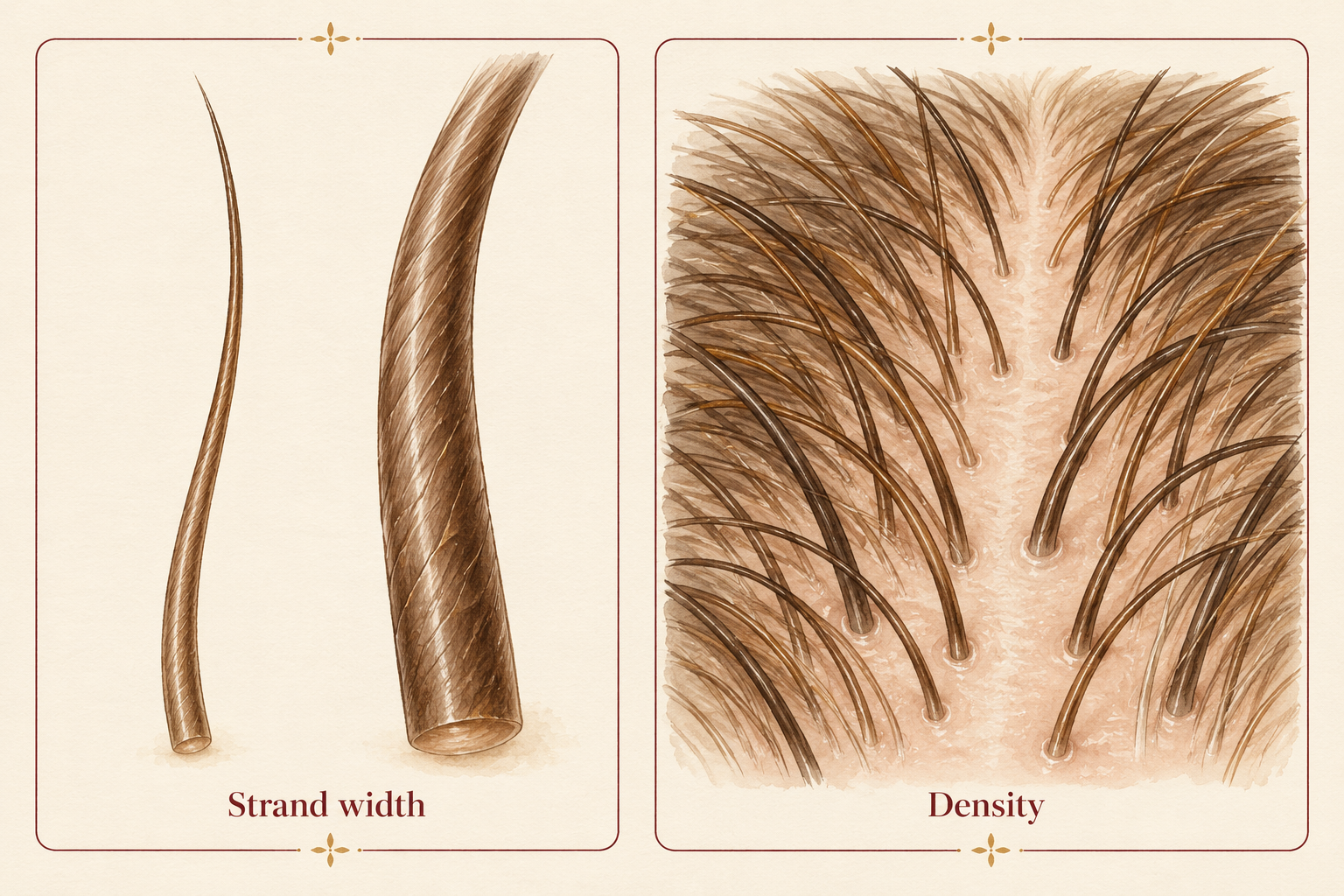
Roll one strand between your fingers, then look at how much scalp shows when you part your hair. Fine strands feel like silk thread, and thick strands feel like cotton thread. A fine strand can still be dense, with plenty of them packed together, and a thick strand can be sparse. Hair that is both fine and sparse looks thin in a ponytail. Know which one you have, because fine hair needs volume tricks and sparse hair needs scalp care. Nobody can change what they were born with, though plenty of small habits make either type look fuller. Try the ponytail test too: wrap your fingers around it and see whether they meet.
2. Spot breakage versus shedding
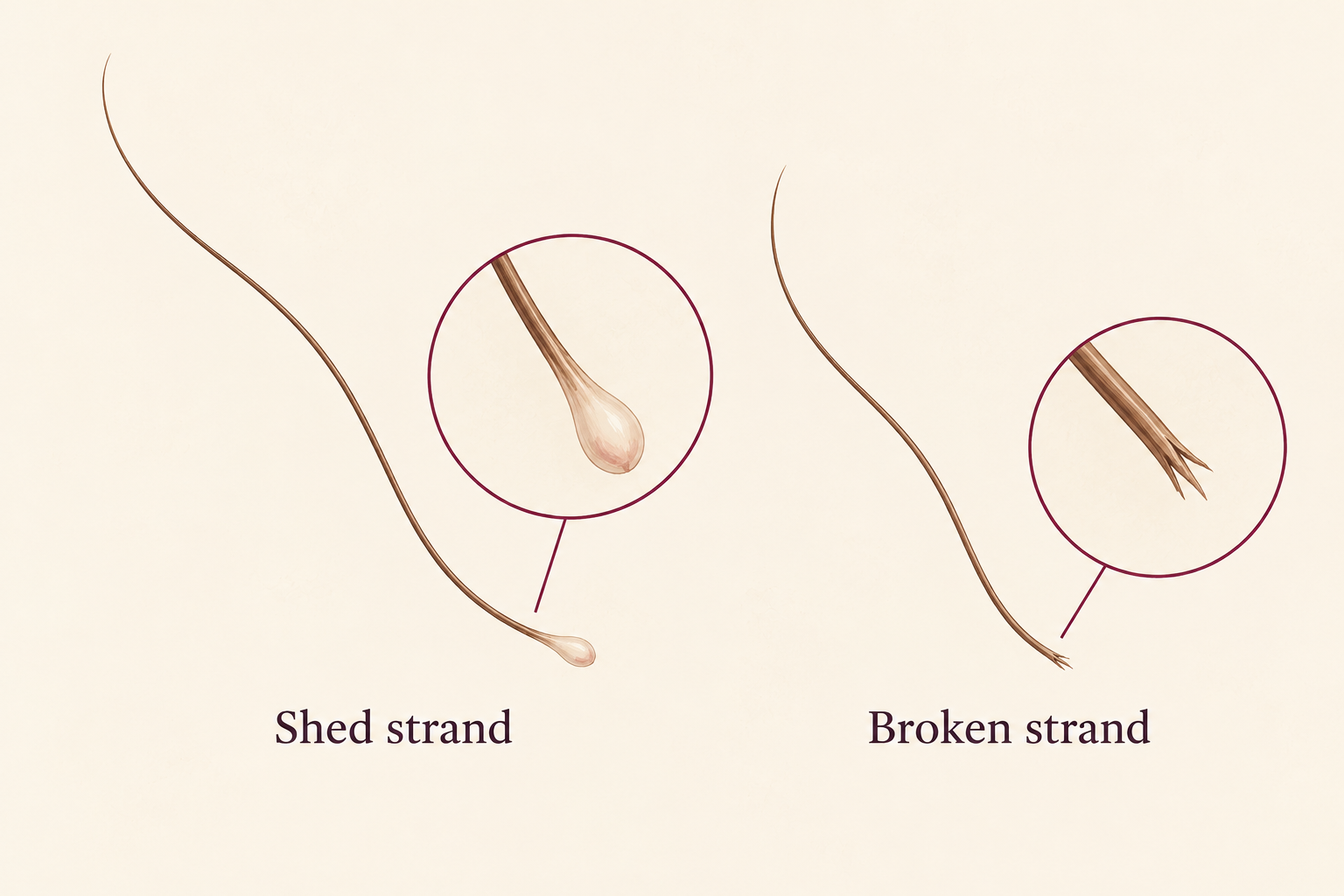
Collect what falls in your brush and look at both ends of the strands. Short pieces with no white bulb at the root are broken hairs, and long strands with a small bulb at one end are shed hairs. Breakage thins the ends, so your ponytail looks like a tapered tail. Shedding thins the density at the root, so your ponytail feels smaller all over. Losing fifty to a hundred long hairs a day is normal. Count for three days if you are curious, then you will know which fixes to start with. Do it over the sink so nothing gets lost, and keep the pieces on a white towel.
3. Keep the ends blunt and healthy
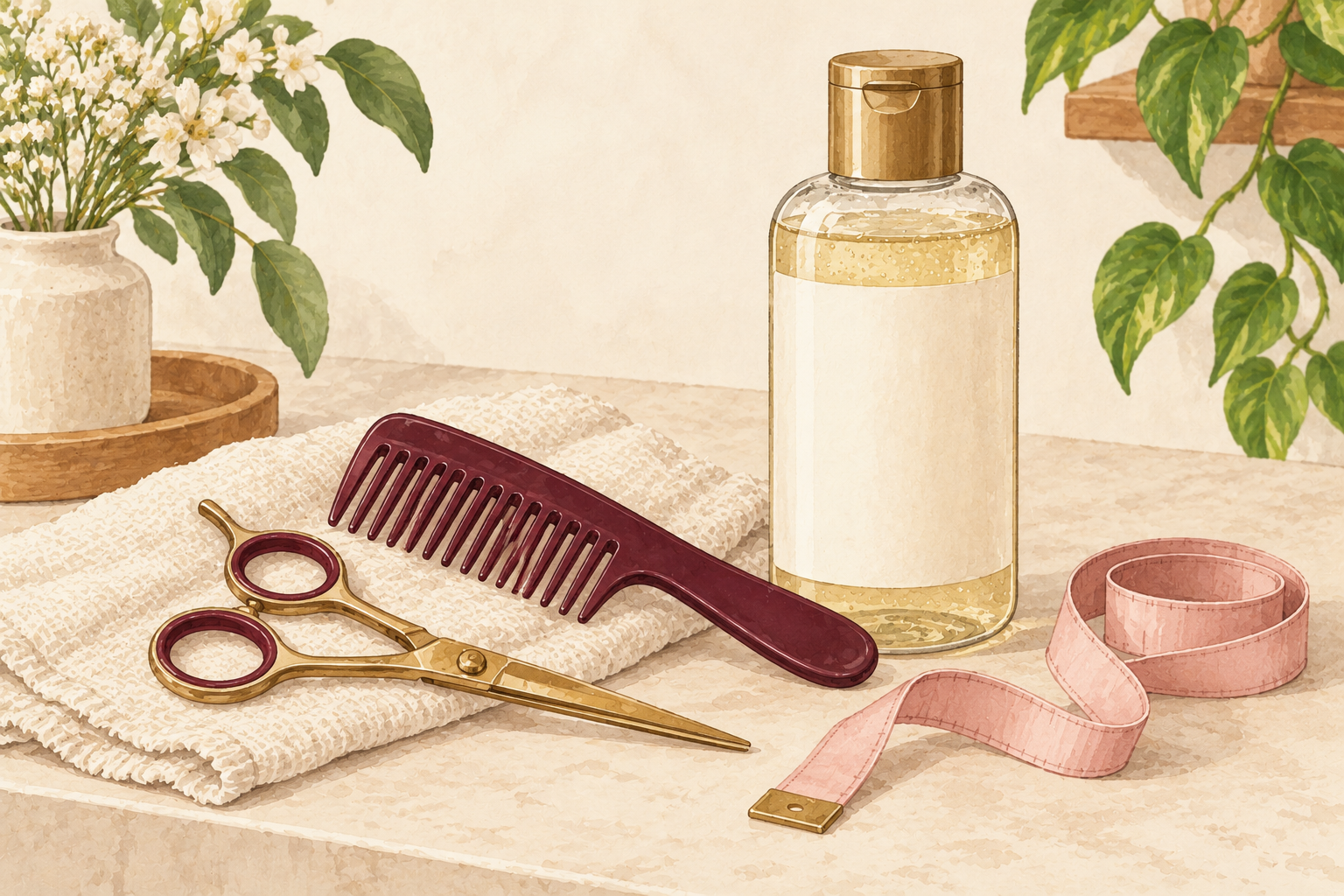
Trim a small amount every eight to twelve weeks so the ends stay blunt. A blunt edge makes the whole mass of hair look wider and fuller, while wispy, see through ends make it look thin even when the roots are strong. Cut straight across, not in a thinning layered way. Trimming will not make your hair grow faster, though it keeps it from snapping higher up. Ask for a blunt cut, or dust the ends yourself in small snips. Check your ends in natural light, since mirrors in dim bathrooms hide damage. If you are growing length, skip the big cut and take off only the frayed bit.
4. Change your part and lift the roots
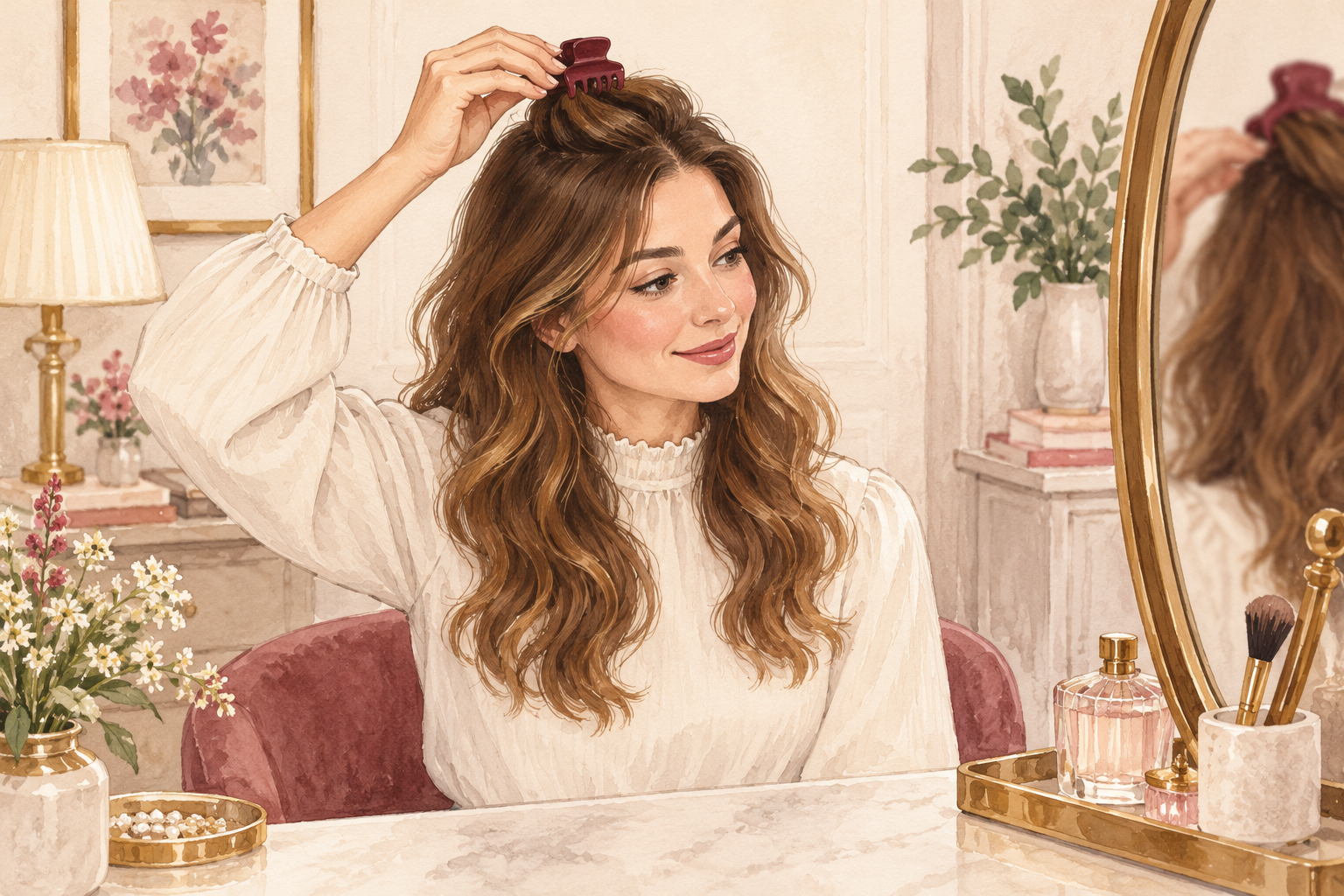
Flip your part to the other side, or comb a zigzag part, to hide thin spots. A part you have worn for years trains your hair to lie flat and shows more scalp. Switching it makes the hair at the roots stand up and cover the line. Blow dry your roots upright for a minute with your head tipped down. Add a pinch of light volume powder only if you like, and brush it out at night. This is the fastest way to look thicker today, while the real work happens underneath. Wear the new part for a week, because the roots take a few days to learn it.
5. Clarify now and then and skip heavy products
Use a clarifying shampoo once every two to four weeks, and keep heavy creams and butters away from your roots. Build up weighs thin hair down until it clumps into strands and shows scalp between them. Rinse until the water runs clear. After you clarify, hair springs back lighter and takes the shape of a fuller ponytail. Keep rich products to the lengths of your hair from the ears down. Fine hair behaves best with light mousse or a spray, never a thick pomade. If your hair looks flat by lunchtime, you used too much of something, so cut back by half.
6. Wash gently with a mild shampoo
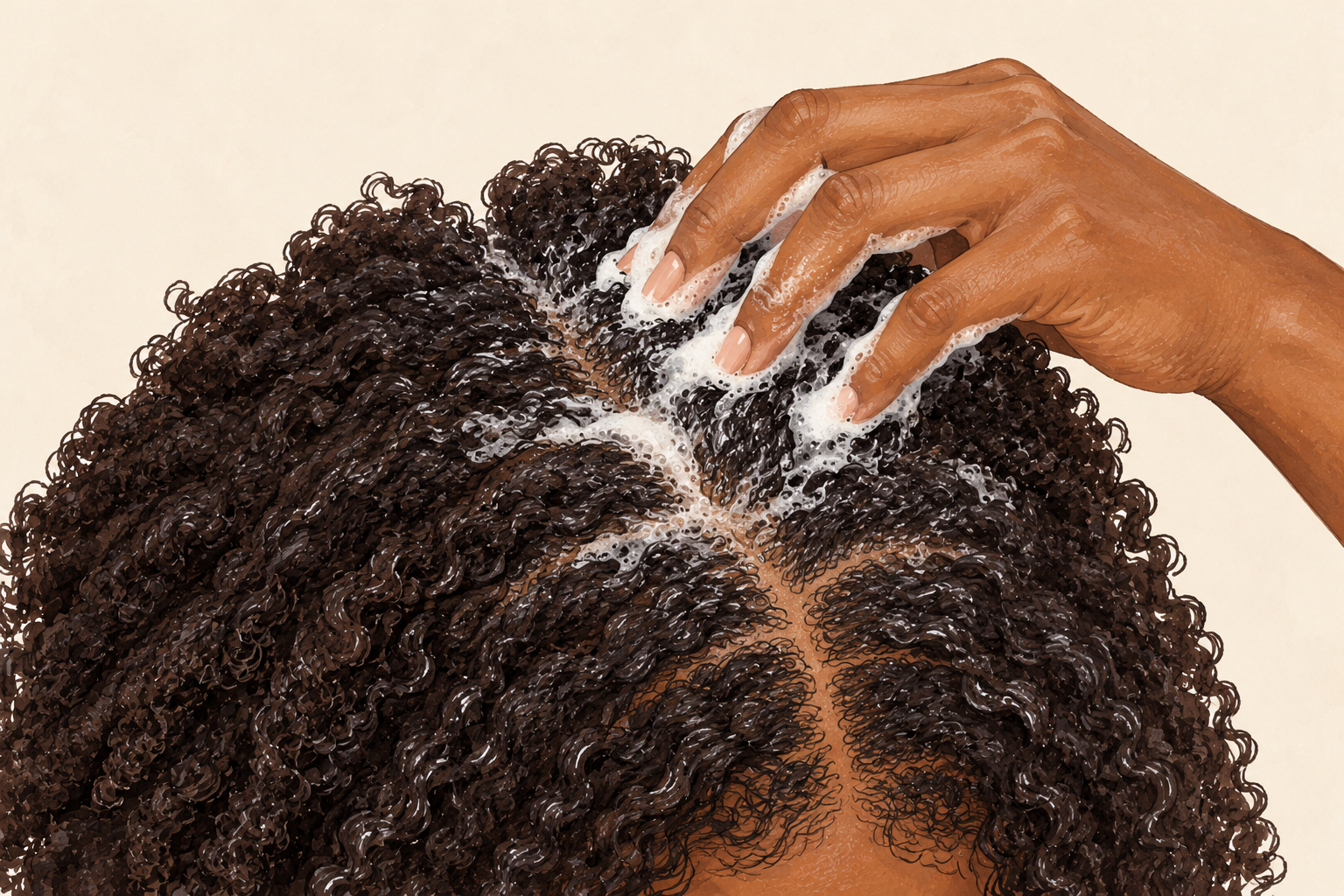
Lather the shampoo in your hands first, then press it into your roots with the pads of your fingers. Scrubbing with nails or a rough brush irritates the scalp and snaps hair. Choose a mild shampoo that does not leave your scalp tight, and wash two or three times a week. Rinse for longer than you think. Squeeze, do not twist, the water out of your hair, then pat it with a soft T shirt or towel. A calm, clean scalp is the ground that thick hair grows in. Tip your head forward and rinse the back of your neck last, where shampoo likes to hide. Rinsing well matters as much as the lather, so when you restock, check best shampoo for hair growth first.
7. Add a daily scalp massage
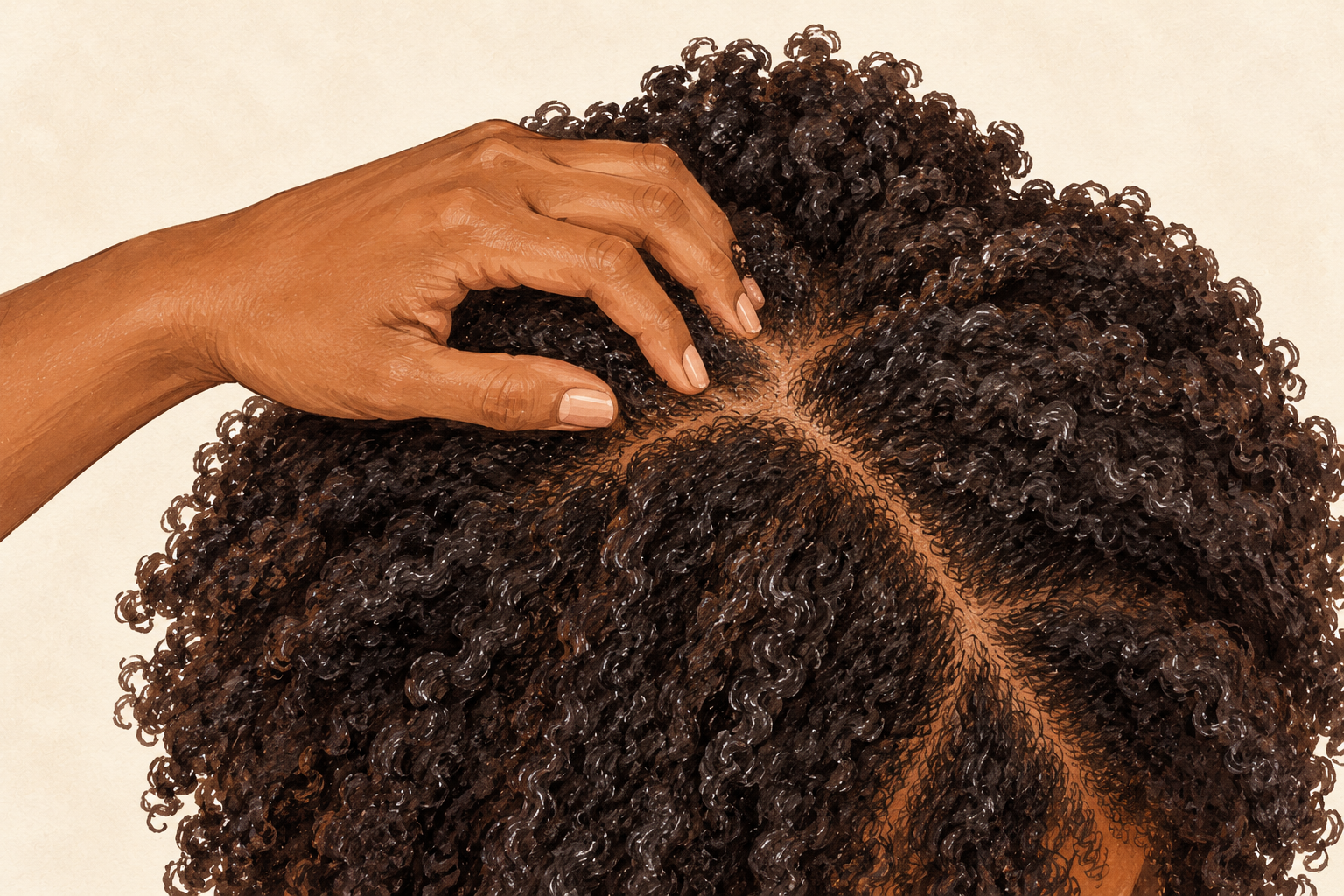
Spend three to four minutes pressing and circling your scalp with your fingertips. Start at the hairline, move toward the crown, and use enough pressure that the skin moves over the bone. It relaxes a tight scalp and it feels lovely. Try it on dry hair at night, or while shampooing. Skip the nails and stop if the skin feels sore. Some girls notice their hair looks fuller after a few months, though a massage will not create hair out of nothing. Think of it as caring for the soil. A drop of light oil on your fingertips makes the glide easier on a dry scalp.
8. Avoid tight styles and rough elastics
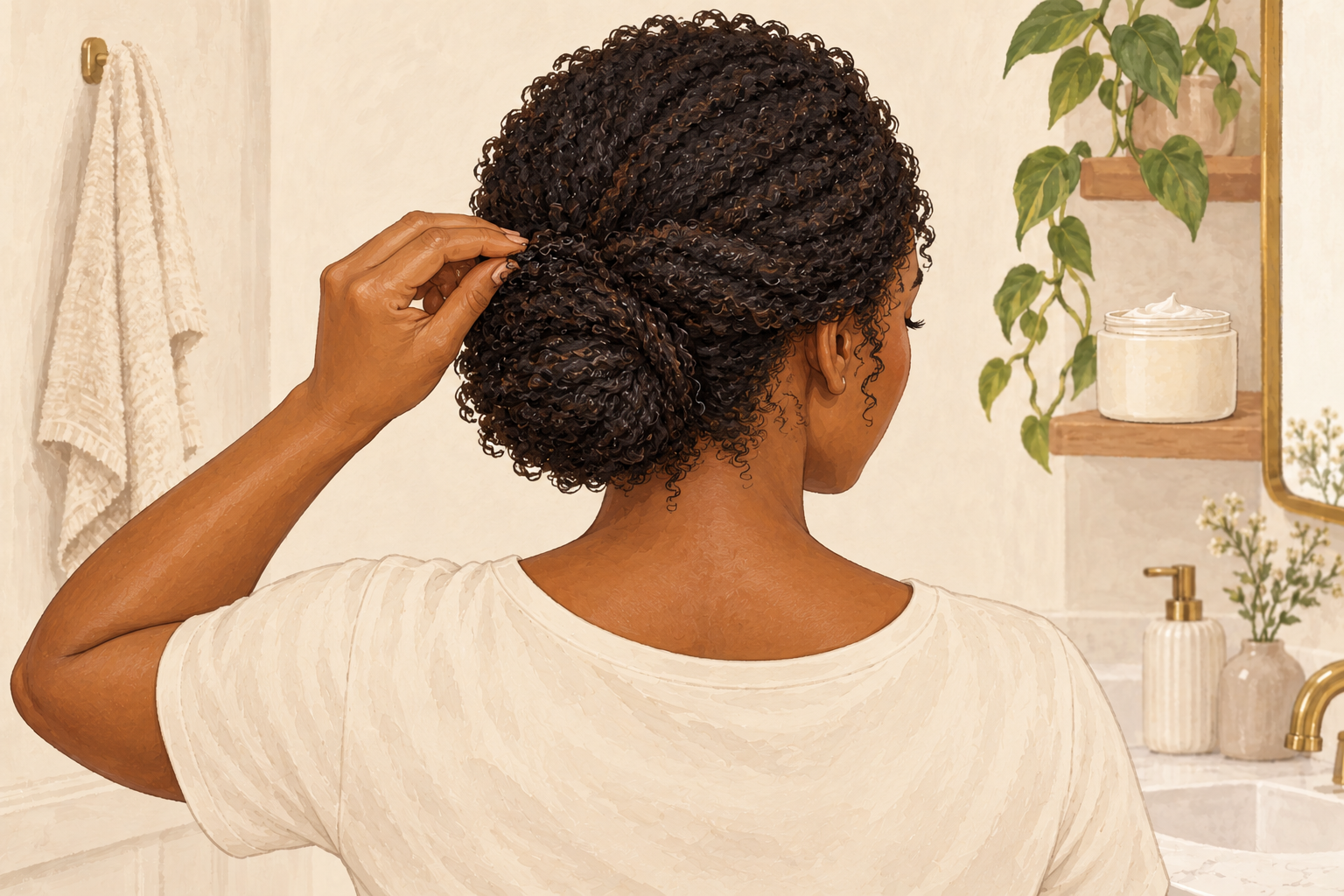
Switch to a loose bun, a soft scrunchie or a spiral tie instead of tight ponytails and thin rubber bands. Pulling hard on the same spot every day weakens the roots and thins the hairline. Move your ponytail higher or lower each day so no single place carries the strain. Never sleep in a tight style. If your scalp aches or bumps appear at the base of the style, loosen it at once. A hairline that gets a break often thickens back within a few months. Soft cloth bands cost nothing to try and save your edges.
9. Cut back on heat and protect what you use
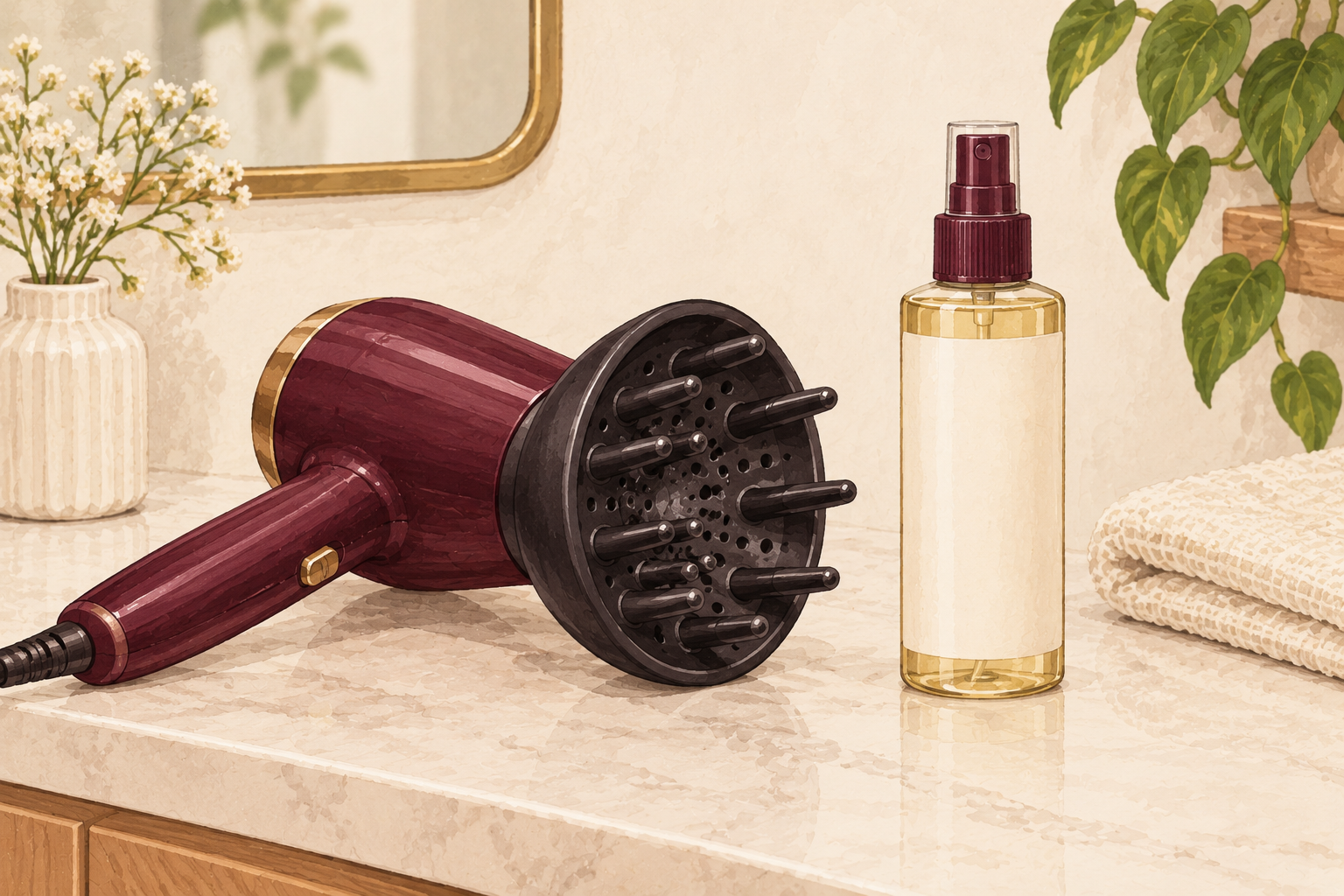
Let your hair air dry when you can, and spray a heat protectant on damp hair before any hot tool. Heat makes the strand brittle, and brittle hair snaps into a thinner ponytail. Use the lowest setting that works and keep the dryer moving. Hold it at least six inches from your head. Flat irons and curling wands should stay below a medium setting, and once a week is enough. Your hair will feel a little denser as the ends stay on your head. Rough towel drying is a quiet culprit, so pat instead of rub.
10. Track your ponytail every month
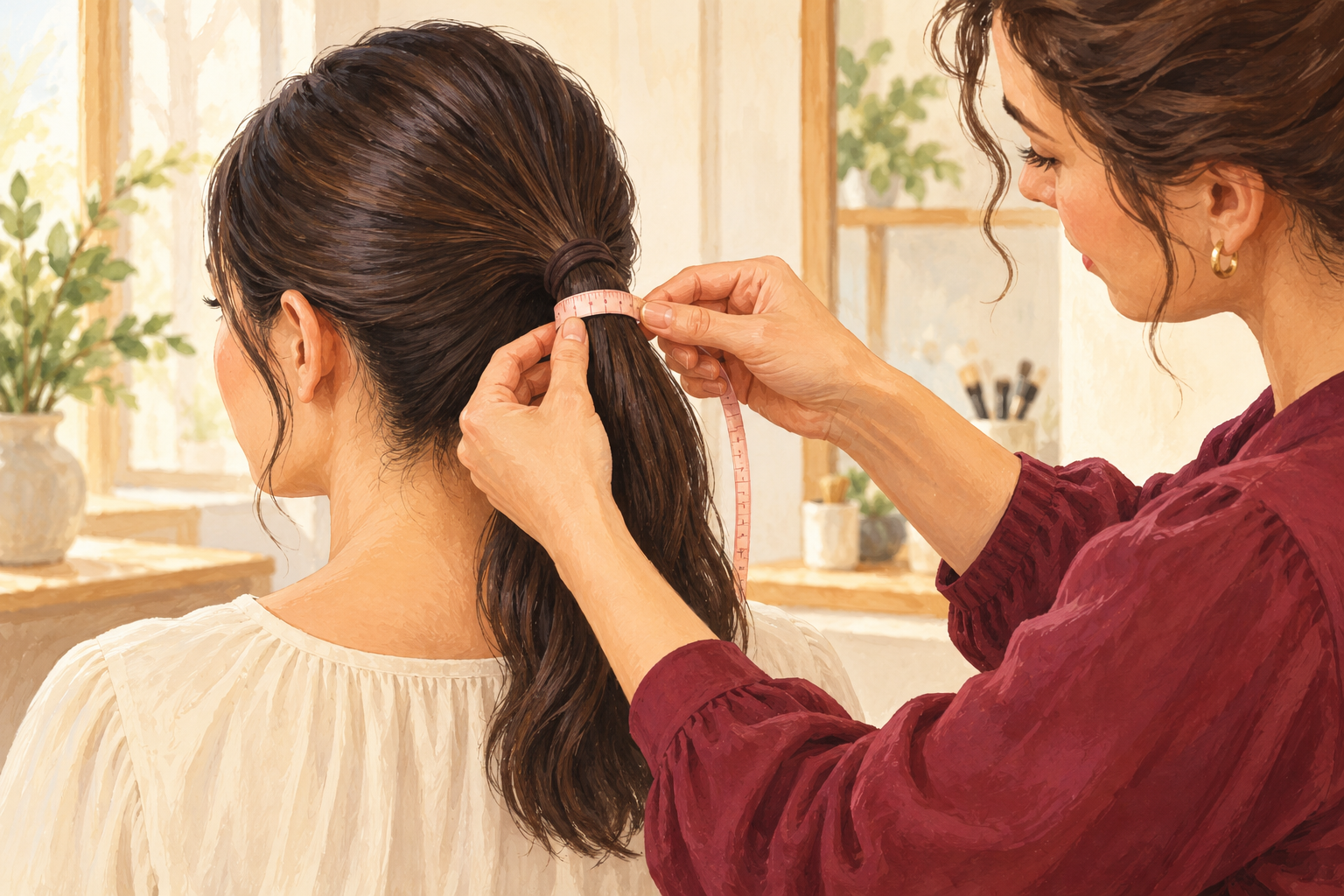
Once a month, make the same ponytail and wrap a soft tape around it just above the elastic. Write down the number and take a photo from behind. Your memory of how thick it was is not reliable, and a record is. Do it on the same day of the month and at the same stage of your wash cycle. A growth of even a small amount tells you your habits are working. If the number drops two months running, look back at what changed in your routine. A new shampoo or a tighter style is often the quiet reason.
11. Watch for sudden or patchy thinning

If hair falls out in handfuls, comes out in patches or has thinned fast over a few weeks, take it seriously. That is different from slow, ordinary thin hair. See your doctor, because things like low iron, hormones and stress can all show up in the brush first. Take your photos and your notes with you. Do not buy five new products while you wait. A quick check can sort out a hidden reason, and then your gentle habits can do their best work. Rest, water and enough food also matter more than any bottle.
12. Give any plan three months

Pick the three habits from this list that feel easiest and stay with them for ninety days. Hair grows about half an inch a month, so new strength takes time to show up in a ponytail. At six weeks you might notice fewer hairs in the brush. At twelve weeks, compare your photos and your measurement. Keep what is working, drop what is not, and add one new habit. Thick hair growth is built by small, quiet choices repeated over weeks, never by one clever product. Be kind to yourself on the slow weeks, because your ponytail is catching up in secret. Plates with enough protein could be one of those three habits, so put food for hair growth on that list.
Complete the Routine: Thick Hair Growth Starts at the Scalp
Tonight, do the ponytail measurement and flip your part. Thicker looking hair grows out of many small choices, so keep the guides below handy for the next one to try.