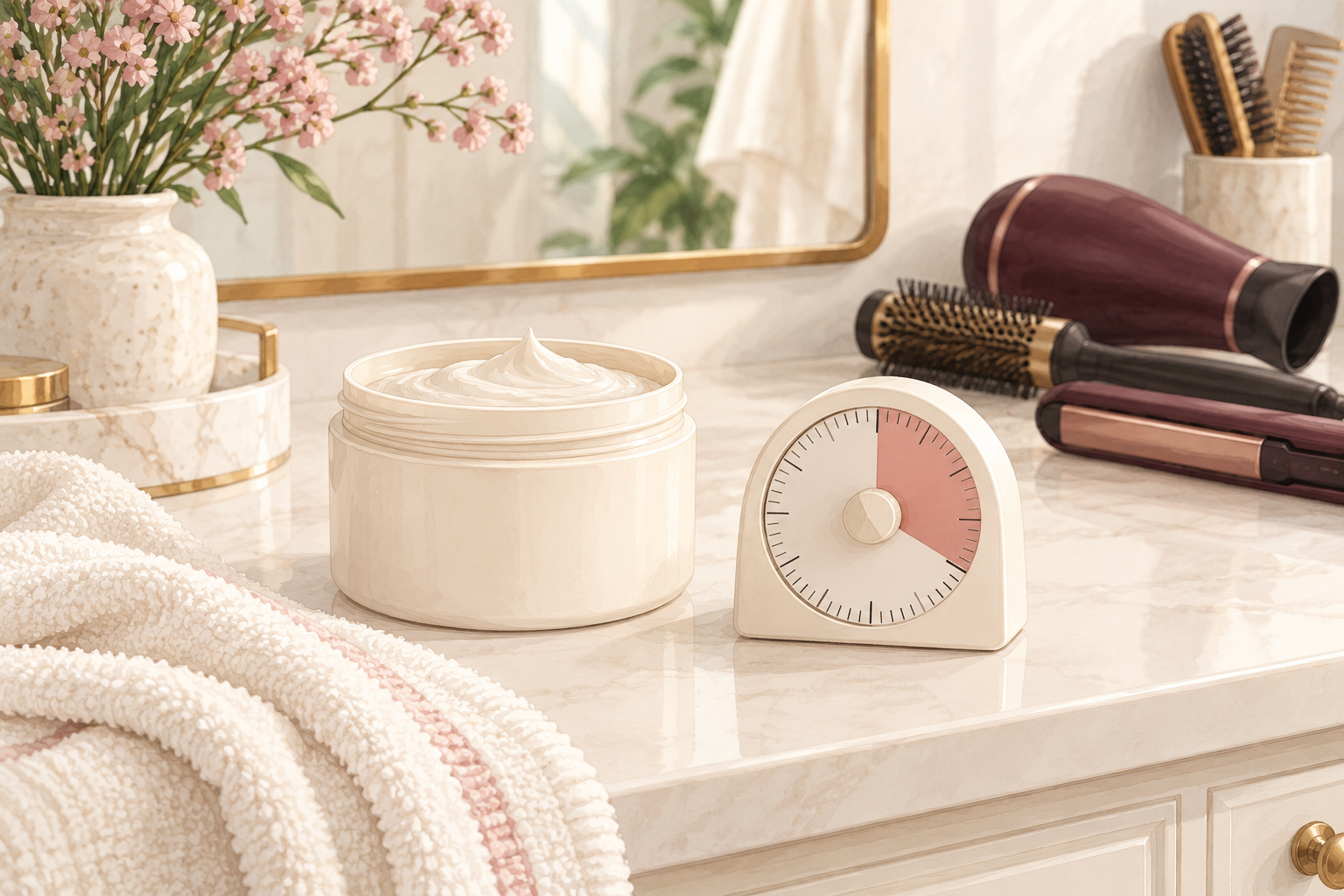
You run your fingers through your hair and it feels like straw, rough at the ends and puffy everywhere else. Caring for dry hair can feel like pouring water into a bucket with a hole in it, because the softness is gone by day two. The fix is a steady weekly rhythm with products in the right order. Here are 12 steps, so start at number one tonight.
1. Gather one small kit
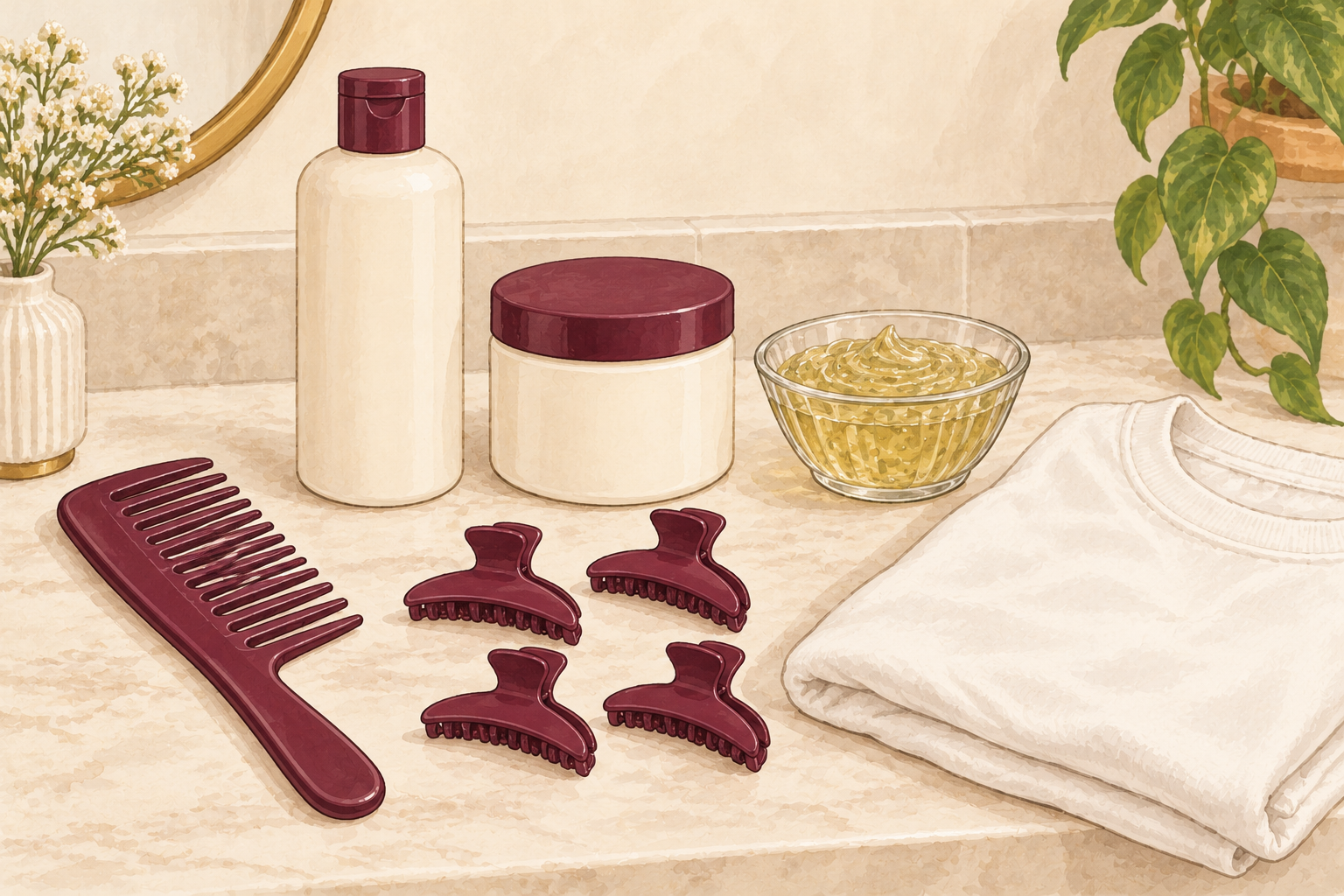
Keep a gentle shampoo, a rich conditioner, a leave in cream, a light oil and a wide tooth comb in one basket. That is the whole list. If a product is not in the basket, it does not belong in the routine yet. Pick a shampoo that does not foam like a bubble bath, because big foam usually means it strips more. Choose a conditioner that feels thick and creamy in your palm. Put a clean towel or a soft t shirt in the basket too. Having it all in one spot means wash day happens on time instead of getting put off until your hair feels like a haystack.
2. Find your starting point
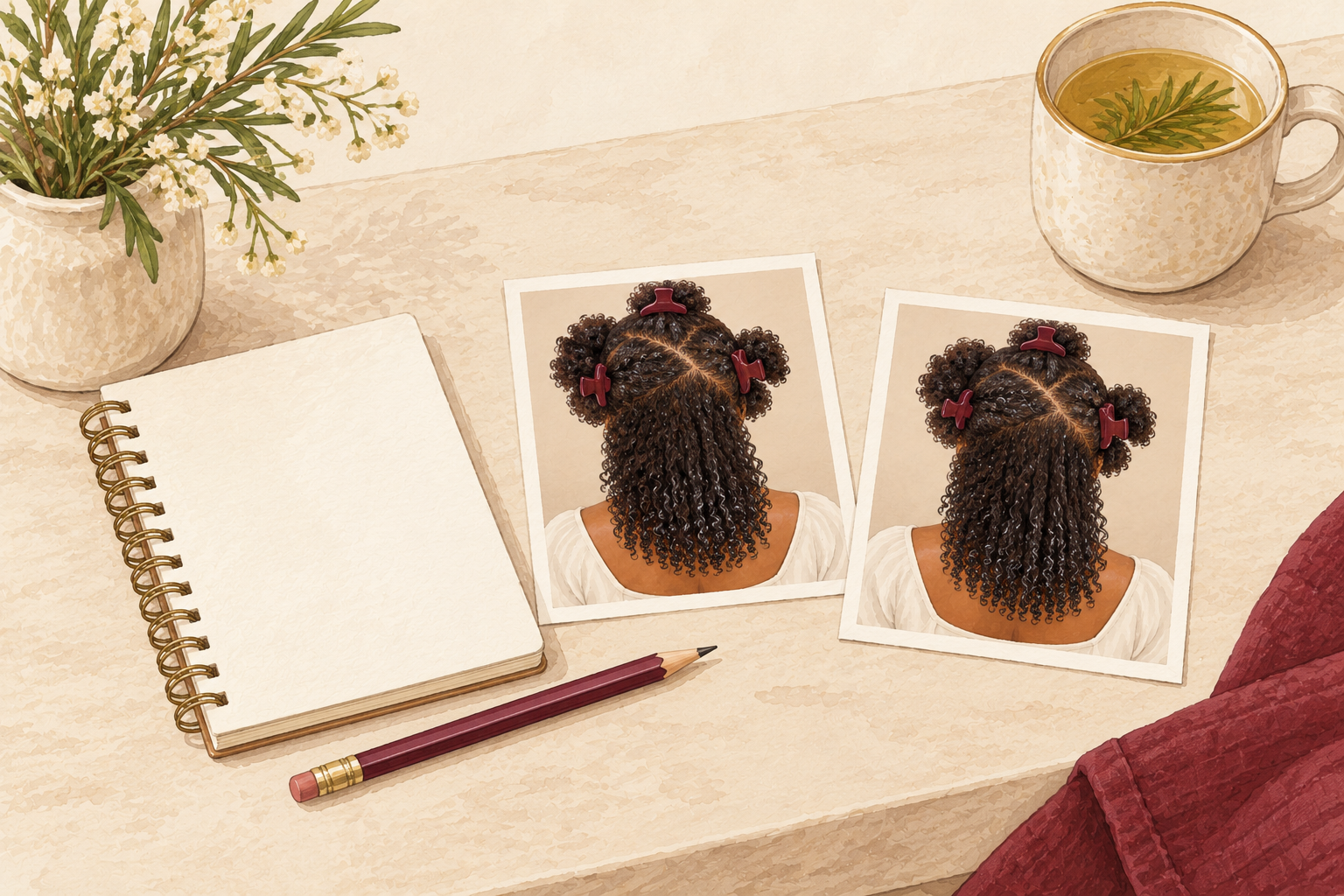
Take a photo of your hair in daylight and hold one strand between your fingers. Notice whether it feels rough all along, only at the ends, or mostly near the roots. Tight, crunchy and puffy points to dryness that needs moisture. Greasy roots with dry ends mean you only treat the lengths. Note how many days your softness lasts after a wash. This is your before picture for caring for dry hair, and you will compare it in eight weeks, because progress is hard to see when you look in the mirror every day. Check your ends under a bright lamp too, since splits hide in dim bathrooms.
3. Wash the scalp, not the lengths
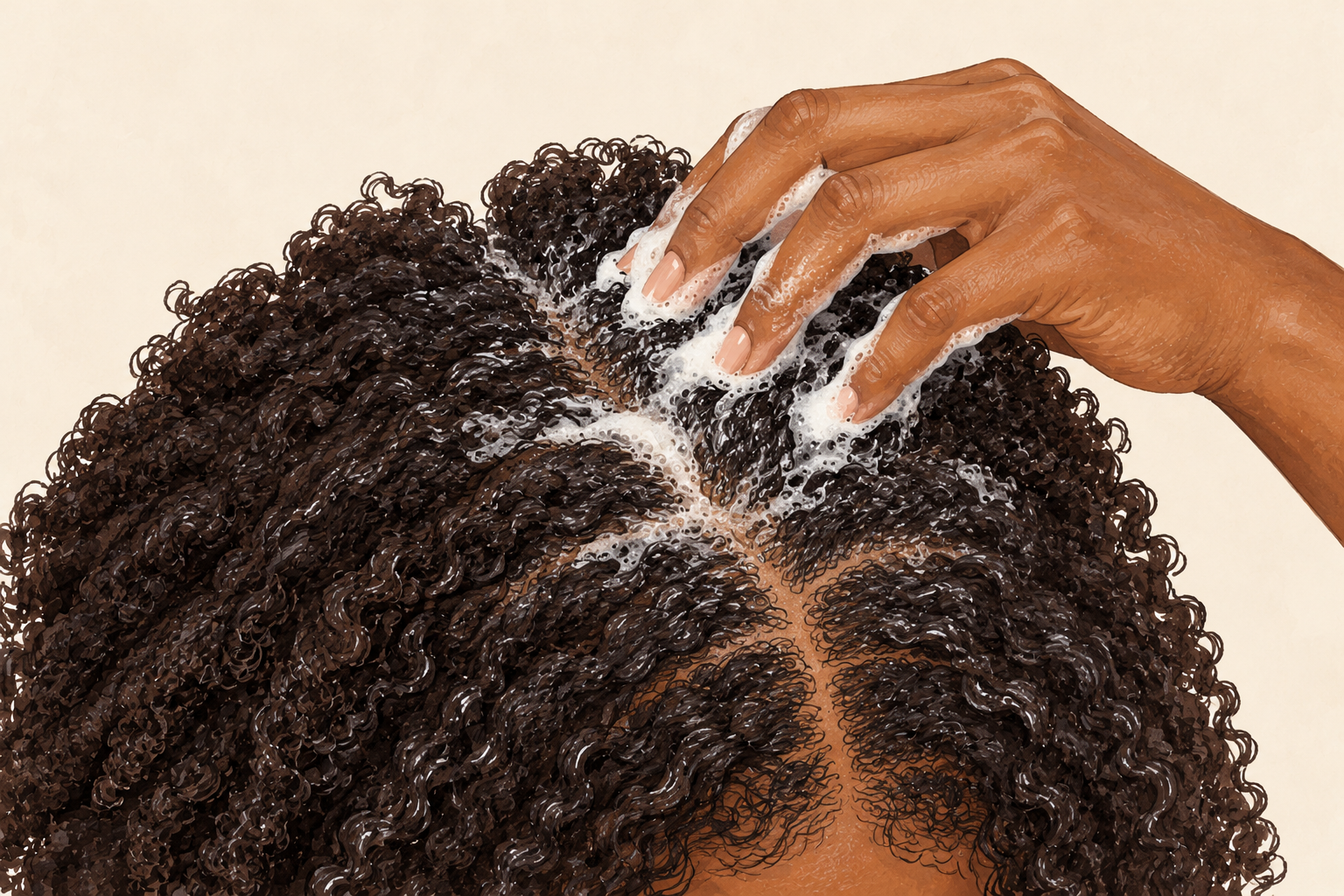
Shampoo your roots only, once or twice a week, and let the suds rinse down your lengths. Dry hair loses its natural oil quickly, so daily washing makes it worse. Use the pads of your fingers, never your nails, and count to sixty. Use lukewarm water, because hot water strips the oil your hair is trying to hold on to. If your scalp gets itchy or oily between washes, rinse it with water on a mid week day instead of lathering again. Rinse until the water runs clear, since leftover shampoo leaves hair stiff and dull.
4. Condition the lengths well
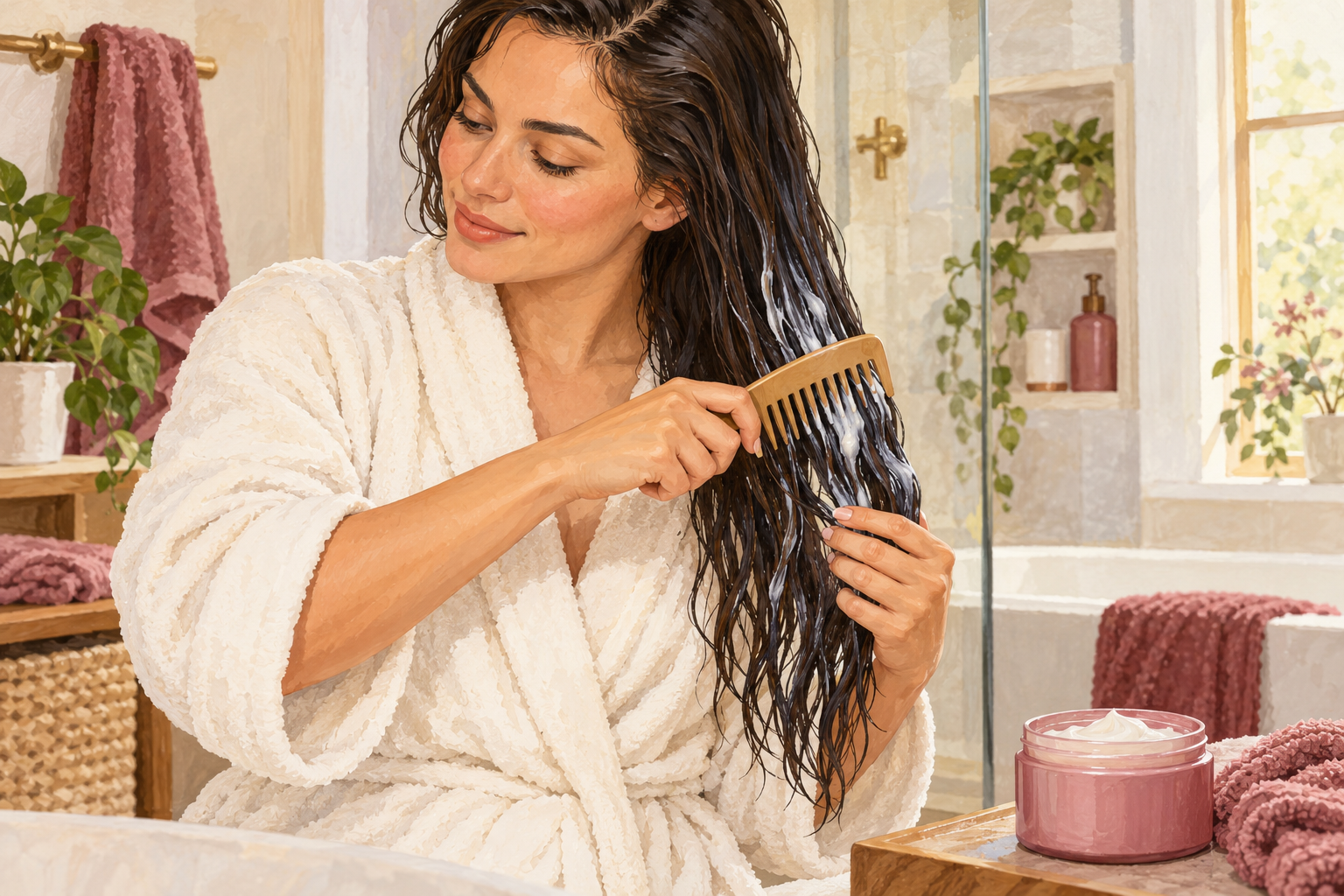
Smooth a generous handful of conditioner from the mid lengths to the ends and leave it for three minutes. Comb it through with the wide tooth comb so every strand gets coated. Dry ends drink the most, so give them a second helping. Keep it off your roots if they get oily. While you wait, wash your body or do your face. Rinse with cool water, which helps the hair lie flat and look shiny. Leave a tiny bit in the very ends if they feel rough, and you will feel the difference the minute you towel off. Do this every wash, without skipping, and the rest of the routine works better.
5. Blot, then add moisture while damp
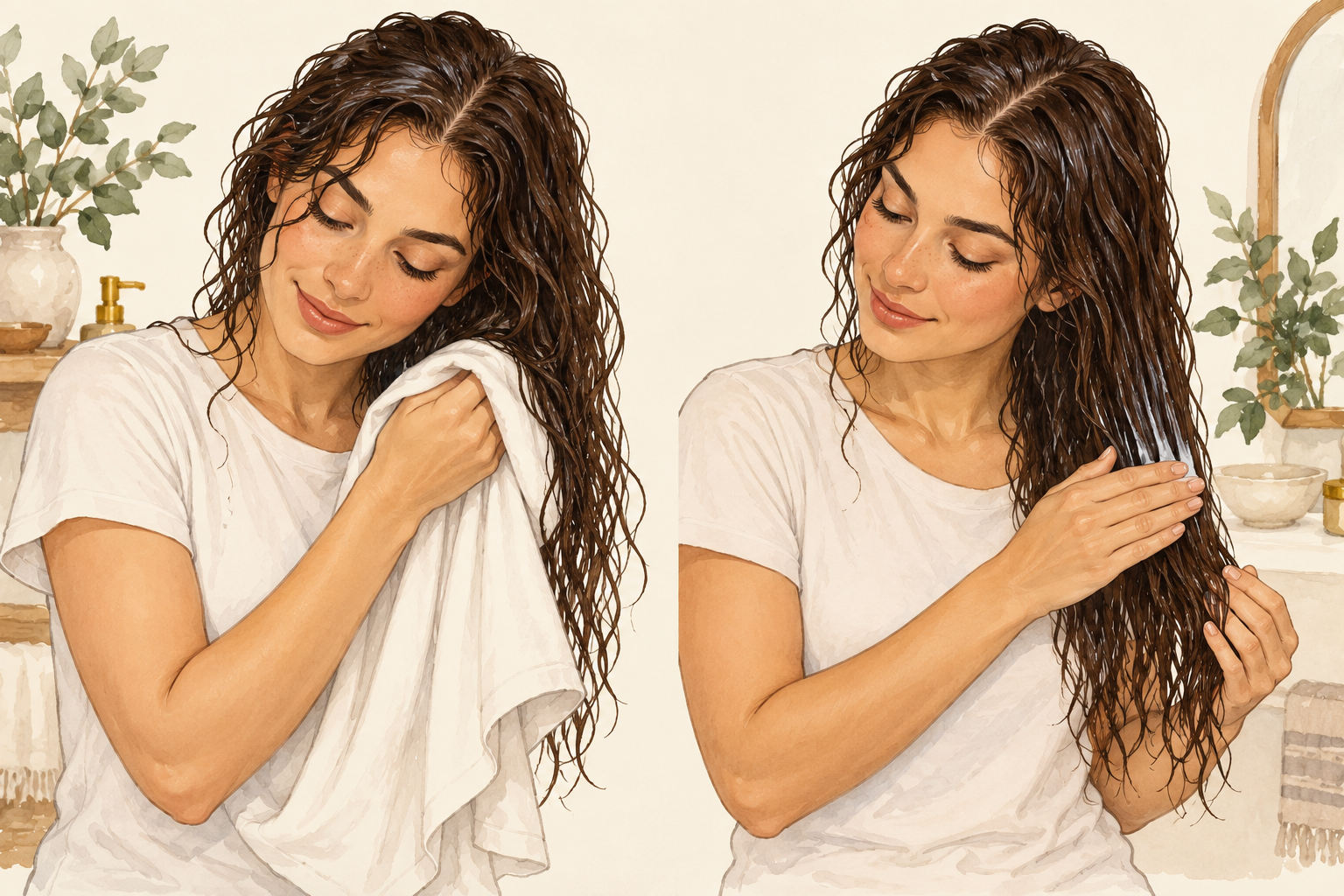
Press the water out with a soft t shirt, then apply leave in cream while your hair is still damp. Damp hair soaks moisture up like a sponge, and bone dry hair does not. Rubbing roughs up the outer layer and invites frizz, so press instead. Use a pea sized amount for fine hair and a golf ball for thick hair. Work from the ends up and stop at the ears. This is the first layer of the order that matters, which is water, then cream, then oil. If your hair feels coated afterwards, use less next time, because a thin film is all you need.
6. Seal with a few drops of oil
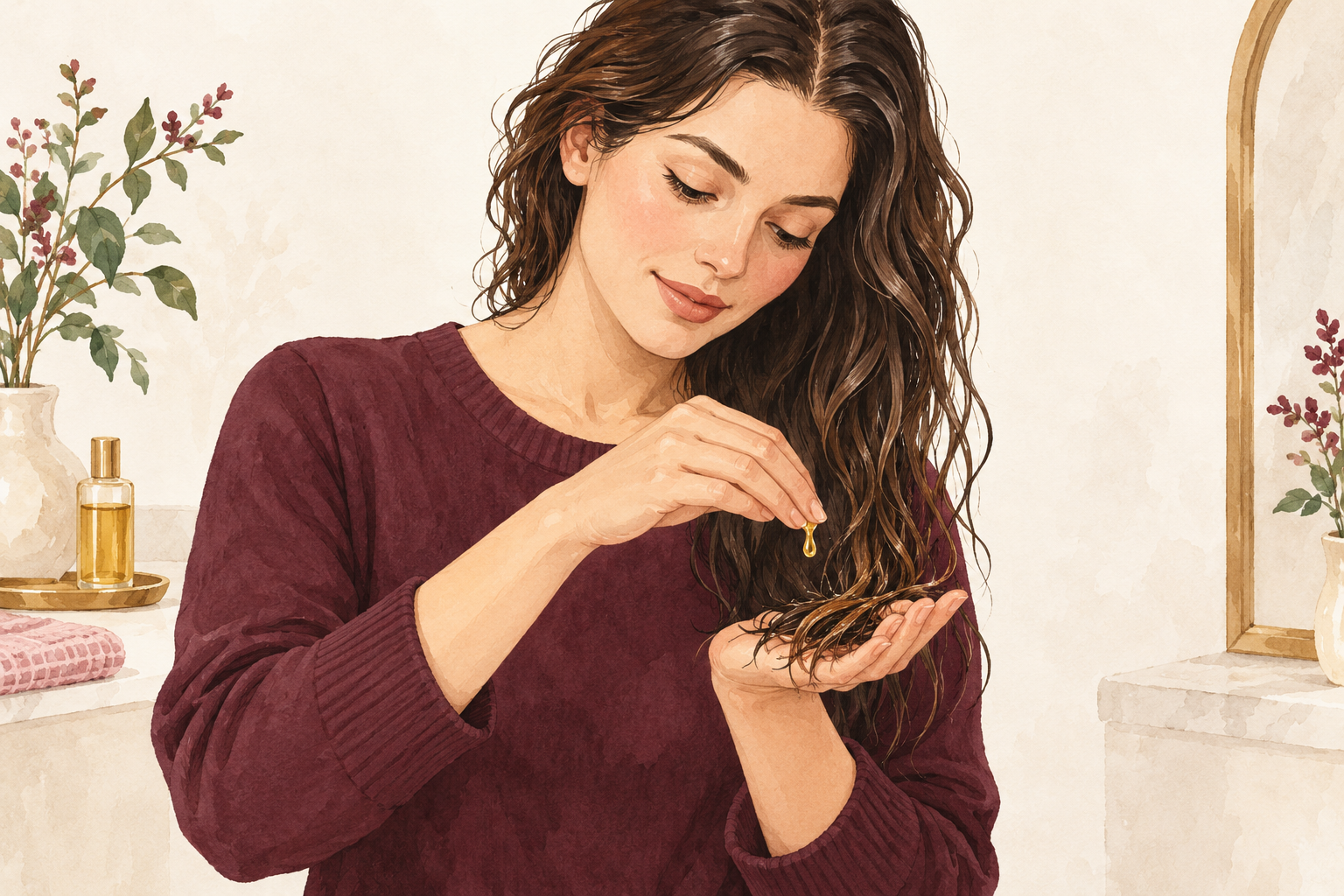
Warm two or three drops of light oil in your palms and press it over the ends, on top of the cream. Oil goes last because it seals in the water that the cream gave you. If you put it first, it blocks the moisture from getting in. Almond, jojoba or argan are all light enough. Glide your hands down the lengths, never rub, and avoid the roots. Dry hair loves oil, but too much leaves it limp and greasy by lunchtime. That is why we measure in drops. Add a drop more only if your ends still feel rough after they dry.
7. Let it air dry, or dry it on low

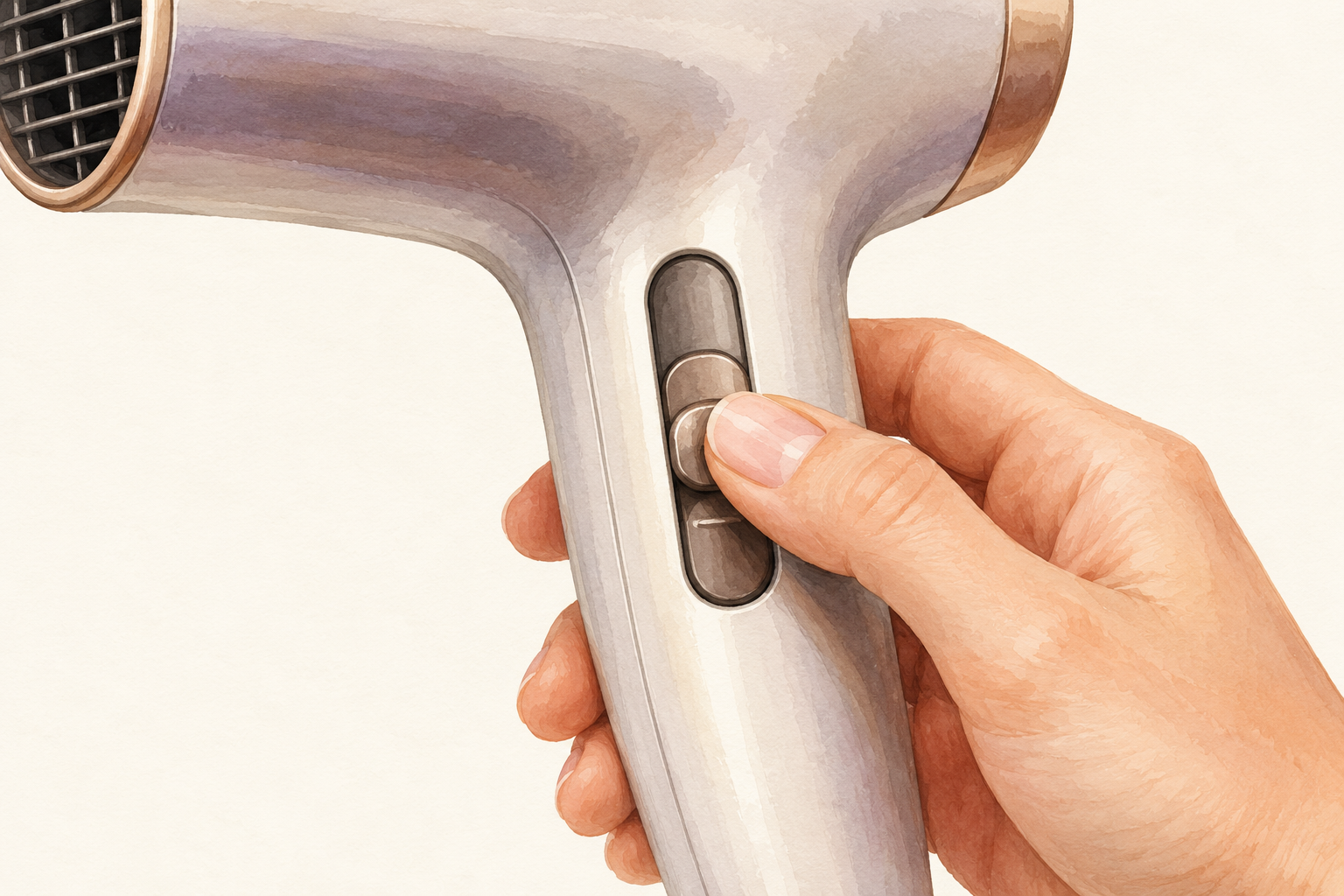
Leave your hair alone while it dries, and do not brush it until it is fully dry. Constant touching makes frizz. If you need the dryer, use the lowest heat, keep it a hand’s width from your hair, and stop when your hair is nearly dry. A diffuser helps curls keep their shape. Wet hair is delicate and snaps easily, so detangle first and then leave it. If you hate waiting, tie a loose braid at the nape and go about your day, and take it down when your hair has dried completely.
8. Add one deep mask a week
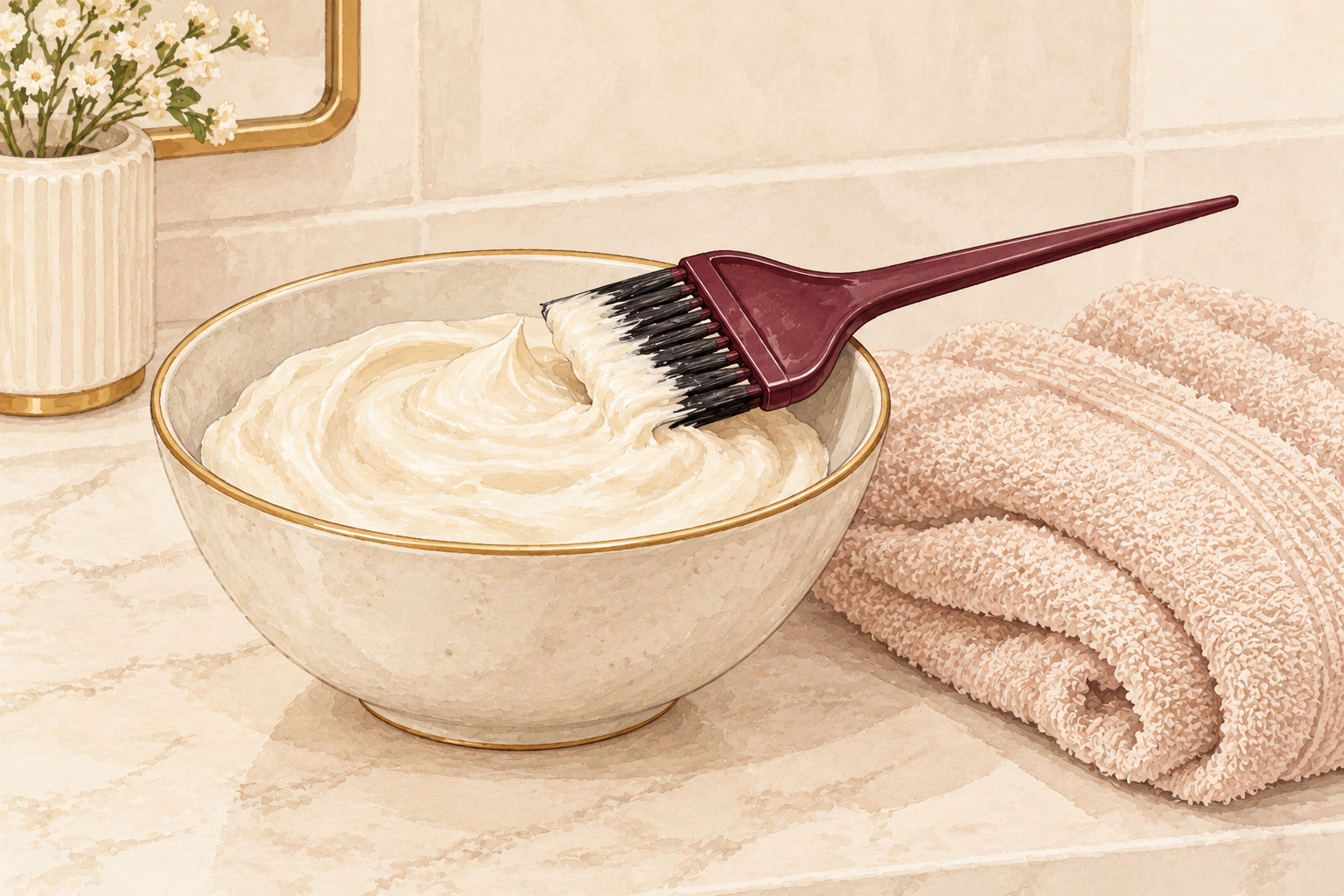
Smooth a thick hair mask on the lengths once a week and leave it for twenty minutes. Cover it with a warm towel or a shower cap, because gentle warmth helps the mask sink in. Do it instead of your normal conditioner, not on top of it. Rinse well, since leftovers feel waxy. Skipping it does not ruin the routine, but you will notice the softness lasts longer when you keep it up. If your hair feels heavy or limp afterwards, switch to every two weeks. A ripe avocado mashed with a spoon of honey is a homemade option if you like to mix your own.
9. Protect your hair at night

Sleep on a satin pillowcase or wear a satin bonnet with your hair in a loose braid. Cotton pulls moisture out of your hair and roughs up the ends while you toss and turn. A loose pineapple on top of your head works for curls, tied with a soft scrunchie. Skip tight elastics, which cause breakage at the same spot every night. You will wake up with fewer tangles and less frizz. If a bonnet slides off, a satin scarf knotted loosely does the same job, and it is worth the small effort. Wash the pillowcase every week so it does not carry old product back to your hair.
10. Swap the habits that dry you out
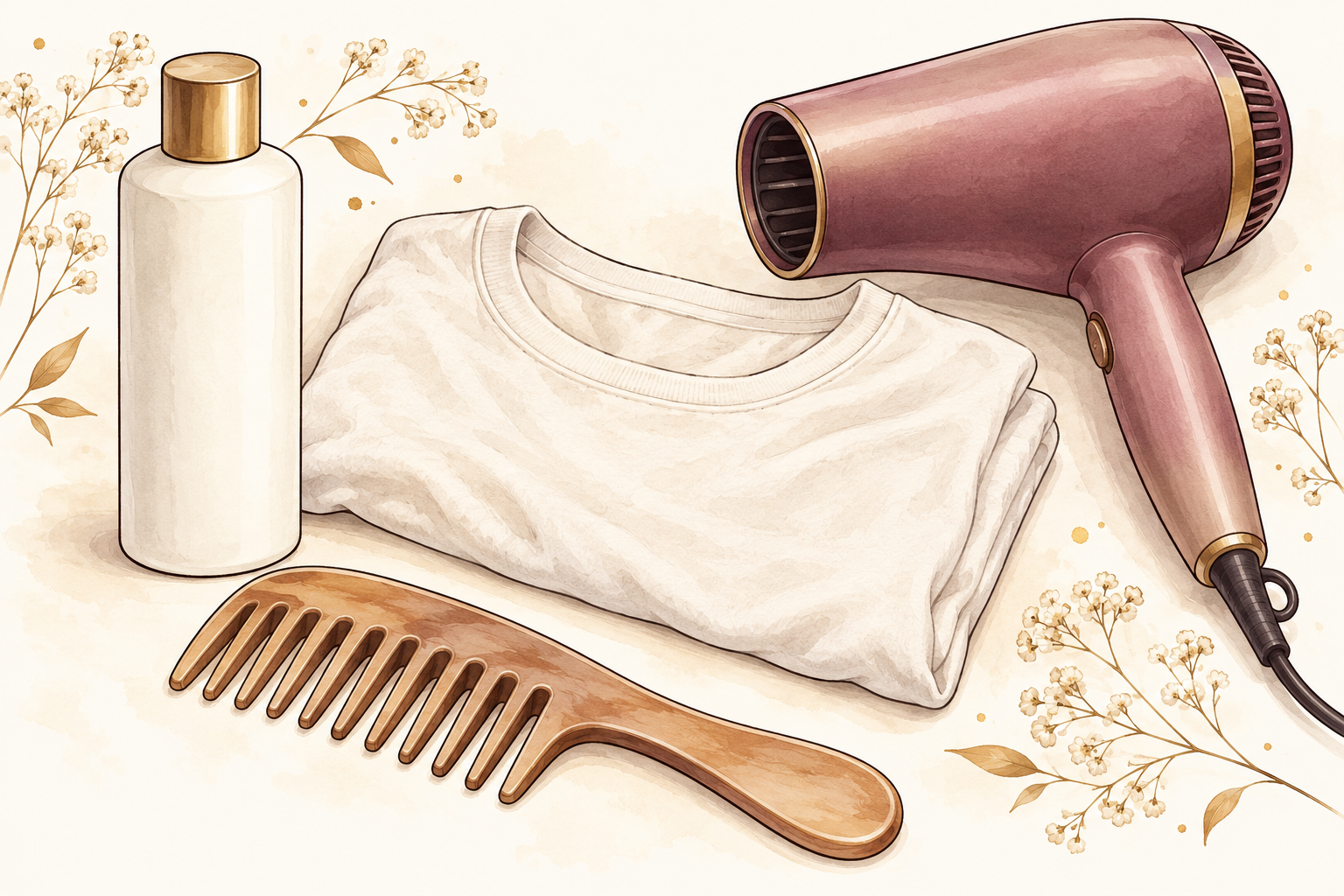
Turn the heat down, use a gentler shampoo and stop brushing dry hair hard. Hot tools bake the water out of your strands. Use them once a week at most, with a heat spray first. Alcohol heavy styling products dry your hair too, so check the first ingredients on the label. Swap tight ponytails for a loose clip. Do one swap at a time so it feels easy. If you color or bleach your hair, give it extra masks, because those treatments leave strands thirsty. Chlorine and sun do the same, so rinse after swimming and cover up on bright days.
11. Trim the damage away
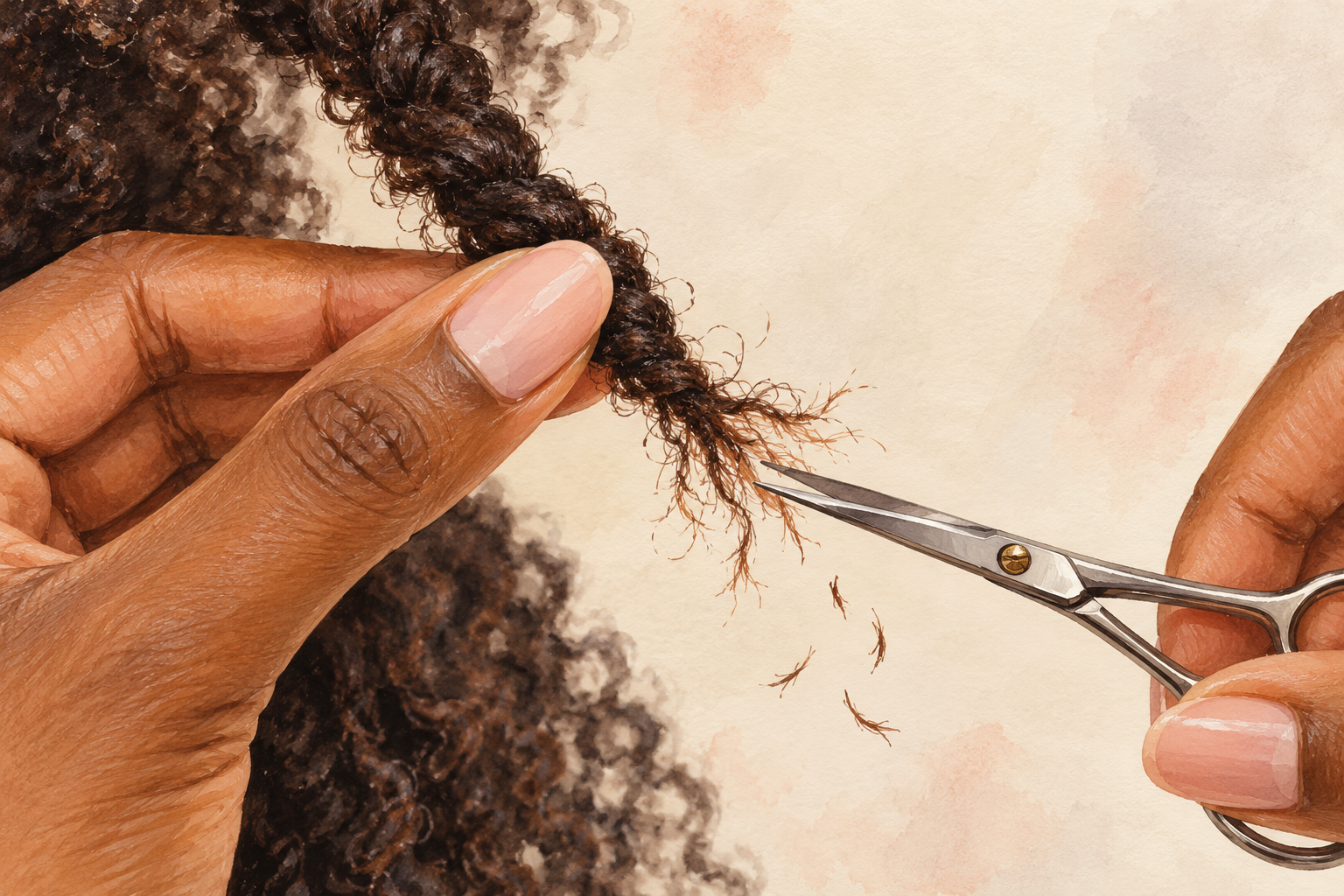
Trim a half inch off the ends every eight to twelve weeks, or sooner if they split. No cream can glue a split end back together, so it keeps traveling up the strand until you cut it off. A small regular trim keeps your hair looking thicker and healthier. Cut on dry, combed hair so you see what you are doing, and use sharp scissors, never kitchen ones. If you are growing your hair, tiny trims still help, because you lose less to breakage than you gain by keeping split ends. Put the date in your phone so you do not forget.
12. Expect softer hair by week eight
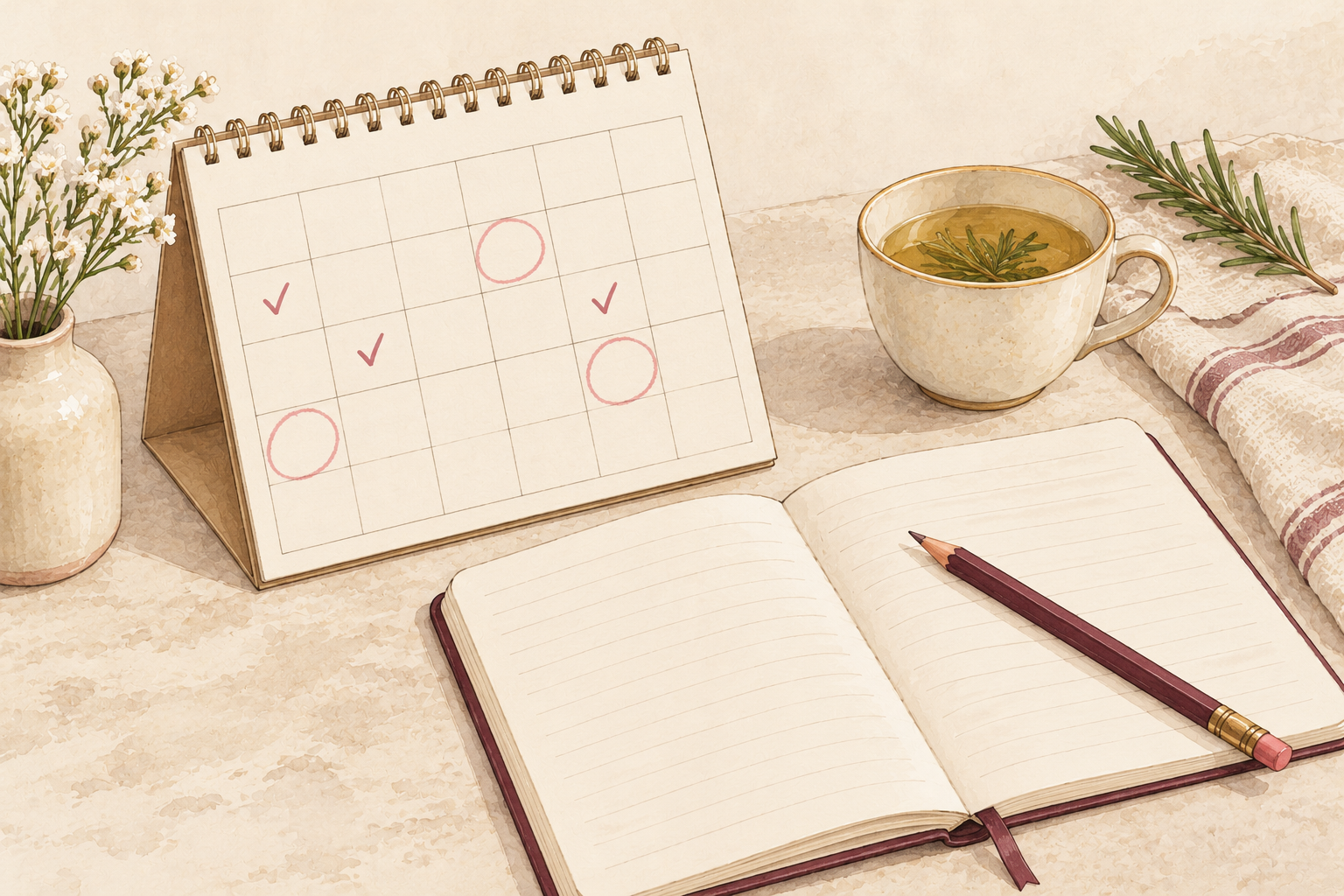
Look for hair that feels softer, tangles less and holds its moisture longer between washes. In the first two weeks, the ends feel smoother after wash day. By week four you should see less frizz and fewer snapped hairs in your brush. By week eight, take a new photo in the same light and compare it with the first. Some weeks will feel drier with the weather or a stressful month, and that is normal. Keep the rhythm steady, because caring for dry hair works slowly and then all at once. If your scalp stays sore or your hair keeps falling out, stop and see your doctor.
Complete the Routine: Caring for Dry Hair Every Week
Tonight, do numbers 3 to 6 and let your hair air dry. When you want extra help, read about a hair mask for dry hair and a few dry hair remedies.