You step out of the shower with bouncy, loose curls, and by lunchtime they have slid into soft waves that go flat at the root. A good 3a curly hair routine fixes that mostly by taking things away: less product, less weight, less touching. These 12 steps run from wash day to day two, so start at number one tonight.
1. Gather a light kit
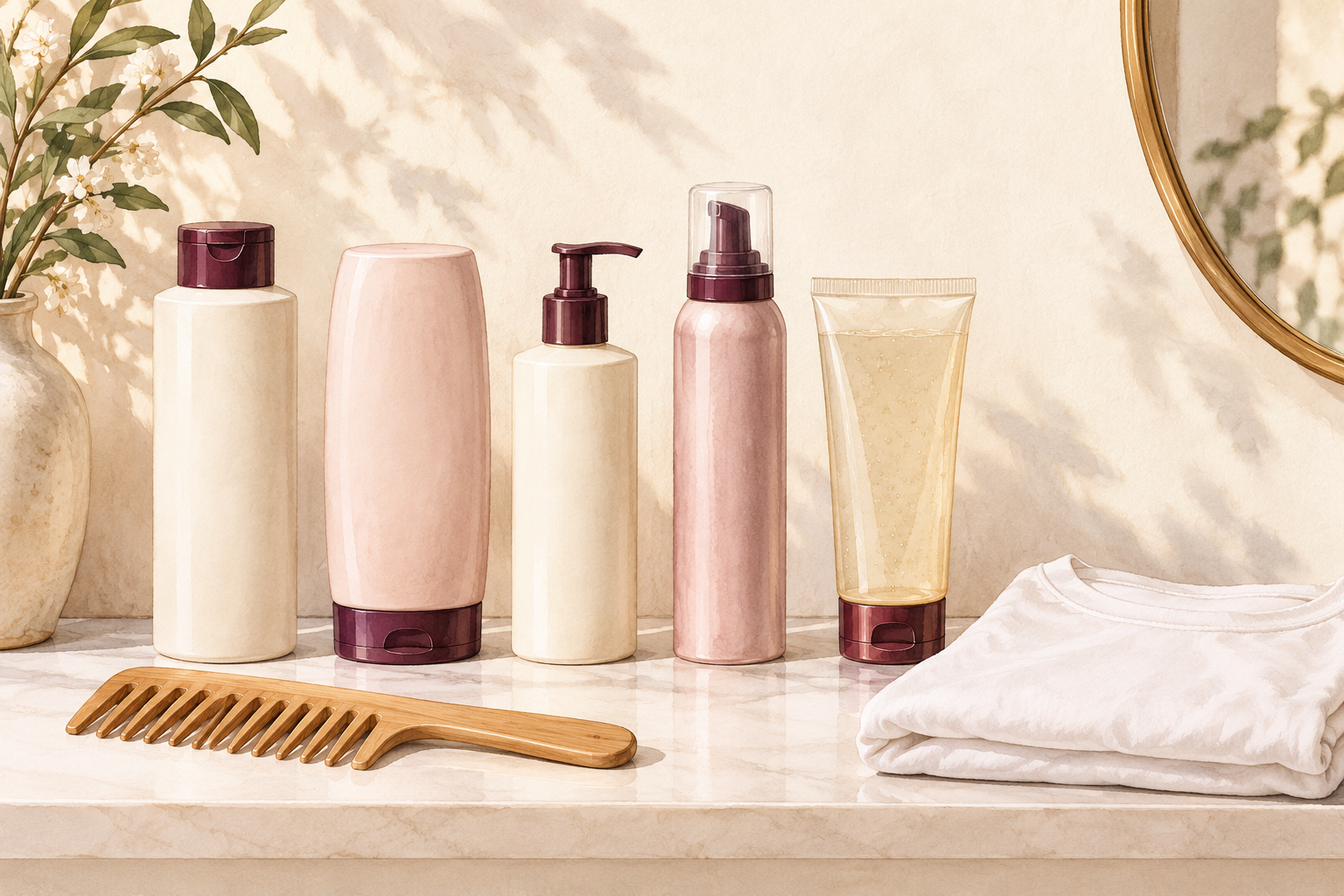
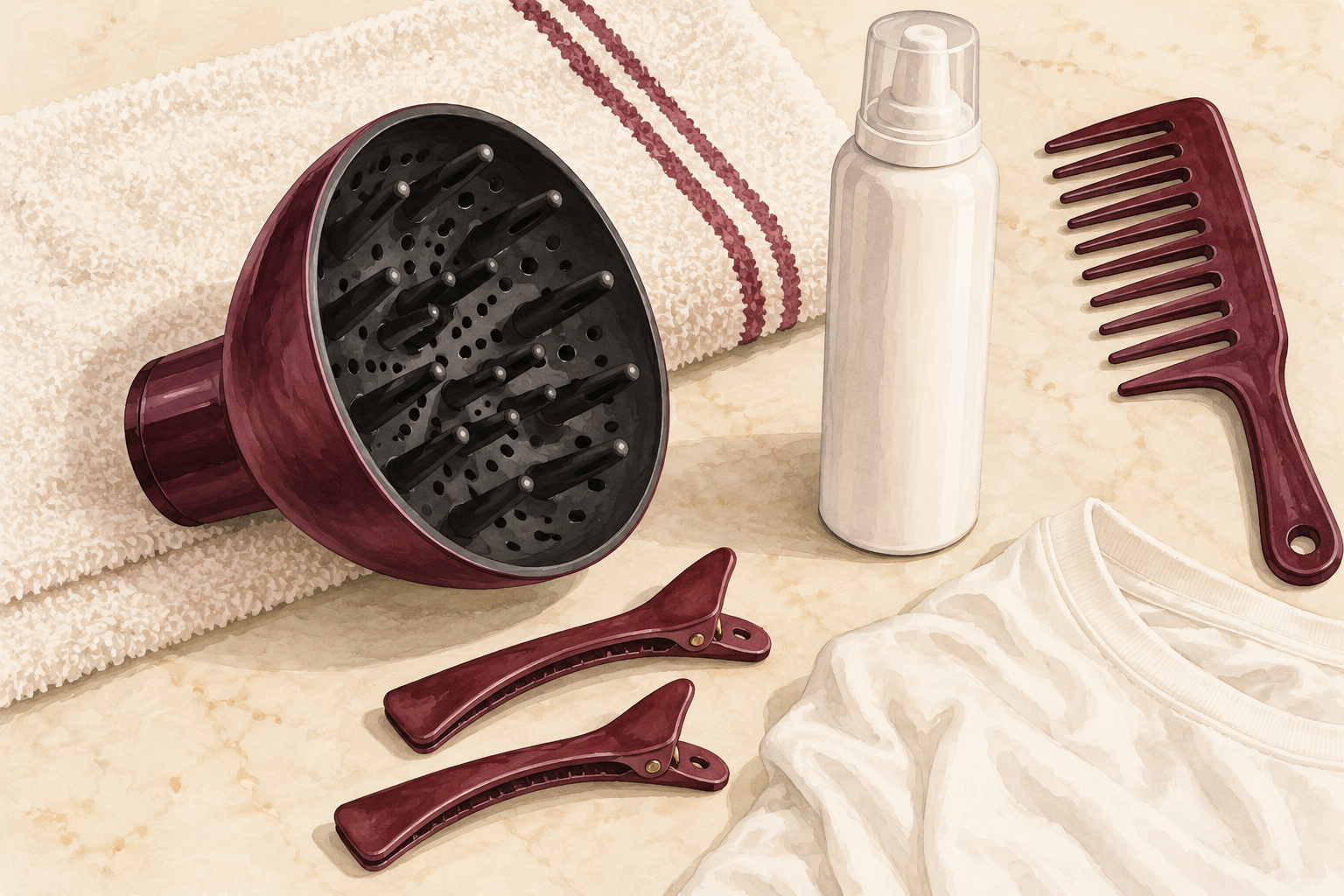
You need a gentle shampoo, a light conditioner, a leave in cream, a mousse, a light gel, a wide tooth comb and an old cotton tee. That is the whole list. Loose curls are weighed down by thick butters and layered oils, so choose lotion style creams and water based sprays. Read the first few ingredients on each label, and if a butter or heavy oil comes first, put it back. Keep one richer product for the driest winter weeks only. Line everything up on one shelf so wash day takes no thinking. A short kit is what keeps a 3a curly hair routine easy to repeat.
2. Check you really are a 3a

Look at a few clean, damp strands from the crown and the nape without touching them. A 3a curl is a wide loop, about the width of a piece of sidewalk chalk, with a clear S shape and no tight corkscrew. If the loops are smaller and spring back when you stretch them, you sit closer to 3b, and a routine with a little more moisture may suit you better. Do this on freshly washed hair, because product hides the real shape. Many heads are a mix of two types, which is completely normal. Take a photo of your curls today so you can compare after a month.
3. Cut every product amount in half
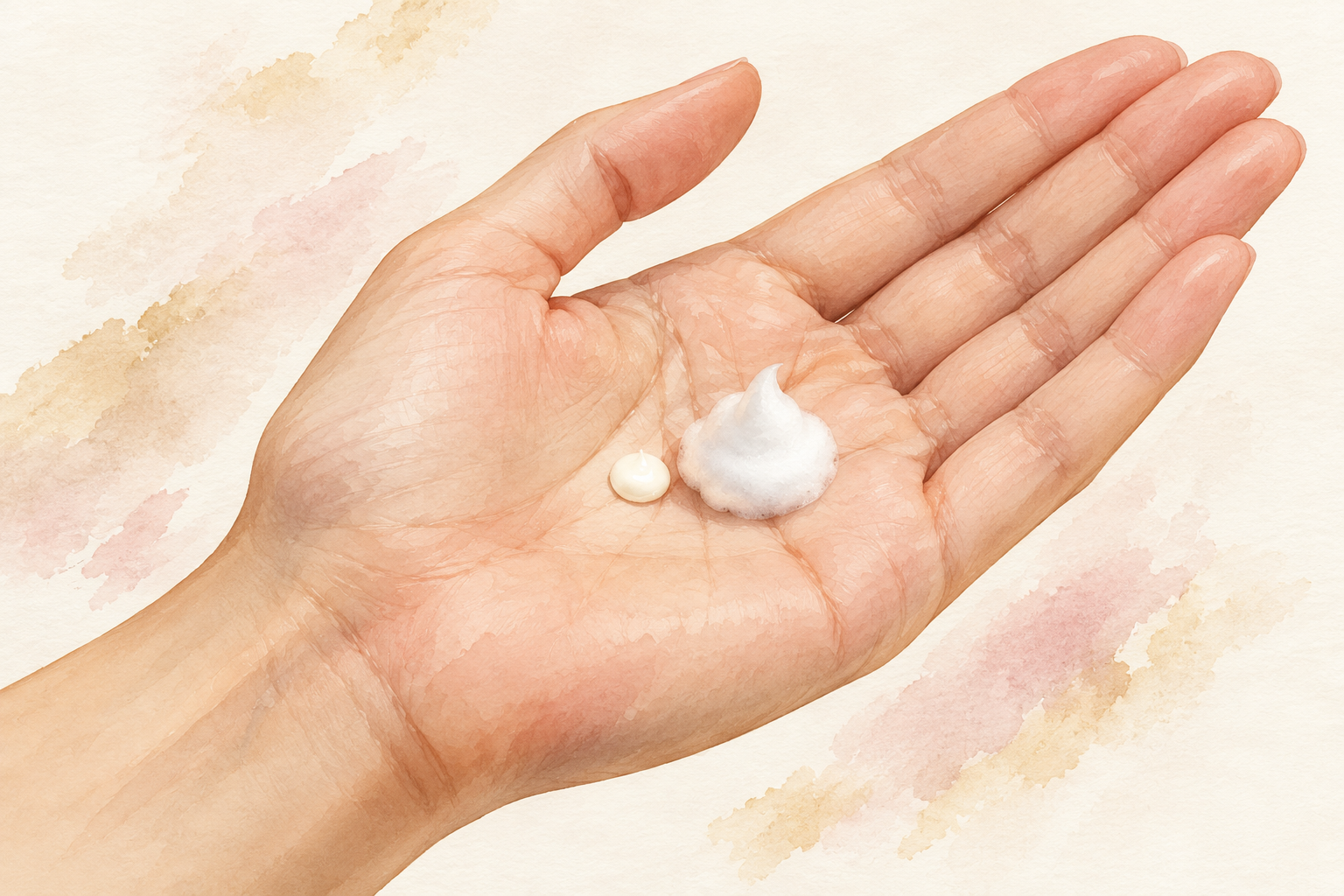
Start with a pea of leave in cream and a puff of mousse about the size of a golf ball. Most loose curls are weighed down by quantity, not by the wrong formula. Add more only if your ends feel rough once dry, because the ends are thirstiest and the roots almost never need any. If your curls fall limp by midday, use less next time, not more. Jot your amounts in your phone notes so the routine stays repeatable, and change just one thing per wash. Your ends may want a touch more cream than the top, so check them first.
4. Shampoo the scalp and let the suds run down
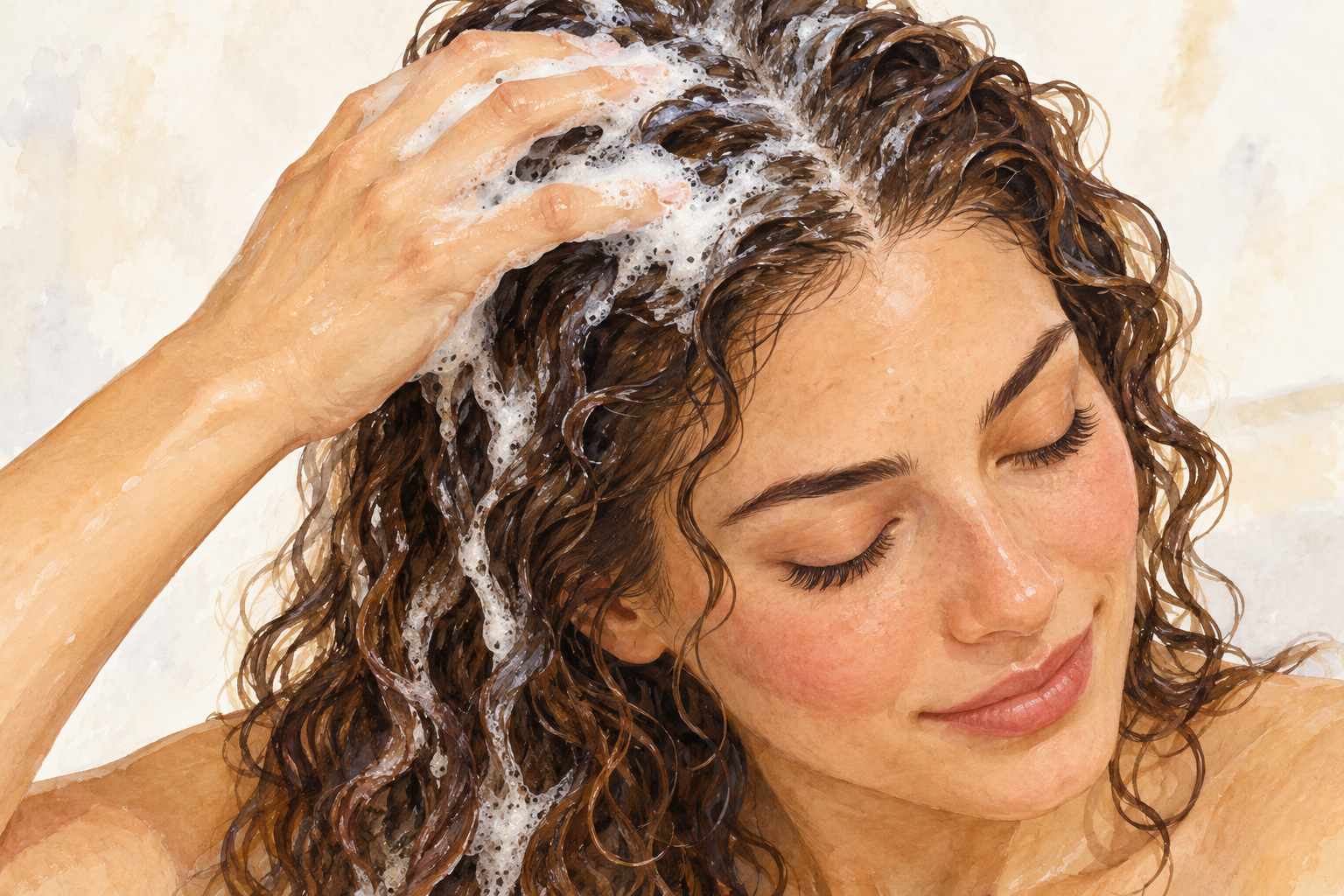
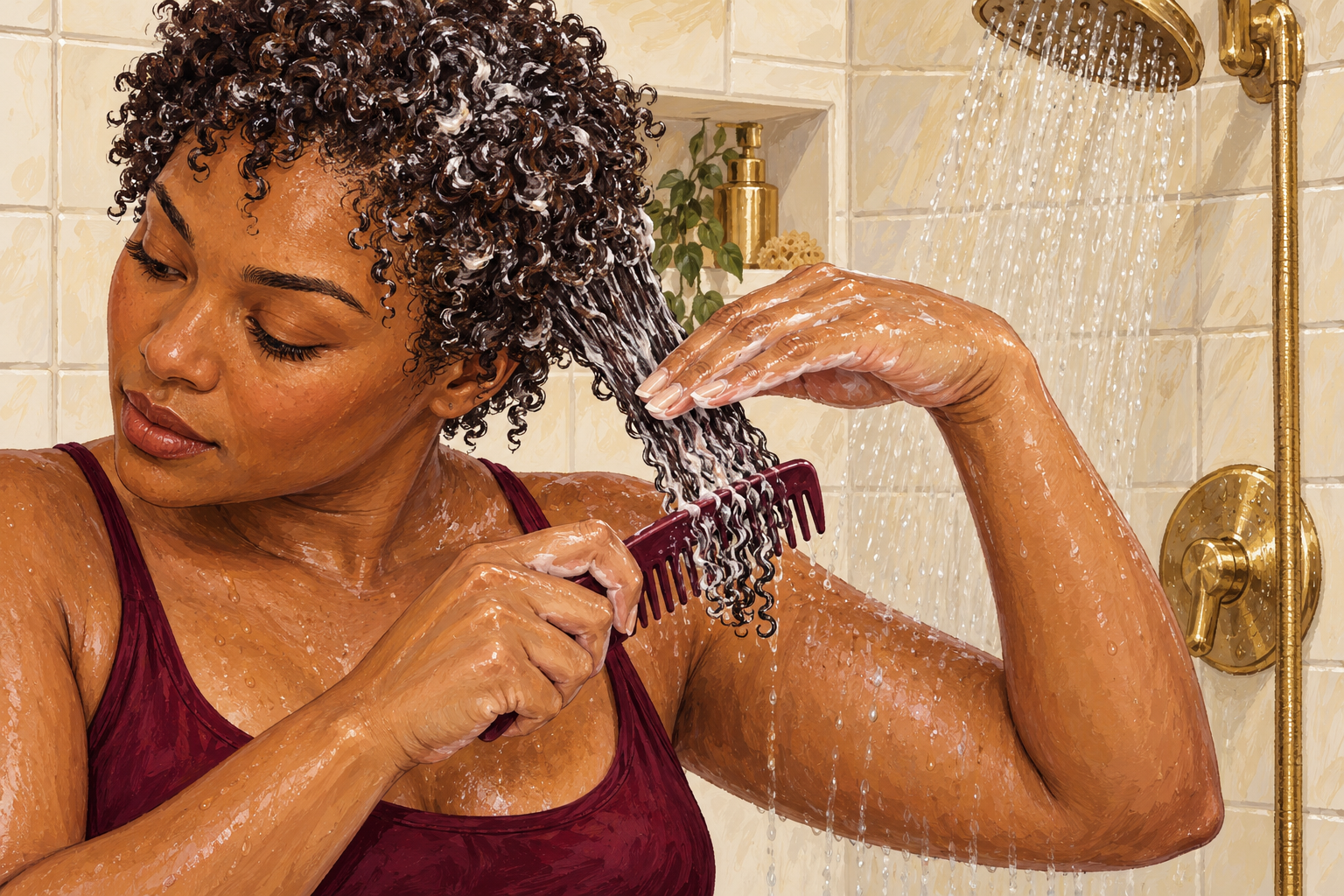
Massage shampoo into your scalp with your fingertips for about a minute and let the foam rinse down the lengths without scrubbing them. Fine, loose curls get oily at the root faster than tight ones, so many people with this pattern wash two or three times a week. Go by how your scalp feels, not by the calendar. Rinse for longer than you think, because leftover shampoo makes roots limp. If your hair squeaks and feels rough, you have washed too hard. Shampoo only once, since loose curls dry out quickly.
5. Condition from the ears down and detangle
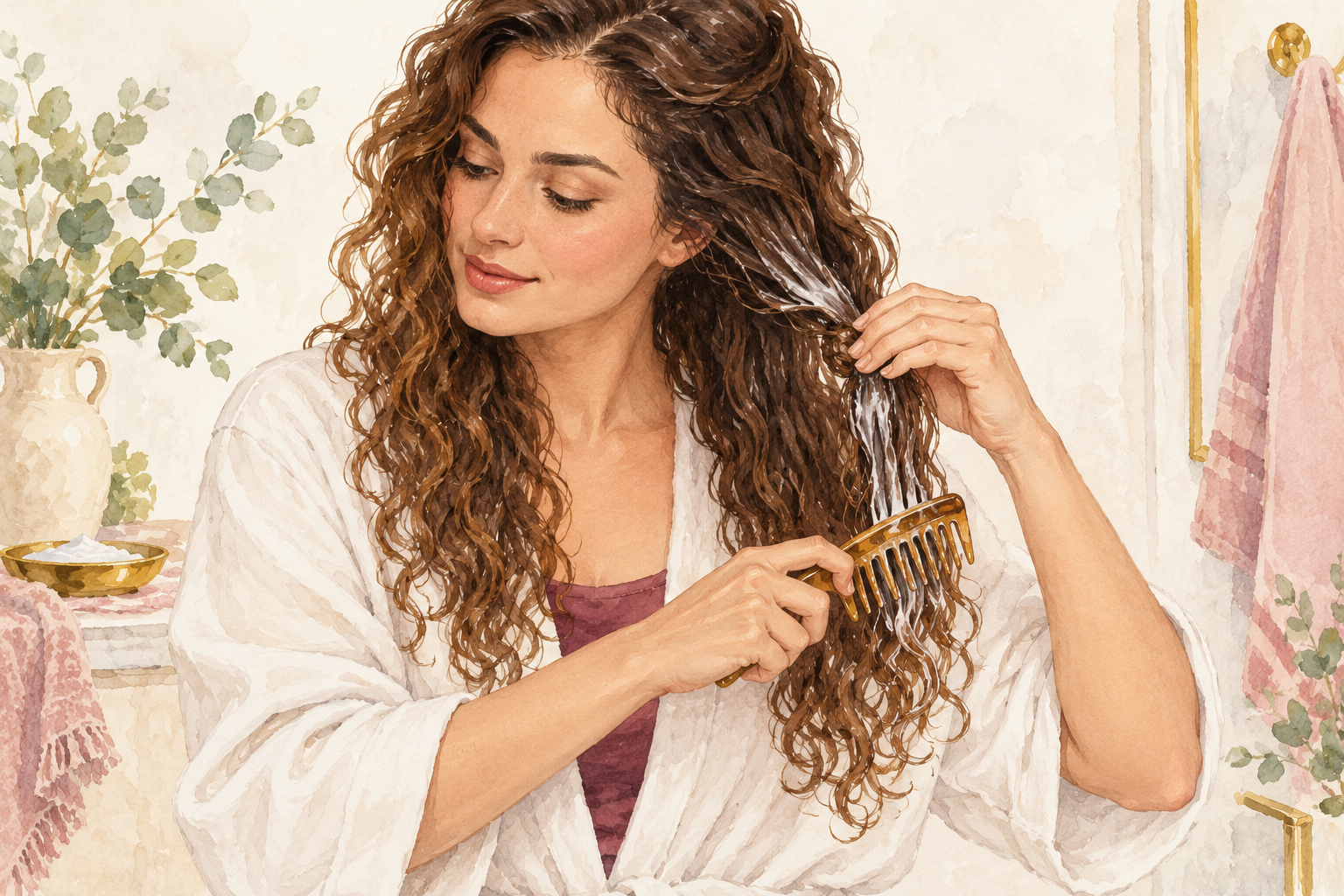
Smooth a light conditioner from about ear level to the ends and keep the roots clean so they hold their lift. Then work a wide tooth comb from the ends upward in small sections while the conditioner is still on. If you hit a knot, hold the hair above it and ease it apart rather than pulling through. Never brush loose curls when they are dry, because that breaks up the clumps and creates frizz. Leave the conditioner in for two minutes while you wash your body. That pause lets it soften every strand without extra product.
6. Rinse most of the conditioner out and squish in water
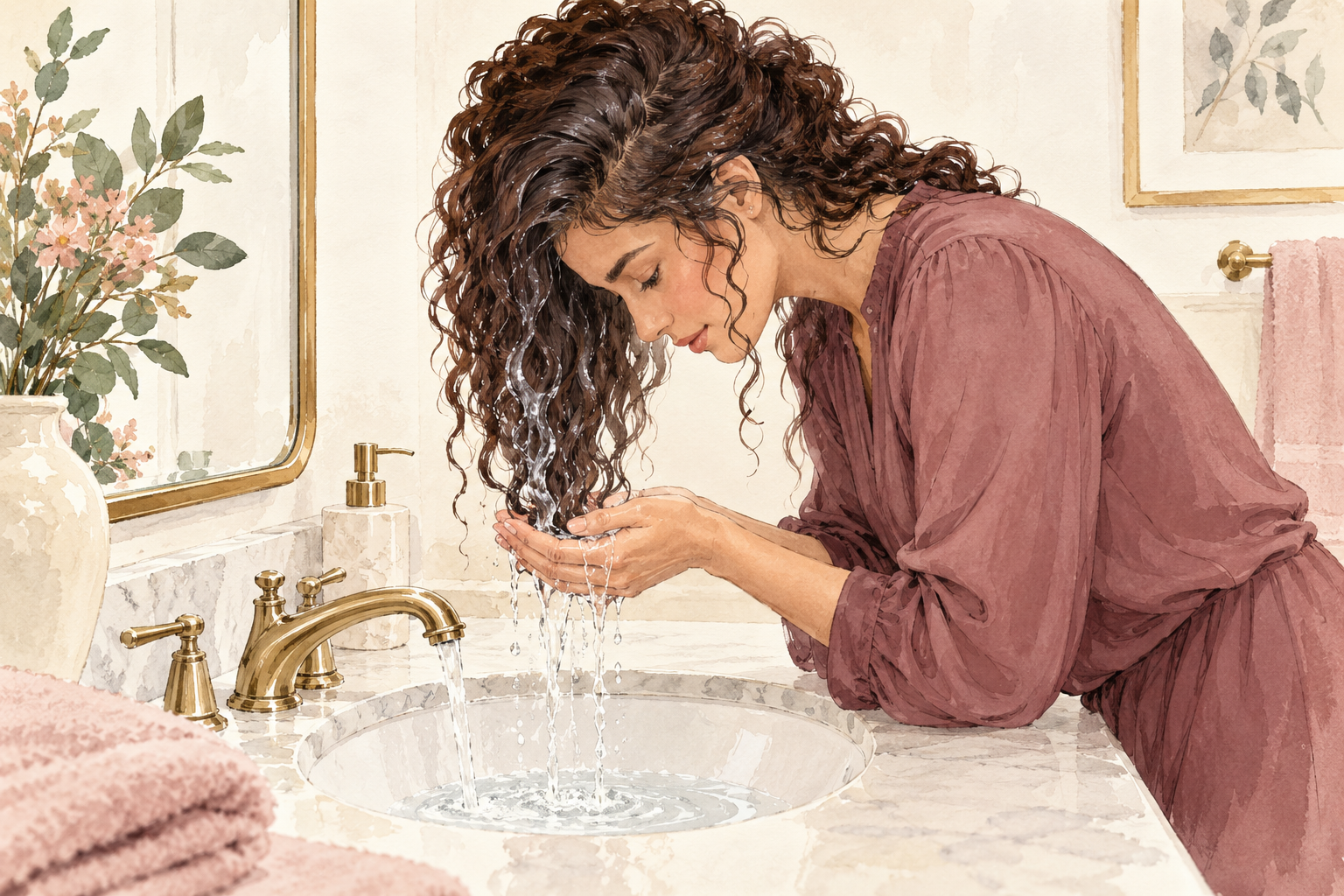
Leave a thin film on the mid lengths and rinse off the rest, finishing with cooler water if you can stand it. Then cup water in your hands and squeeze it up into the curls. This clumps loose strands into curl groups while the hair is soaking, and that is where definition comes from later. If your hair feels slimy afterwards, you left too much in, so rinse longer next time. Do not towel rub, and do not comb again once the clumps have formed. Each little squish should feel like gathering a handful of ribbon.
7. Apply leave in and mousse to dripping wet hair
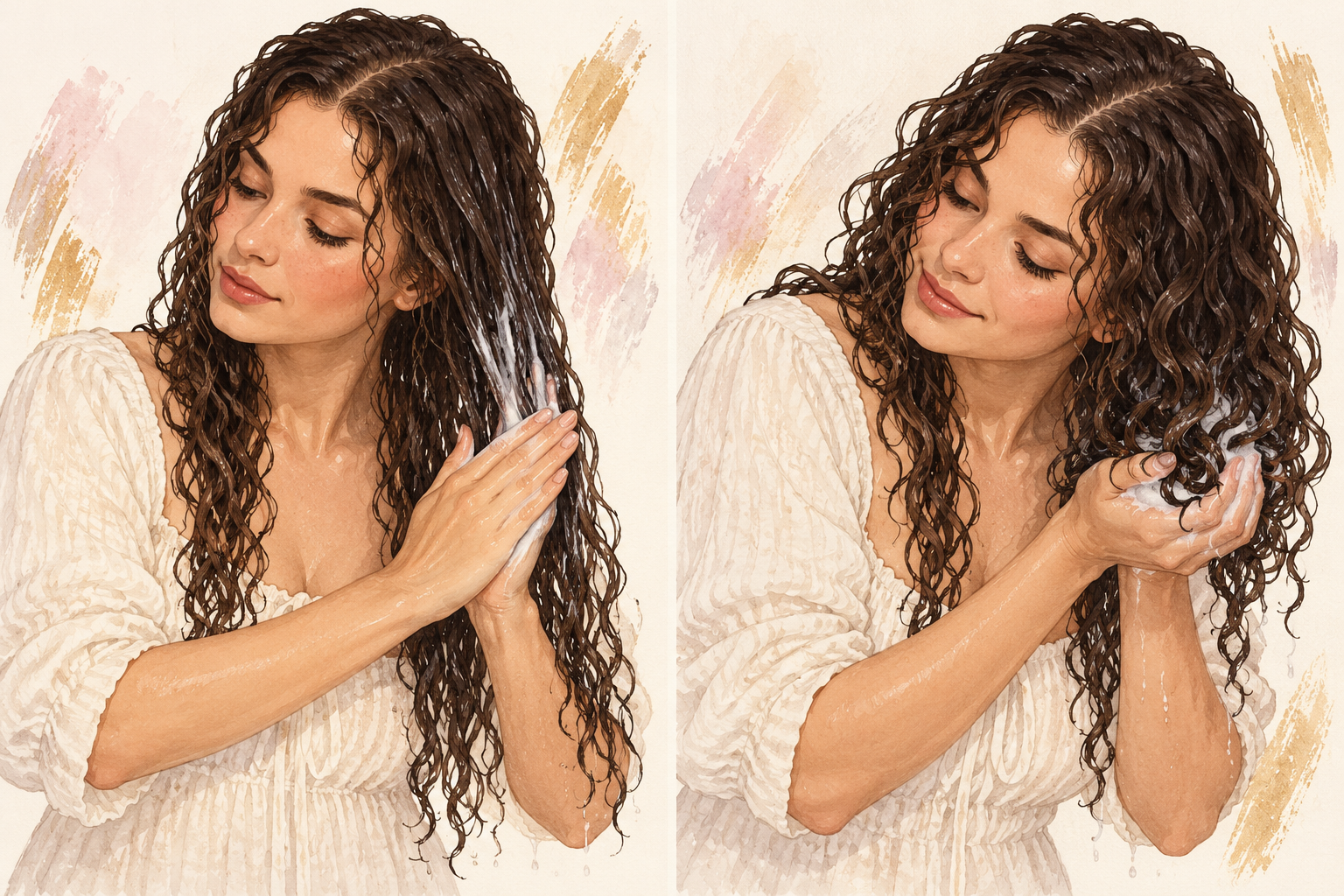
Do not towel off first. With your hair still dripping, flatten the leave in between your palms and glaze it over your lengths, then scrunch mousse upward in small sections. Wet hair spreads product evenly and keeps the clumps together as they dry. If you wait until the hair is damp, the same amount feels heavier and the curls split into frizz. Scrunch each section three or four times, then leave it alone. Skip the roots with the cream, since the roots need the least. Work from the ends up to the mid lengths and stop there.
8. Scrunch in a light gel and blot with a tee
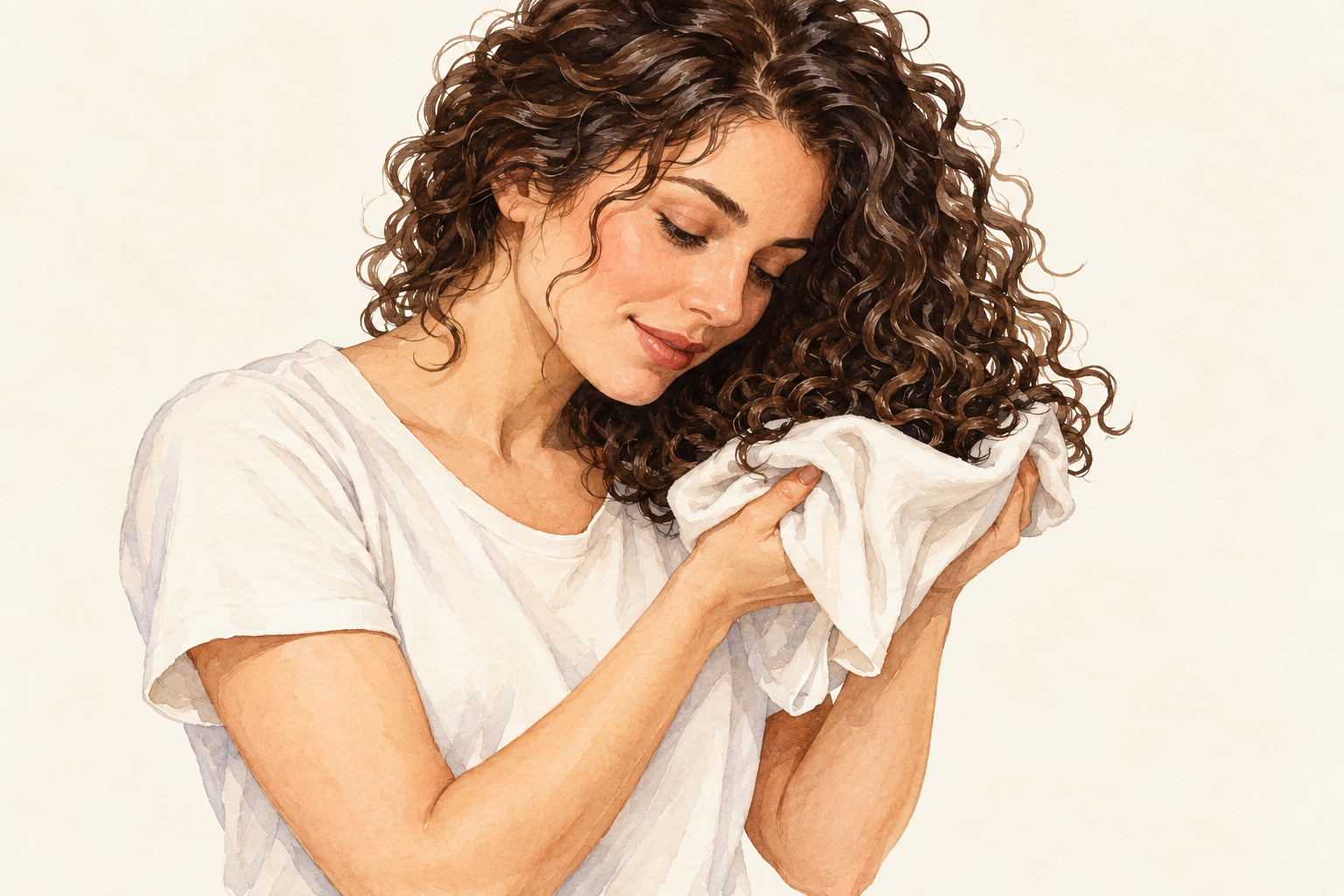
Rake a little light gel over the top of the curls, then press an old cotton tee upward against them instead of rubbing. A terry towel roughs up the surface and breaks the clumps. The gel forms a soft cast as it dries, which holds the shape while the curl sets. Resist touching, since fingertips pull the clumps apart. Once the hair is fully dry, scrunch the stiffness out with dry hands and the curls soften. That crunch is a good sign, not a problem. Wait until your hair is fully dry before you test it, or you will break the cast.
9. Air dry, or diffuse on low
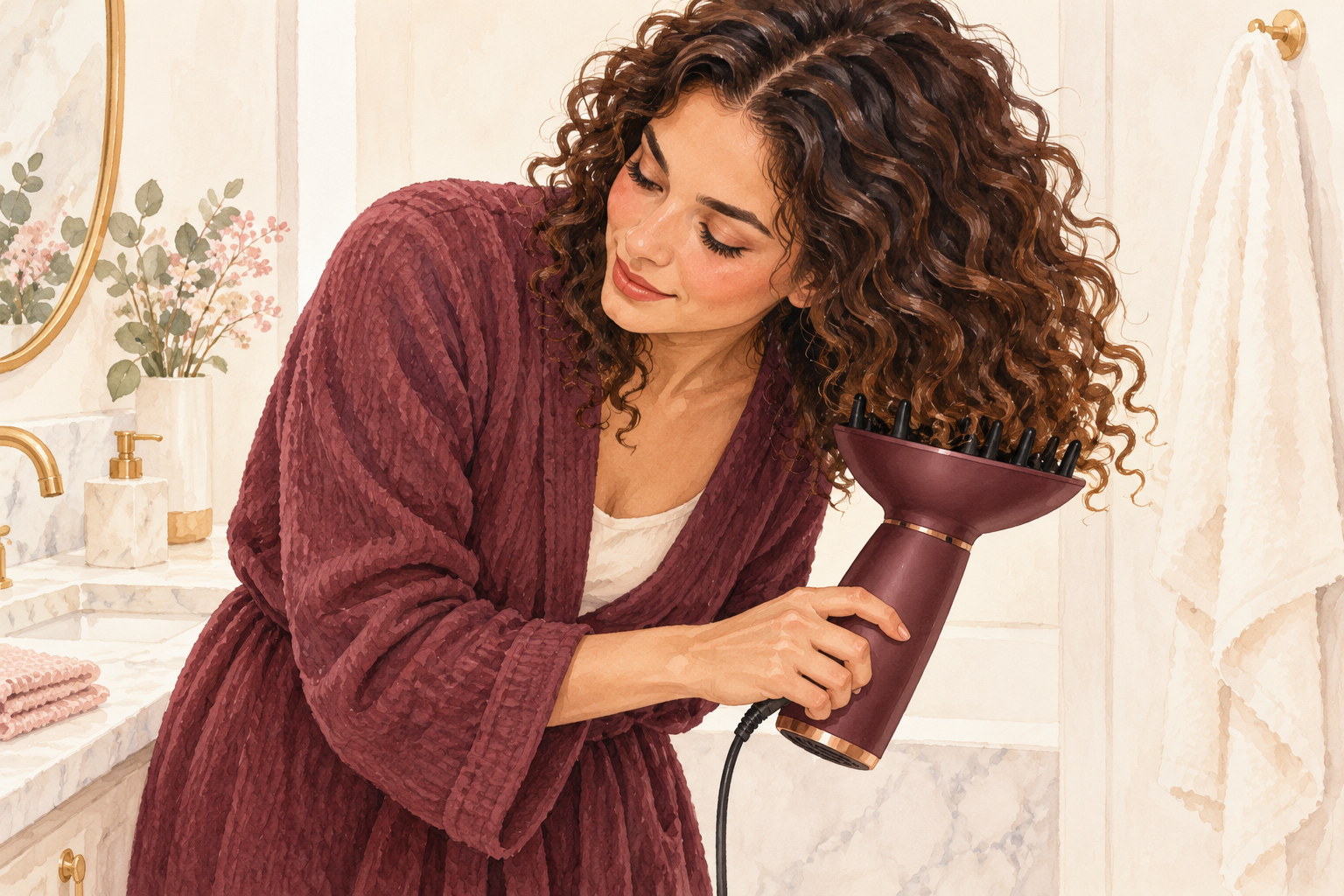
Air drying gives the softest result, but loose curls left wet and heavy often dry flat at the roots. If you are short on time, use a diffuser on low heat and low speed, cup a section in the bowl for a minute, and stop while the hair is almost dry. Tip your head upside down for the first few minutes to give the roots lift. Let the last bit dry on its own, so the ends do not scorch. High heat close to the scalp puffs up frizz without adding definition. Keep the diffuser moving in small circles, and never press it flat against the curls.
10. Reset on day two with water and a loose pineapple
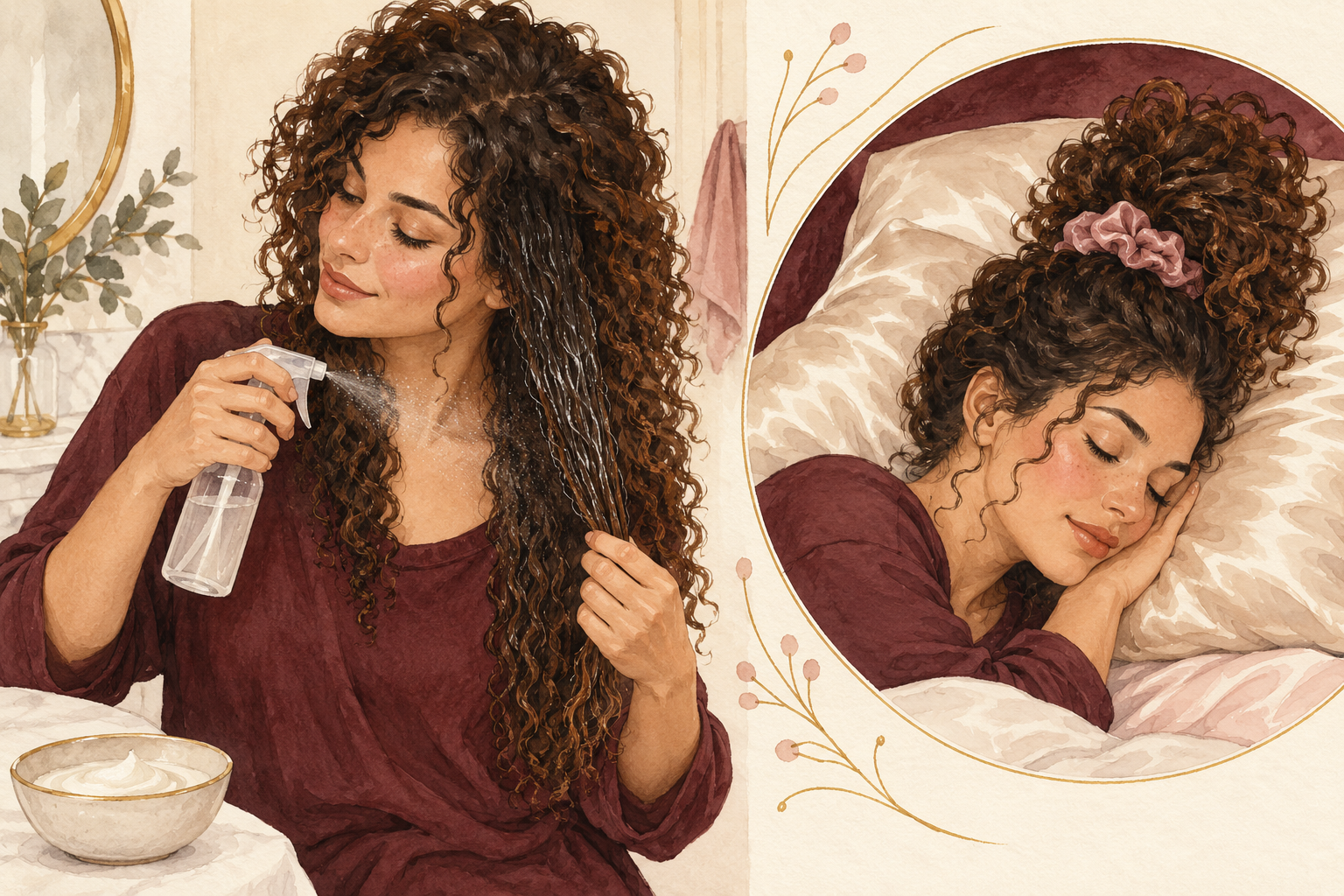
Fill a spray bottle with plain water and one drop of conditioner, then mist only the flat sections and scrunch. At night, gather your hair into a very loose ponytail on top of your head, which cuts friction on the pillow. Keep the elastic slack, because a tight band on fine curls leaves a dent. Skip more gel on day two, since it piles up and weighs the curls down. Most days the refresh takes under five minutes. If your curls still look flat after misting, a tiny dab of mousse on the crown will lift them.
11. Add a clarifying wash and a light mask on schedule
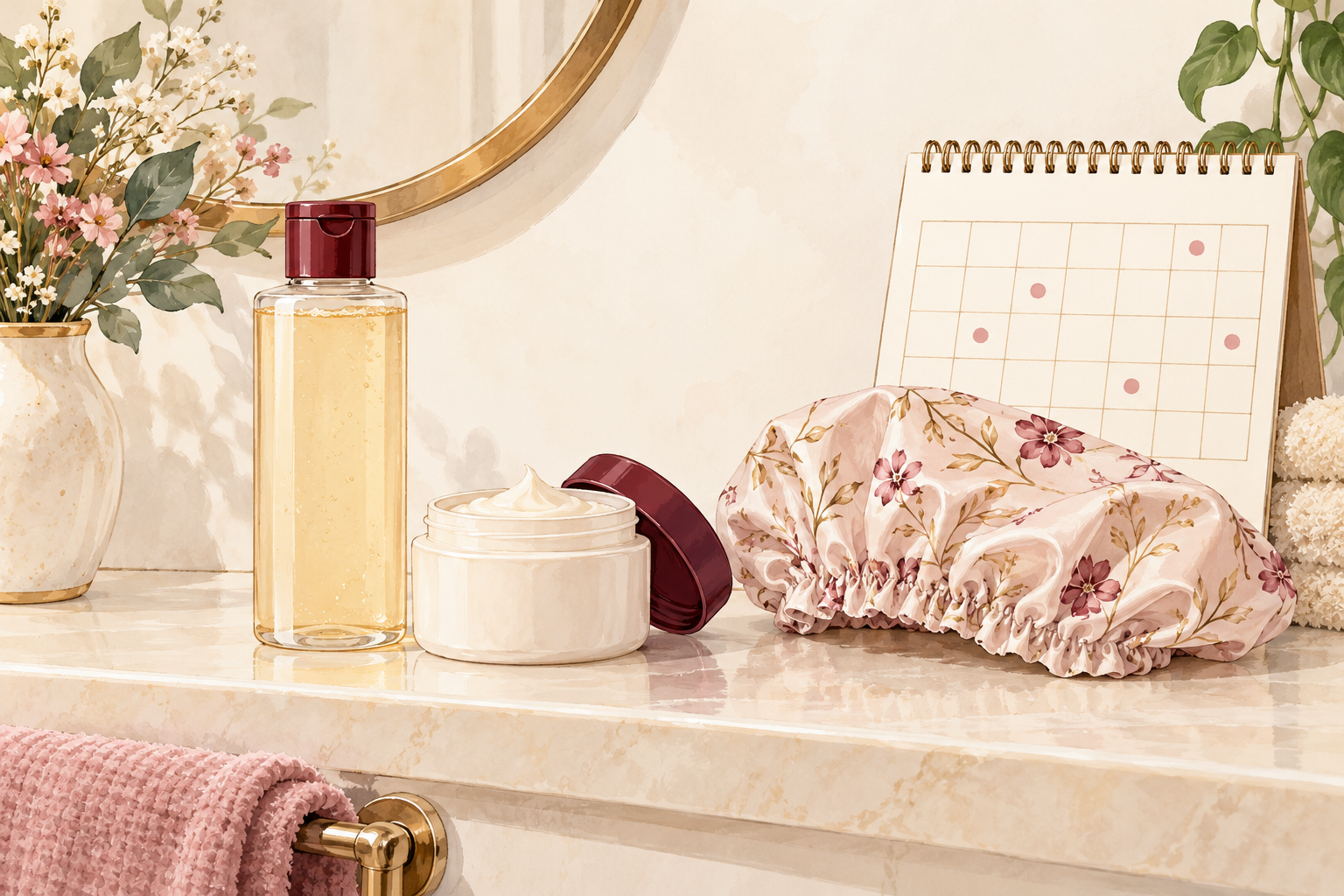
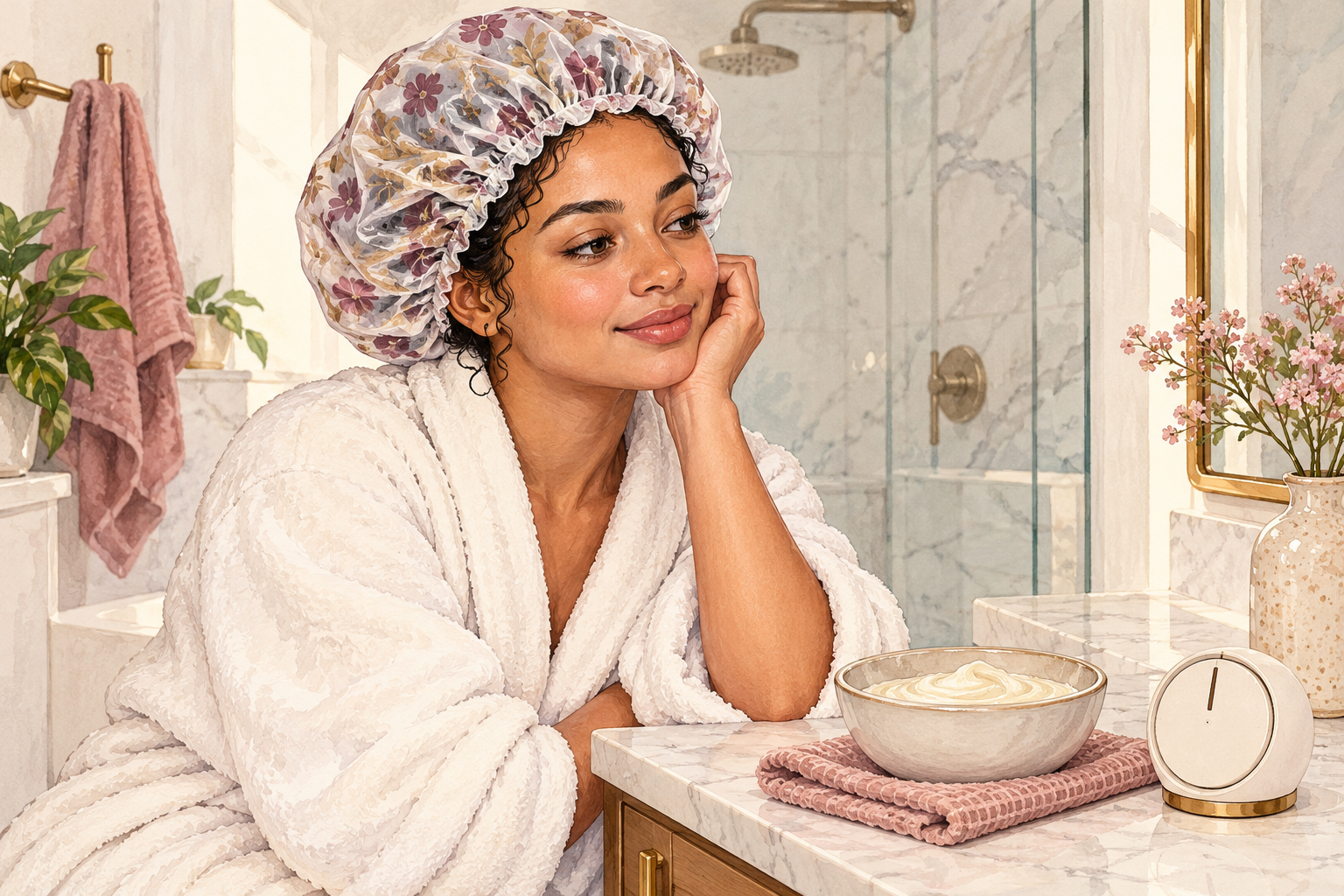
Once a month, use a clarifying shampoo if your curls feel coated and refuse to bounce. Follow it with your usual light conditioner. Every other week, swap the conditioner for a light mask, left on for ten minutes under a shower cap. Skip the mask in any week your hair already feels soft. Both are extras, not daily steps, and loose curls do best when they are not asked to carry too much. If your curls feel stiff afterwards, wait another week before repeating. This is the part of a 3a curly hair routine that keeps weight from building up quietly.
12. Swap the usual mistakes and read your results

Swap heavy oil for a lighter cream, a dry brush for a wide tooth comb and a hot dryer on high for a low diffuse. At week one you should see less greasiness and slightly more clumping. By week four, the clumps repeat from wash to wash. By week eight, wash day feels automatic. If the curls are still limp, change one thing, such as the conditioner, and give it a month before you judge it. Heavy oil on wet hair, brushing dry curls and piling on more gel to fight frizz are the usual culprits, so scrunch the stiffness out once dry instead.
Complete the Routine: Your 3a Curly Hair Routine This Week
Pick one heavy product to move to the back of the shelf, then measure half your usual amount on your next wash day. For more, read about curly hair routine products and curly hair routine for volume.