You moisturize in the morning, and by afternoon your zigzag curls feel dry again, tangled and a little brittle at the ends. Tight 4b coils lose moisture fast, and the oils from your scalp struggle to travel down every bend. A steady 4b curly hair routine fixes that with 12 simple steps, from your kit to your night habits, so start at number one tonight.
1. Gather a small wash day kit

Put a wide tooth comb, four to six clips, a spray bottle, a leave in cream, a light oil and a satin bonnet in one basket. Having everything within arm’s reach, in one basket, means you never leave half your hair dry while you hunt for a clip. Add a soft towel or an old cotton shirt for drying, because rough terry cloth snags tight coils. Fill the spray bottle with plain water. This little basket saves more time than any product, and it makes wash day feel calm instead of like a battle. Keep it on a shelf near the bathroom so it is ready when you are.
2. Know what your 4b hair is telling you

Stretch one dry coil gently and notice how much it shrinks, and where it feels driest. 4b hair has sharp, tight zigzags with very little visible curl pattern, so it can look short when it is actually long. Tight bends are the weak spots, which is why the ends and the nape snap first. Healthy 4b hair feels soft and springs back when you stretch it. If yours feels rough or snaps, your routine needs more water and gentler handling. Take a photo of your hair today so you can compare in eight weeks. Look at the back too, since it is the part you rarely see.
3. Wash every one to two weeks, scalp first

Section your hair into four to six parts and shampoo only the scalp with your fingertips. Let the suds run down the lengths as you rinse instead of scrubbing the coils, because rubbing them together causes knots. Washing every day strips the little oil that 4b hair has. Washing every one to two weeks keeps the scalp clean and the lengths soft. Use a gentle, sulfate free shampoo, and rinse for longer than feels necessary, because leftover shampoo itches and dries the hair. Squeeze, do not wring, when you finish.
4. Detangle in sections with conditioner

Smother one section at a time in conditioner, then finger detangle before you pick up the comb. Start at the ends and work toward the roots in small steps. Never comb dry 4b hair, because it snaps like a twig. If a knot fights you, add more conditioner and keep your fingers gentle. Twist each finished section loosely and clip it away so it does not tangle again. Rinse with cool water, and notice how much easier the hair feels when it is slippery. Work in the shower or over a basin, where the water can run. This step is the heart of a good 4b curly hair routine.
5. Deep condition twice a month

Apply a rich deep conditioner to clean, damp hair, cover it with a shower cap and leave it on for twenty to thirty minutes. Warmth from a towel or a hood dryer helps it soak in, and rinse well afterwards. Twice a month is enough for most people, and you can add a third round in a very dry season. If your hair feels stiff or crunchy after, use a lighter mask next time. Sit with a book and let it work, because rushing this step is the quickest way to waste it. Warm, not hot, is the temperature you want.
6. Start every layer with water

Mist your hair with water until it feels cool and wet, and always do this before cream or oil. Oil cannot put moisture into hair, it can only hold in what is already there. So the order matters: water first, then the rest. Spray section by section instead of drenching everything at once. If your hair has dried between washes, mist it lightly again before you add anything. You will feel the coils soften and spring open almost at once. Hair that drinks the water is hair that is ready for the next layer.
7. Seal in water with a cream
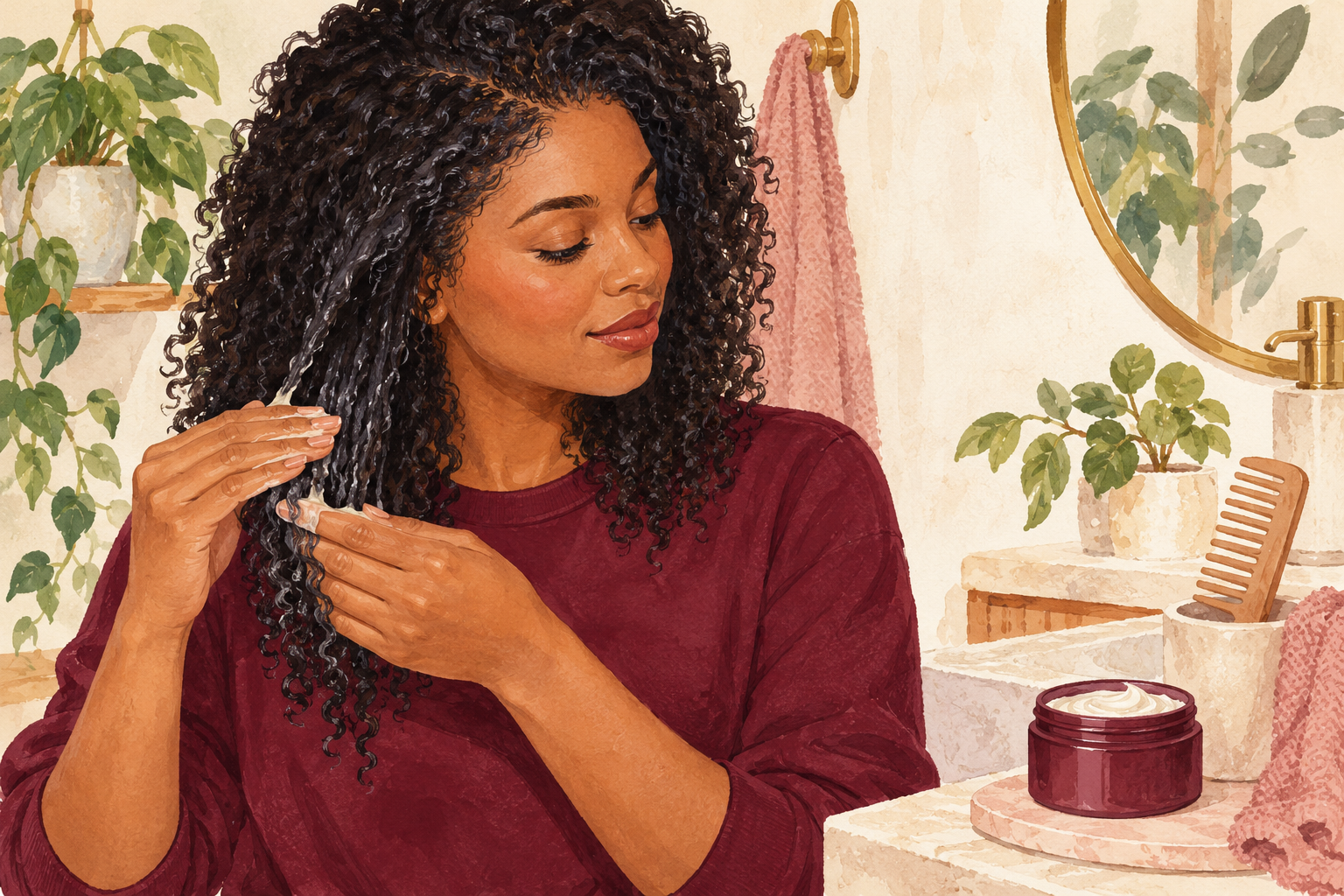
Rake a dollop of cream the size of a grape through each section of damp hair. A rich cream traps the water you just added, and it makes the zigzags clump together instead of fluffing out. Work from the ends upward, since the ends are the oldest and driest part. Add a little more only if your hair soaks it all up. If the cream sits on top like a white film, you used too much, so smooth it in with a damp palm. Smooth, soft sections should feel like butter, not paste. Squeeze each section lightly from the ends to help the cream sink in.
8. Finish with a few drops of light oil

Use two or three drops of a light oil per section, and press it over the cream. Sealing with oil slows evaporation, so your moisture lasts through the week. Choose lighter oils that feel thin on your fingers, and keep heavier ones for the scalp. Warm the oil in your palms first so it spreads thinly. Hair that feels weighed down or greasy has too much oil, and a quick rinse in the shower will reset it. Light is the secret with 4b hair. Skip the oil on days when your hair is already soft, because more is not always better.
9. Stretch in twists and pick gentle protective styles

Twist each damp, creamed section into a chunky two strand twist and let it dry fully. This stretches the coils, cuts down on shrinkage knots and makes detangling easier next time. Protective styles like loose braids or twists tucked away from the edges keep your ends safe, but they should never pull on your scalp or sting. Change a style after three to four weeks, not eight. Keep your ends tucked and your edges relaxed, and your hair will thank you. Take a style out the moment it feels tight or itchy.
10. Cover your hair with satin every night

Gather your hair into a loose pineapple or a few twists and cover it with a satin bonnet or scarf. Cotton drinks the moisture out of 4b hair overnight, and it snags the coils. Make sure the bonnet fits snugly but does not squeeze. Wash the bonnet every week or two, because it picks up oil. Add a satin pillowcase as backup in case the bonnet slips off. You will wake up with softer, less tangled hair that needs less work in the morning. A quick mist and a fluff with your fingers is often all you need.
11. Swap the habits that cause breakage

Put away the fine tooth comb, the tight elastics and the daily heat. Combing dry hair, rough towel drying and tight ponytails are the main reasons 4b hair breaks. Swap them for finger detangling, a soft shirt for drying and loose scrunchies. Heavy butters layered on top of each other can also build up and block moisture, so use less. If your edges keep thinning even after you loosen your styles, see your doctor. A few small swaps protect everything you do on wash day. Change one habit a week so it does not feel like a big overhaul.
12. Expect softer hair, not instant length

Look for softness first, then fewer tangles, then less breakage over about eight weeks. In week one your coils should feel softer and easier to separate. By week four you should find fewer knots when you detangle. By week eight you should see fewer broken bits on your clothes and in your comb. Trim only the dead ends, a little at a time, so you keep as much length as you can. Do it every three months, or when you feel thin, see through ends. Hair grows slowly, about a centimeter a month, so celebrate the small changes. Measure your hair stretched out once a month, and write the number in your phone.
Complete the Routine: Your 4b Curly Hair Routine for This Week
This week, wash on one day, detangle in sections and layer water, cream and oil. For more ideas, read about 4c curly hair routine and curly hair night routine.