You sit down with a comb and a prayer, and an hour later your arms ache, your scalp stings and the sink is full of hair. Detangling natural hair should never feel like a fight. With slip, small sections and the right tools, it gets calm and quick. Here are 12 gentle steps, so start at number one next wash day.
1. Pick the right day and give it time
Set aside forty minutes on wash day, when your hair is damp and you are not in a rush. Detangling when you are tired or late is how hair gets pulled and torn. Put on a show or a podcast so the time feels pleasant. Never detangle hair that is bone dry, because dry strands snap, and never when it is dripping wet either, because wet hair is at its weakest. Damp hair that feels soft and slippery is the sweet spot. Eat something first, since long sessions go better when you are not hungry. If your hair is very dry, mist it lightly first so it softens before you start.
2. Gather gentle tools
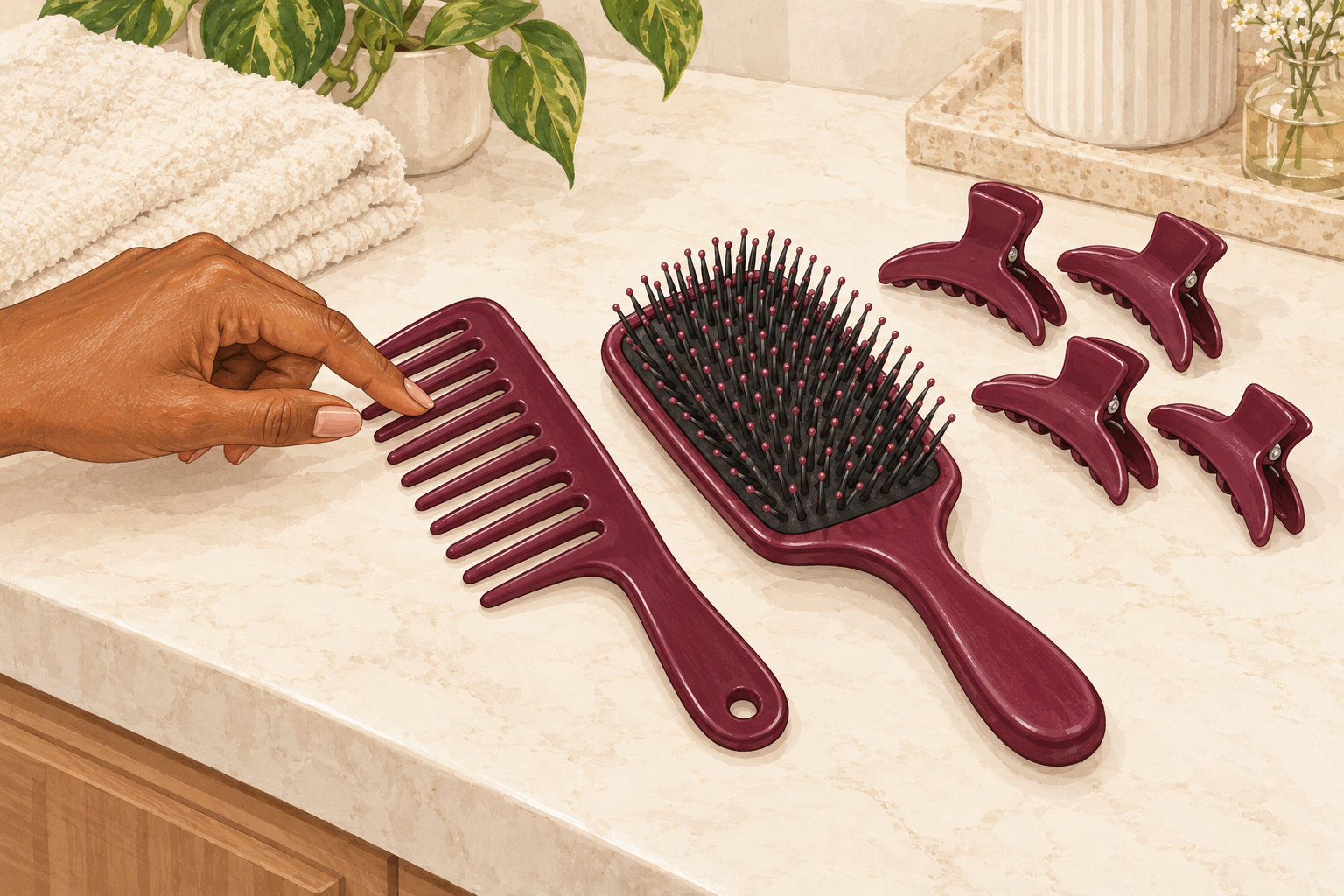
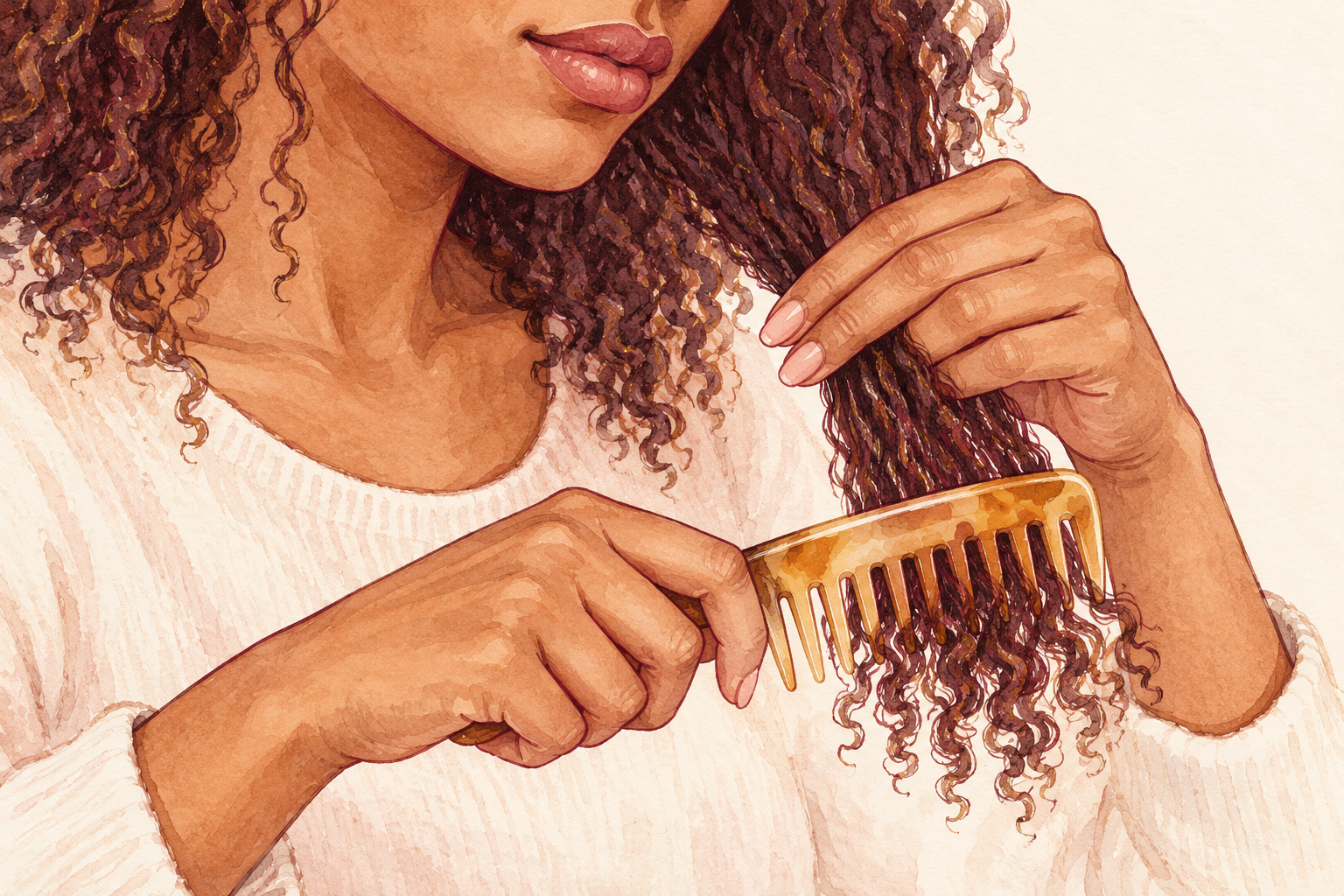
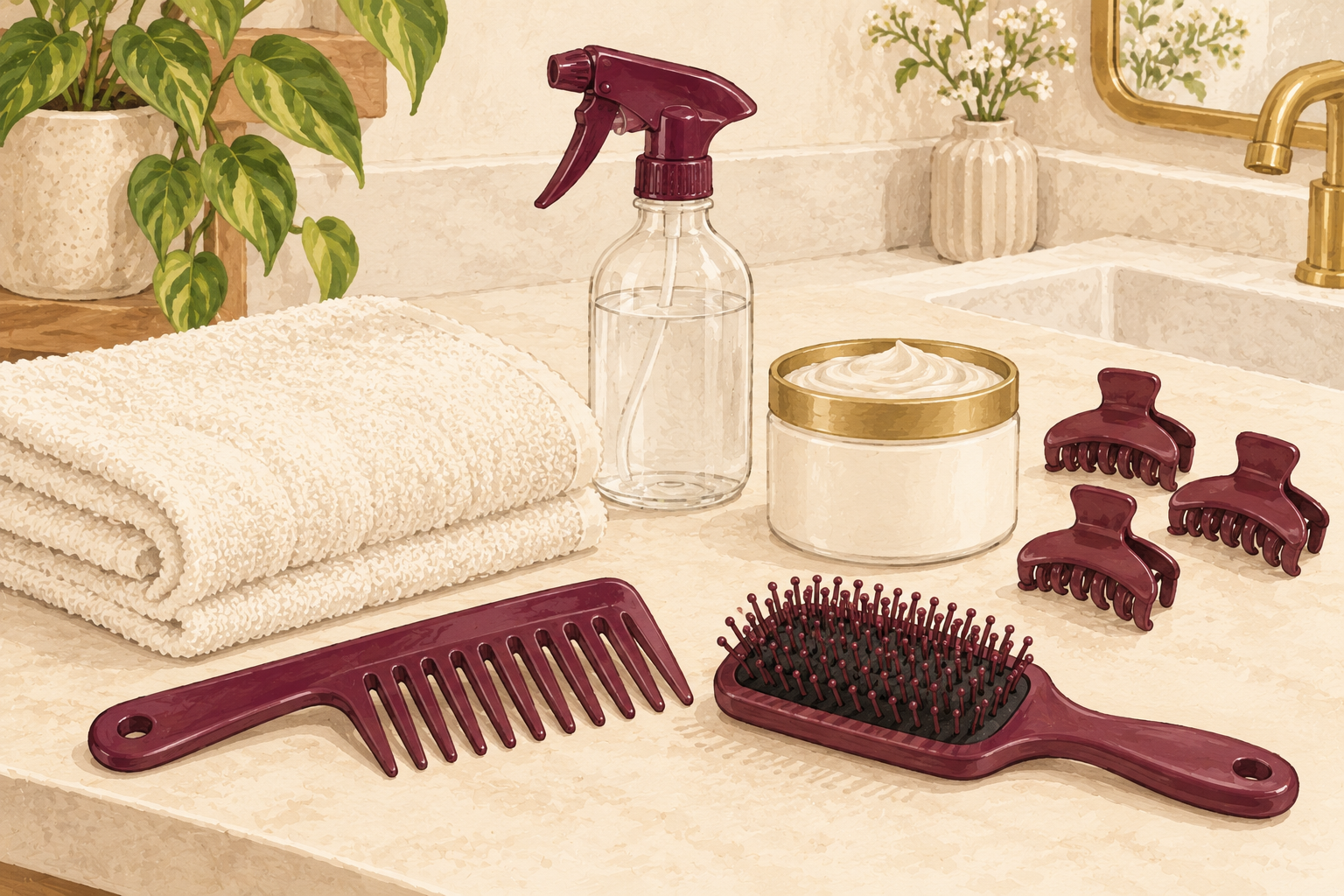
Choose a wide tooth comb with smooth, rounded teeth, a brush with flexible bristles, four or more clips and a spray bottle of water. A comb with rough seams catches hair and snaps it. Run a finger down the teeth to check they feel smooth. Keep a towel over your shoulders and a bowl near you for the shed hair. Wash your comb and brush every couple of weeks, because old product builds up on the teeth. The fewer tools you use, the more you learn how your hair behaves. A paddle brush with flexible bristles suits looser curls, while the comb suits tighter coils.
3. Loosen the knots before the water touches
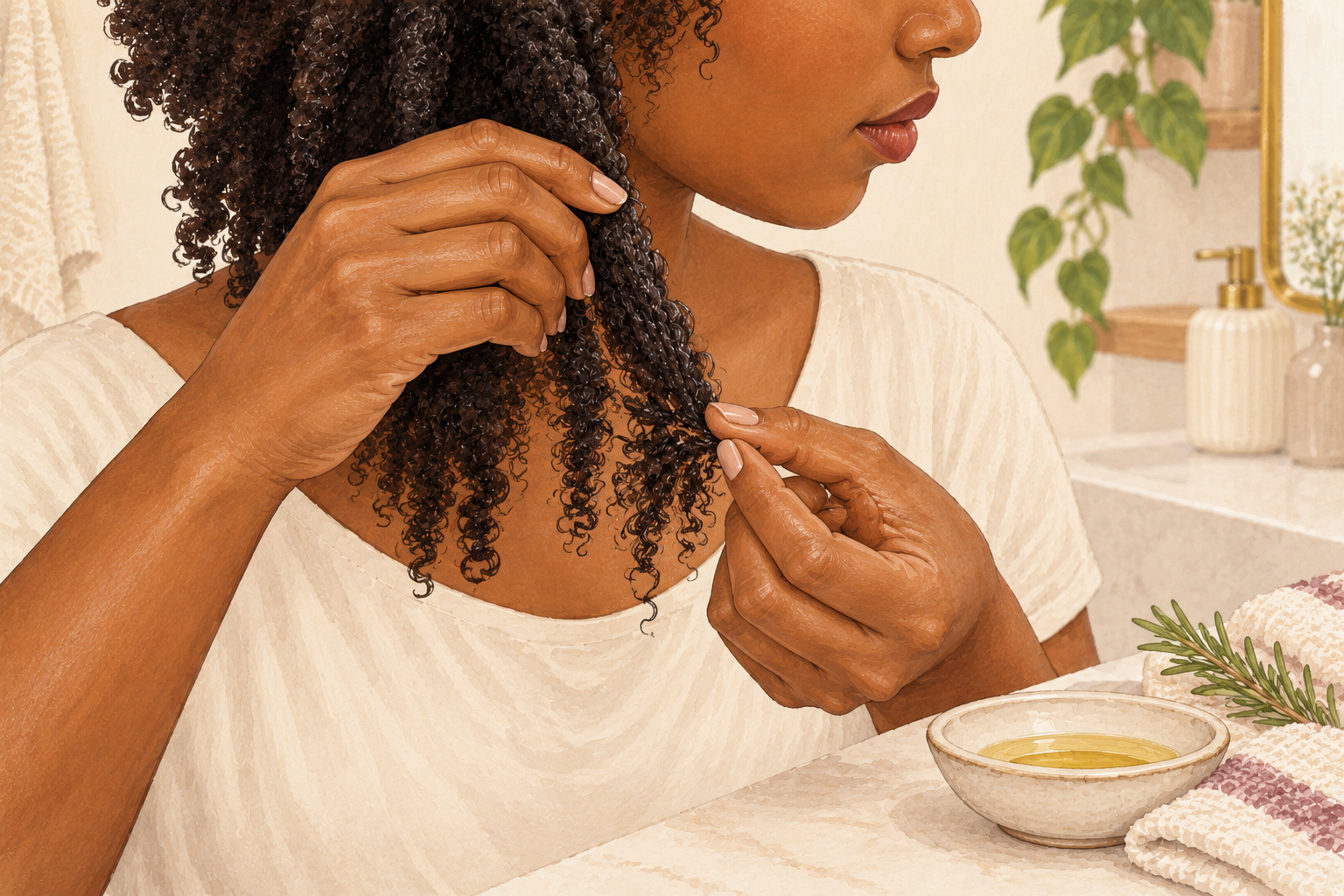
Rub a little oil or conditioner through dry hair, then pull the biggest knots apart with your fingers. Pre loosening keeps the water from tightening the tangles into harder knots. Start with the ends and work upward in small pinches. Use only a teaspoon of oil per section so your hair is not heavy. Do not comb at this point, because dry hair is easiest to break. Ten minutes of finger work now saves you twenty later, and the knots fall apart with much less pulling. Do this step in front of a mirror so you can see where the knots hide.
4. Divide into small sections
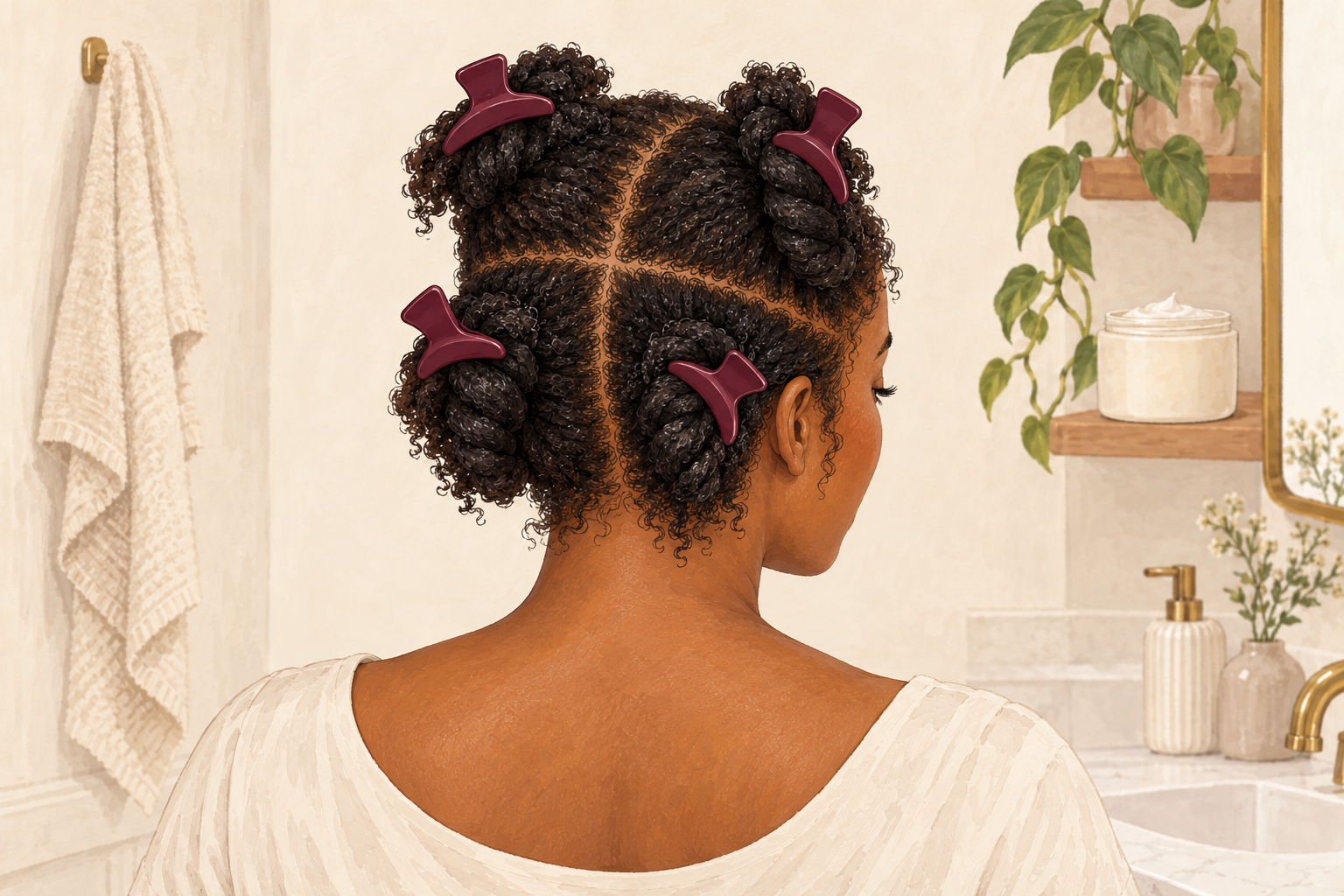
Split your hair into four sections for short hair or six to eight for long, thick hair, and clip each one away. Work on one section at a time, and keep the others twisted so they do not tangle again. Smaller sections mean less hair to fight at once, and each comb stroke has fewer knots to deal with. Part with the tail of a comb or your fingers. Keep the section loose enough to hold a bit of slip, but out of the way of your hands. You will finish faster than you expect. If a section feels too large, split it in half and keep going.
5. Add plenty of slip
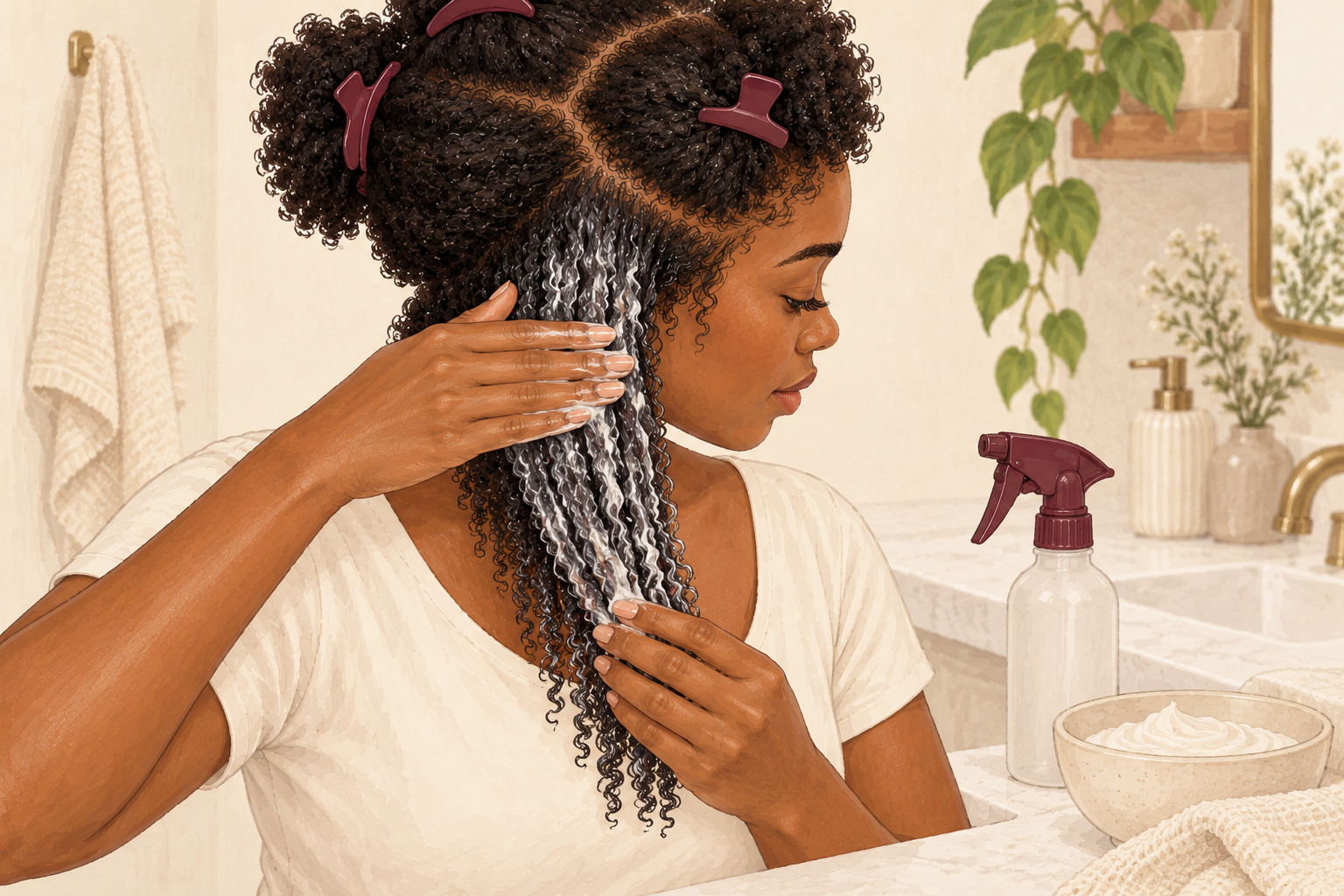
Coat each section with a creamy conditioner until the hair feels slick, like a wet bar of soap. Slip is what lets the comb glide past a knot instead of snagging on it. Mist the section with water as you work, because dry patches drag. If your fingers stick anywhere, add more. You can use a detangling spray, a thin leave in or just your rinse out conditioner. Do not worry about using too much, since the comb will tell you when there is enough. Add slip again halfway through if the section starts to feel tight.
6. Start with your fingers
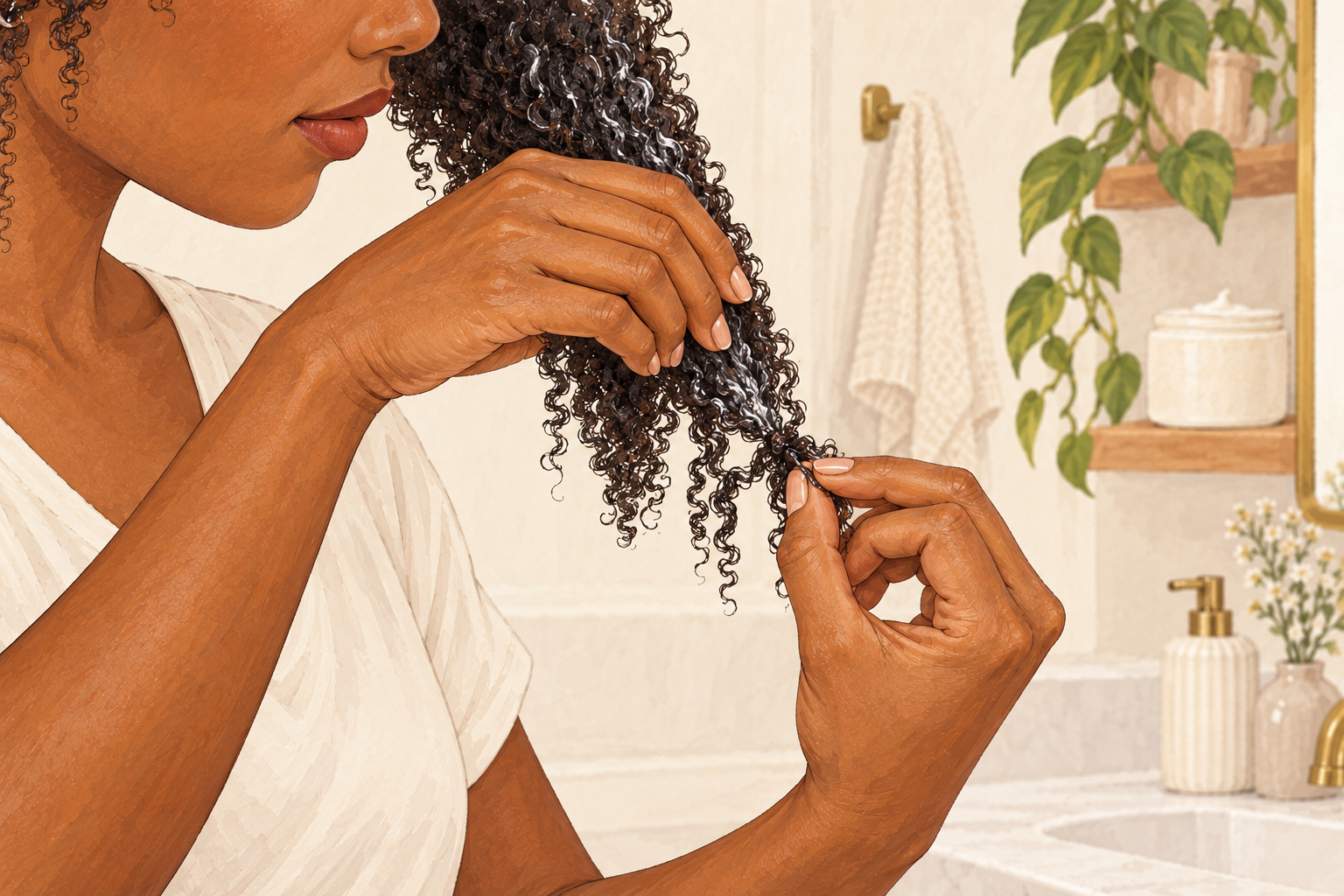
Use your fingers to open each section from the ends up, pinching and teasing knots apart. Fingers feel a knot long before it breaks. Hold the hair above the knot with one hand so your scalp does not take the pull. Let single hairs fall free and shed hairs slide out as you go. Go slowly, because speed turns a small knot into a big one. By the time you reach for the comb, most of the hair should already move freely. Fingers are the gentlest tool you own. If a knot will not budge, move on to another one and come back later.
7. Comb from the ends up
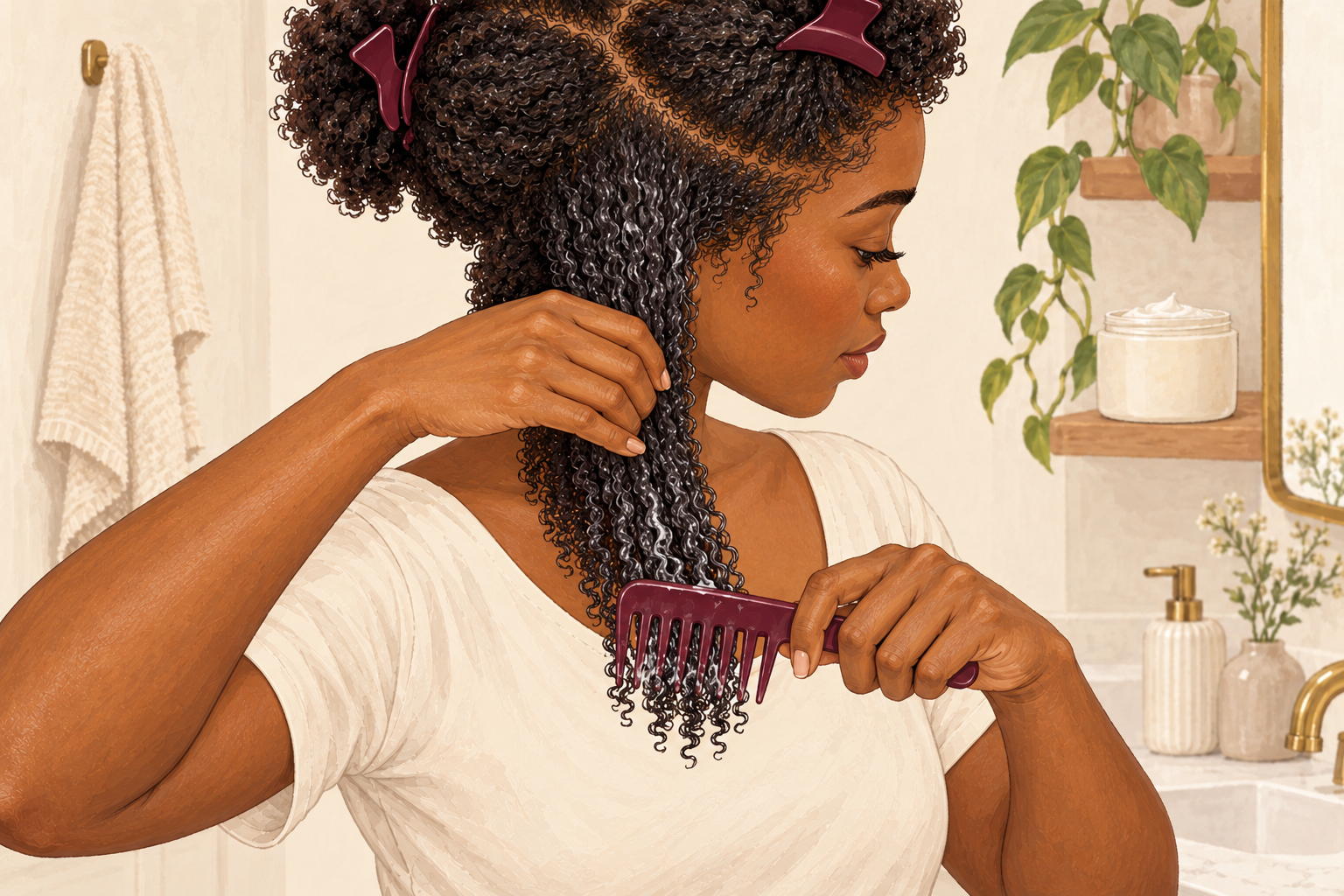
Hold the section above where you are working and comb only the last two inches first, then move up an inch at a time. Working from the ends gives knots room to release instead of piling up at the bottom. Use short, light strokes and stop when the comb catches. Never drag the comb down from the root through all the knots at once, because that is what rips hair. Once the ends are smooth, move up. If the comb will not move, go back to fingers and add more slip. Keep the hold on the hair above the comb, so your scalp takes none of the pull.
8. Handle stubborn knots with patience
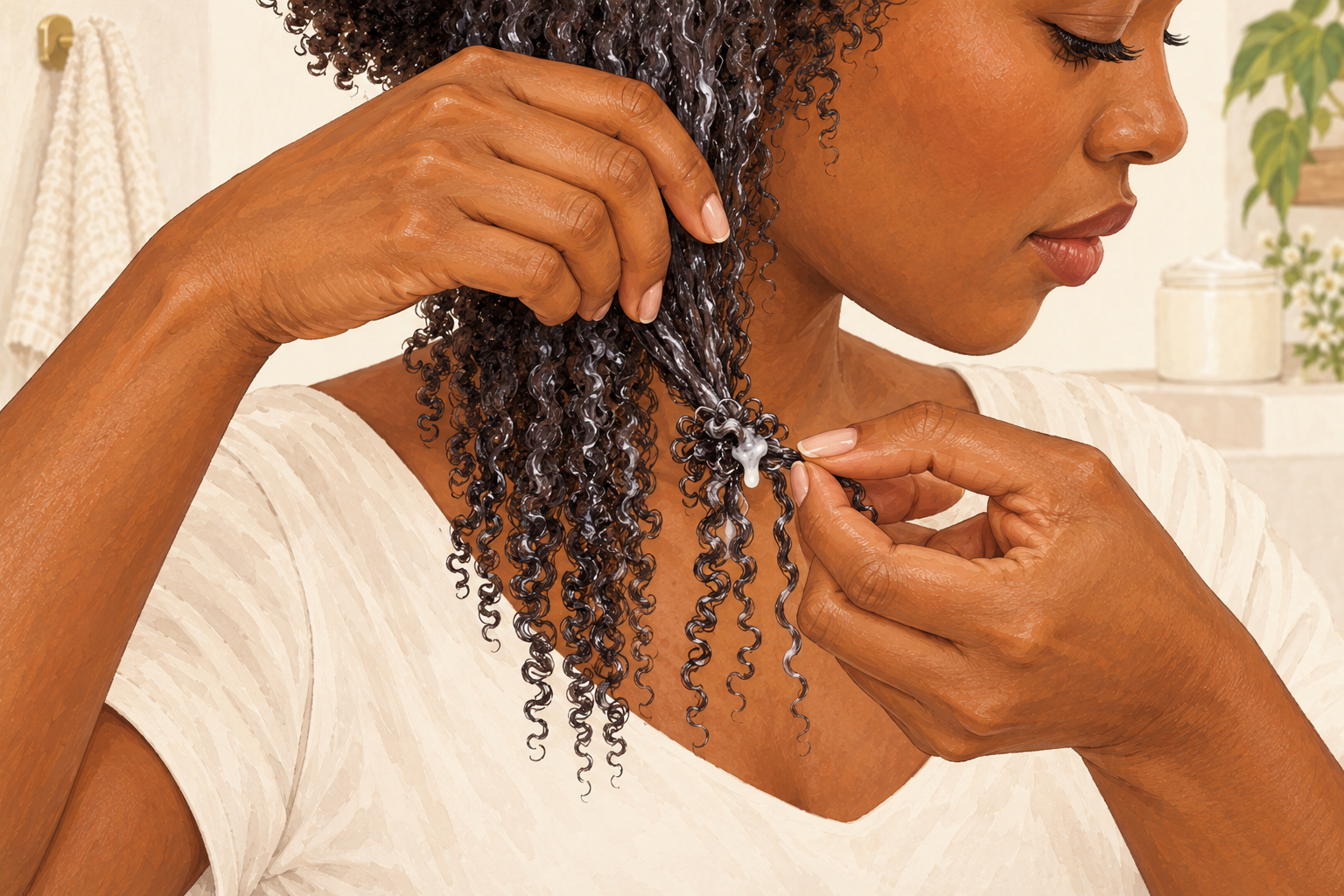
Hold the hair above the knot, add a drop of conditioner, and pick the knot apart one strand at a time with your fingertips. Pulling harder only locks it tighter. If the knot is tiny and close to the end, snip it off with sharp scissors rather than tearing the hair around it. Take a breath and give it a few minutes. Most knots loosen with patience. If you hit a mat close to the scalp, stop, add more slip, and work from its outer edge inward. Never rush this part, because the hair you save here is the length you keep.
9. Twist each section as you finish
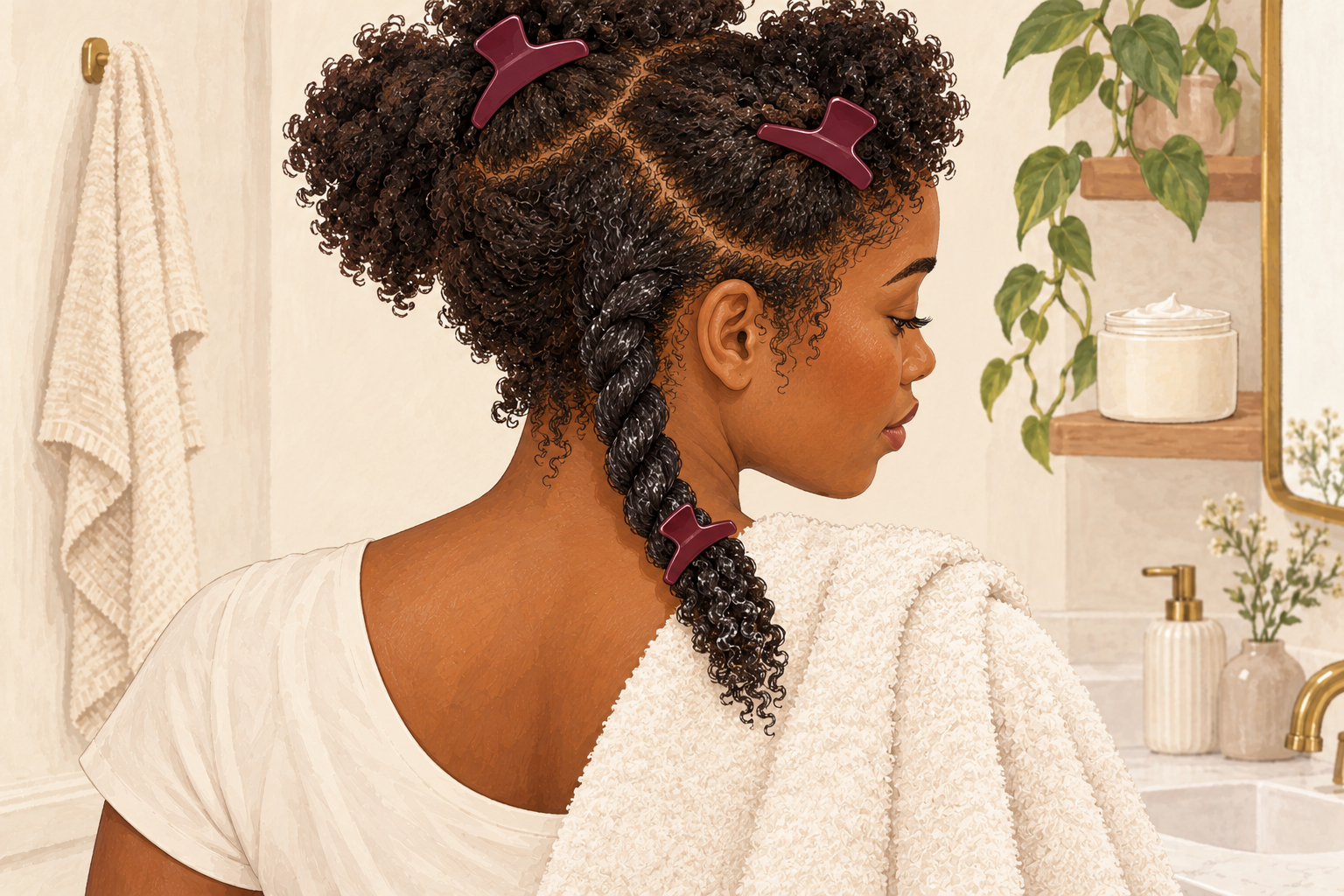
Loosely twist or braid each detangled section and clip it away before you start on the next. This keeps the finished hair from tangling with the rest. Make the twists large and loose, not tight, so your scalp does not feel pulled. By the end you have four to eight neat sections that are ready for rinsing. It also gives you a clear picture of how much is left to do. Tight styles pull on the roots, so keep these twists easy. Large twists also hold the slip in, so the hair stays soft until you rinse.
10. Rinse and seal in moisture
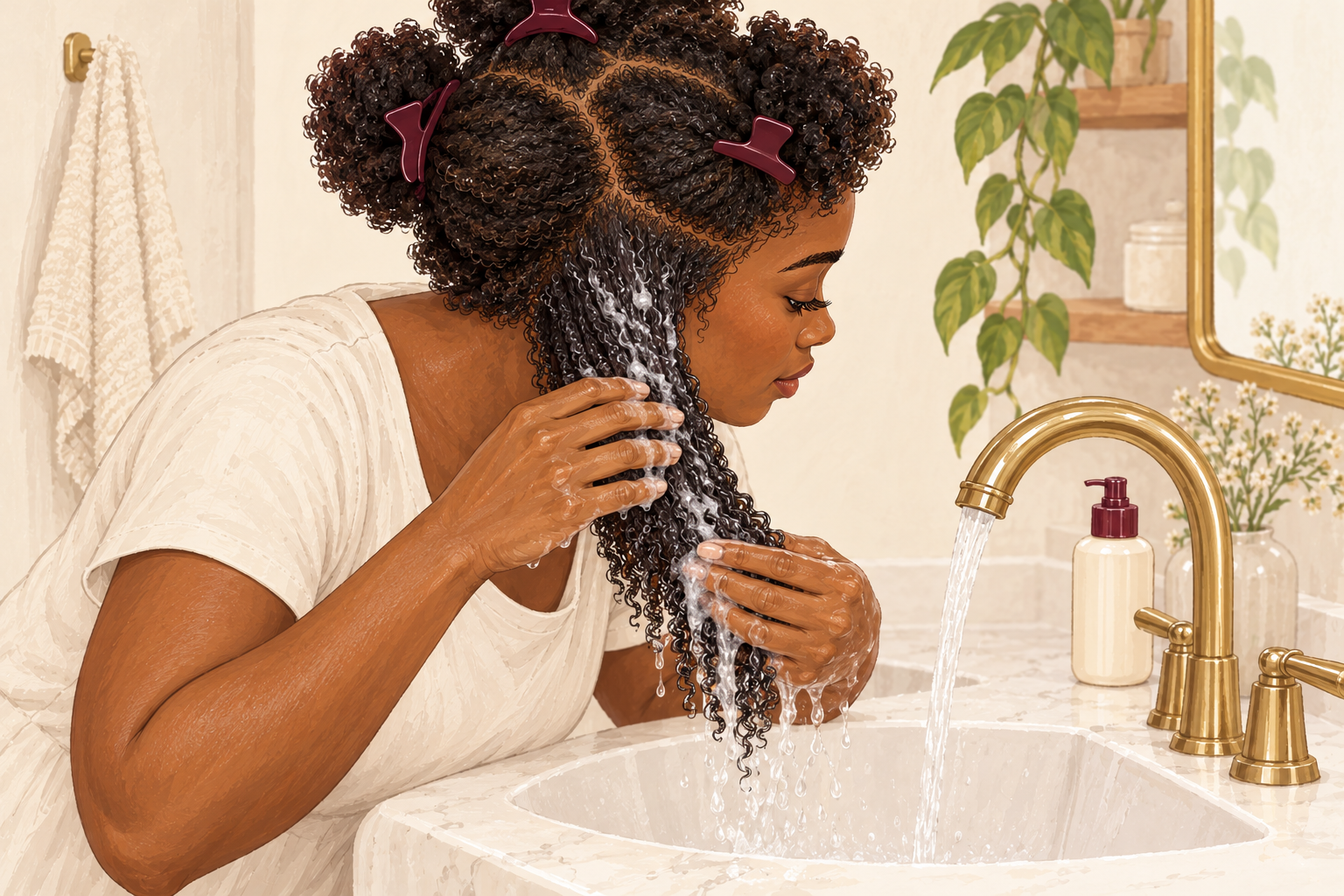
Rinse each section with lukewarm water while your fingers glide through it, then end with a cooler splash. Smooth a leave in conditioner through the hair while it is still wet, and seal the ends with a light oil. Skip rubbing your hair with a towel, since rough fabric roughens the strands. Squeeze the water out gently with an old T shirt instead. Your hair should feel soft, slippery and bouncy, not stiff. If a section feels tangled again, repeat a short pass with fingers. Do not skip the leave in, because it is what keeps tomorrow’s tangles away.
11. Fix the common slips
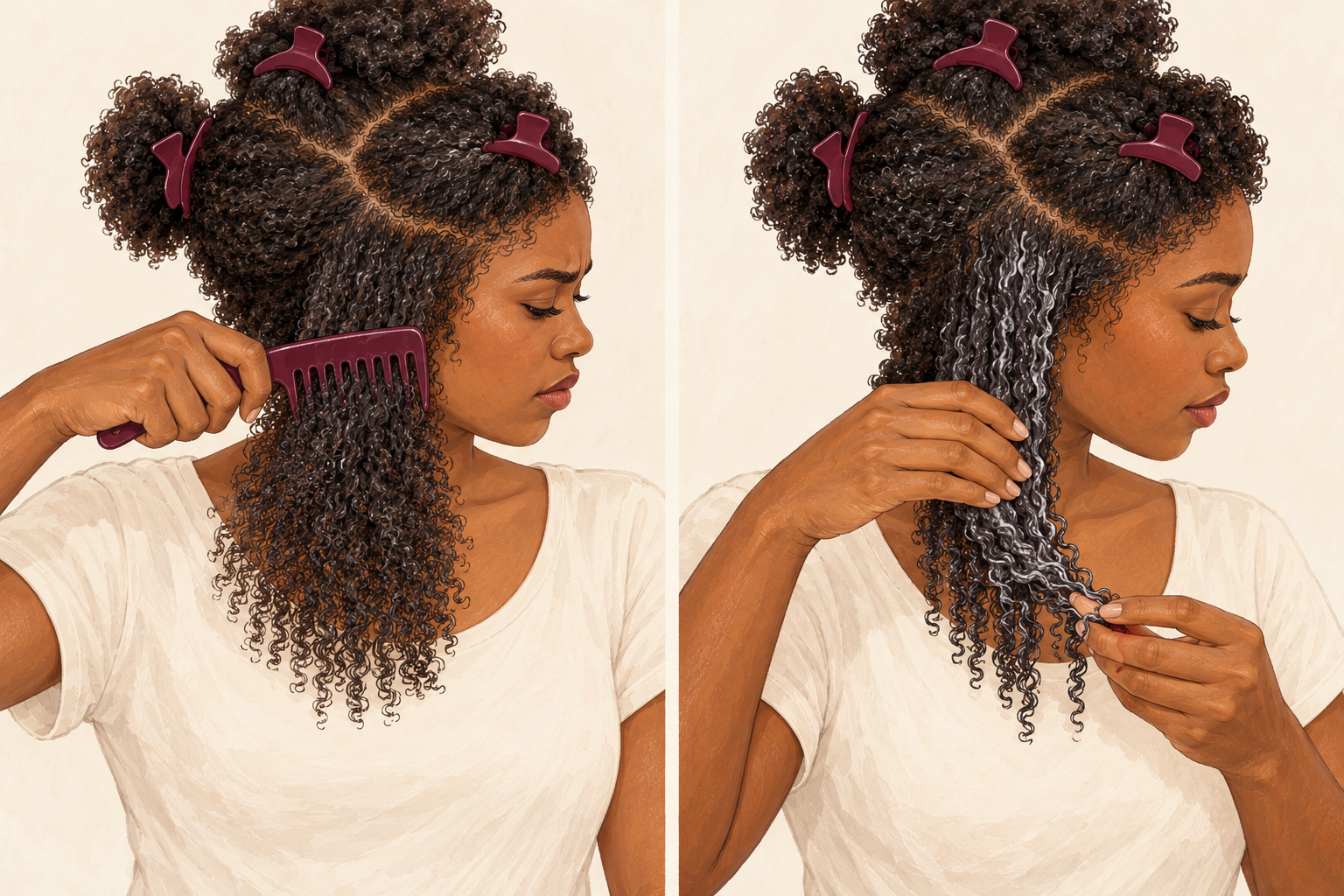
Never detangle dry, never start at the roots, and never force the comb. Shed hair in the comb is normal, since you lose about fifty to a hundred hairs a day, and detangling is when they finally come out. A comb full of hair with short broken bits means you need more slip or a gentler pass. If you are always in pain, switch to a finger only method. Clean the comb after each section, because a clogged comb pulls. Keep your elbows relaxed, since tense arms pull harder. Stop for a minute if your scalp feels sore, and carry on when it settles.
12. Protect your work afterwards

Finish with loose twists or a braid, and sleep in a satin bonnet or on a satin pillowcase. Cotton drinks moisture and snags soft strands. Detangle weekly or every two weeks, because hair that goes unattended for a month turns into mats. Trim split ends every few months so they do not travel up the strand and cause new knots. Over time, detangling natural hair gets faster, and your hair feels kinder to handle. A little care between wash days keeps the tangles small. Every wash day you repeat this, the knots get fewer and the whole session gets shorter.
Complete the Routine: Detangling Natural Hair Without Tears
Next wash day, start with finger work on dry hair, add plenty of slip, and clip your sections. For tougher tangles, read about how to detangle matted hair and matted hair.