If you have ever stood in a drugstore aisle staring at fifty bottles and wondered which one goes first, you are in good company. Hair care routine advice tends to come as a pile of products with no order, and the order matters more than most people realize. Putting a leave in before shampoo, or conditioning before you detangle, can waste product and leave your hair feeling worse than before. A simple hair care routine order solves that, and it is easy to remember once you have used it a few times.
The good news is that a beginner hair care routine is shorter than you think. You need a gentle shampoo, a conditioner, a way to detangle, a few drying habits, and a couple of weekly or monthly extras. Everything else is optional, and you can add it once the basics feel automatic. Many people are surprised by how little they actually need. Hair grows about half an inch a month, so what you do consistently over months will always beat what you do intensely for a week.
Below are twelve hair care routine steps, grouped into five stages: before the wash, the wash itself, after the wash, drying and styling, and the weekly and monthly extras. Read them once, then pick the steps that fit your texture and your schedule. You can skip anything that does not apply, and you can come back to the rest later. Think of this as a map, not a rulebook. Your texture, your climate, and your schedule all get a vote.
Hair Care Routine Steps Before You Wash
In any hair care routine, a little preparation makes the wash itself easier and gentler on your strands.
1. Learn Your Hair Type and Your Scalp Type
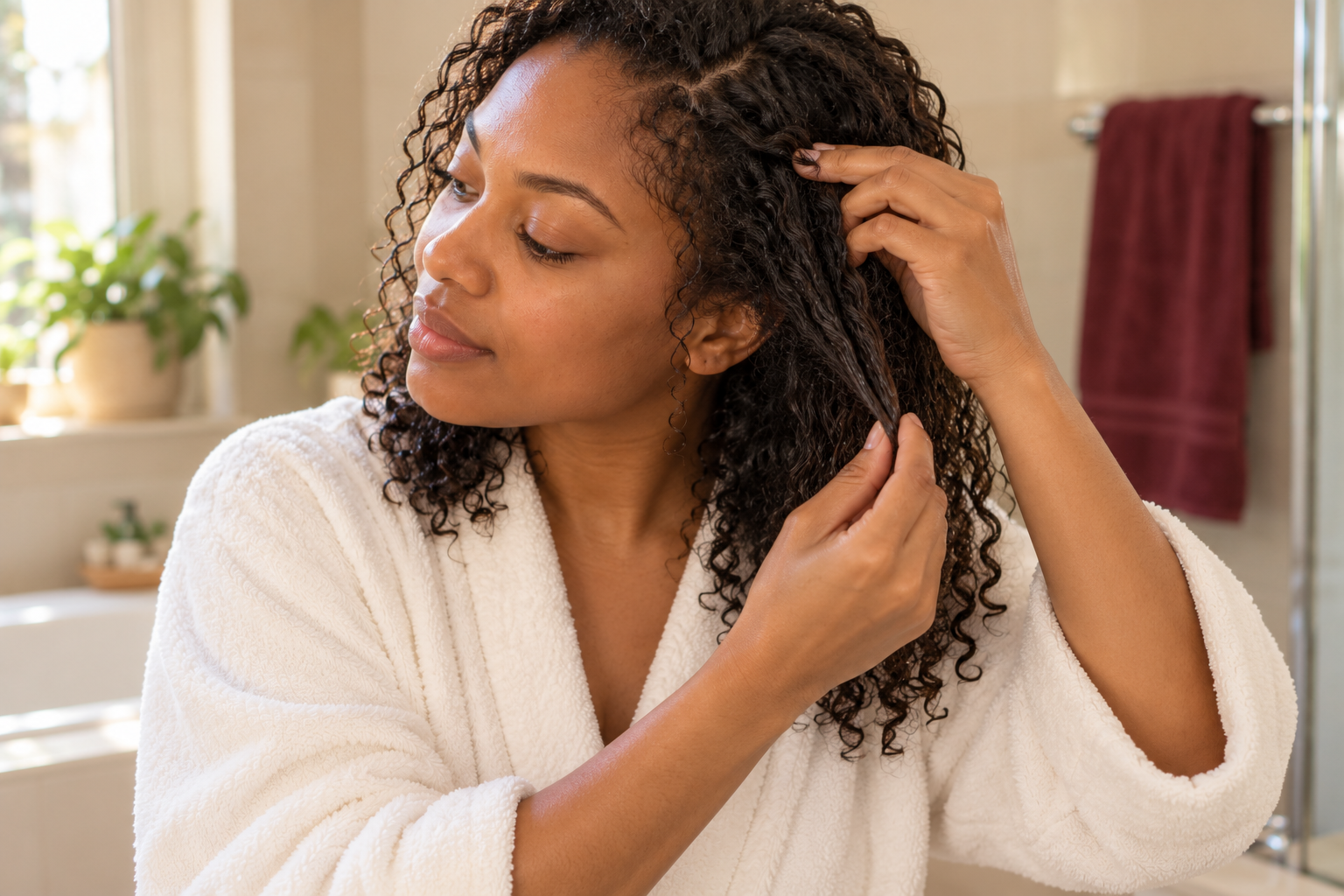
Before you buy anything, notice how your hair behaves. Is it straight, wavy, curly, or coily, and is it fine or thick? Does your scalp turn oily within a day or stay dry and tight? These two answers shape every other choice, from how often you wash to which products suit you. Take a few notes and photos, so you can see how your hair responds over time. This small bit of homework saves you from buying products meant for a very different head of hair.
2. Detangle Gently Before You Get Wet
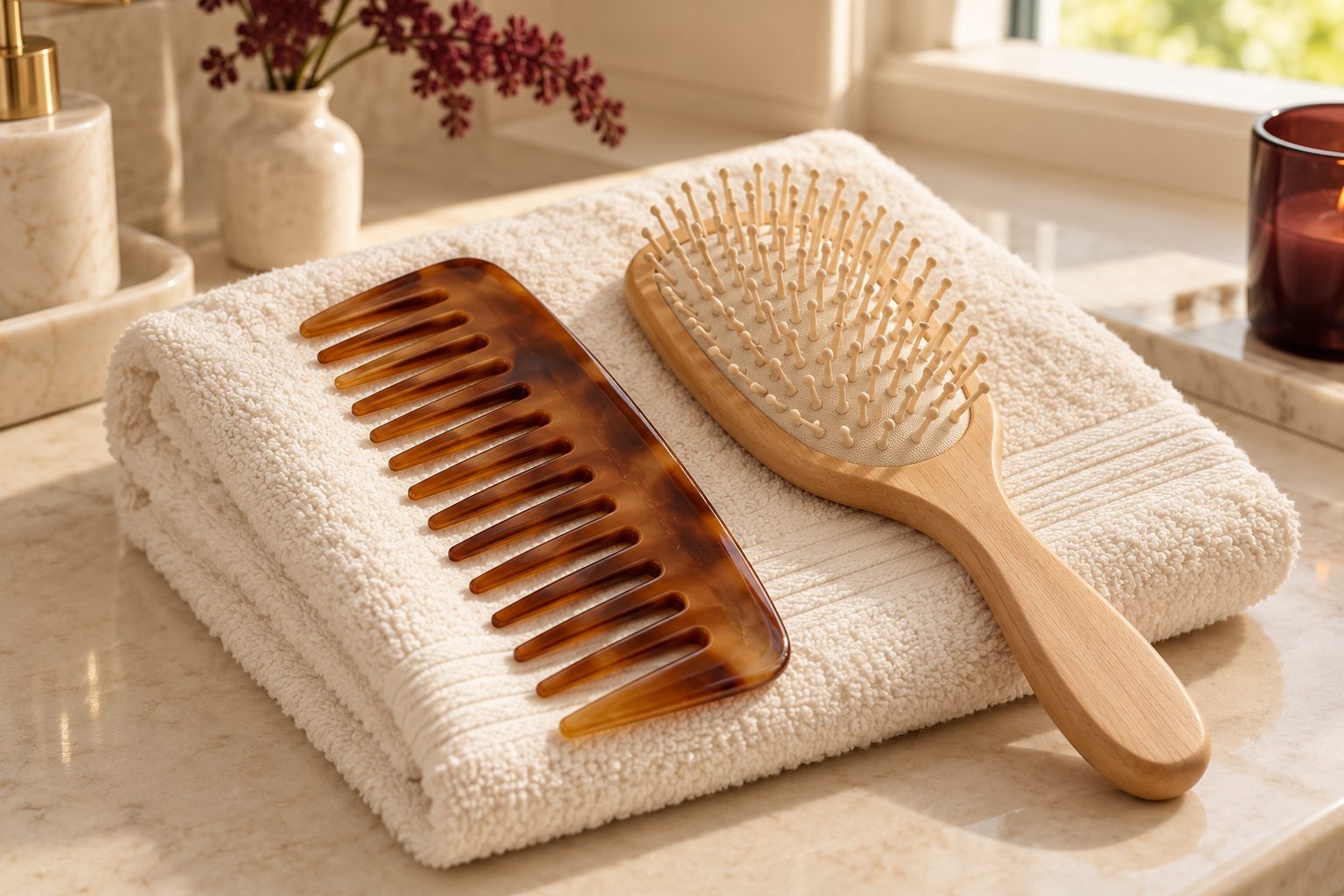
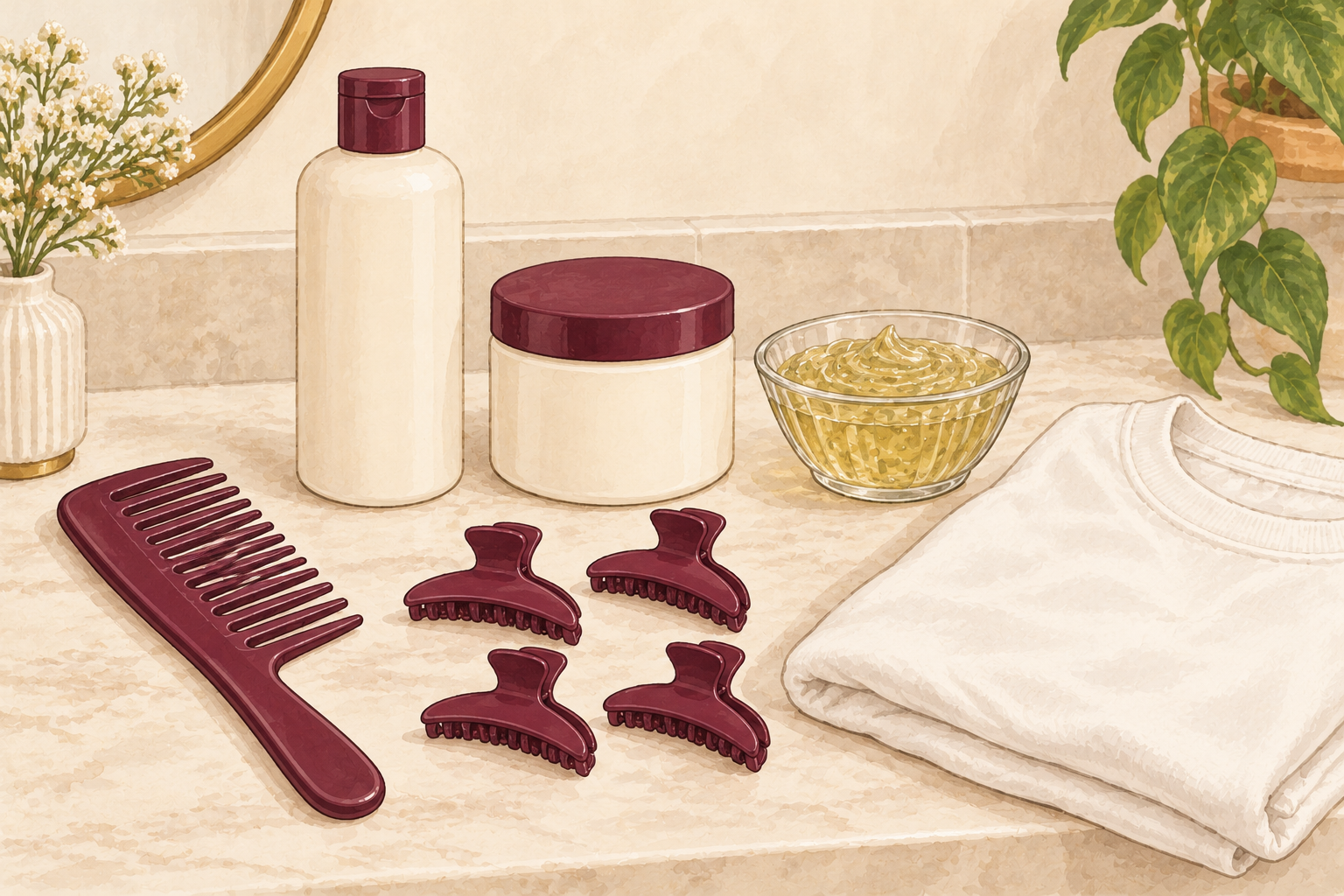
Start with dry or slightly damp hair and loosen big knots using your fingers or a wide tooth comb, beginning at the ends. Tangles tighten when they get wet and soapy, so removing the worst of them first saves breakage later. If your hair is very curly or coily, detangle with conditioner in the shower instead, since dry coils can snap. If you are not sure, test it on one section and watch how many hairs come away.
3. Add an Optional Pre Wash Treatment
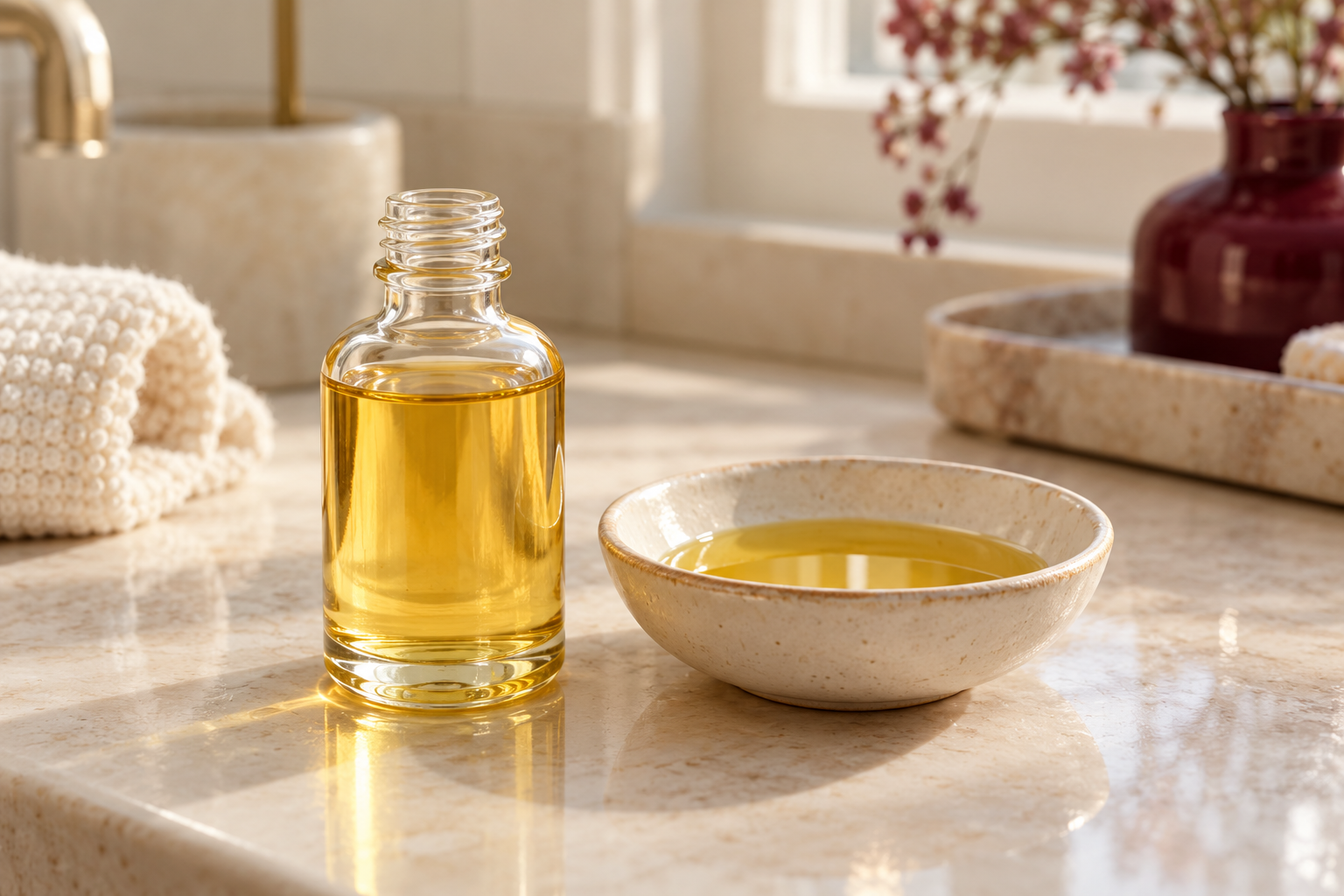
If your ends feel dry, apply a small amount of light oil or conditioner to the lengths about thirty minutes before shampooing. This is sometimes called pre pooing, and it can reduce the stress of washing on dry strands. It is optional, so skip it if your hair is fine and gets weighed down easily. If you try it, use only a teaspoon or two of oil, and shampoo twice if your scalp feels coated.
The Wash Itself in Your Hair Care Routine
This is where most of the work happens. Good technique matters more than fancy products.
4. Shampoo the Scalp, Not the Lengths
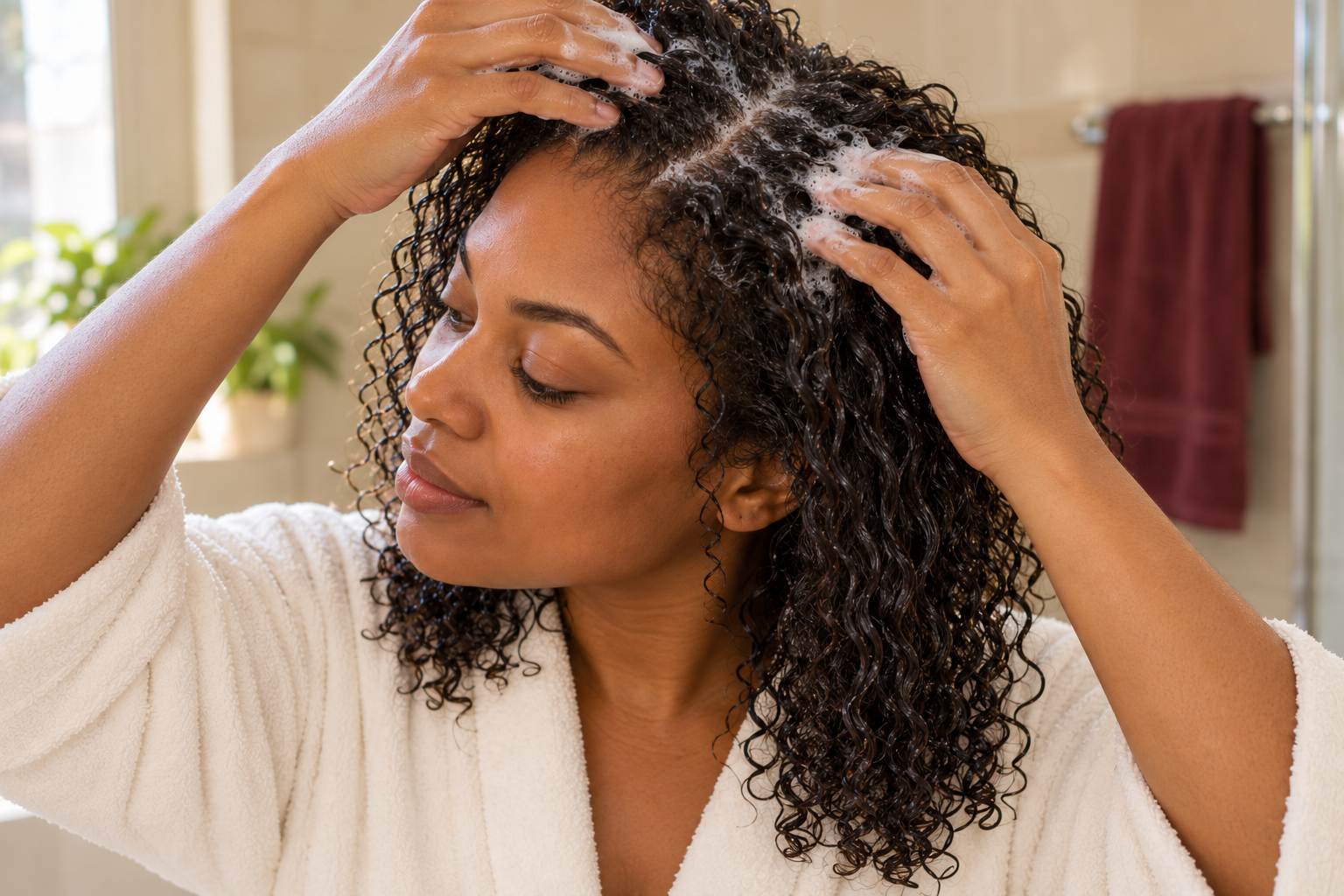
Use a coin sized amount of mild shampoo, and massage it into your scalp with the pads of your fingers for a minute or two. The suds will rinse down the lengths on their own, and that is enough to clean them. Scrubbing the lengths together causes tangles and roughness. A comfortable scalp is the foundation, so notice whether it feels clean without feeling tight. If it feels tight or squeaky, your shampoo may be too strong for you.
5. Rinse Thoroughly With Lukewarm Water
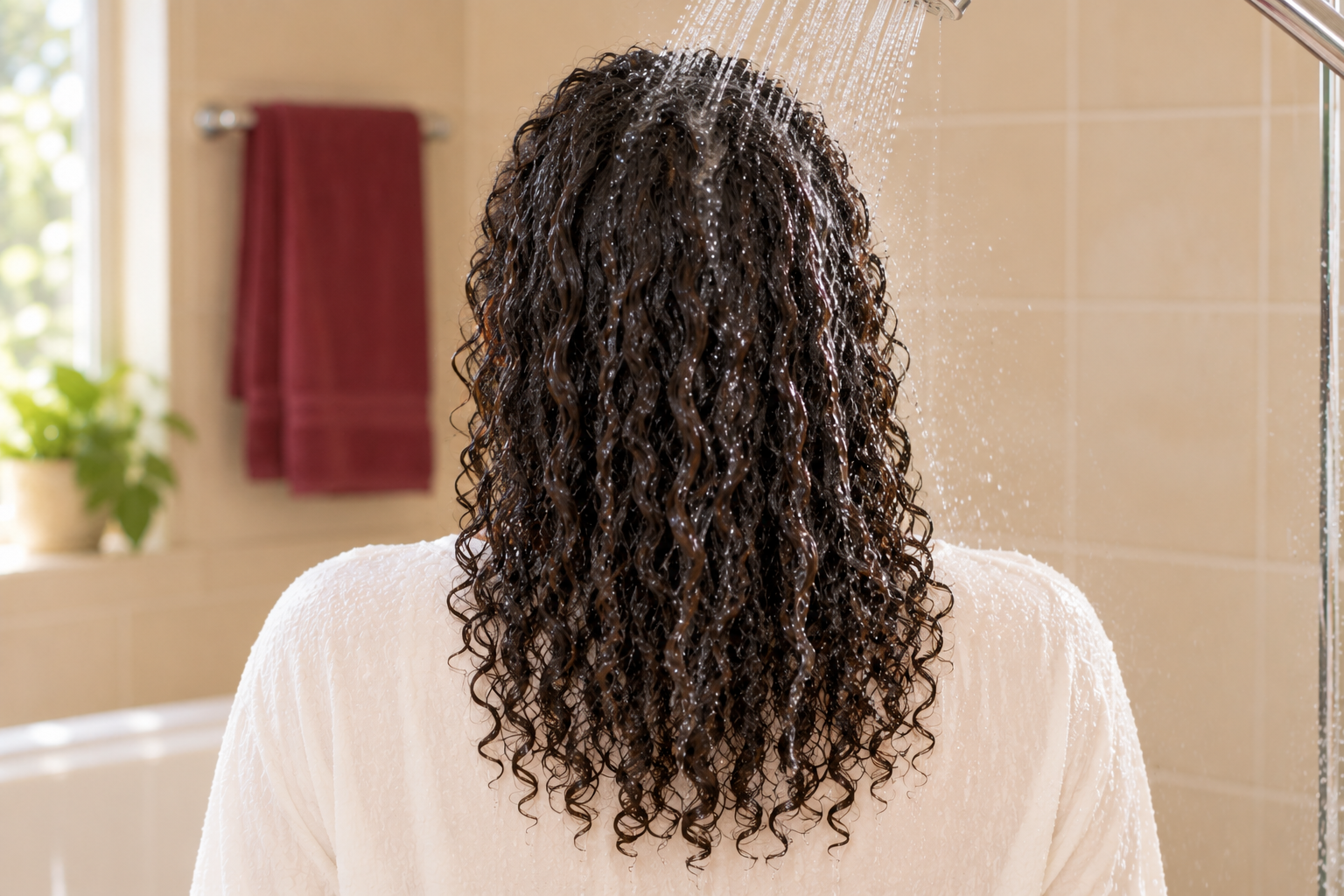
Rinse until the water runs clear and your hair no longer feels slippery. Leftover shampoo causes itching, dullness, and flakes. Use lukewarm water rather than very hot, which can irritate the scalp and dry out hair. A finishing cool rinse is optional, and many people enjoy how smooth it makes their hair feel. Spend a full minute rinsing, because most product problems come from what was left behind.
6. Condition the Mid Lengths and Ends
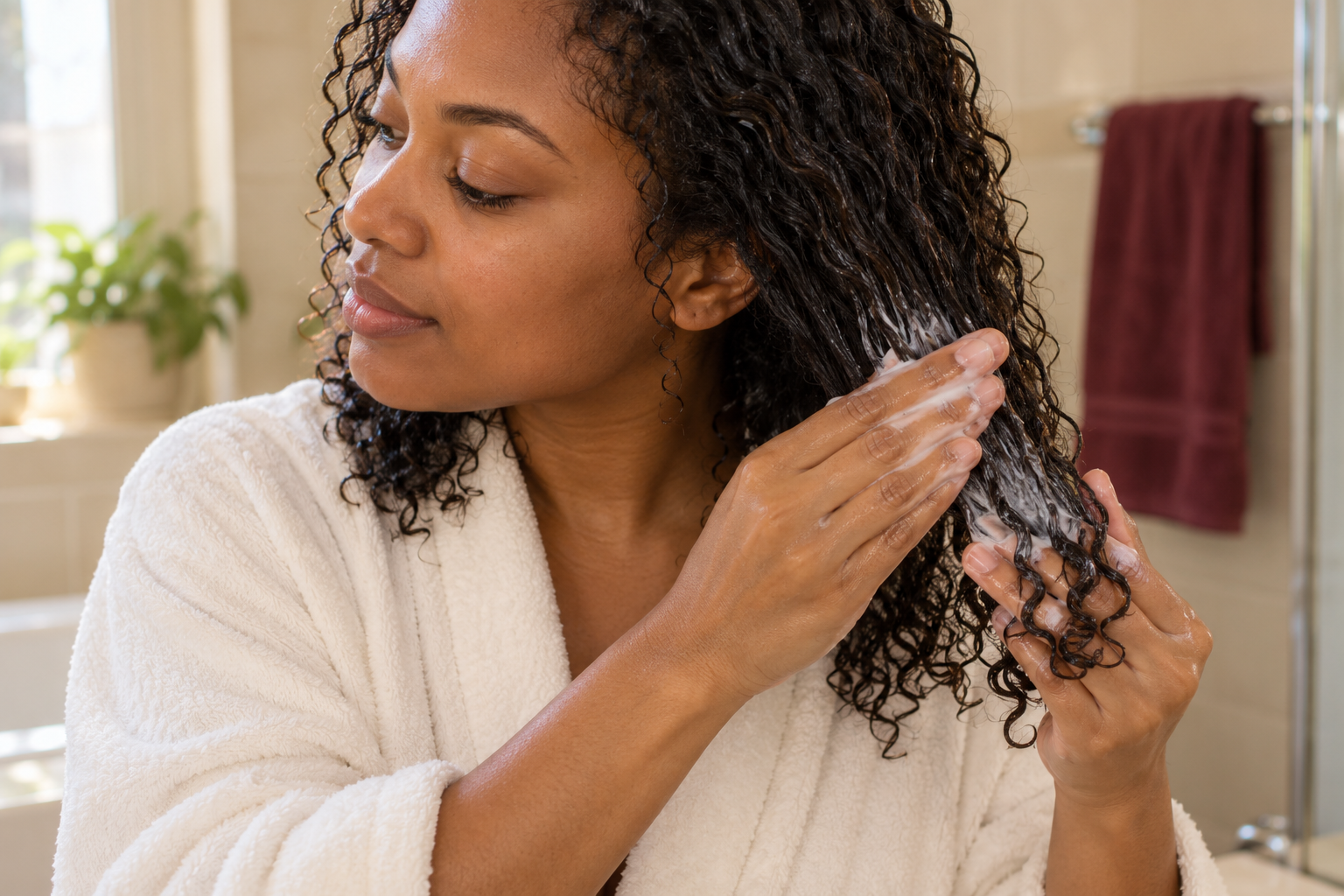
Squeeze out extra water, then apply conditioner from the ears downward, keeping most of it off your scalp. Comb it through gently with your fingers or a wide tooth comb, and leave it on for two or three minutes before rinsing. Conditioner smooths the cuticle and makes detangling easier, so do not skip it, even if your hair feels fine after shampoo. If your hair is fine or oily, use a smaller amount and rinse a bit longer.
Your Hair Care Routine After the Wash
The minutes right after you step out are when hair is most fragile, so handle it carefully.
7. Blot, Do Not Rub
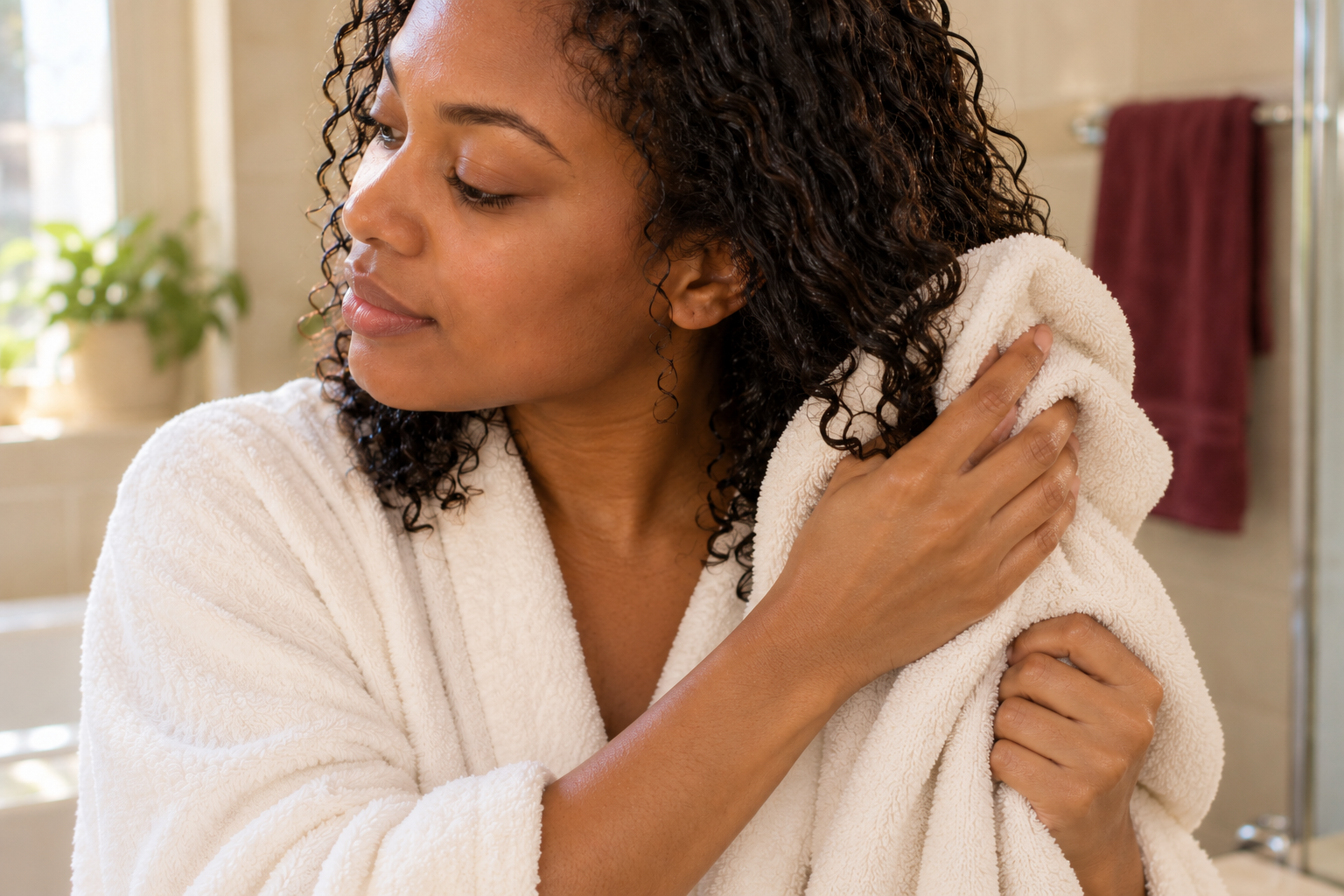
Squeeze the water out with a soft towel or an old cotton t shirt. Rubbing roughens the cuticle and causes frizz and breakage. Wrap your hair loosely for a few minutes, then unwrap. Wet hair is stretchy and fragile, so avoid brushing it roughly at this stage, and use only your fingers or a wide tooth comb. Cotton t shirts have a smoother weave than terry towels, which is why so many people swear by them.
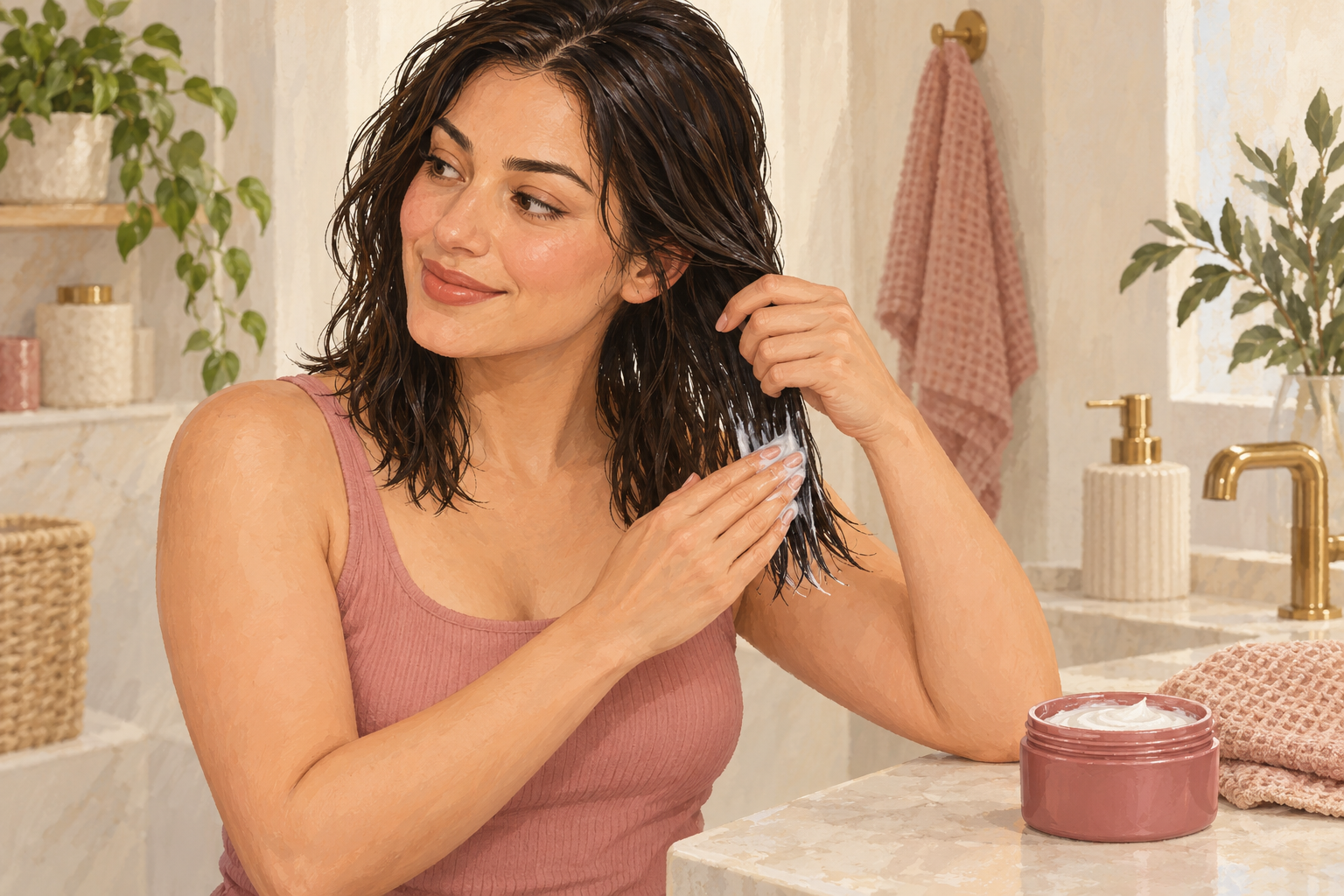
8. Apply a Light Leave In
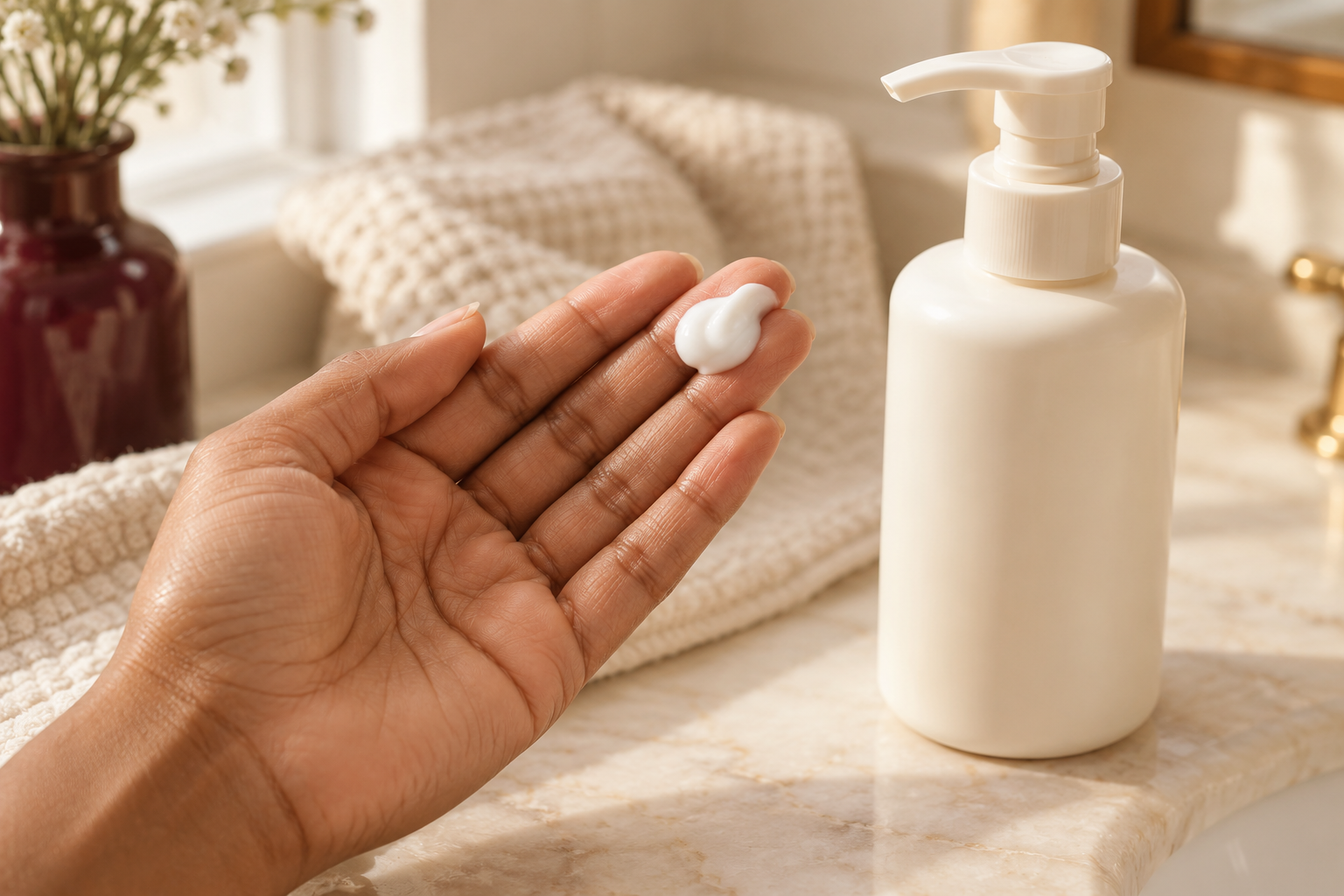
Smooth a small amount of leave in conditioner through your damp hair, focusing on the ends. It adds slip, softness, and a little protection, and it helps your hair hold moisture. Start with less than you think you need, and add more only if your hair still feels dry. Heavy layers can make fine hair look limp. Thicker or coily hair usually welcomes a creamier formula, so adjust to your texture.
Drying and Styling in Your Hair Care Routine
How you dry your hair can undo a good wash or protect it. A few small choices make a big difference.
9. Air Dry When You Can

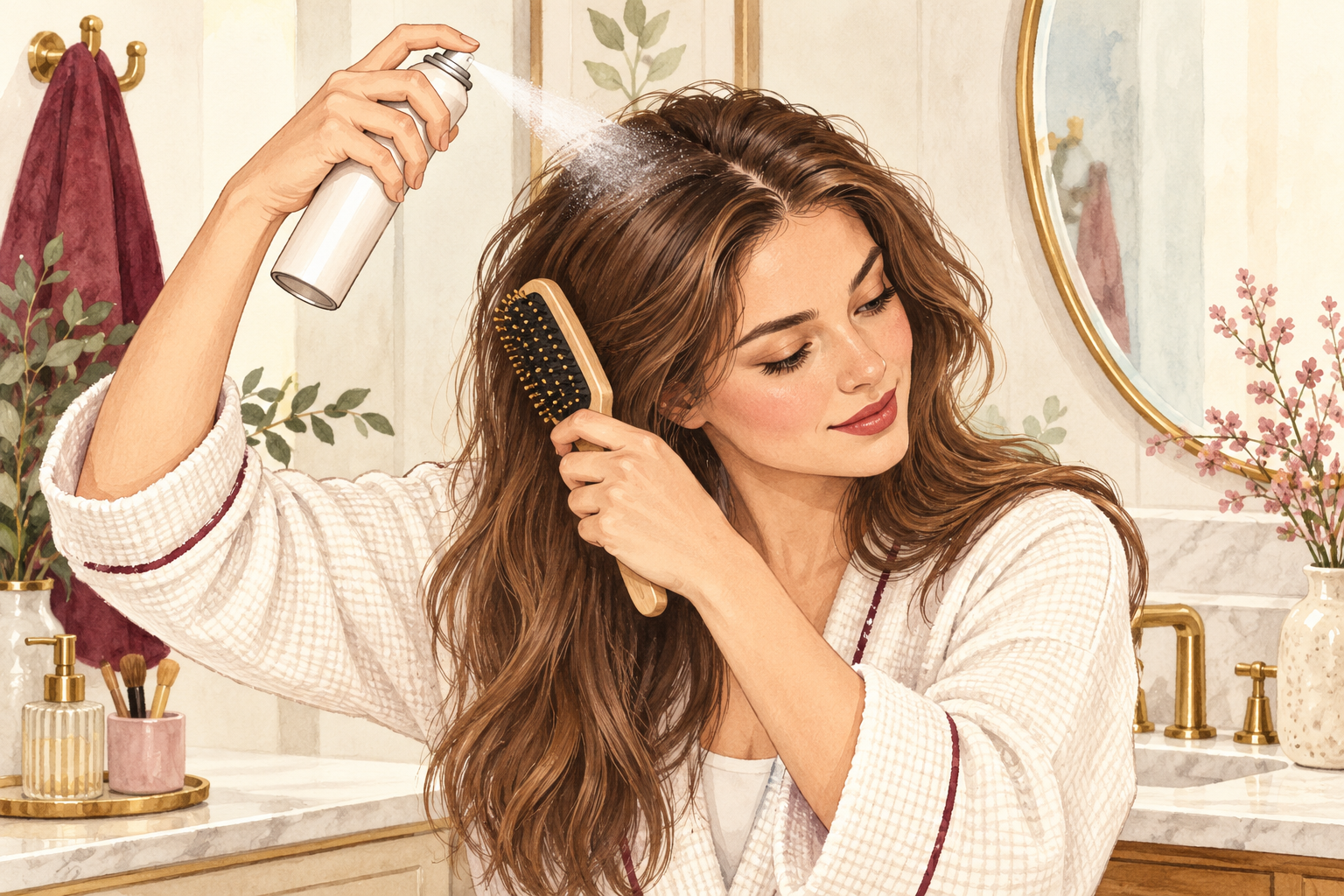
Letting your hair dry naturally is the gentlest option, and it works well on most days. Scrunch or smooth it gently, and avoid touching it too much while it dries, which causes frizz. Resist the urge to flip, shake, or fluff, and let the shape set on its own. If you are short on time, partly air dry, then finish with a quick blow dry on low heat.
10. Use Heat Protectant and Medium Settings
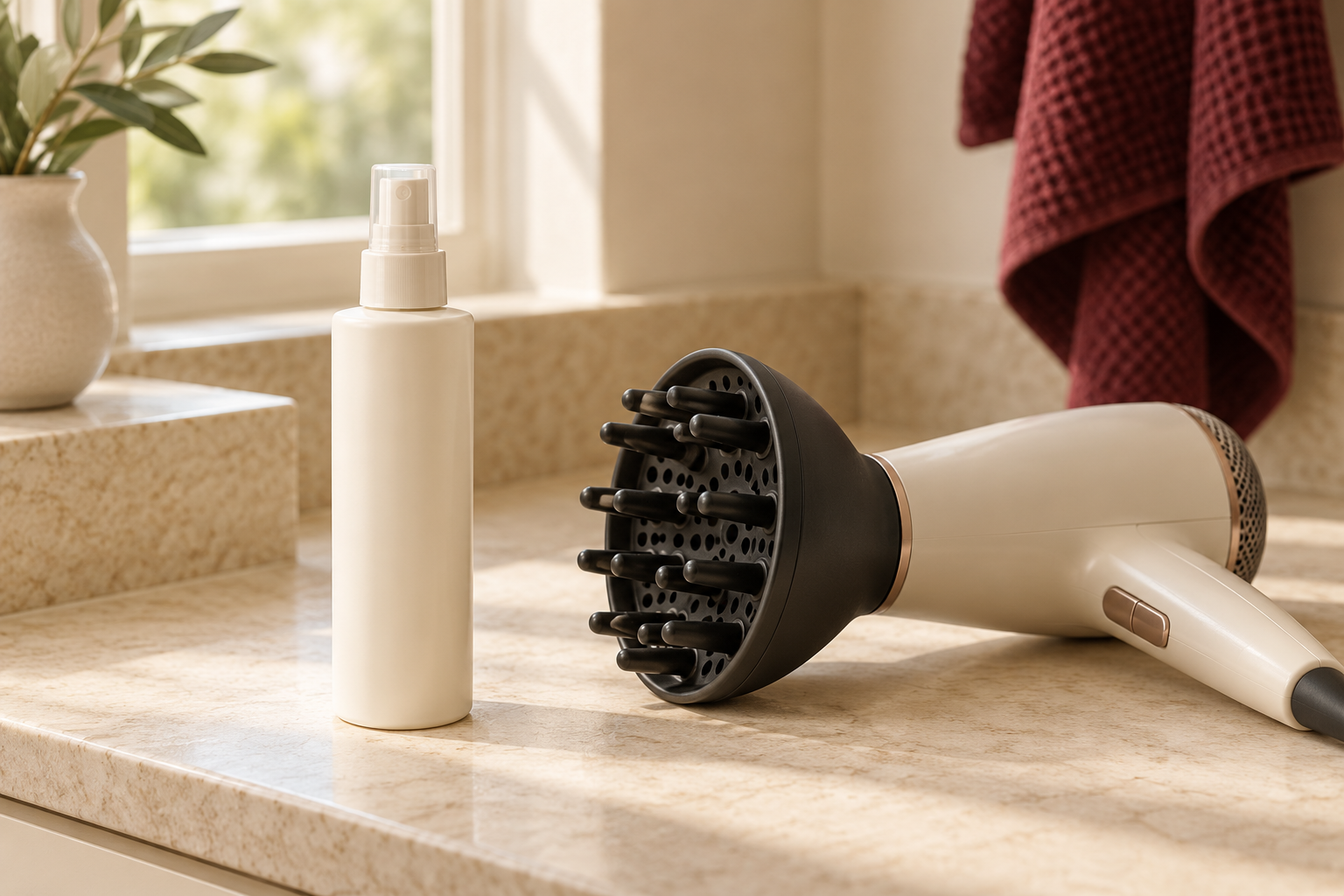
If you use a blow dryer or flat iron, apply a heat protectant first and choose a moderate temperature. Keep the dryer moving, and do not hold it close to your hair. Heat damage builds slowly, so a few careful habits protect your hair for months and years. Think of the protectant as a seatbelt, since it works best when you use it every single time.
Weekly and Monthly Extras
These are the habits that turn a good hair care routine into a great one, and they take only a few minutes.
11. Deep Condition Once a Week
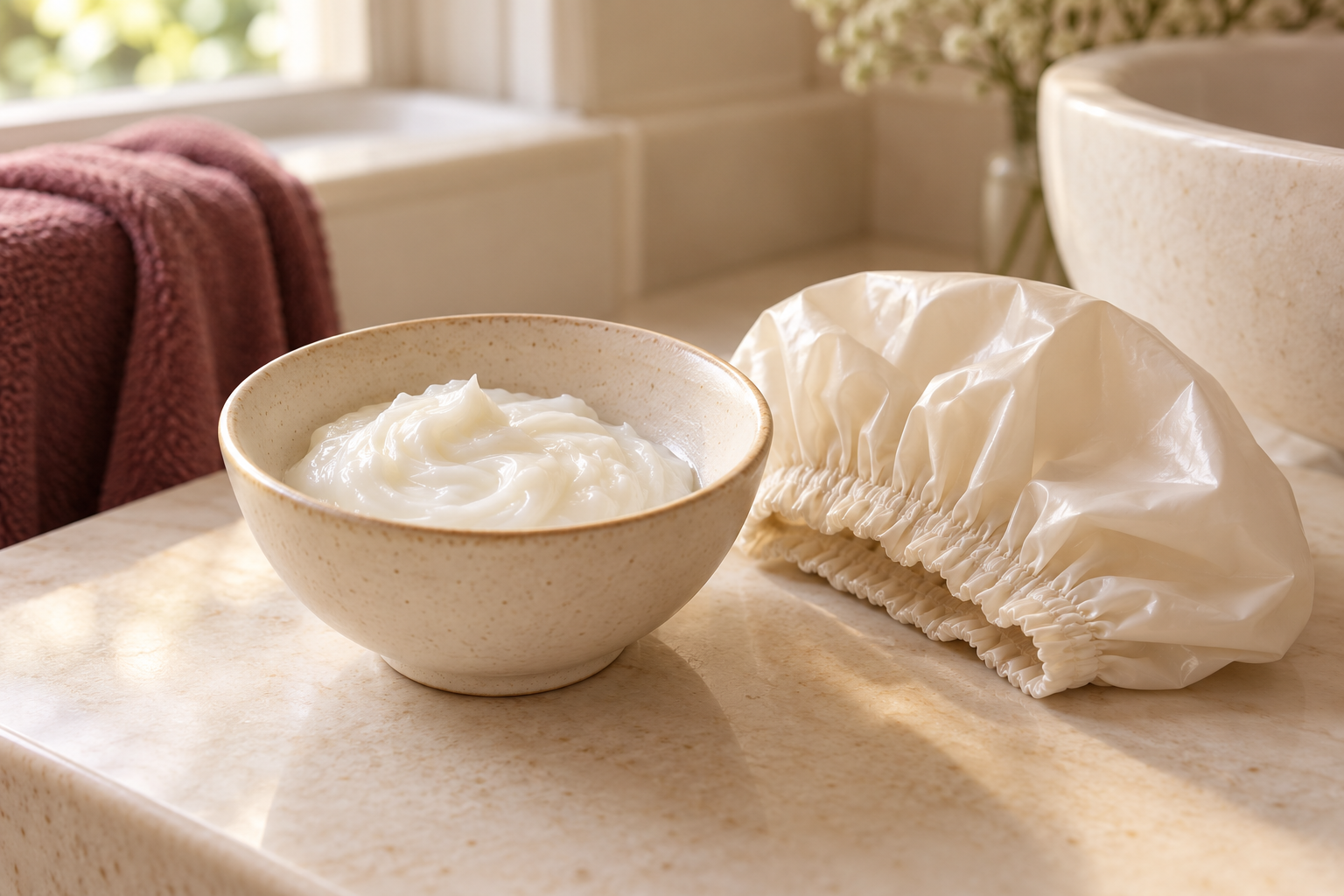
Once a week, replace your regular conditioner with a deeper treatment and leave it on for fifteen to twenty minutes. This replenishes moisture and softens strands, which helps your hair resist breakage. If your hair feels heavy afterward, use it every two weeks, and focus on the ends. Check how your hair feels the day after, because softness that lasts is the best sign you chose well.
12. Trim Every Few Months
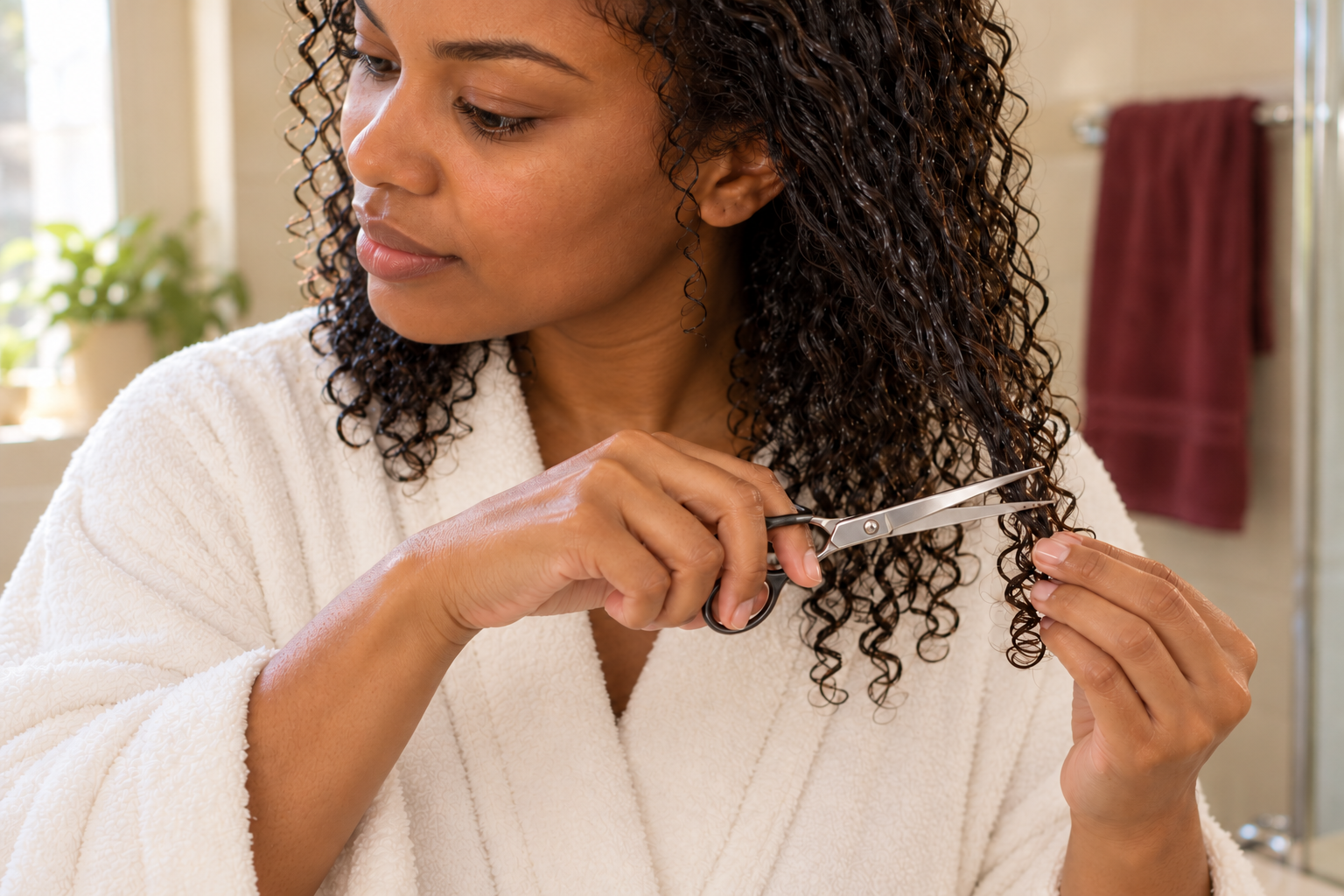
A small trim every two to three months removes split ends before they travel up the strand. You do not need a big cut. Ask for a dusting, and keep your length while getting rid of damage. Regular trims are one of the simplest ways to keep hair looking healthy as it grows. Mark your next trim on a calendar so that it does not slip.
Complete the Routine: More Hair Care Routine Support
Once the basics of your hair care routine feel easy, you can customize. My hair care tips help you troubleshoot common problems, and my weekly hair care routine shows how to space the extras across a week. Tonight, start with one step in this order, and add the next when it feels natural. The American Academy of Dermatology page on tips for healthy hair is a good cross check on the basics.