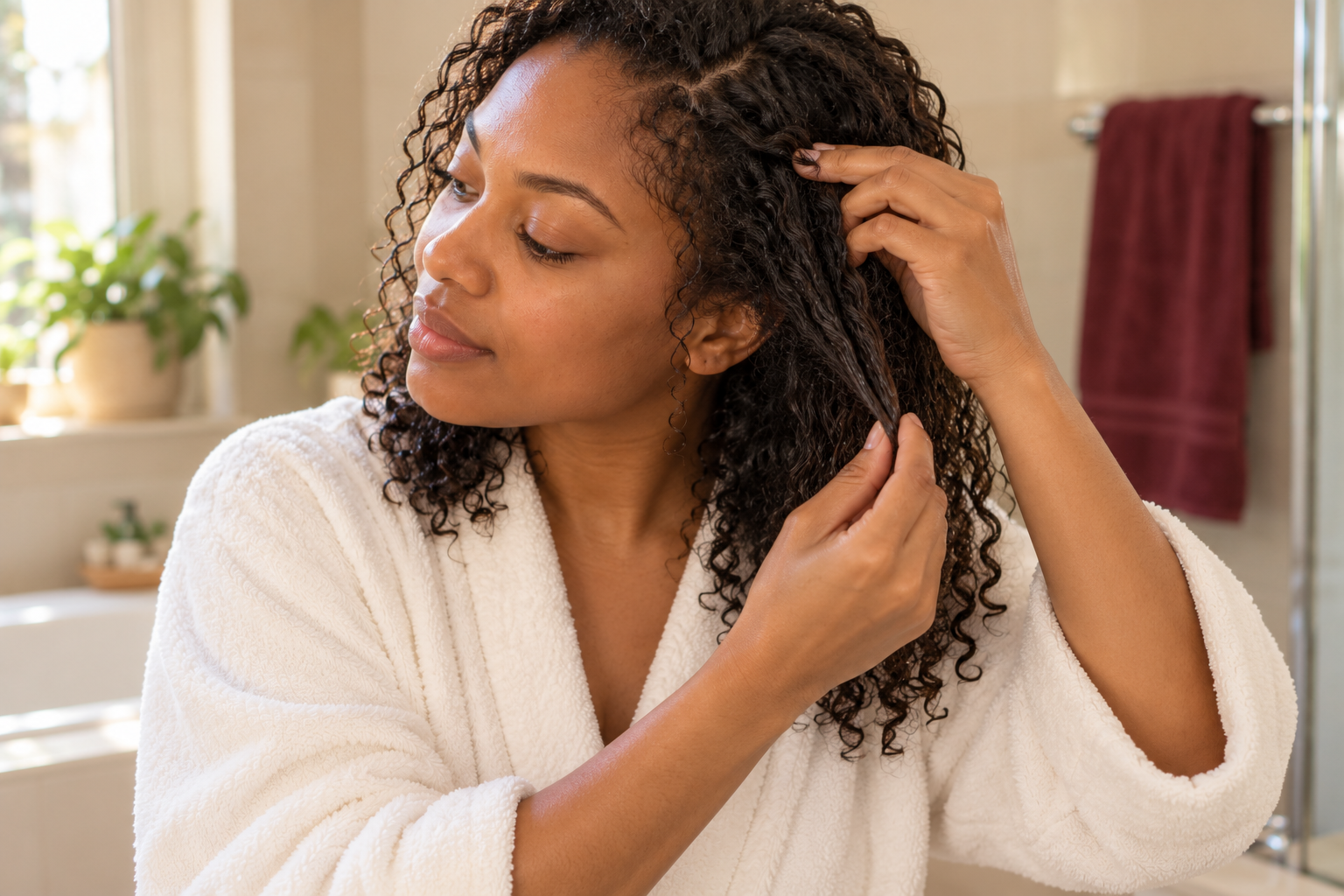
You wash it when you remember, use conditioner when you have time, and wonder why your hair never looks the same two days in a row. Hair does better on a rhythm. This weekly hair care routine spreads 12 small steps across seven days, from wash day to bedtime. Start at number one tonight.
1. Gather a small kit and pick your wash day
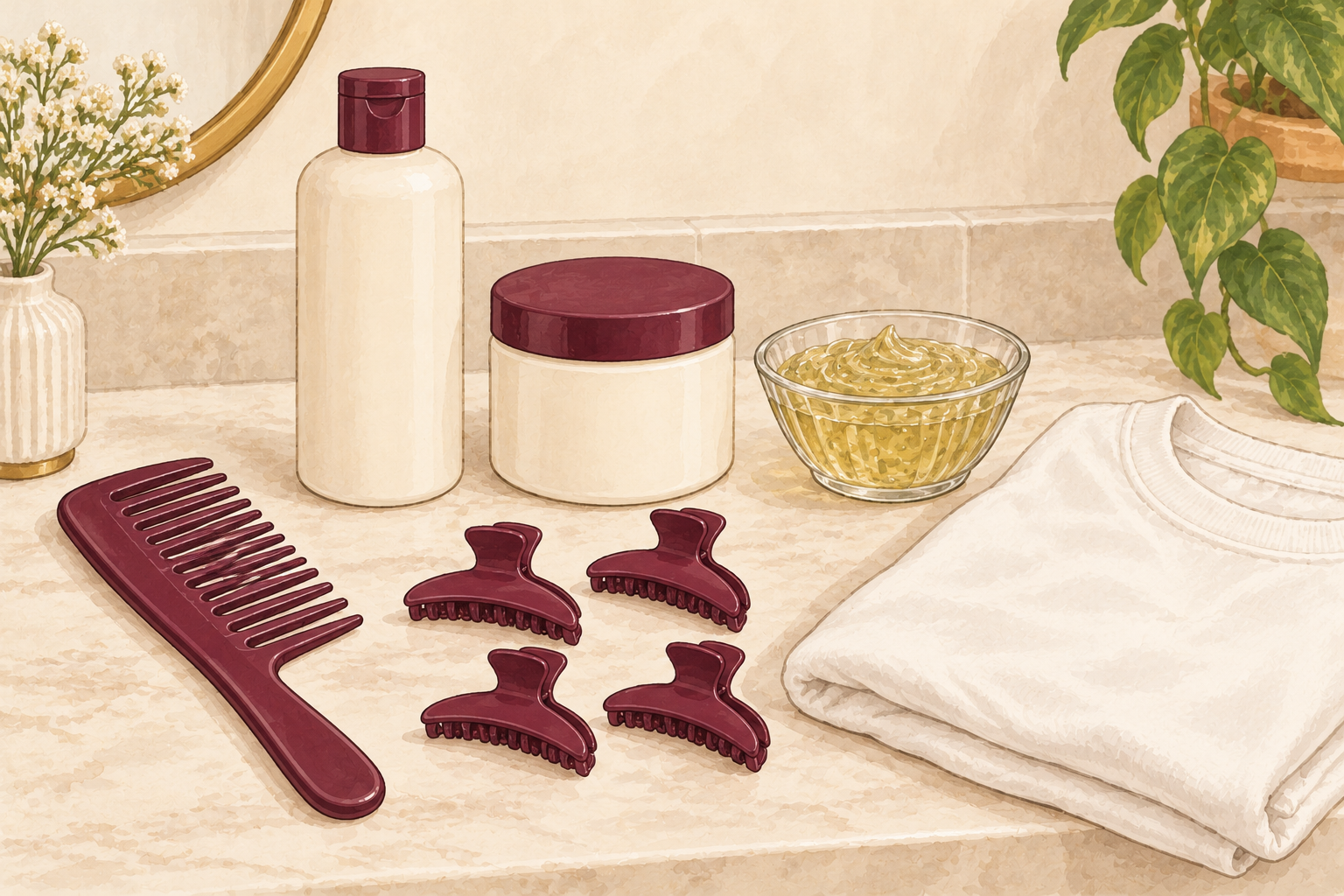
Put shampoo, conditioner, a wide tooth comb, a soft towel, a spray bottle and a satin scarf in one basket. Then choose one wash day for the week, such as Sunday or Wednesday, and treat it like a date you keep. Pick a day when you are not rushing, because wash day takes an hour with deep conditioning. Stick a note on your bathroom mirror for the first two weeks. When everything lives in one basket, you skip fewer steps and spend less time hunting for the comb. A zip bag works if you have no basket.
2. Notice your starting point
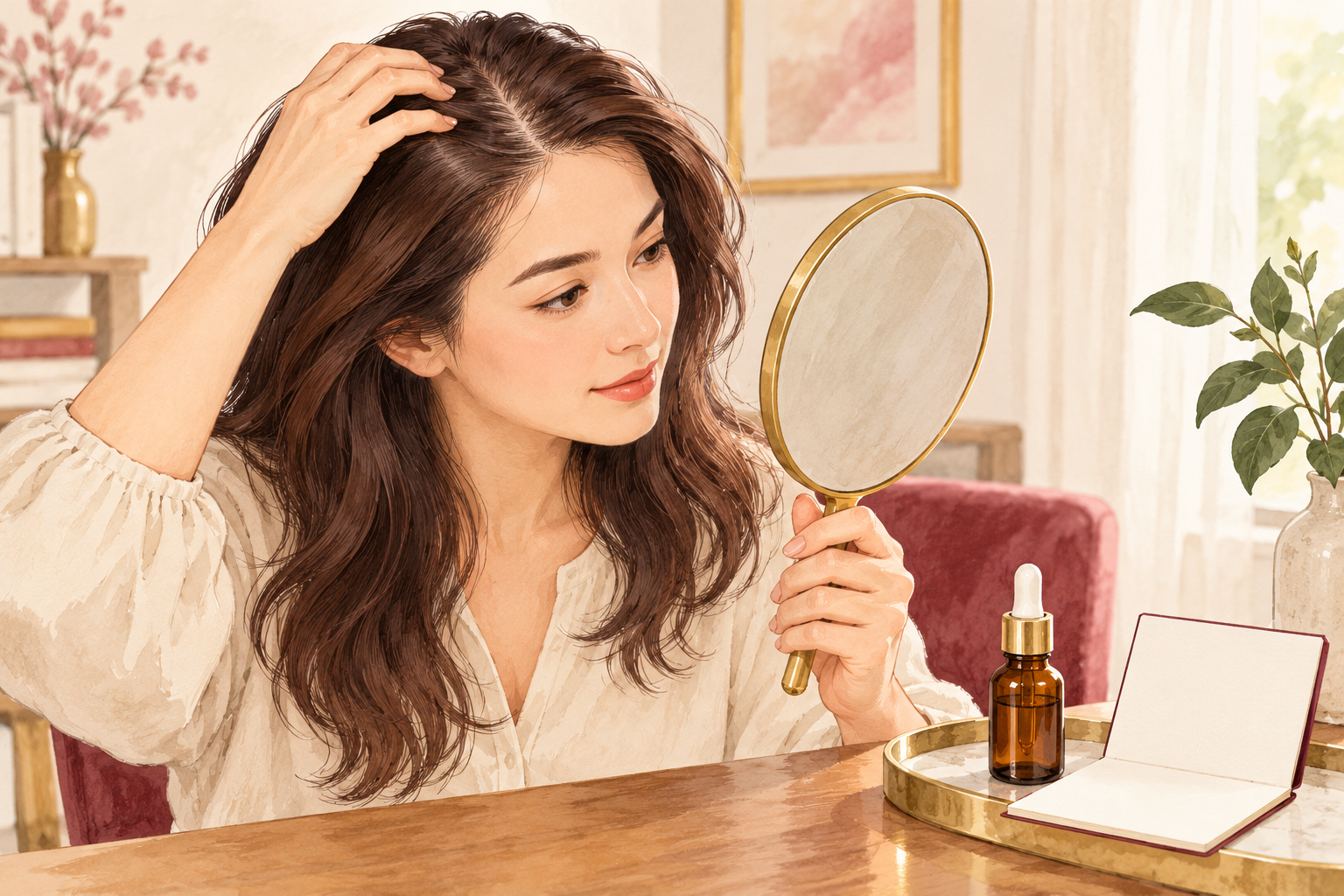
Look at your scalp and ends in daylight and decide whether they lean dry, oily or both. Oily roots with dry ends is very common, and it means you wash the scalp and put conditioner on the lengths. If your hair is thick, curly or coily, plan for more moisture. If it is fine and straight, plan for lighter products. Take a photo today so you can compare in a month. Note how long your hair takes to dry too, because that changes what you do on busy mornings. Trust what you see, and adjust the plan to match. Press a strand between your fingers, because rough strands need extra moisture.
3. Day one, cleanse gently and massage the scalp
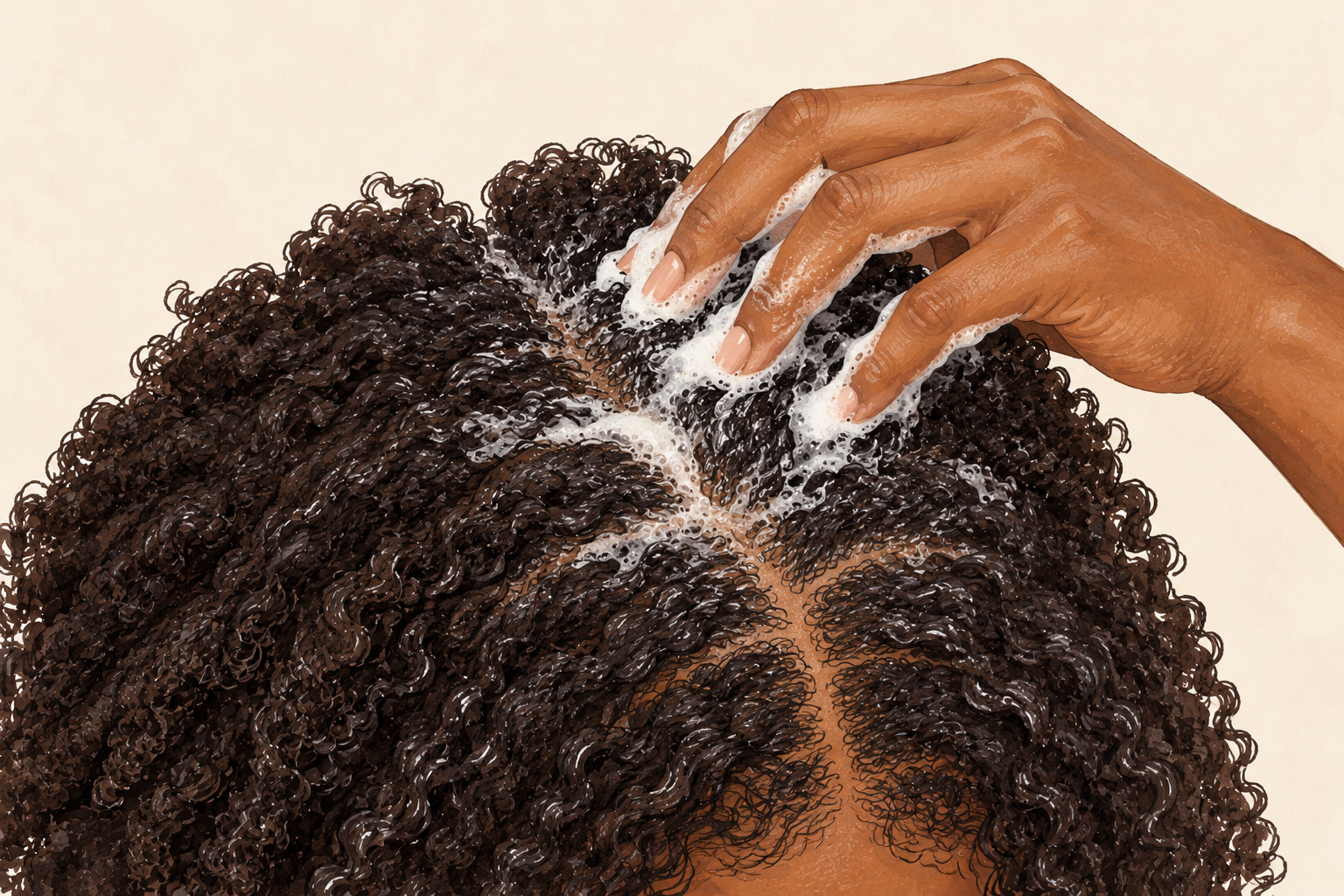
Wet your hair fully, work shampoo into the scalp with your fingertips for a full minute, then rinse well. Let the suds run down the lengths instead of scrubbing the ends. Use lukewarm water, because very hot water dries the scalp. Rinse until the water runs clear and your hair feels light. If your hair is very dry, shampoo once and skip the second round. A clean scalp is the base for every other step, so do not rush it. Your fingers should move the skin of your scalp, not slide on top of it. Rinse a little longer than feels necessary. If the water runs foamy at the end, you have not rinsed enough.
4. Day one, deep condition and detangle
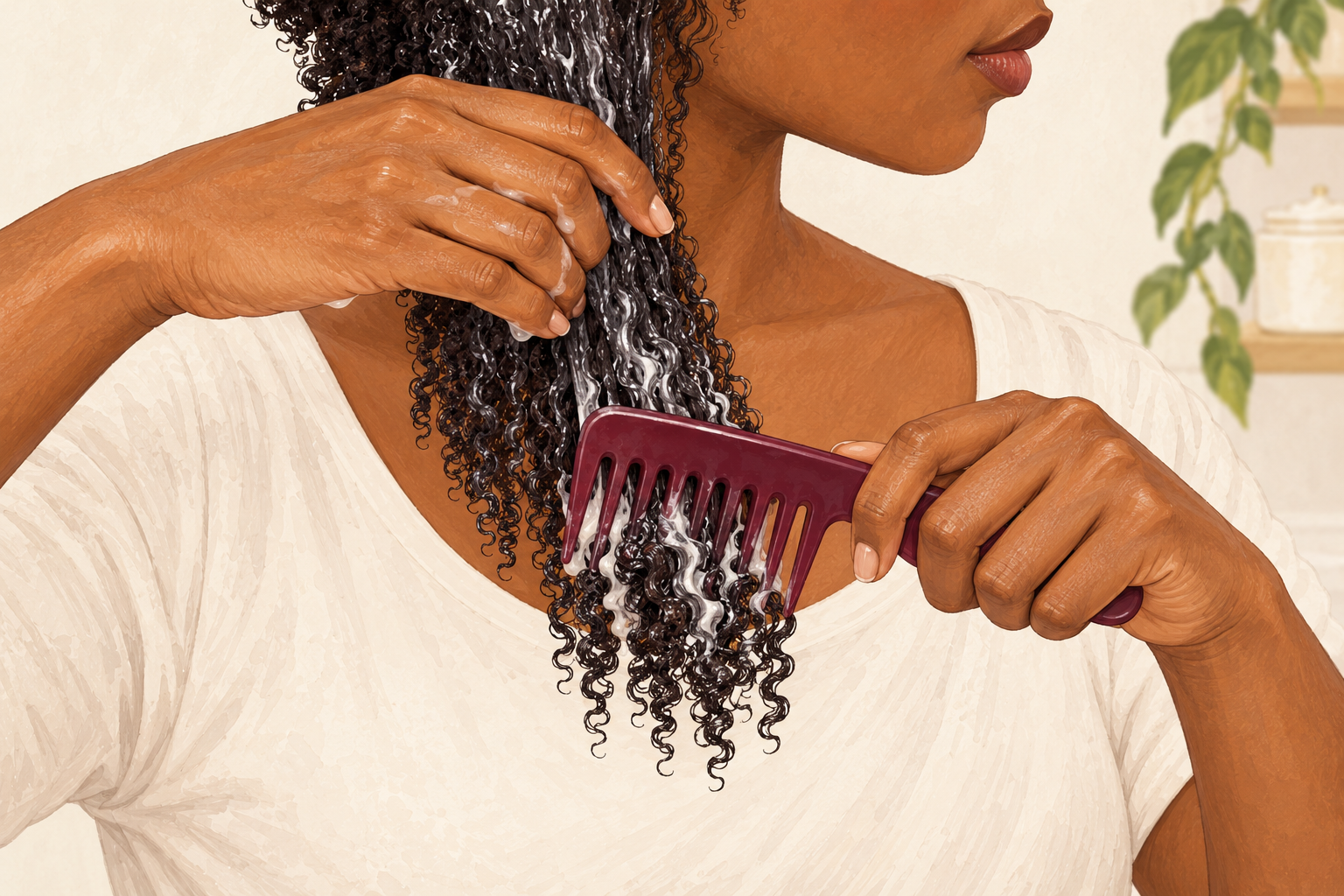
Smooth a generous scoop of conditioner from the ears down, then comb through in four sections. Leave it on for ten to twenty minutes, with a shower cap if you can. This is when hair is the softest, so it is the best time to detangle. Start at the ends and work upward with a wide tooth comb. Rinse with cool water to close the surface. Do this deep session once a week, and a quick two minute version is enough for the other washes. Your hair should feel slippery and loose, not squeaky. Set a timer so you do not wander off and forget it.
5. Day one, dry gently and seal in moisture
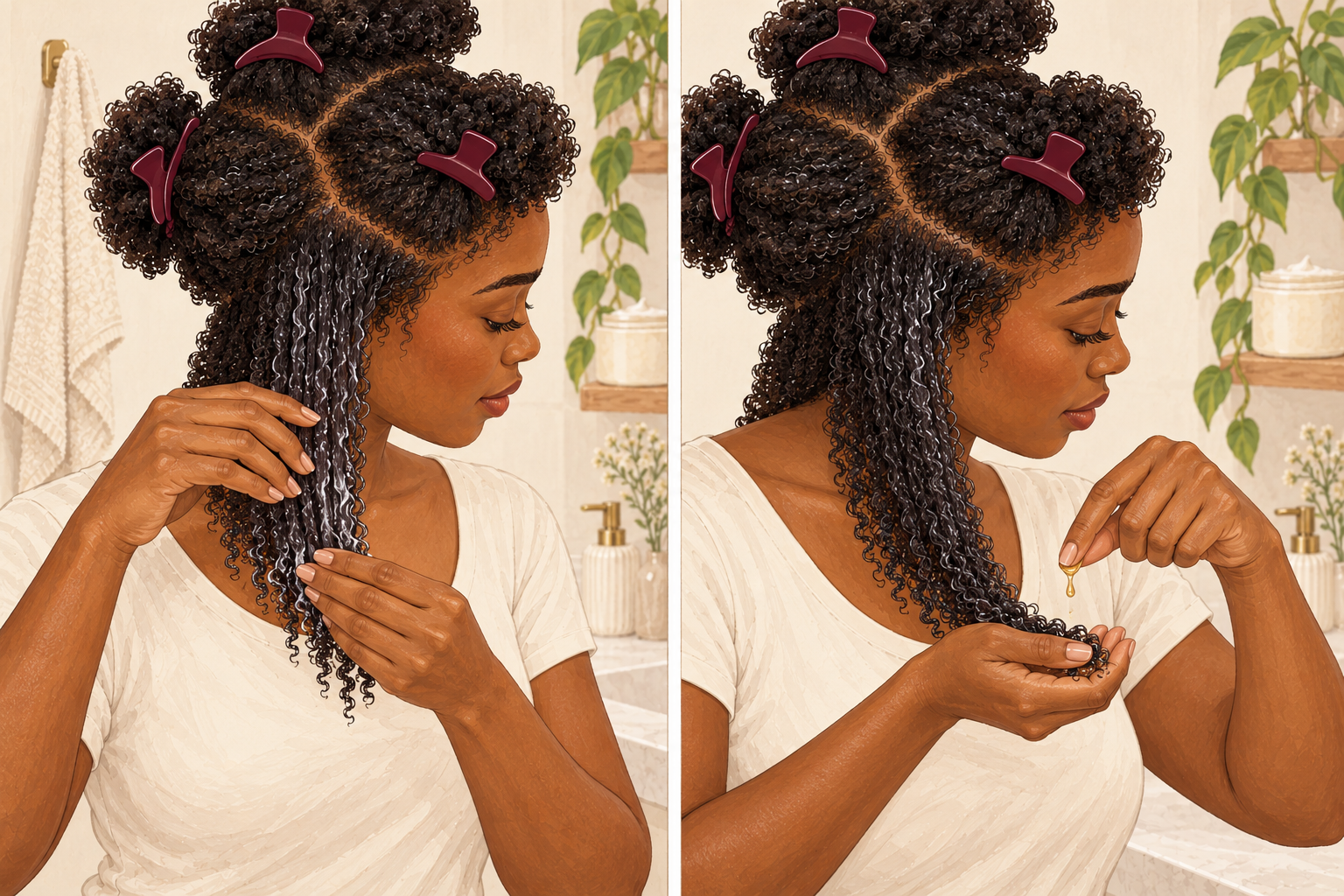
Squeeze the water out with a soft towel, then add a leave in cream and a few drops of oil while the hair is damp. The cream holds water and the oil seals it in. Skip rubbing, because rubbing raises frizz. Air dry as much as you can, or use a diffuser on low heat. Do not comb hair after it has dried, since that breaks the style. Your ends need the most, so apply the cream there first and work upward. By evening your hair should feel soft and not tacky. Wait until it is fully dry before touching it again.
6. Day two or three, refresh the ends with a light mist
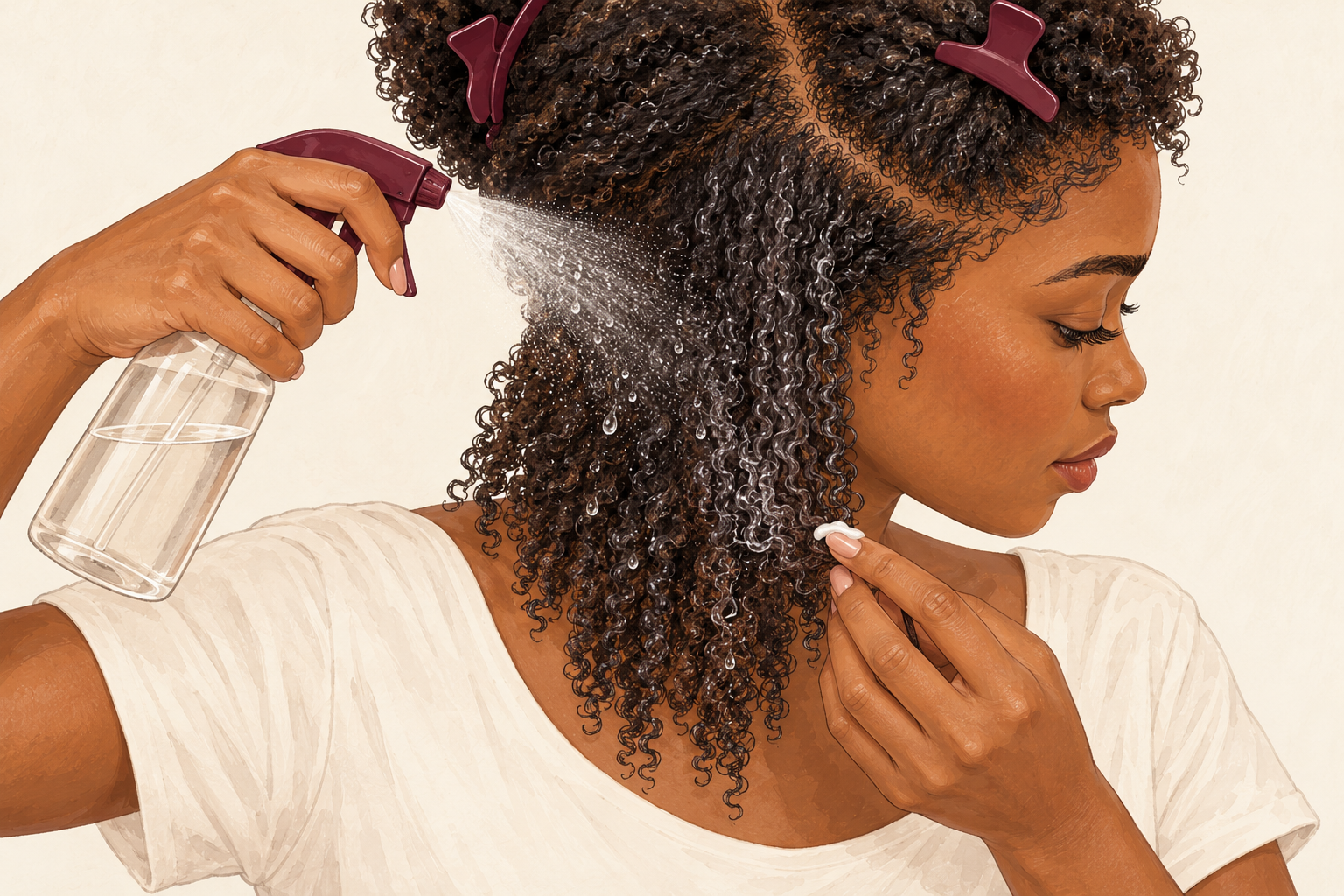
Spritz the ends with water or a light leave in mist, then smooth in a drop of oil. Hold the bottle a hand’s length away so you dampen the hair and do not soak it. Then pat and shape it with your hands. This takes two minutes and keeps the style looking fresh between washes. Do not mist the roots, because they get greasy quickly. If your hair is fine, use only water and a drop of oil. If it is very curly, a mist with a little cream works better. Try it on day two and keep notes on what works. Skip it on the days your hair already feels soft and fresh.
7. Midweek, give your scalp a few minutes
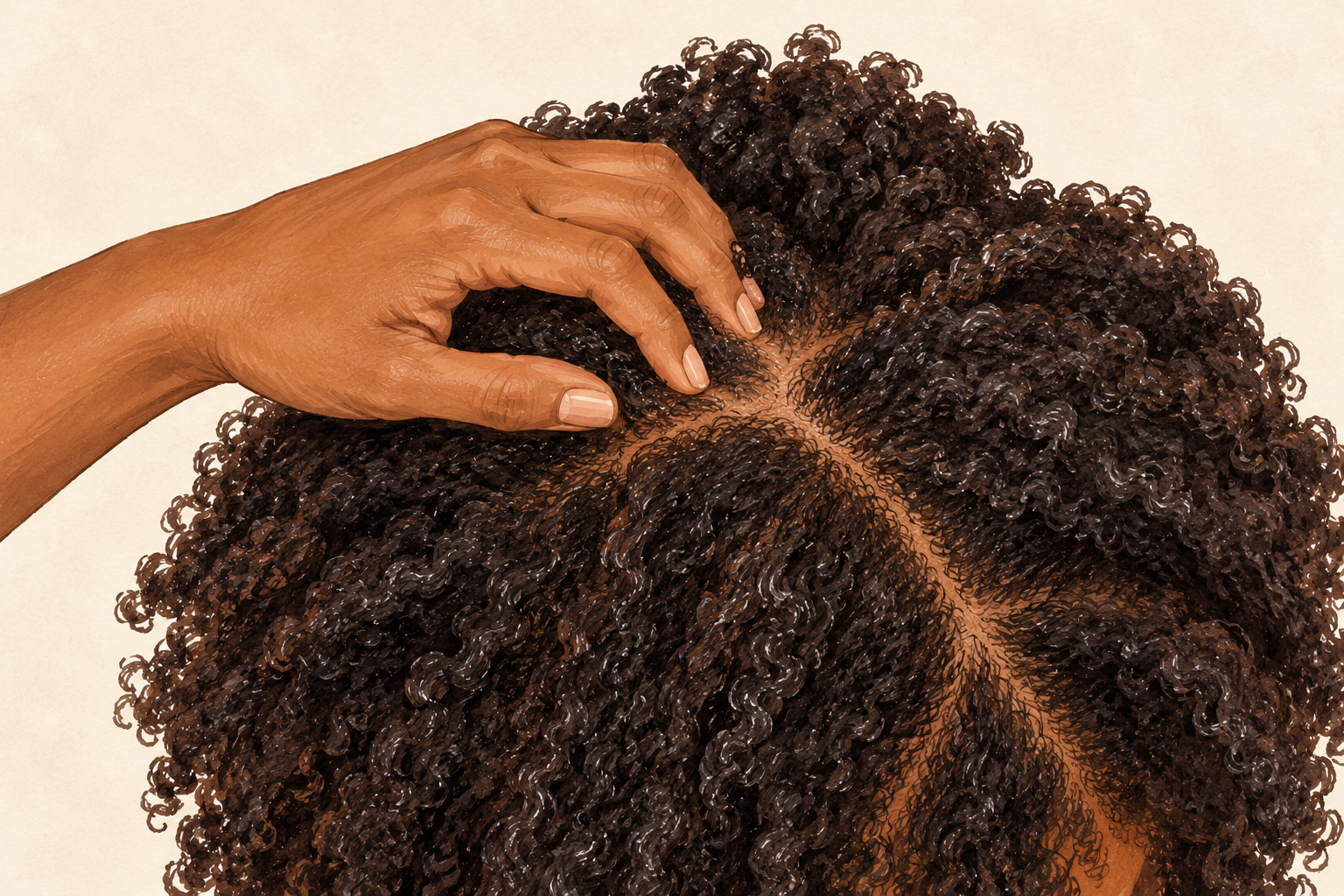
Press your fingertips into your scalp and move in slow circles for three to five minutes, with a drop of light oil if it feels dry. It is relaxing and keeps the scalp comfortable. Do it in the evening while you watch something. If your scalp is oily, skip the oil and just massage. Stop if anything stings or looks red. Use only the pads of your fingers, never your nails. A short scalp session twice a week is plenty, and it keeps flakes down between washes. Add a little extra pressure at the temples, where tension builds up.
8. Choose a gentle style for the day
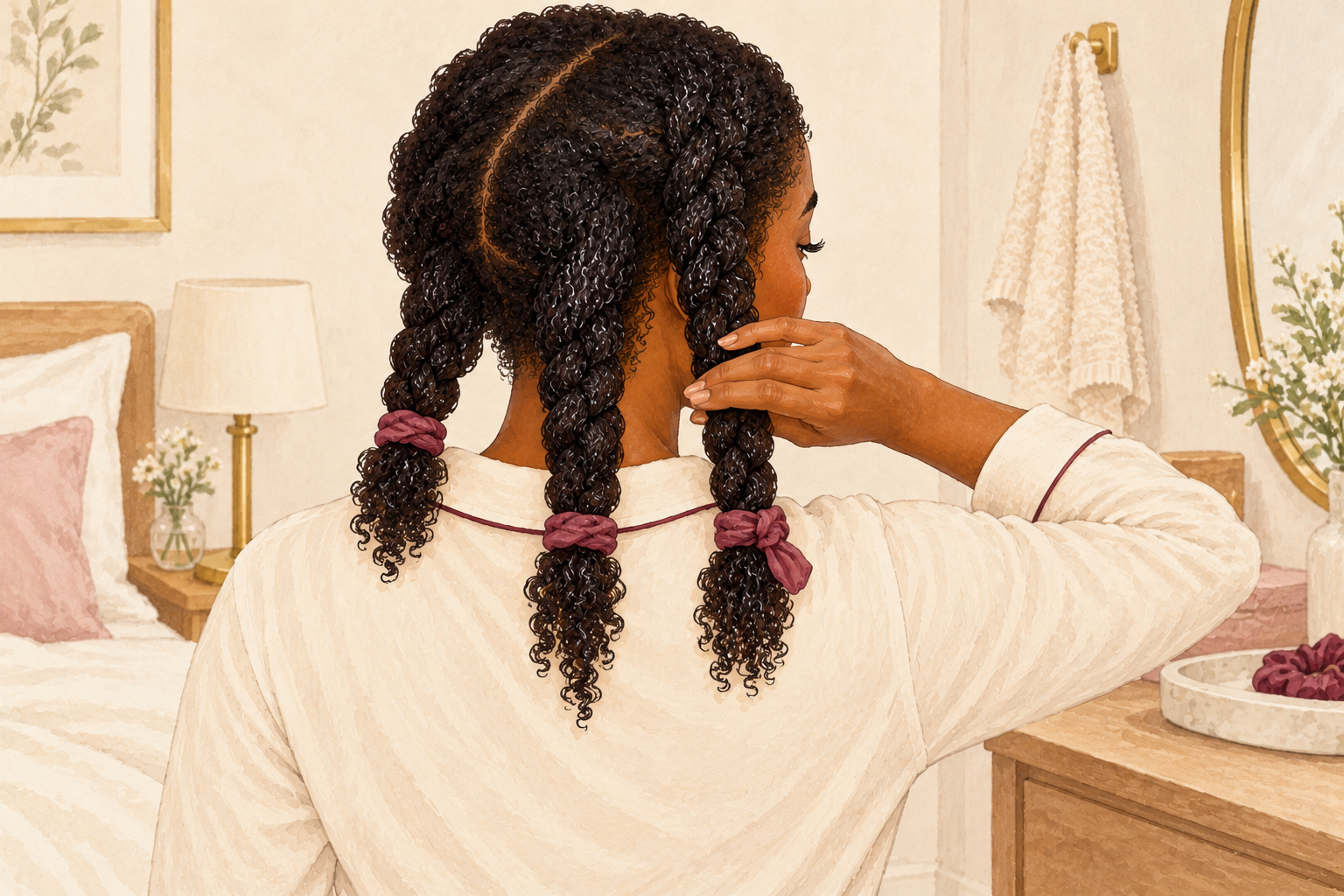
Wear a loose braid, a low bun or twists that sit gently on your head. Tight ponytails pull on the hairline and cause breakage over time. Use soft scrunchies, not thin elastics, and move the style position each day. Check that nothing aches by midday. If it does, loosen it right away. A style you can leave alone for two or three days means less handling, and less handling means less breakage. This is a good place to use up the extra five minutes in your morning. Keep a few soft scrunchies by the door so you grab one on your way out. A claw clip is a good pick for thick hair that feels heavy by afternoon.
9. Weekend, check your ends and scalp
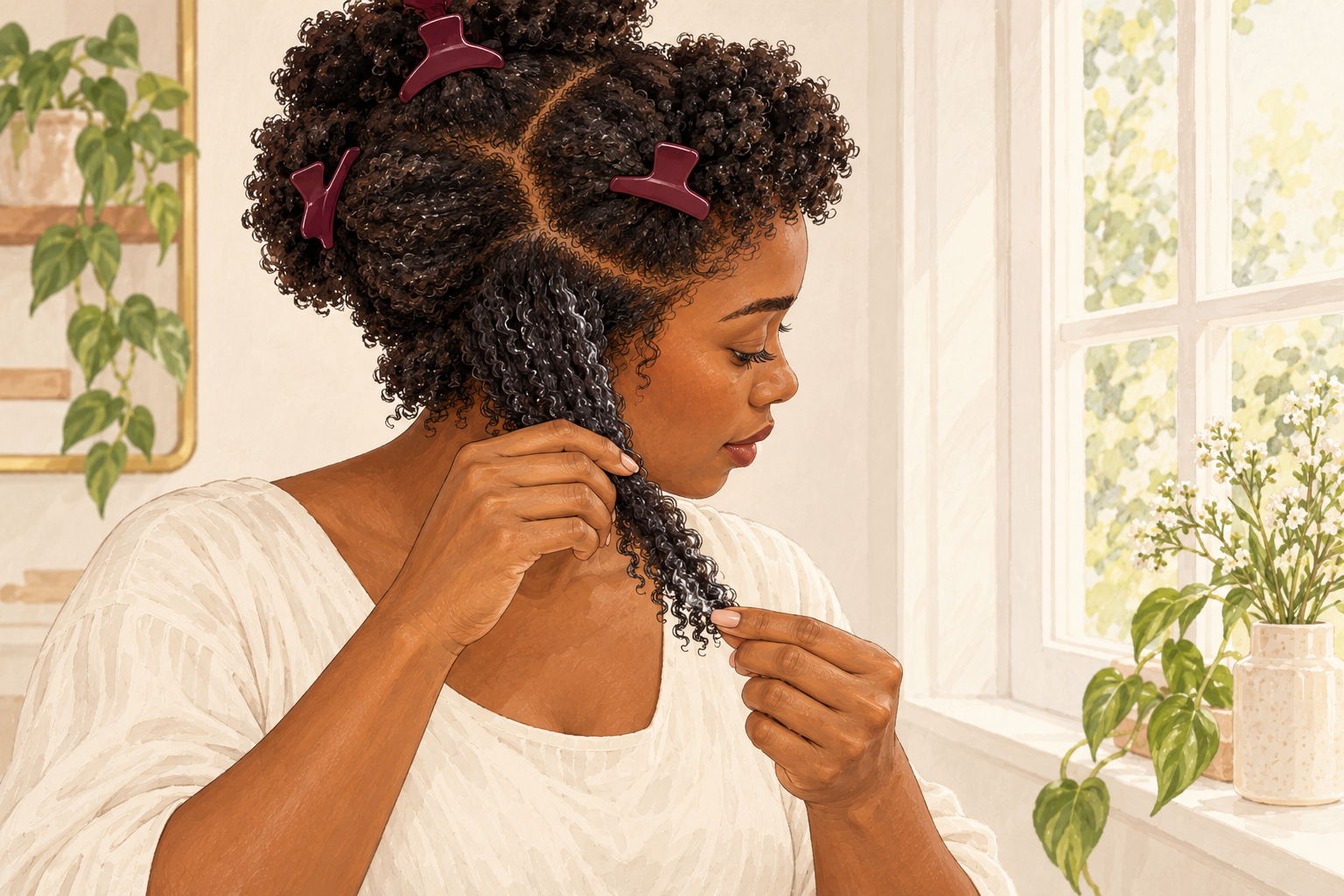
Go through your hair in good light and look for splits, knots, flakes and tender spots. Twist a small section and look at the tips. Do you see white dots or forked ends? Is the scalp tight, itchy or flaky? These small signs tell you whether to add moisture, cut the ends or wash a bit more. Five minutes is enough. Write down what you see, so next week you can compare. Also check your tools, because a clogged brush needs a wash. Sunday evening, with a cup of tea, works nicely. If you find a snag, mark it and trim it on your next wash day.
10. Weekly extras and swaps
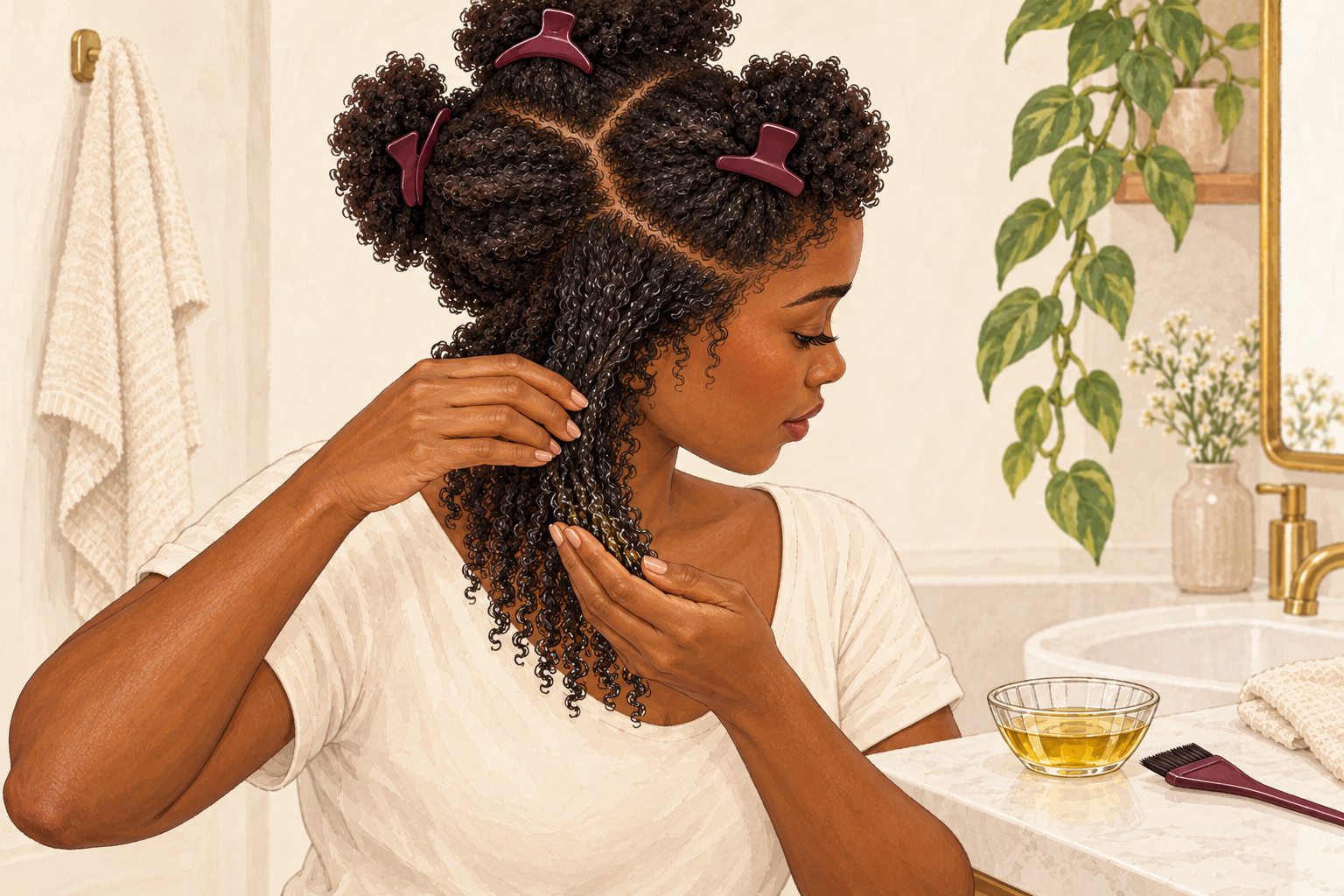
Once a week, warm a spoon of oil and rub it into dry hair for twenty minutes before your wash. If your hair feels coated, clarify with a clarifying shampoo once every two to four weeks instead. When your ends split, trim a quarter inch rather than waiting. On very busy weeks, swap the deep conditioning for a quick two minute rinse, or swap a wash for a co wash. These swaps keep the habit alive when time is short. Pick the one that matches your biggest worry this month. Write the plan on your calendar. A co wash means washing with conditioner only, which is kind to dry strands.
11. Bedtime, secure your hair loosely
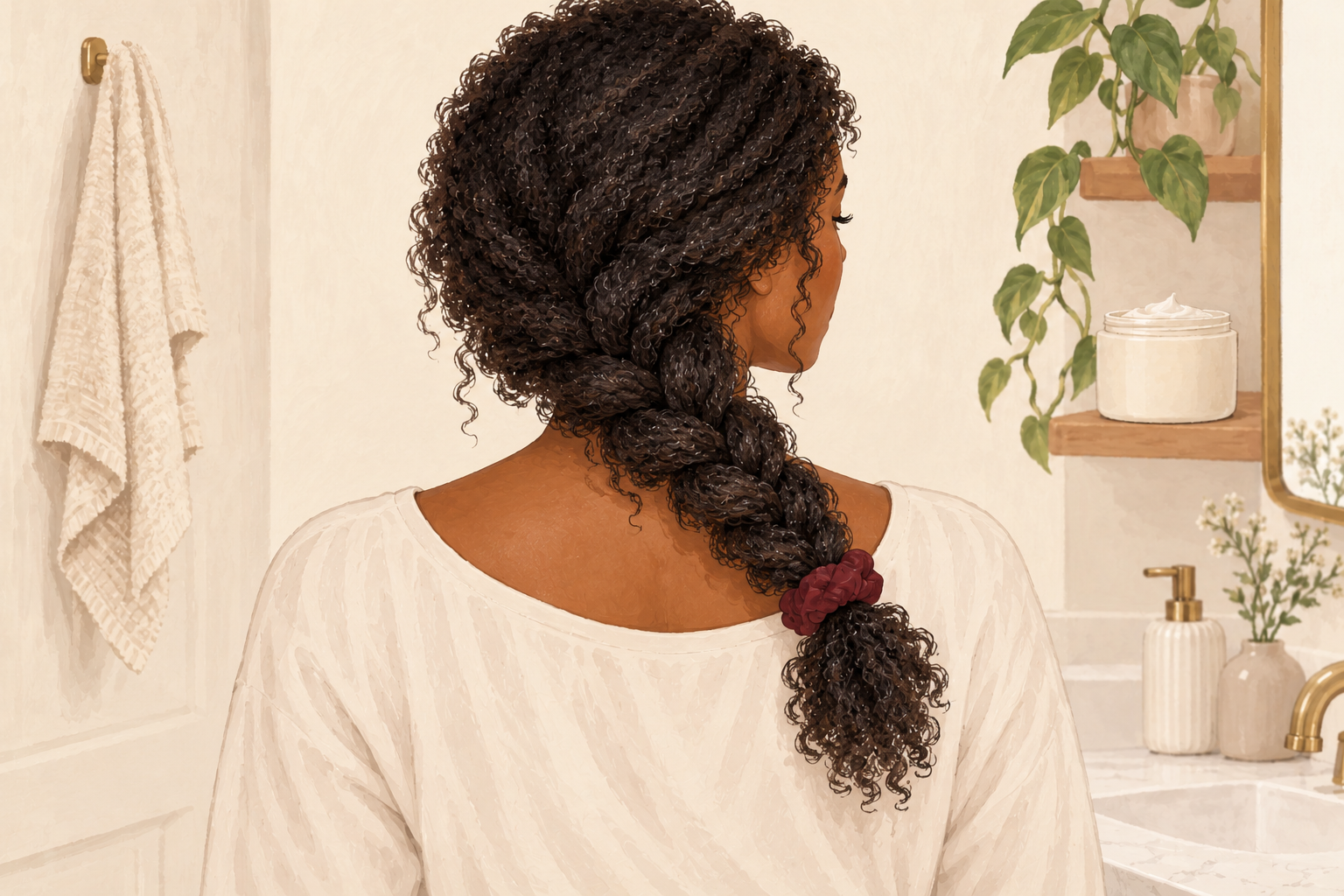
Gather your hair into a loose braid, a few twists or a high pineapple tied with a soft scrunchie. This keeps the strands from rubbing on the pillow and tangling. Leave enough room that you could slide a finger under the band. Add a drop of oil to the ends first if they feel dry. A tight band at night pulls on the hair for eight hours, so loose is the whole point. Do the same braid each night so it becomes a habit you stop thinking about. Check that your edges are free and not tugged. Smooth the braid with a little water on your palms so flyaways lie flat.
12. Cover with satin and expect gradual change

Slip on a satin bonnet or sleep on a satin pillowcase every night. Satin lets your hair glide, while cotton drinks its moisture and roughens the surface. After two weeks you will likely notice less frizz, fewer tangles and softer hair on wash day. After a month, ends look healthier and the style lasts longer. Keep a photo log. If the week fell apart, pick up the routine again the next day, because a missed step is not a setback. A weekly hair care routine works because it is easy to repeat. Wash your bonnet or pillowcase every week.
Complete the Routine: Your Weekly Hair Care Routine, Made Easy
Block out your wash day now and gather your basket tonight. For more structure, read about hair care routine and curly hair care routine.