Your scalp feels tight the second you step out of the shower, and by evening there are fine white flakes on your shoulders and an itch you keep scratching. Another shampoo changed nothing. A hair mask for dry scalp is a gentle thing to try at home. Here are 12 simple ways to do it safely, so start at number one tonight.
1. Gather your kit and patch test
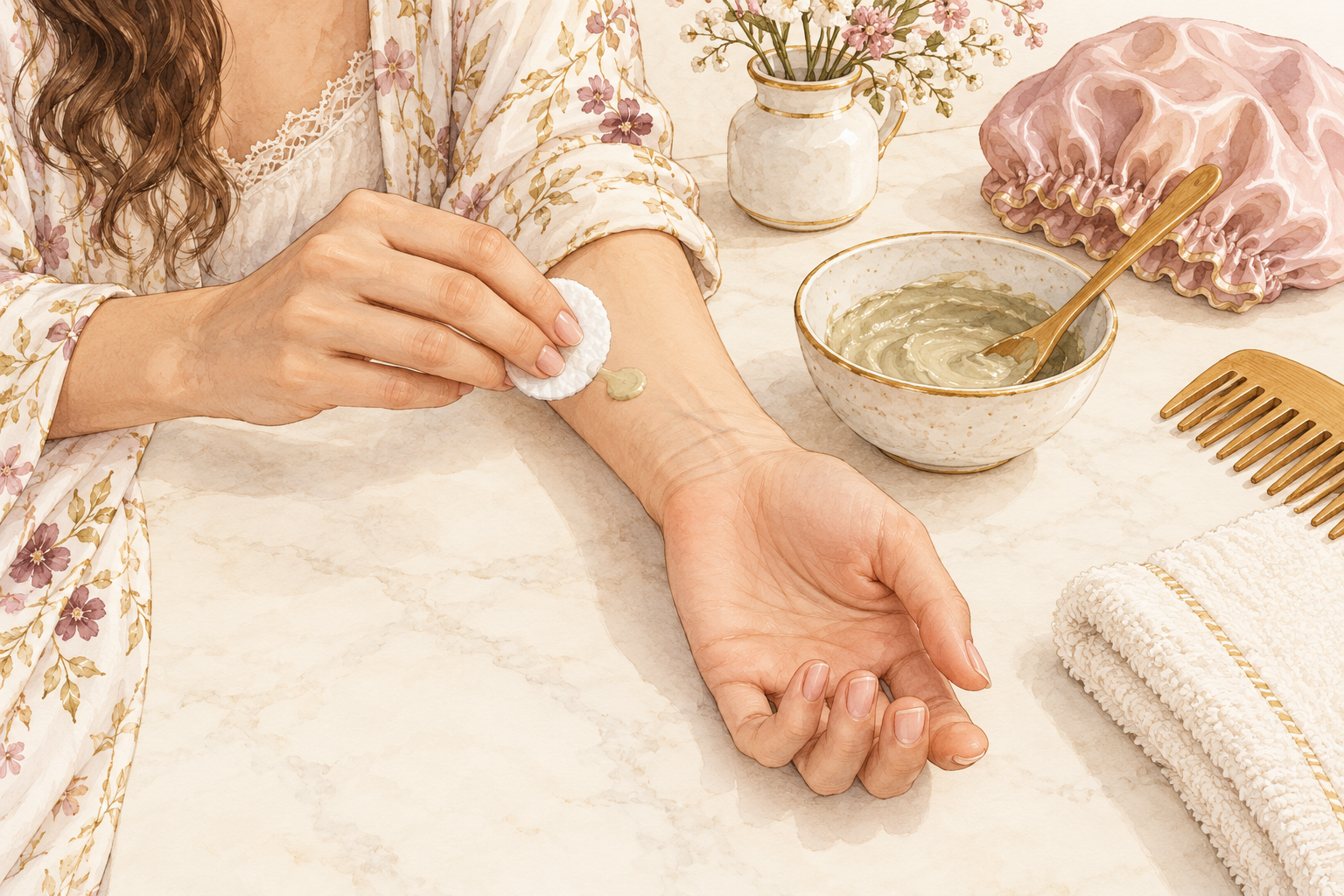
Dab a tiny amount of each new ingredient on your inner wrist and leave it for a full day. Look for redness, itching or swelling, and skip anything that reacts. Test one ingredient at a time so you know which one caused a problem. You need a small bowl, a spoon, a wide tooth comb, a shower cap and an old towel for your shoulders. Never put a mask on a scalp that is cut, scratched or sore, because oils and acids sting open skin. Do the wrist test the day before you plan to mask. A cotton pad dipped in the mix keeps the wrist dab neat and easy.
2. Check that it is dry scalp, not oily flakes
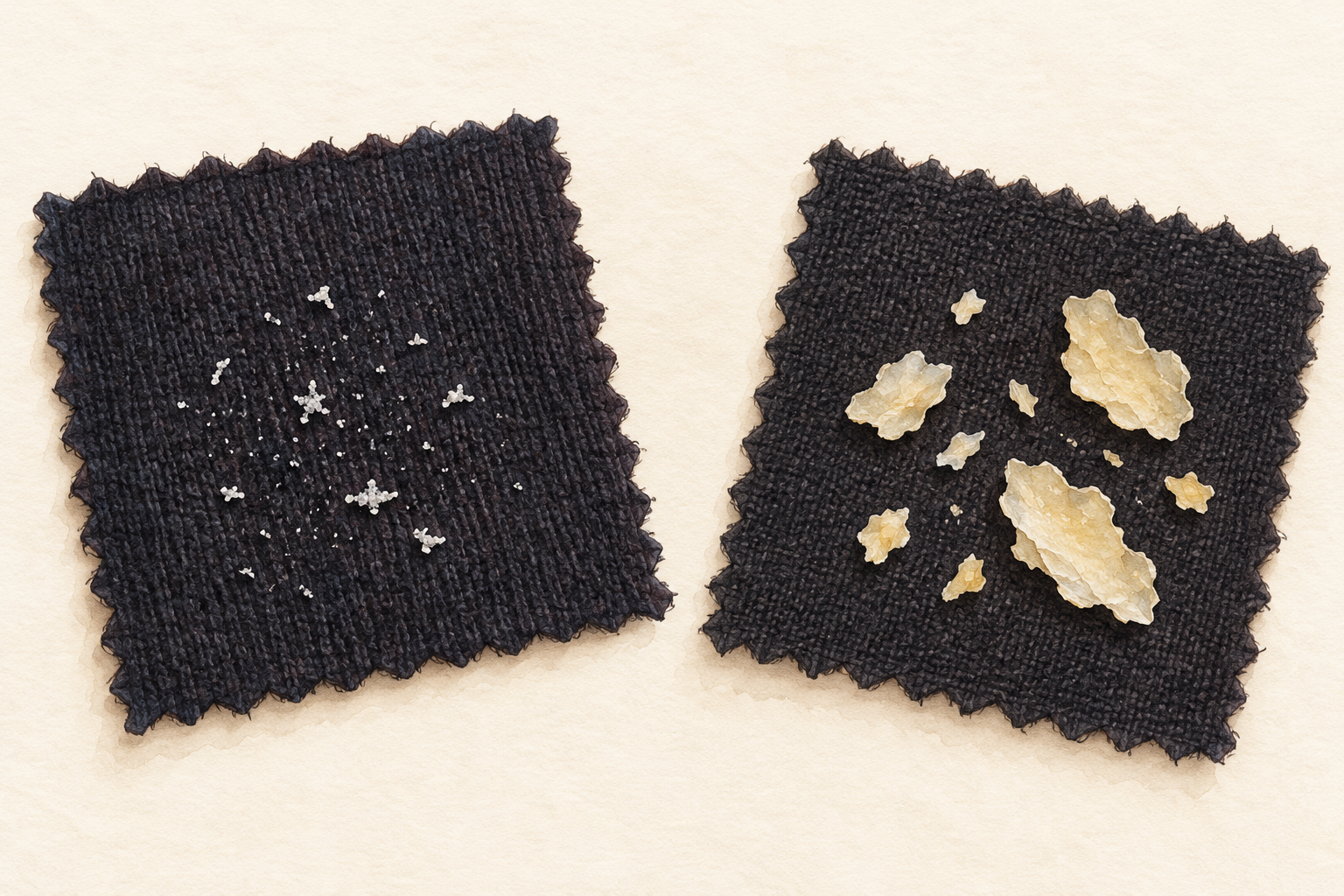
Look at the flakes in daylight and feel how your scalp behaves an hour after washing. Dry scalp flakes are small, white and powdery, your scalp feels tight, and your hair is often dry as well. Oily flakes are larger, yellowish and a bit greasy, and the scalp may feel oily. Masks suit the dry kind best. If you cannot tell which one you have, start with the gentlest recipe and watch what happens over two weeks. A mask soothes the surface for a while and does not cure the cause. A dark top shows the difference too, so check your shoulders at the end of the day.
3. Start with plain aloe gel
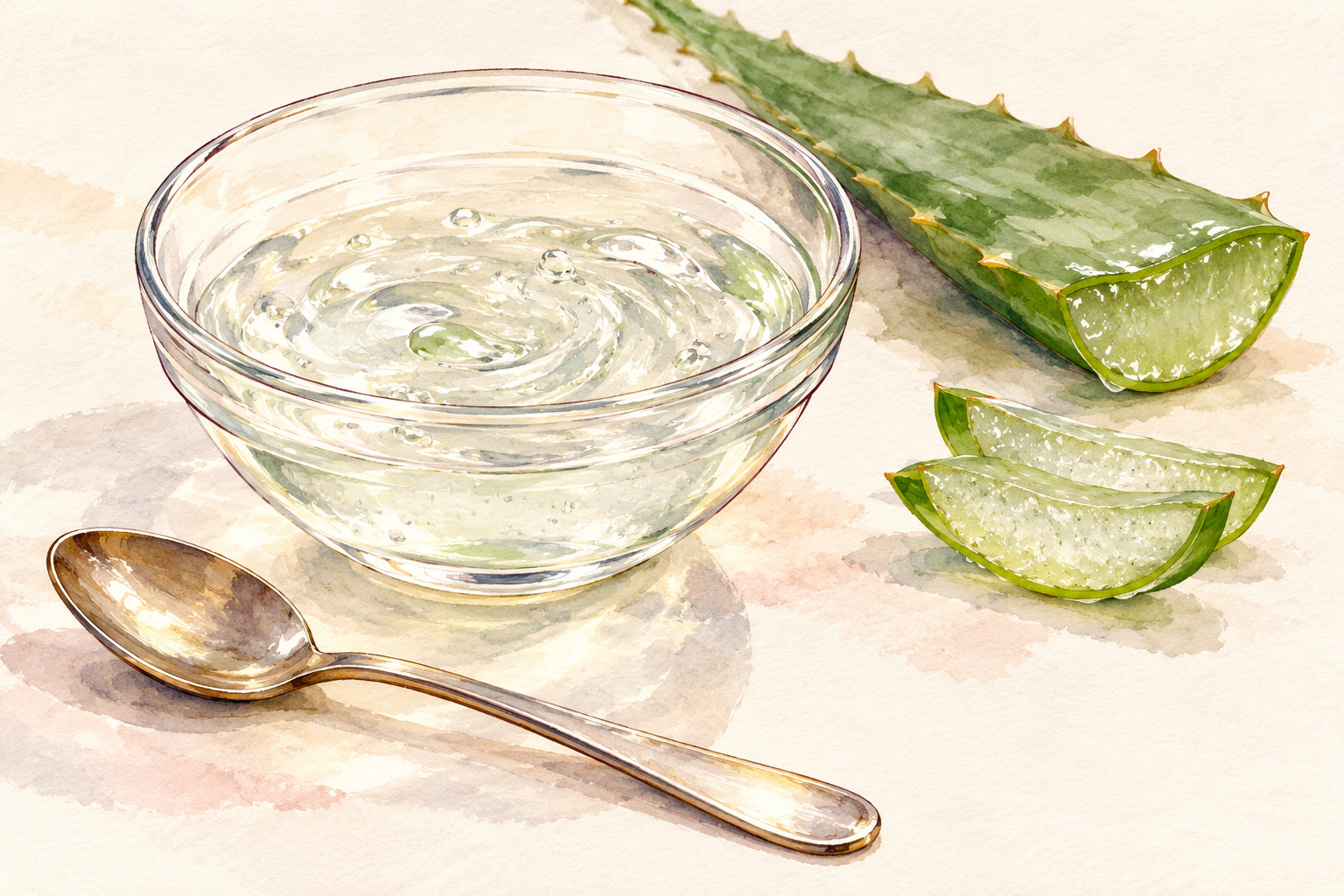
Stir two tablespoons of pure aloe vera gel with one tablespoon of water until it spreads like thin cream. This is the lightest option, so it rinses out easily and suits fine hair that goes flat. Choose a gel that is clear, with no perfume and no alcohol, because those two are what sting. It feels cool and calming on a hot, itchy patch. If your skin stings, rinse it off at once. Keep what is left in the fridge for a day, then throw it away. Smooth it on while the scalp is still damp from a rinse.
4. Try plain yogurt for calm and softness
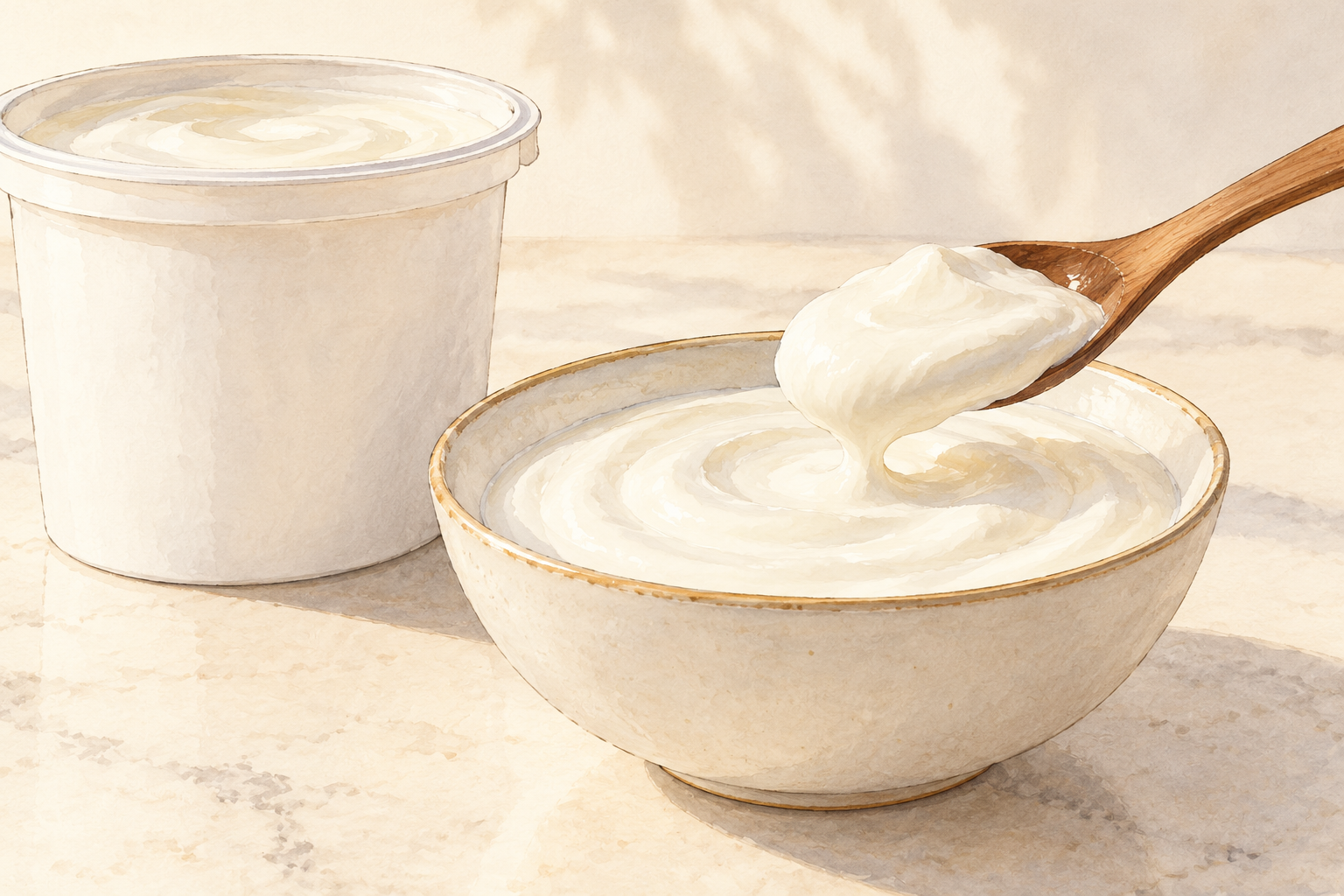
Spread three tablespoons of plain, unsweetened yogurt over a damp scalp and leave it for fifteen minutes. It is cool on the skin and rinses clean, which is why it works well on a sore, itchy day. Use it fresh from a new tub, and do not keep leftovers from the mask. Choose plain over flavored, because sugar and perfume are not wanted near a tender scalp. If dairy tends to bother your skin, go back to the aloe. Rinse until no white film is left on your parting. Let the tub sit out for ten minutes first if cold yogurt feels too sharp on your scalp.
5. Warm a teaspoon of coconut or jojoba oil
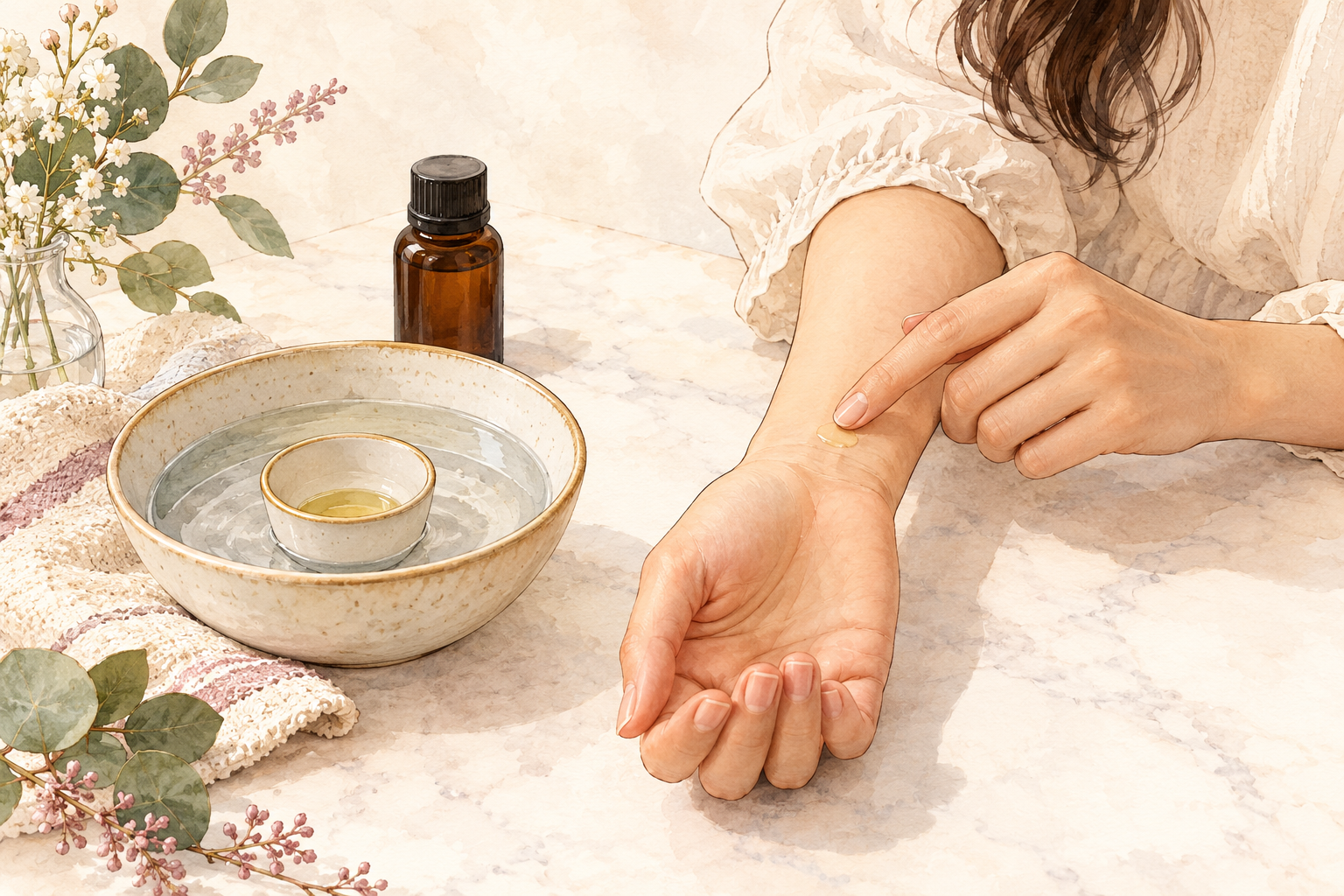
Melt one teaspoon of coconut or jojoba oil in a cup set in warm water until it feels just warm to the wrist. Press it onto a damp scalp with your fingertips, keeping the amount small. Both oils are moisturizing, though oils seal in moisture and do not add any, which is why damp skin matters. A thick coat is hard to wash out and leaves the scalp greasy. Skip this one if your scalp is already oily or the flakes look yellow. Follow with a gentle shampoo, twice if needed. Test the warmth on your wrist, because hot oil on the scalp is a mistake you only make once.
6. Part the hair and press the mask on
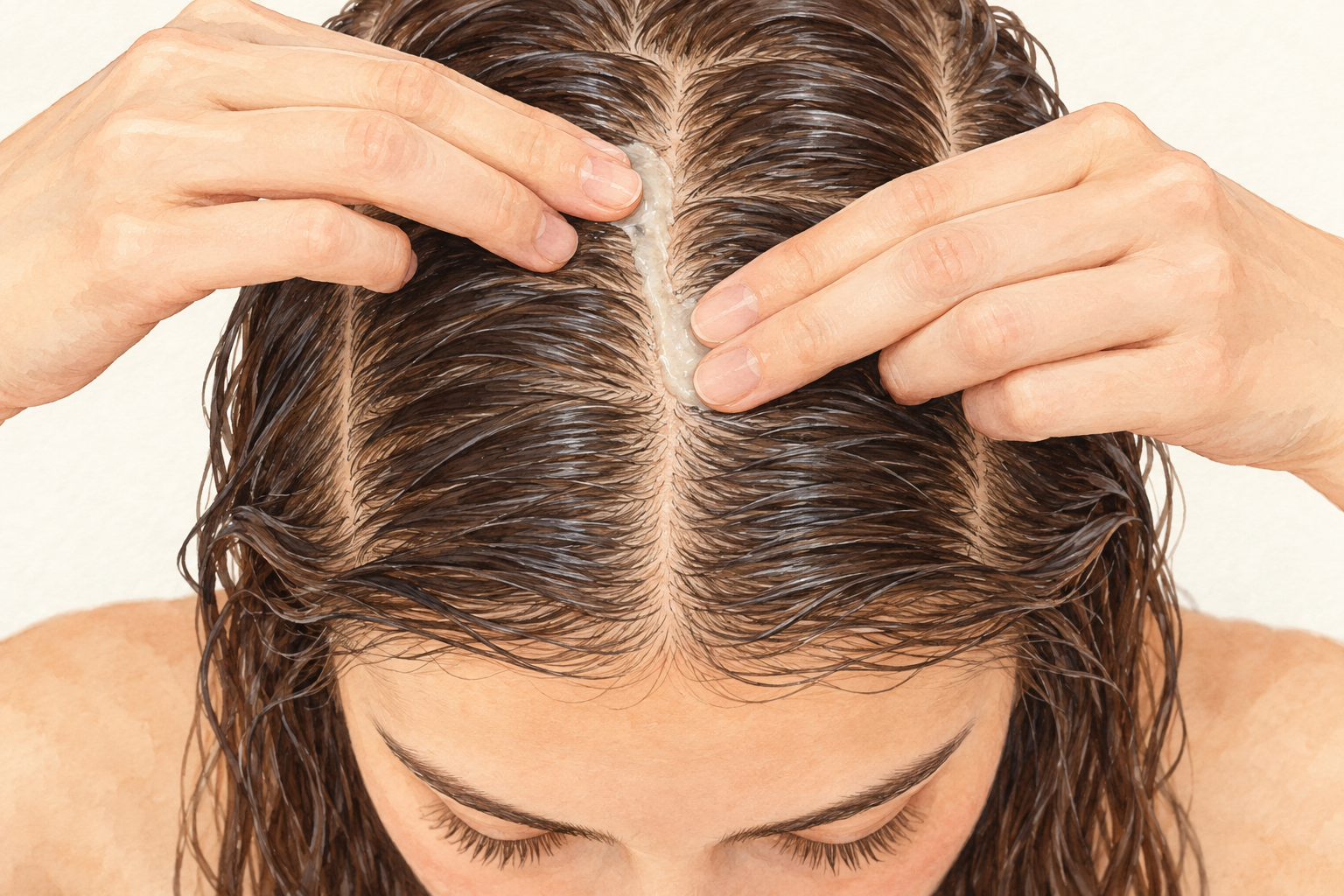
Part damp hair in lines about an inch apart and press the mask onto the scalp along each line. A hair mask for dry scalp works on skin, so keep it off the lengths. Use the pads of your fingers and never your nails. A wide tooth comb makes neat partings without much effort. Work from the front to the back, and finish at the nape. If the mix drips, it is too runny, so stir in a little more yogurt or gel. A thin, even layer works better than a thick blob. Use four parting lines for short hair and six or eight for long hair.
7. Massage lightly for two minutes
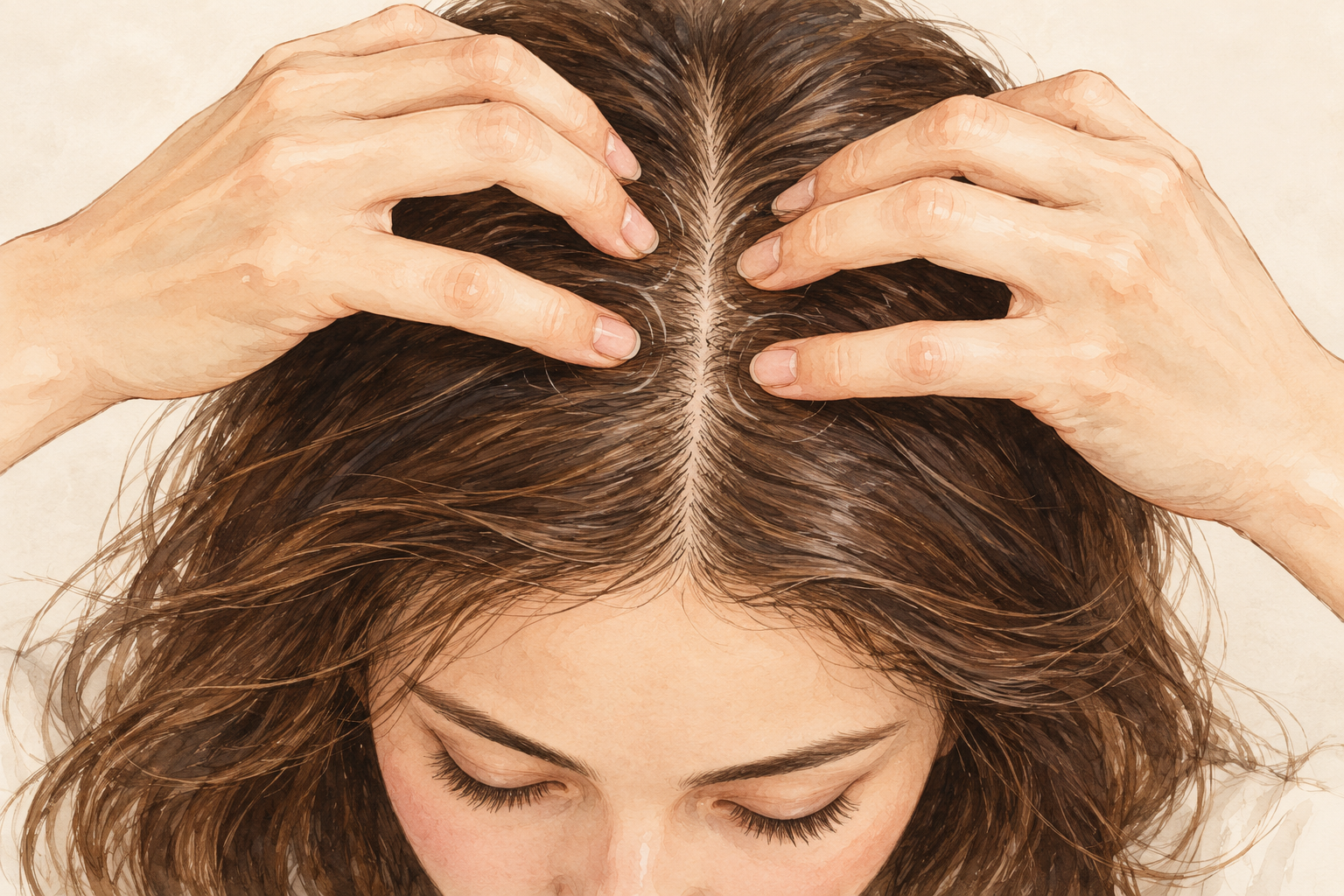
Make slow circles with the pads of your fingers for two minutes, pressing just enough to move the skin. Be gentle, because a dry scalp scratches easily. The massage warms the area and spreads the mask into the parting lines. Stop if it feels sore or tingly. Many girls rush this part, but two slow minutes make the whole mask feel like a treat. Breathe out as you press, and drop your shoulders, since tight shoulders make your scalp feel tighter too. Your scalp should feel warm and soft afterwards, never hot or red.
8. Leave it for 10 to 20 minutes, then rinse lukewarm
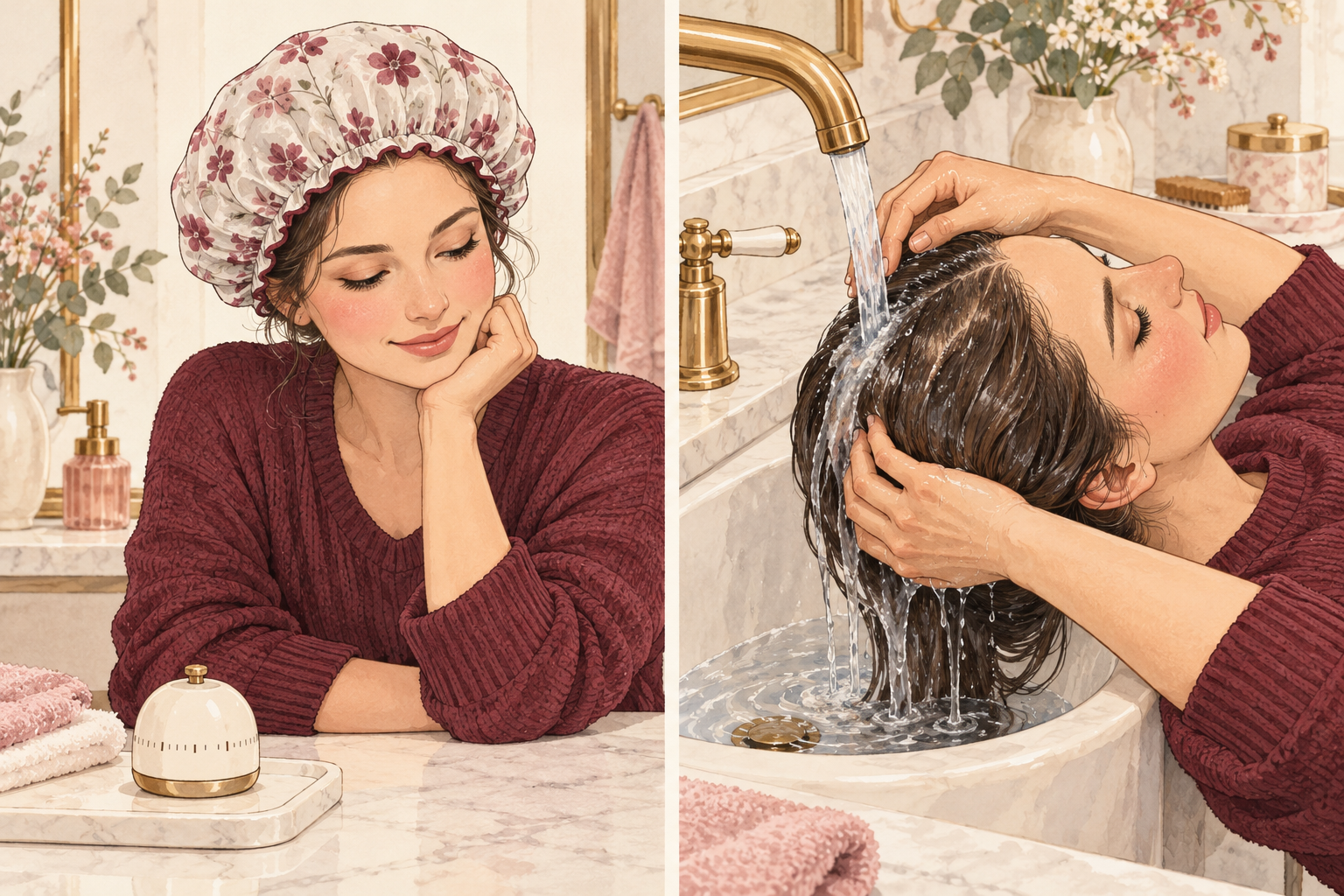
Clip your hair up, cover it with a shower cap and set a timer for 10 to 20 minutes. Do not let the mask dry hard on your scalp, because that makes it harder to rinse and can irritate. Rinse with lukewarm water, since hot water dries the scalp out again. Wash with a gentle shampoo afterwards if you used oil, and rinse until the water runs clear. A cooler splash at the very end feels soothing. Pat the scalp dry with a soft towel instead of rubbing. Lean your head back for the rinse so the mask does not run into your eyes.
9. Keep it to once a week
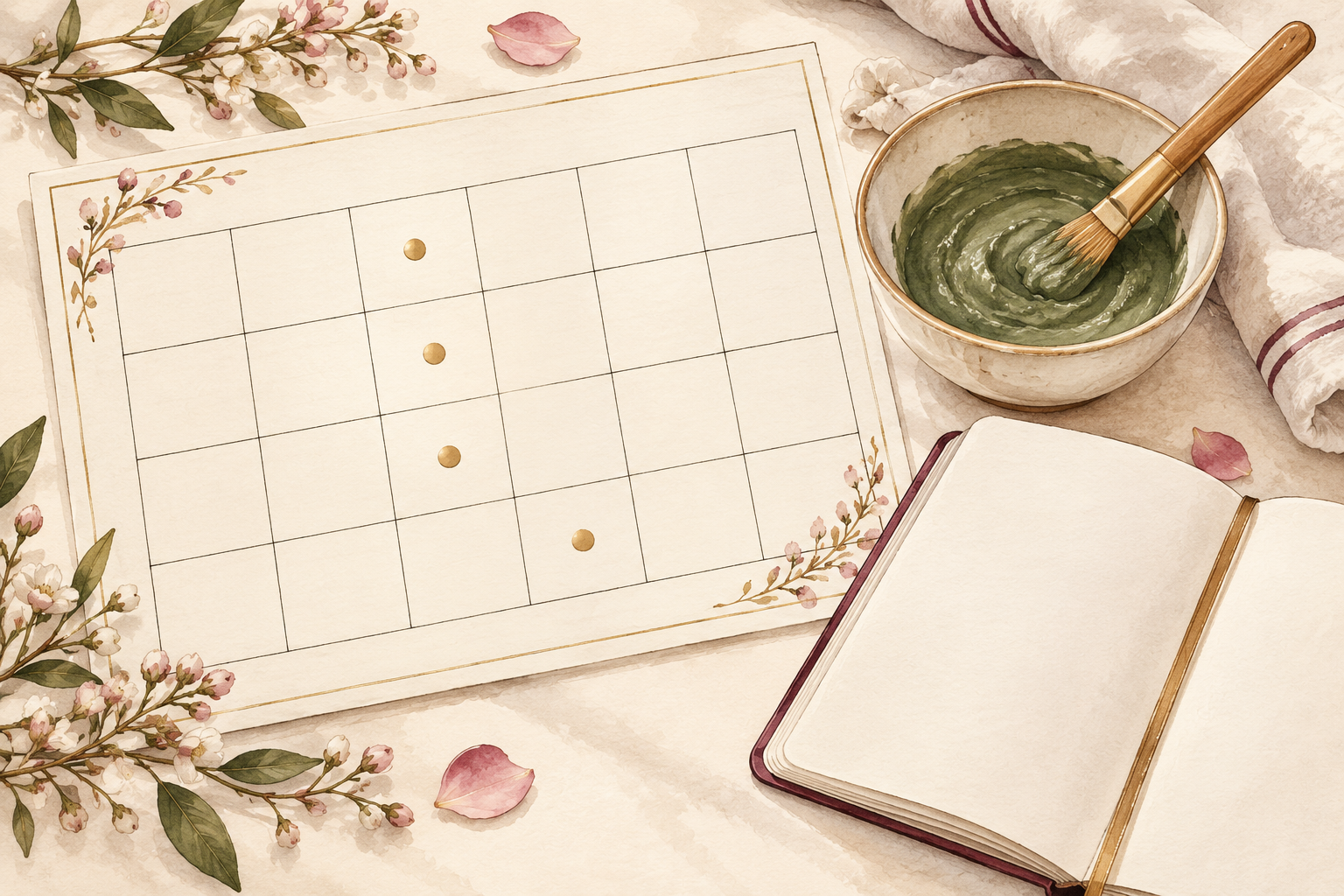
Start with one mask a week for four weeks, and add a second only if your scalp loves it. More masks do not mean a calmer scalp, and too many can leave it greasy or itchy. If you notice bumps, greasiness or more itching, step back for a week. Your scalp needs regular gentle washing more than it needs frequent masks. Write the mask days on a calendar so you can see the rhythm and how your scalp feels after each one. Skipping a week costs you nothing, while overdoing it can set you back for days.
10. Leave out the harsh extras
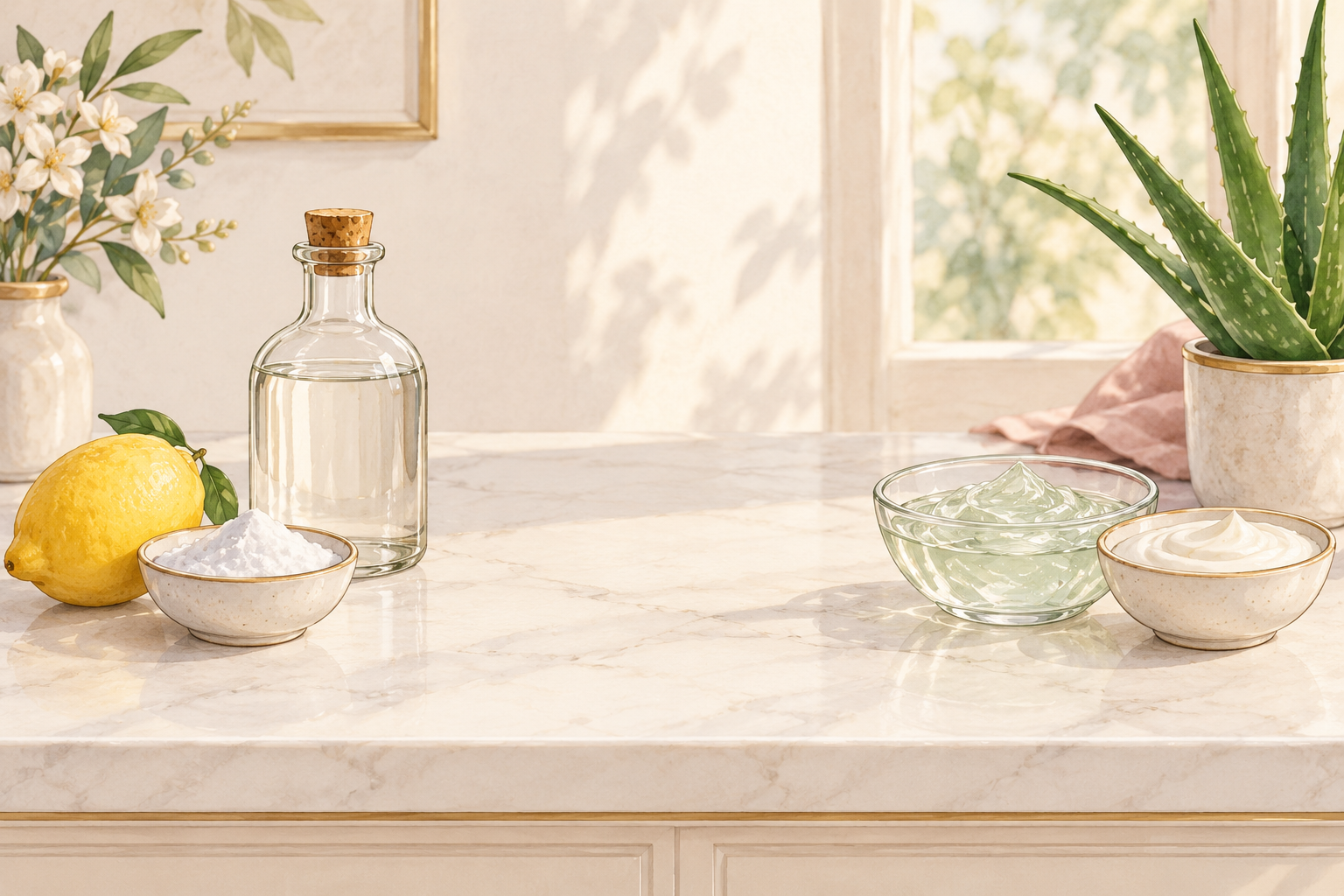
Keep lemon juice, vinegar and baking soda off a dry scalp. They can sting and dry it out more. Tea tree oil is popular but strong, so if you want it, dilute one or two drops in a tablespoon of carrier oil and patch test first. Most heads do just as well with no essential oil at all. Plain and boring is a good rule for a sensitive scalp. If a tip online says to leave something strong on your head for an hour, close the tab. If something stings the second it lands, rinse it off and cross it off your list.
11. Fix the wash habits that dried it out
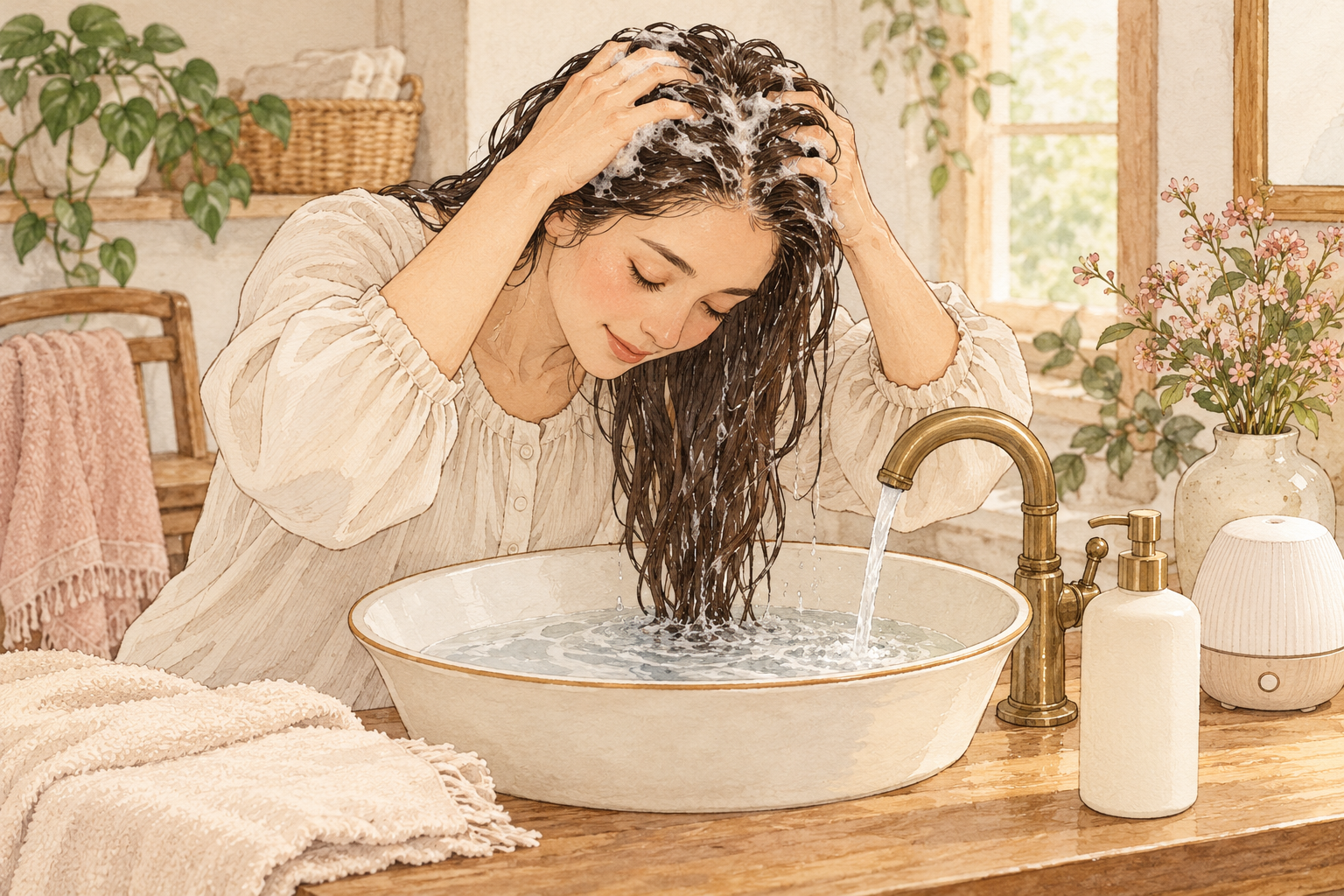
Wash with lukewarm water and a gentle shampoo, and stretch the gap between washes by a day. A mask is only a plaster if hot showers and harsh shampoo keep drying you out. Rinse well, because leftover shampoo itches. Cover your scalp with a hat in cold wind and use a humidifier or a bowl of water near a heater. If you want to compare gentle shampoo ideas, the shampoo guide linked below explains what to look for. Small changes here make your mask last longer. Ten minutes less in a hot shower already helps your skin keep its own moisture.
12. Expect softer, not cured, and know when to stop

Look for a scalp that feels softer and less tight for a day or two after the first mask. By week four, with gentle washing and one mask a week, the flakes and itch should be calmer though not gone. By week eight you will know what keeps you comfortable. Dry spells can return in winter. Stop any mask that stings or makes the itch worse, and wash it off straight away. If you see red patches, thick scale or sores, rest the scalp and see your doctor.
Complete the Routine: Hair Mask for Dry Scalp This Weekend
This weekend, patch test one ingredient, then leave the aloe or yogurt mask on your damp scalp for fifteen minutes. For the wash side of the story, read about shampoo for dry scalp and how to get rid of dry scalp.