Your scalp feels tight an hour after washing, fine white flakes sit on your dark top, and the shampoo that was meant to help seems to make it worse. Choosing a shampoo for dry scalp is partly about the label and partly about how you wash. Here are 12 checks to run before your next bottle, so start at number one tonight.
1. Look at the flakes before you pick a bottle
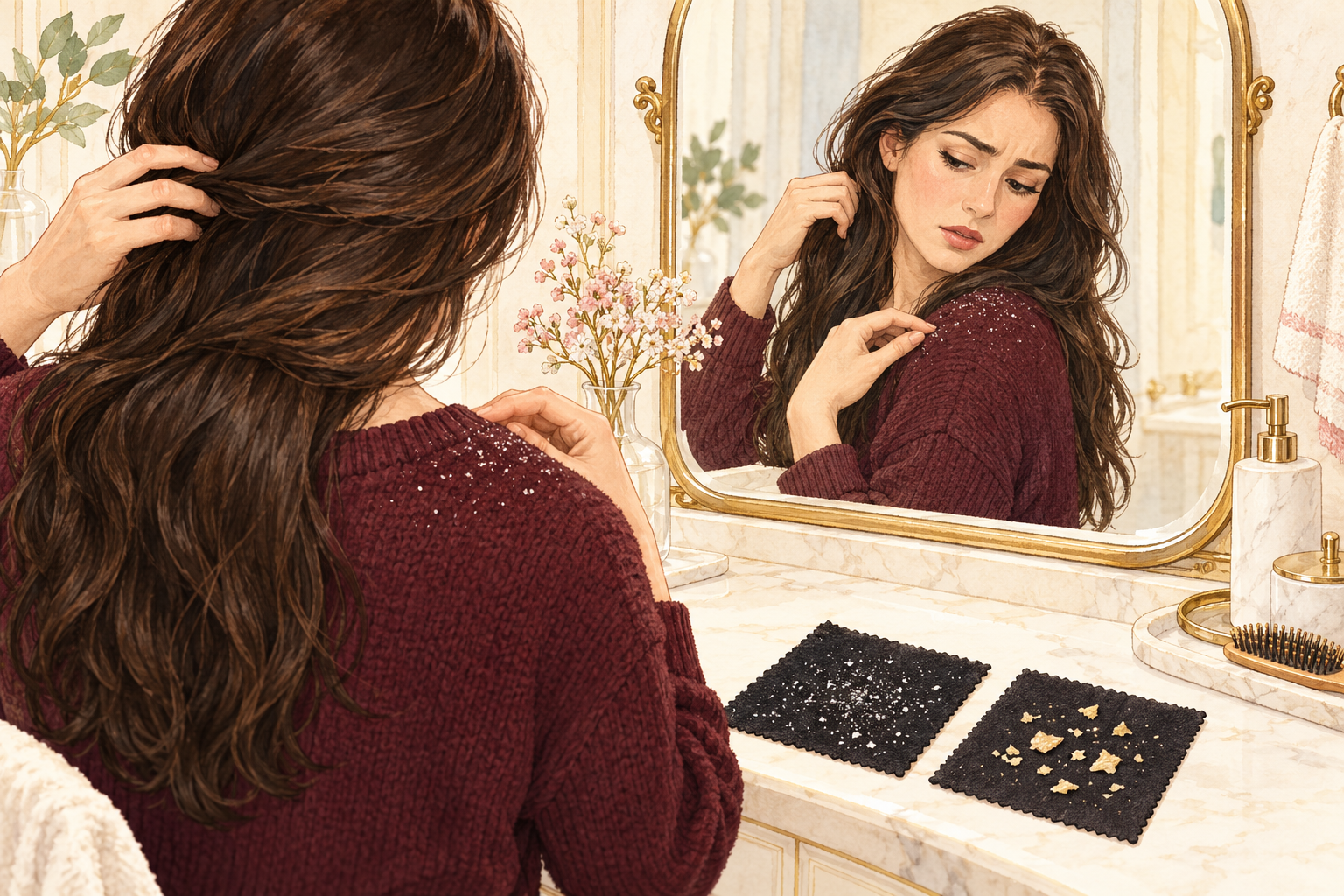
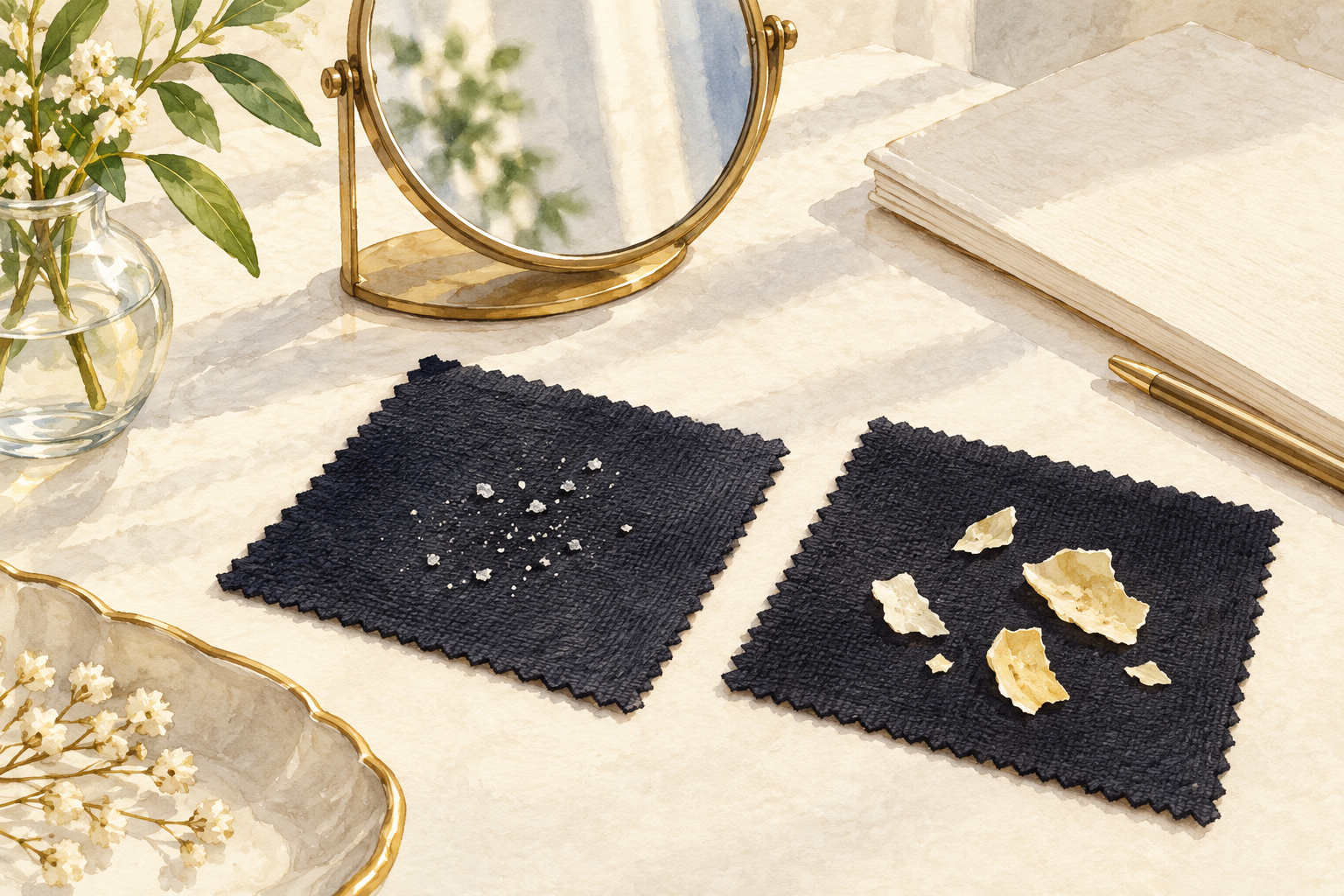
Part your hair in daylight and look at the size and color of the flakes. Dry scalp flakes are small, white and powdery, and the skin elsewhere may feel tight too. Dandruff flakes are larger, a little greasy and often yellowish, and the scalp can feel oily. The two can look alike, so use this as a guide and not a rule. If you cannot tell, treat it as dry scalp first and watch for two weeks. Take a quick photo so you can compare later. Check the crown and behind the ears too, since flakes gather where the shampoo is rinsed last.
2. List what is drying your scalp out

Write down hot showers, daily washing, cold air, indoor heating and strong cleaners, then tick the ones that apply to you. Most people tick two or three. Cutting those can help more than any new bottle, and it costs nothing. A shorter shower, a humidifier in the bedroom and a hat in the cold are small fixes that add up. Note when your scalp is worst, such as winter mornings or the day after a swim, so you can spot the pattern. Count how many hot showers you take in a week, and cut one.
3. Pause new products for two weeks
Stop trying a different bottle every week and keep to one gentle shampoo and one simple conditioner. Styling creams, oils and dry shampoo build up on the scalp and flake off looking exactly like dryness. Washing the build up out once and then keeping things plain tells you what is really left. Resist adding anything new for two full weeks. The best shampoo for dry scalp is often the plainest one you already own, so give it a fair chance first. If you must style, use a light mist and wash it out the same night.
4. Start with a mild, fragrance free formula
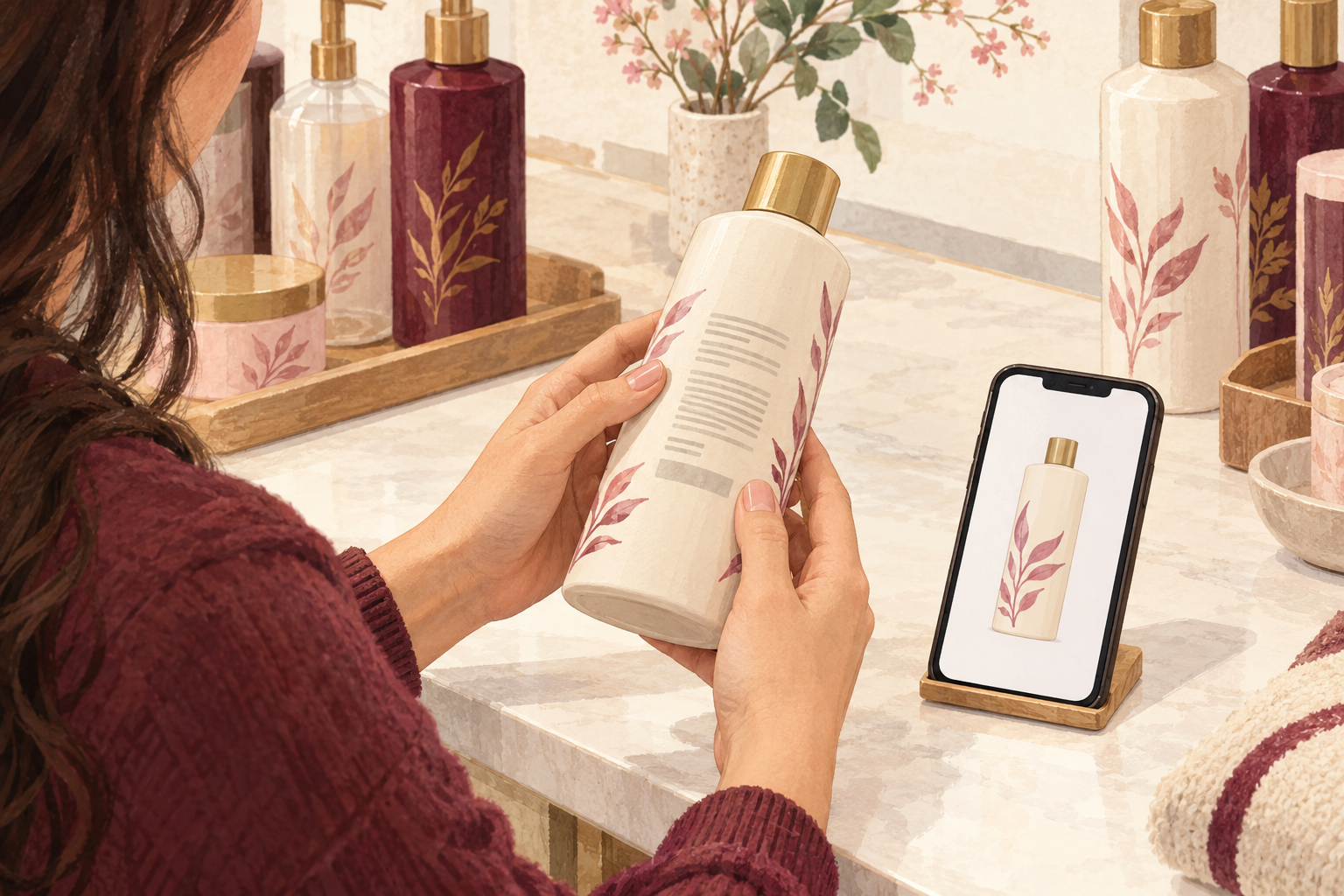
Pick a gentle shampoo with little or no perfume, since that gives an irritated scalp the least to react to. Words like gentle, fragrance free or for sensitive skin are hints, not promises, so turn the bottle around and read the first few ingredients. A creamy or clear formula that foams softly is usually kinder than one that foams like a bubble bath. Skip anything with a strong tingle, such as heavy menthol, if your scalp stings. A good shampoo for dry scalp leaves it calm, not buzzing. A shampoo that leaves your hair feeling like straw has too much cleansing power for your scalp.
5. Look for soothing, moisturizing ingredients
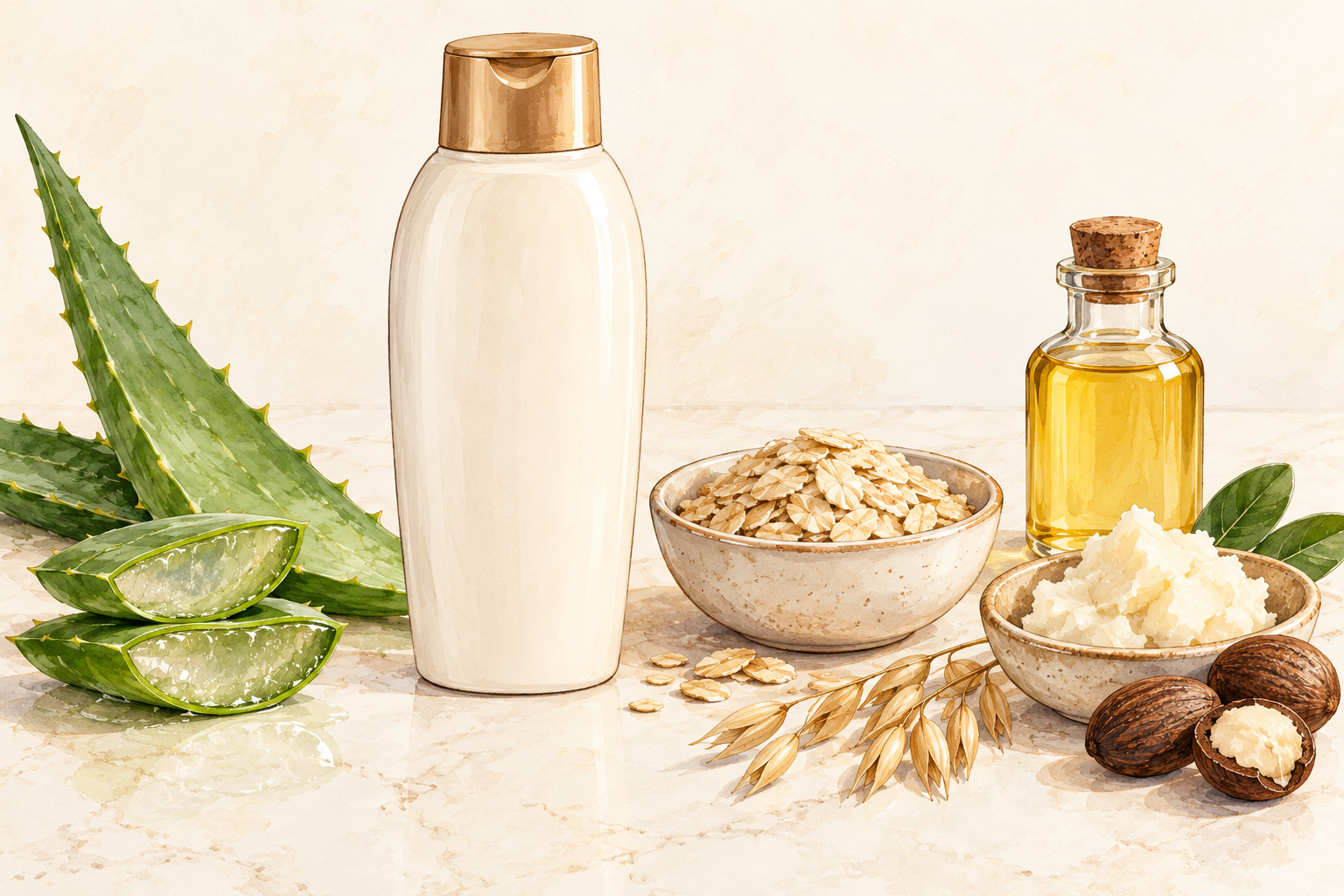
Scan the label for aloe, glycerin, oat, shea or a plain oil, which add softness while the shampoo cleans. These do not turn a shampoo into a cream, but they take the squeaky edge off. Be careful with a long list of alcohols, since some drying ones sit high on the list. If a bottle smells strongly of mint or citrus, put it back. Choose one you can keep using for a month, because a shampoo needs time to show what it can do. Glycerin and aloe are listed by name, so you can find them in a few seconds.
6. Match the shampoo to your hair type

Choose a light, clear shampoo for fine or straight hair, and a creamy, moisturizing one for thick, curly or coily hair. Fine hair goes flat under heavy formulas, while coily hair gets drier from harsh ones. Color treated hair also does better with a gentle bottle. Think about the length of your hair too, because long hair needs a smooth conditioner on the ends to avoid tangles. Notice how your hair feels when it is dry. If it is crunchy, add moisture, and if it is limp, go lighter. Wavy hair sits in the middle, so begin with the creamy kind and go lighter if it flattens.
7. Use an active only if the flakes look like dandruff
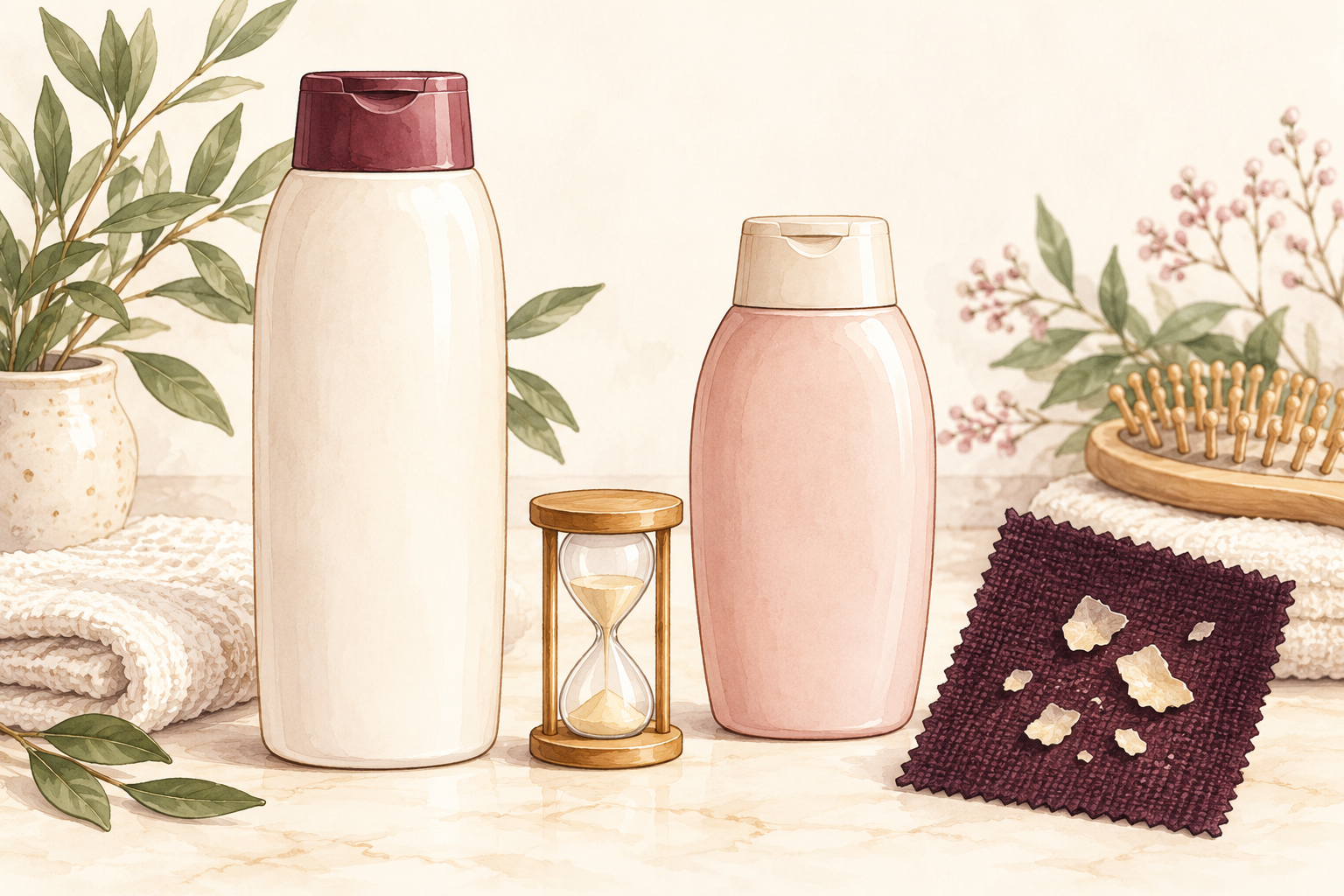
Reach for a shampoo with zinc or salicylic acid only when your flakes are large, greasy and itchy. Those actives are meant for dandruff, and on small powdery flakes they can dry the scalp even more. Follow the contact time on the label, since it changes from bottle to bottle. Use it two or three times a week at first, alternating with your mild shampoo. If you are unsure which kind you have, start with the mild one and switch only if two weeks bring no change. Keep the foam on your scalp and off your face, and rinse your hands afterwards.
8. Wash with lukewarm water and your fingertips
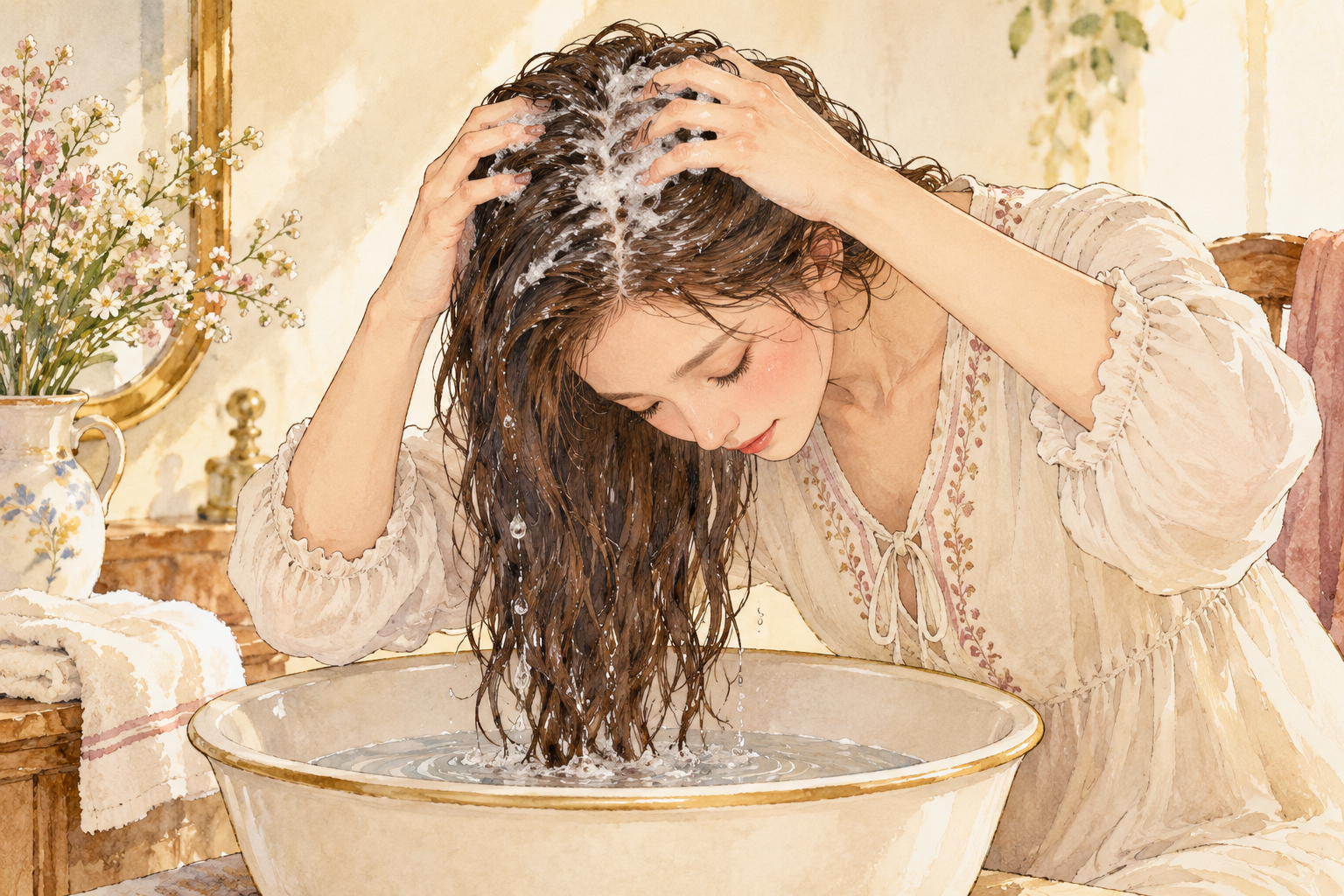
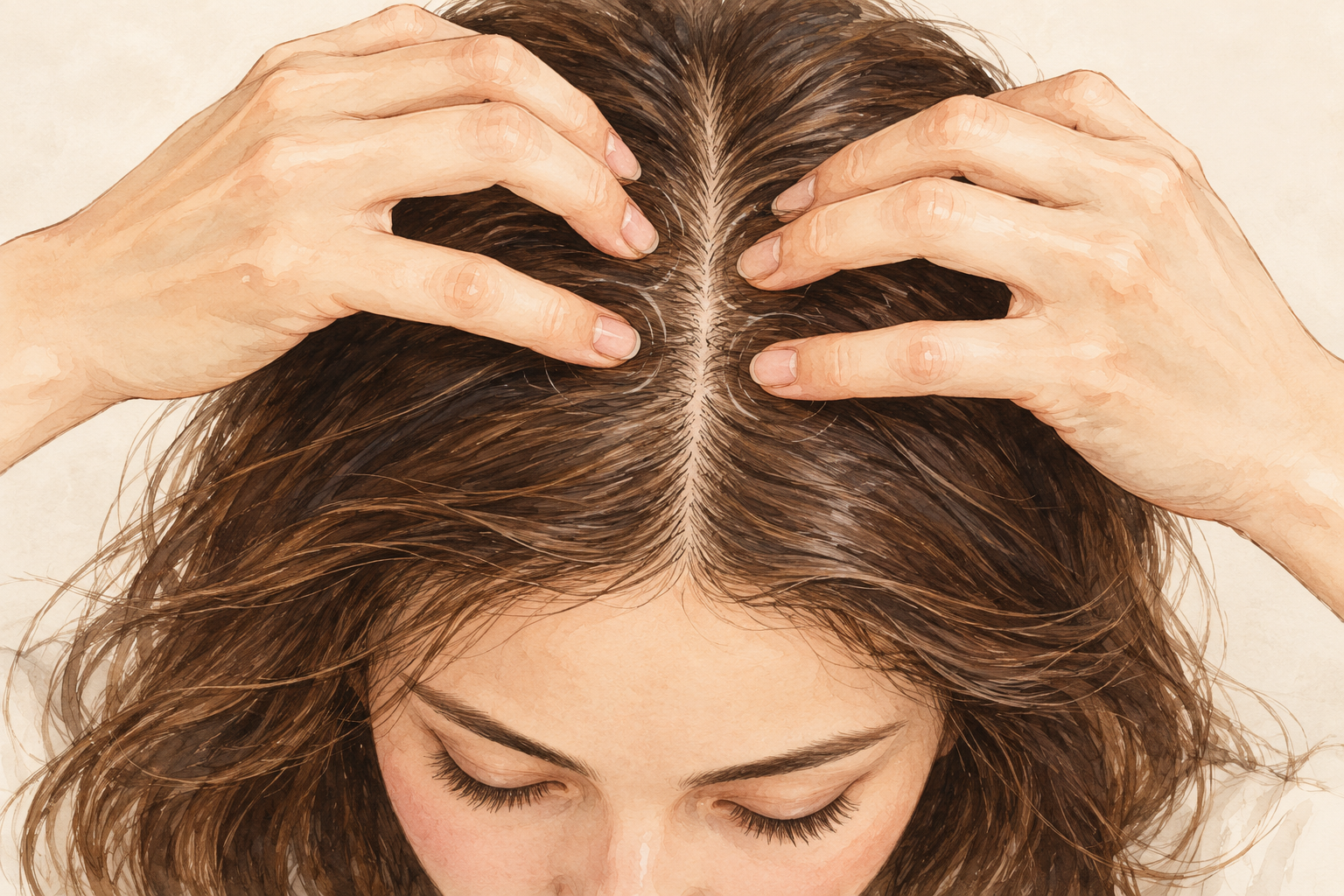
Wet your hair fully, then massage a coin sized amount of shampoo into the scalp with the pads of your fingers for about a minute. Let the suds run down the lengths without scrubbing them. Scratching with nails breaks the skin, and hot water strips it fast, so keep the temperature just warm. Rinse longer than you think, then put conditioner on the lengths and keep it off the roots. Pat dry with a towel instead of rubbing, which is kinder to a tender scalp. Cool the last rinse down a little for a calmer, less itchy finish.
9. Start at every two or three days and adjust

Wash on a fixed rhythm, such as Monday, Thursday and Sunday, and then adjust by how your scalp feels. Fine, straight or oily hair is often fine every two to three days. Thick, curly or coily hair may be happy with once a week. If your scalp feels tight within a day, stretch the gap a little. If it turns itchy and greasy, wash sooner. Changing the rhythm often confuses your scalp, so change one thing at a time and leave it for two weeks. Skip a wash on a quiet day if your scalp feels fine, because a calm scalp does not need rescuing.
10. Skip the habits that waste a good shampoo
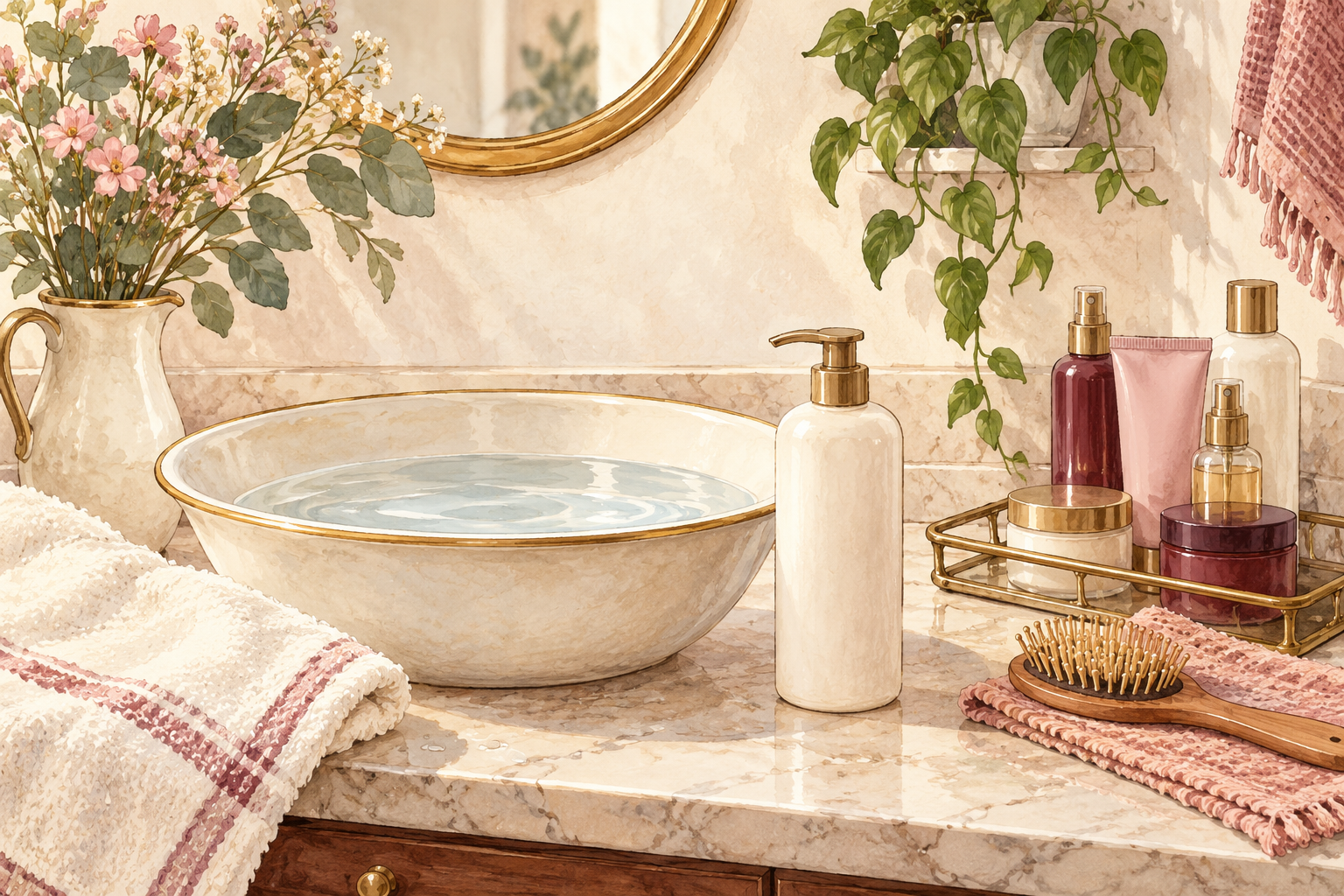
Swap hot water for lukewarm, dry shampoo for one extra day between washes, and a new bottle every week for one bottle for a month. Over washing, scratching and picking keep the cycle going. Every product change restarts the clock, so you never find out what works. Heavy conditioner on the roots also leaves a film that looks like flakes. Rinse your shampoo out completely, because what stays behind itches. Write the date you started a bottle on the side with a marker, so you know when to judge it. Pick one product to take off your shelf this week, and leave it out for a month.
11. Know what working looks like

Give a new plan two to four weeks and look for small changes. In week one your scalp may feel a little less tight after a wash. By week two the flakes should be thinner, especially if hot water or daily washing was the culprit. By week four you should have a rhythm you can keep, with fewer flakes on dark tops and less urge to scratch. These are rough markers, because scalps vary a lot. Keep a short note of how your scalp felt each wash day. Your hair should also feel softer between washes, not squeaky or straw like.
12. Know when to skip the shampoo and simplify
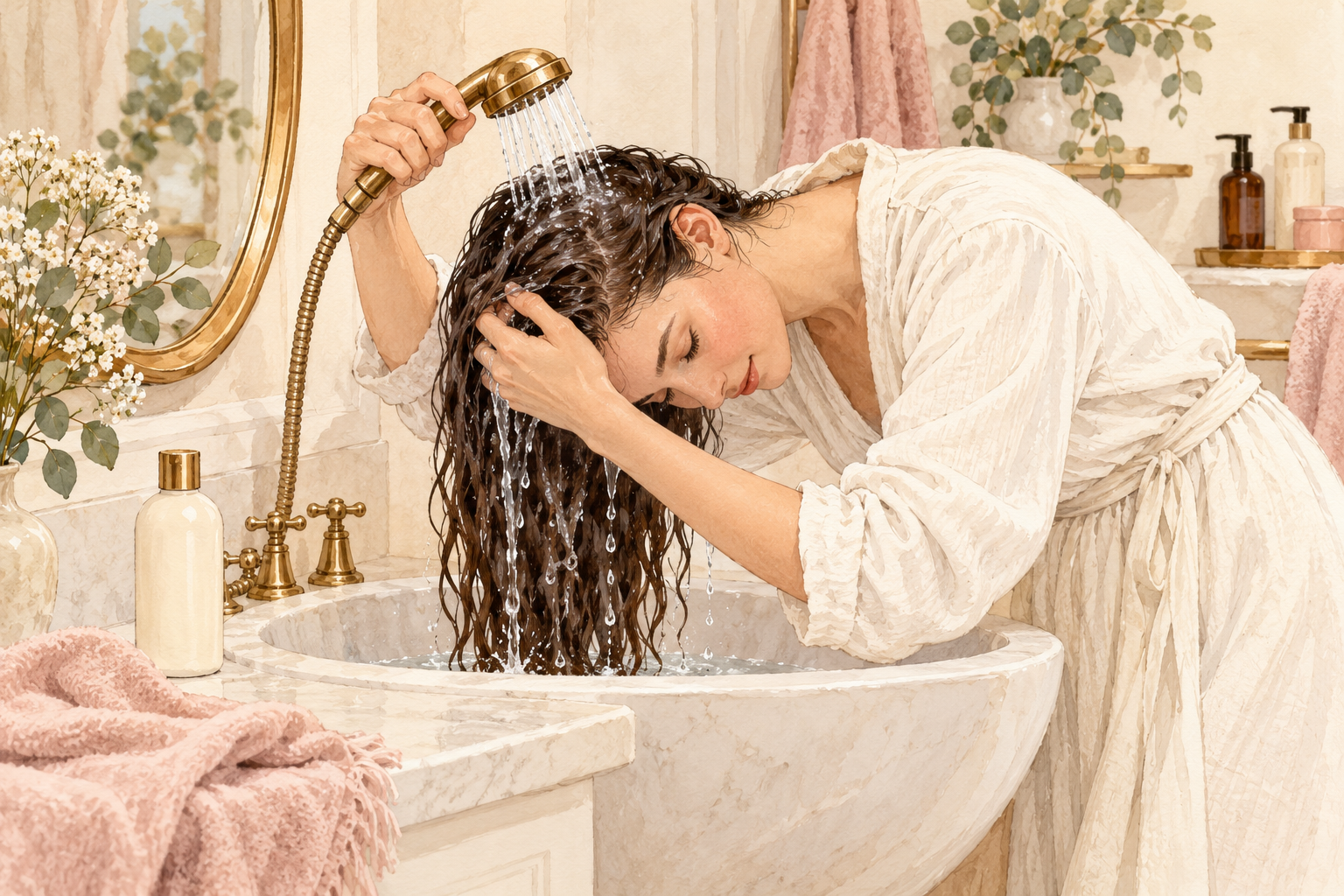
If your scalp burns or the itch gets worse, rinse it out and drop everything harsh. Go back to lukewarm water, one mild shampoo and a few days of nothing else. Sometimes the answer is not a new bottle at all, but less washing, less heat and fewer products. A few drops of plain oil on dry skin before a wash, or aloe gel on a clean scalp, can soothe between washes, but patch test first and rinse well. Do not keep switching bottles after the first month. Give your scalp a quiet week with lots of water and sleep, and watch it settle.
Complete the Routine: Shampoo for Dry Scalp This Week
This week, wash with lukewarm water, use one mild shampoo and write down your wash days and how the scalp feels. For gentle extras, read about how to get rid of dry scalp and a hair mask for dry scalp.