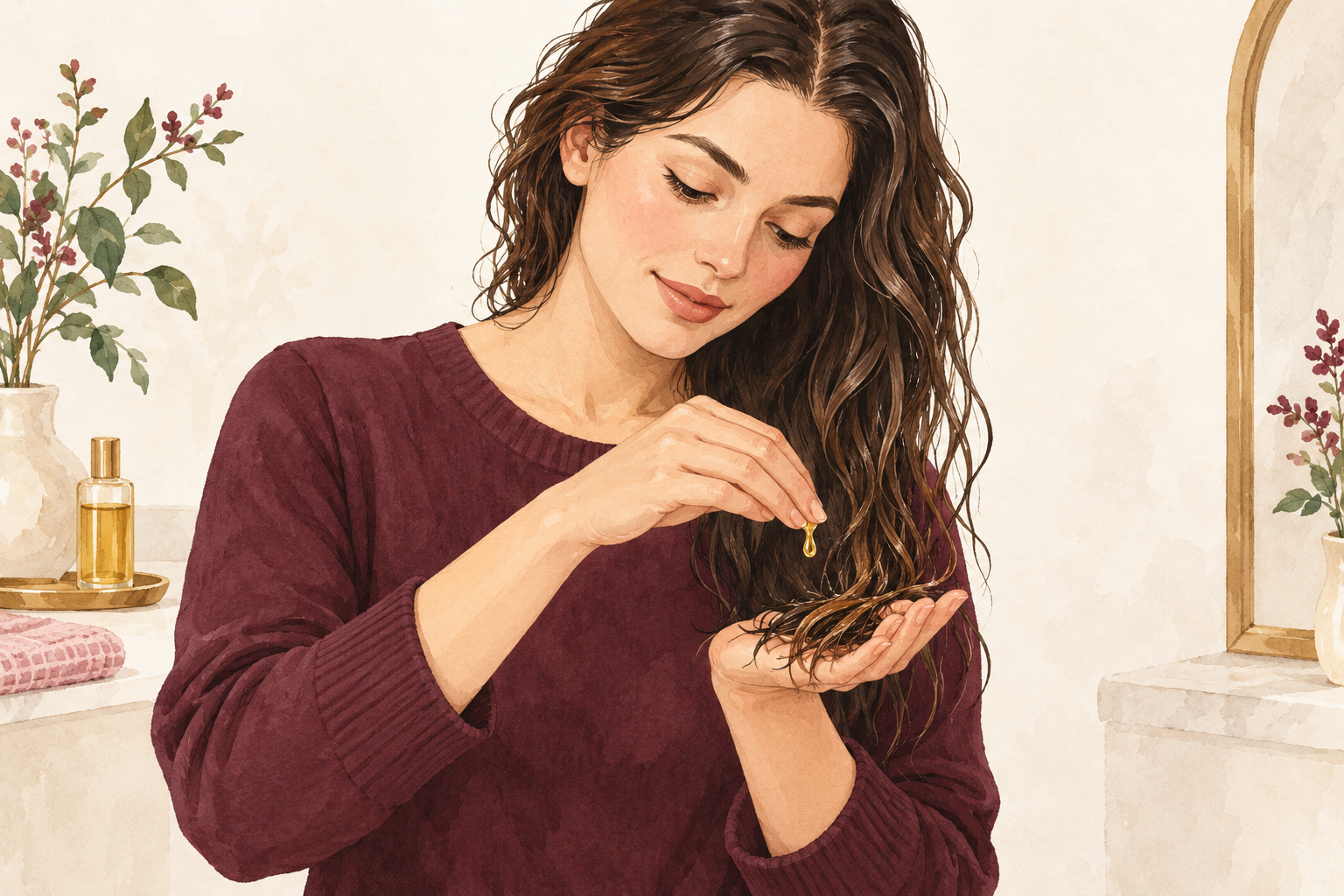
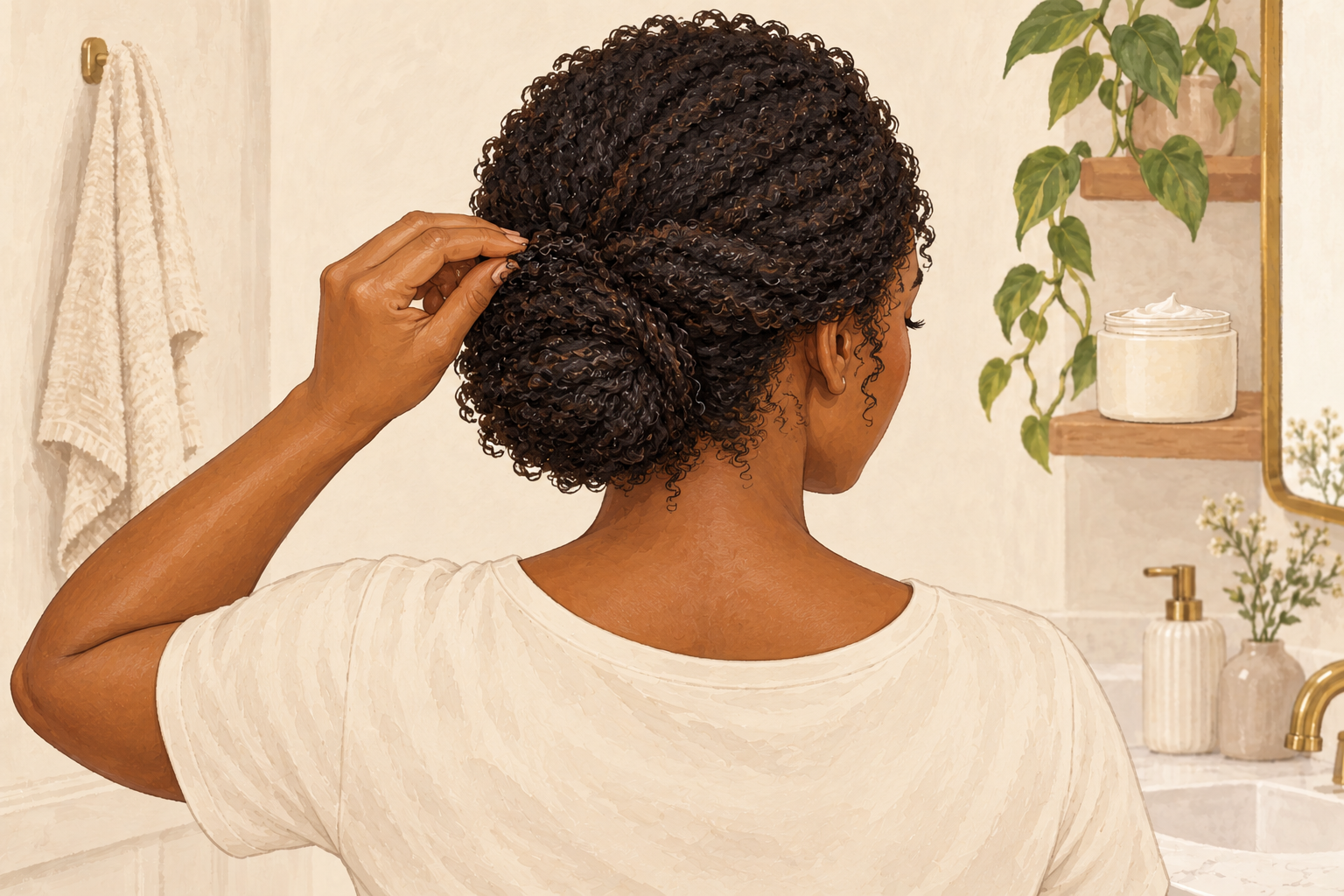
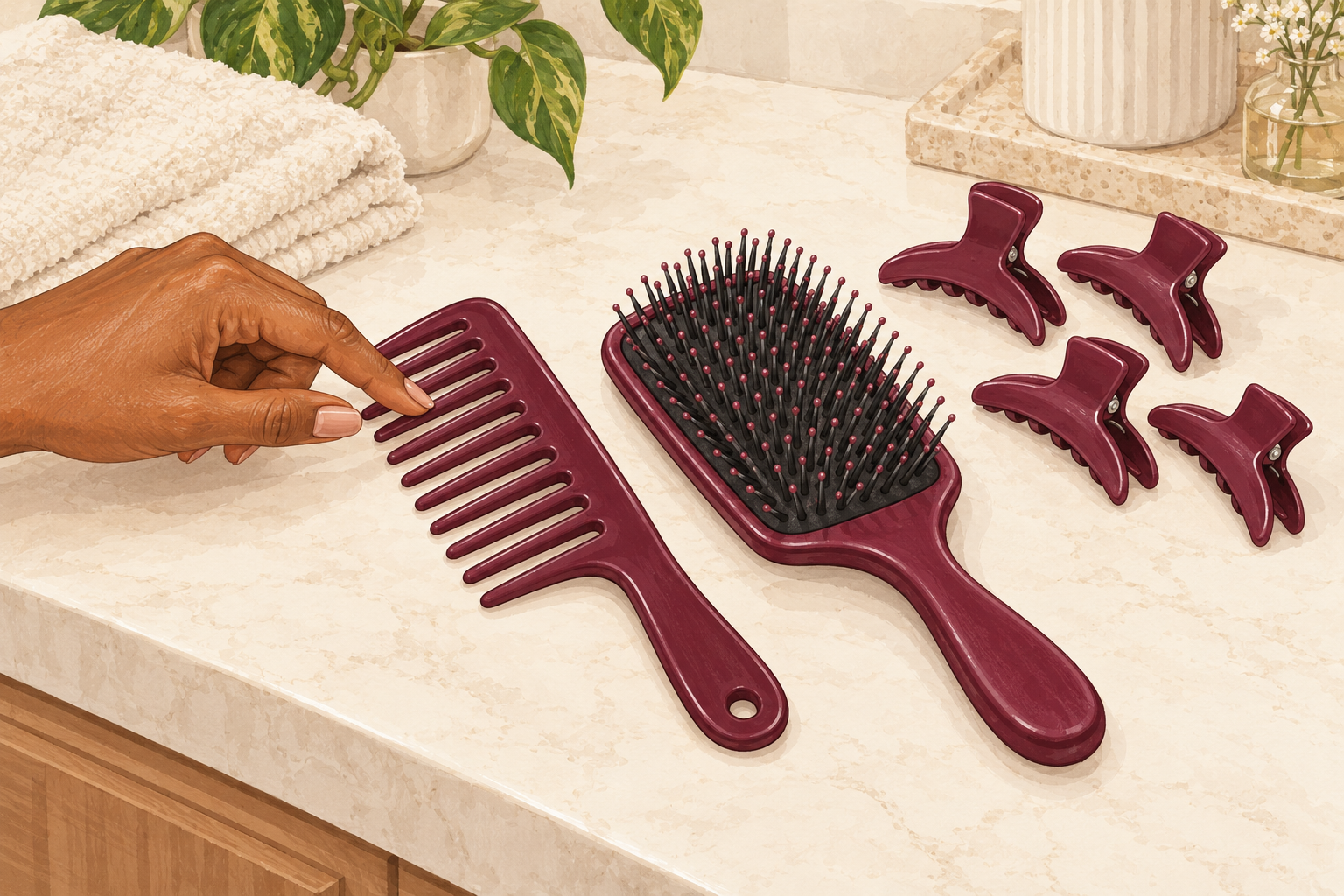
You decide to go natural, and by month two you are staring at a short, shrunken, tangled head wondering if you made a mistake. You did not. Natural hair growth is slow at first and then it takes off, as long as you handle it gently. This plan gives you 12 steps for your first year, so start at number one tonight.
1. Gather a small kit
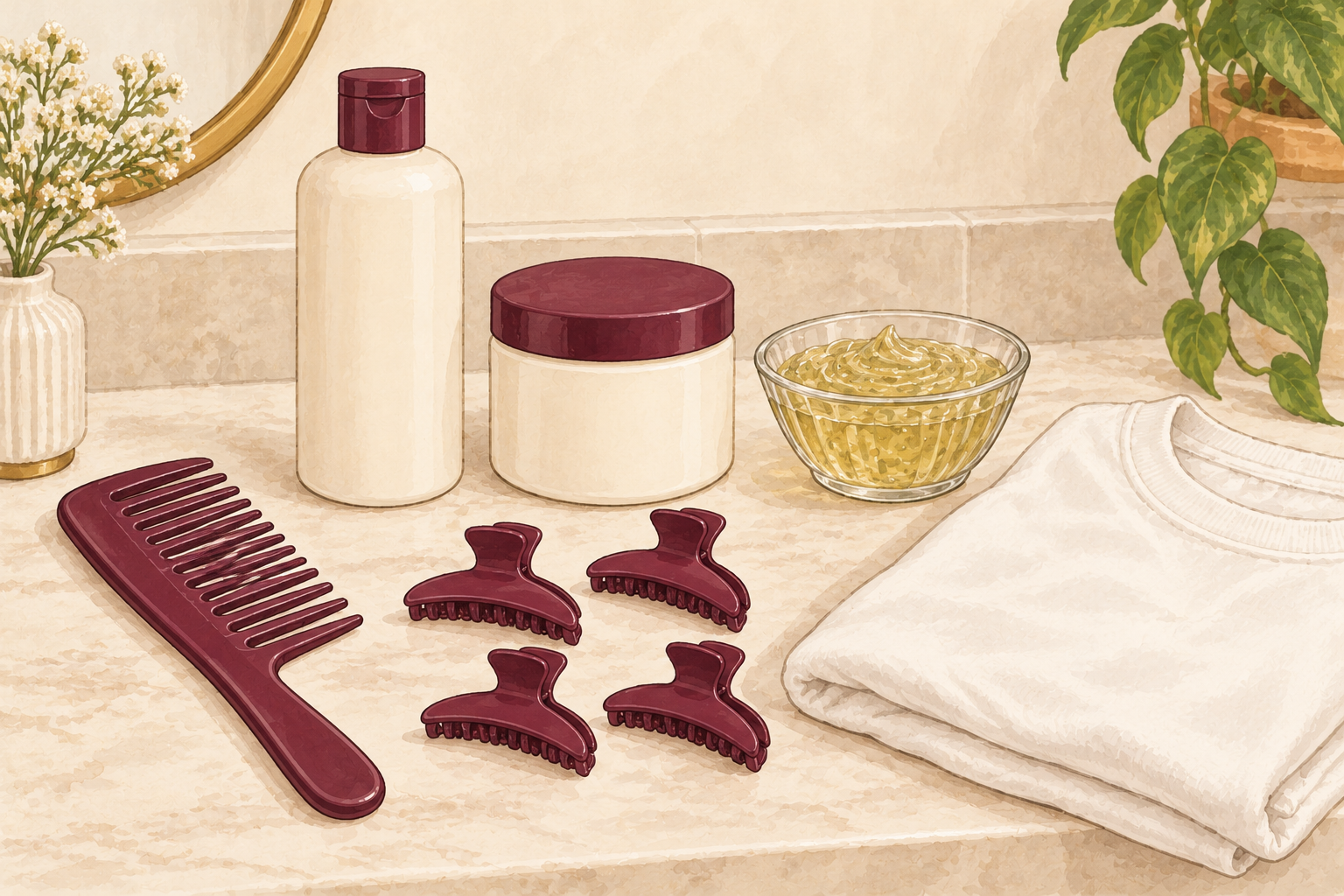
Set out a wide tooth comb, a spray bottle, a moisturizing cream, a light oil, a satin scarf and a notebook. That is the whole shopping list for the first month. Every extra product makes it harder to tell what your hair likes, so resist the urge to buy more. Keep everything in one basket in the bathroom or bedroom. Choose a gentle shampoo and a rich conditioner if you do not have them already. You can add a deep conditioner later, and a small kit is much easier to stay with. Add a satin scarf from day one, since protecting new hair at night is easy and works fast.
2. Take photos and learn your pattern
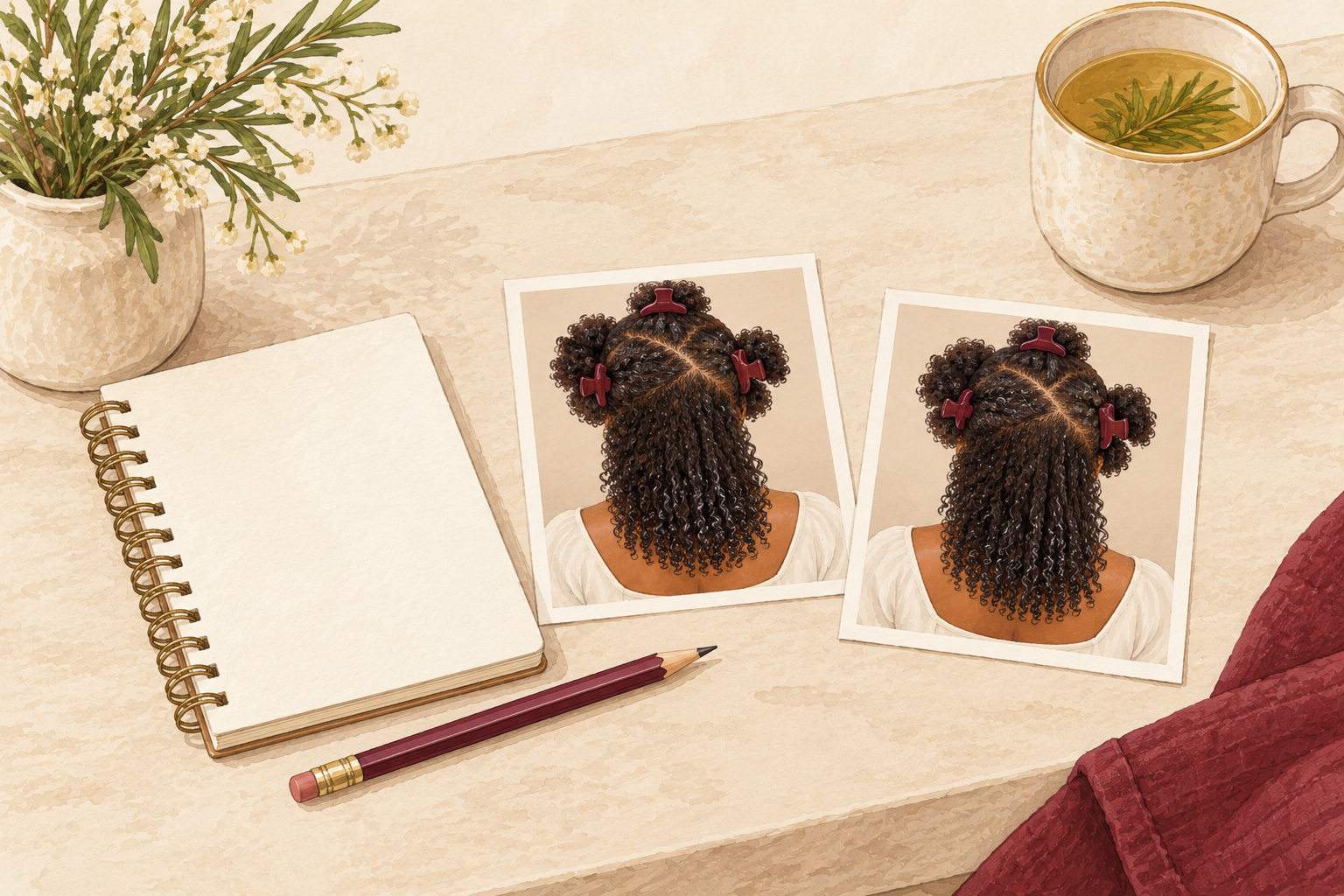
Photograph your hair from the front, side and back on day one, and again on the first of every month. Wet a small section and watch how it curls. Is it tight coils, loose waves, or a mix of both? Note which areas feel driest, because that is where you will put extra moisture. Write what you see in a notebook, not just in your head. Your pattern is your guide for the whole year. Use the same light each time, since a different bulb changes how your curls look. These first photos feel awkward, but you will treasure them in a year.
3. Build a short, simple routine
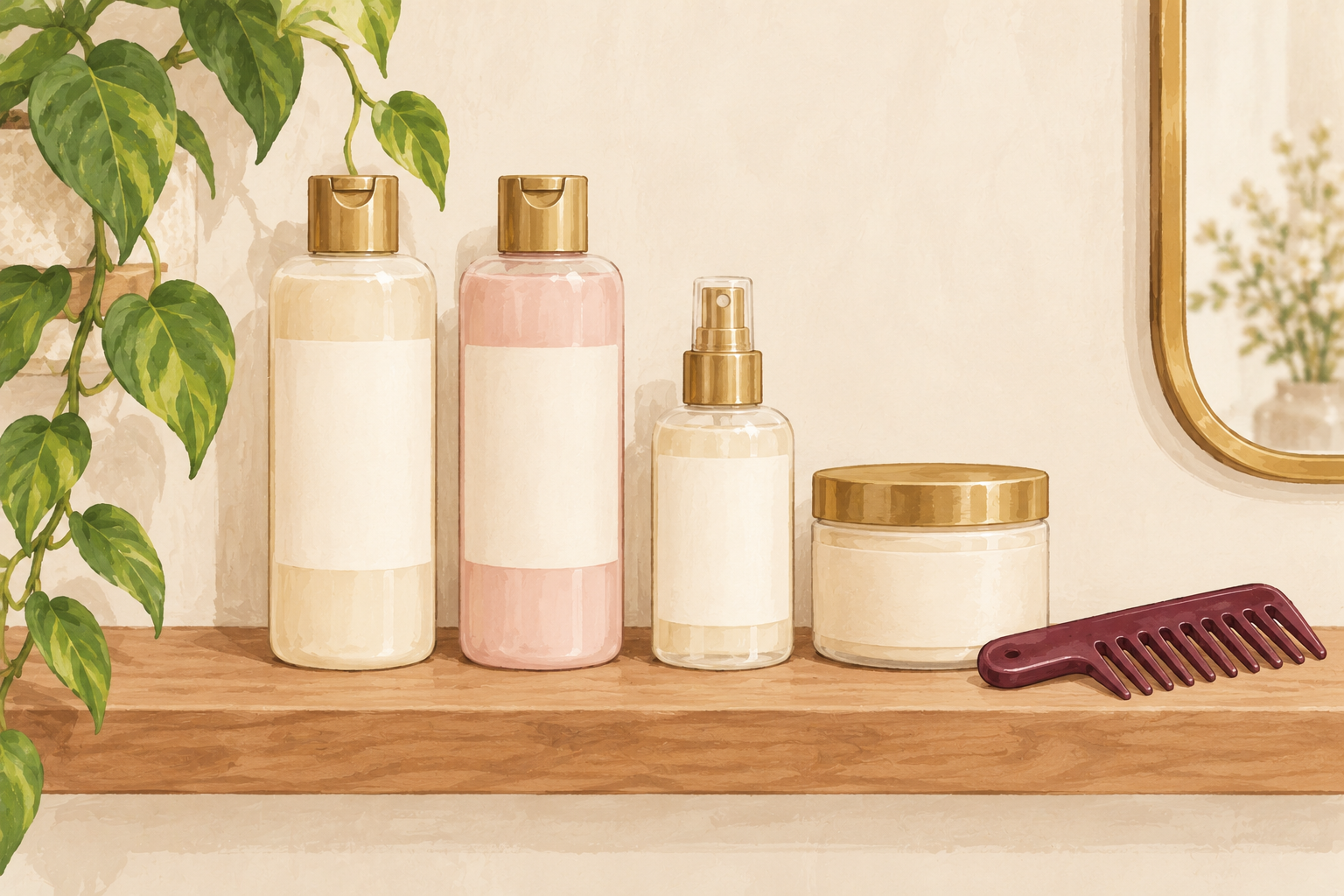
Wash weekly, use conditioner every time, moisturize in between, and cover your hair at night. That is four things, and it covers most of what natural hair needs in the first three months. Add steps only when your hair asks for them, such as a deep conditioning mask once it feels rough. Write the routine on a card and stick it on your mirror. Simple routines get done, and complicated ones get skipped by week three. Expect the first month to feel clumsy, and that is completely normal. Resist the urge to copy a stranger’s routine, because your curls are your own.
4. Set a weekly wash day
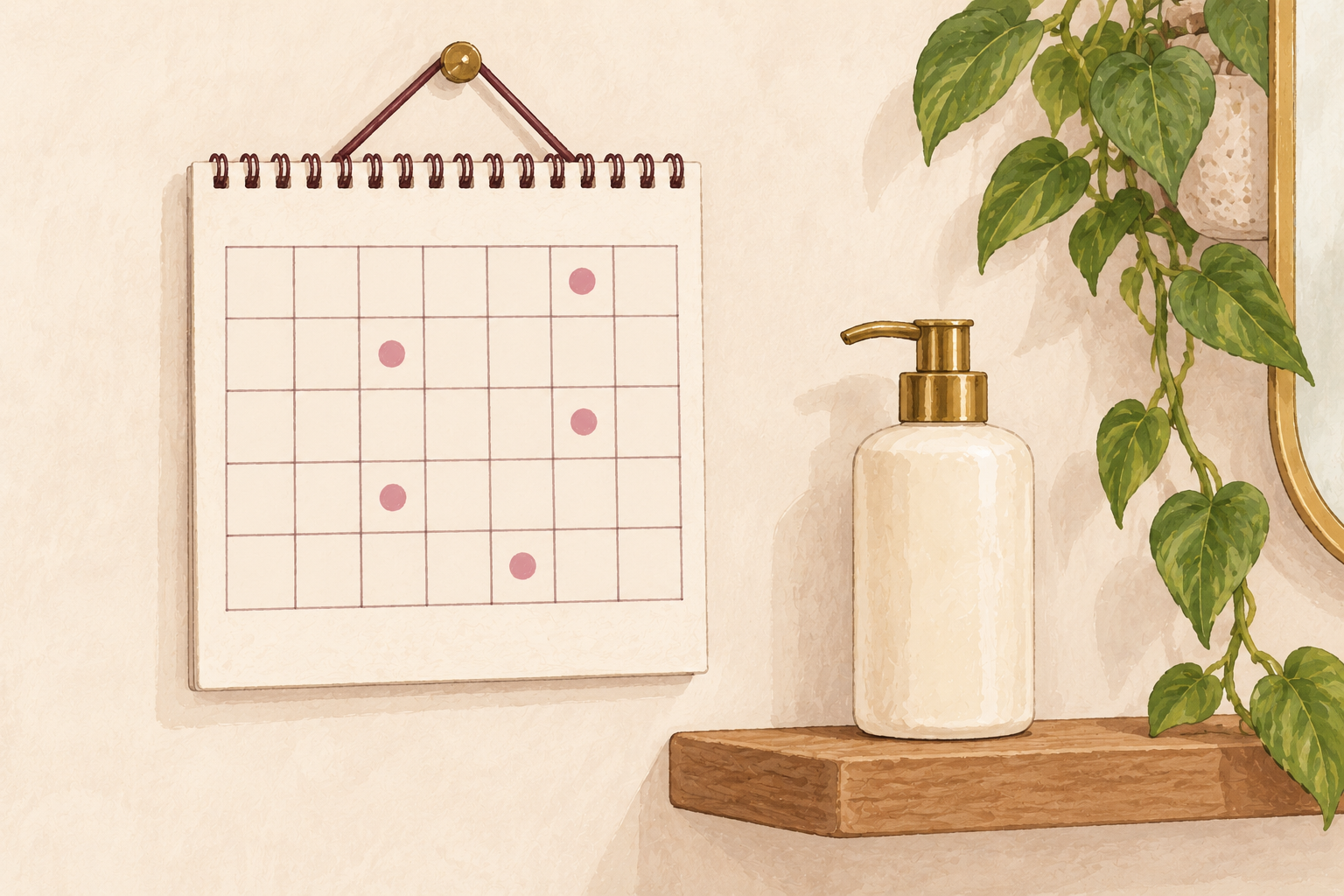
Pick one day, such as Sunday, and give yourself two to three hours without rushing. Pre treat with oil for thirty minutes, shampoo the scalp, put conditioner on the lengths, and detangle while the conditioner is still on. Wash only your scalp and let the suds slide down. Rinse with cool water at the end. Washing weekly keeps the scalp comfortable and stops buildup from sticking to new growth. If your hair is very dry, stretch it to every ten days, and do not skip more than that. Put on music or a show, so the time passes happily instead of dragging. Finish by twisting each section loosely, so it dries stretched instead of tangled.
5. Stop detangling dry hair
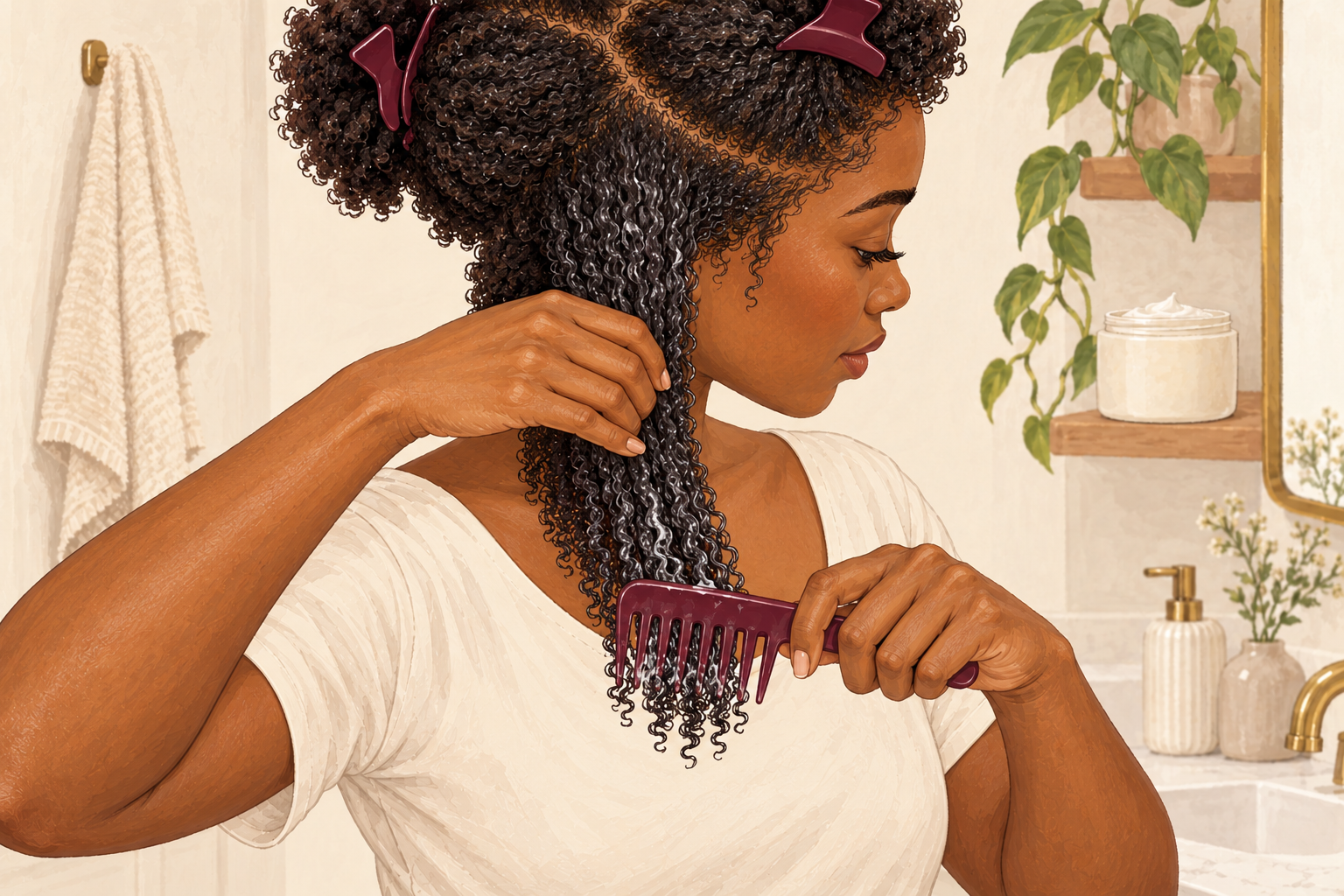
Detangle only when your hair is wet and slippery with conditioner, working from the ends upward. Dry natural hair snaps like a brittle twig when you force a comb through it. Use your fingers first, then a wide tooth comb, and always hold the section above the knot. Take your time and talk yourself through it. If the comb stalls, add more conditioner and wait a minute. A gentle twenty minute detangle on wash day saves more hair than any treatment you can buy. Hair that has been detangled gently grows into your later months with fewer breaks.
6. Start a weekly deep conditioning habit
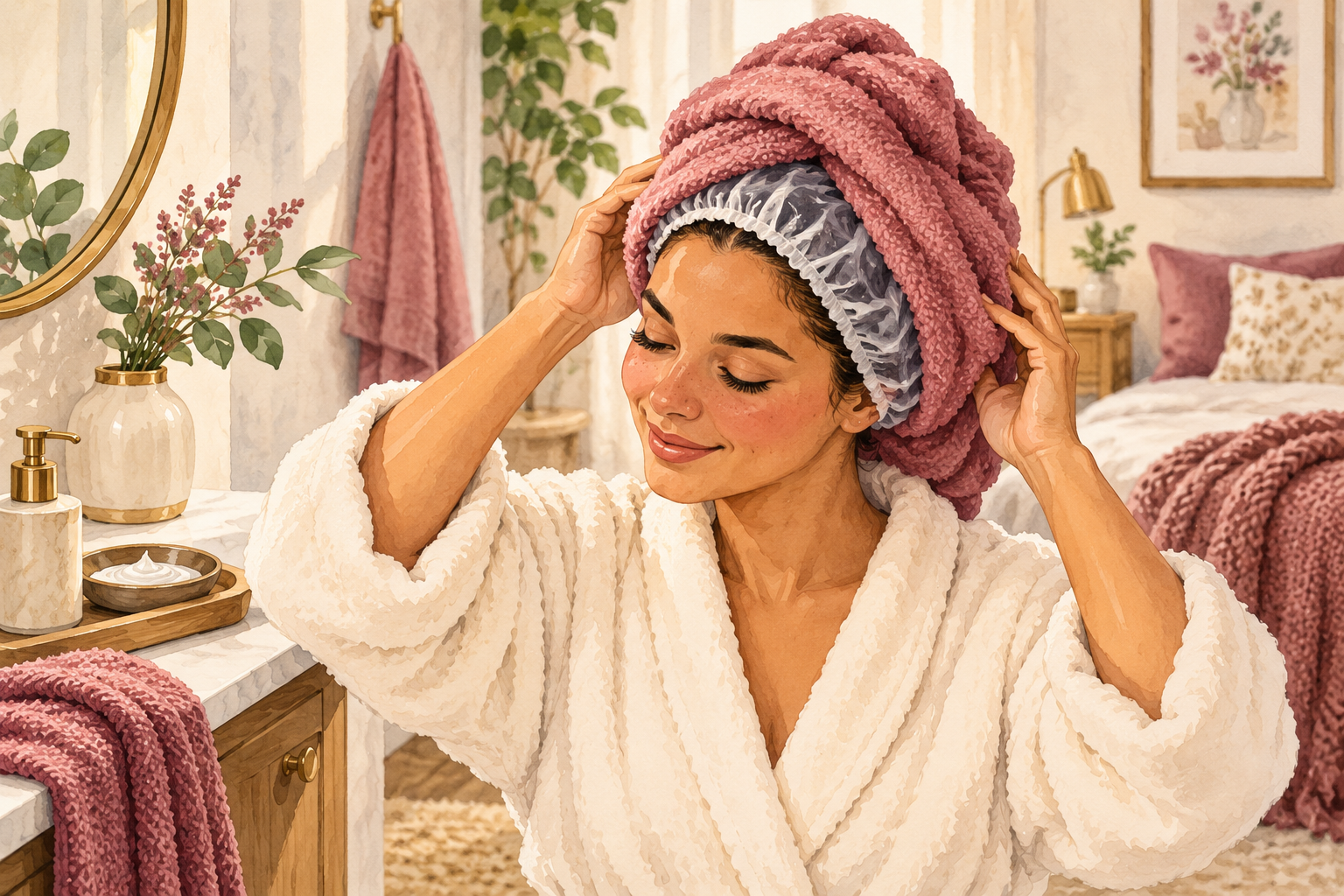
Smooth a rich mask over clean, damp hair, cover with a shower cap, and leave it for twenty to thirty minutes. Rinse with cool water. Natural hair loses moisture quickly, and a weekly mask puts it back so the strands stay bendy. Sit with a warm towel over the cap for extra softness. After a month your hair should feel springier and less tangled. If it feels mushy or limp afterwards, switch to a lighter mask. If it feels stiff, look for one with a little more softness. Skipping the mask for a month is the quickest way to feel the difference it makes. Rinse it all out, because leftover mask makes hair feel coated by the next day.
7. Learn to moisturize between washes
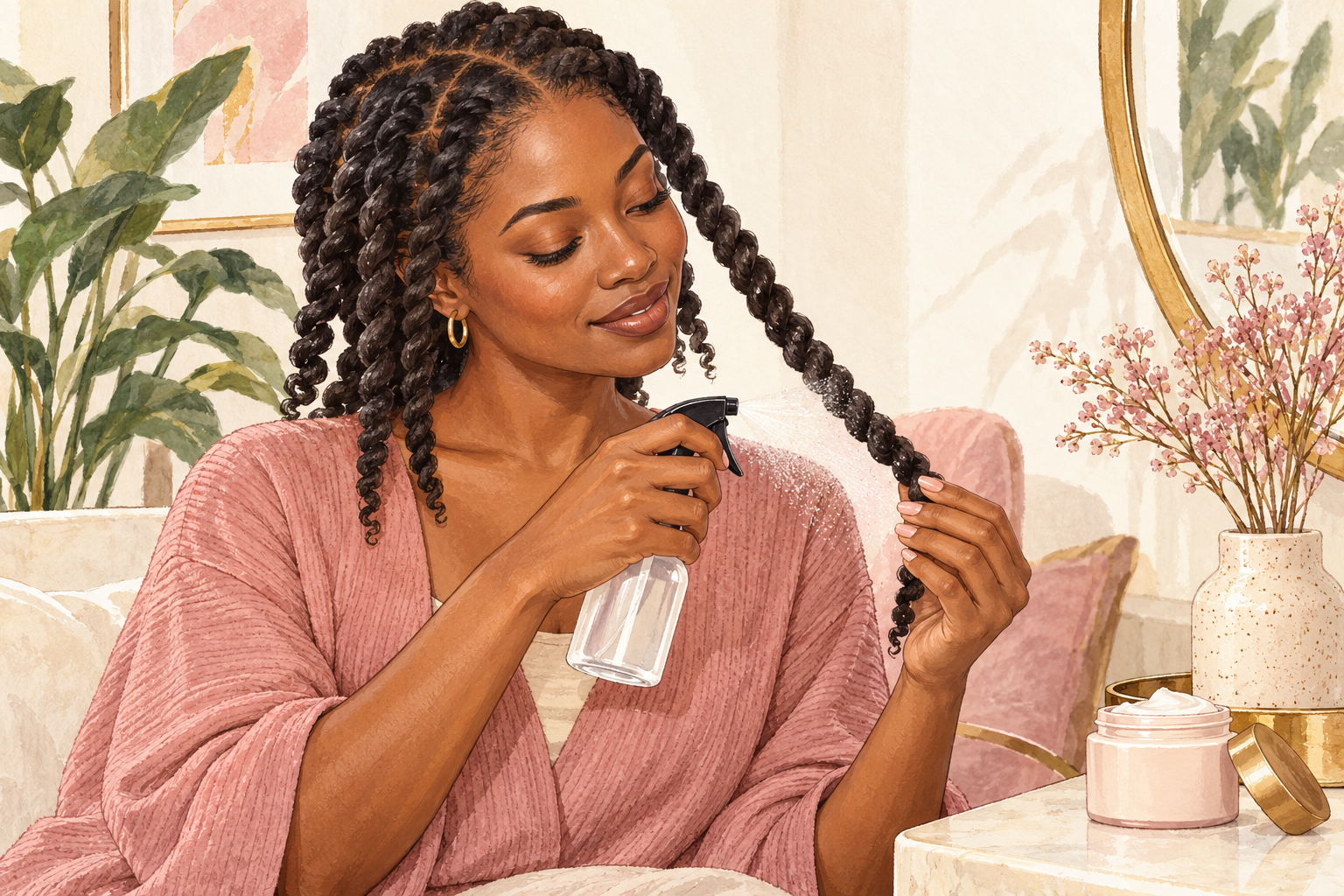
Mist your hair with water, press in a little cream, then seal with a few drops of oil every two or three days. Do it in the morning or at night, whichever suits you. Work in sections so you reach the ends, which dry out first. Use less than you think, because too much cream makes hair heavy and sticky. If your hair feels crunchy by day three, you are doing it too late, so try day two. This quick top up keeps hair soft until the next wash. A small spray bottle by your bed makes this a ten second habit.
8. Try low manipulation styles
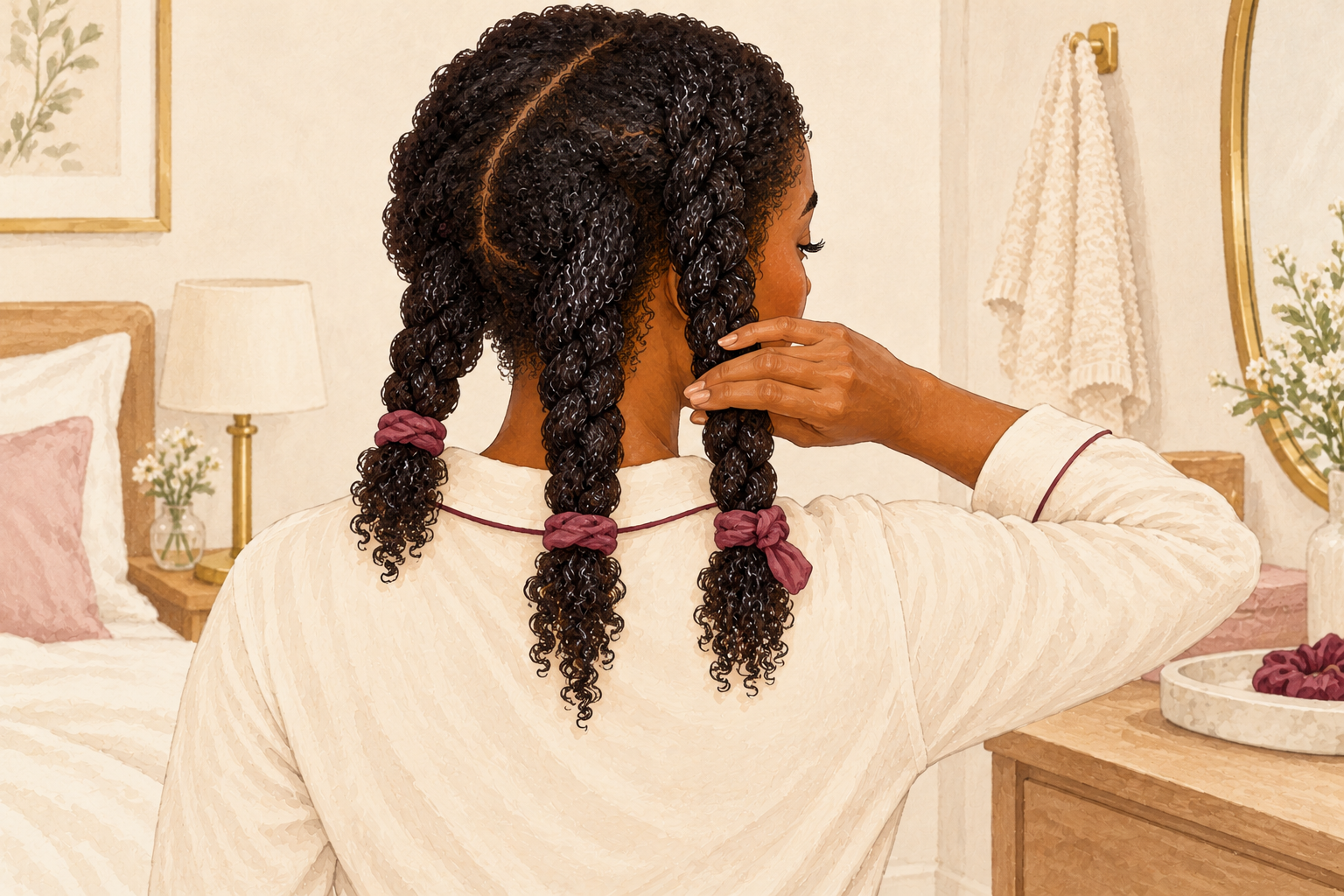
Wear twists, braids or a puff for a week at a time, and avoid picking and restyling every day. Every time you touch your hair, you risk losing a few strands. Low manipulation styles keep your hands out of it while it grows. Keep them loose, never tight on the edges, and refresh the ends with a little water and oil. Take the style down gently with oil on your fingers. A relaxed bun on a good day is a style too, and it costs you nothing. Your scalp also gets a break from pulling and tension.
9. Protect the line where two textures meet
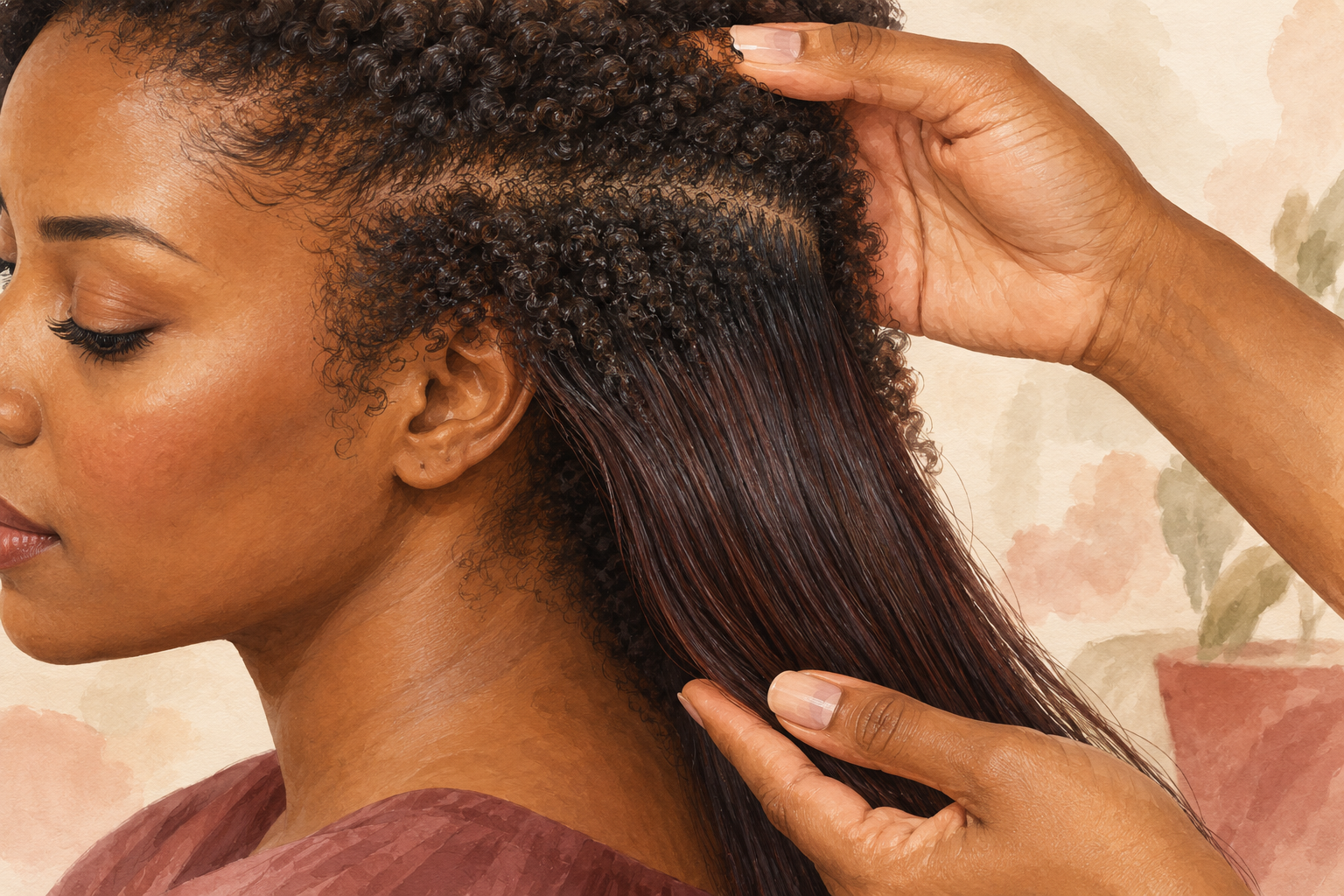
If you are growing out a relaxer or color, treat the line where old and new hair meet like glass. That line is the weakest spot, and it snaps first. Keep it moisturized, detangle with extra slip, and avoid tight styles or heat there. Do not rush to cut it all off if you are not ready. Many women trim a little every few months until the old hair is gone. Wearing braids or twists over the line also keeps it out of harm’s way. This is the one place where patience pays you back double. Check the line with a fingertip each wash day, and if it feels rough, add extra cream there.
10. Understand shrinkage before you panic
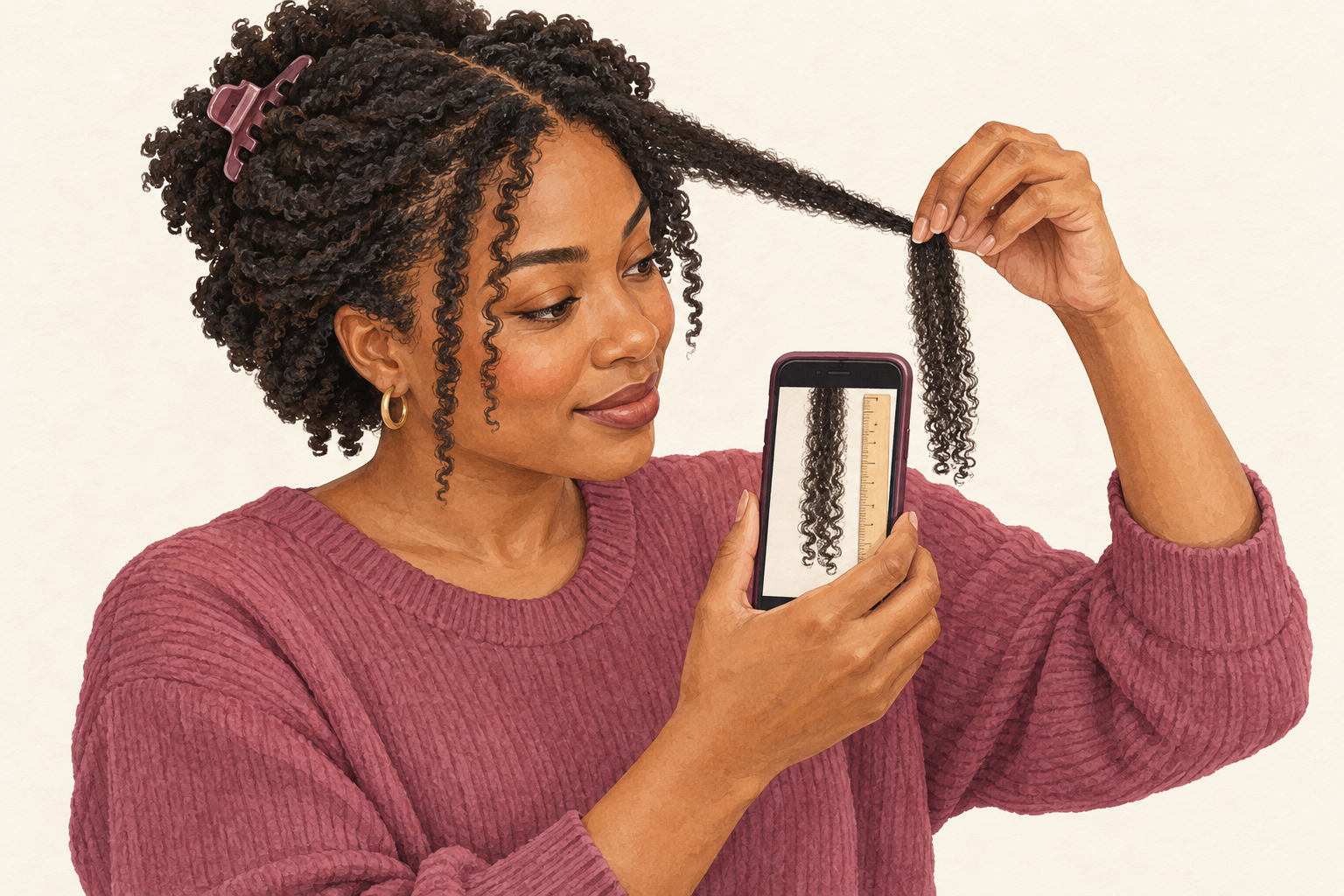
Know that your hair may look half its length when dry, and that this is normal for natural hair. Shrinkage is the springy curl pulling up toward your head, and it means your hair is healthy and elastic. Stretch a damp section with your fingers to see the real length, or wear twists or braids. Do not judge your growth from a dry, shrunken afro. Stretching without heat is gentler than a flat iron. If you love the volume, enjoy it, because shrinkage is part of the look. A shrunken head of hair is a sign of healthy curl, not slow growth.
11. Trim only what is damaged
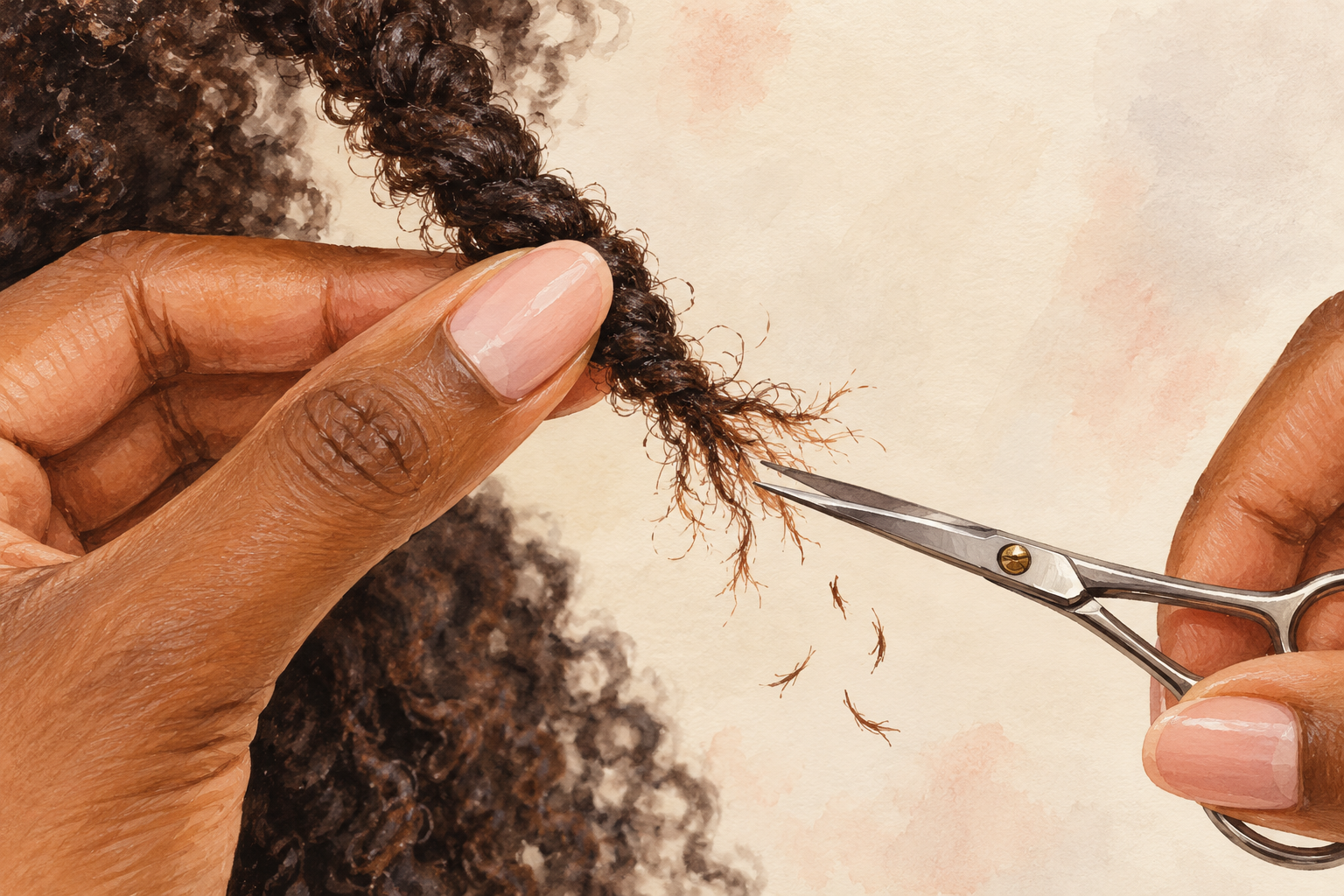
Snip just the dry, split or see through ends, about a quarter inch at a time. Cut a little every three to four months, or whenever your ends feel rough and tangle into each other. You do not need a big chop unless you want one. Trimming only what is damaged keeps the length you worked for. Do it on stretched, clean hair so you can see what you are cutting. Dusting the ends often is gentler than a big trim once a year. Regular tiny trims are what keep the line of your hair even and strong.
12. Compare your year and keep what works
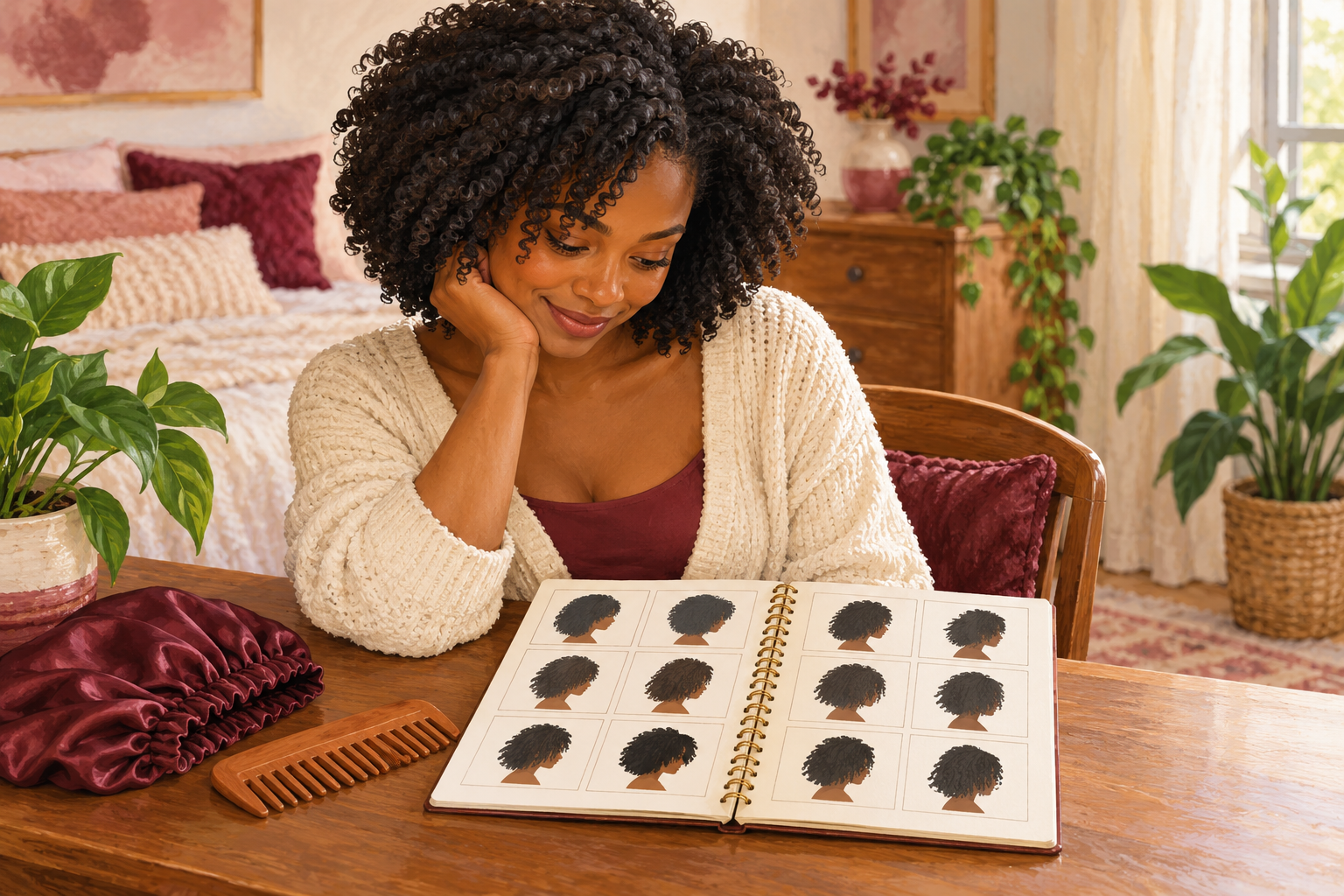
Spread your twelve monthly photos out and look at them from month one to month twelve. You will likely see thicker, healthier hair, even if it still feels short on a shrunken day. Circle the months when your hair looked best, and check what you did that month. Natural hair growth is rarely a straight line. Keep the habits that helped, drop the ones that did not, and write next year’s plan on the last page of your notebook. Your own hair is the best teacher. Most women are surprised by how much changed once they look back.
Complete the Routine: Natural Hair Growth Beyond Year One
Keep your wash day and your satin scarf, and add one new idea each season. For oil ideas and more tips, read about natural hair growth oil and natural hair growth tips.