You have been wearing the same coils for a year, and it feels like nothing has changed. Your hair is growing, but shrinkage hides the length and dryness snaps off the ends before you can see it. 4C hair growth is really about keeping what you grow. These 12 habits show you how, so start at number one tonight.
1. Measure your stretched length, not your shrunken length

Gently pull a section straight with a soft tape measure next to it, and write down the number. Shrinkage can hide half or more of the real length, so a coil that looks like three inches may be six when stretched. Always measure the same section, such as the back or the crown, on the same day each month. Do not pull hard, because stretching a dry coil can snap it. Your hair is not stuck. It is simply curled up like a spring, which is exactly what 4C does. A tape measure is kinder to your mood than a mirror.
2. Expect about half an inch a month

Know that most hair grows around half an inch each month, which adds up to about six inches a year. That is the same for every texture, so 4C hair does not grow slower, it only shows less of the length. Growth speed also changes with age, health and your family. Do the math before you compare yourself to anyone online. If you keep all of it, you gain a full hand span in a year. Patience here is not a slogan, it is just arithmetic. Keeping your ends healthy is what lets the full half inch show up.
3. Take photos in matching light

Take a photo of your hair every four weeks, in the same spot, with the same light and the same style. Good progress hides in photos, because you see your hair every day and miss slow change. Take one stretched shot and one natural shot from the back. Keep them in a folder named by month. When you feel stuck at month five, scroll back to month one and the difference usually surprises you. Avoid taking them under harsh bathroom bulbs, as they make hair look duller than it is. Add a short note under each photo about what you did that month.
4. Keep a regular wash day

Wash your hair every one to two weeks on a set day, and stay with the same steps. 4C hair is dry by nature, and long gaps let the scalp build up while short gaps strip the oil. Pre poo with a little oil, shampoo the scalp with a gentle cleanser, and finish with conditioner on the lengths. A regular wash day also sets a rhythm, so you stop scrambling when your hair feels rough. Block out two or three hours. Rushing is how hair gets yanked, and yanked hair breaks. Treat wash day like a date with yourself, with music and a snack.
5. Layer water, oil and cream
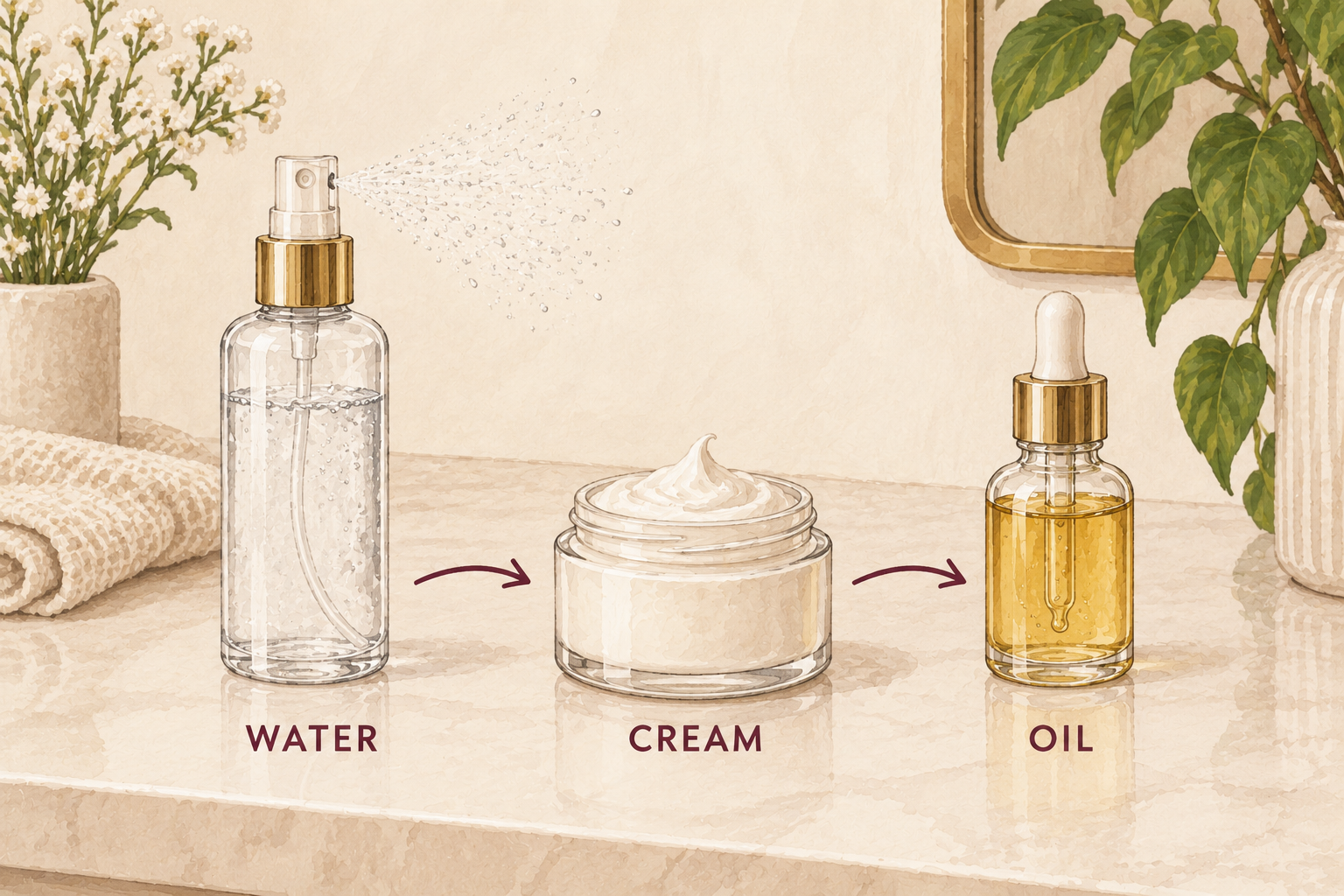
After washing, spritz damp hair with water, seal with a few drops of oil, then lock it in with a cream. This layering gives dry coils a drink and keeps it there. Work in four to eight sections so every strand gets coated. Use more cream on the ends, which are the oldest and driest part. Some people swap the order and put cream before oil, so try both and see which keeps hair softer through day three. Skip the layers on dirty hair, where they just mix with buildup. The order matters less than doing it on damp hair every time.
6. Deep condition every week or two

Apply a thick conditioner mask in sections, cover with a cap, and leave it for twenty to thirty minutes. Sit under a hooded dryer or wrap a warm towel over the cap for a little heat. Coily hair loses water quickly, and a regular deep conditioning session refills it so strands bend instead of snap. Alternate a moisture mask with a protein one if your hair feels either limp or stiff. Rinse until the water runs clear. A good sign is that your hair feels soft and stretchy, not gummy, when it is wet, and a bad sign is hair that snaps when you tug it lightly. Do it more often in cold, dry months when coils feel crispy.
7. Detangle in small sections with slip
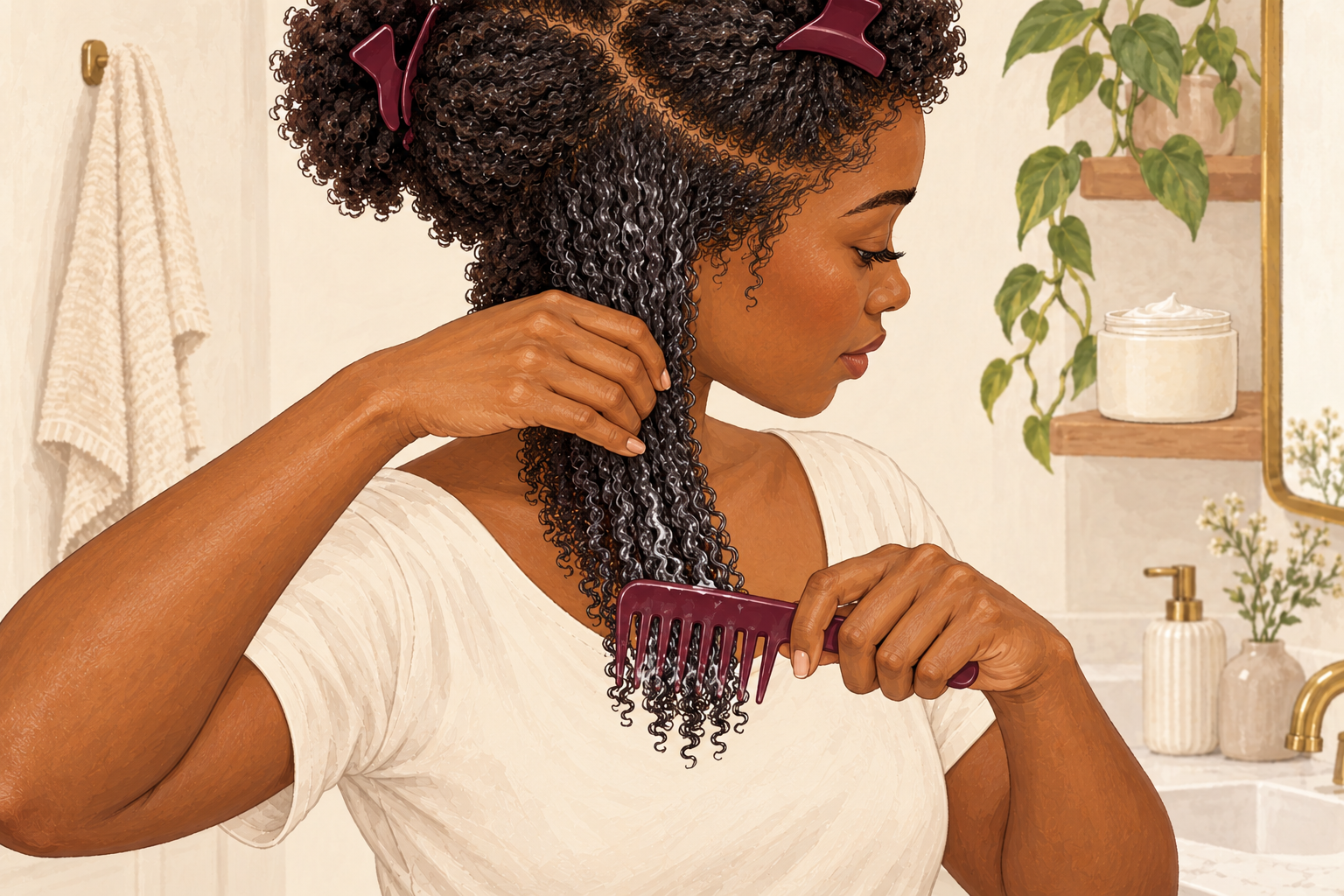
Work in four to eight sections, add plenty of conditioner, and start combing from the ends upward. Dry 4C hair knots into little bundles, and ripping through them costs you length. Use your fingers first to loosen the big knots, then a wide tooth comb. Hold the section above the knot so the root does not take the pull. If you hear a snap, stop and add more slip. Detangle only when hair is wet and slippery, never when it is dry, and put each section into a loose twist when you finish. Patience here is worth far more than any growth product.
8. Stretch without heat when you can

Stretch your hair with braids, twists or a banded style while it is damp, and leave it overnight. This lets you see more of your length without a hot comb or flat iron. Damp hair stretches gently as it dries, so you wake up with softer, longer looking hair. Use plenty of cream so the hair does not dry rough. Tie a scarf over it at night. Heat can be an occasional treat, but keep it low, and give your hair a month of rest before the next one. Undo the twists gently with a little oil on your fingers.
9. Choose low tension protective styles
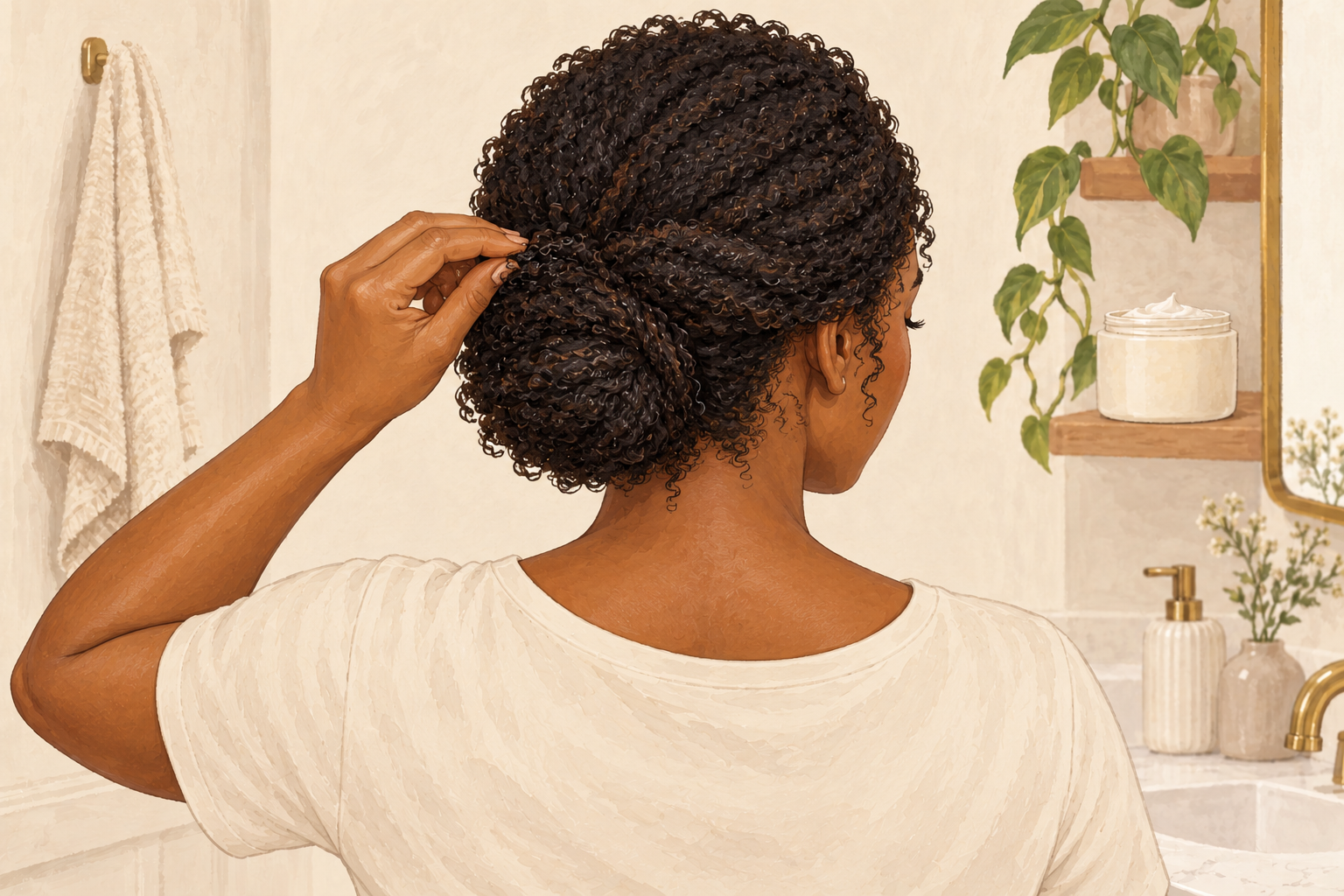
Pick braids, twists or buns that feel comfortable on day one, and take them down within six to eight weeks. Tight styles pull on the roots and can thin the edges, so ask for a looser install and moisturize the braids while they are in. Your scalp should not sting or have raised bumps. Leave your edges out when you can. A protective style protects only when it is gentle, so leave a thumb sized gap before the first braid. Keep your hair clean and oiled underneath while the style is in. Taking a style down on time protects your edges for the next one.
10. Sleep on satin every night

Put your hair in a satin bonnet, scarf or pillowcase before you sleep. Cotton soaks up moisture and snags coils, so you lose both softness and length while you rest. Stretch or twist your hair loosely first so you wake up with fewer tangles. Make sure the bonnet is not too tight around your edges. Wash it every week or two. This habit takes ten seconds and protects your wash day from being wasted by the pillow. Many women find it the simplest and most rewarding change on this entire list. If you share a bed, a bonnet also keeps your hair out of the way.
11. Care for the scalp too
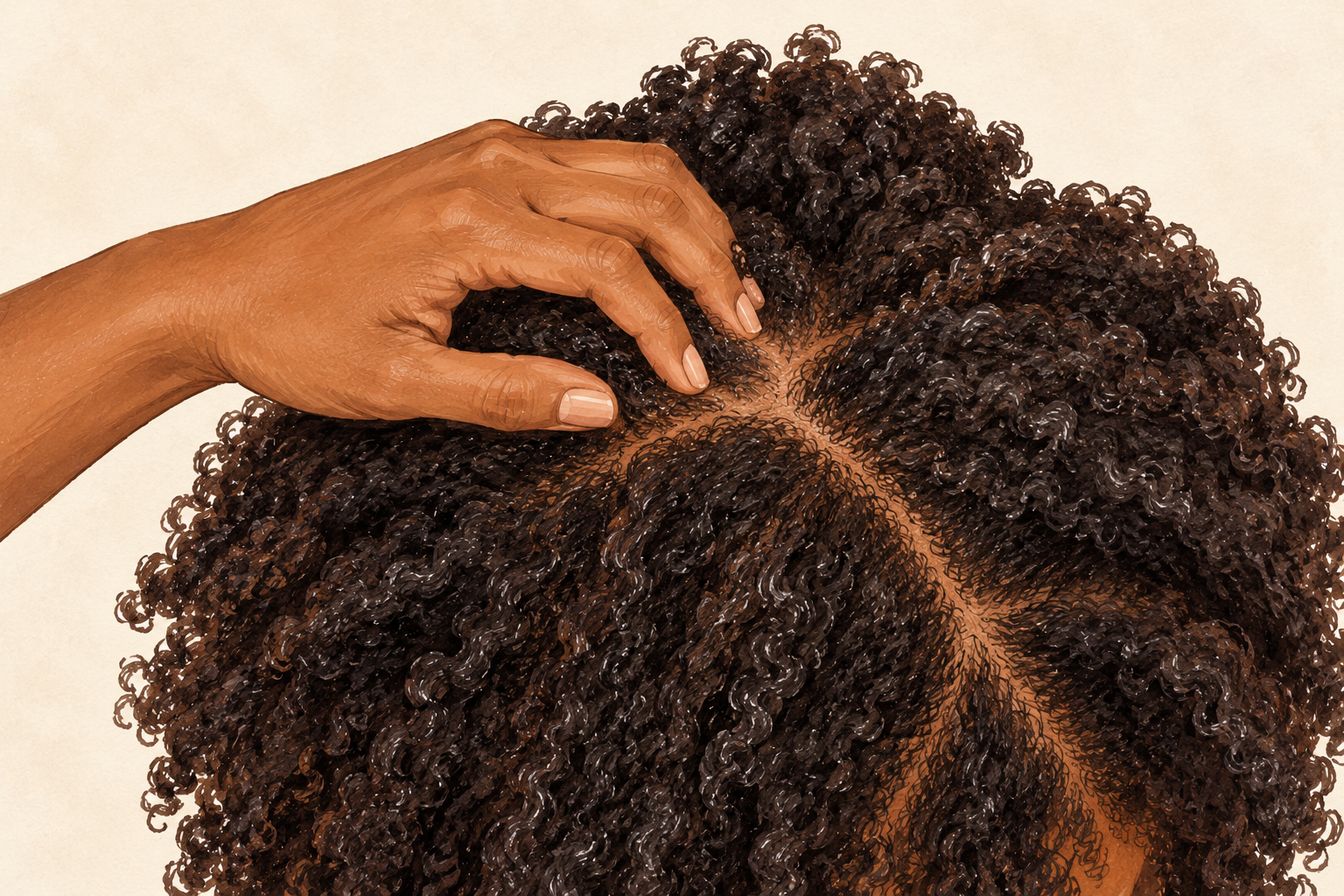
Massage your scalp with your fingertips for three to five minutes, a few times a week. Gentle massage feels good, loosens tight skin, and helps you notice any dryness or bumps early. Use a few drops of light oil on a dry scalp, but not on a flaky or inflamed one. Keep your nails short so you are not scratching. A clean, comfortable scalp supports 4C hair growth, because healthy skin makes happy hair. Skip heavy butters on the scalp, as they can clog and cause itching. Scalp massage also helps you notice early if something changes.
12. Trim little and often
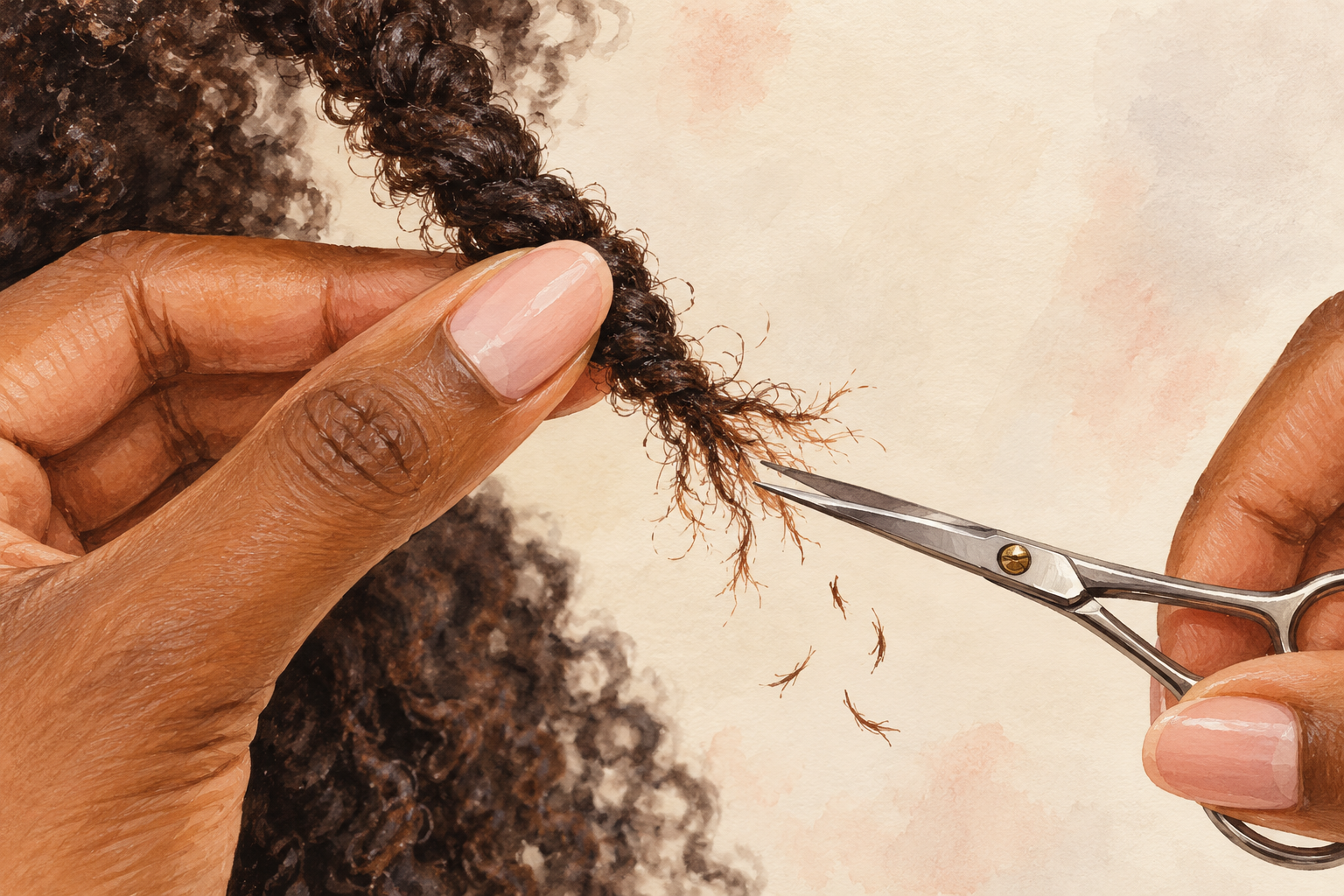
Trim just a quarter inch off the ends every three or four months, or whenever you see splits. Split ends travel up the strand if you leave them, and that costs far more length than a small regular trim. Twist a section and snip the fuzzy ends that stick out, or ask a stylist to do it. Dust only what is damaged. Do not cut because a calendar says so. If you see no splits, wait. A healthy end holds moisture better, which means more of what you grow stays on your head. Small regular trims keep the length you worked for.
Complete the Routine: 4C Hair Growth You Can Keep Up
Pick two habits for this month and add one more each month. For a full care plan, read about 4c natural hair care and black hair growth.