You run your fingers down your ends and they feel like straw, tangled, snapping and nothing like the hair you remember. When you have extremely damaged hair, the real question is whether to rescue it or cut it. These 12 steps help you judge the damage and decide, so start at number one tonight.
1. Find where the damage stops
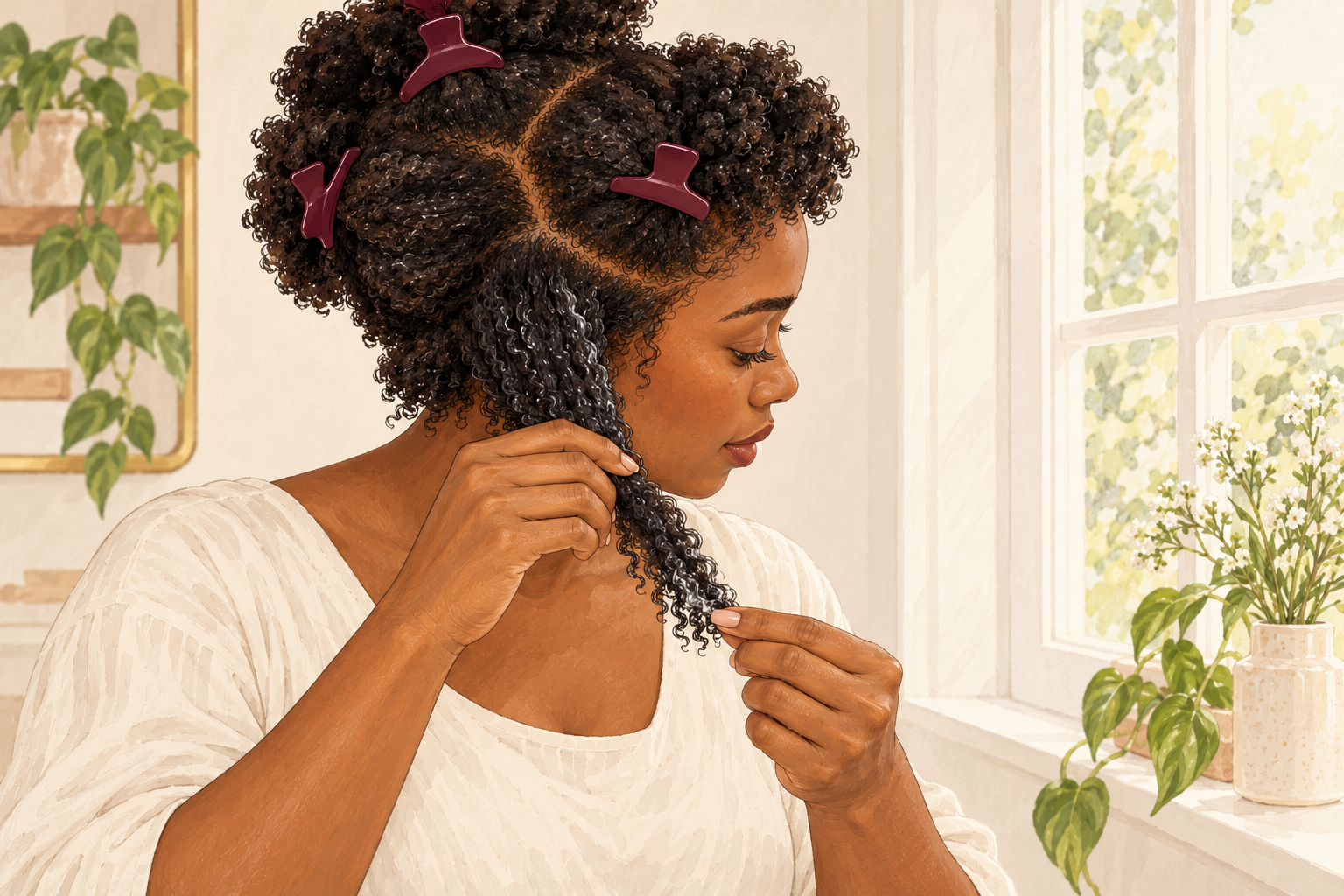
Hold one section up in daylight and slide your fingers from the root down to the ends. Notice the point where hair stops feeling smooth and starts feeling rough, dry or bumpy. If that point is only an inch or two from the ends, you are in a good position. If it sits near your ears or your scalp, the damage runs deep. Look at the very tips as well, because a split in the middle of a strand is a clear sign that the hair has broken down. Doing this once, on clean dry hair, gives you the clearest answer.
2. Try the gentle wet strand check
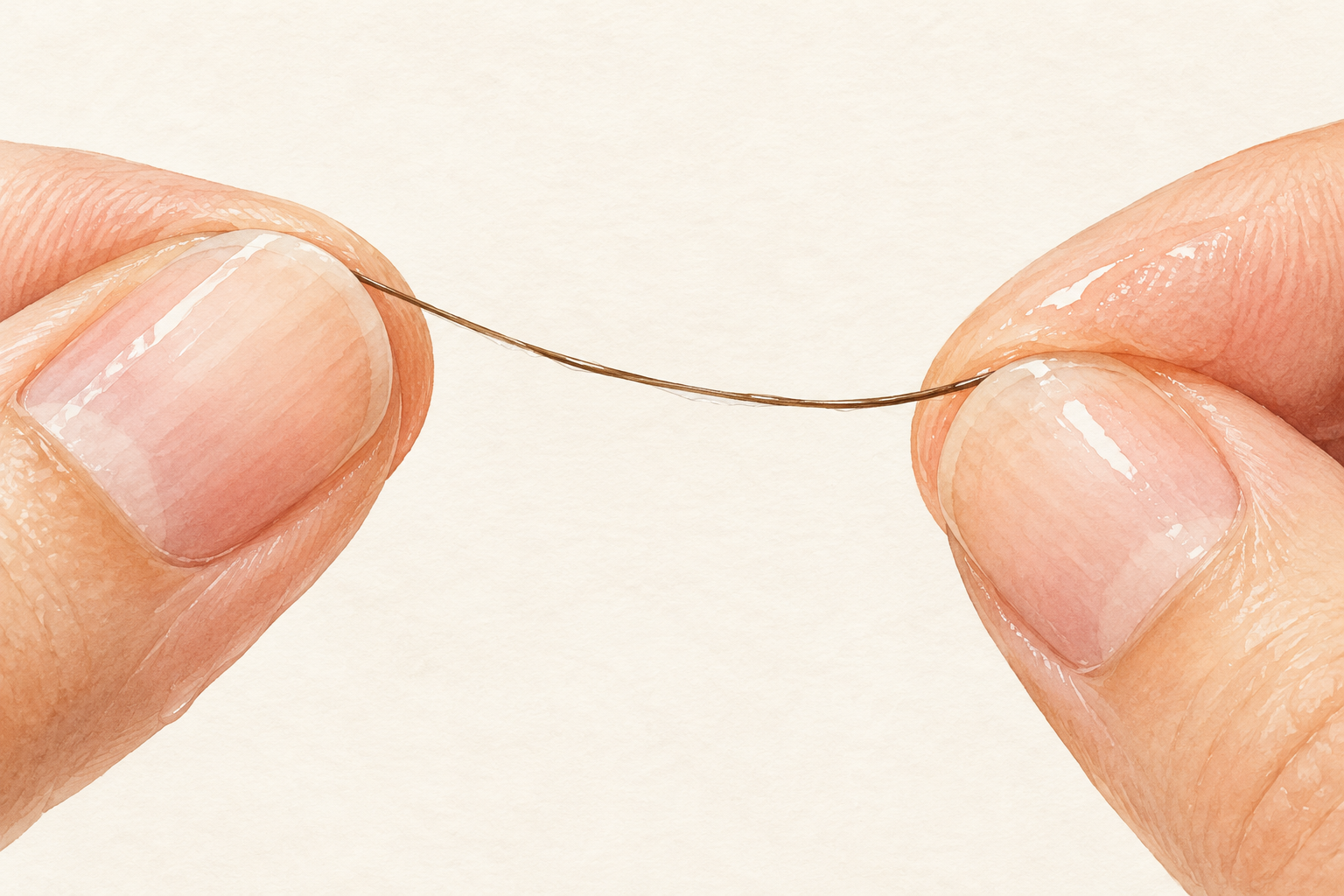
Wet one strand, hold it by the ends and stretch it very gently. Healthy hair gives a little when you stretch it and then springs back. Badly damaged hair feels mushy, stretches like gum or snaps straight away. Test a strand that has already fallen out, and never pull one from your head. Try three spots, one near the front, one at the crown and one at the nape, because heat and dye often hurt some areas more than others. Write down what you find so you can compare it again next month. Two or three strands snapping in a row is your answer, so do not keep testing in hope.
3. Watch how it behaves when you comb and style
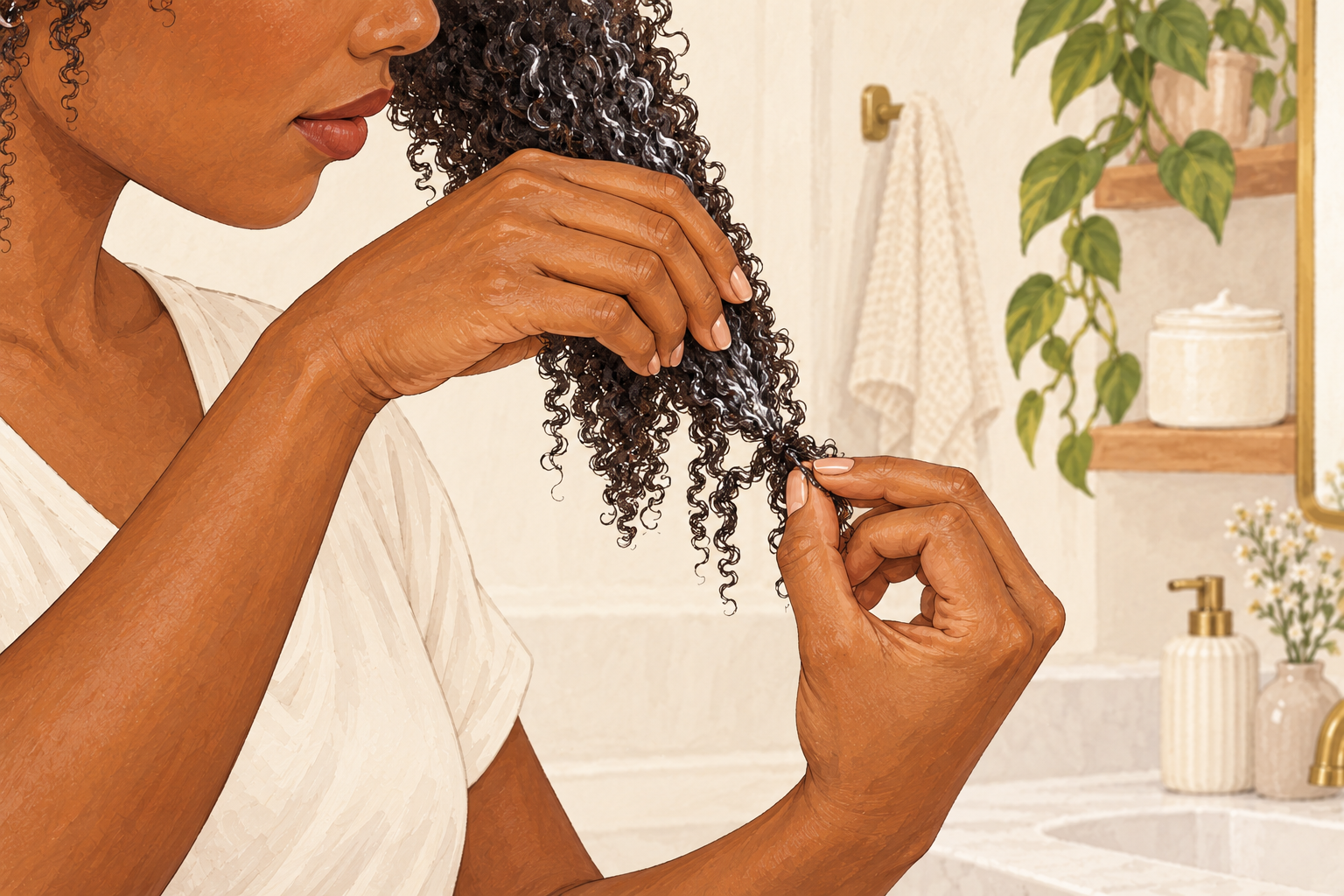
Notice whether your hair knots within minutes, shrinks into a fuzzy cloud or refuses to hold a curl. Constant tangles, dull color and a rough feel even after conditioner are signs the outer layer is worn away. Curls that suddenly look loose or stretched out usually mean the pattern is damaged. Hair that feels gummy when wet and brittle when dry is also a sign. Keep a short list of what you see, because it helps you decide on the next few steps and choose the right cut. A photo with the flash on shows the same rough, dull surface.
4. Name what did it
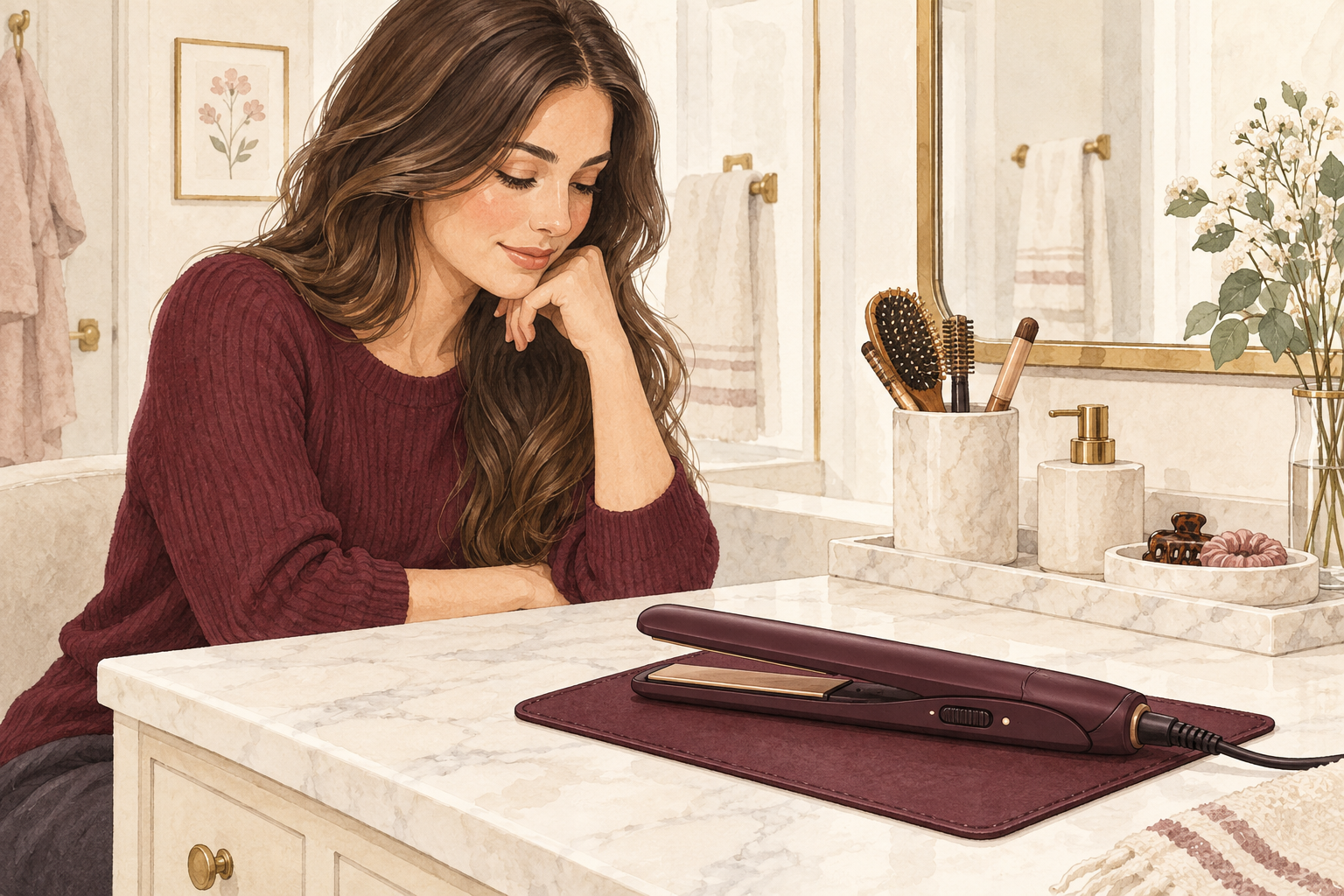
List every heat tool, dye, bleach, relaxer and tight style you have used in the past year. Extremely damaged hair usually has more than one cause stacked together, such as bleach on top of dye, or daily flat ironing on color treated hair. Seeing it on paper makes the pattern obvious. It also tells you what to pause first. Be gentle with yourself, because most damage comes from wanting a style you loved, not from carelessness. Mark the one thing you will drop for now. Counting heat days per week is useful too, because five days of flat ironing damages more than one hot night.
5. Pause the heat and the chemicals
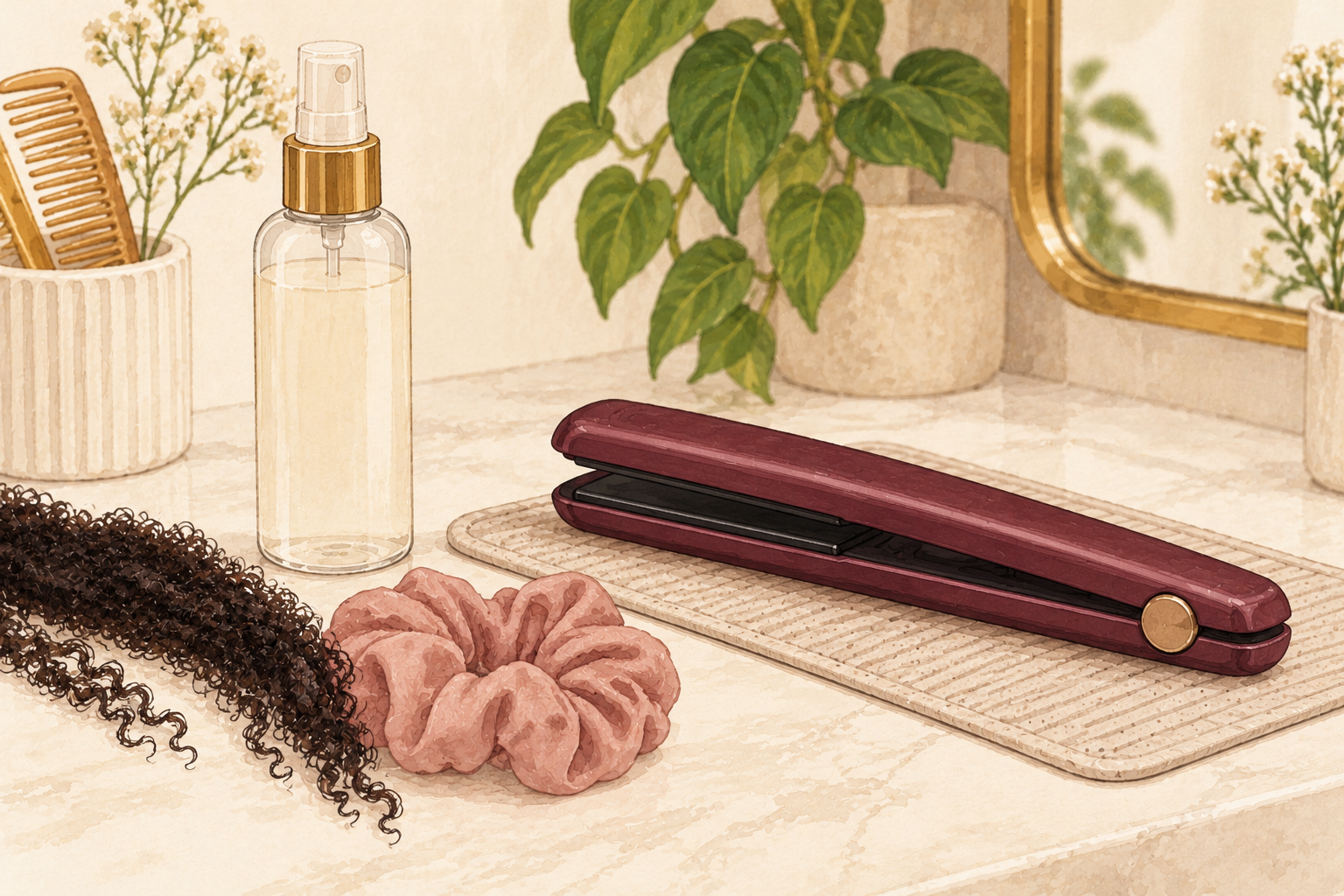
Stop flat ironing, curling, bleaching, relaxing and dyeing for at least eight weeks. Every pass of heat on damaged hair opens up more cracks. Let it air dry or use a dryer on a cool setting, held a hand width away. If you must style, do heatless curls with a soft headband or braids overnight. Tight ponytails and buns pull at weak spots, so wear your hair loose or in a soft clip. A pause gives you a true picture of what is left, and that makes the cut decision easy. If an event comes up, do one soft set of rollers on dry hair instead of the iron.
6. Cut if the damage runs far up the strand
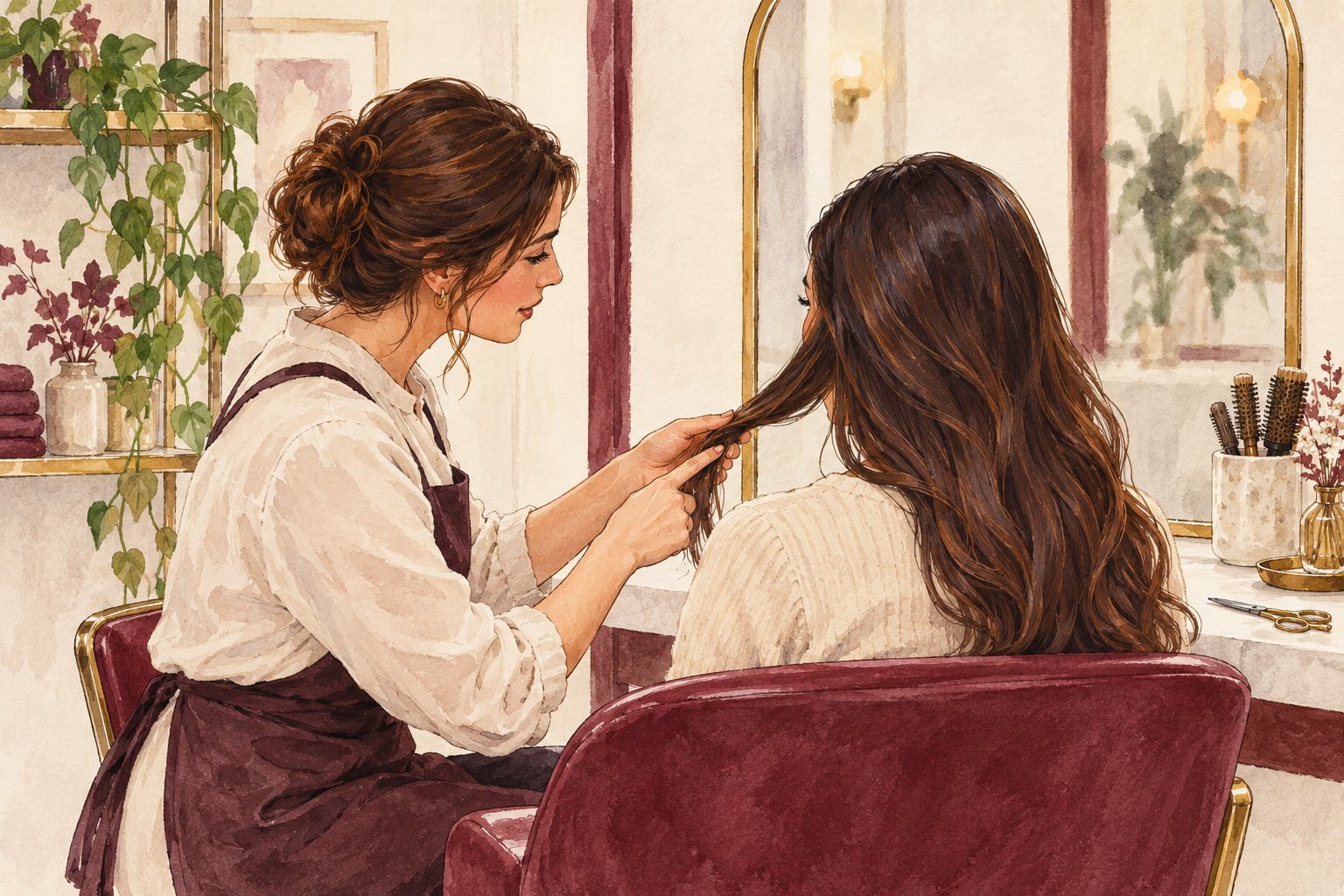
If more than a third of your length feels rough and breaks easily, plan a real haircut. Masks only coat the surface, and they cannot rebuild a strand that has lost its structure. Keeping that length means keeping tangles and constant breakage, and the hair keeps shedding bits from the ends. Cutting feels scary, but healthy shorter hair looks thicker and shinier than long, broken hair. Ask for a cut that removes all the worst part, not a tiny trim that leaves you in the same place in a month. Book the cut within two weeks, before you talk yourself out of it.
7. Keep it and trim in stages if the damage is limited
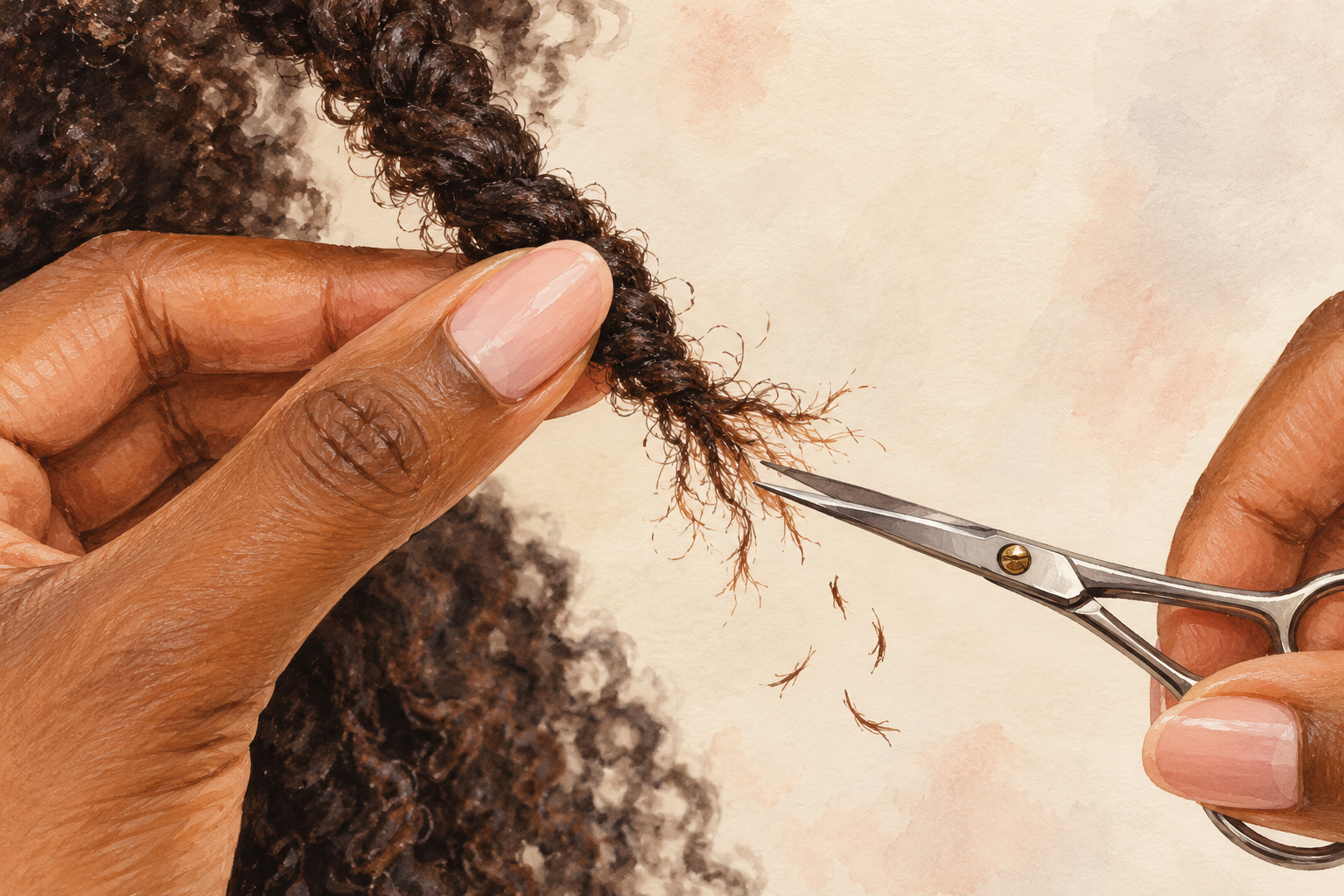
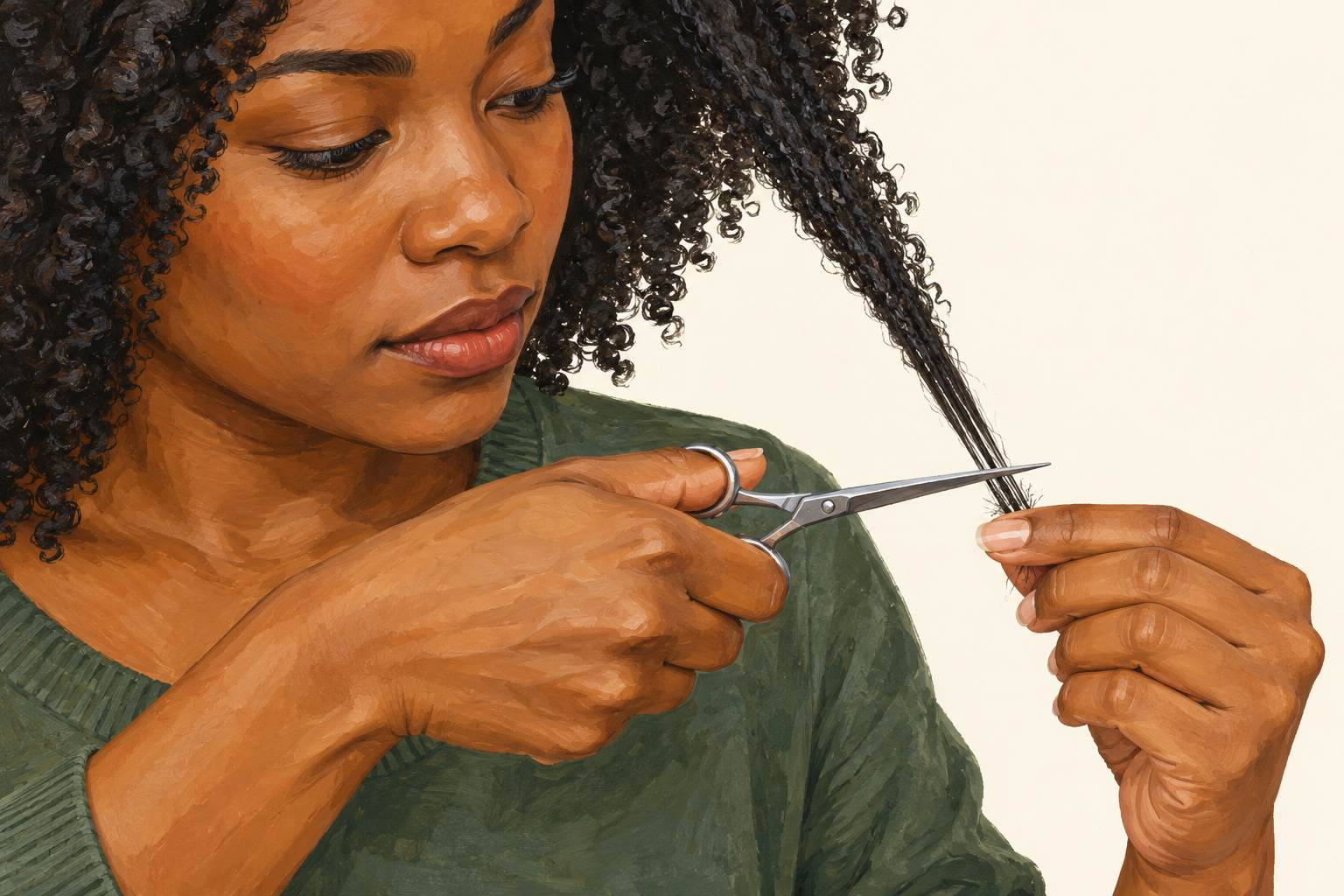
If only the last few inches are rough, trim half an inch every six to eight weeks. This works when the top part of the hair still feels strong and smooth. Each small trim removes the oldest hair and slowly walks the damage out. You keep most of your length while you wait. Take a photo of your ends each time, and you will see them looking cleaner. Skip the trims for too long and the splits creep upward, which turns a small problem into the big cut you wanted to avoid. Ask the hairdresser to cut dry so you can see exactly what is coming off.
8. Choose by your goal, not by guilt

Ask yourself what you want your hair to look like in six months, then work backwards. If you want a healthy, swingy bob, cut now and enjoy it. If length matters most, trim in stages and style with care. Neither choice is wrong, and neither means you failed. Guilt makes people hold on to ends that are already gone. Pick one plan, tell a friend about it so you stick to it, and stop second guessing. Your hair will still grow about half an inch a month whichever way you go, so the choice is never permanent.
9. Know what a trim fixes, and what to ask for
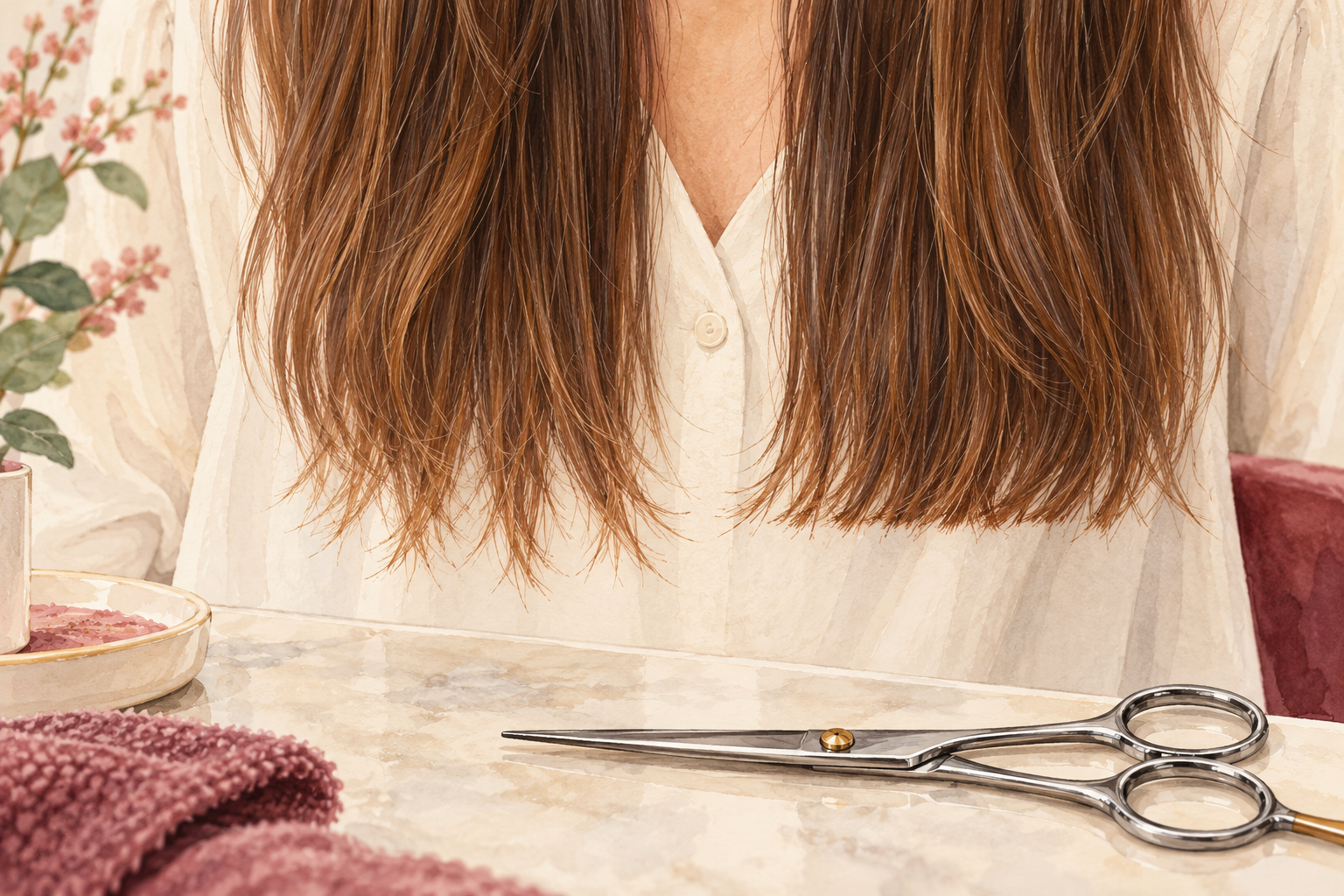
A trim removes split ends, snags and the frayed tips that make your hair tangle. It will not repair the damage further up, and it will not make a weak strand strong. Bring a photo and ask your hairdresser for a blunt, even cut with the dead ends removed. Tell them to go slowly and check how the hair feels after each inch. Fresh ends also help products work better, because they stop the hair from soaking up everything and staying dry. Dusting, which snips only the frayed tips, is a gentler choice when you are keeping length.
10. Wash gently and condition every time
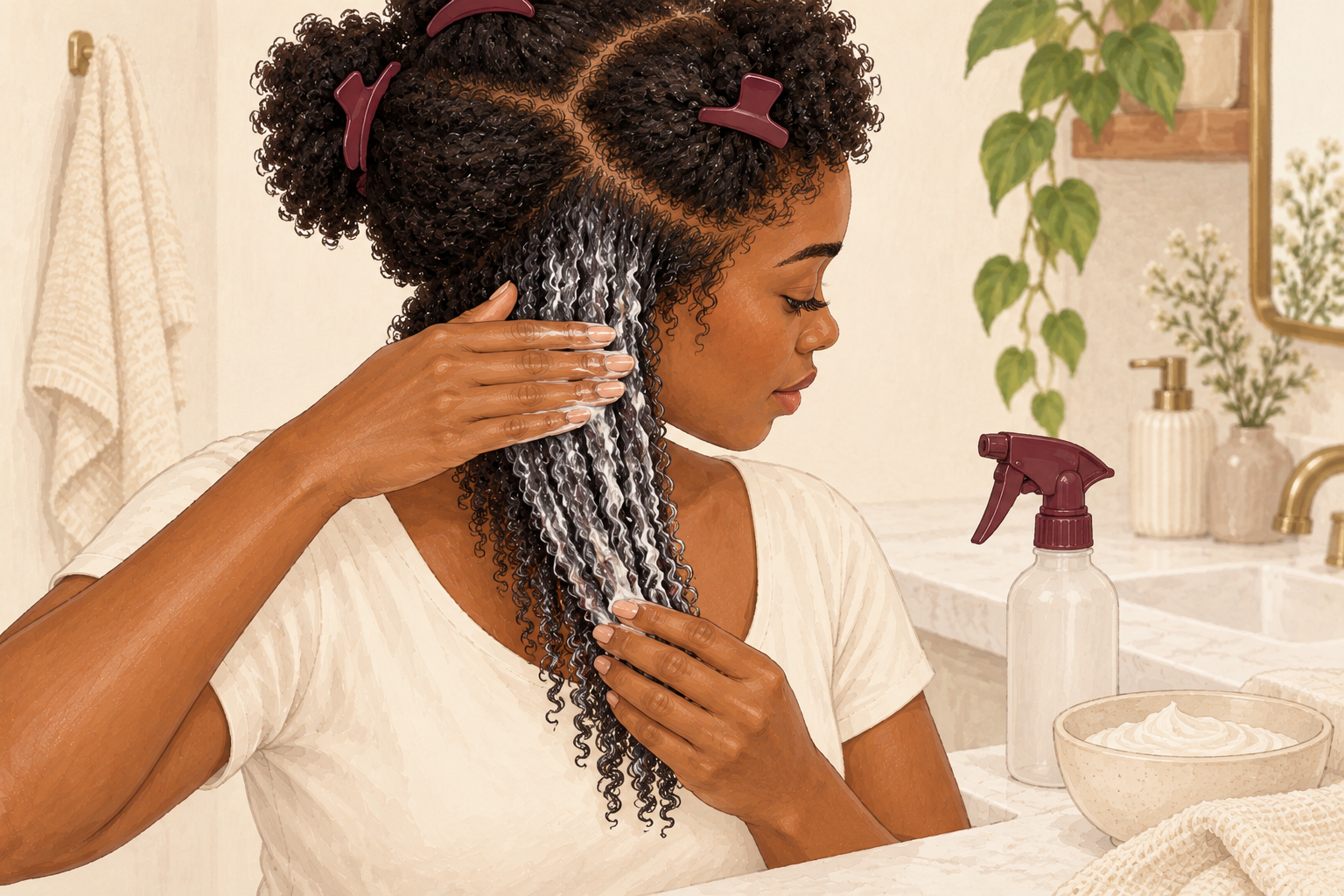
Shampoo your scalp only, and put conditioner on from the mid lengths to the ends. Use lukewarm water and let the suds run down, instead of scrubbing the lengths. Detangle in the shower with a wide tooth comb, starting at the ends and moving up in small sections. Leave the conditioner in for three minutes before you rinse. Pat the hair dry with an old cotton tee rather than rubbing it in a towel. Each of these small habits saves a few strands, and strands add up. Do not brush wet hair from the roots, which is when it snaps most.
11. Add a rich mask once a week
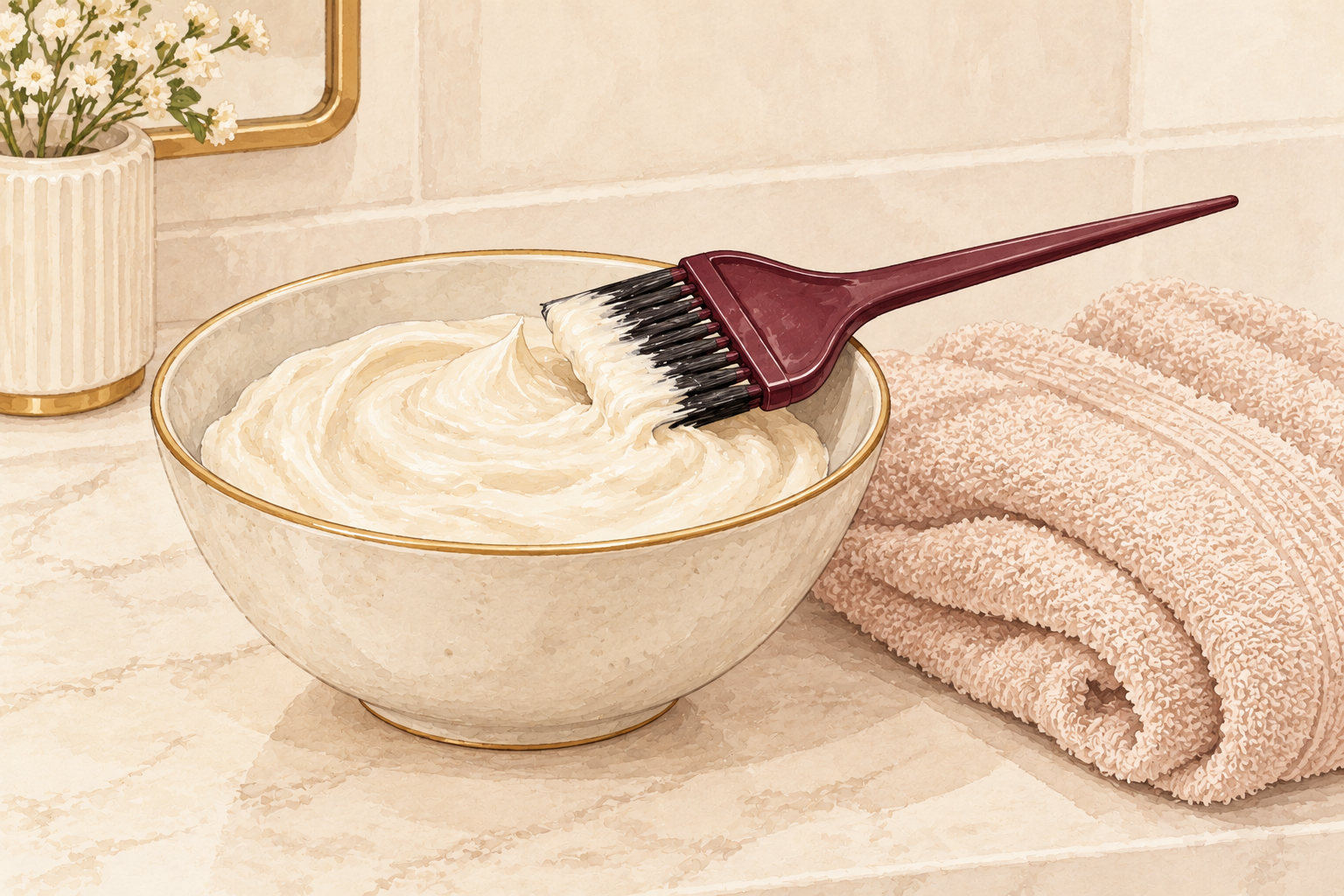
Smooth a thick moisture mask through damp hair, concentrating on the ends, and leave it on for twenty minutes. If your hair feels gummy and limp when wet, try a light protein treatment once a month instead, then follow with moisture. Do not use both on the same day. Rinse until the water runs clear. A mask will make your hair feel softer and easier to comb, but it will not rebuild a broken strand. Think of it as comfort while the cut or the trims do the heavy lifting. Use a plain, light mask so your damaged hair is not weighed down.
12. Expect slow change at weeks one, four and eight

In week one the hair feels softer from the gentler routine, though the damage looks the same. By week four you should see fewer tangles and less shedding in the brush. By week eight, new growth at the roots and fresh ends make the whole head look healthier. Avoid the mistakes that keep you stuck, such as heat on wet hair, brushing hard from the roots and bleaching again too soon. Healing takes months, and extremely damaged hair rewards patience far more than any product. Take a photo of your ends today, then another at week eight in the same light.
Complete the Routine: Extremely Damaged Hair You Can Save or Reset
Tonight, do your strand check, put away the heat tools and book the cut if you decided on one. For gentle recipes, read about a hair mask for damaged hair and damaged hair repair.