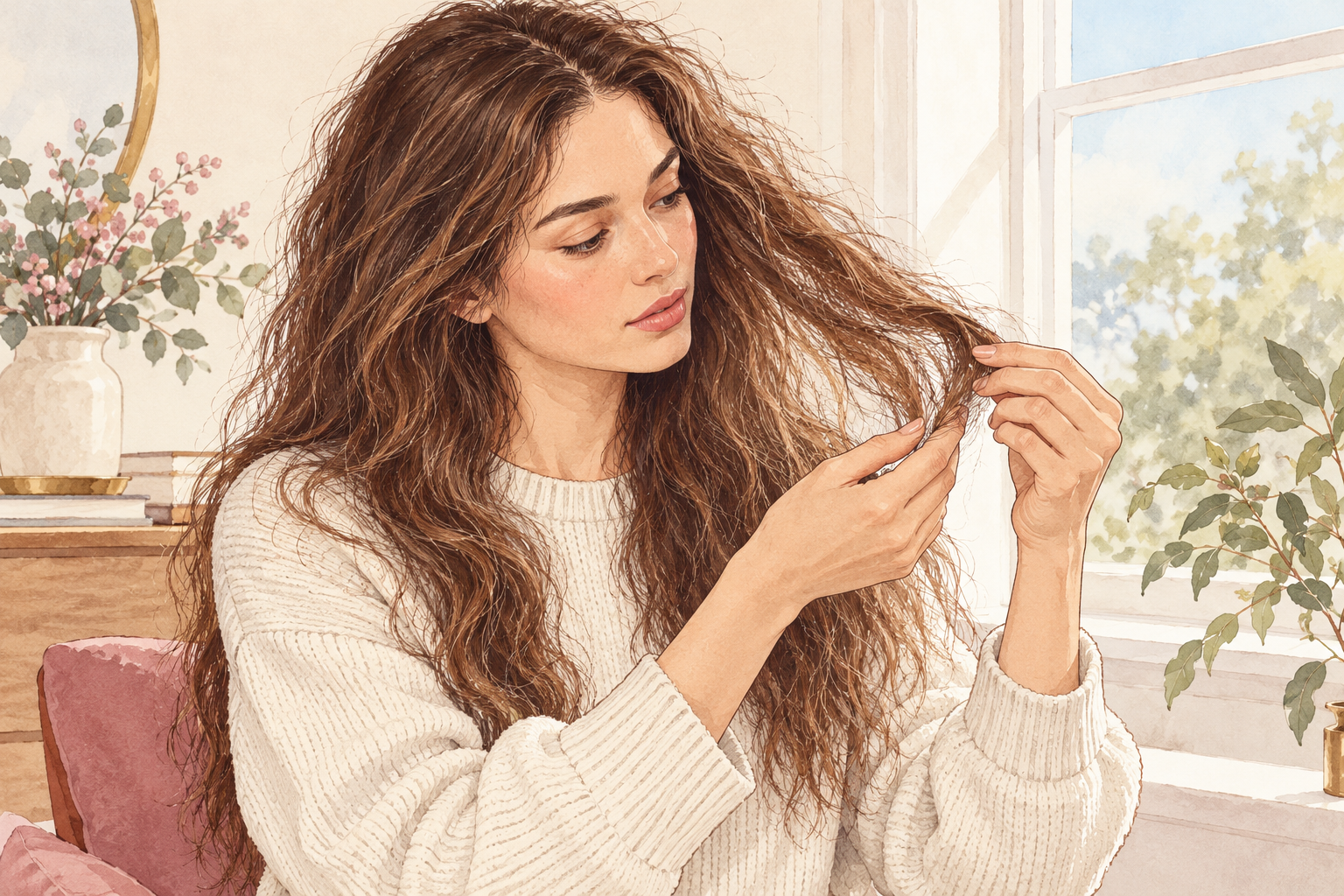
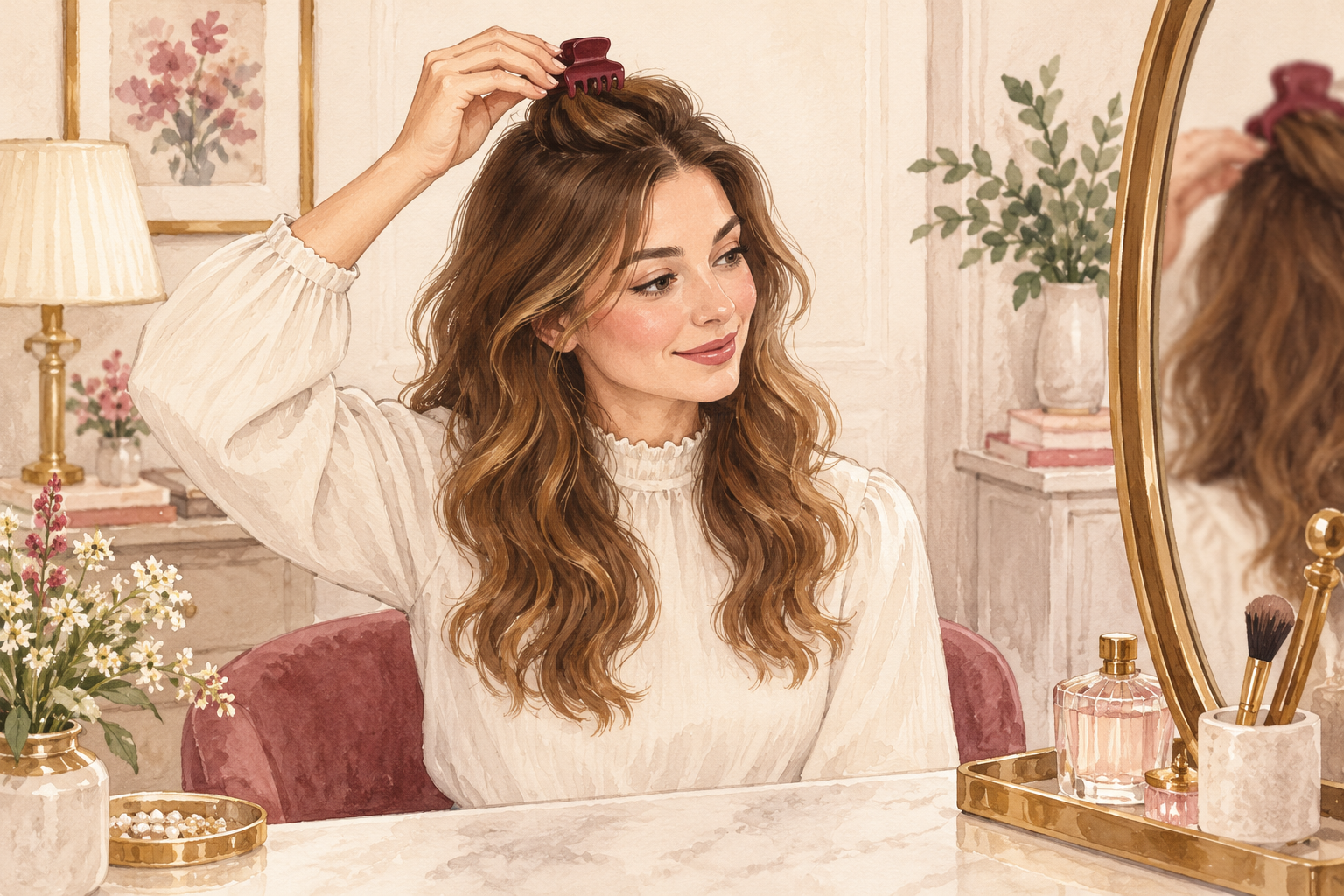
Your waves look lovely for ten minutes after the shower, then the crown puffs up, the middle goes fuzzy and the ends lose their shape. Frizzy wavy hair is tricky because the frizz does not show up in one place. These 12 fixes follow the frizz from the top of your head to the ends, so start at number one tonight.
1. Spot where your frizz shows up
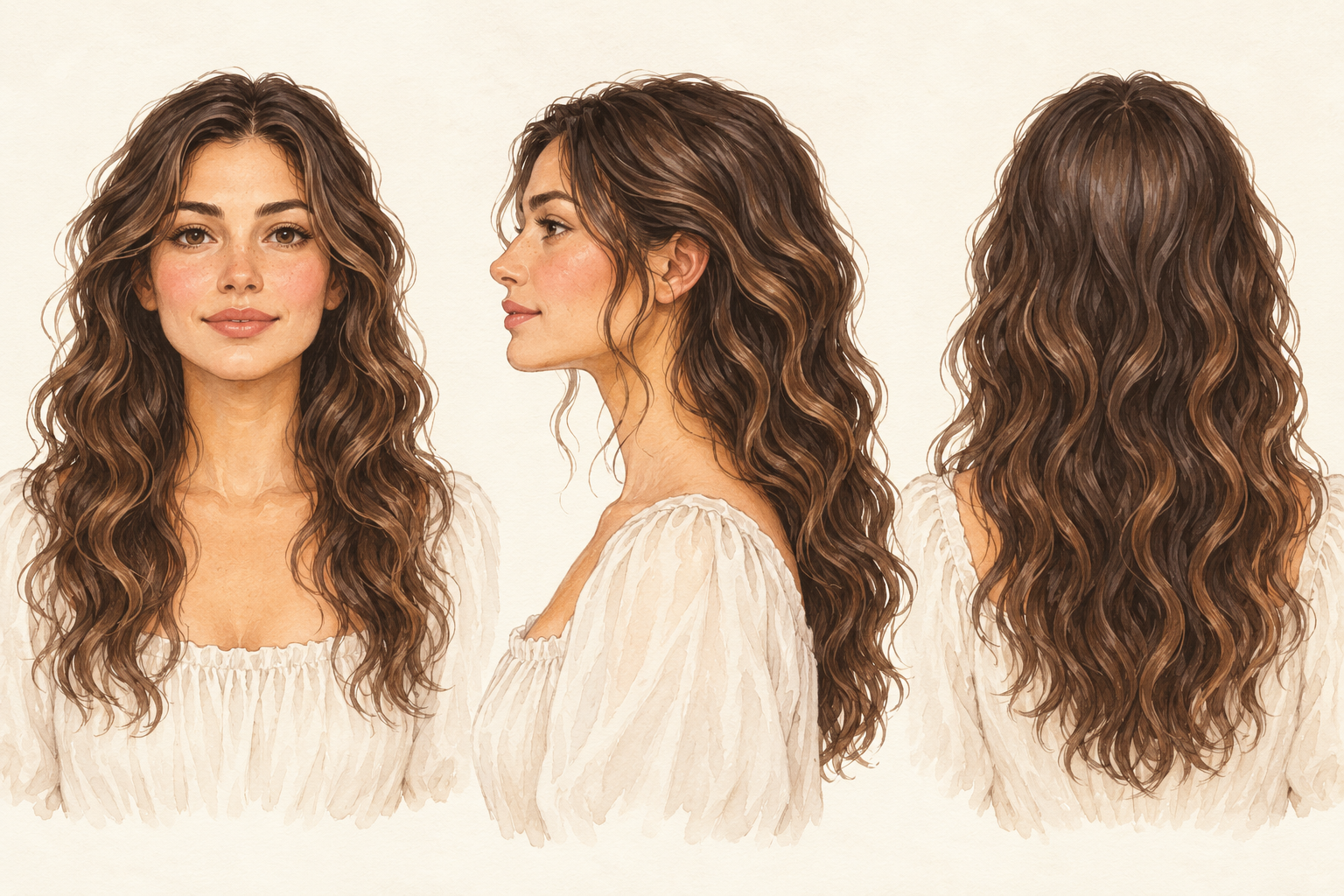
Check your hair in daylight and note whether the frizz sits at the crown, the mid lengths, the ends or only on day two. Each spot has its own fix. Crown frizz comes from friction and a rough surface, mid length frizz from dryness, and end frizz from damage and splits. Day two frizz comes from sleep and handling. Take a photo from the side and the back after a wash and again the next morning. Write it down, because this simple note decides which of the next steps you need most. Compare the two photos and you will spot the trouble area at once.
2. Know why waves frizz
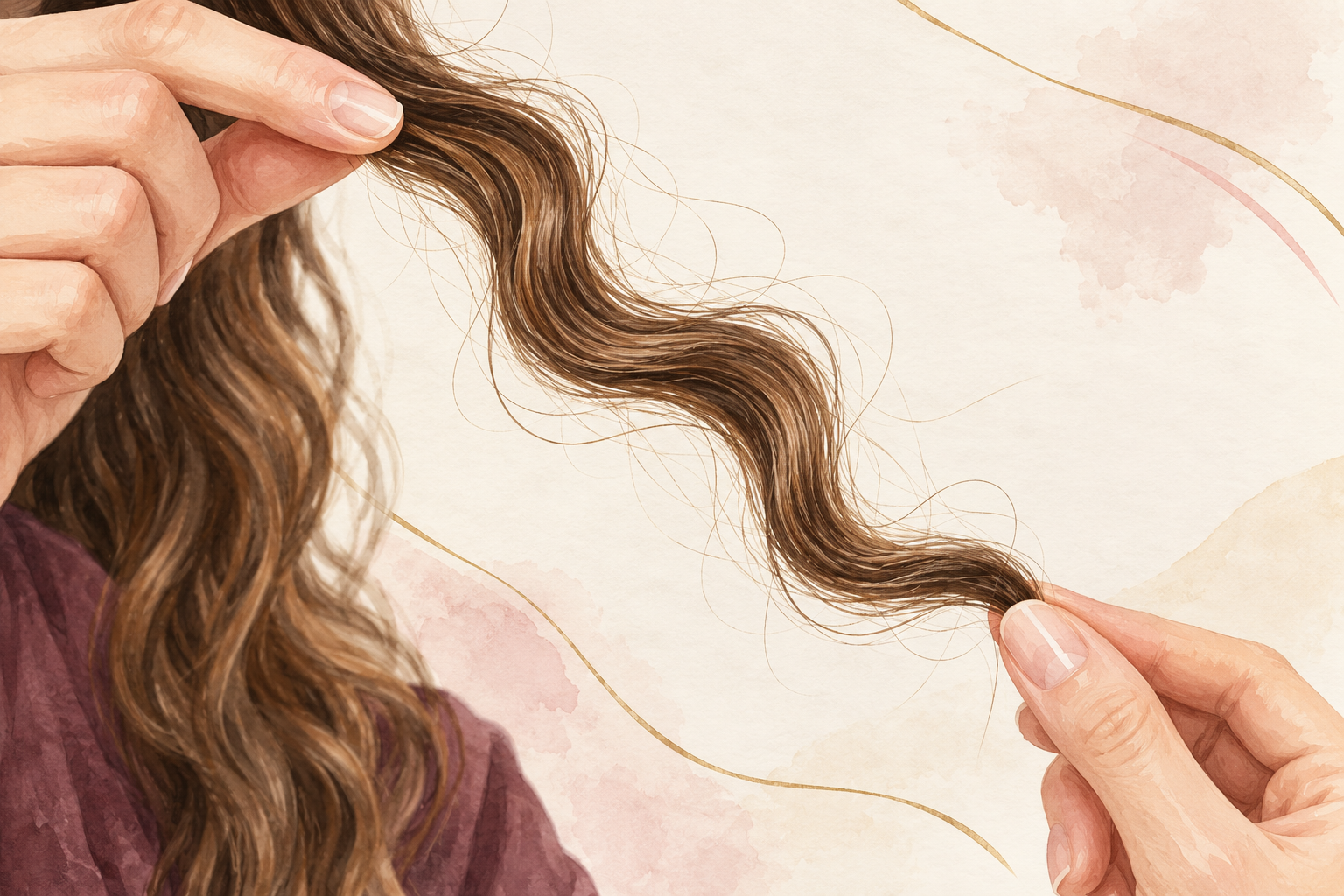
Understand that waves sit between straight and curly, so they have a lifted surface but not much natural oil to cover it. The bends stop scalp oil from reaching the ends, and the loose pattern gives air plenty of room. That leaves the outer layer rough and ready to puff. Waves also get weighed down easily, so heavy fixes backfire. Aim for a light, steady supply of moisture, smooth handling and a little hold. Once you see this, the routine feels like common sense. You are smoothing a layer, not forcing a shape. Fine waves need a lighter touch than thick ones. Getting the why straight makes wavy hair care easier to apply to your own waves.
3. Stop rubbing the top with a towel
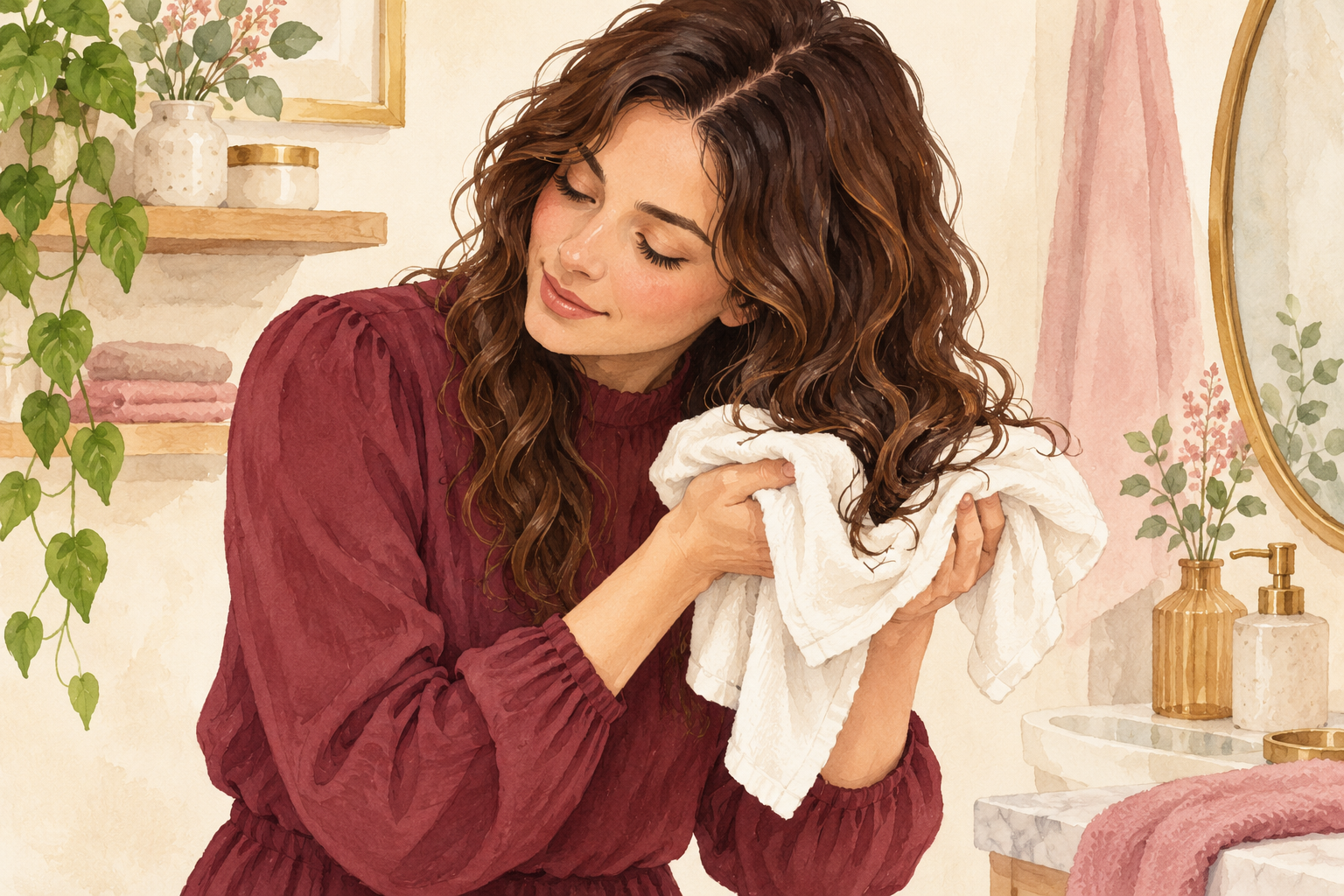
Squeeze your hair with a soft cotton t shirt or microfiber towel and never rub. Rubbing roughens the surface and breaks up your wave pattern, and the crown takes the worst of it. Scrunch up from the ends in gentle handfuls for a minute, then stop. Leave the t shirt wrapped around your head for ten minutes while you get dressed. A rough terry towel is the usual reason for crown puff, and the switch alone changes how your hair looks by morning. Do not pull your hair out of the wrap, just unwind it. Keep one soft shirt just for hair so it stays free of lint.
4. Protect the crown at night
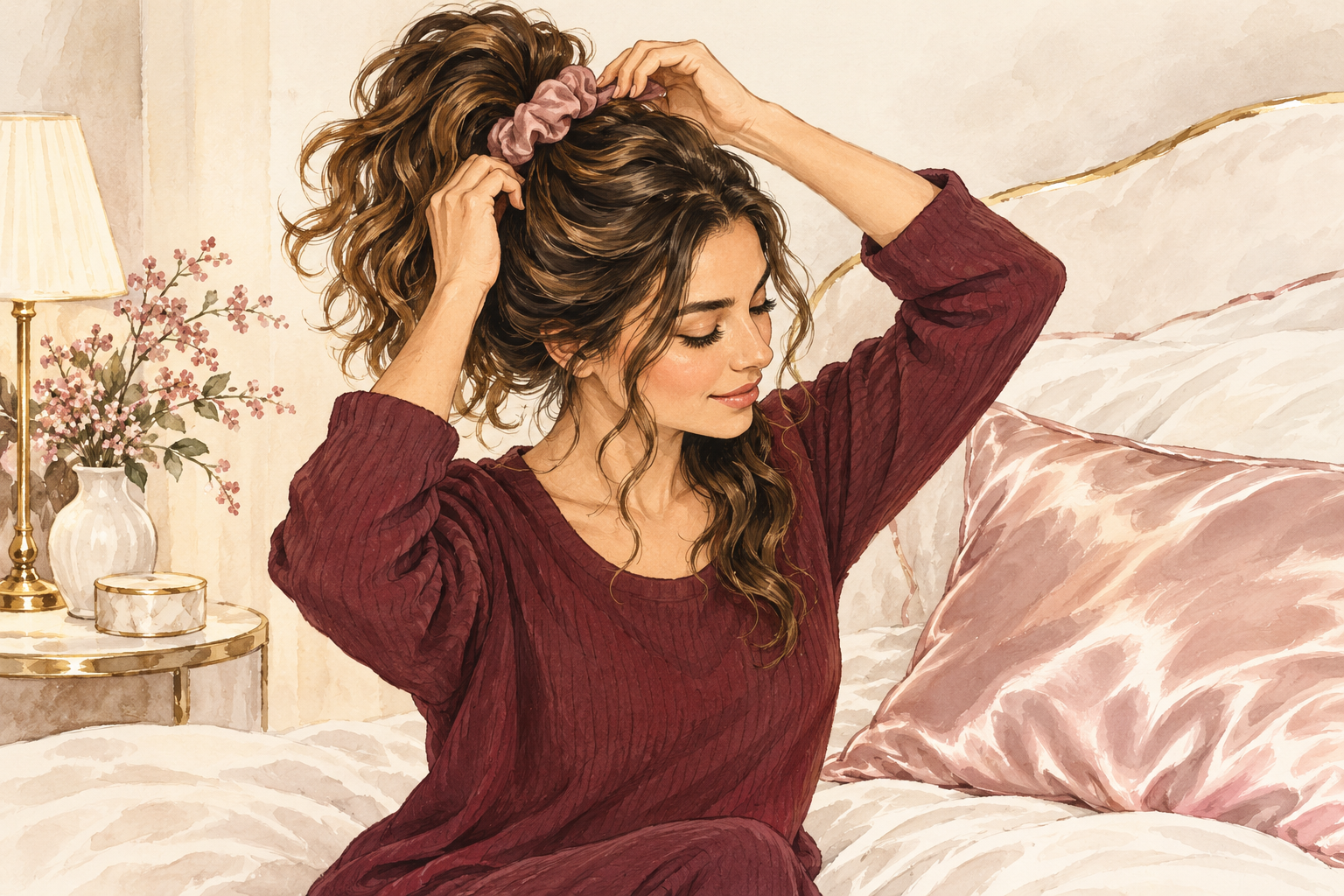
Gather your hair into a loose pineapple on top of your head and cover it with a satin bonnet or sleep on a satin pillowcase. Cotton drags on the crown all night and lifts the surface, which is how you wake up with a cloud. Use a soft scrunchie, and keep it loose so it does not dent the waves. If a bonnet falls off, a satin scarf tied loosely does the same. Add a spritz of water in the morning to relax the shape. Your crown should look smoother within a week. Wash the bonnet or pillowcase weekly so oil does not build up.
5. Add moisture before you add smoothing
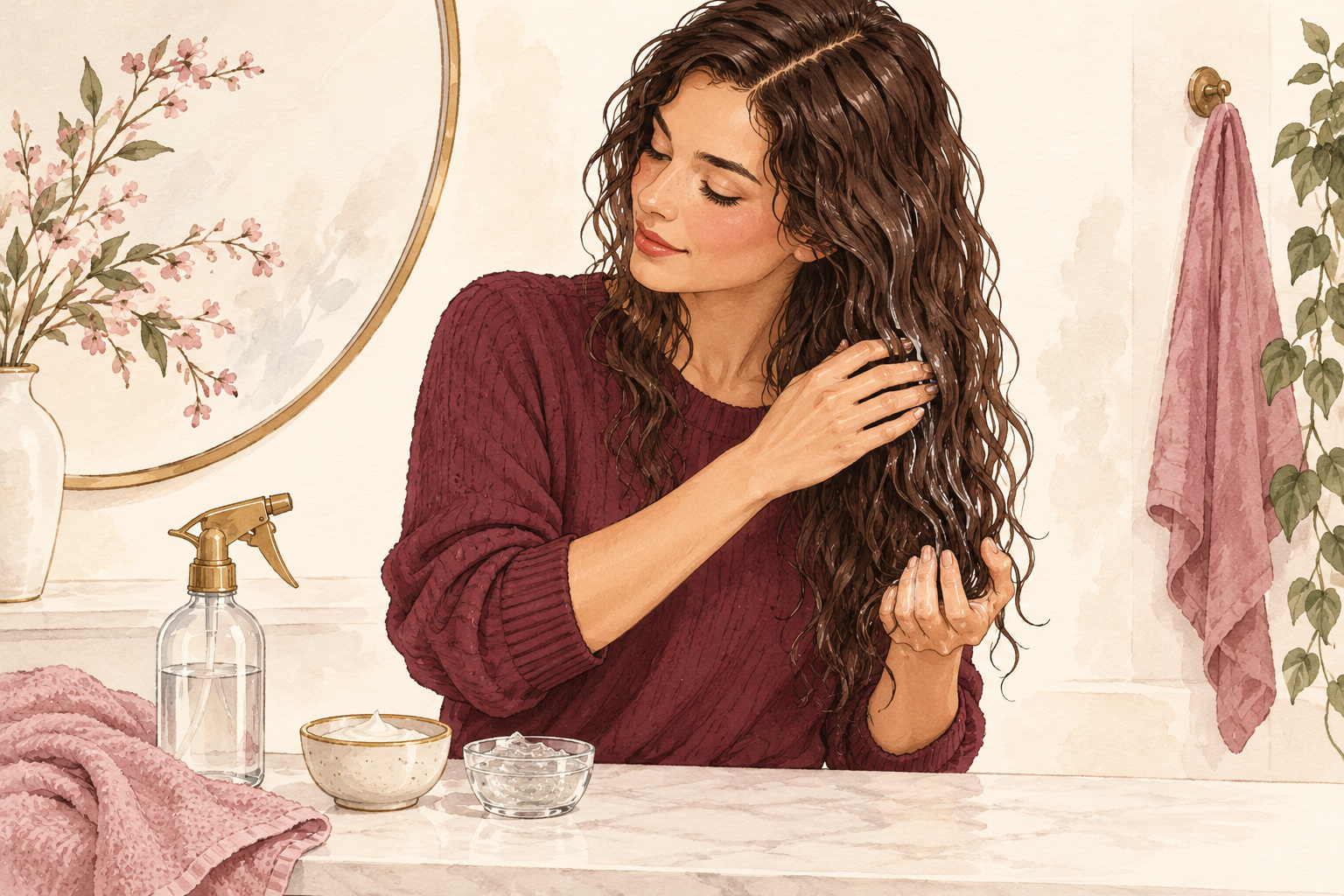
Wet your hair first, work in a light cream, then add a smoothing gel or serum on top. Frizz is often thirst in disguise, and smoothing a dry strand only hides it for an hour. Squeeze out the extra water, smooth the cream through the mid lengths, then scrunch. Use a coin sized amount for shoulder length hair. If your waves fall flat, use half. Wavy hair loves water, so the order is water, cream, then hold. Skipping the first step is the usual reason a product does not work. If your waves still feel dry, add a second thin layer of cream rather than a thick first one. Squeezing the water upward in handfuls helps the waves clump. Moisture ahead of smoothing is the rule, so explore more fixes under frizzy hair remedies when frizz returns.
6. Cool down the heat tools
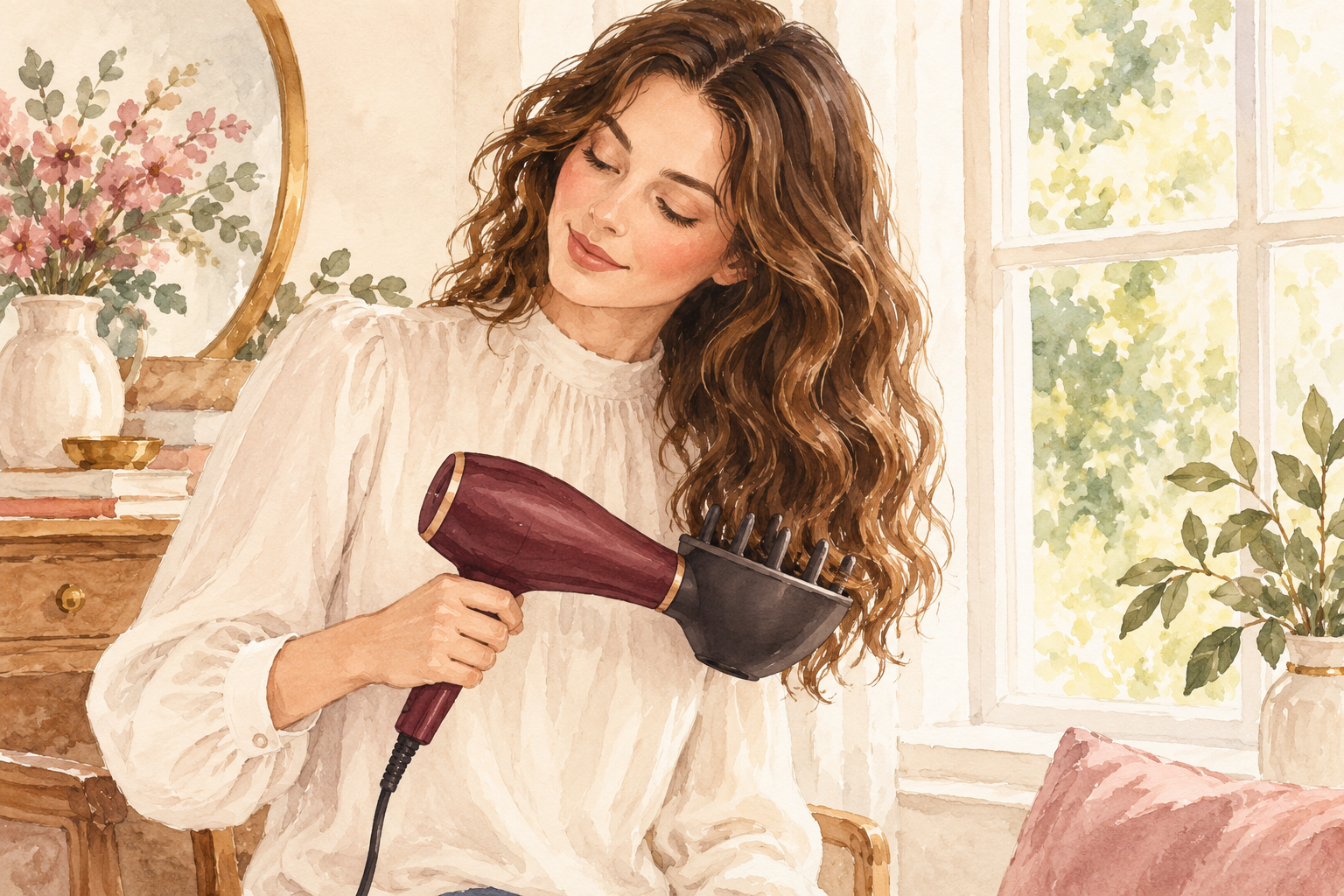
Use the lowest setting that works, protect your hair first, and keep the dryer a hand width away. Hot tools lift the surface of wavy hair and leave the mid lengths and ends fuzzy. Dry about eighty percent with a diffuser on low and cool, then leave the rest to air. Straighten only once or twice a week, and pass the iron one time. If your waves no longer return after washing, give heat a month off. Fuzz at the mid lengths usually settles after a few weeks. A cool shot at the end of drying closes the surface and adds shine.
7. Keep your hands away while it dries

Leave your hair alone until it is fully dry, then break the cast with a little oil on your hands. Touching, parting and fluffing while wet breaks up the wave clumps and lets frizz take over. If you must adjust something, do it in the first five minutes. Then wait. A diffuser or air drying needs about an hour for shoulder length hair. The hard crunch you feel on dry hair is the gel cast, and scrunching upward loosens it into soft waves. Keep a book nearby to keep your hands busy. Pick a day to try it when you have nowhere to be.
8. Smooth the surface with a light hand
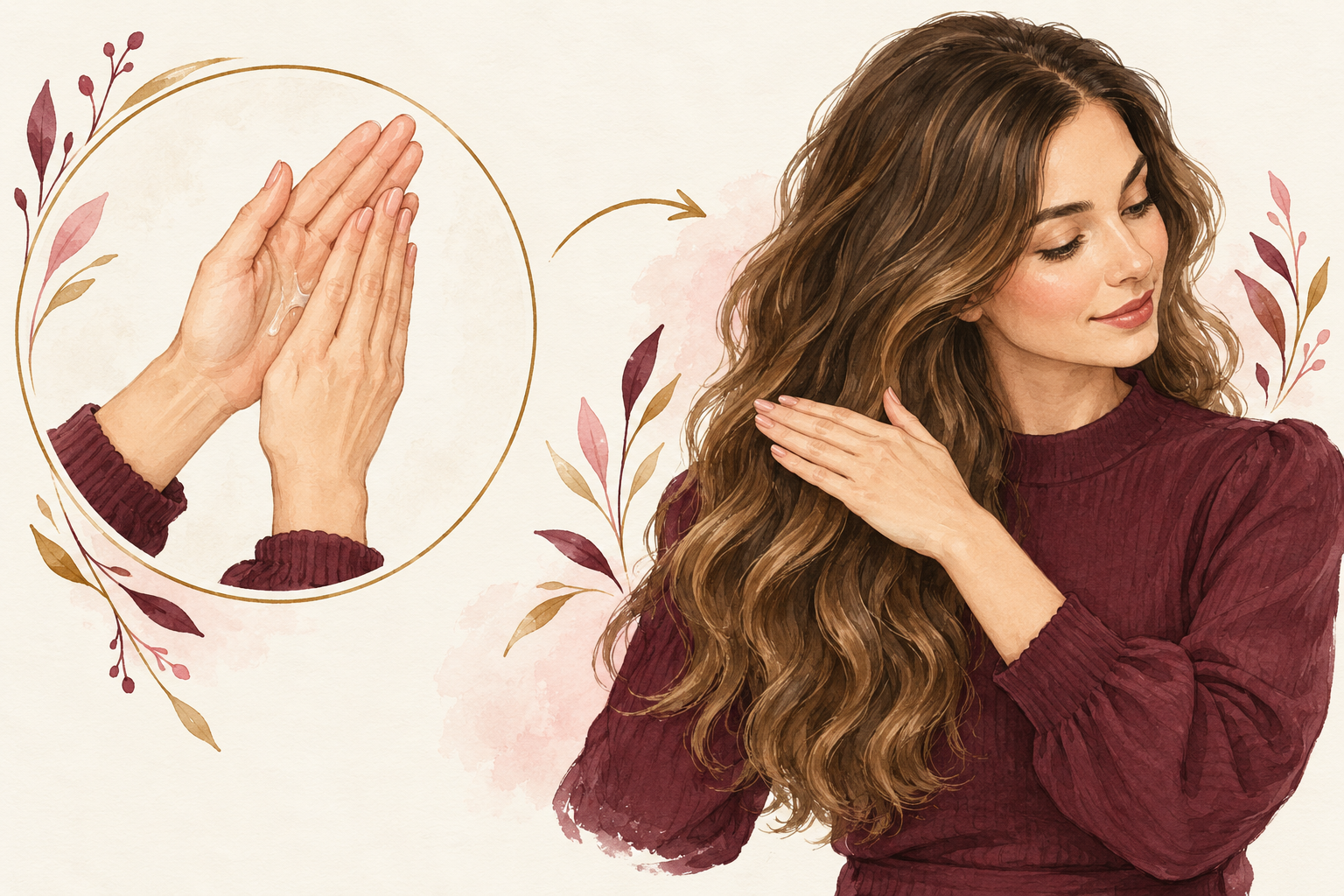
Press a pea sized bit of lightweight serum or oil between your palms, then glide over the top layer only. A heavy hand flattens waves and leaves them greasy. Press, do not rub, and add another drop only if you need it. Focus on the places that puff, usually the crown and the front. Doing this on dry hair after styling softens the fuzz without breaking the pattern. If your waves feel weighed down, go lighter next time. A little goes a very long way on wavy hair. Rinse your palms afterward so the leftover oil does not drift to your face. Do the front last, since that is where frizz shows in photos.
9. Seal the ends while hair is damp
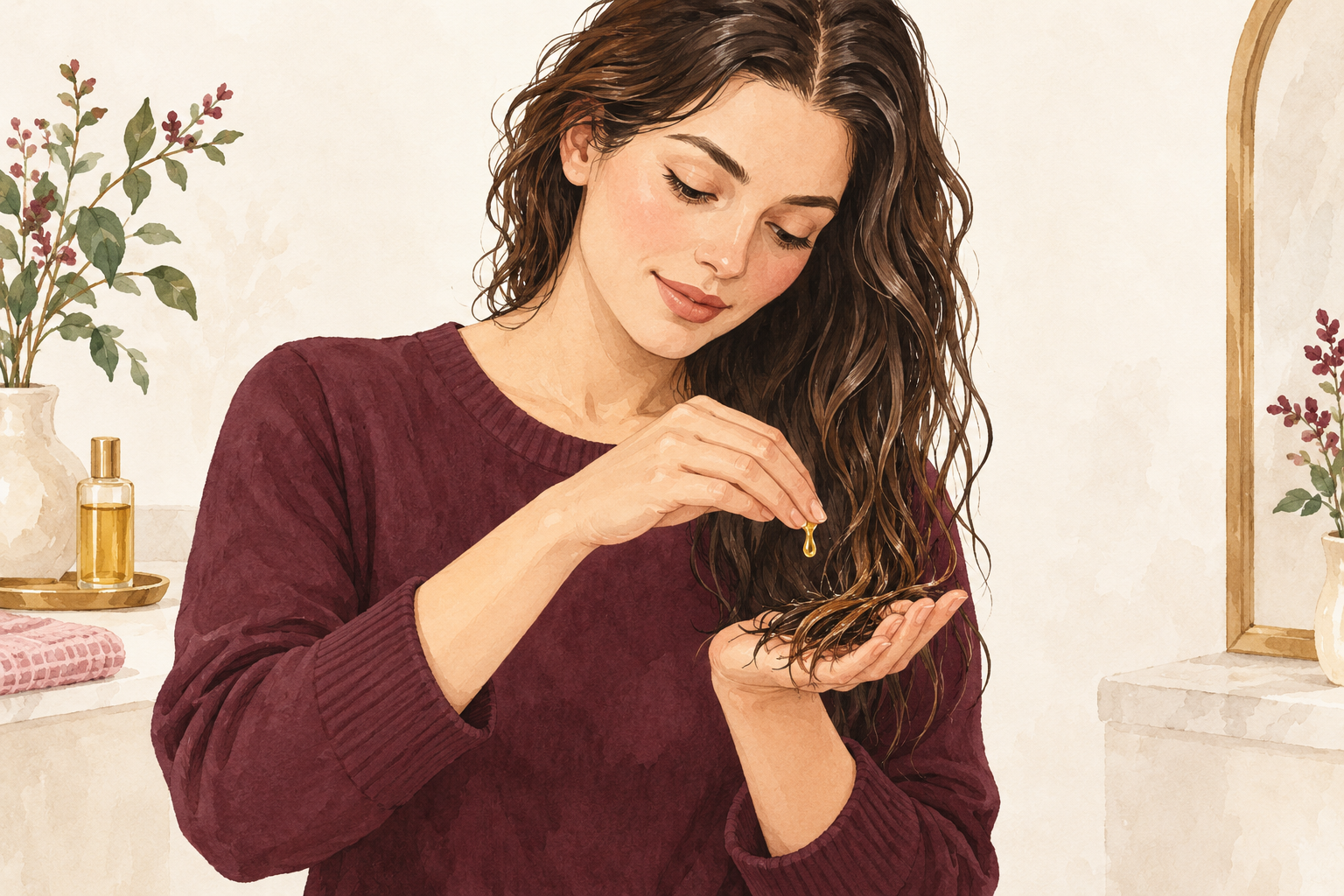
Add two or three drops of a light oil to damp ends right after your cream. Ends are the oldest part of the hair and dry out fastest, so they need a seal to hold water in. Press the oil in with your palms rather than dragging it through. This keeps the waves clumped instead of stringy. Leave your roots alone, since oil there flattens. If your ends still feel crunchy after drying, add one more drop next time. Seal after every wash and your ends will feel supple. Start at the tips and stop around the chin.
10. Deep condition every one to two weeks
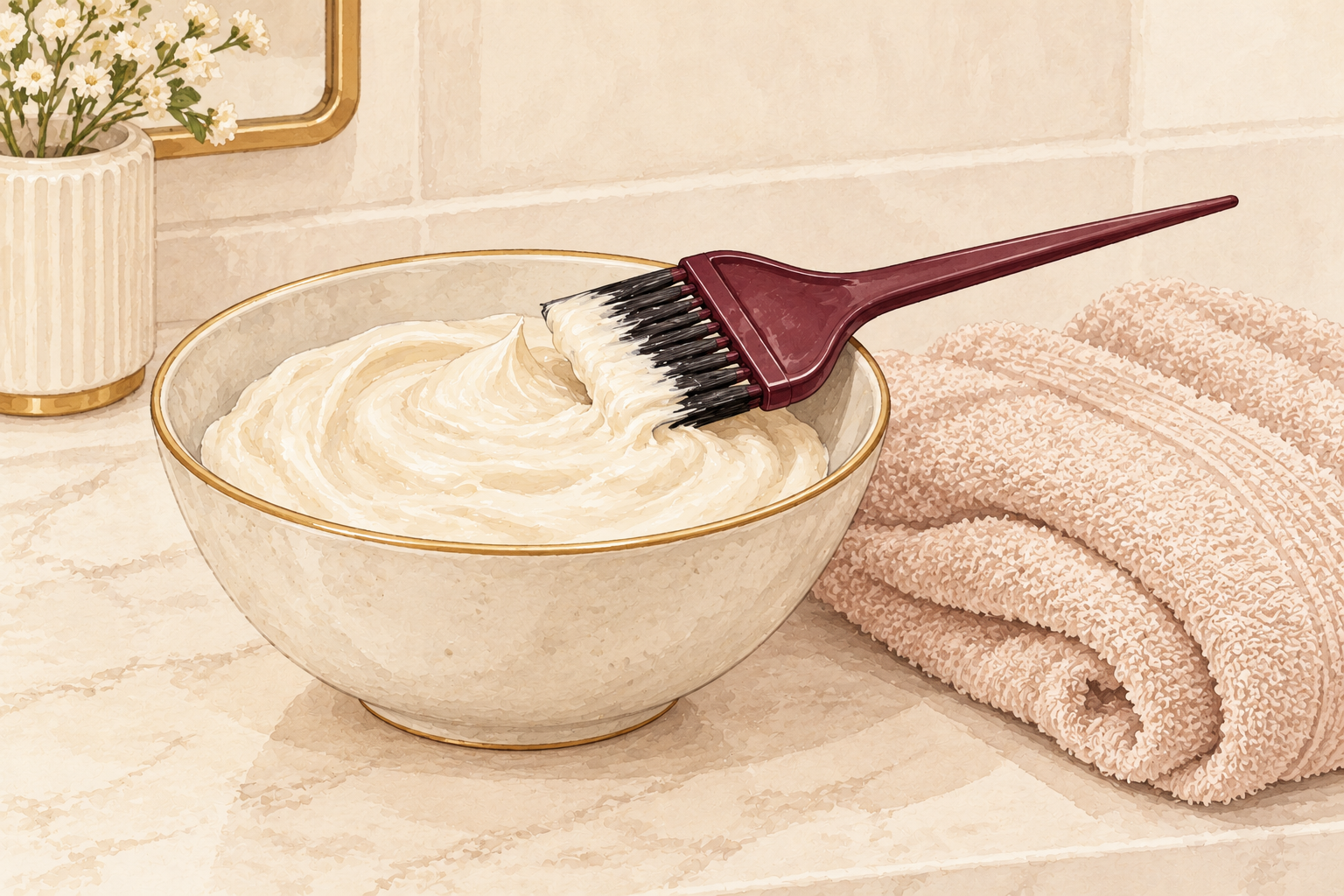
Leave a thick conditioner on for twenty minutes under a shower cap, then rinse with cool water. Frizzy wavy hair is usually thirsty, and a weekly deep treatment fills it back up. Add a little warmth with a towel for a better soak. If your waves go limp afterward, move to every second week. If they feel dry, add a session. Rinse until your fingers glide through the lengths. A proper soak is the step that makes all the lighter products work better. Keep a timer by the bath so you do not forget it. Sit with a podcast on, and the twenty minutes pass quickly.
11. Trim the splits and clarify monthly
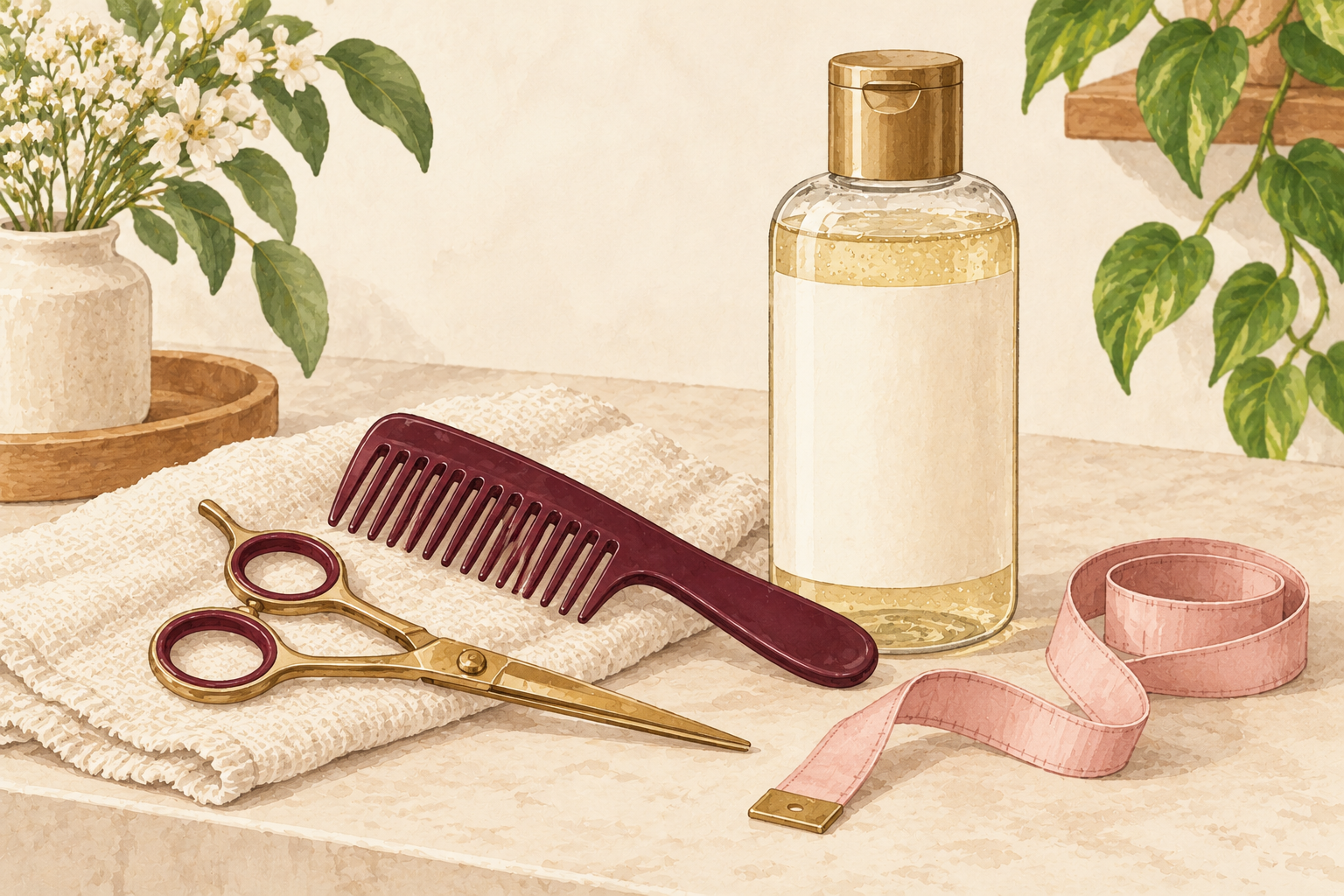
Cut off a quarter inch when the ends fork, and use a clarifying shampoo once a month to wipe the slate clean. Split ends frizz no matter what you put on them, and a trim is the only real fix. Build up from products weighs waves down until they look fuzzy and dull, so a monthly reset helps. Follow clarifying with a deep treatment. Rinse thoroughly, because leftover shampoo adds to the fuzz. After a trim and a clarify, most waves look brighter and bounce back. Cut dry hair over a towel, one small section at a time.
12. Refresh on day two and track your results
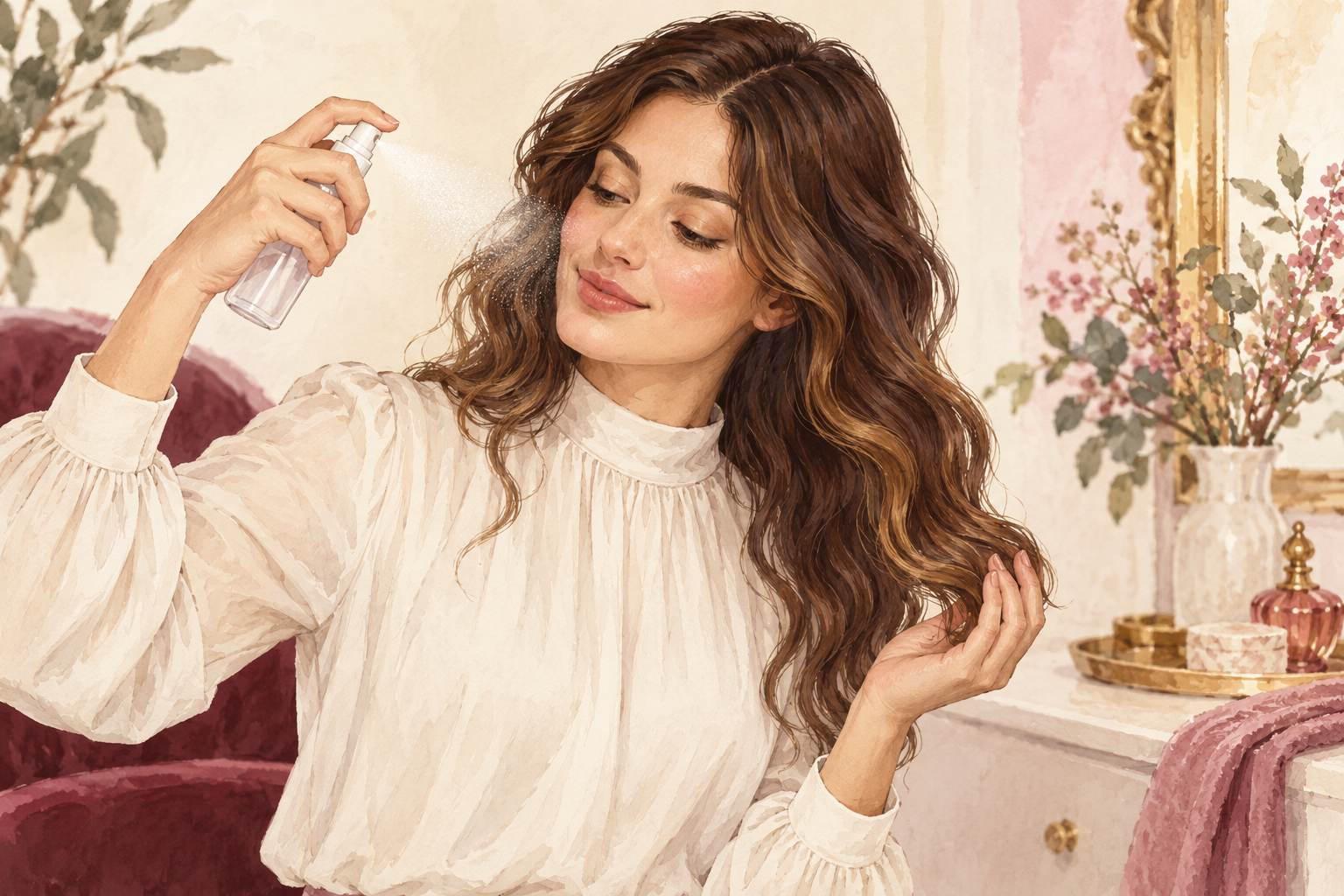
Mist your hair lightly, scrunch, and add a drop of oil to the puffy spots. Day two frizz needs a little water, not a full wash. Take a photo each week from the same side and change only one thing at a time. After a month you will likely notice a smoother crown, softer mid lengths and a neater finish on day two. Frizzy wavy hair rarely vanishes, but it can look calm and tidy. Keep going, even if one week looks messy. Smooth the crown last, with the flat of your hand. A small spray bottle by the front door makes this easy to do before you leave.
Complete the Routine: Calm Frizzy Wavy Hair for Good
Tonight, swap your towel for a t shirt and cover your crown. Wavy hair rewards small, steady changes, and more guides below can help you pick the next adjustment to try.