You see white flakes on your shoulders again, your scalp itches, and a video swears one kitchen mask will fix it. A hair mask for dandruff can soothe the itch and loosen the flakes, but only when it is gentle and timed. These 12 steps start with the mildest option, so begin at number one tonight.
1. Gather what you need and patch test
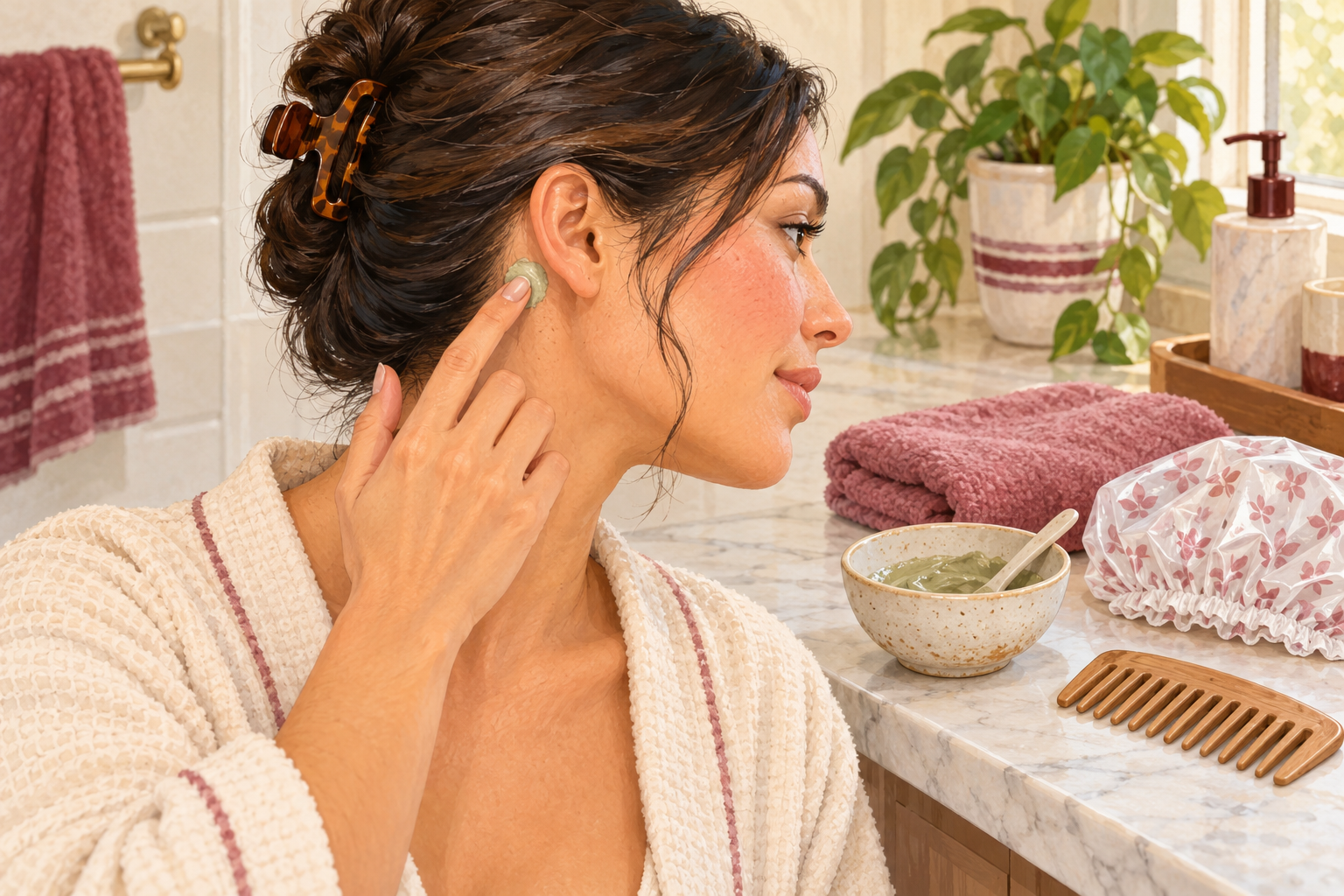
Dab a pea sized amount of any mask on the skin behind your ear, then leave it for a full day. If you see redness, itching or swelling, that recipe is not for your head. Test every new recipe this way, even the ones made only from food, because food can irritate skin too. Gather a clean bowl, a spoon, a shower cap, a wide tooth comb and a soft towel before you start. A reaction on your scalp is harder to wash away than one behind your ear, so this day of waiting is worth it. Wash your hands before and after, and keep the bowl for masks only.
2. Check that masks suit your flakes
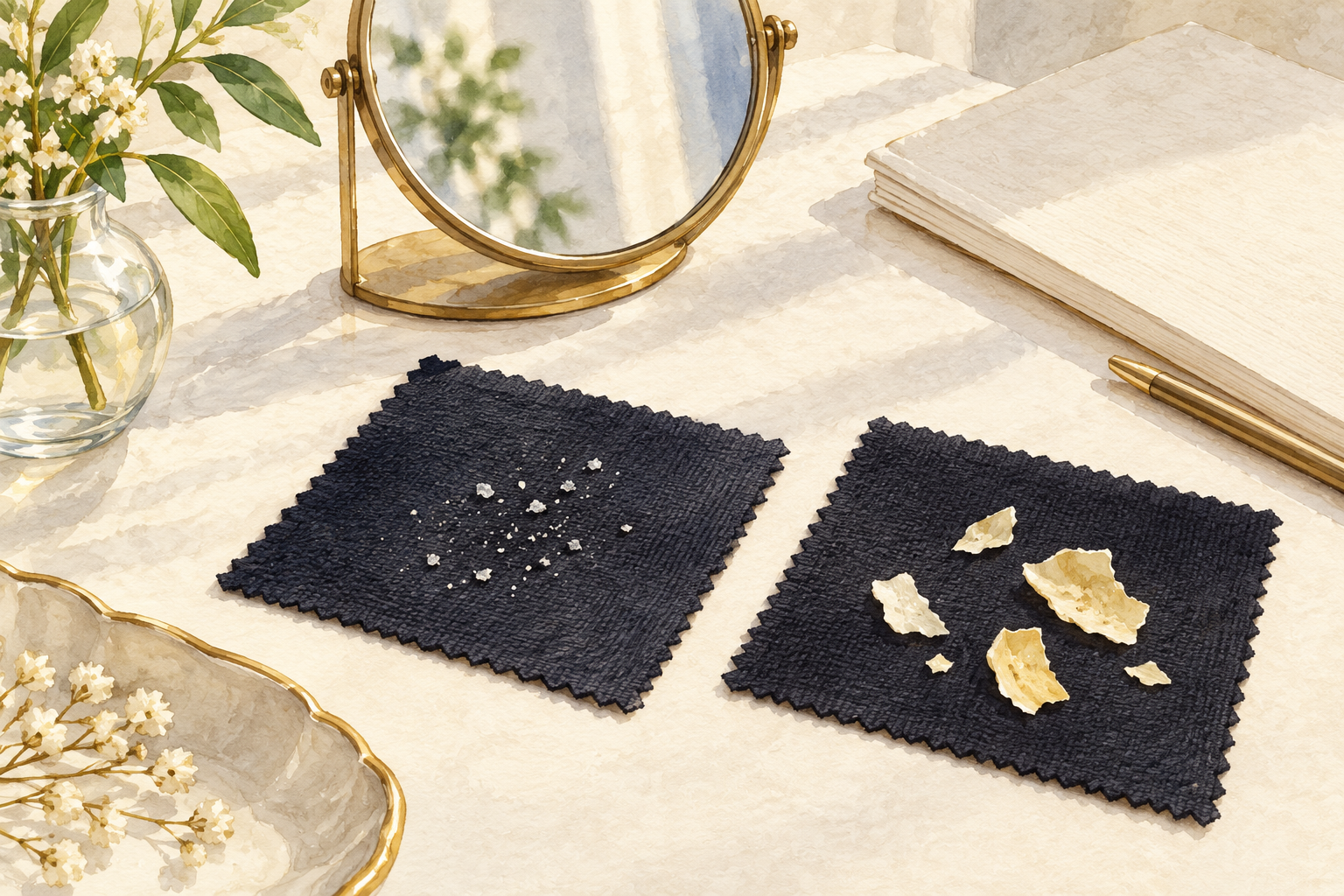
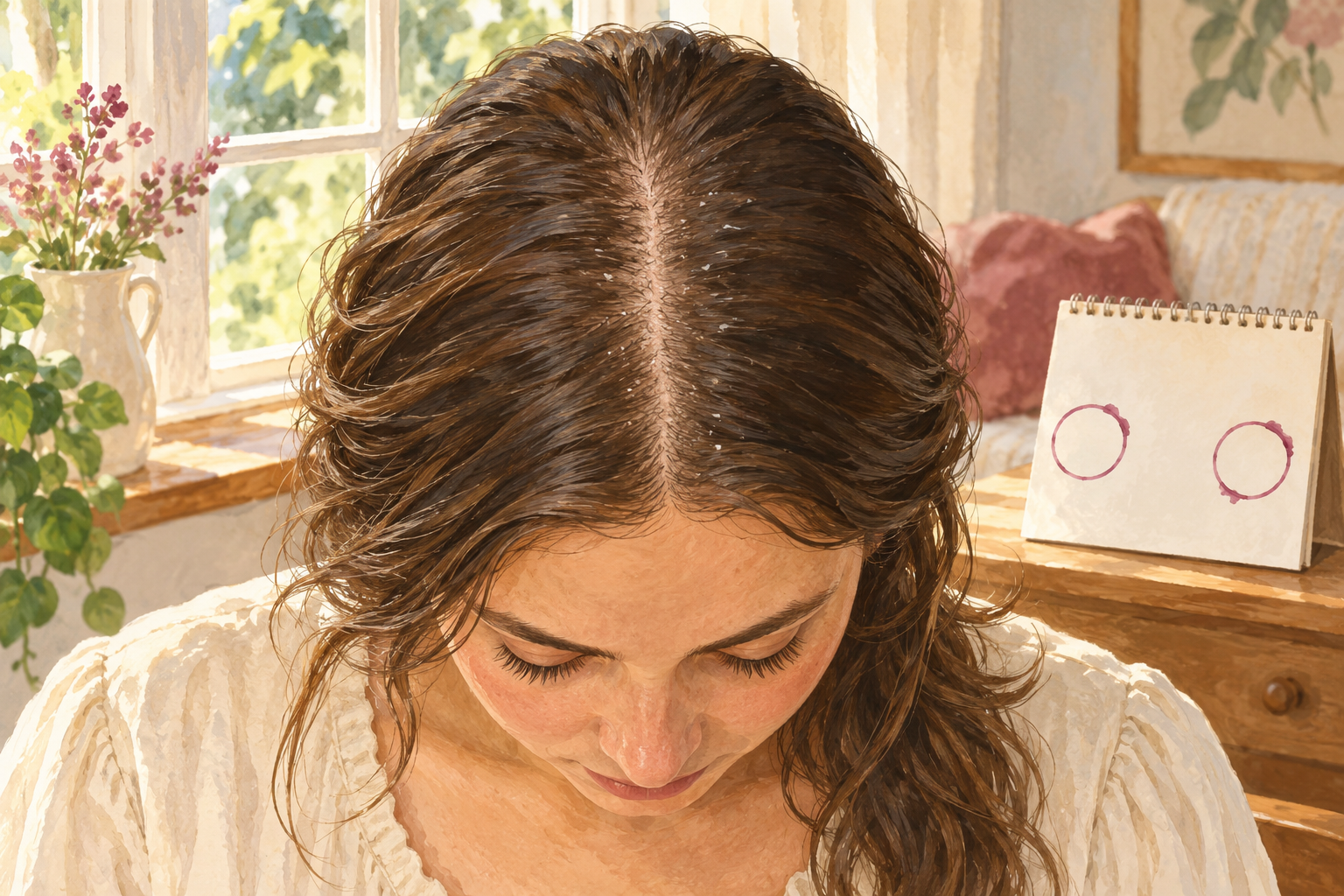
Part your hair in daylight and look at the flakes. White or slightly yellow flakes with a mild itch are the kind a mask can soothe. Very fine, tight flakes with a dry feeling all over may be a dry scalp, which prefers even less. A thick, red or crusty patch, or a scalp that burns or weeps, should not get a mask at all. If you are unsure, start with the gentlest recipe below and watch how your scalp answers. A mask is a calming extra between washes, never the whole plan. Flakes that stay oily and clumped to the hair tend to respond best.
3. Start with pure aloe gel
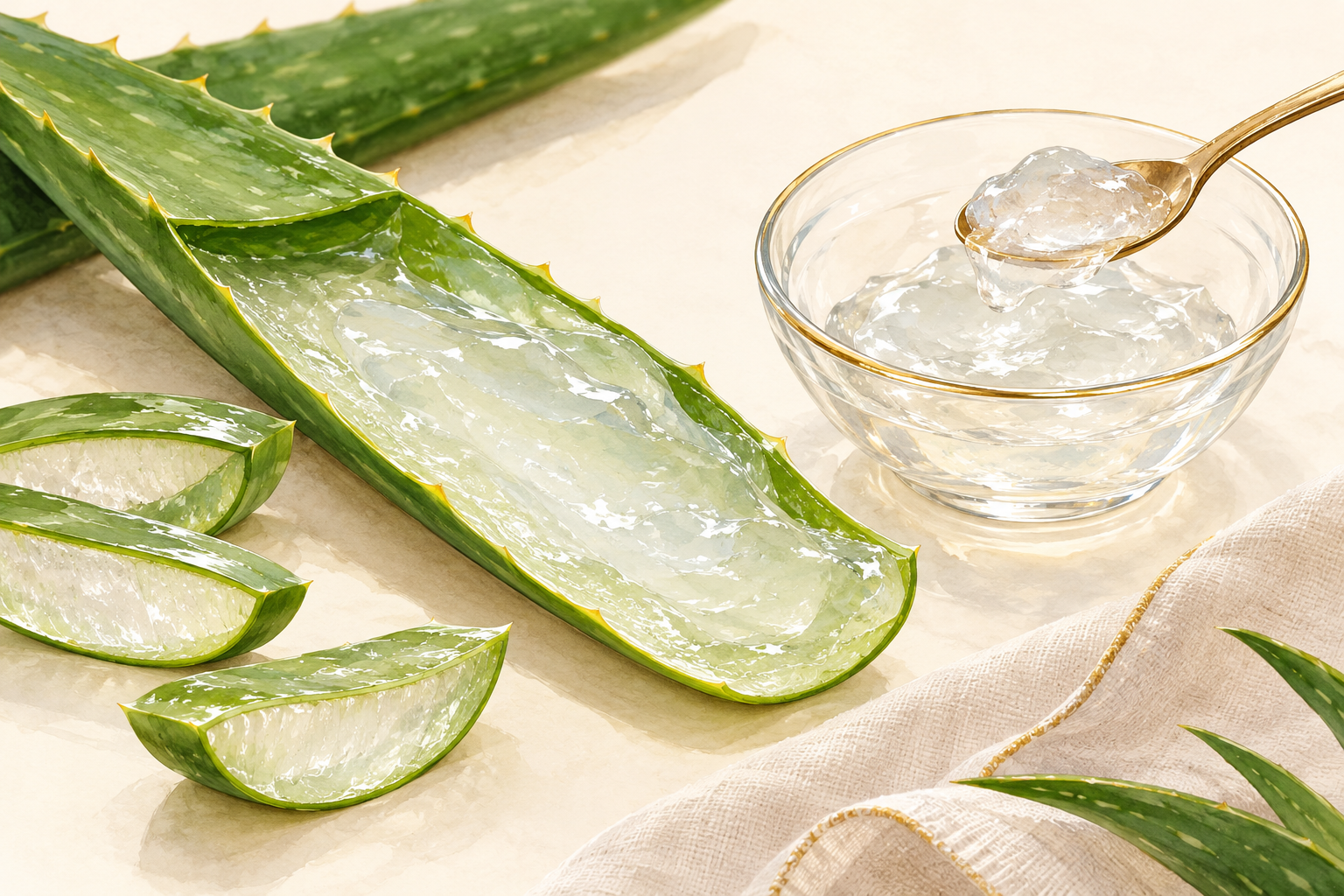
Smooth a thin layer of pure aloe gel over a damp scalp and leave it for ten to fifteen minutes. Pick a gel that is mostly aloe with no perfume and no alcohol, because those two are what sting. It feels cool and calm, like a cold spoon on a tired eye. Rinse with lukewarm water, then shampoo as usual. This is the gentlest mask on the list, so it is the best one to learn on. It will soothe the itch, but it will not clear the flakes alone, so keep your hopes small and sweet. Pour a little into a clean pot so you never dip a used spoon into the tube.
4. Stir aloe into plain yogurt
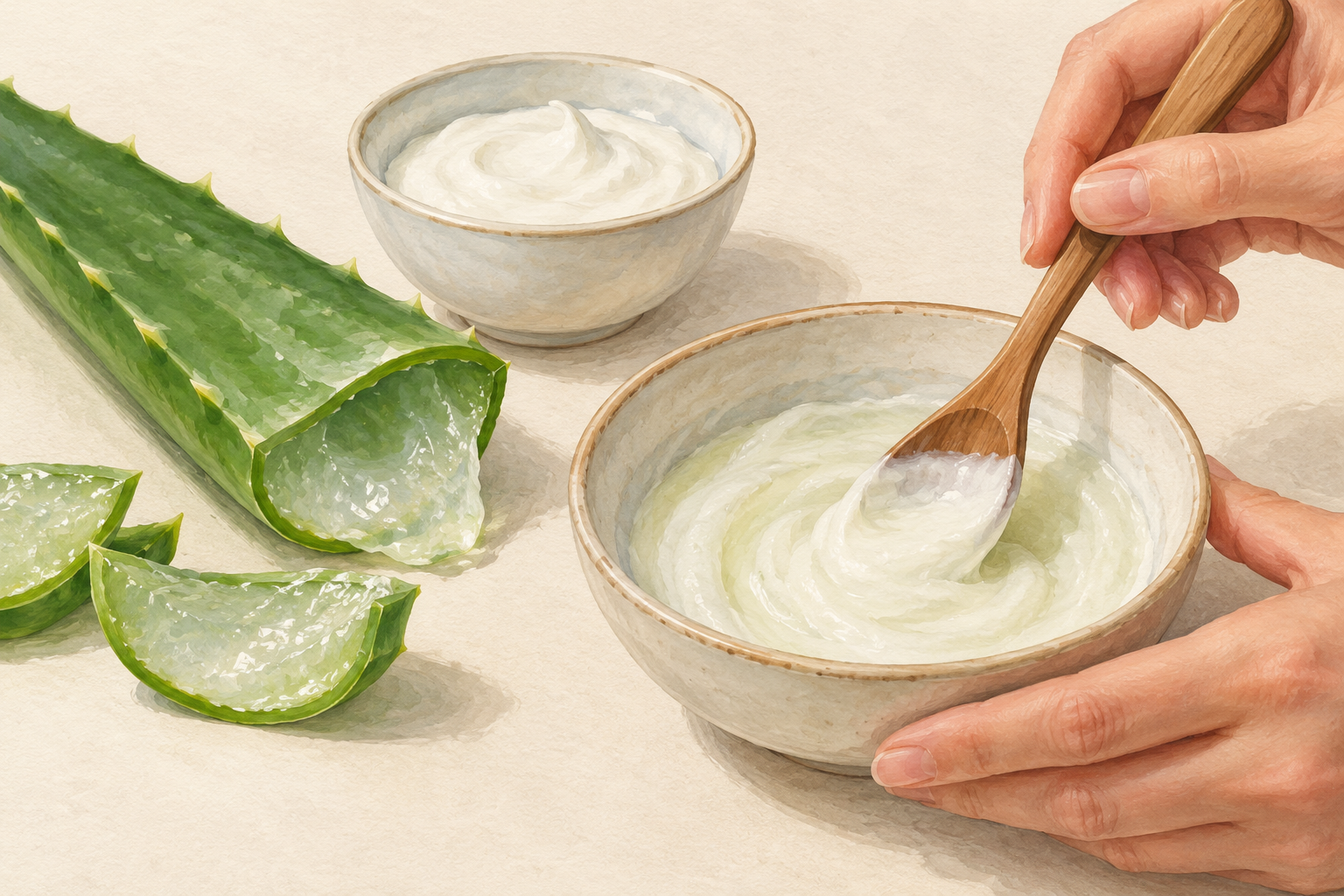
Mix two tablespoons of plain unsweetened yogurt with one tablespoon of pure aloe gel until smooth. Both are cooling and mild, and together they feel like a soft cream on an itchy scalp. Smooth it onto the scalp only, then pop on a shower cap for ten to fifteen minutes. Make it fresh each time and throw out the leftovers, because yogurt turns quickly, especially in warm weather. If the mix drips down your neck, it is too runny, so add a spoonful more yogurt. Rinse with lukewarm water and shampoo twice if it feels coated.
5. Try a soft oat paste
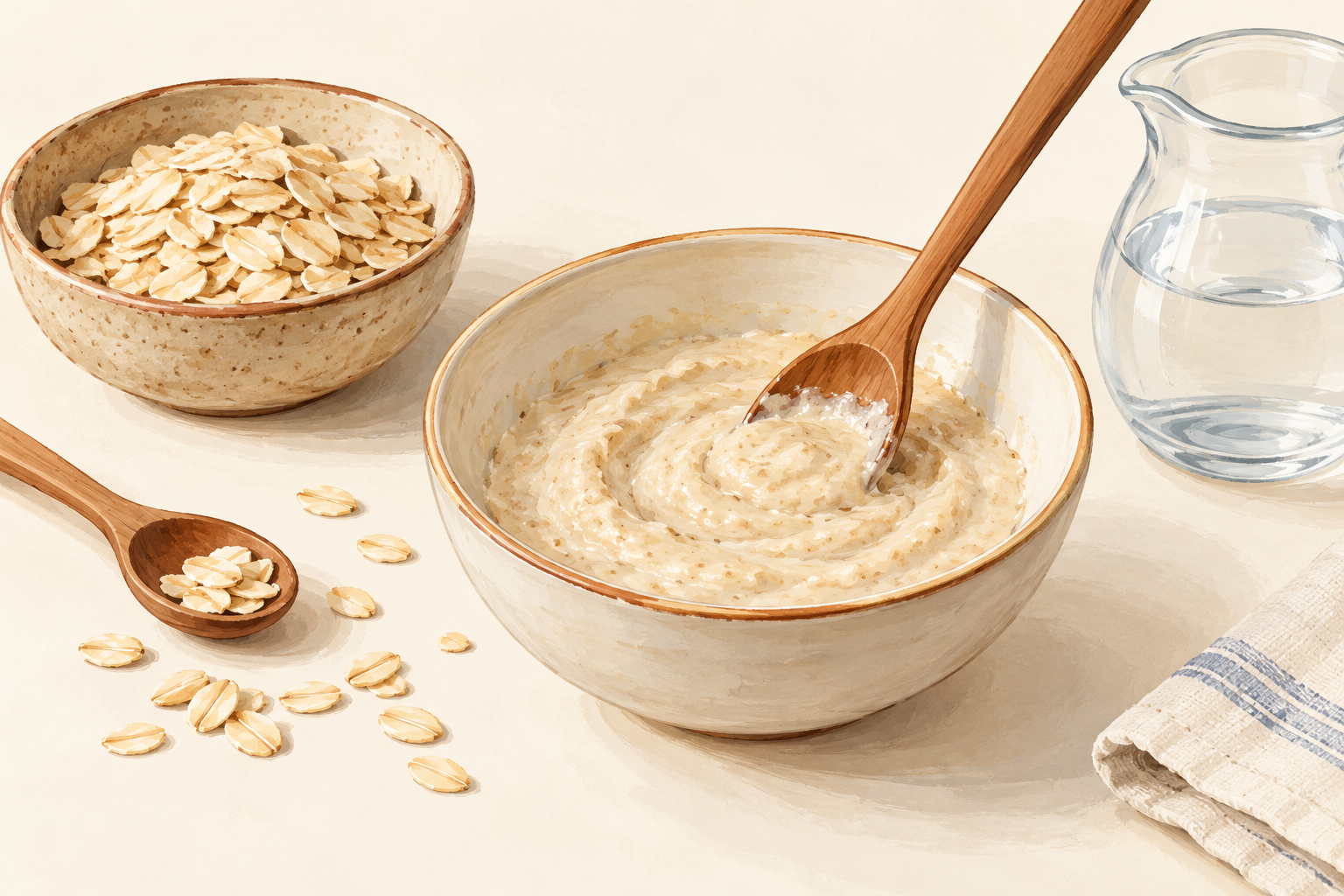
Grind two tablespoons of plain oats to a fine powder and stir in enough warm water to make a loose paste. Oats calm itchy skin, and this paste spreads easily without any oil. Press it into the scalp with your fingertips, wait ten minutes, and rinse until the water runs clear. Oat bits can hide in thick hair, so rinse for longer than you expect and comb gently afterwards. It makes a good swap if yogurt does not agree with you or if you are avoiding dairy. Use it fresh and never save it for later. Add a teaspoon of plain yogurt if the paste feels too thin.
6. Dilute tea tree oil in a light oil
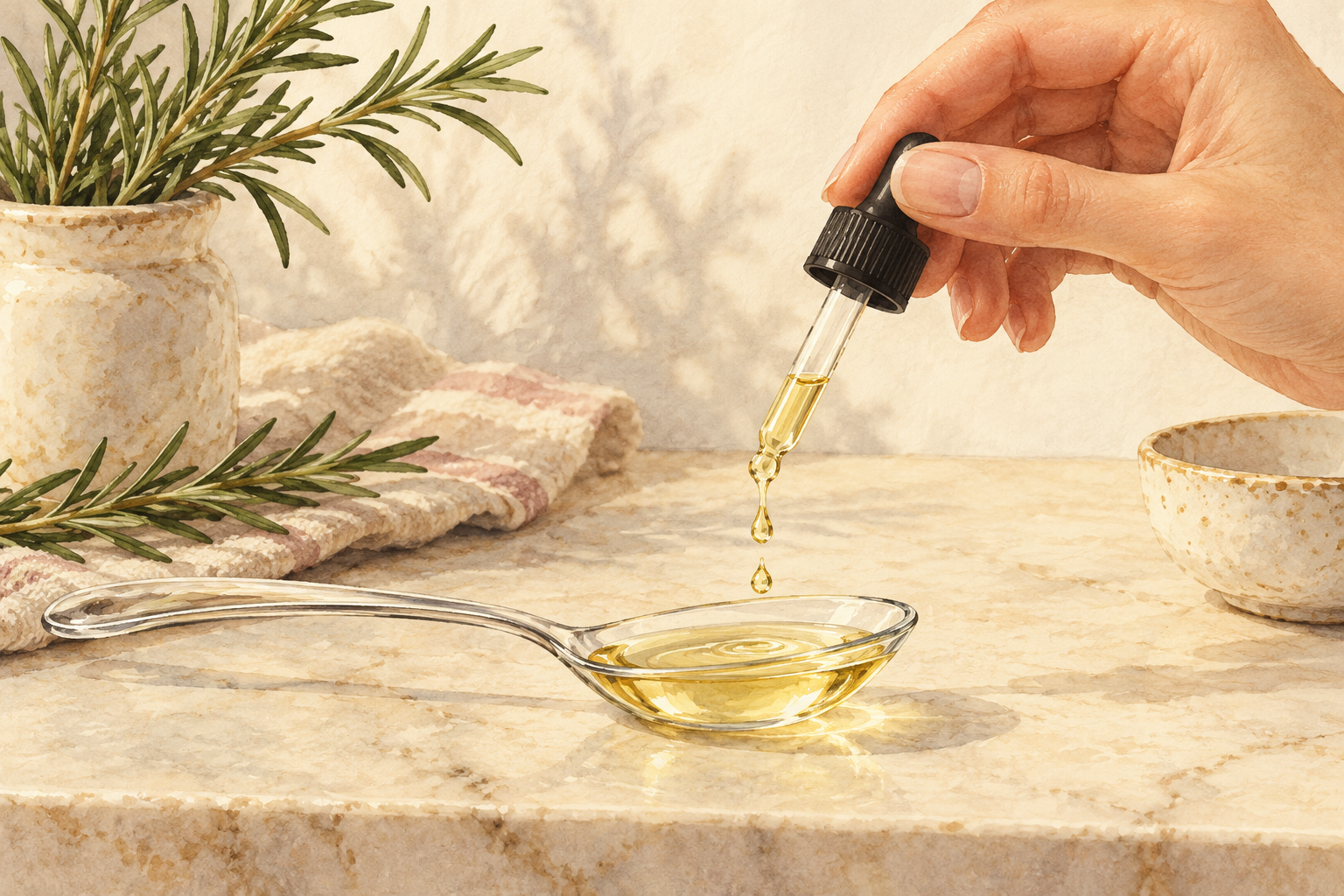
Add no more than two or three drops of tea tree oil to a tablespoon of a light oil such as jojoba or almond. Never put tea tree on your scalp neat, because it is strong and can burn. Patch test the mix first, then massage a thin film into the scalp for about ten minutes and wash it out well with shampoo. Keep it away from your eyes. If your scalp stings or turns redder afterwards, stop right there and cross it off your list. This is the strongest kitchen option here, so save it for later. Keep the leftover oil mix in a closed jar for no more than a week.
7. Use your anti dandruff shampoo as a mask
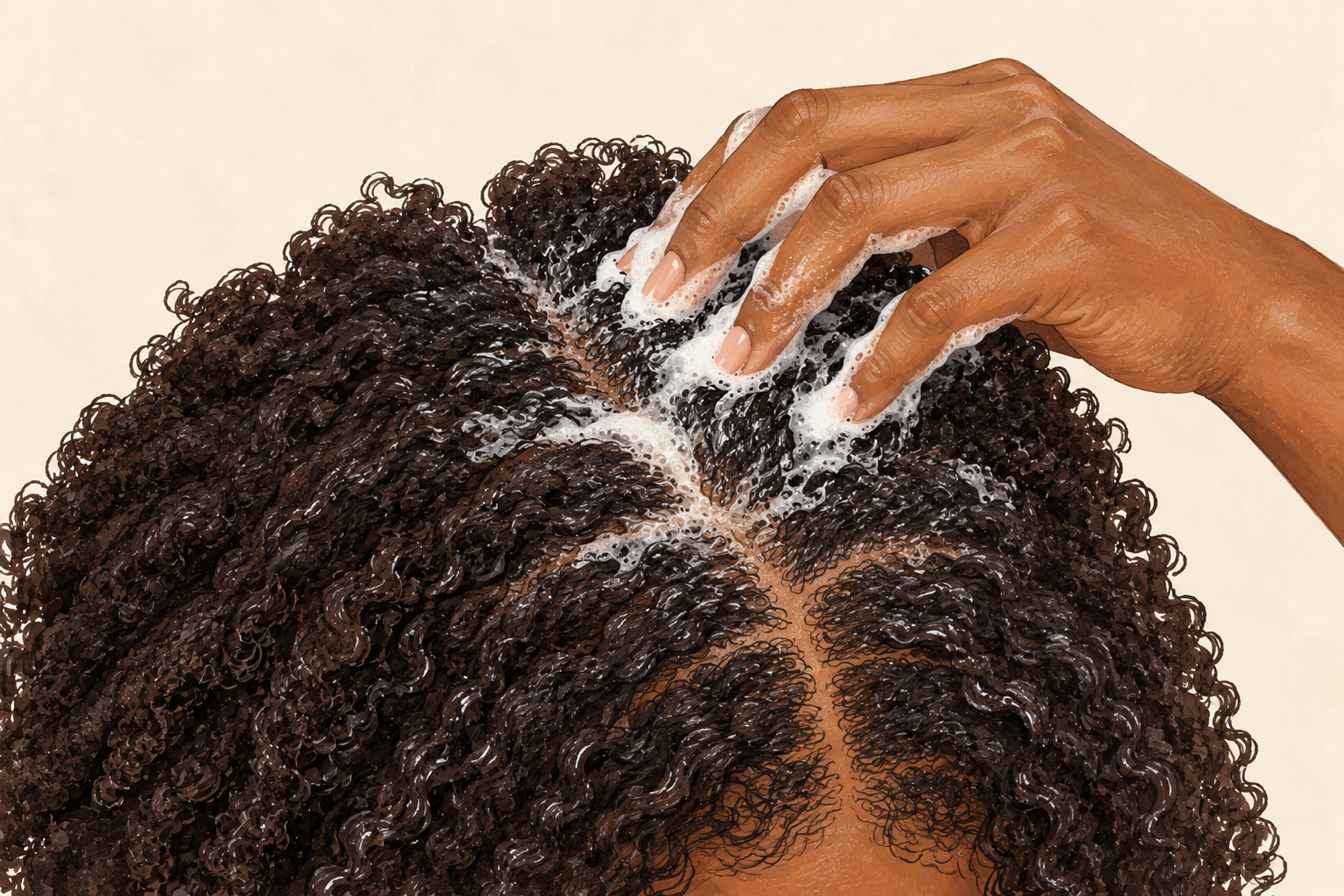
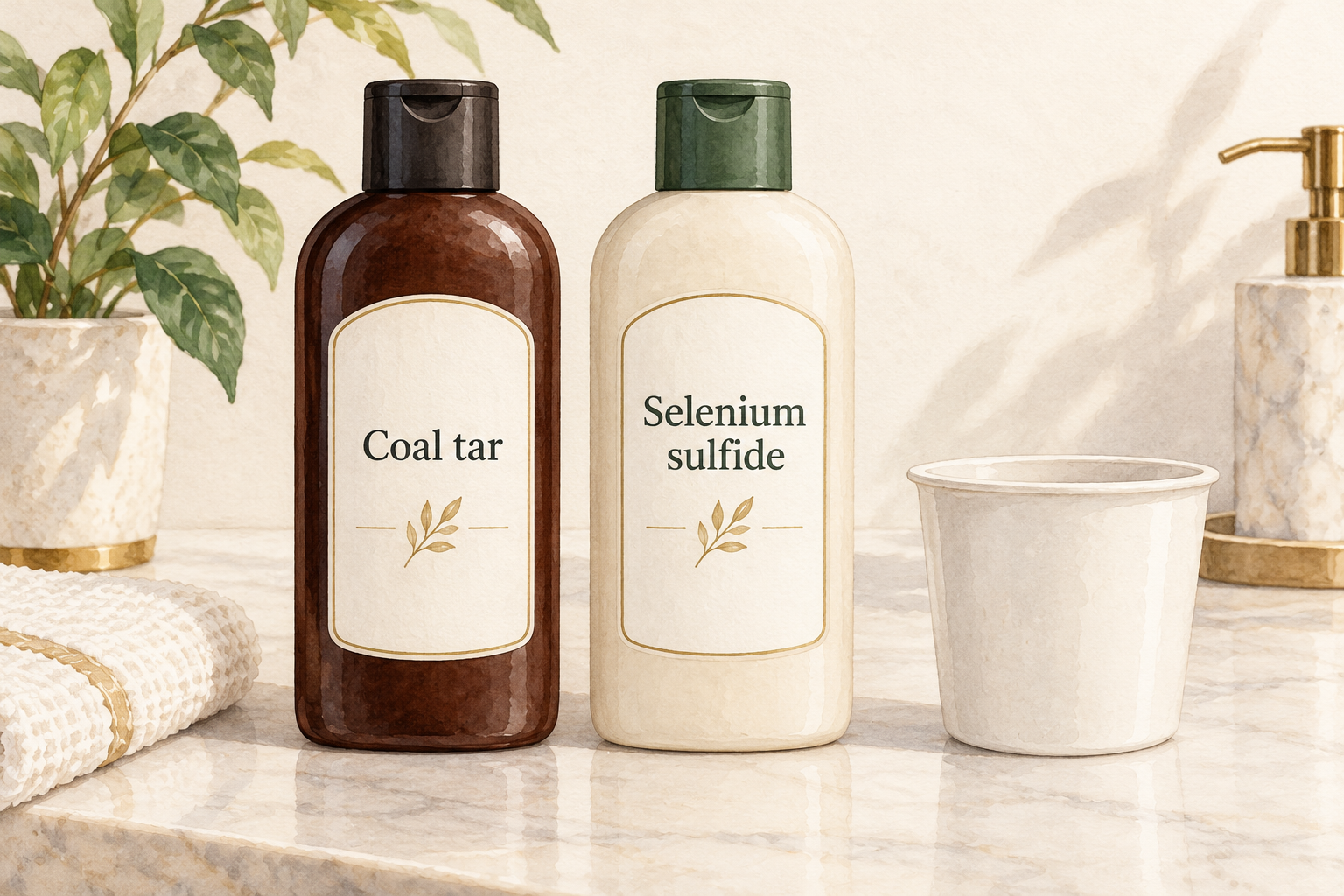
Lather your anti dandruff shampoo on the scalp only and leave it on for the time written on the bottle. Many ask for five minutes or so, and rinsing sooner is why they seem weak. Look for zinc, salicylic acid or sulfur on the label. Keep it off your lengths, which dry out easily. Use it once or twice a week alongside your normal shampoo. This is the mask that does the most for flakes, so the kitchen recipes work best as soothing extras around it. Set a timer and use the wait to wash your face. Leave the mask days for the nights you are staying in.
8. Apply it in sections with your fingertips
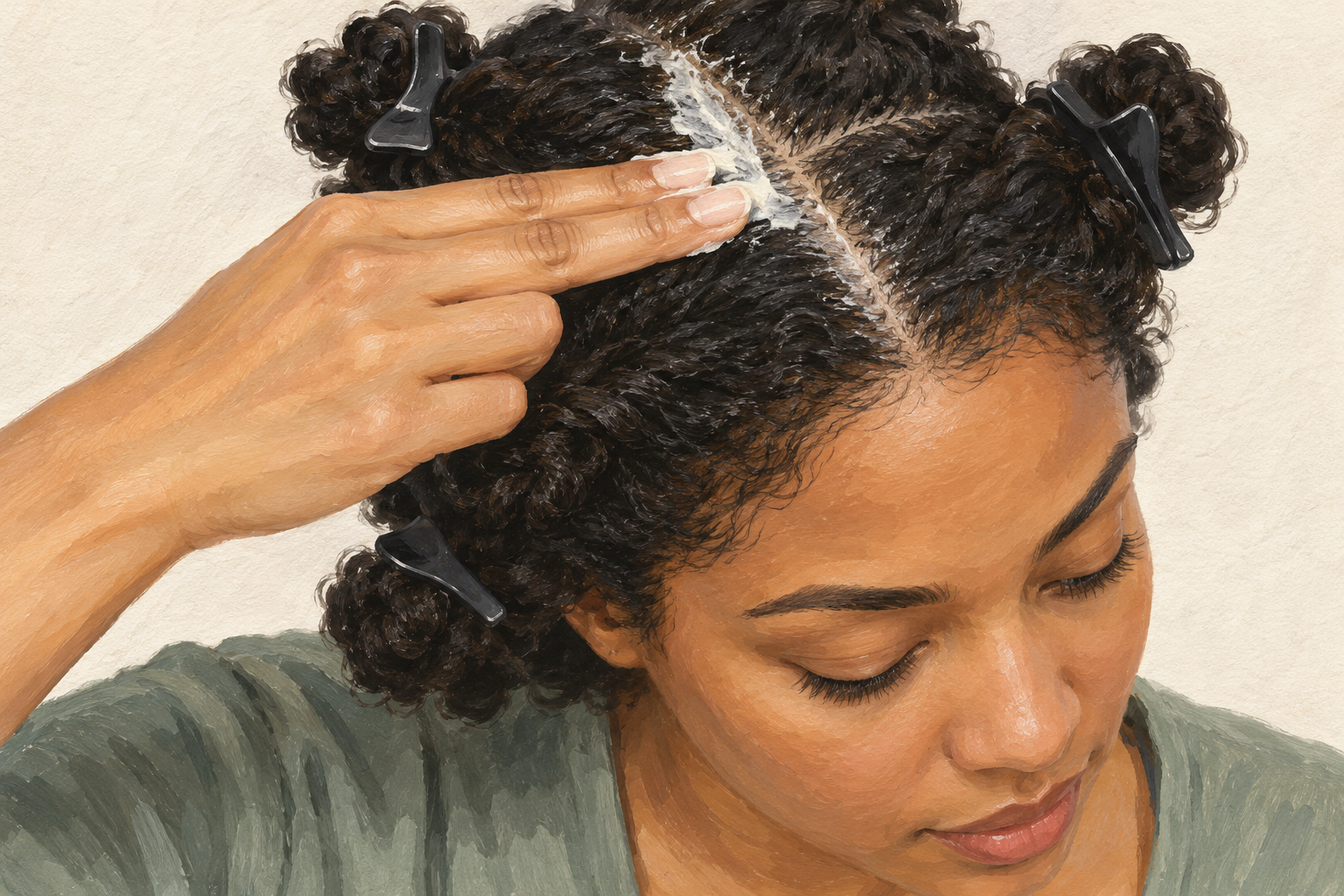
Clip your hair into four sections and smooth the mask along each parting with the pads of your fingers. Never use your nails, because scratching opens tiny breaks that make everything sting. Massage in slow circles for one minute with light pressure, like kneading soft dough. A hair mask for dandruff belongs on the scalp, not on the lengths, which do not need it. A wide tooth comb helps you reach the spots you can’t see at the back. Wipe drips from your neck and ears before they dry. Lift your hair gently as you work so the mask reaches skin and not just strands.
9. Time it and rinse lukewarm
Cover your hair with a shower cap and leave a kitchen mask on for ten to fifteen minutes, no longer. More time does not make a mask work harder, and a mask that dries on the scalp can tug and itch. Rinse with lukewarm water, because hot water makes an itchy scalp angrier. Then shampoo to take off what is left, and put conditioner on the lengths only. An oily mask may need two rounds of shampoo. If you can still feel any residue, rinse for another minute before you leave the shower. A towel around the neck catches the drips.
10. Keep it to once a week

Use a mask once a week, and never more than twice, alongside your regular shampoo. Your scalp is already irritated, and too many treatments only add to it. Pick one wash day and make it your mask day so it becomes a habit. If your hair is coily or curly and dries easily, once is plenty. Fine, oily hair may enjoy a second, lighter round. Write the date on your phone and judge the mask by how your scalp feels four weeks from now, not by one night. Skipping a week does no harm, so never double up to catch up.
11. Leave out lemon, baking soda and neat vinegar
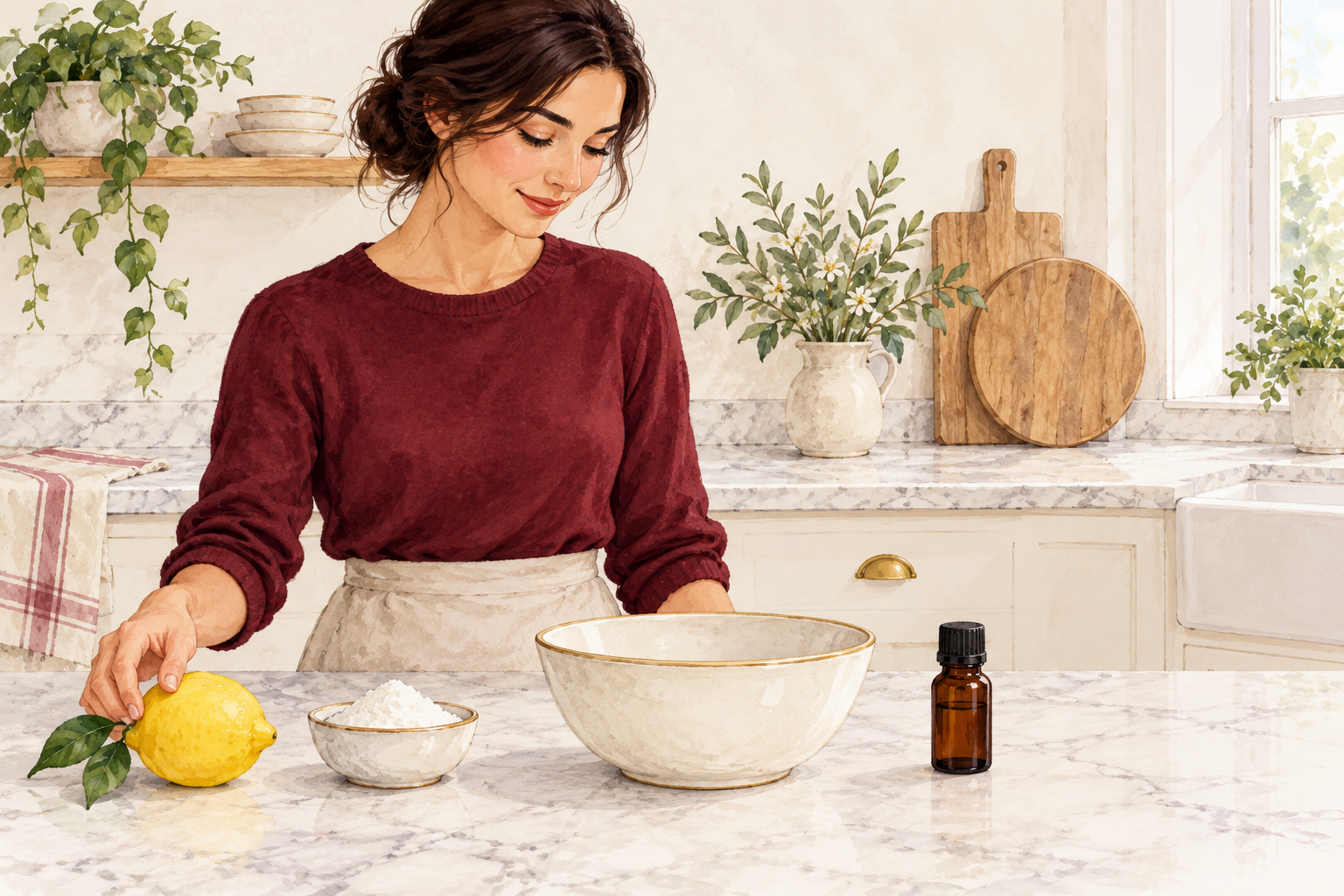
Keep lemon juice, baking soda and undiluted vinegar off your scalp. Lemon and vinegar are sharply acidic, and baking soda is harsh, so all three can sting an itchy scalp and are hard to rinse out evenly. Raw lemon on skin can also leave it touchy in the sun. Thick oils left on all night are another trap, because the yeast behind dandruff feeds on oil and can flake more. If a recipe asks for any of these, scroll past it. Gentle and slow beats fast and red every time. Skip anything with strong perfume, because scent can irritate too.
12. Know what you will notice and when to stop

Expect less itch for a day or two after each mask, and fewer flakes by week four. Your scalp renews itself slowly, so a miracle by Thursday is not coming. Wash your brush and pillowcase weekly so old flakes do not return to a clean head. If a mask makes things worse, stop it and go back to basics. If you get red, sore or crusty patches, or the flaking has not improved after a month, see your doctor to rule out something else. Take a photo of your parting today to compare later. Be patient, because a slow scalp and a steady routine always win.
Complete the Routine: A Hair Mask for Dandruff Plan for This Week
This week, patch test the aloe and yogurt mix, use it once with your fingertips, and follow with your usual shampoo. To compare shampoos before you rely on one, read anti dandruff shampoo, and if your flakes are fine and tight, see dry scalp.