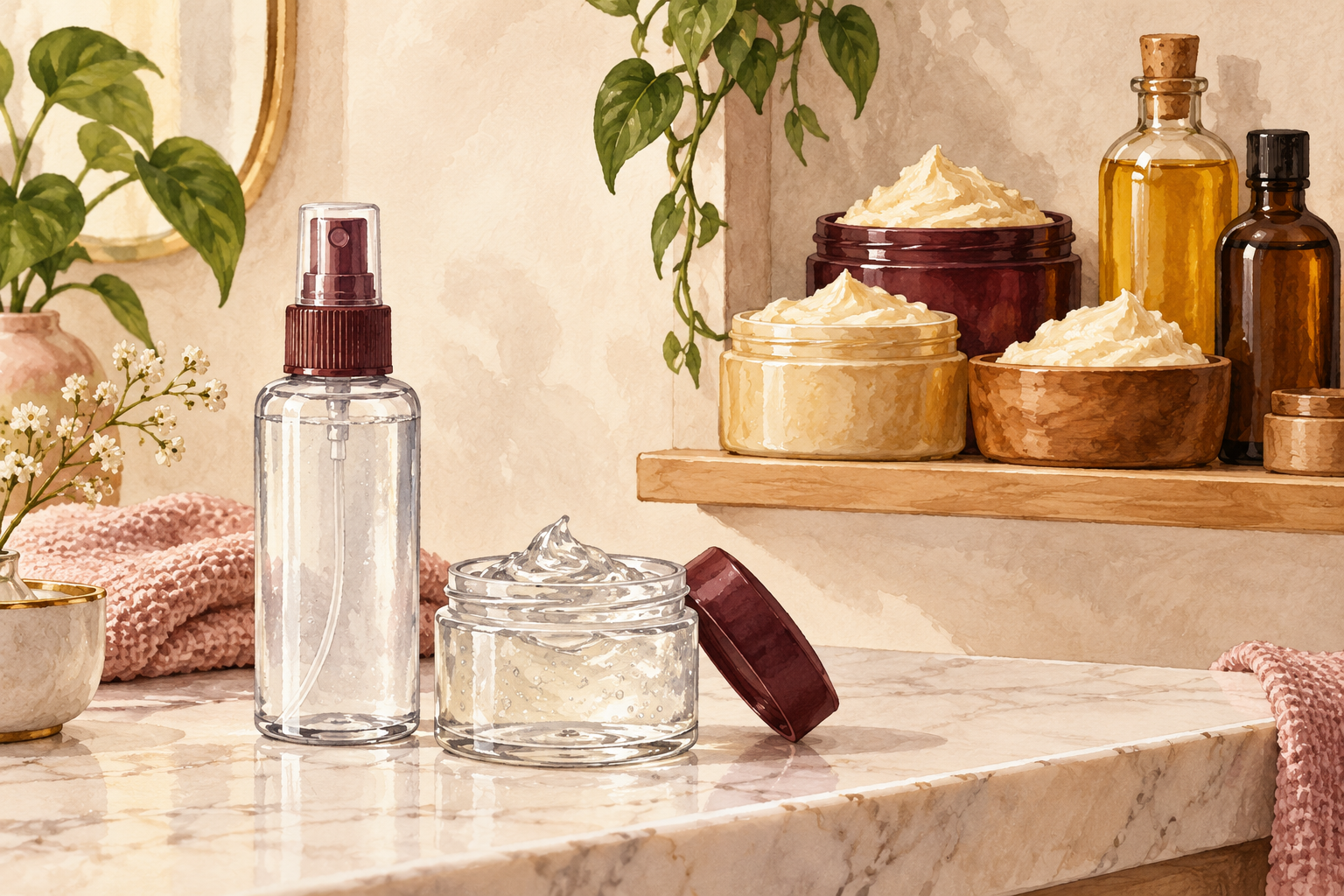
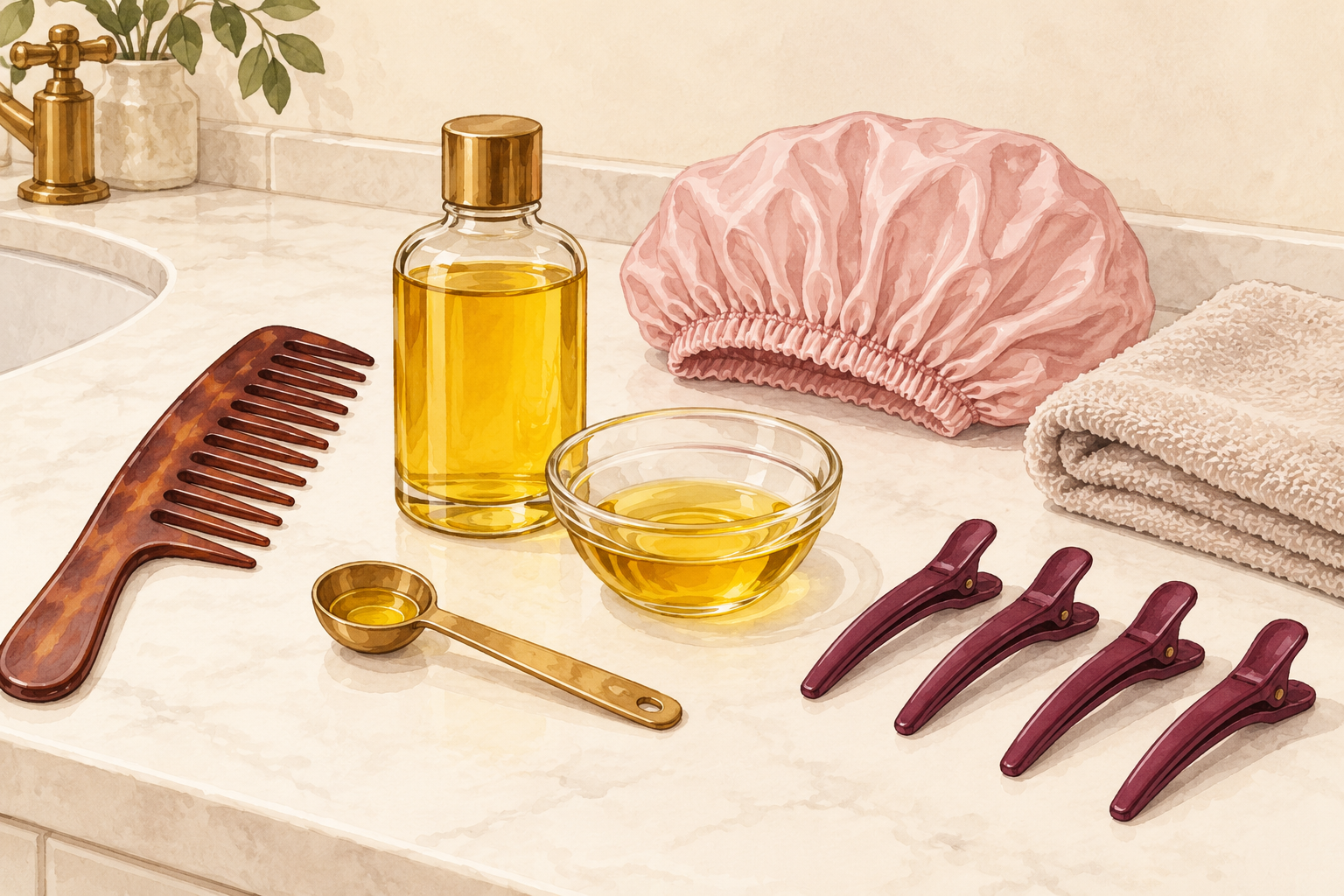
Your scalp feels tight after a long day, and you rake your nails across it without thinking. Hair massage for growth is a gentler habit that takes a few minutes and feels like a treat. These 12 techniques walk you through the setup, the moves and the routine, so start at number one tonight.
1. Use the pads of your fingers and keep your nails short
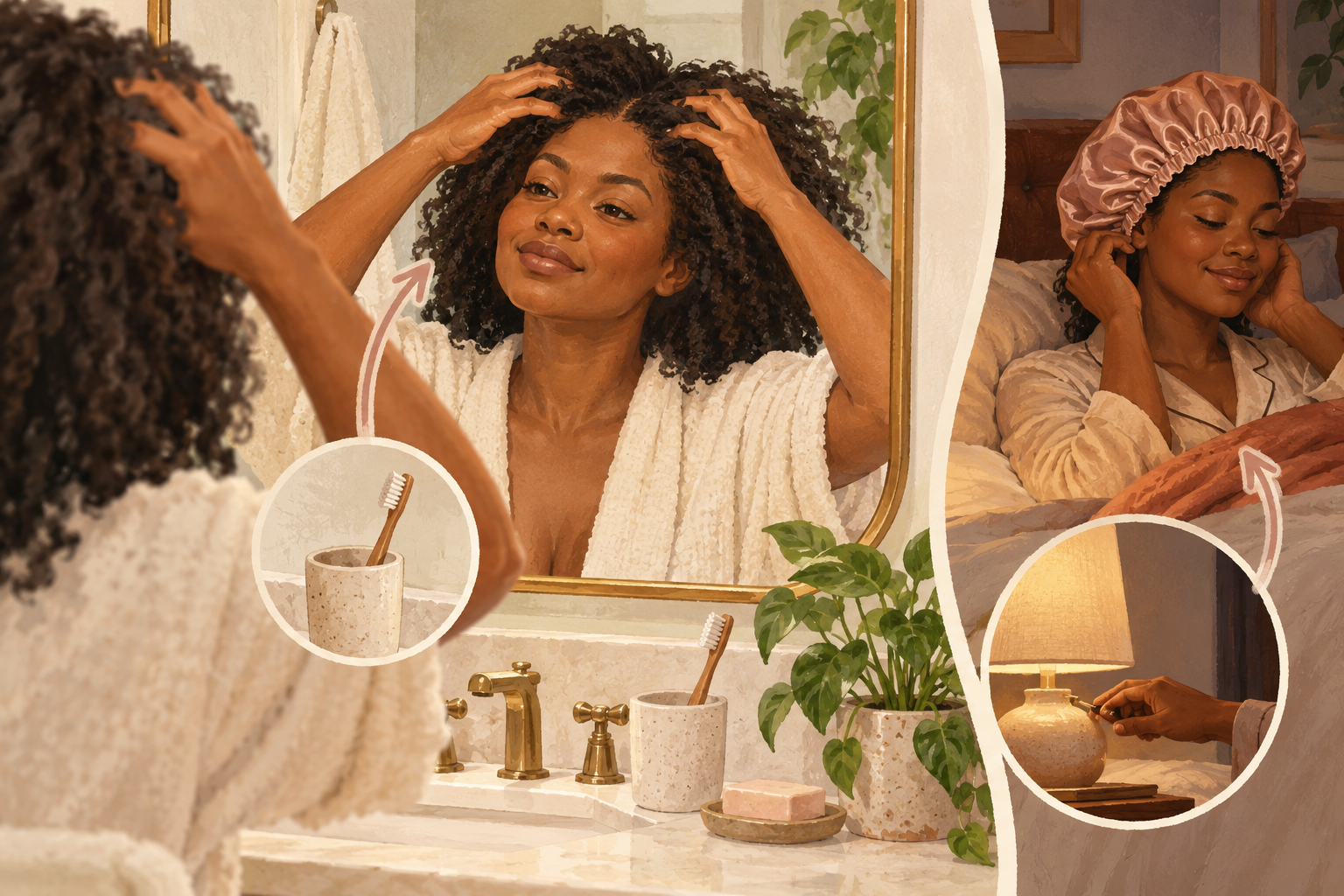
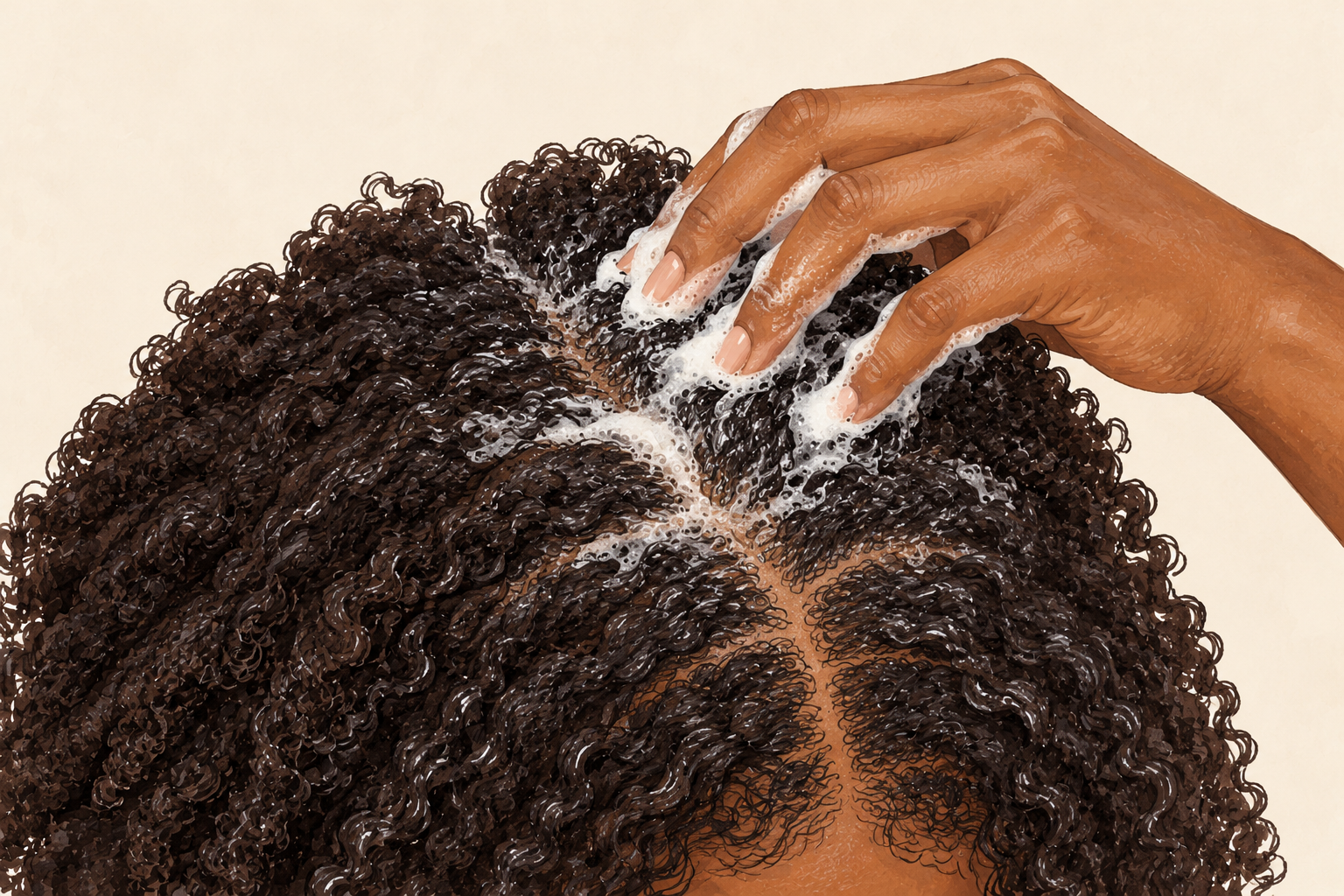
Press with the soft pads of your fingers, never your nails. Nails scratch the skin and leave tiny cuts that sting in the next wash. If your nails are long, tuck them in and press with the flat of your fingers. Wash your hands first, because you are about to touch the skin your hair grows from. Keep your thumbs ready too, since they are strong and good for the back of the head. A massage should feel firm and kind, like kneading soft dough, and never like scrubbing a pot. If you feel a sharp spot, move your fingers a little to the side.
2. Pick a time you will actually keep
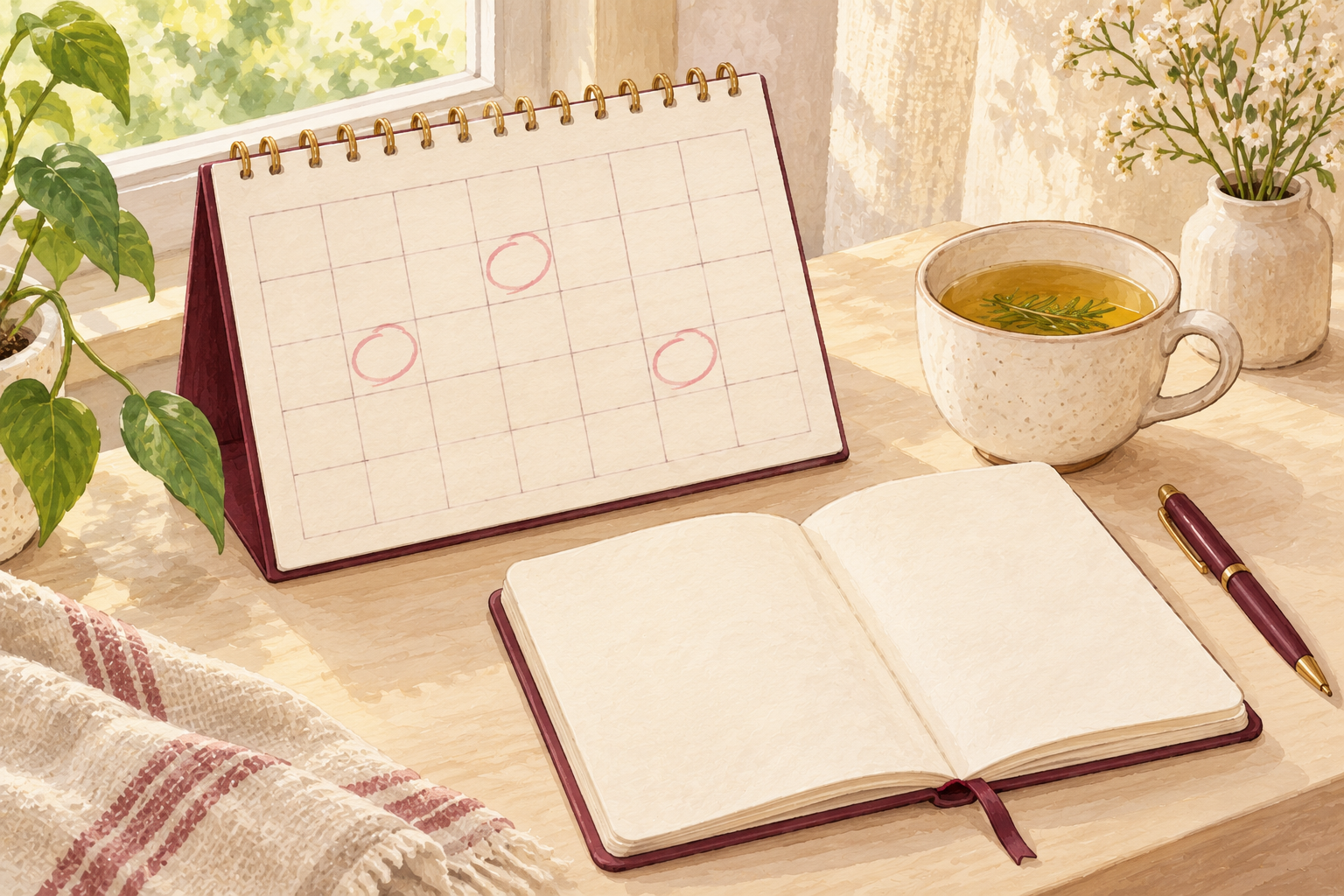
Choose one slot, like right after your evening wash or while the kettle boils, and stick to it. A massage you do at the same time every day becomes a habit within three weeks. Nighttime works well, because your shoulders drop and you are not rushing. If mornings suit you better, do it before you style. Set a phone alarm for the first week only. Do not aim for a perfect hour, because three relaxed minutes you actually do are better than twenty you skip. Link it to something you never skip, like switching off the lamp or washing your face.
3. Detangle first and skip aggressive scrubbing
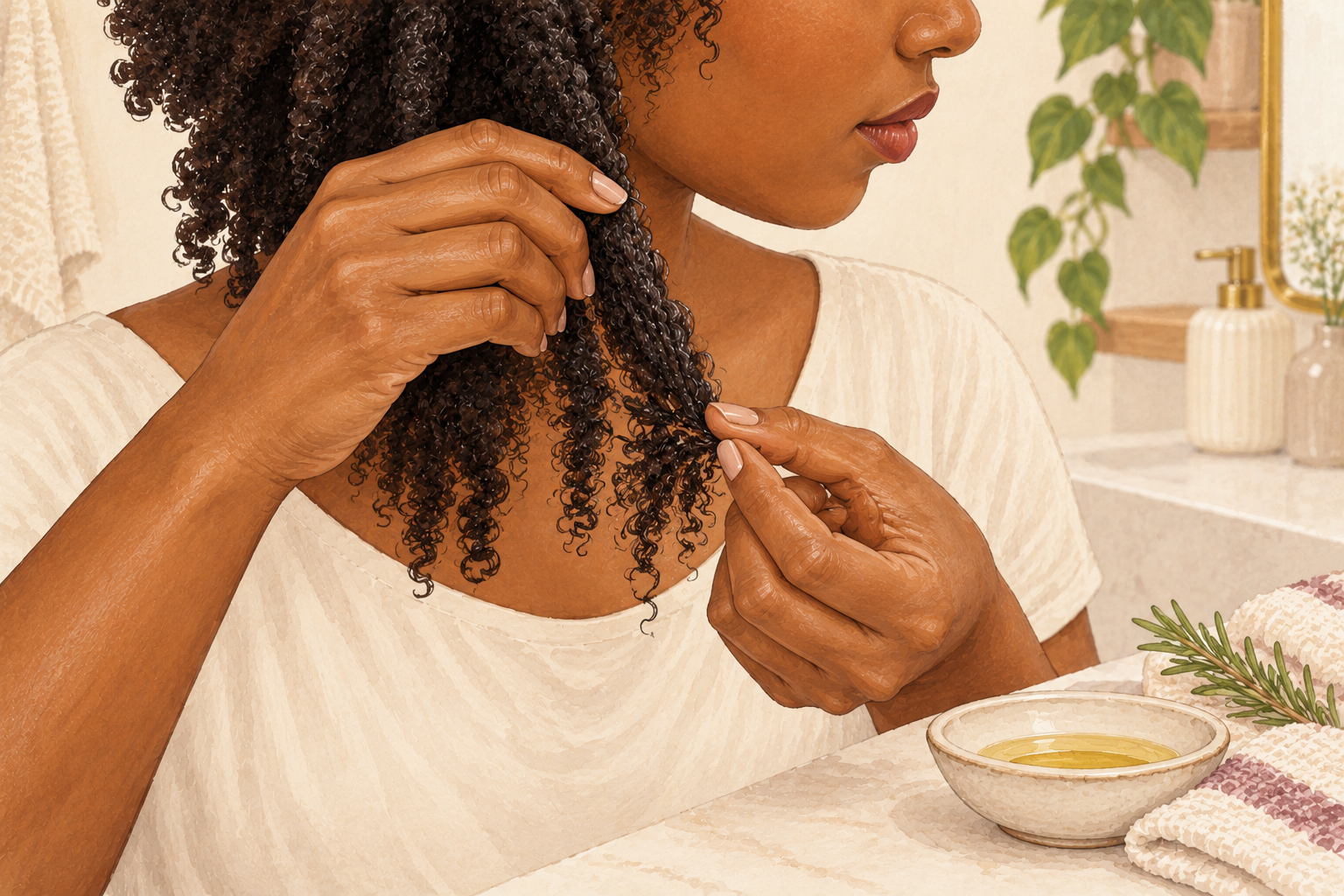
Comb out your hair from the ends up before you start, so your fingers do not catch on knots. Knotted hair pulls against the roots when you massage, and that tugging can cause breakage. Work gently on dry hair or damp hair, but not soaking wet, because wet strands stretch and snap. Leave the vigorous rubbing for the towel. The goal is to move the skin of your scalp, not to rattle the hair. If you hit a tangle midway, stop and fix it before carrying on. Five calm minutes of combing first also makes the massage itself feel smoother.
4. Make small circles across the whole scalp
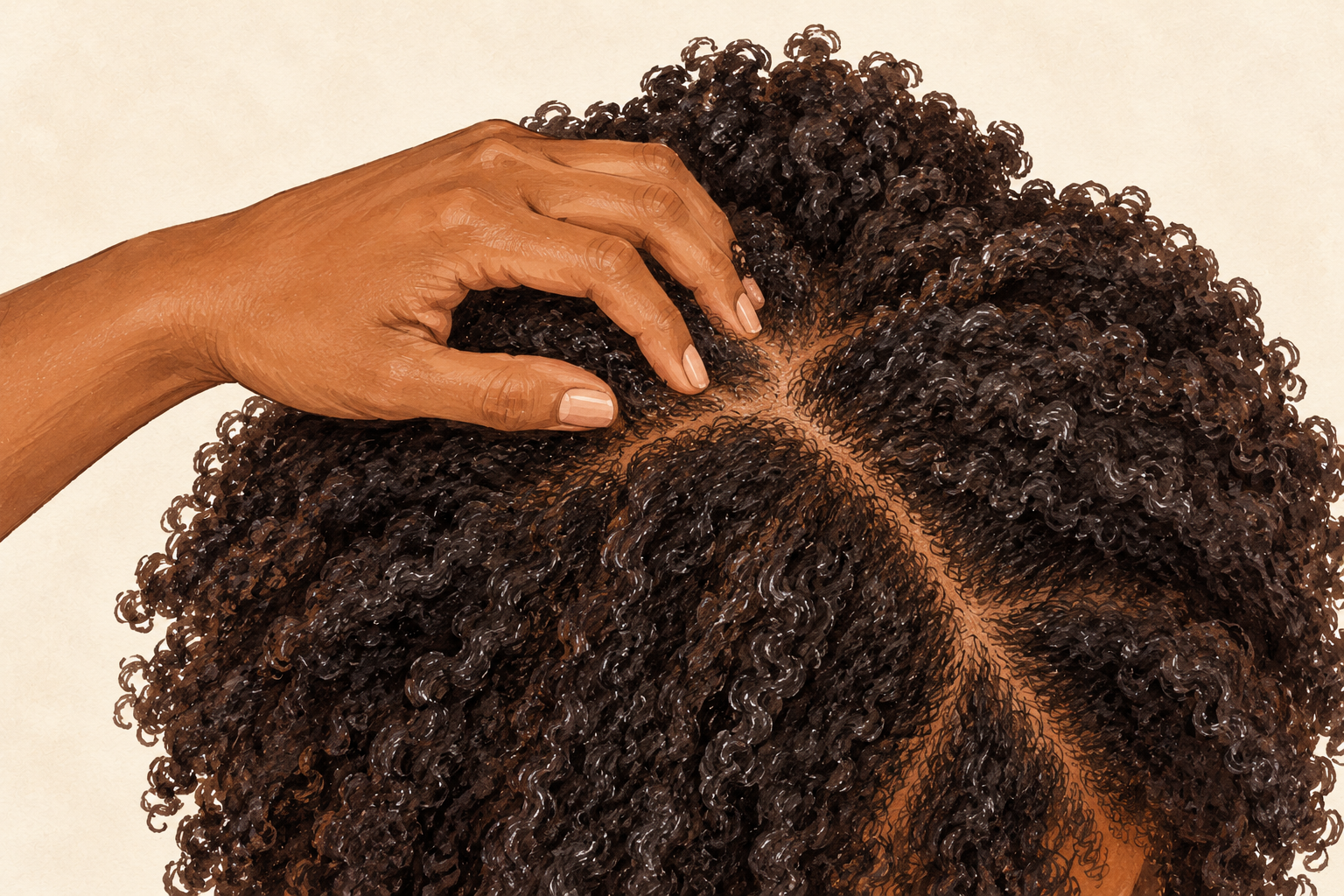
Place your fingertips on your scalp and move the skin in slow circles, about the size of a coin. The skin should shift over the bone while your fingers stay in place, rather than sliding over the hair. Work in sections from the front to the back, spending about ten seconds on each spot. Use a medium pressure that feels good, never sore. Do this for the first minute. It warms the skin and tells you where your scalp is tight, and those tight spots will often loosen before the end of the week. Count slowly to ten at each stop, so you do not rush past the tight areas.
5. Add scalp lifts and gentle slides
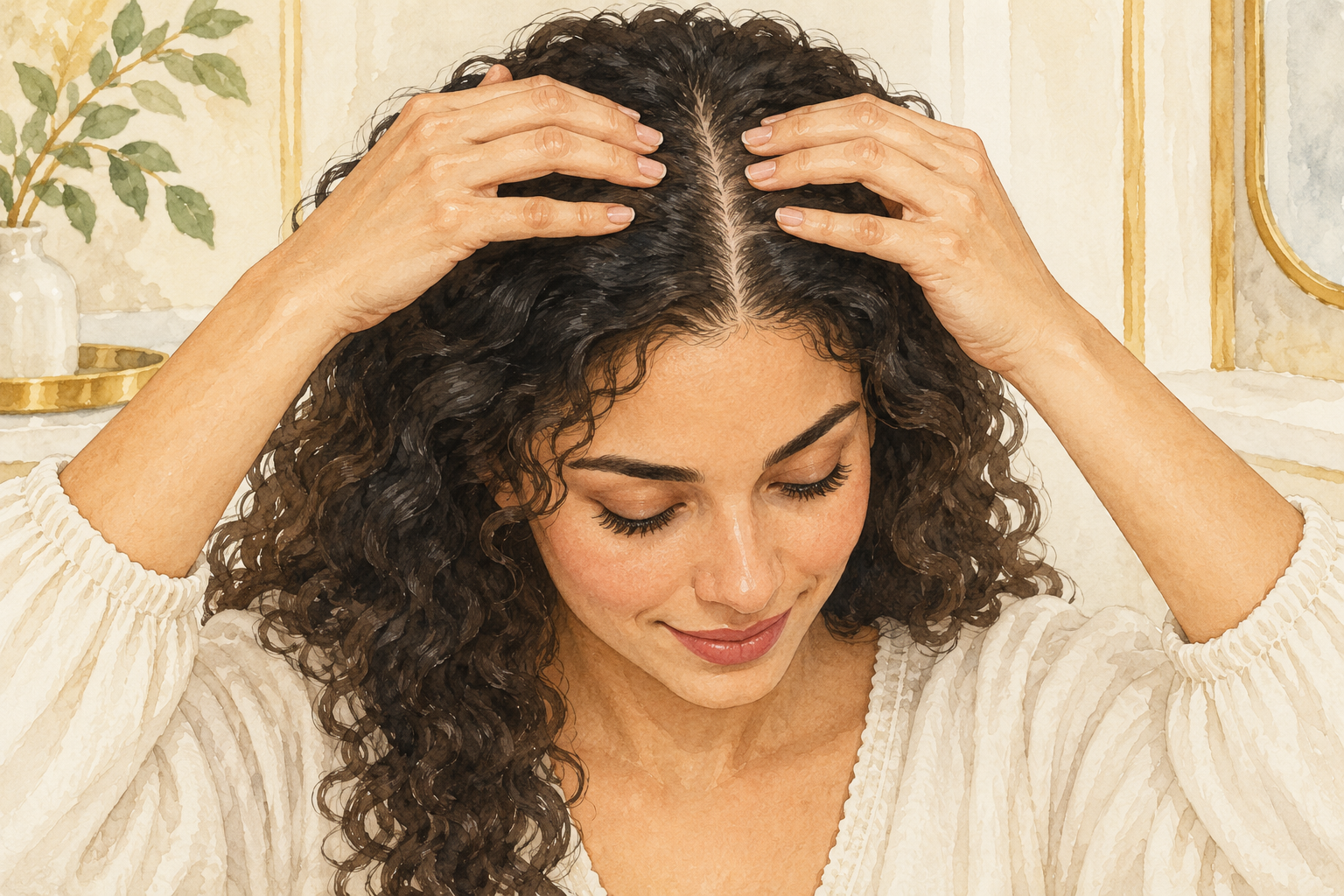
Spread your fingers wide, press down, and lift the scalp gently upward for five seconds, then release. Think of it as a slow stretch for the skin. Follow with slow slides back and forth across the top of your head, as if you were smoothing out a rumpled sheet. Do each move about six times before you shift your hands. Scalp skin is often stiff in people who spend hours at a desk. If you feel a pinch, ease off, because the pressure should feel like a stretch, never a pull. Release slowly each time, and you will feel the blood flow warm the skin under your fingers.
6. Sweep from your temples to your crown

Start at your temples, press lightly, and sweep your fingers up and back toward the crown in long strokes. Repeat ten times on each side. This move feels wonderful when your head aches or your jaw is clenched. Keep your elbows relaxed, because tense shoulders ruin the effect. Let your strokes get slower and softer as you go. This is the part to do while you breathe out slowly, and it often leaves you feeling sleepy and calm, which is a bonus. Finish with a few slow strokes down the back of the head toward the neck.
7. Work the base of the skull and behind the ears
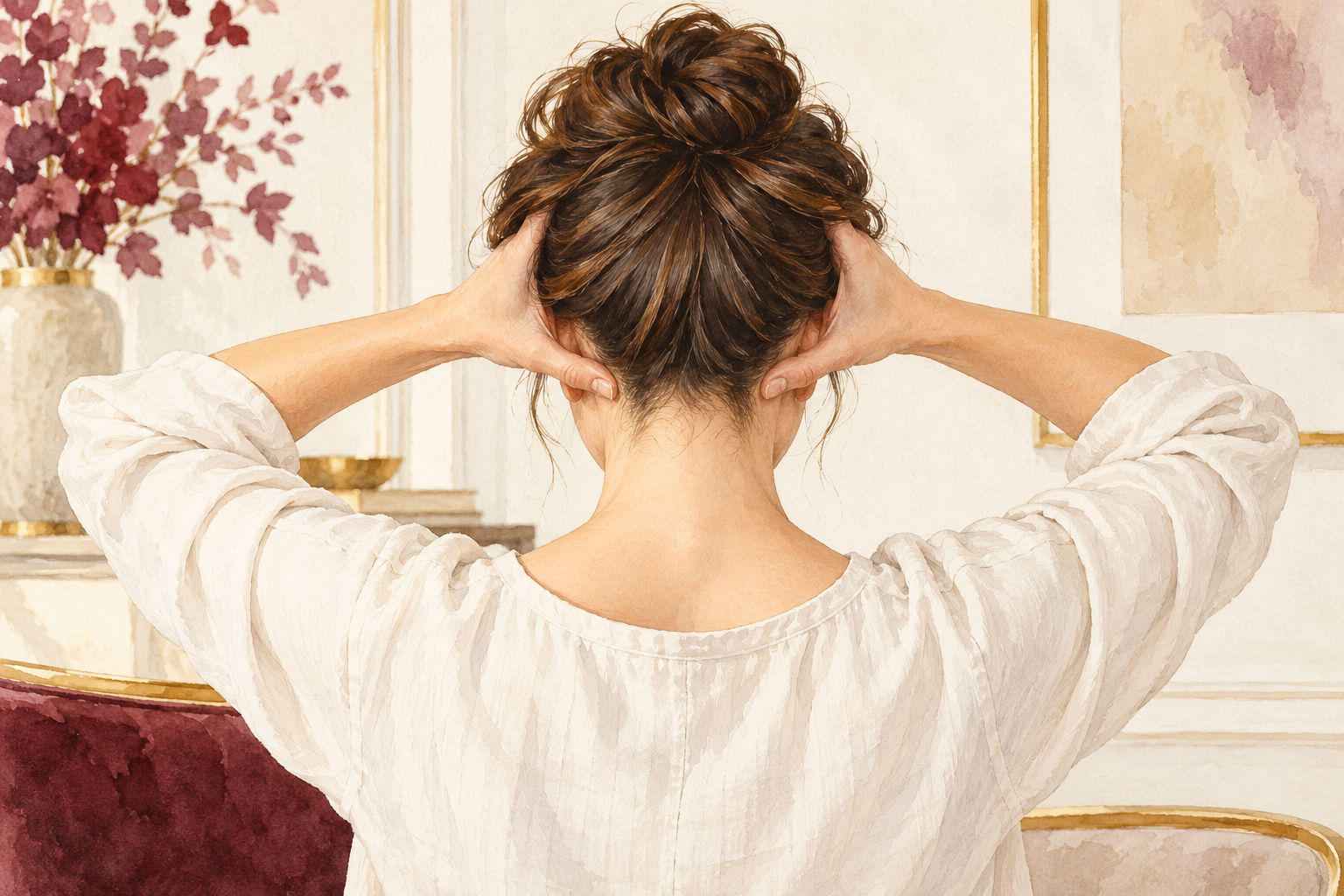
Put your thumbs at the base of the skull and press up and inward in small circles for thirty seconds. Then move to the soft area behind each ear and repeat. These spots hold a lot of tension, especially if you scroll on your phone or sit hunched at a desk. Lean your head into your thumbs a little so the pressure is easy to control. Press on the way out as you breathe. You may feel a gentle release in your neck, and your shoulders usually drop with it. If you find a knot of tension, hold gentle pressure on it for ten seconds and let it melt.
8. Be extra gentle around the hairline and edges
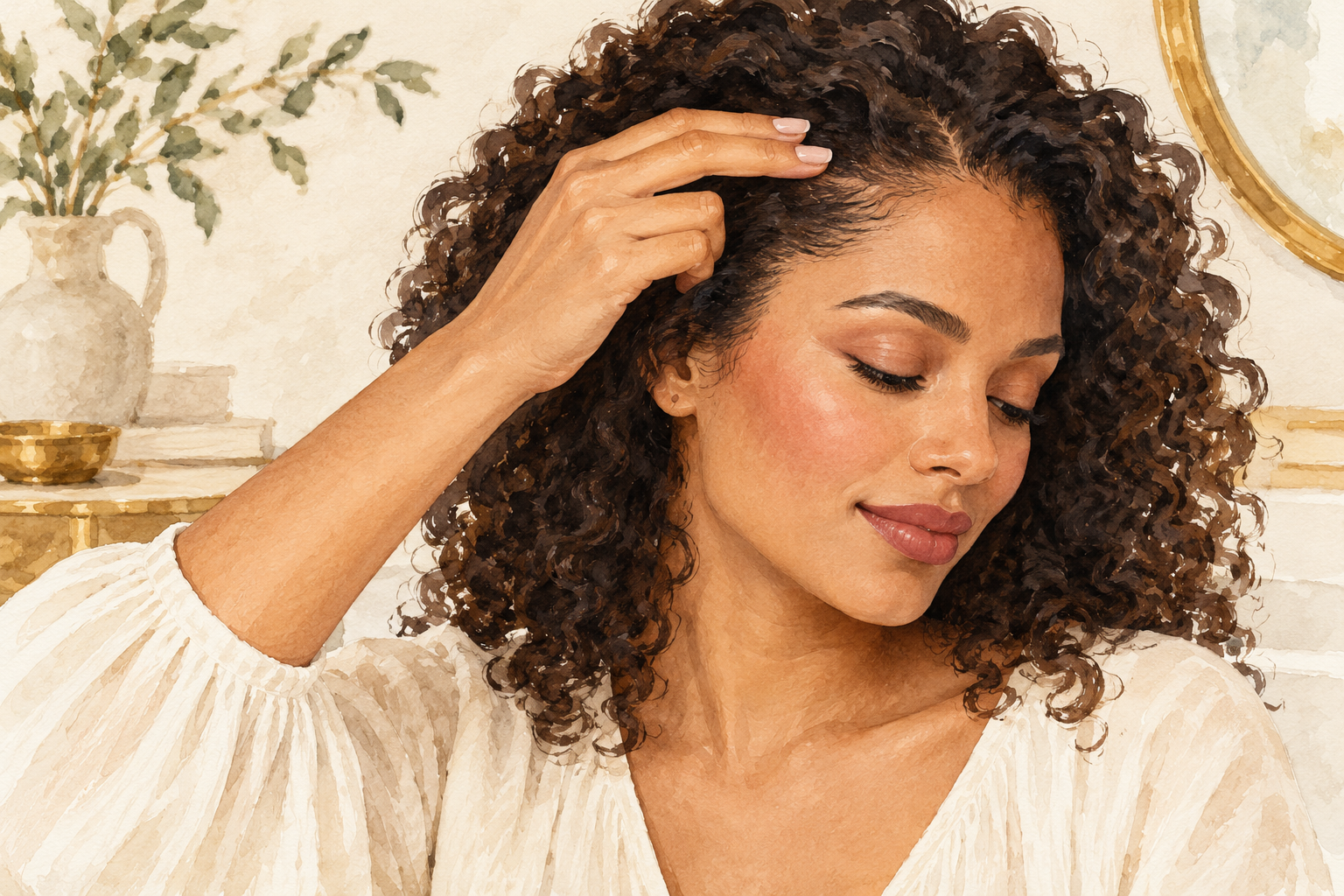
Use feather light pressure around your hairline, with just the pads of your index and middle fingers. The hairs here are fine and delicate, and they pull out easily. Skip the lifting and stretching moves on your edges, and use slow, soft circles only. If your hair is often styled tight, give this area a rest from tension too. Spend about thirty seconds on each side. This is where hair tends to thin first, so a little care here counts for a lot. Never pull on hair near the edges, even during the lift, and never press hard on thin areas.
9. Try a silicone scalp massager
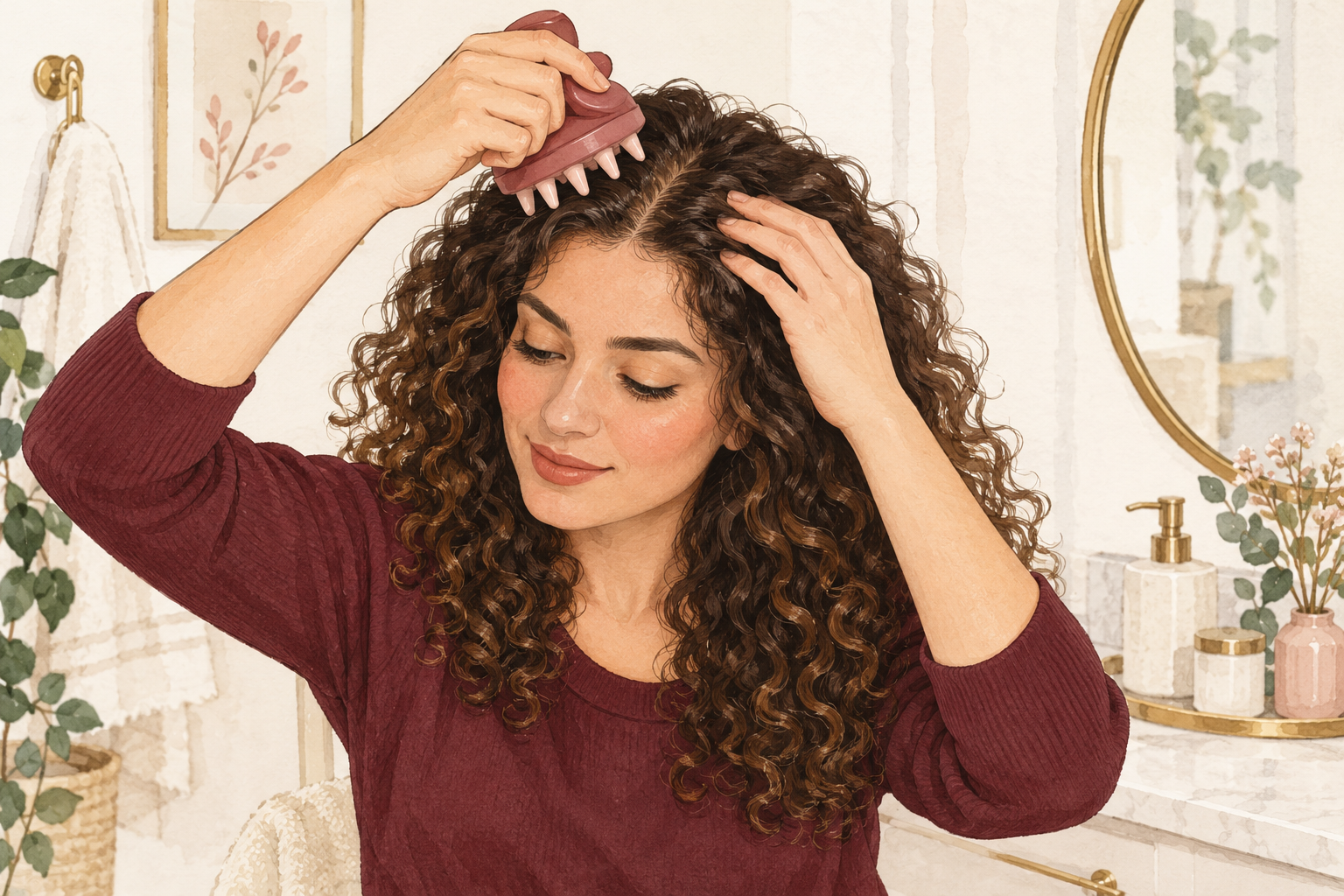
Use a soft silicone massager in the shower on wet hair, working it in small circles over your shampoo. The rounded bristles feel like a hundred little fingers, and they help lift flakes and buildup. Keep the pressure light, because the brush does its work without muscle. Do one minute, then rinse it well and let it dry. Skip it if your scalp is sore or scratched. A massager is a nice extra, but your own fingers do the same job for free, so do not feel you need to buy one. Wash the massager with warm soapy water after each use, so it stays fresh and clean.
10. Use a light oil only if it suits your scalp
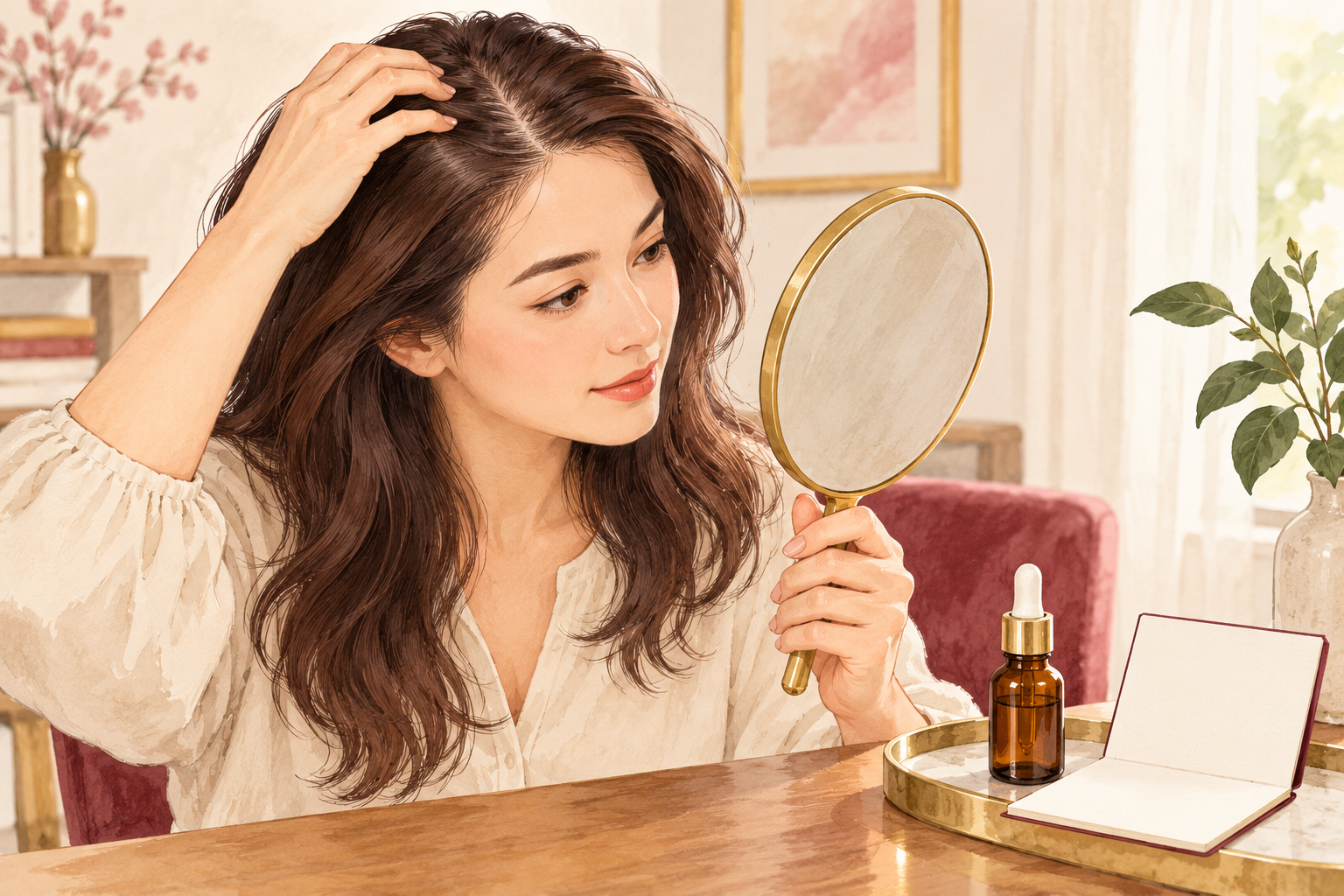
Warm two or three drops of a light oil, like jojoba or sweet almond, between your fingers before you start. Oil gives your fingers slip, so the skin does not drag. Try it on a small patch behind your ear the day before. If your scalp is oily or flaky, skip the oil completely and massage on dry or shampooed skin. Wash it out within a few hours, because oil left on too long collects dust. Heavy oils can clog the scalp, so keep it light. A plain massage on clean skin works just as well, so the oil is optional.
11. Aim for four to five minutes a day
Set a timer for four or five minutes, and go through the moves in order: circles, lifts, sweeps, then the neck. More is not better, and ten angry minutes will leave your scalp red and sore. If you are short on time, do two minutes and call it a win. On a busy day, even sixty seconds of circles counts. Stop if your scalp starts to burn or itch. A short, steady habit does far more than a long session once a month. Tie your hair back afterwards, and drink a glass of water while your head still feels warm.
12. Give it three months and know when to pause
Keep going for at least twelve weeks and check your parting once a month for changes. Hair takes time to respond, so nothing dramatic will show in the first few weeks. What you will likely notice is a looser, more comfortable scalp, less tightness and a calmer feel on wash day. If it hurts, itches or looks red, pause for a few days. Hair massage for growth is a habit for the long run, and the best proof is simply how good it feels. Take a photo of your parting today so you can compare in three months.
Complete the Routine: Hair Massage for Growth Every Night
Tonight, try numbers 1 to 4 for three minutes. To go further, read about castor oil for hair growth and fast hair growth oil.