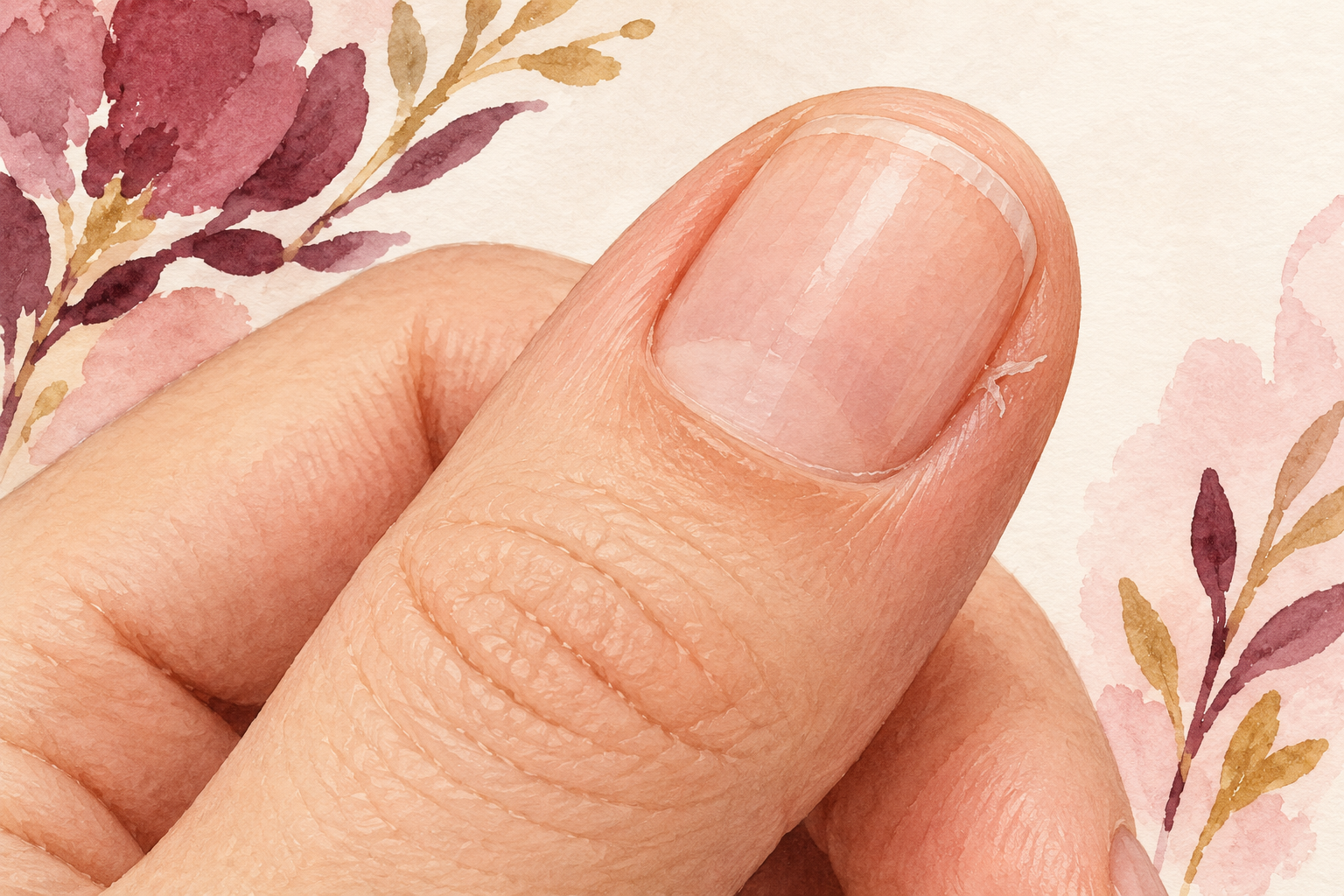
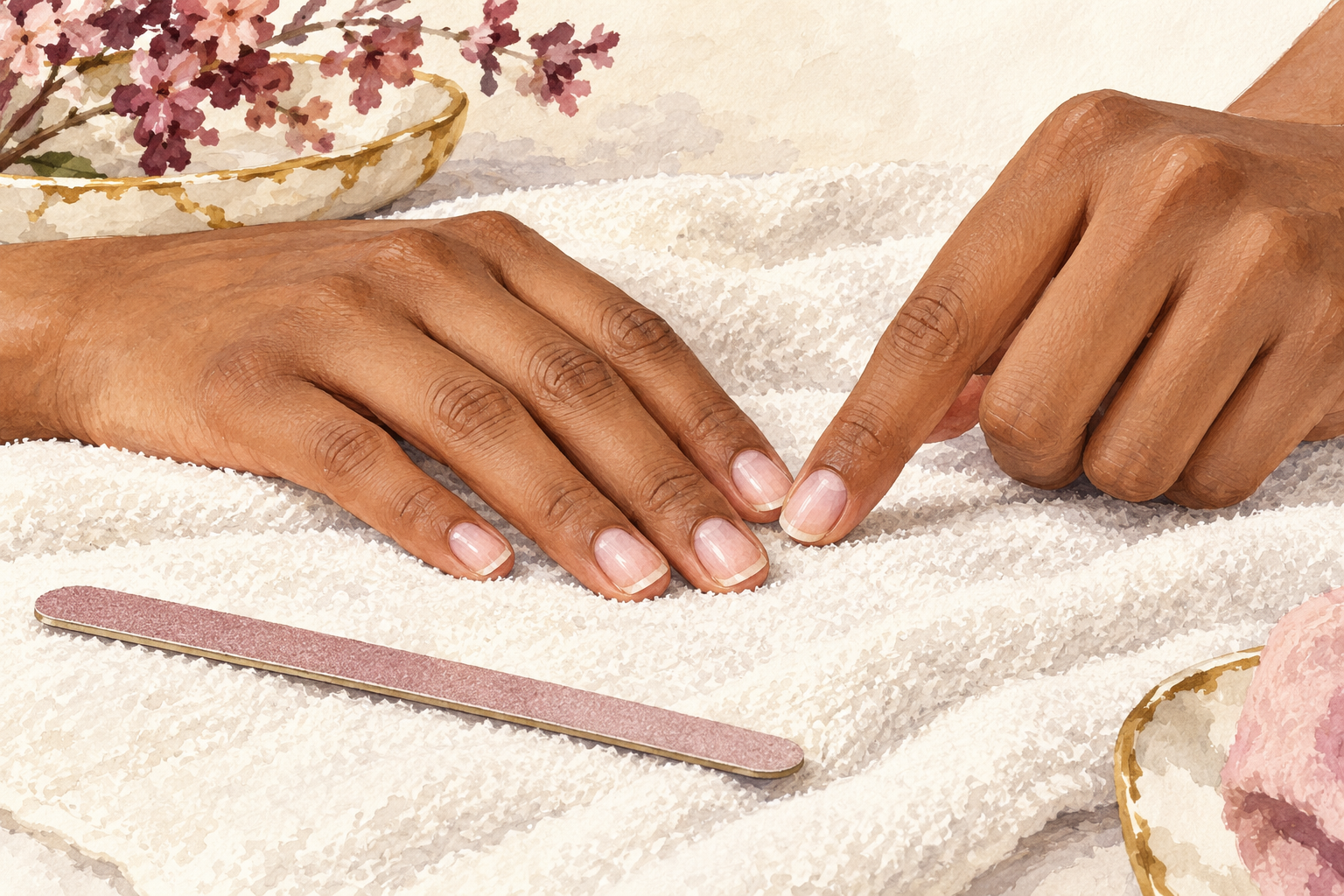
You promise yourself this is the last time, and ten minutes later you are halfway through your thumbnail without noticing. Learning how to stop biting nails starts with catching the habit, not fighting it. These 12 swaps begin with your triggers and end with nails you actually want to keep, so start at number one tonight.
1. Count your bites for three days
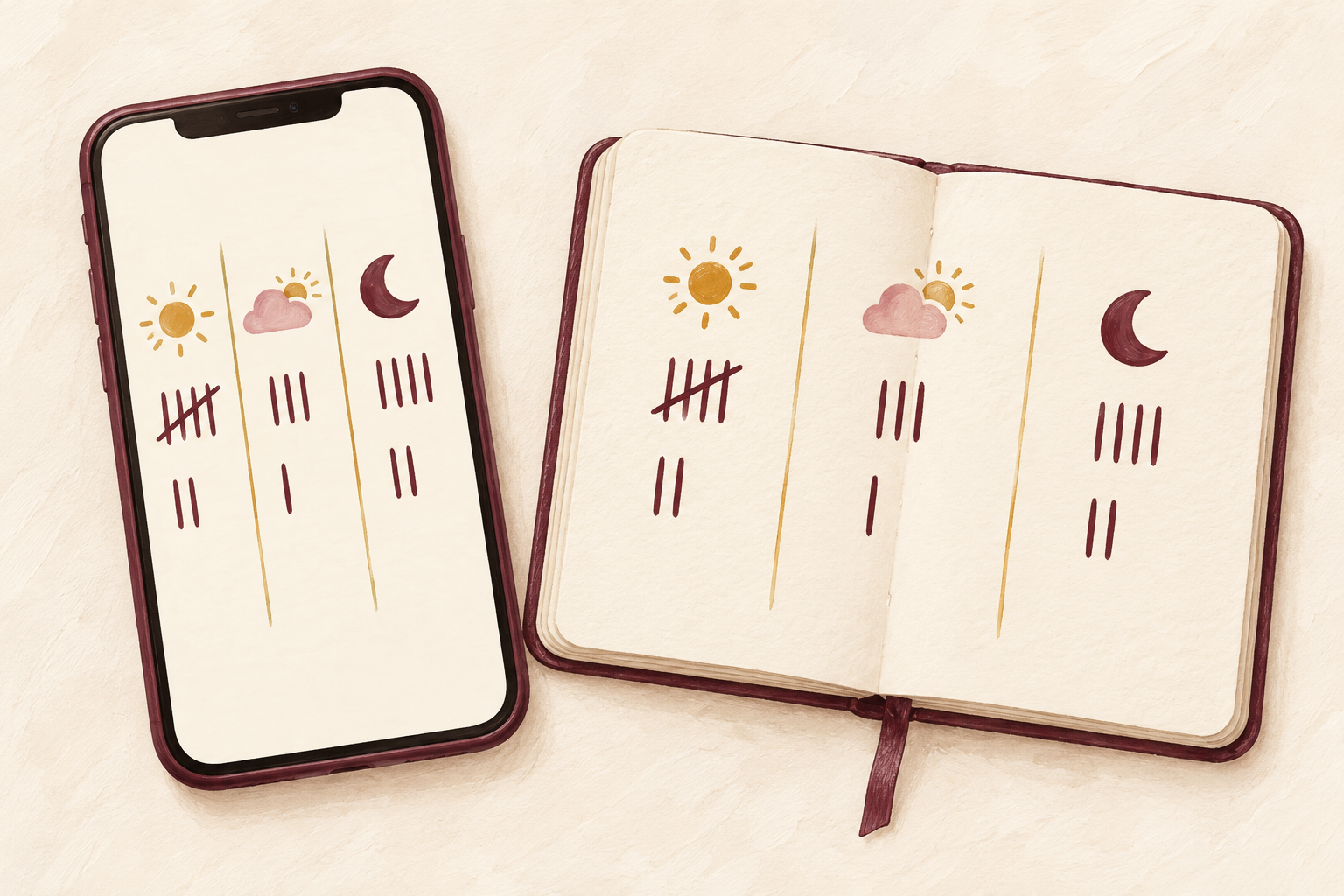
Put a tally on your phone and add a mark every time your hand reaches your mouth. Jot down the time and what you were doing, nothing more. Do not try to quit yet, because this step is only about noticing. By day three a pattern shows up: the sofa during a series, the car in traffic, the minute before a hard phone call. Most girls are surprised, since biting happens while the mind is somewhere else entirely. Seeing it written down makes it feel less like a flaw and more like a habit with a timetable, and a timetable can be changed.
2. Name your type: bored, stressed or snagged
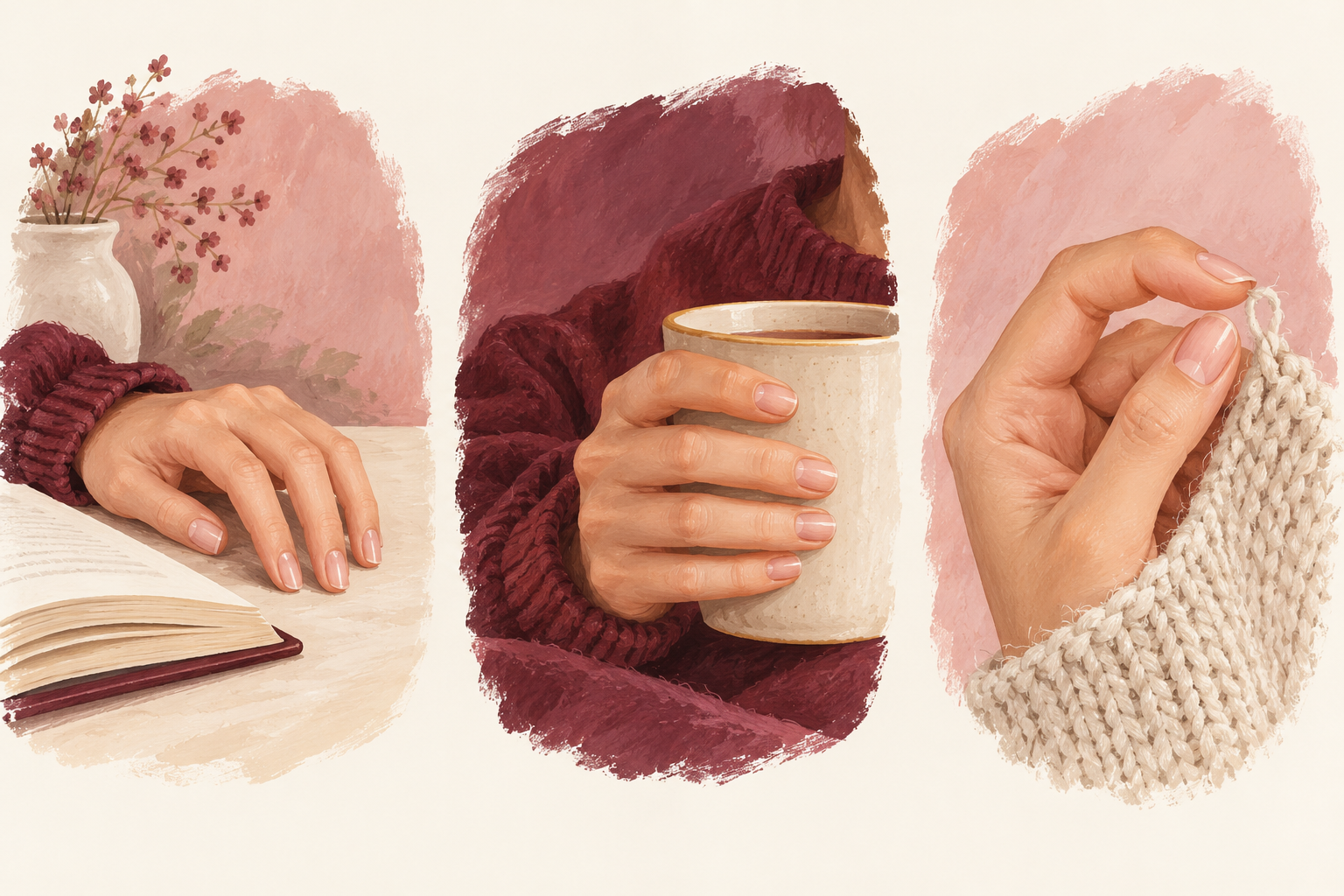
Sort every tally mark into one of three kinds, bored, stressed or snagged. Bored biting happens when your hands are idle, like during a long show. Stressed biting arrives with deadlines, arguments and waiting for a reply. Snagged biting starts when a ragged edge or hangnail feels wrong and your teeth try to tidy it. Write your top two on a sticky note and stick it on your mirror. Each type needs a different swap, and knowing yours saves you from fixes that were never meant for you. Most girls end up with two types, and that is perfectly normal.
3. Smooth every snag before it tempts you
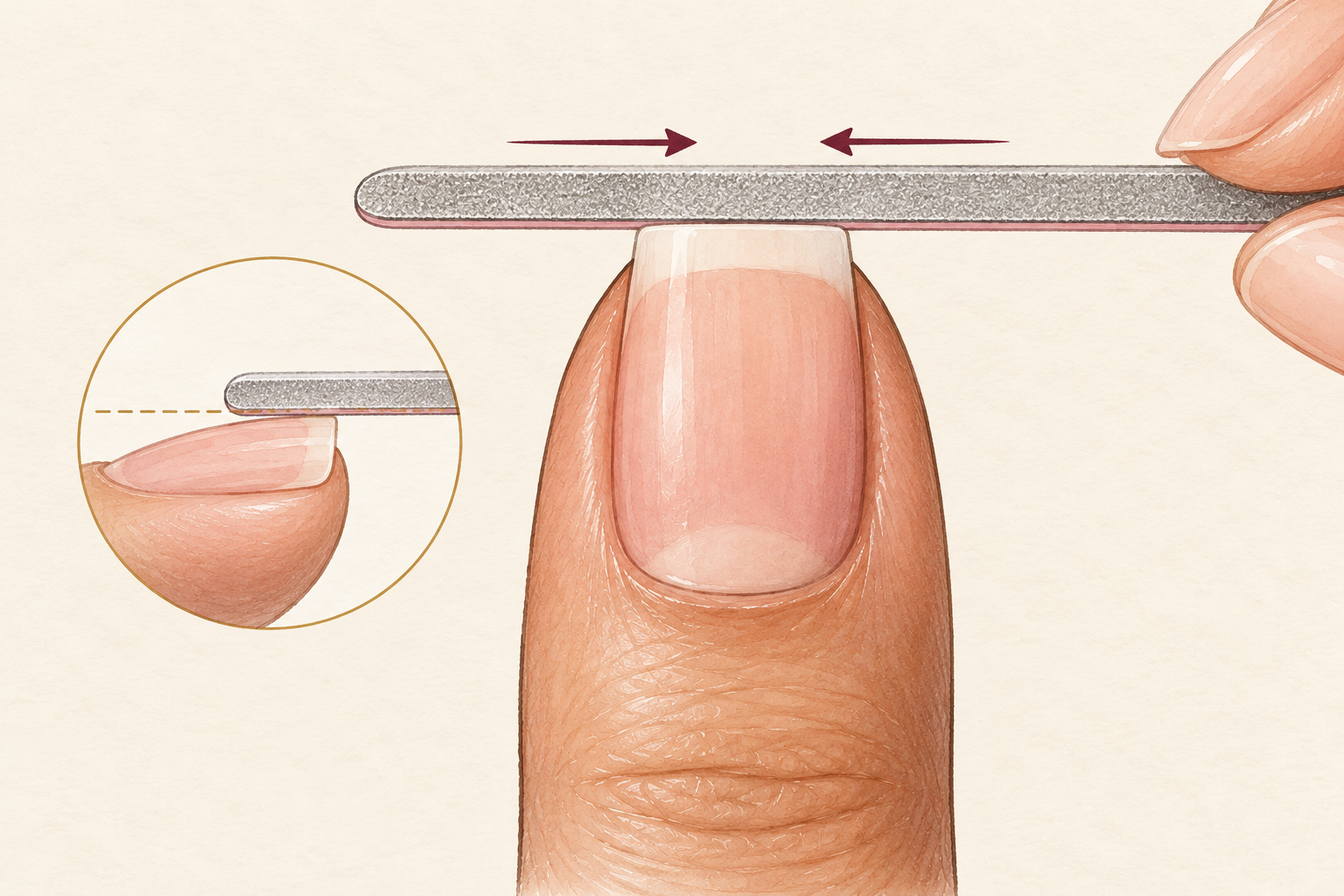
Keep a fine file in your bag, one by the sofa and one on your desk. A tiny snag is the loudest invitation to bite, so file it flat in one direction the second you feel it. Trim a hangnail with clean clippers instead of tearing it, because a torn one bleeds and stings for days. This will not stop stress biting, but it removes a whole group of triggers in one evening. Reaching for a file takes ten seconds, and once your edges are smooth there is simply less to chew. If a snag is too deep to file, a small snip is better than a bite.
4. Keep nails short enough that nothing can be grabbed
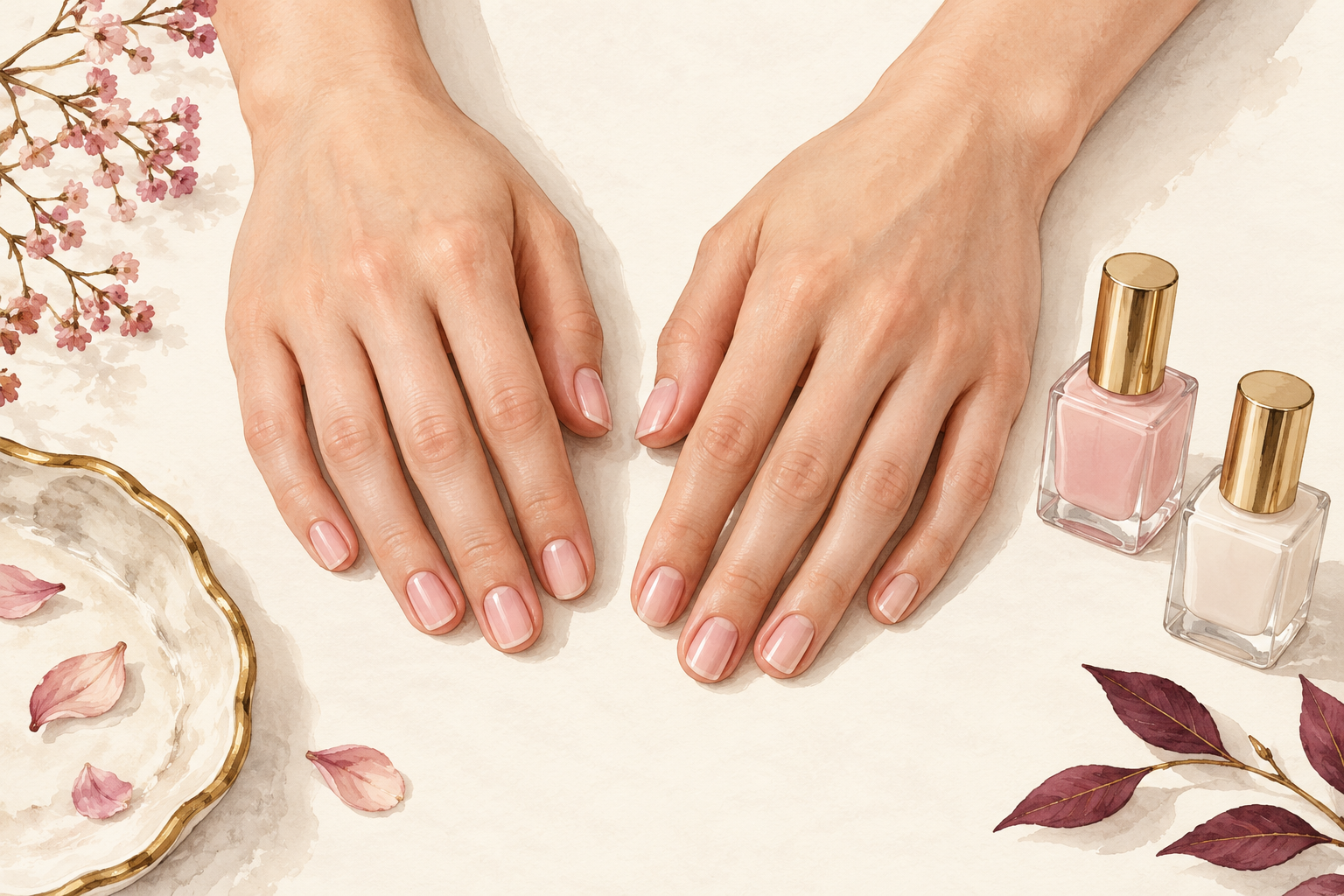
Trim to a short, rounded shape with no white edge left to catch between your teeth. Short does not mean sore, so stop before the nail is level with the fingertip skin. Smooth the corners and trim again every Sunday, because even a millimetre of free edge invites a nibble. Short nails also snag less on sleeves and hair. The easiest part of how to stop biting nails is giving yourself nothing to bite, and tidy bare tips look better than chewed ones anyway. Check your nails again on Wednesday, as a quick tidy keeps the habit from restarting midweek. Keep tips short and tidy, then open how to shape short nails when a corner catches.
5. Paint on a bitter polish
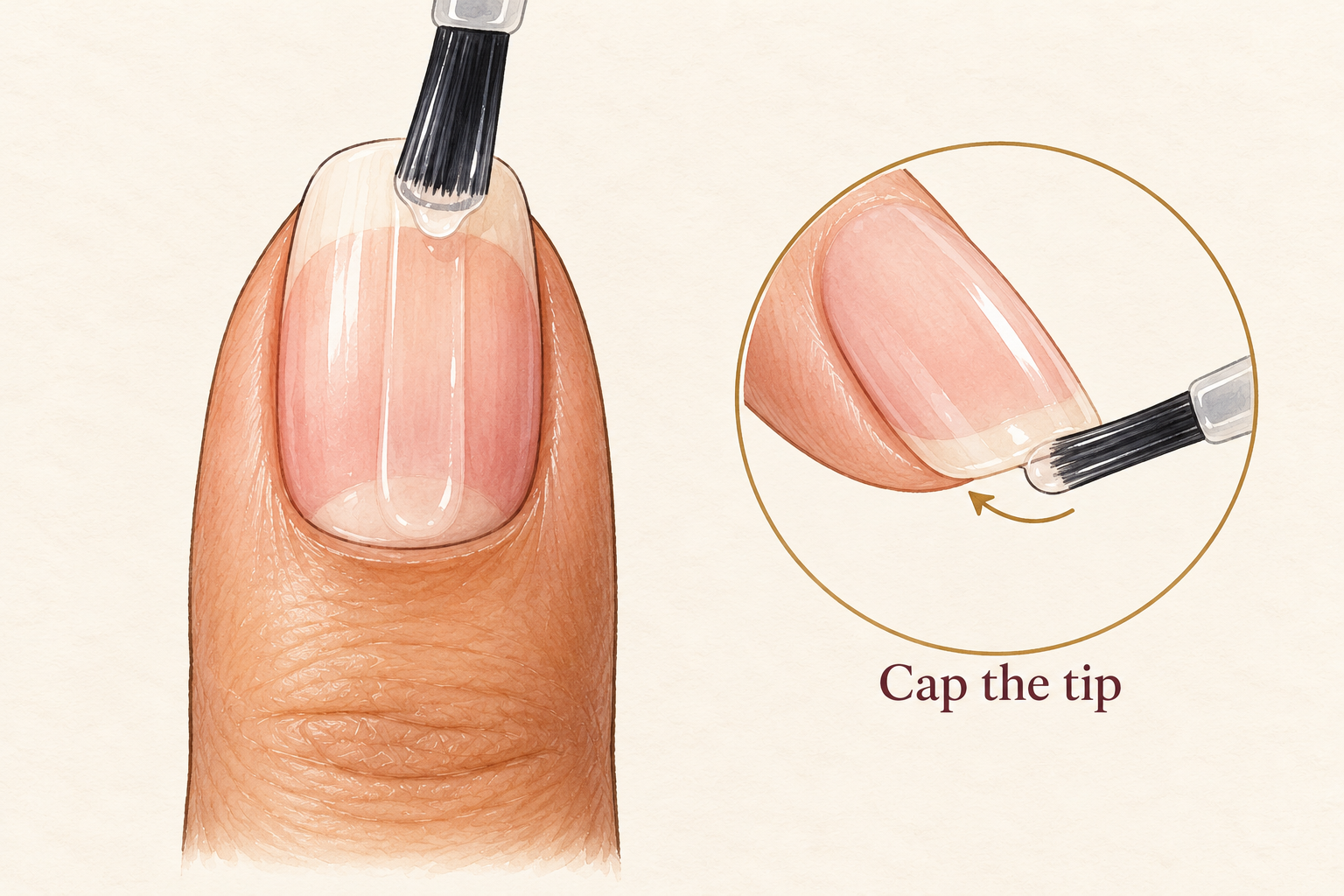
Brush a bitter tasting polish over every nail in the morning and again after you wash up. It is safe and it tastes awful, which is the whole point, because you get a nasty surprise one second before the bite. Wash your hands before you eat so the taste stays off your food. Water wears it thin, so reapply when it starts to look patchy. Some girls stop noticing the taste after a few weeks, so treat it as a helper for the first month, not a cure. Keep it away from your lips. Pick a clear one if you do not want anyone to notice, or a pretty color if you would like the extra reward.
6. Cover the finger that always loses
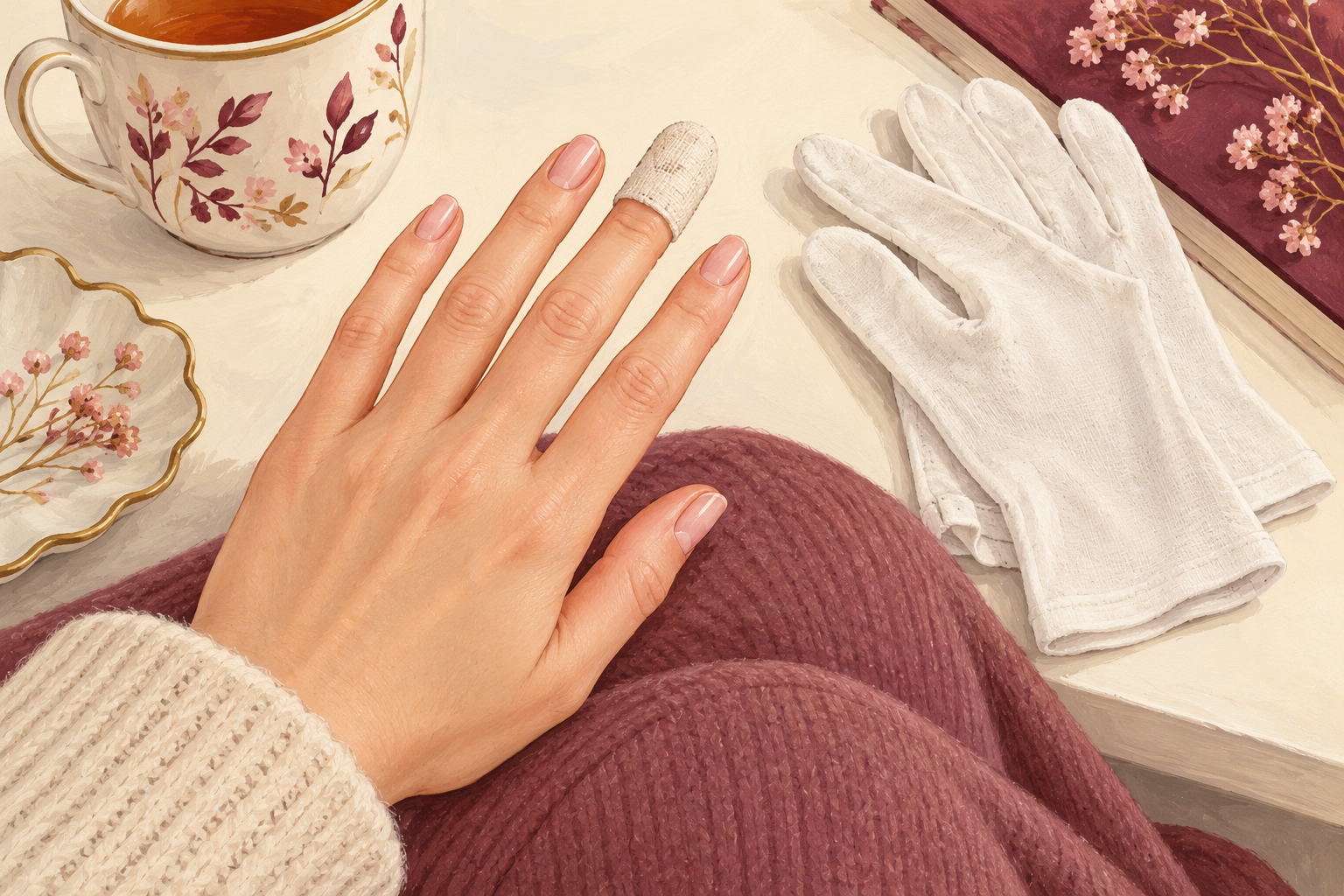
Wrap only your worst finger in a thin plaster or a strip of tape and leave the rest alone. One finger usually takes most of the damage, and covering it breaks the automatic reach. Pull on soft cotton gloves for TV time or scrolling in bed. A coat of color helps too, since a painted nail feels like something you want to keep pretty. Take the plaster off in the shower so the skin can breathe, and put a fresh one on every day. Remember the covered finger is only a short term fix while the habit loosens.
7. Give your hands a different job
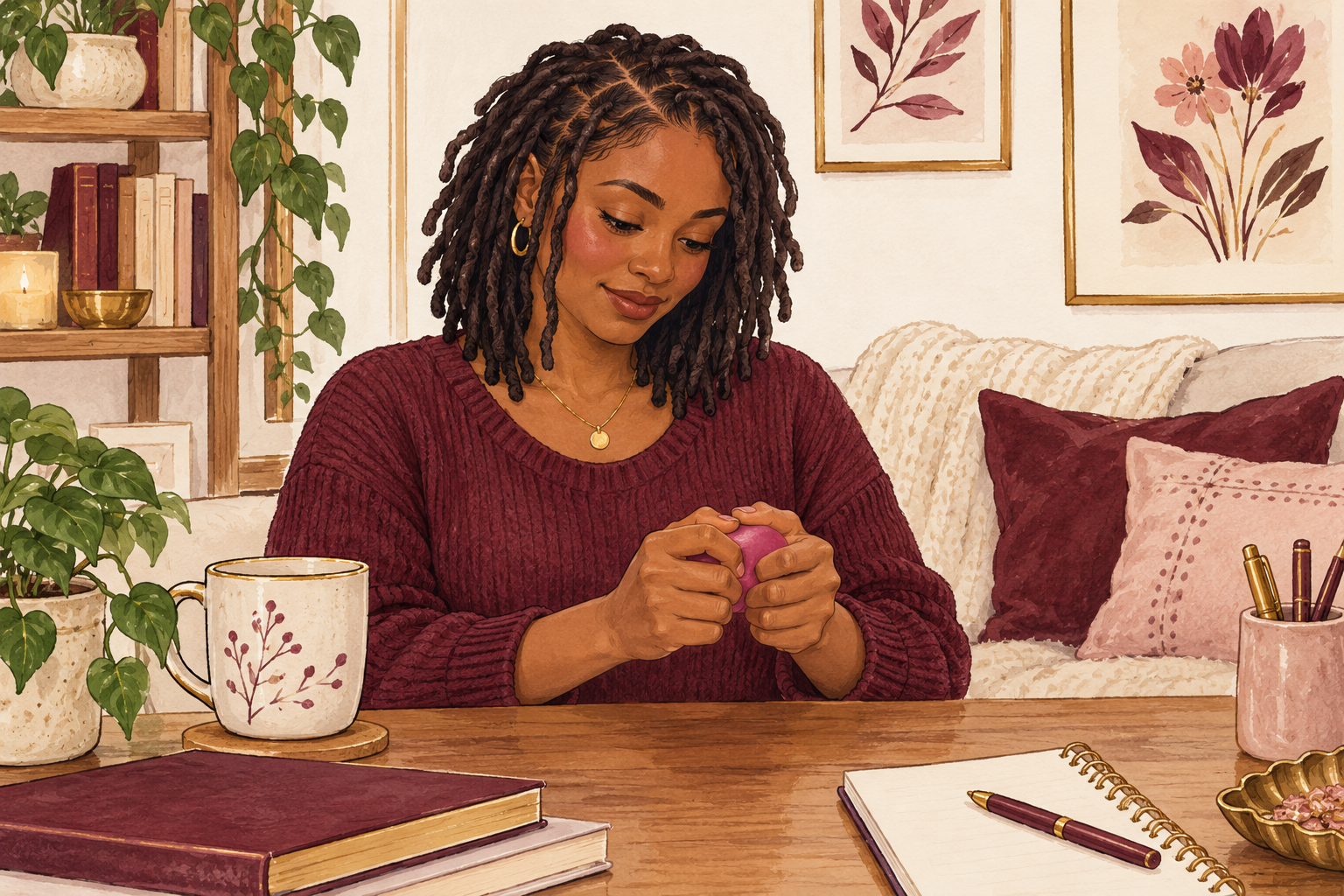
Keep something small to hold at your desk, by your bed and in your bag. A stress ball, a smooth stone or a ring you can spin all work well. The moment you feel the pull, pick it up before your hand gets near your face. It will feel silly for about a week and then become automatic. Choose a quiet one for meetings and a squishy one for stressful calls. For the bored kind of biting, a glass of water with a straw gives your mouth something to do as well. Put the object where your hand lands first, such as next to your keyboard or on the arm of the sofa.
8. Start with one set of nails
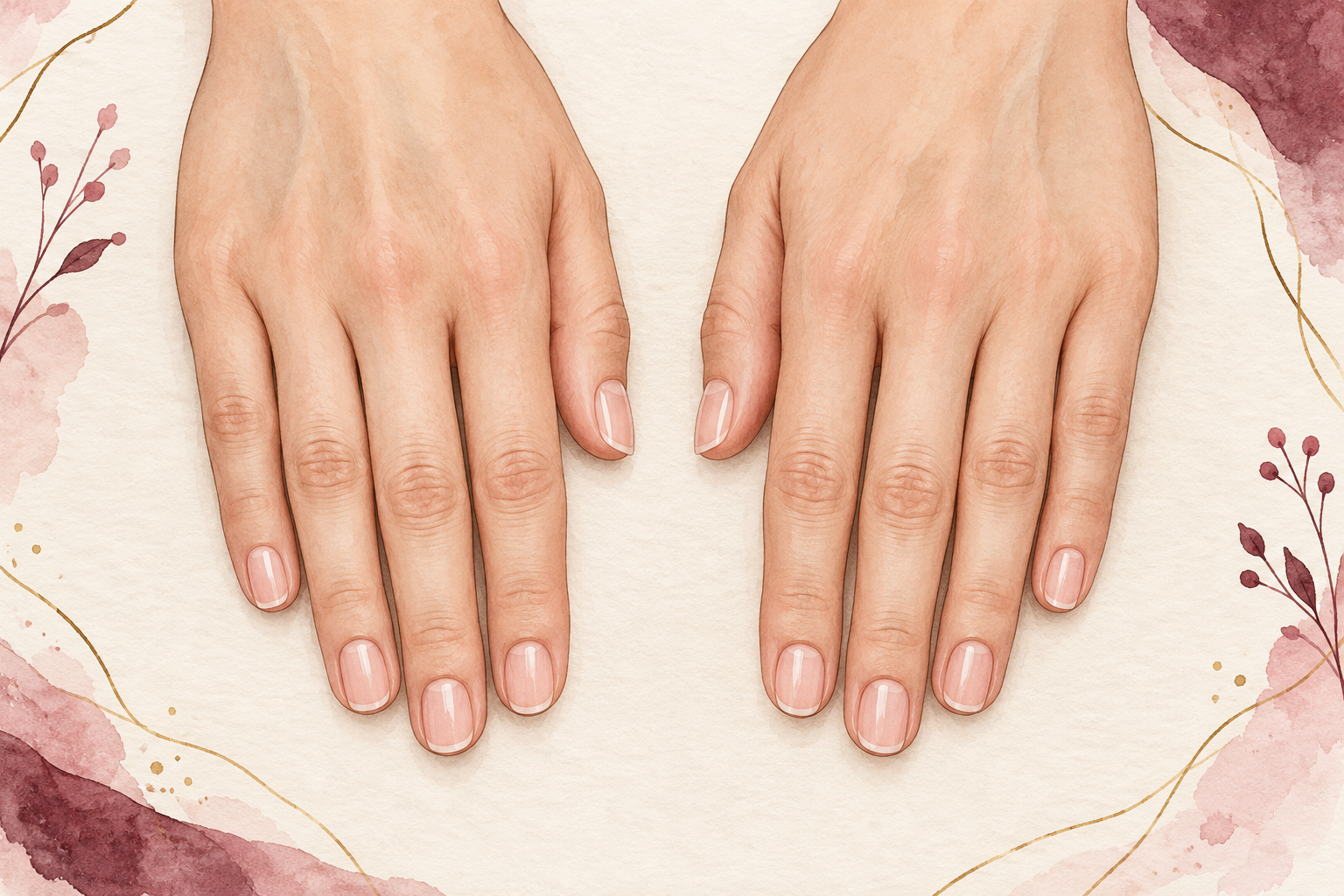
Choose your thumbs, or whichever nails are in the best shape, and make them off limits. Quitting on ten fingers at once is how most plans collapse by Thursday. Once your thumbs stay safe for two weeks, add the pointer fingers, then the rest. Mark each safe day on a calendar so you can watch a streak grow. Two nails with a proper edge on them is a real win, and it shows you the habit can change. Do not move on to the next finger until the last one feels easy.
9. Stop after the first nibble

The second you catch a bite, stop and file that edge smooth. A jagged edge is the main reason one nibble turns into five. Then go back to what you were doing without a lecture. One slip is one slip, and it does not erase the days before it. Speak to yourself the way you would to a friend. Slips are most common on stressed days, so keep your fidget closer then. Check your tally afterwards to see what set it off, and add that trigger to your sticky note. Staying calm after a slip is worth more than any product.
10. Look after the skin around the nail
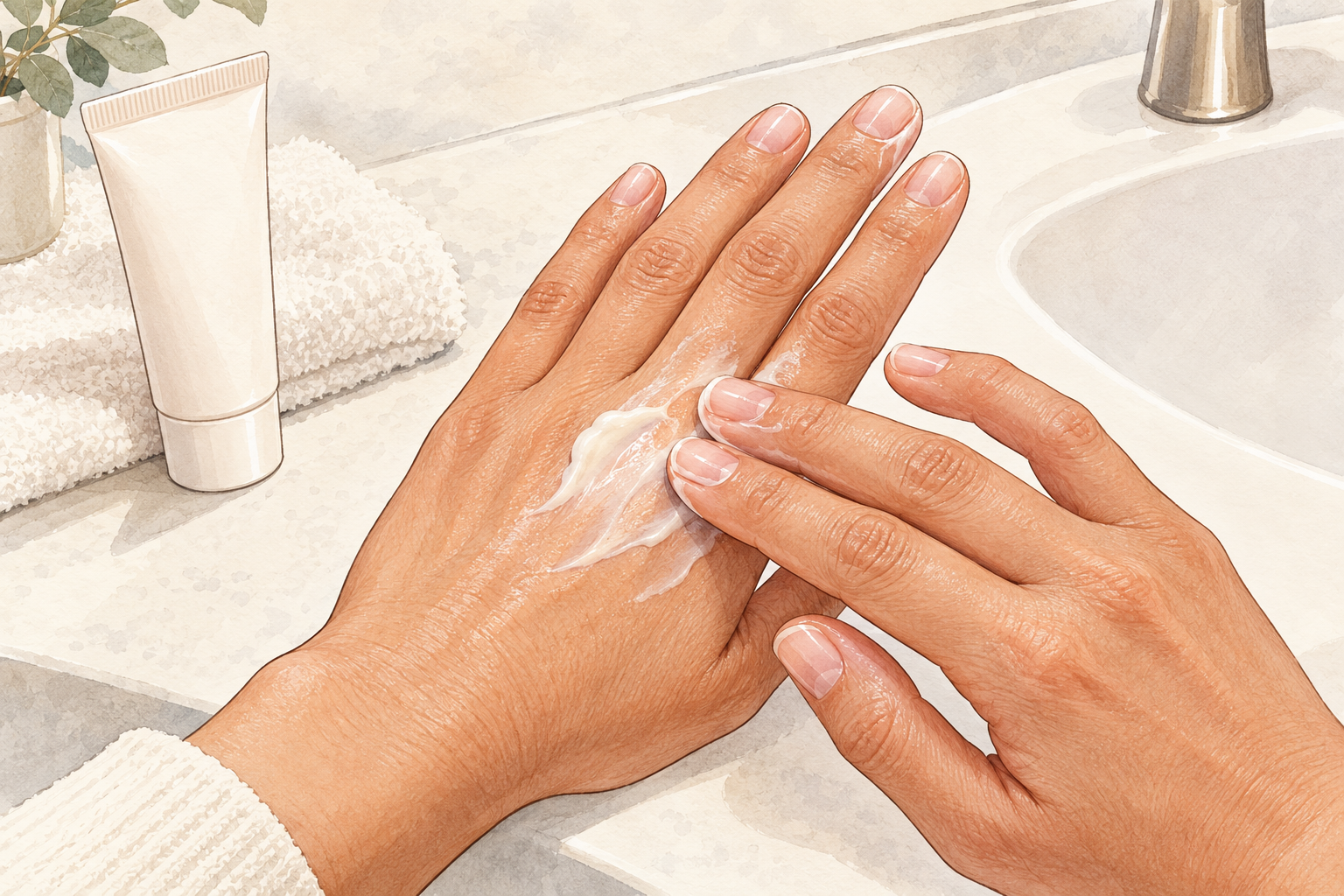
Rub a drop of oil or hand cream around each nail at night, about ten seconds a hand. Bitten nails leave sore, dry skin that cracks into hangnails, and hangnails send you straight back to biting. Do not pick at the sore bits. If a finger turns red, hot or throbs and does not settle in a few days, go and see your doctor. Otherwise a clean plaster and some patience is all it needs. Skin that stays soft is far less tempting to chew. A few minutes after a shower is the best moment, while the skin is still soft. Choose the moment after a shower, and read nail cuticle care to keep skin in good shape.
11. Watch for swaps that sneak in
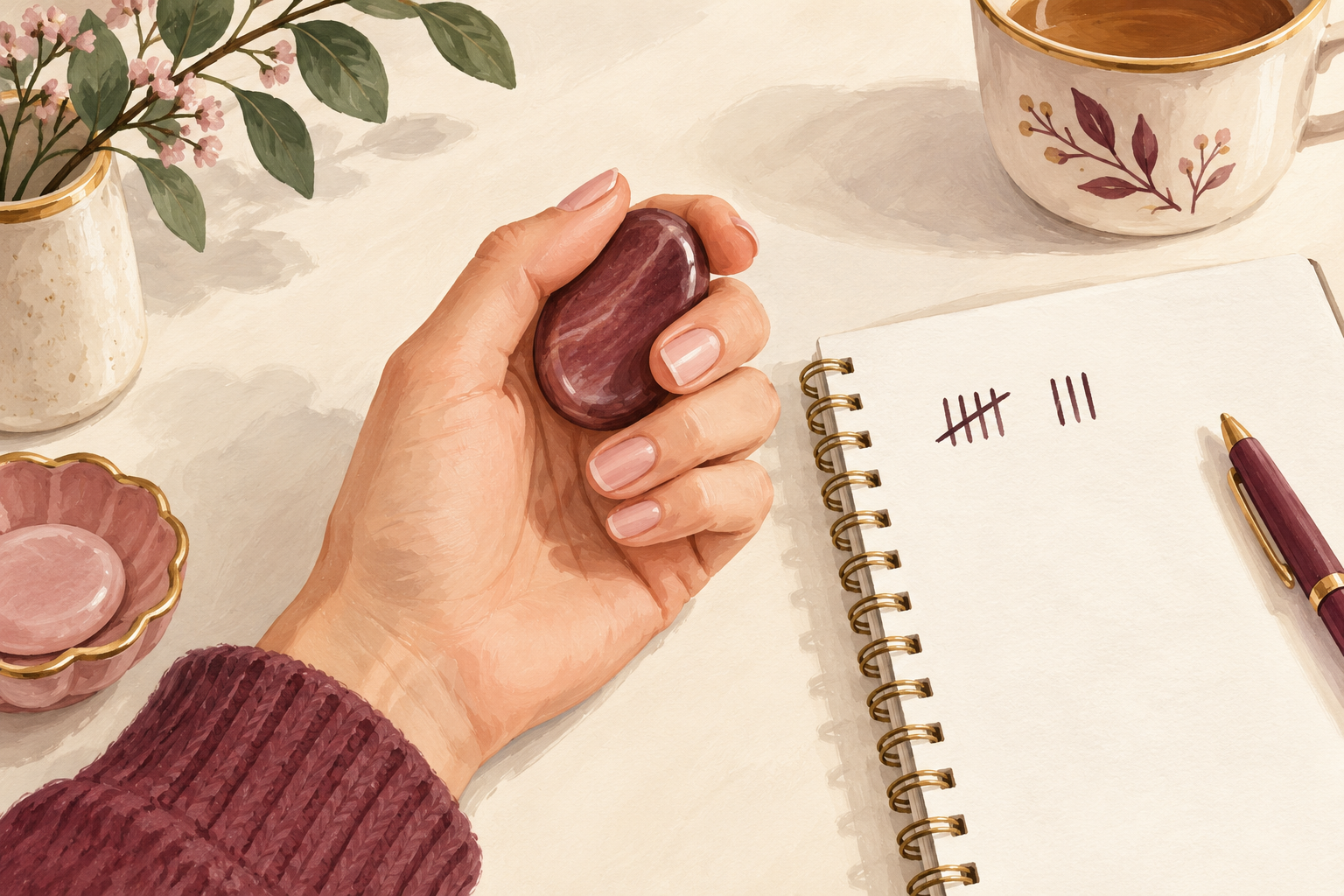
Notice if you start picking cuticles, chewing pens or biting your lip instead. Many girls quit biting and find the same urge moves somewhere else. It is doing the same job, so give it the same answer: a fidget in your hand, a barrier on the spot and a mark in your tally. Keep the file close for any new rough patch. Switching a pen for a cold water bottle or a piece of gum at your desk takes the cap out of reach. Catching the swap early keeps one habit from simply replacing another.
12. Expect slow, real progress at weeks one, four and eight
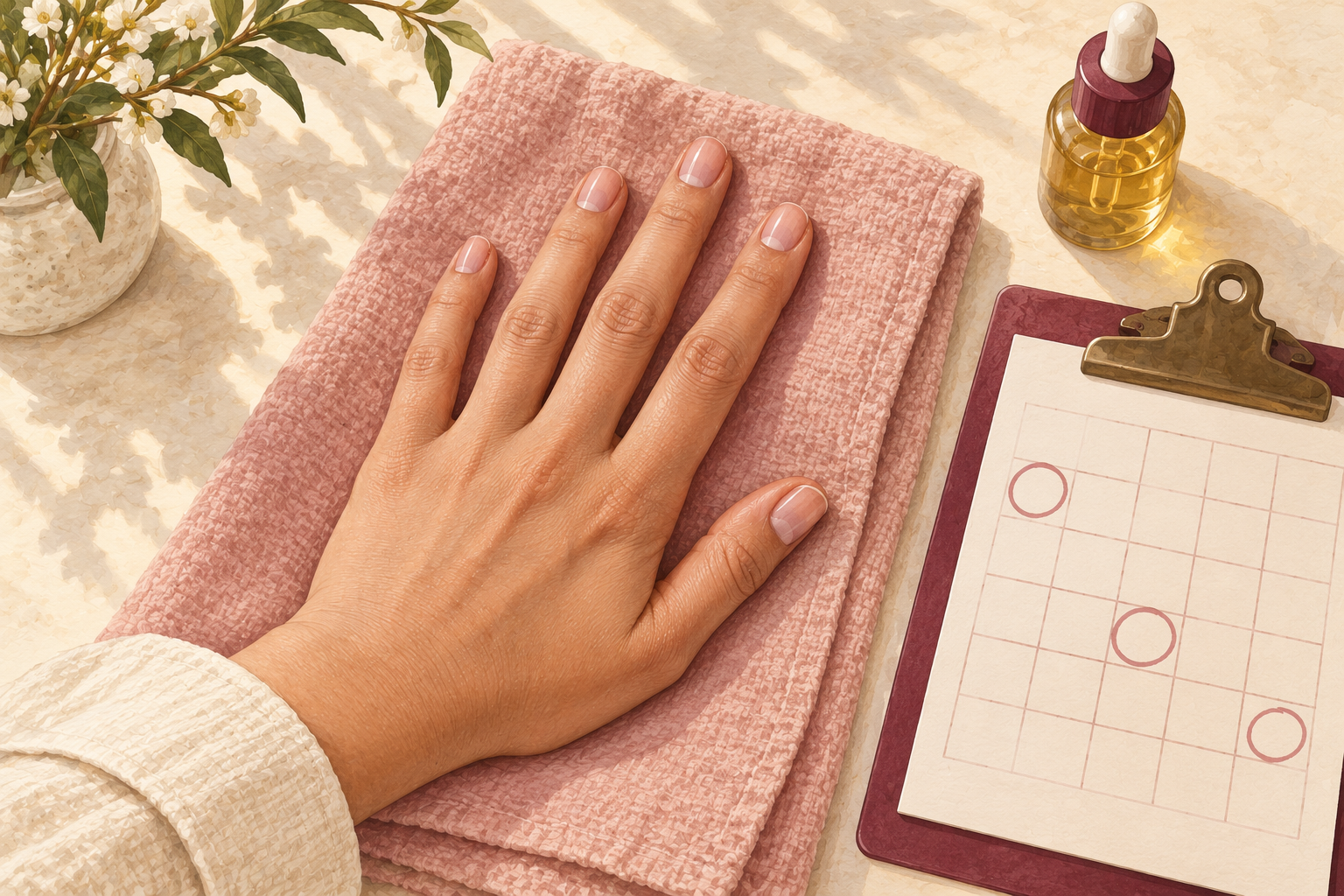
In week one you will catch yourself a lot, and that is the habit loosening, not failing. By week four your thumbs should show a small white edge and the urges may cluster in just your top two moments. By week eight many girls find biting has shrunk to a few predictable situations, though stress can pull it back for a day. A slip in week six does not wipe out the progress. Photograph your hands today and once a month in the same light, because longer nails are the best motivation. Be patient, because nails take about a month to grow a visible edge.
Complete the Routine: How to Stop Biting Nails One Week at a Time
Tonight, file every snag smooth, paint on the bitter polish and start your tally. Stopping a habit is slow work, and slips along the way are part of it. Further on, the guides below suit the next step once you feel steady.