A tiny strip of skin lifts beside your nail and catches your sleeve every time you reach for something. You pick at it, it tears, and now the side of your finger stings in the shower. Nail cuticle care fixes this without scissors. Here are 12 gentle steps to settle the flap and stop the next one, so start at number one tonight.
1. Tell the cuticle from the hangnail
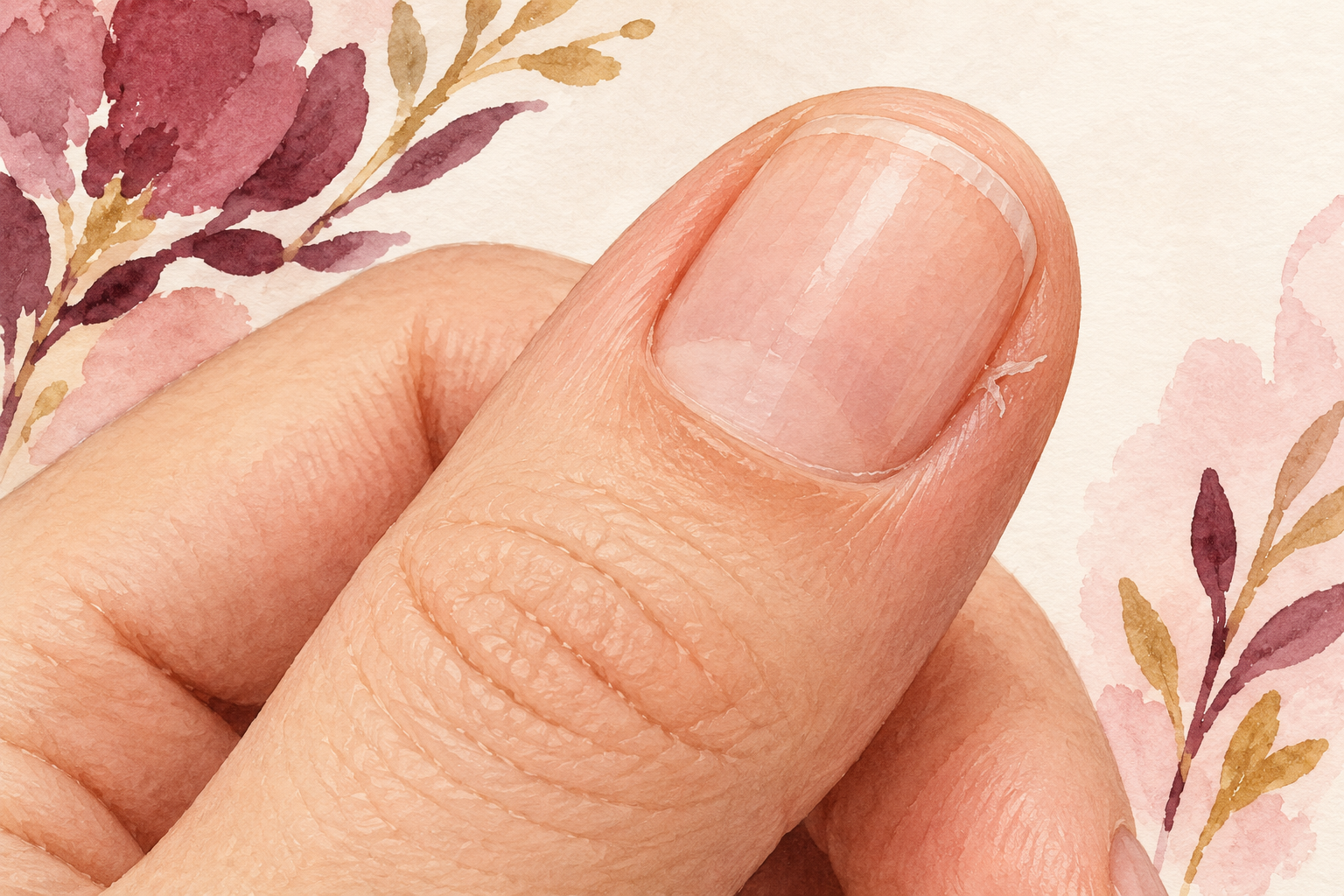
Look closely at the skin around the nail before you touch anything. The cuticle is the thin seam of skin sealed tight against the base of the nail, and it works like a gasket. A hangnail is a loose flap of dry skin that sticks out beside the nail, and it is the only part that is a problem. If you can see pink, living skin underneath the flap, leave that alone. Check each finger in daylight, since hangnails love the thumb and first finger that you use most. A hangnail often hurts more than it looks, so do not judge it by its size.
2. Find what dried the skin out
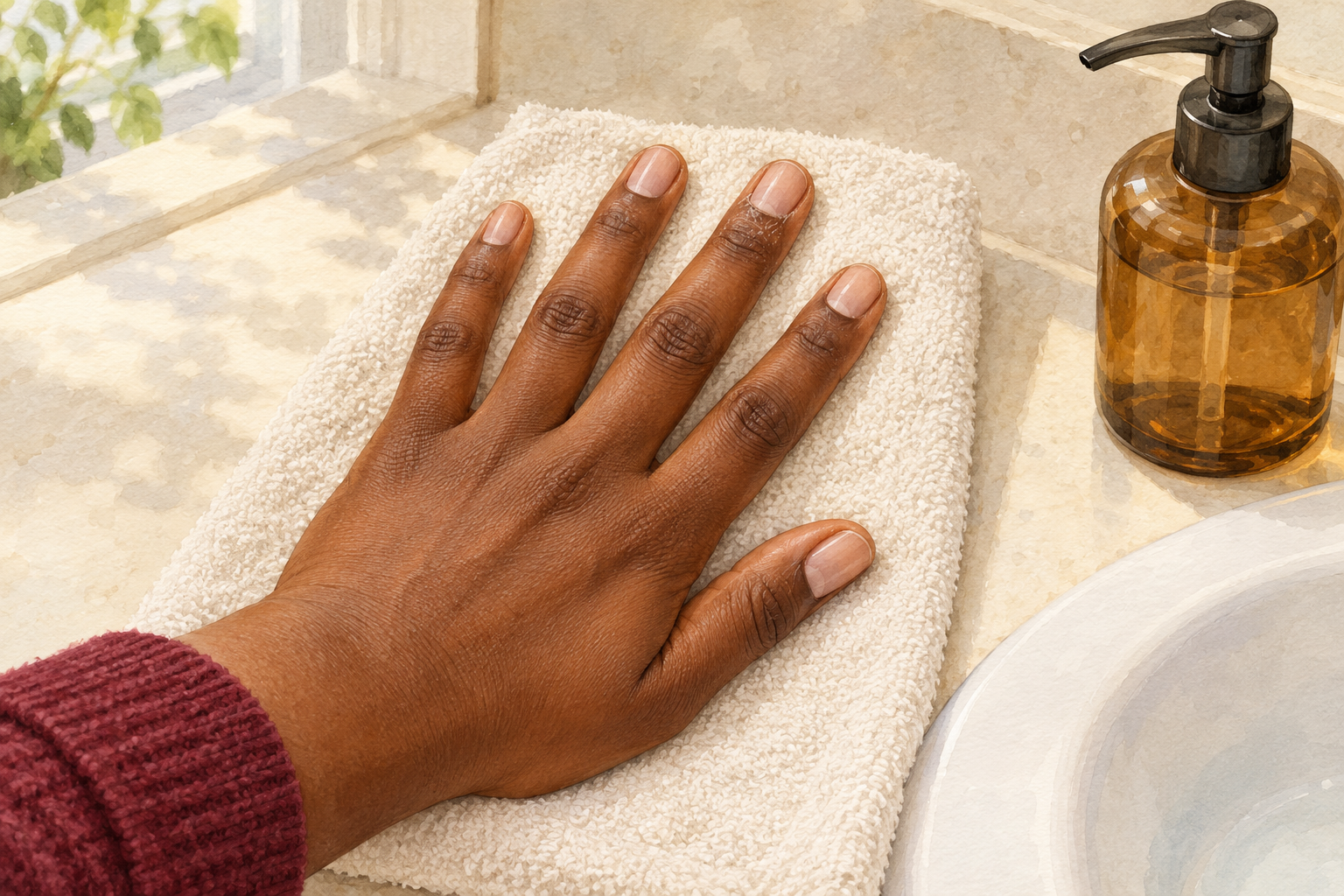
Think about what your hands went through this week. Hot water, frequent washing, harsh soap, pool water, cold air and acetone remover all pull moisture out of the skin around your nails. Biting and picking tear it too. Dry skin splits the way a dry lip does, and the splits become hangnails. Pick the habit you recognize and fix it first, or the flap will come back as soon as it heals. Most people find two or three culprits, and winter makes every one of them worse. Counting how many times you wash your hands in a day can be a real eye opener. Dry skin is the usual cause, so a wider look at nail care makes sense.
3. Stop pulling and cover it
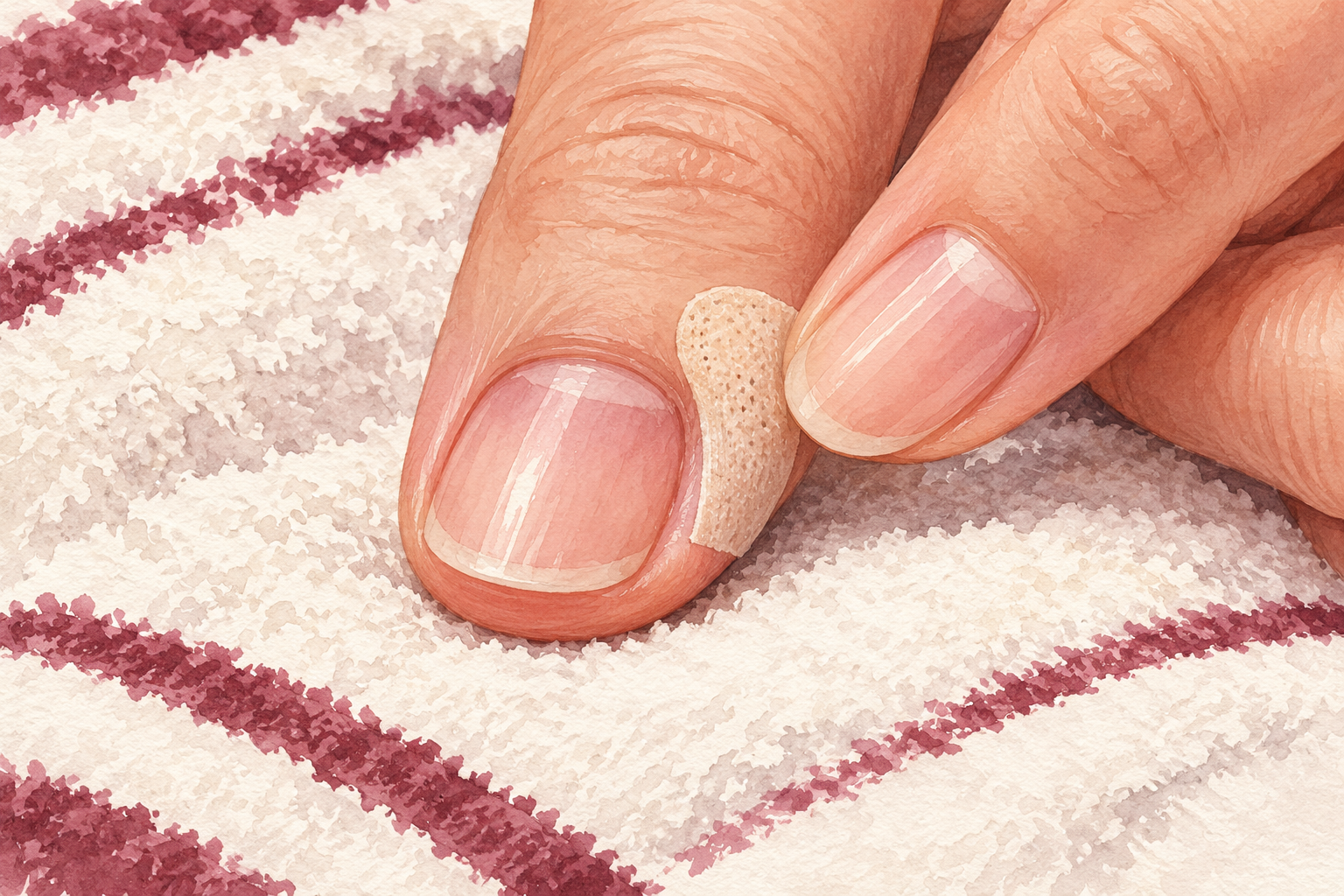
Leave the flap attached and put a small plaster over it if it keeps catching on your clothes. Tearing it off often rips a strip of living skin with it, and that is where the sting and the bleeding come from. Wash your hands with soap first so you are not pushing dirt into a tiny tear. A flap you leave alone for a day or two is always easier to deal with than one you yanked. Change the plaster each morning so the skin underneath stays dry and clean. Pick a plaster with a soft pad so it does not drag on the tender edge.
4. Put the nippers away for good
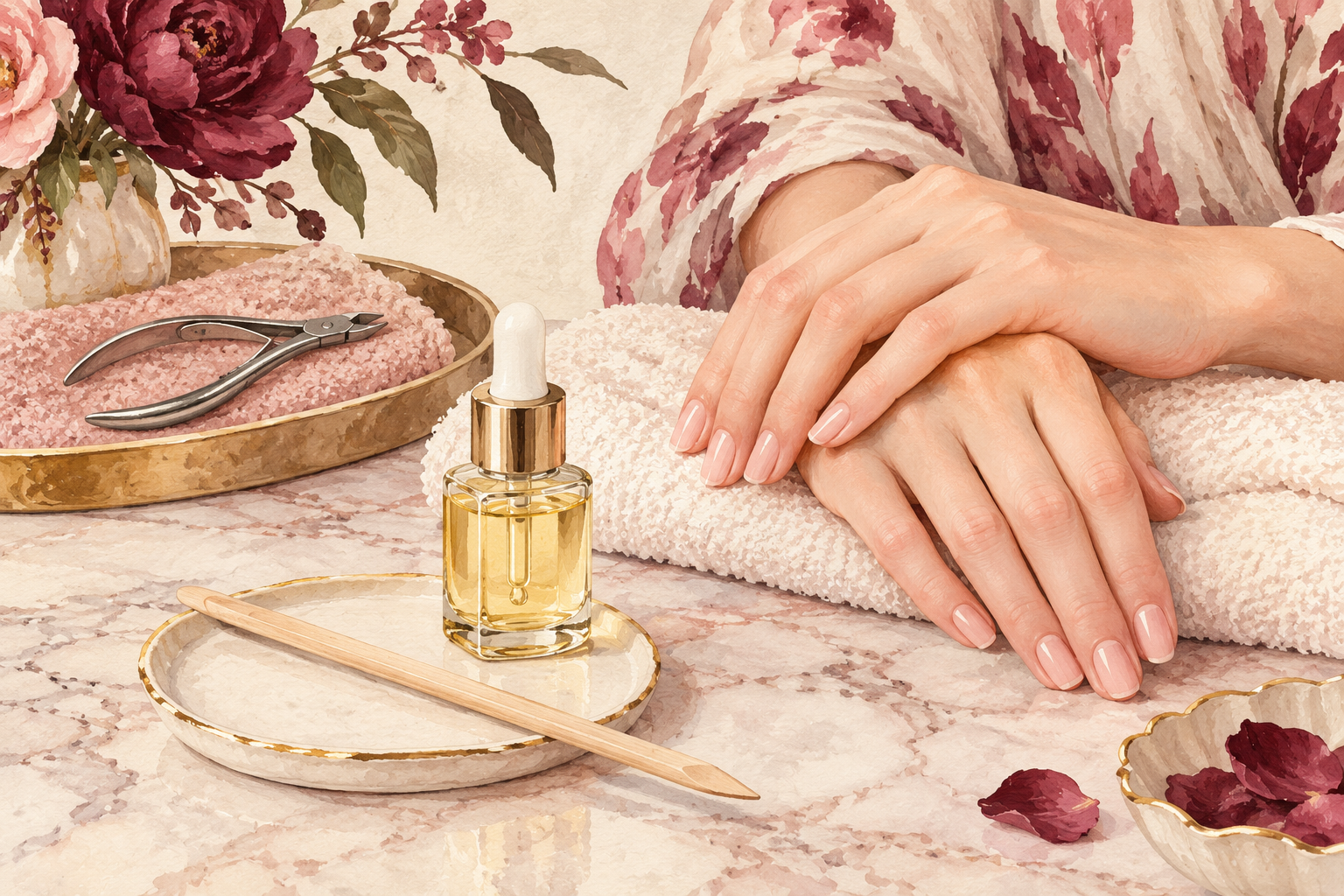
Skip cutting your cuticles, even for a neat manicure, and soften and nudge them back instead. The cuticle is a seal, and cut skin grows back rough and ragged, which makes you want to trim again. That cycle is how many hangnails begin. If your cuticles look untidy, push them back gently with a soft stick after a soak, and stop the moment it tugs. Neat looking cuticles come from soft skin, not from sharp tools. Give your fingers a month of no cutting and notice how much calmer they look. A cuticle that looks a little rough but feels soft is healthy, so leave it be.
5. Soak the skin until it bends
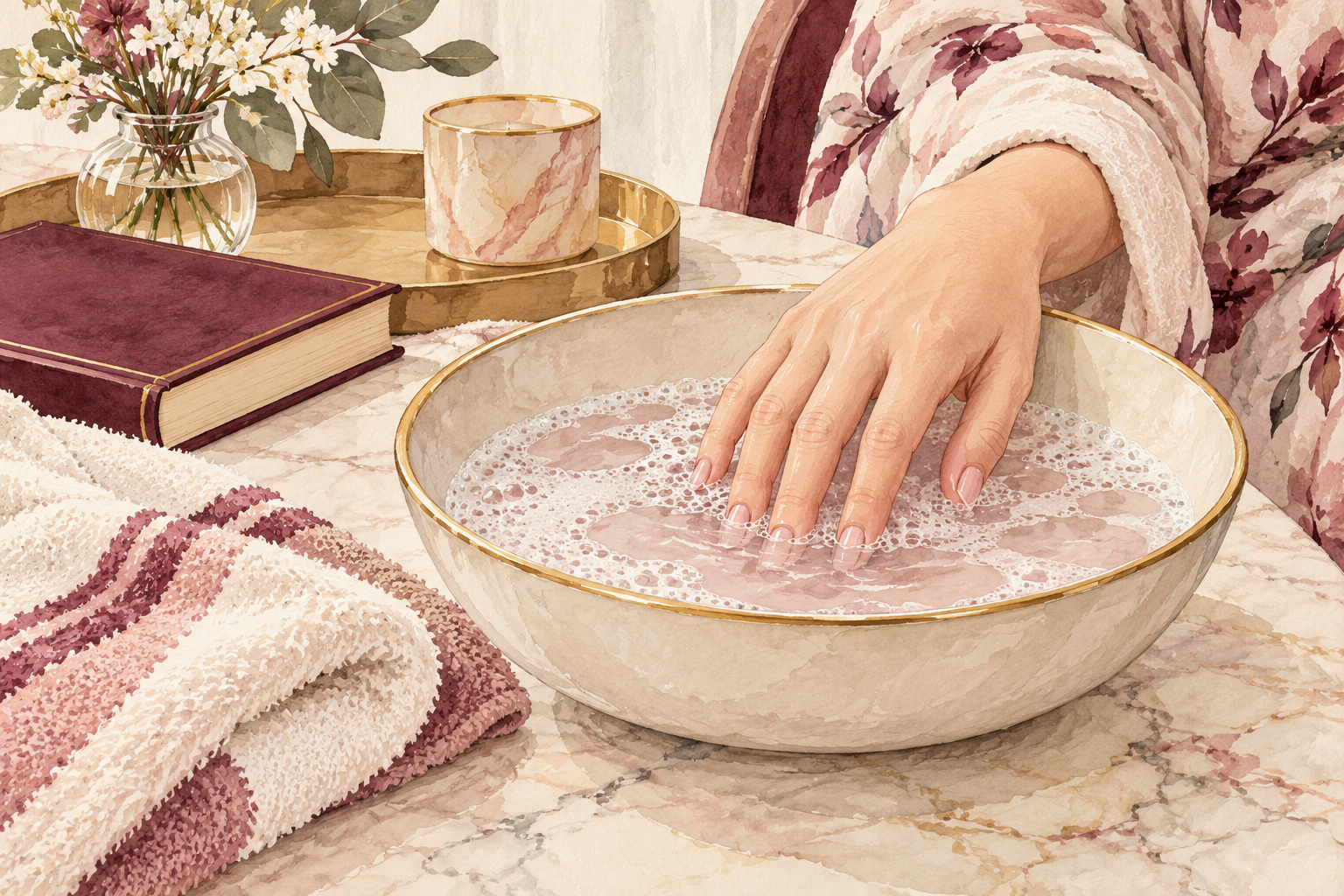
Soak your fingertips in warm, soapy water for about ten minutes, then pat them dry lightly. Warm water makes everything gentler, because soft skin bends where dry skin tears. Work on the flap straight after the soak, while the skin is still pliable. Keep the water comfortable rather than hot, since hot water dries the skin again afterwards. Read a few pages or watch a show while you soak so it does not feel like a chore. Do this two or three evenings a week while a hangnail heals. Skin that looks slightly wrinkled and feels springy after the soak is ready for care.
6. Seal it overnight with jelly or oil
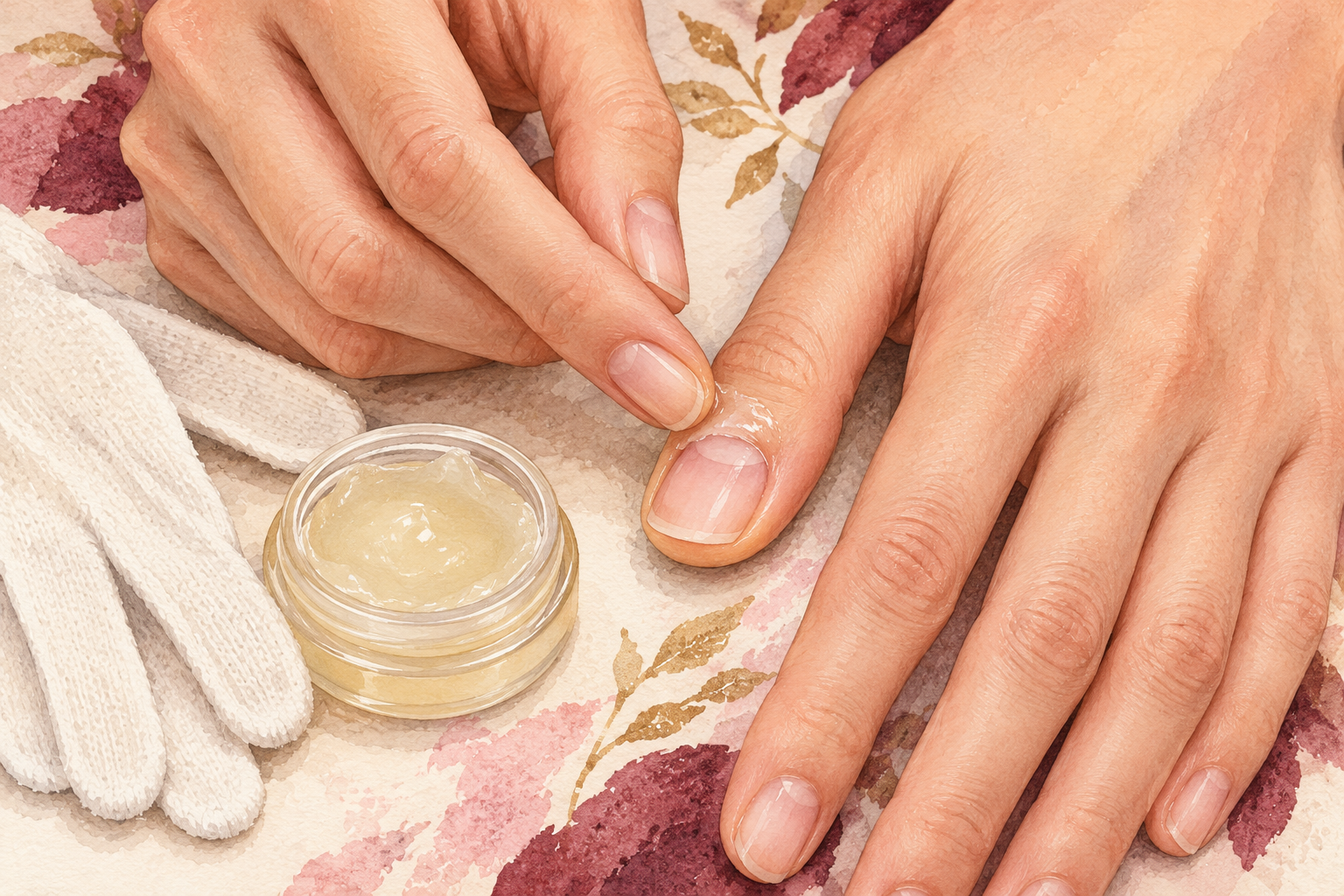
Rub a little petroleum jelly or plain oil into the sore spot and the skin around it just before bed. Slip on thin cotton gloves or a loose plaster so it stays put on the pillow. Jelly and oils seal in moisture but do not add any, so do this while your skin is still slightly damp from washing. Repeat for two or three nights. By then the flap usually softens and lies flat, and the soreness fades. It is the easiest fix on this list, and it costs almost nothing. A pea sized dab covers all ten fingers, and more just rubs off on the sheets.
7. Snip only the loose tip if it still catches
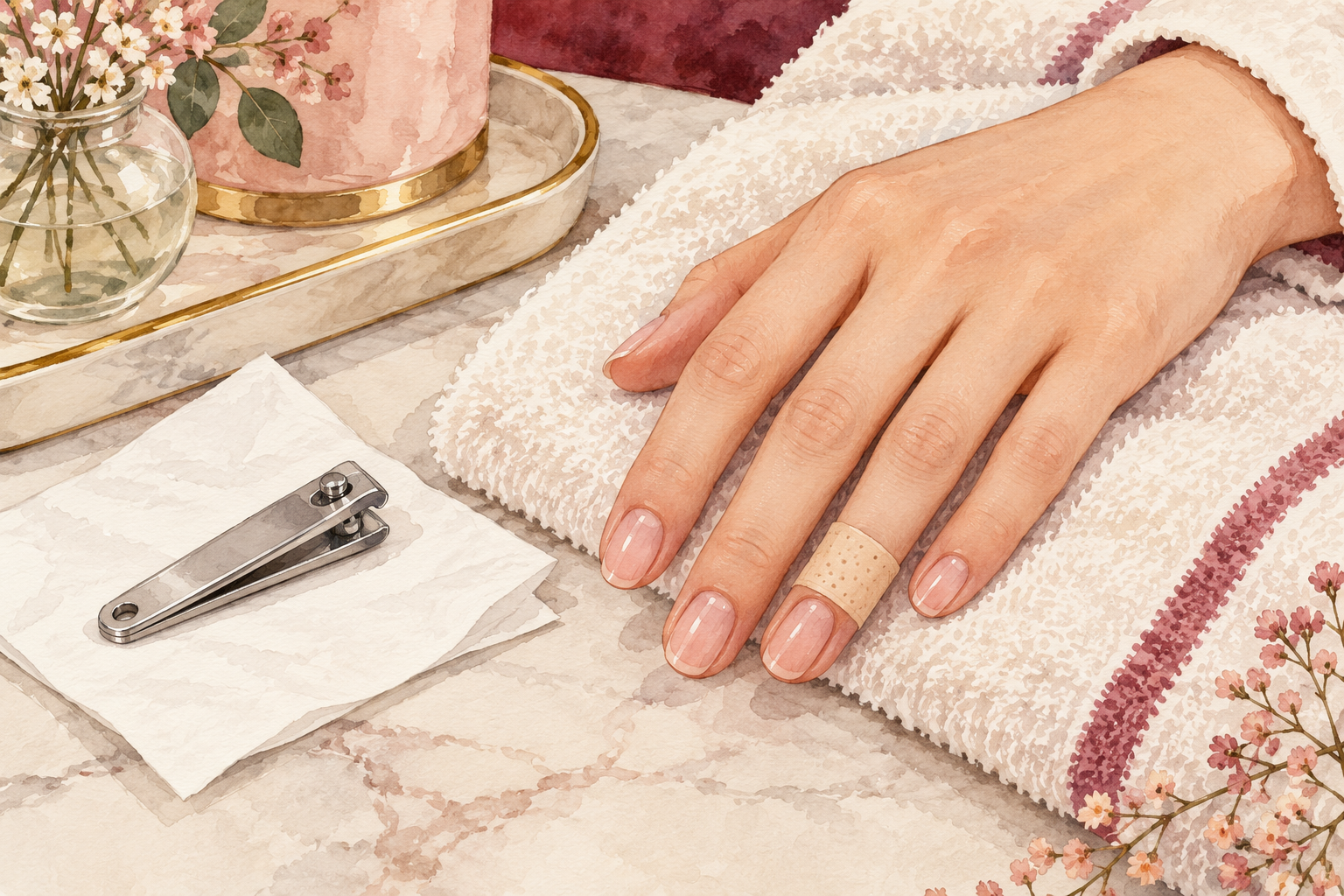
If a hangnail stays stubborn after a few days, trim just the dead overhanging bit with clean clippers after a soak. Wipe the blades with a cotton pad and rubbing alcohol first. Cut straight across the loose tip and never go into pink skin. If it bleeds, rinse it under cool water, dab on a little antibacterial ointment and cover it with a plaster. Ask someone to help if you cannot reach it comfortably, because a slip is how small tears become big ones. Treat this as a last step, not the first. Throw the loose bit away right after, and wash your hands again.
8. Press in a drop of oil every day
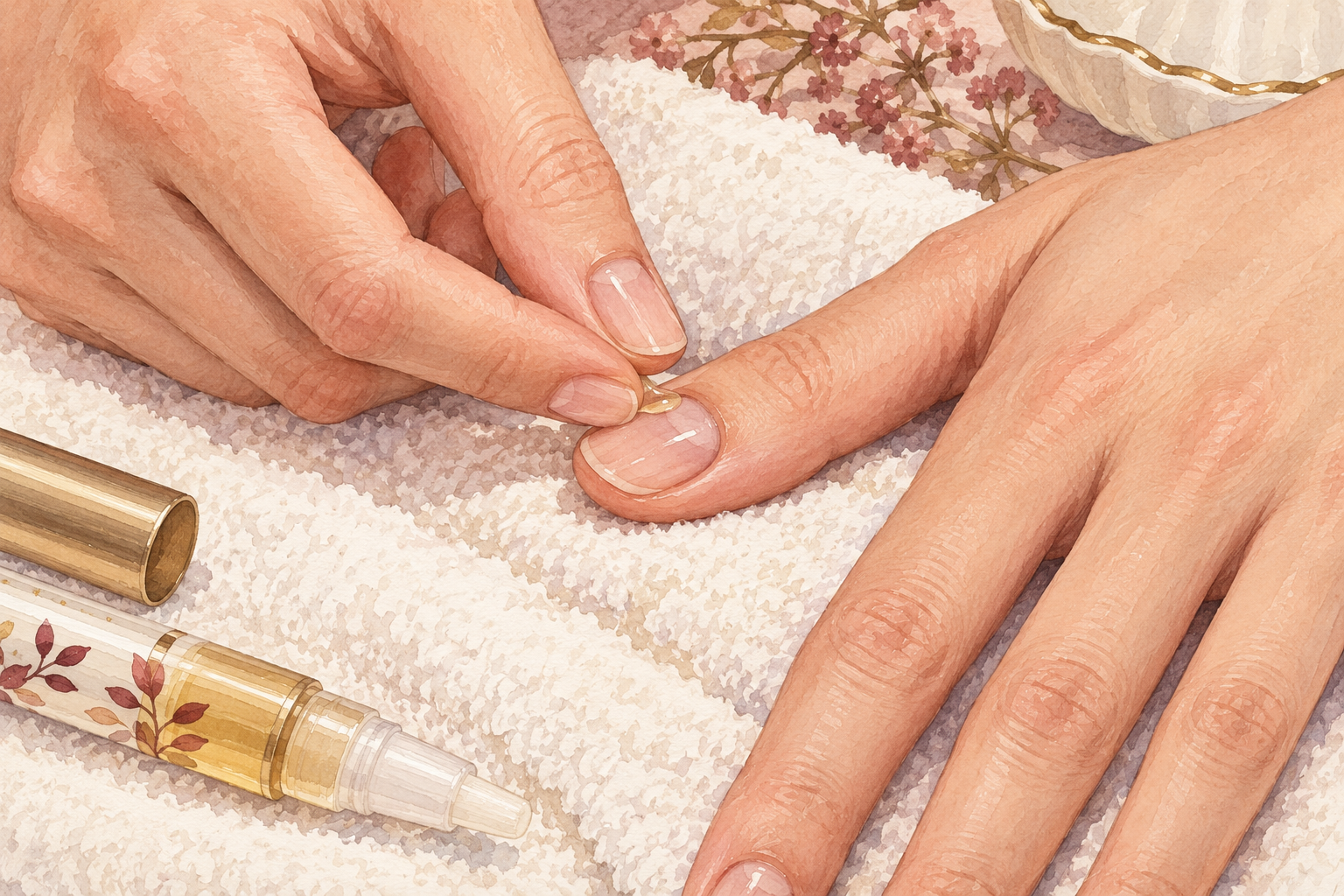
Put one drop of plain oil on each nail base and massage it in for ten seconds. Pick a fixed moment, like after brushing your teeth, so it becomes automatic. Almond, jojoba and olive oil all work, but test a small spot first if you have a nut allergy. You need very little, and extra only makes your phone slippery. After two or three weeks the skin around your nails looks smoother and the flaps appear less often. Rub any leftover oil into the backs of your hands. Keep the bottle beside your toothbrush so you cannot forget it.
9. Use hand cream after every wash
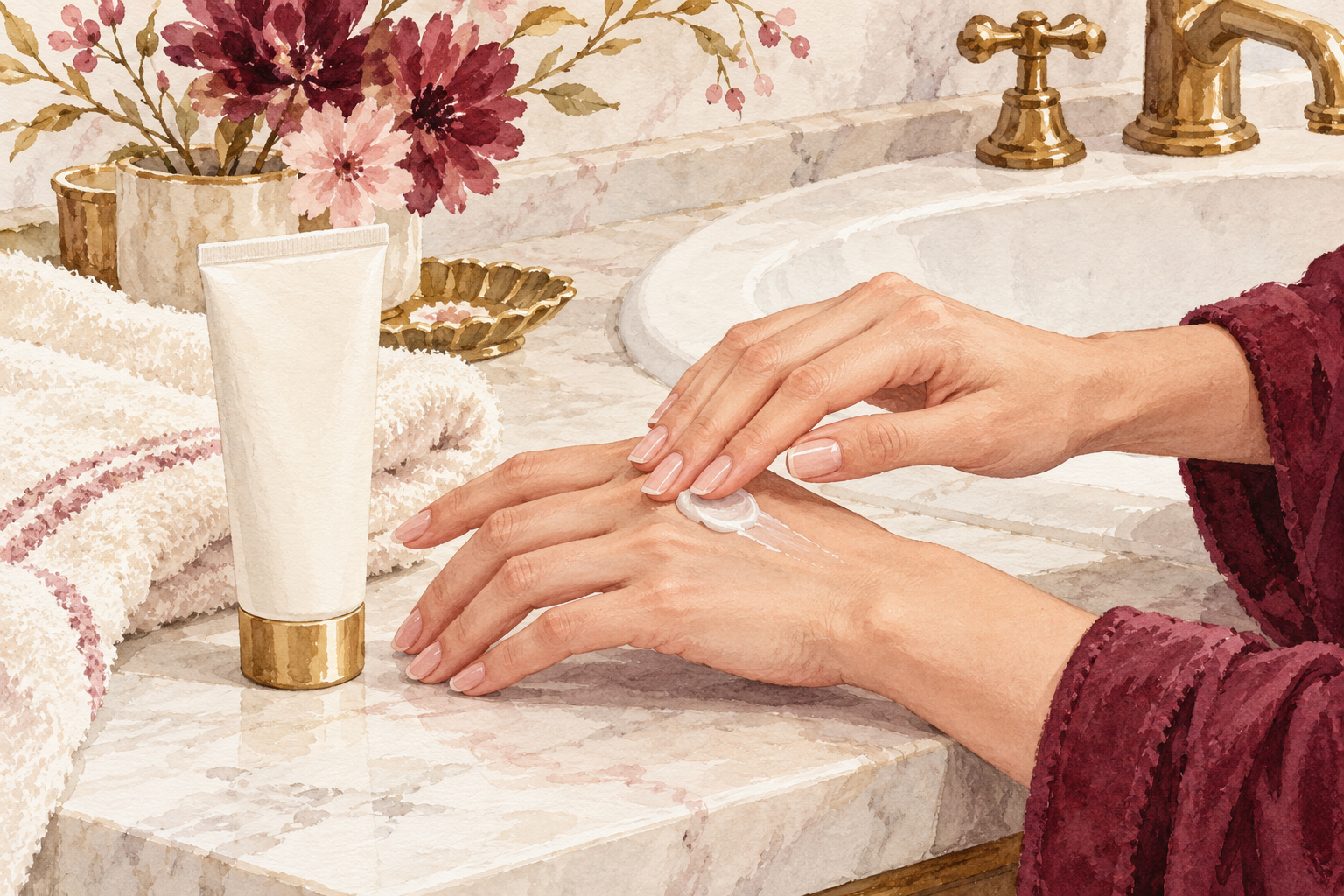
Keep a tube by every sink and one in your bag, and use it each time you dry your hands. Work it into the skin on both sides of each nail as well as the backs of your hands. Choose a rich cream that sinks in, because a greasy one makes you skip it. In winter add a thicker layer at night. Good nail cuticle care is mostly moisture, since dry hands are the main reason hangnails return. Skin that feels soft and a little bouncy by evening means the cream is doing its job. Dab extra on any finger with a sore spot, and cover it if it feels tender.
10. Swap harsh water, soap and remover for gentler ones
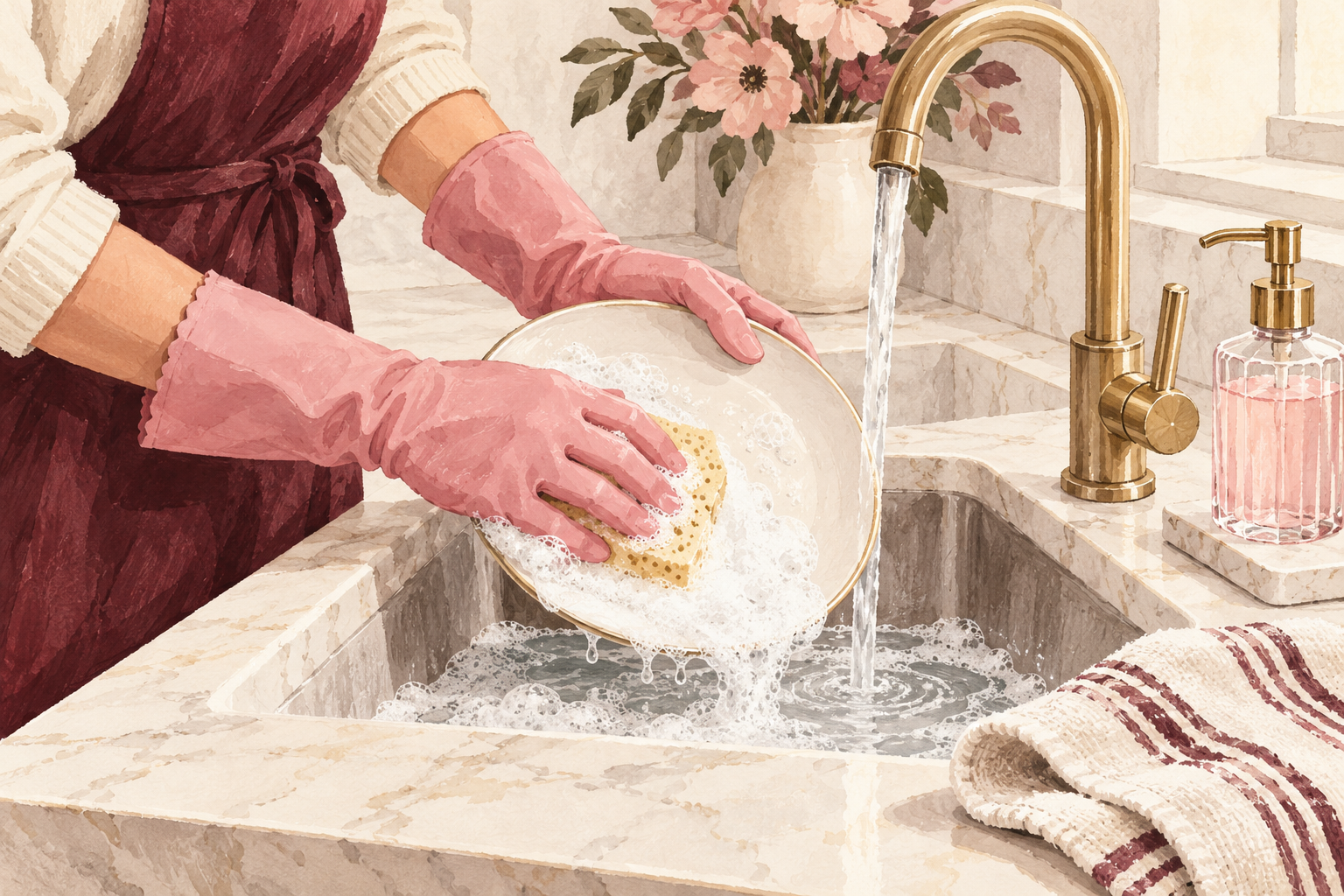
Wear gloves for dishes, cleaning and gardening, and wash your hands in lukewarm water. Hot water, strong soap and chlorine strip the oils from your skin quickly. Use acetone remover less often and open a window when you do, then wash and moisturize straight away. Choose a soft hand soap that does not leave your fingers squeaky. These swaps feel tiny, but dryness is what starts the flaps, and fixing it cuts down how many you get. Hang the gloves on the tap so you reach for them without thinking. Dry your hands fully after washing, since damp skin chaps faster in cold air.
11. Swap picking and biting for something else

Keep a fine file in your bag and smooth any rough edge instead of picking at it. Picking tears the skin and starts the cycle again. A clear bitter tasting polish can help if biting is part of the story. If you pick when you are stressed or bored, give your hands another job, such as a smooth stone or a fidget ring on your desk. Notice the moment your hand drifts to your mouth and put it in your lap. The urge fades faster than you expect, usually within a minute or two. Tell a friend you are working on it, and ask her to nudge you when she sees you picking. Picking and biting often run on the same urge, and for that, how to stop biting nails is the page.
12. Expect calmer skin in a few weeks
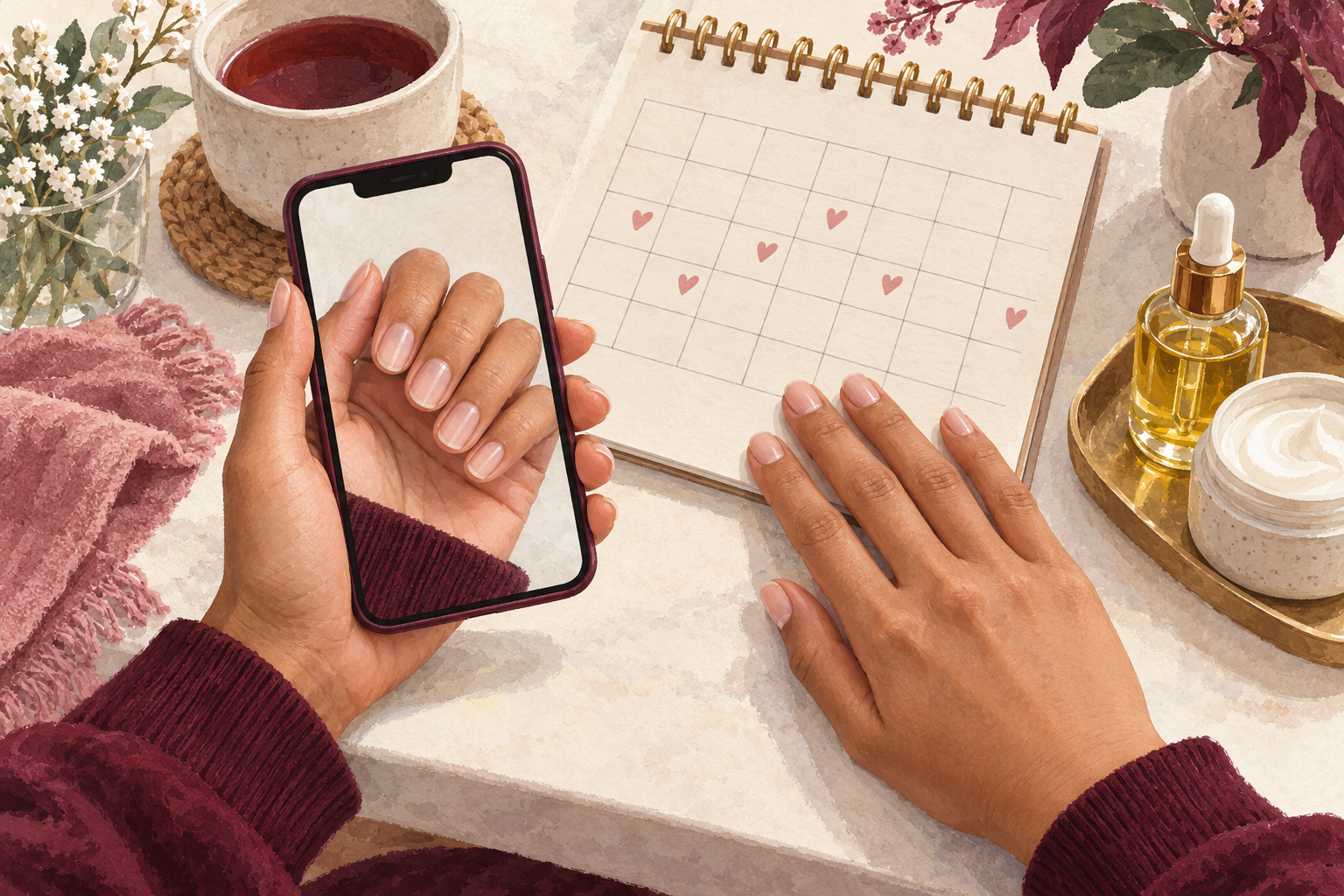
Look for a flap that feels calmer in week one and smoother skin around the nails by week four. Skin heals much faster than nails, so progress shows early. New flaps can still pop up in winter or after lots of handwashing, so do not take it personally. If a finger turns hot, puffy and throbs, it is time to see your doctor before it spreads. Otherwise keep going with the soak, the oil and the cream. By week eight this care is a habit you do without thinking.
Complete the Routine: Nail Cuticle Care Tonight
Tonight, soak your fingertips, press oil into each nail base and finish with hand cream. Softer skin comes from steady habits, so let one more guide below sit beside this routine and give your hands time.