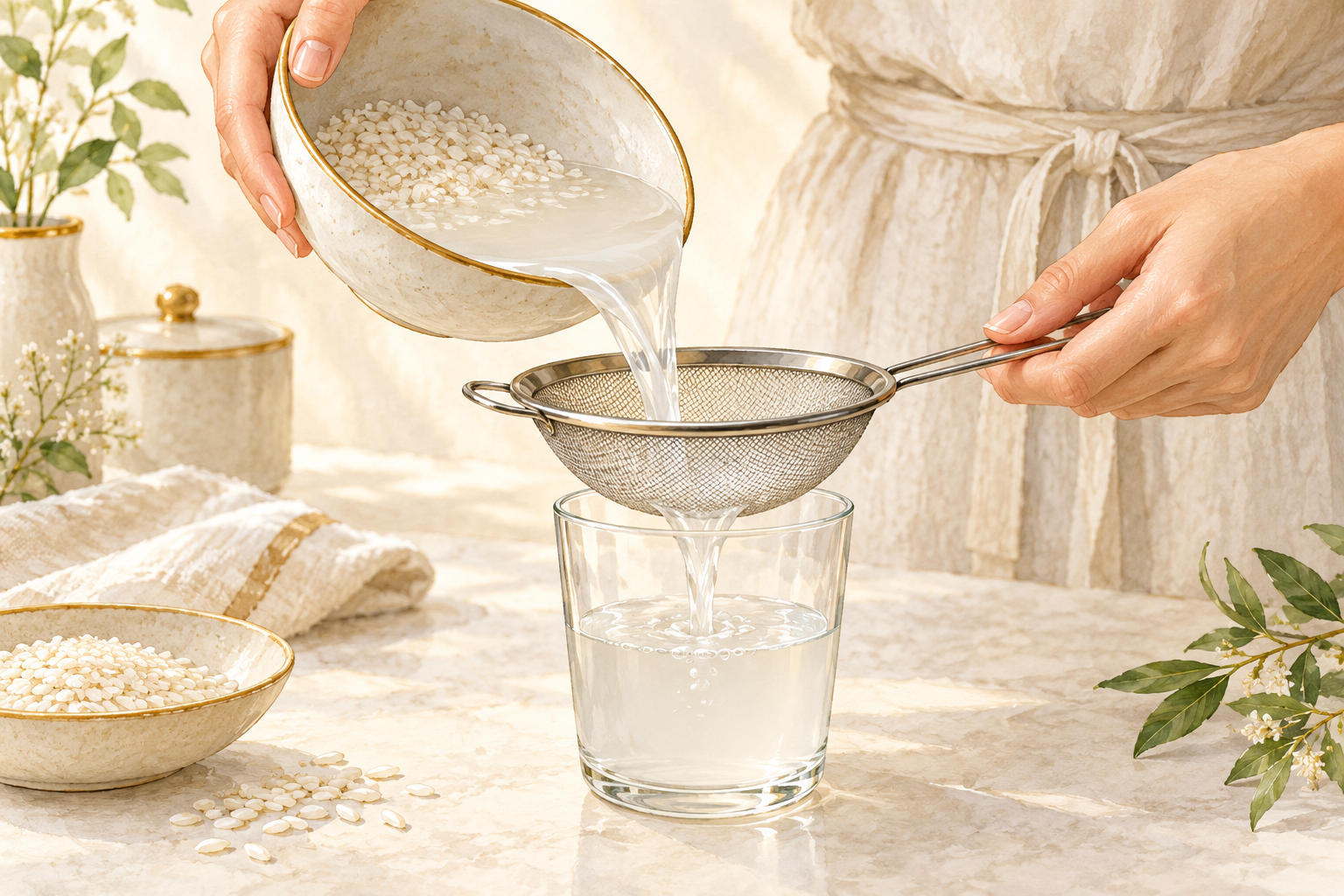
You saw a bunch of rosemary in the market and wondered if the green water on social media is worth the fuss. It is a simple, gentle kitchen remedy, and it takes about twenty minutes. These 12 steps cover rosemary water for hair growth from the pot to the spray bottle, with the safety checks included. Start at number one tonight.
1. Gather what you need and plan a patch test
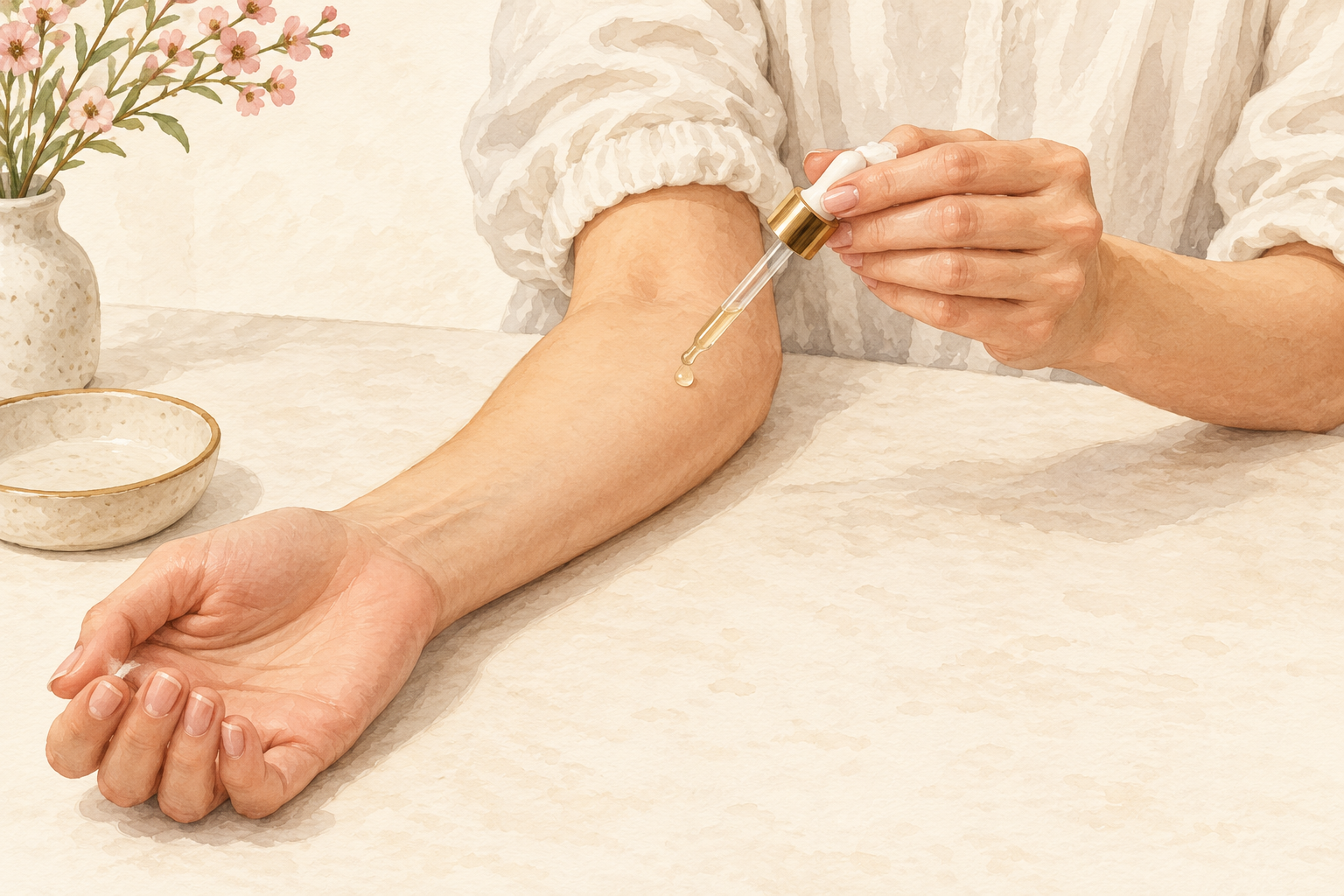
You need a handful of rosemary, two cups of water, a small pot, a strainer, a clean spray bottle and a coffee filter. That is the whole shopping list. Before you brew a full batch, plan a patch test. Once you have some made, dab a little on the inside of your elbow, wait a full day and check for redness or itching. If your skin reacts, do not put it on your scalp. Wash the bottle and the pot well first, because a clean start keeps the water fresh for longer. Rinse the bottle with boiling water and let it air dry upside down.
2. Know who it suits

Rosemary water is a light mist that suits most scalps, including oily, normal and mildly dry ones. It is a water, not an oil, so it does not weigh hair down. It sits well with fine hair and with coily hair that dislikes heavy products. Skip it if you are allergic to rosemary or other mint family herbs, or if your scalp is broken, sore or very inflamed. Pregnant women may want to ask first. It is a gentle helper for a healthy scalp, not a fix for every hair worry. Think of it as a daily glass of water for your scalp. Water based mists are the lighter option here, while rosemary oil for hair growth brings more weight to the choice.
3. Pick fresh sprigs when you can
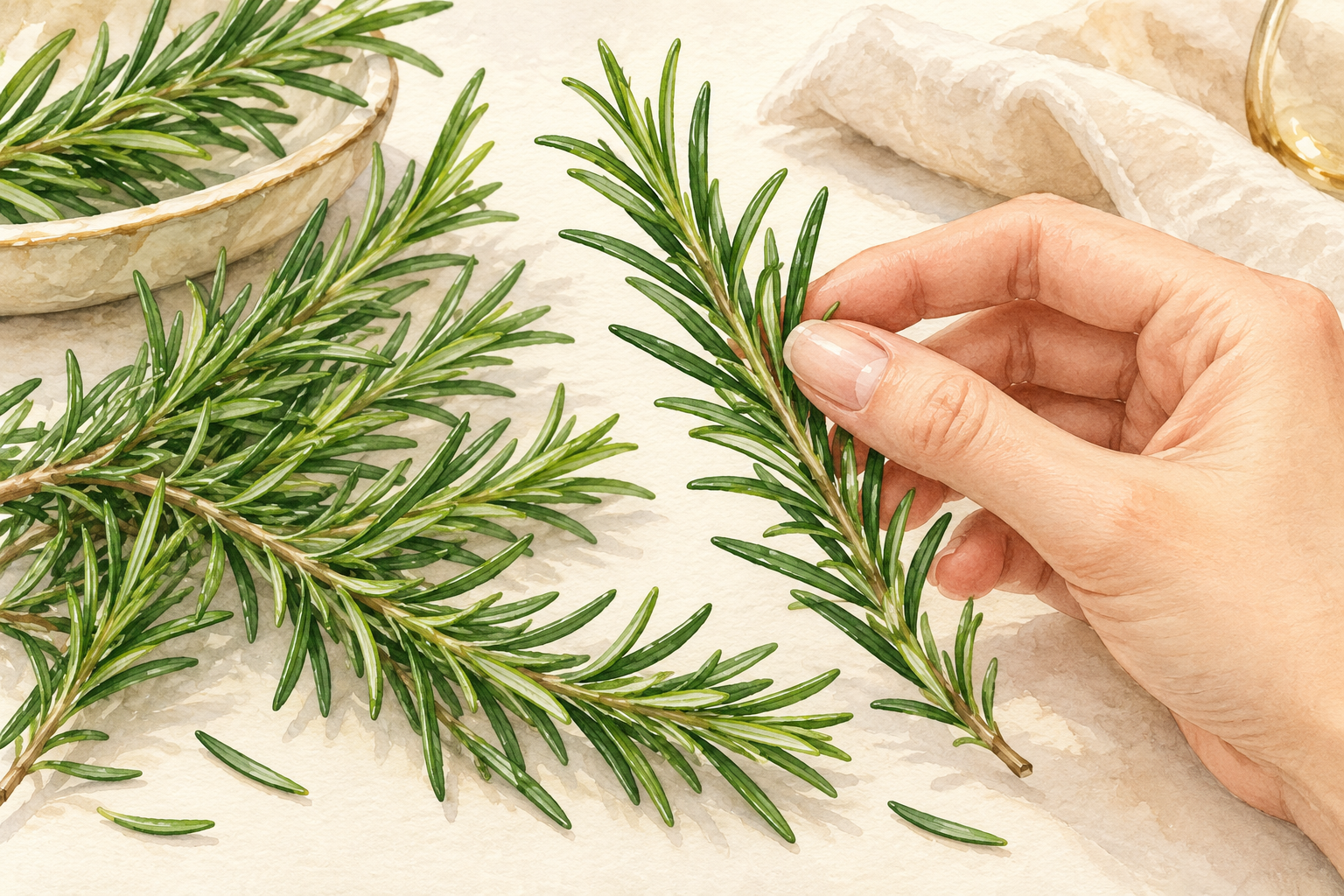
Choose bright green sprigs that smell sharp and piney, and use about four or five for two cups of water. Fresh rosemary gives the clearest, nicest water, and it is the gentlest start. Check that the leaves are not black, limp or slimy. Pinch one and sniff it, because a strong smell means it is fresh. Strip the leaves from the woody stem only if the stem is tough, otherwise leave them on. A potted plant on your windowsill is the easiest source, and it means you will always have it on hand. A lovely smell makes the habit easier to keep, and fresh leaves give you the best one.
4. Use dried rosemary in a pinch
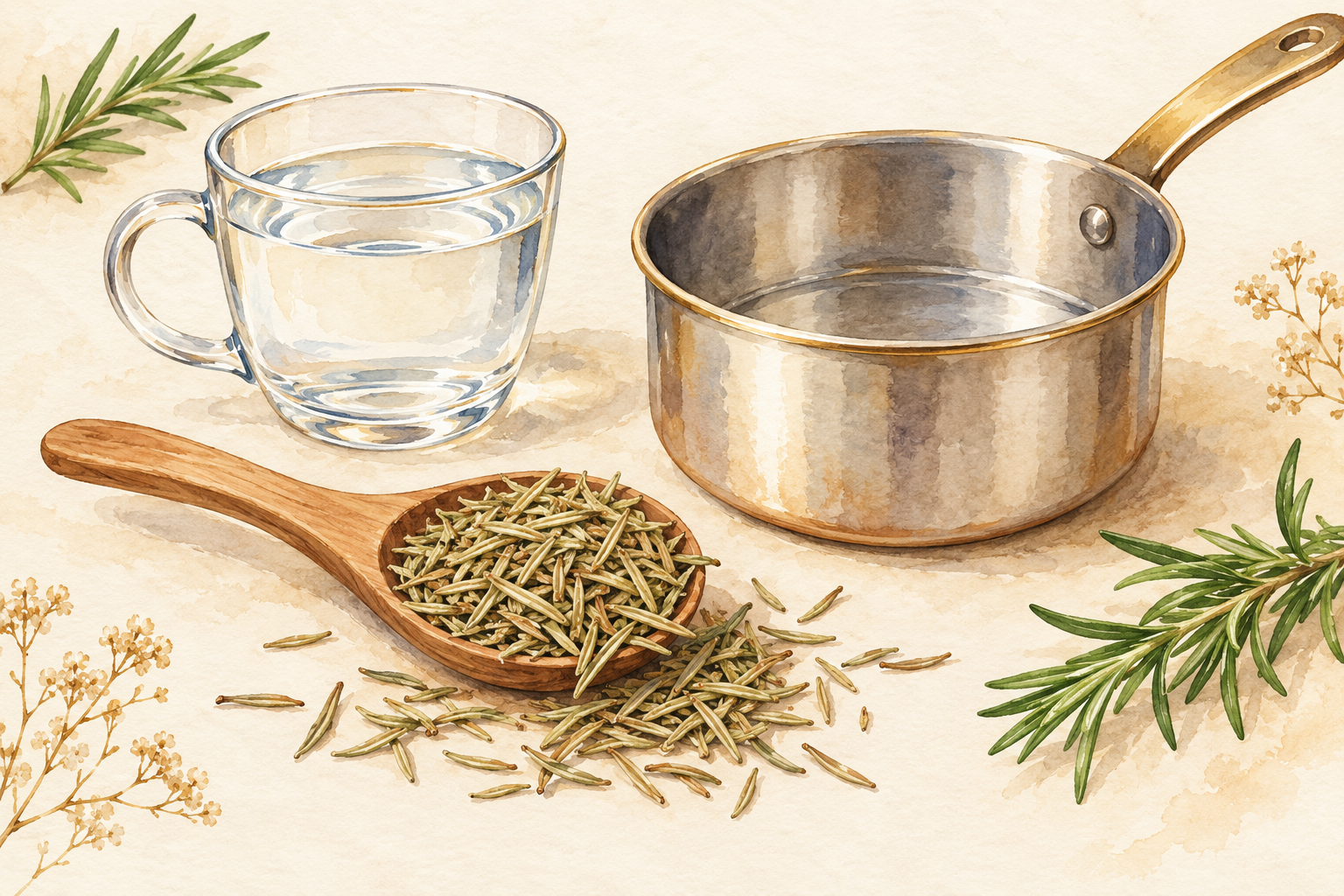
Swap in two tablespoons of dried rosemary for the fresh sprigs if that is all you have. Dried herb is stronger by weight, so do not use more than that. Check the date, because old, dusty rosemary smells flat and gives a weaker water. Loose dried rosemary will leave bits in the water, so plan to strain it well. Crush it lightly in your fingers before it goes in the pot to release the scent. It is a perfectly good back up when the market is closed or the plant has been picked clean. The water will be a touch darker, and the smell a little more earthy.
5. Rinse the herb before it hits the pot
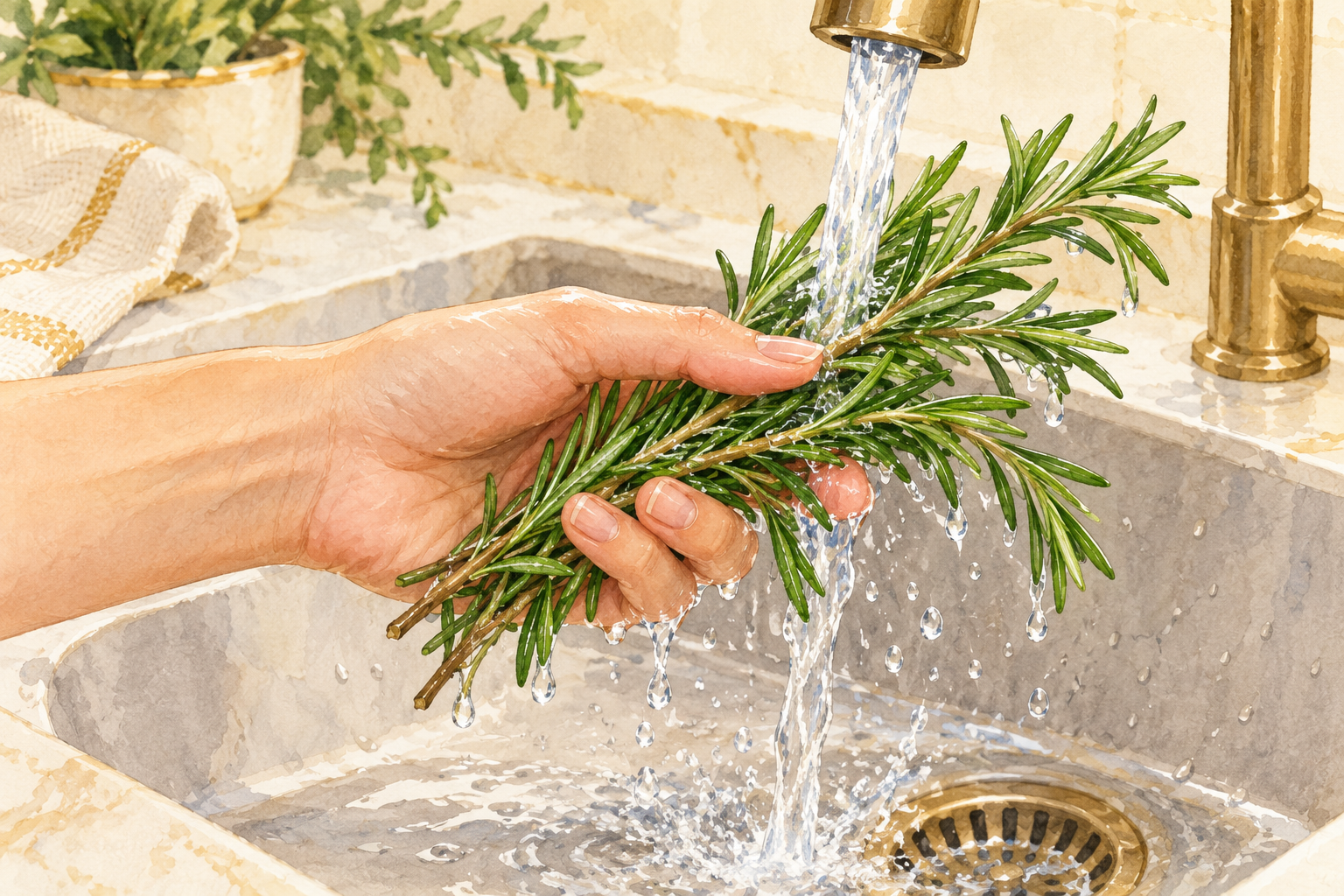
Hold the rosemary under cool running water for a few seconds and shake it dry. Fresh herbs can carry soil, dust and tiny bugs, and none of that belongs near your scalp. Rub the leaves gently with your thumb so the water gets between them. You do not need soap. A quick rinse is enough, and then you can drop the sprigs straight into the pot. This is a small step that makes a big difference to how long your water stays fresh in the fridge. Do it while the water heats and it adds no extra time.
6. Simmer for ten to fifteen minutes
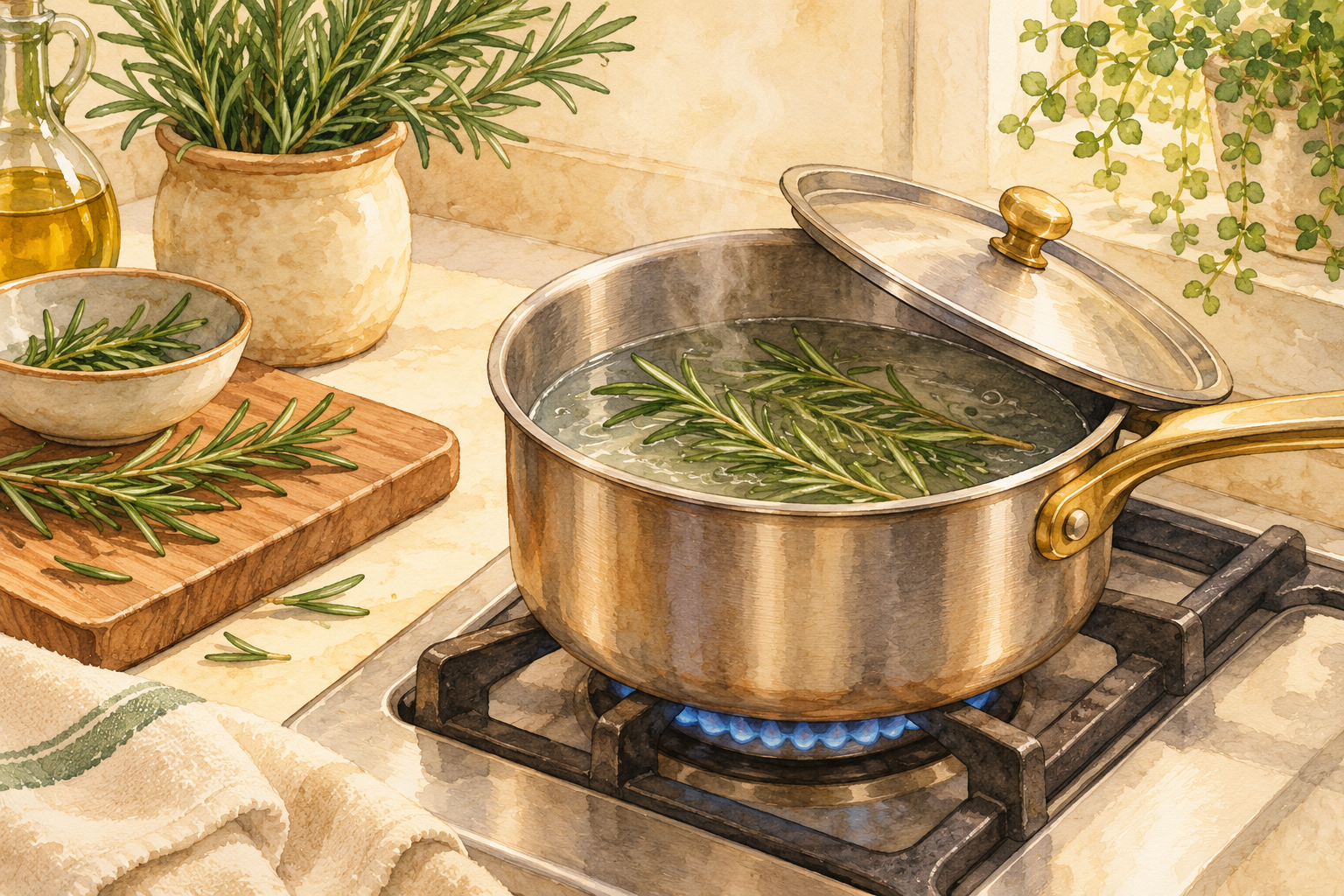
Bring two cups of water to a boil, add the rosemary, lower the heat and let it simmer gently for ten to fifteen minutes. Put a lid on loosely. You want small bubbles, not a hard boil, because a rolling boil can make the water bitter and cloudy. The water turns a pale golden green and your kitchen smells like a spa. Stir once or twice with a clean spoon. If you see the water dropping below the herb, add a splash. When the time is up, switch the heat off and move the pot away.
7. Steep until it cools completely
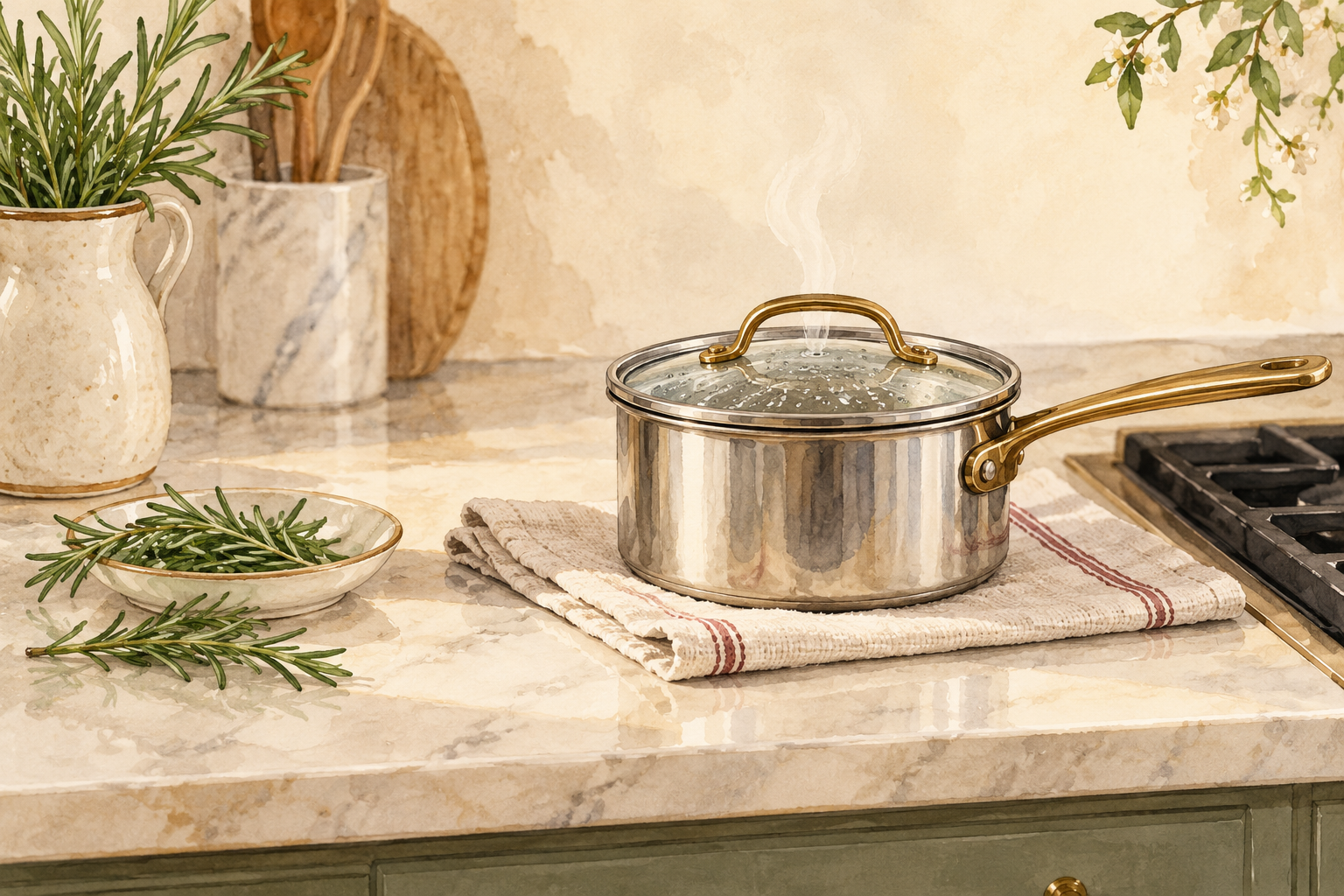
Leave the lid on and let the water sit until it is fully cool, about an hour or more. The slow cooling lets the leaves keep giving up their flavor, so the scent comes out stronger. Never spray warm water on your scalp, since heat can irritate it. If you are short on time, set the pot in a bowl of cold water. By the time you come back, the water will be deeper in color and ready to strain. Patience is the whole trick here. Go and do something else, like a face mask or a load of laundry, and come back when the pot is cool to touch.
8. Strain it through a coffee filter
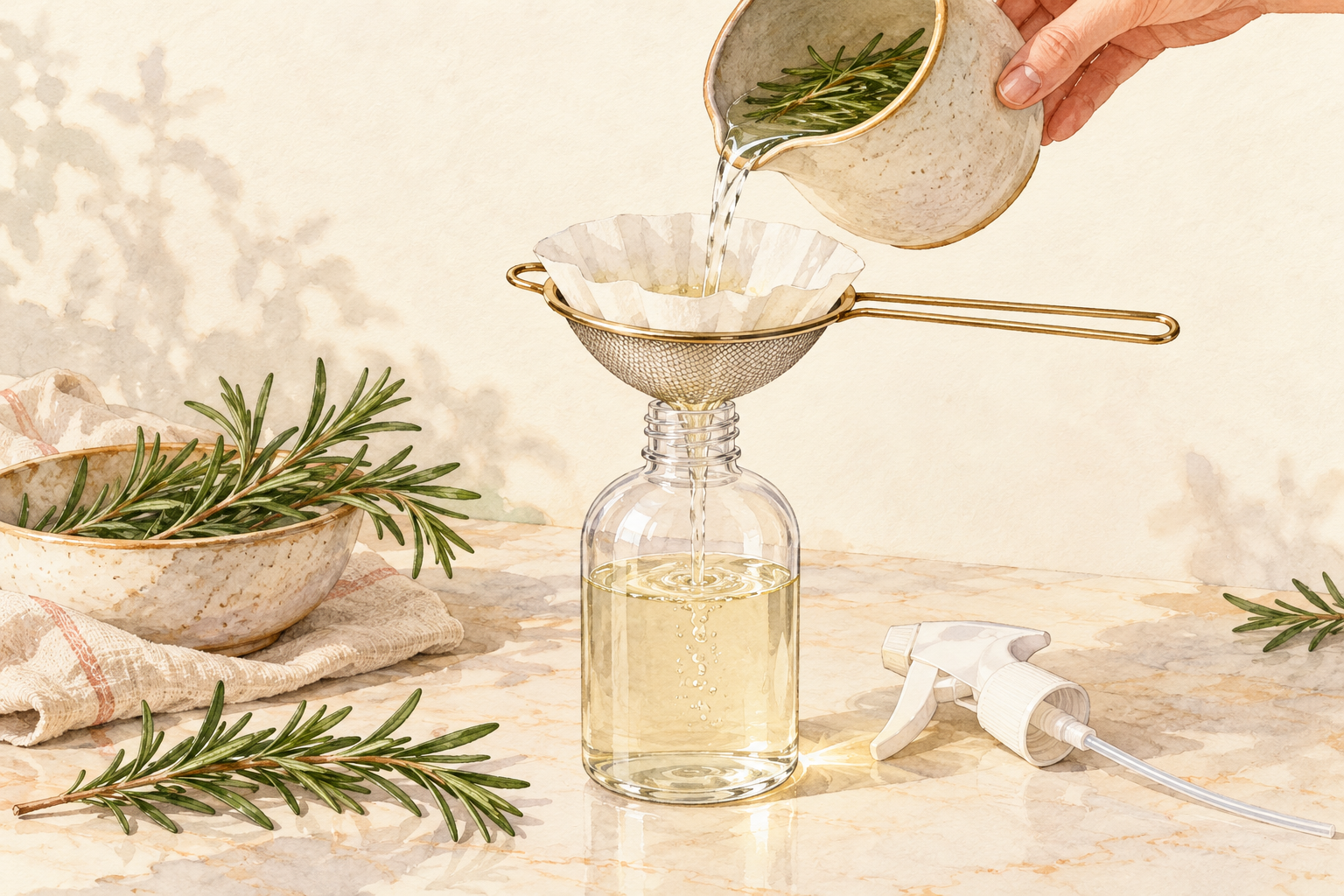
Pour the water through a fine strainer lined with a coffee filter into a clean spray bottle. Tiny bits of leaf can block the nozzle and stick to your scalp, and the filter catches them all. Press the leaves gently to get the last drops, and then throw them out. Fill the bottle only to three quarters, leaving room for shaking. Label it with the date using a strip of tape. Your finished water should look clear, light amber and smell fresh and herbal. If it looks dark brown, you simmered it too hard, so brew a gentler batch next time.
9. Store it in the fridge for one week

Keep the bottle in the fridge and use it within seven days. There is no preservative in it, so it spoils faster than shop bought mists. If it turns cloudy, smells sour or grows anything floaty, throw it away and make a fresh batch. Pour any extra into an ice cube tray and freeze it, then thaw one or two cubes in a cup at a time. Cold water on the scalp also feels refreshing in hot weather. Small batches are better than big ones, because fresh water works best. Shake the bottle gently before each use, in case any fine sediment settled.
10. Part your hair and mist the scalp

Section your hair into four parts and spray along each parting line, about five or six sprays in total. Aim at the skin, not the hair, and keep your eyes closed. Wet but not dripping is the goal. Do it on clean or slightly dirty hair, after a wash or on a day when the scalp needs refreshing. You will feel it cool the skin, and the smell lingers for a short while. Avoid the face, and wipe any drips off your forehead right away.
11. Massage for two minutes afterward

Press your fingertips on the damp scalp and move in slow circles for two minutes. The massage warms the skin and spreads the water evenly. Use your pads, never your nails, and go lightly over any tender spot. You can add one drop of rosemary oil to a spray later, but not at the start, and not neat. Do not overdo it, because daily heavy rubbing can irritate. If it stings or itches, stop and rinse with plain water. Rice water or a little aloe gel mixed into the bottle are gentle swaps, as long as you use them fresh.
12. Spray three or four times a week for twelve weeks

Mist your scalp three or four evenings a week and keep it up for twelve weeks. Hair grows slowly, about half an inch a month, so you will not see anything in the first two weeks. In the early weeks you will likely notice a fresher, calmer scalp. After two or three months, you may see a little more new growth at the hairline, and your hair may feel thicker at the roots. Take a photo of your parting each month. No change by twelve weeks simply means rosemary water for hair growth is not your remedy, and that is fine. Note down the evenings you sprayed, because steady use gives it a fair chance. Rice water asks for the same patience, so try rice water for hair growth later on.
Complete the Routine: Rosemary Water for Hair Growth Every Week
Make your first small batch tonight and patch test it before you spray. Scent and feel are personal, so the guides below can help you compare other gentle ways to care for your scalp.