Your bathroom drawer is full of brushes, clips and gadgets, and your hair still breaks at the ends. A tool that snags, pulls or overheats does quiet damage every single day. These 12 hair care tools are the ones that earn their place, plus a few to retire. Start at number one tonight.
1. A smooth wide tooth comb
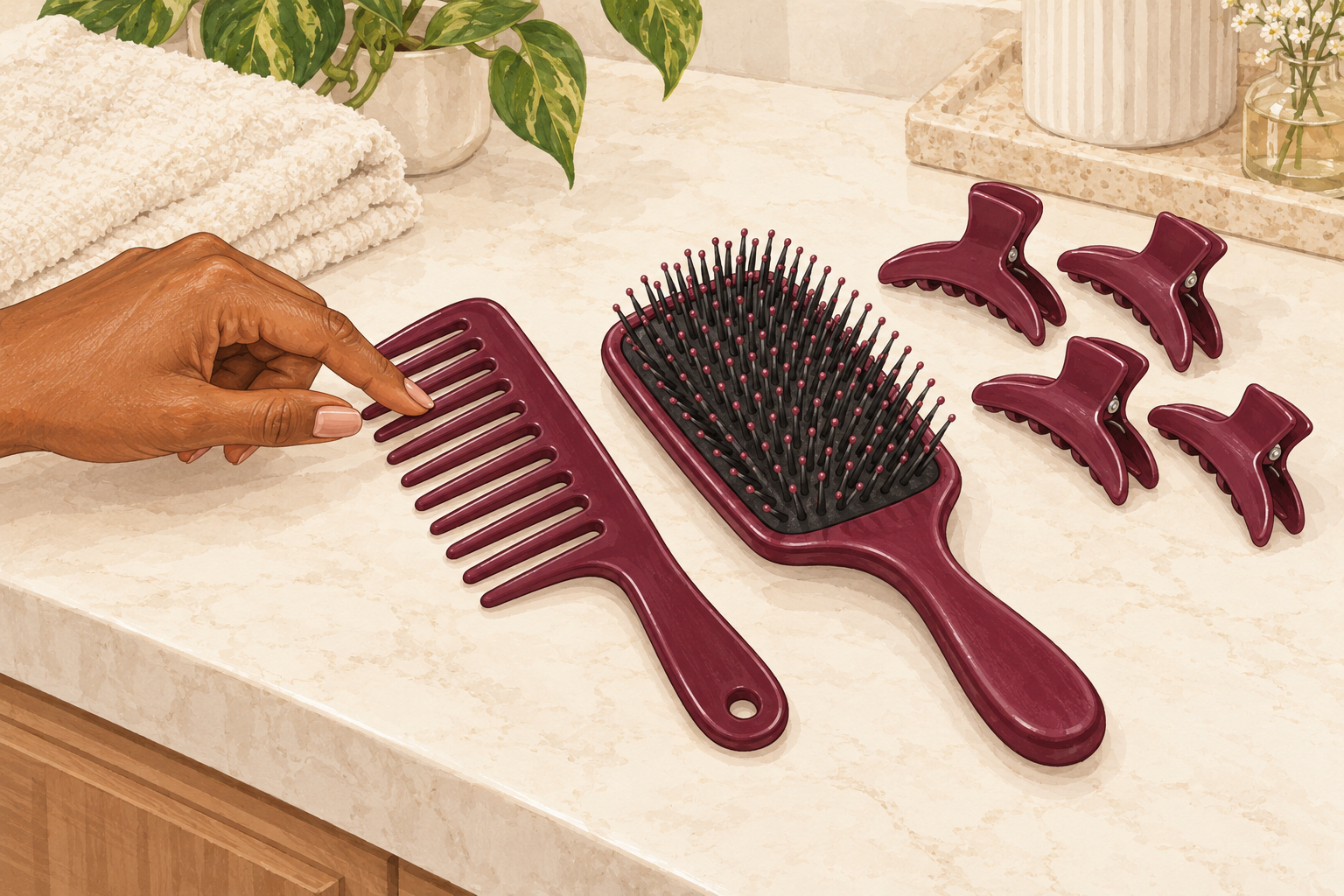
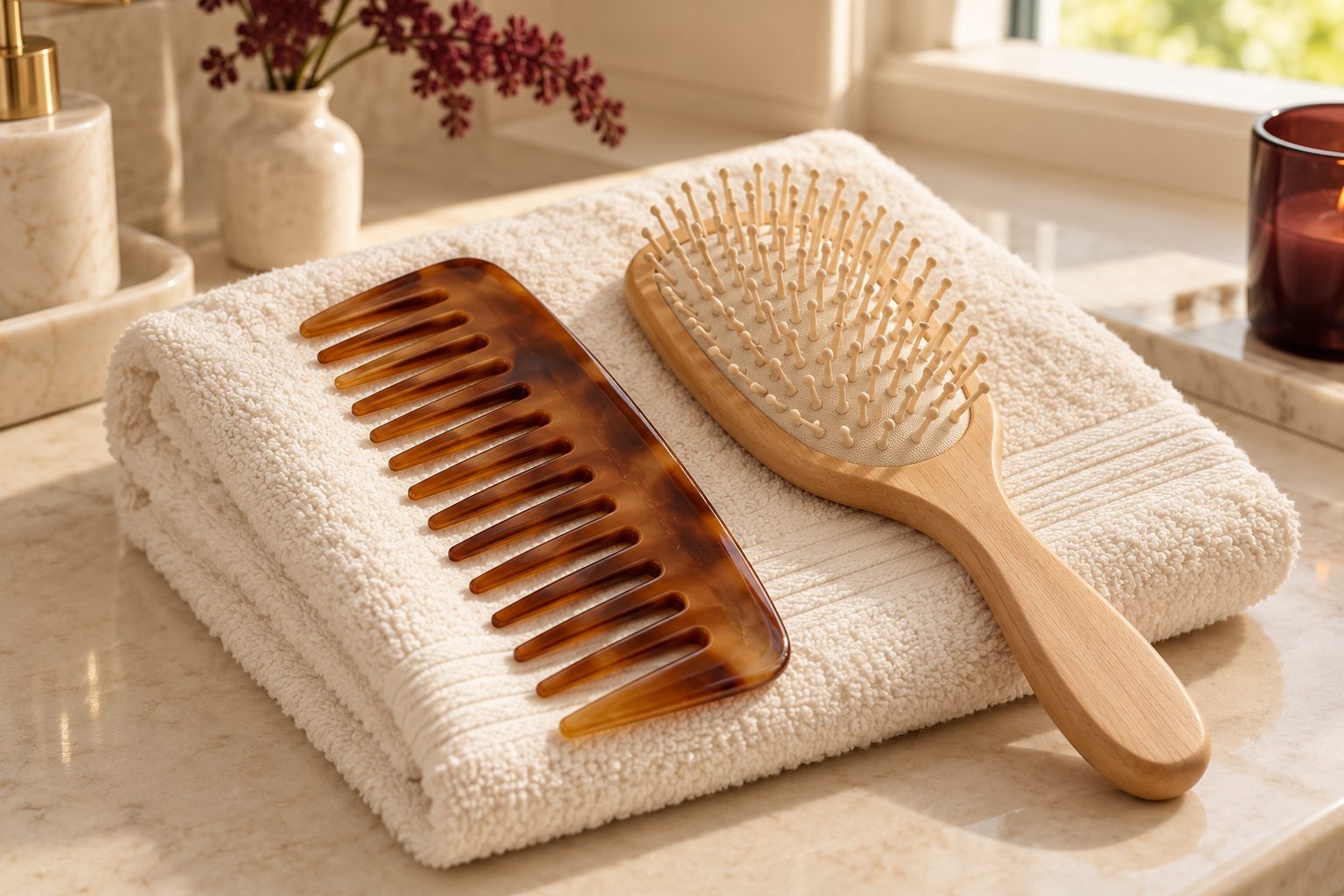
Pick a comb with wide gaps and no rough seam, then run your thumb along the teeth to check. A seam you can feel will snag the hair every time you pass through. Use the comb on wet hair that is coated in conditioner, starting from the ends and working up in small sections. It is the safest tool for curls, coils and waves, and it suits fine straight hair just as well. If you hear tiny clicks or feel a catch, the comb is wrong for you. Keep one in the shower and one in your bag. Wood and smooth plastic both work, so choose whichever feels comfortable in your hand.
2. A flexible detangling brush
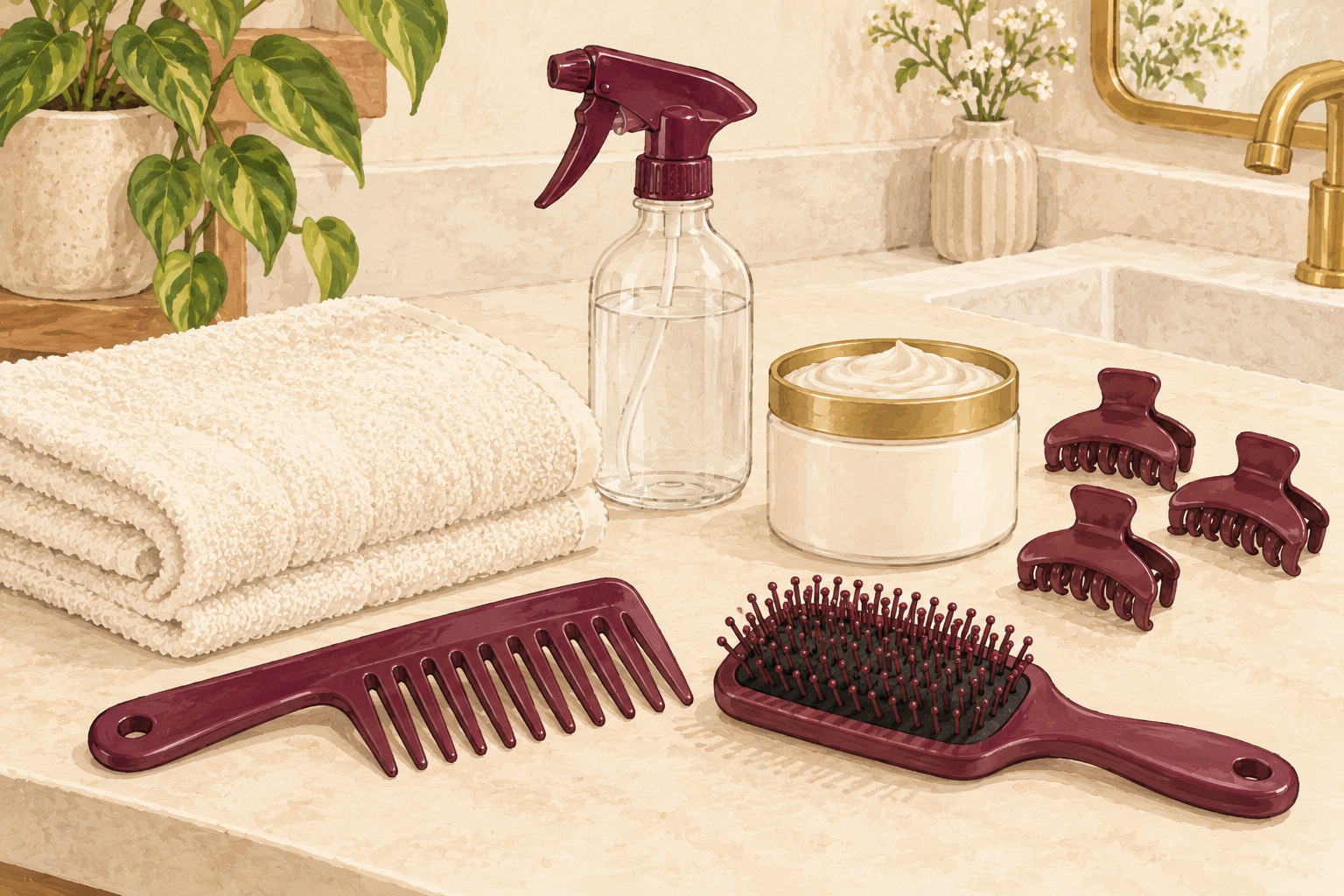
Choose a brush whose bristles bend when you press them against your palm. Stiff, fixed bristles pull strands out at the root, while a flexible brush glides over knots and lets them slip apart. Hold the hair above the knot with your other hand to take the strain off the scalp. Work in four sections and finish each one in a few light passes. A brush like this is the best choice if your hair tangles easily, and it is a good shower companion for long, thick or curly hair. If it pulls, you went too fast. It should leave you with only a few strands in the bristles after a full session.
3. Your own fingers
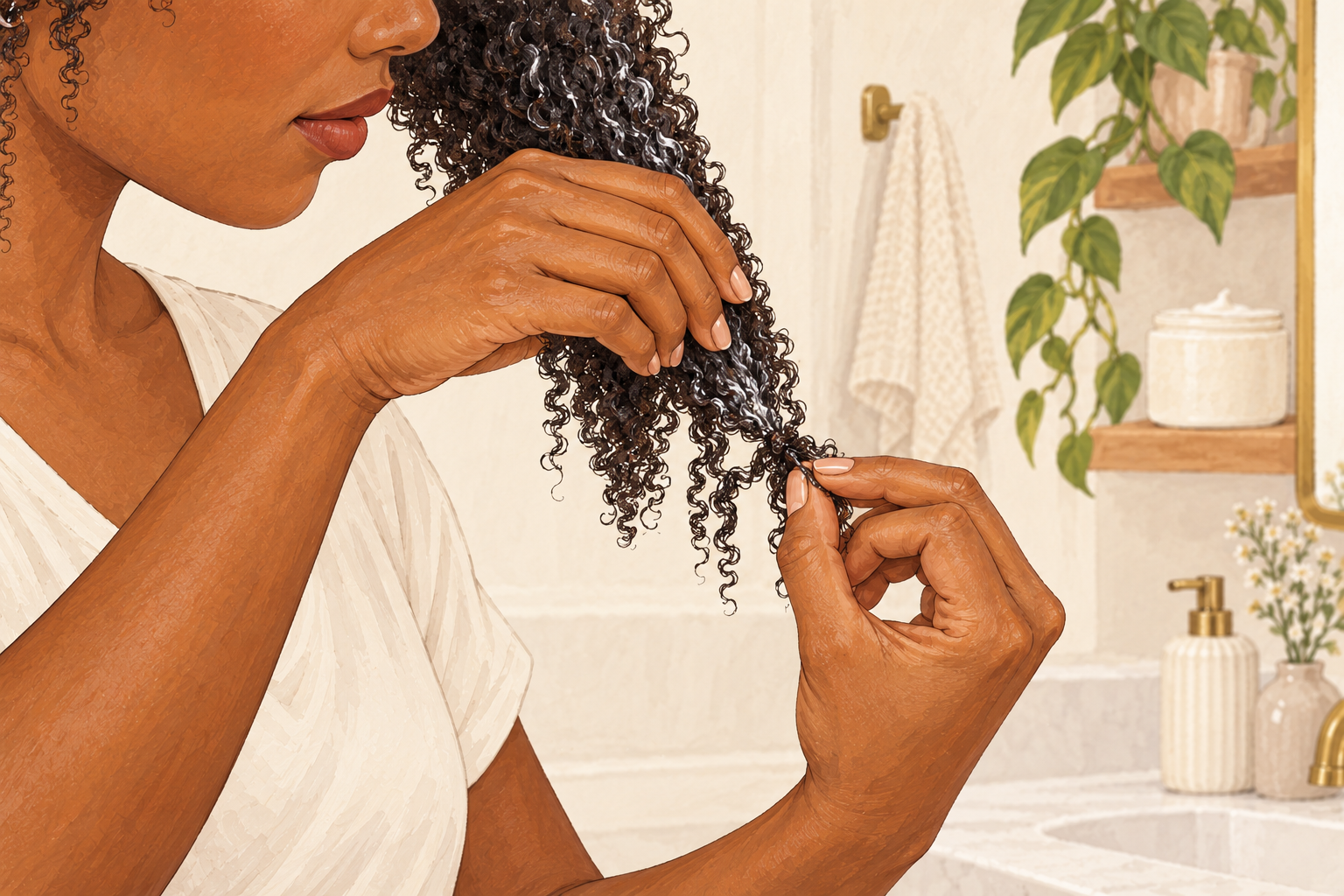
Use your fingertips first on any knot, and reach for a comb only when the knot is loose. Fingers feel resistance before it becomes breakage, which no comb can do. Take a small section, find the knot, and tease it apart from the bottom. Add a little conditioner or water if it is stubborn. It takes a few extra minutes, but it saves strands. For very curly or coily hair, finger detangling is often the only tool you need on wash day. Wash your hands first so you are not adding oil or lotion. Rings and long nails catch strands, so slip them off or keep your nails short for this job.
4. A microfiber towel or an old cotton t shirt
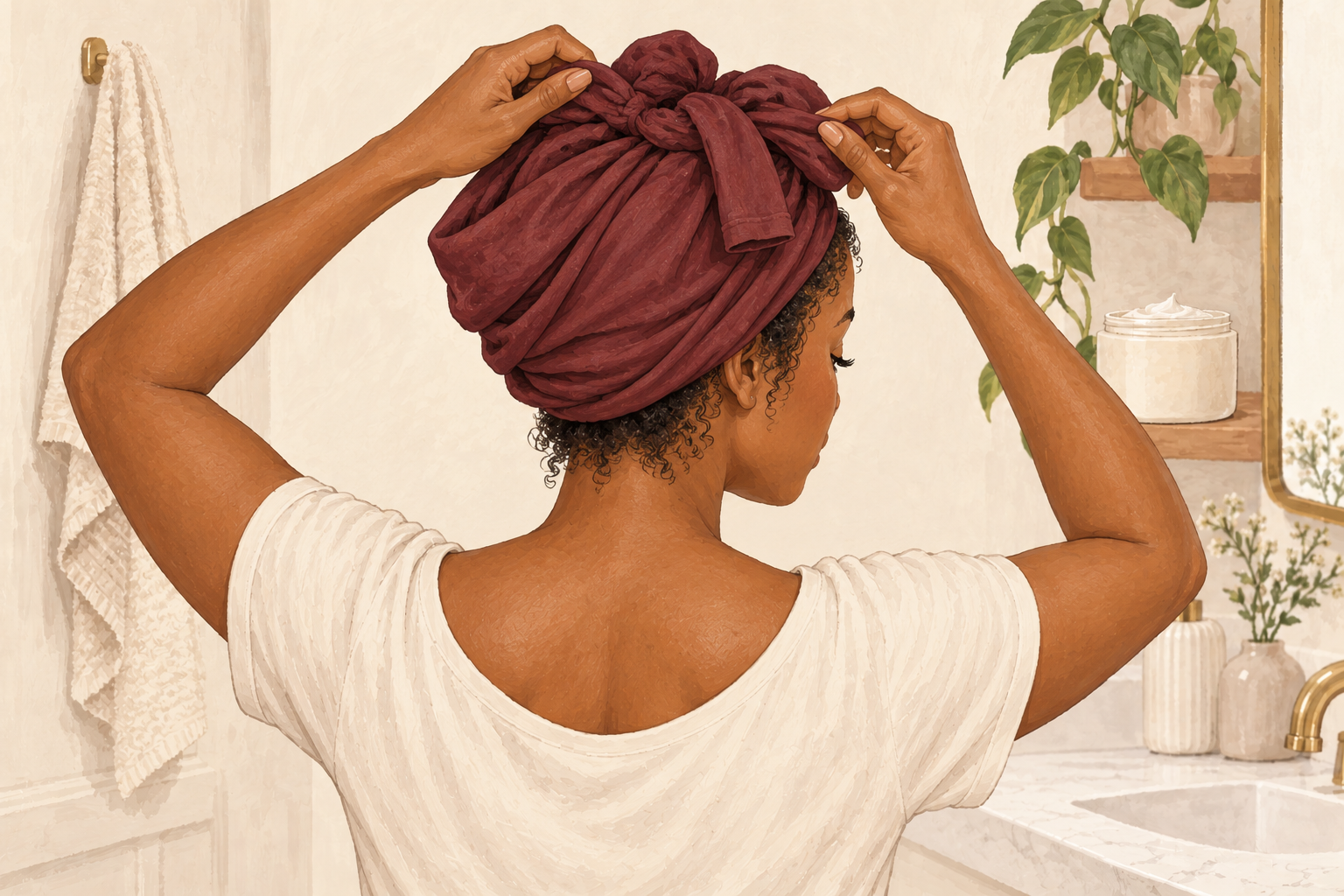
Squeeze water out of your hair with a soft towel or shirt, never rub. Rough terry cloth catches the hair and roughens the surface, which becomes frizz. Wrap your hair in the towel for ten minutes, or scrunch it gently from the ends upward. A microfiber towel absorbs more water, so drying time drops. If you have curls, a soft cotton t shirt is gentle and easy to wash. Pat, press and wait, and the difference in frizz shows within two or three washes. Leave the wrap on while you brush your teeth and get dressed, then unwrap.
5. A dryer with adjustable heat and a diffuser
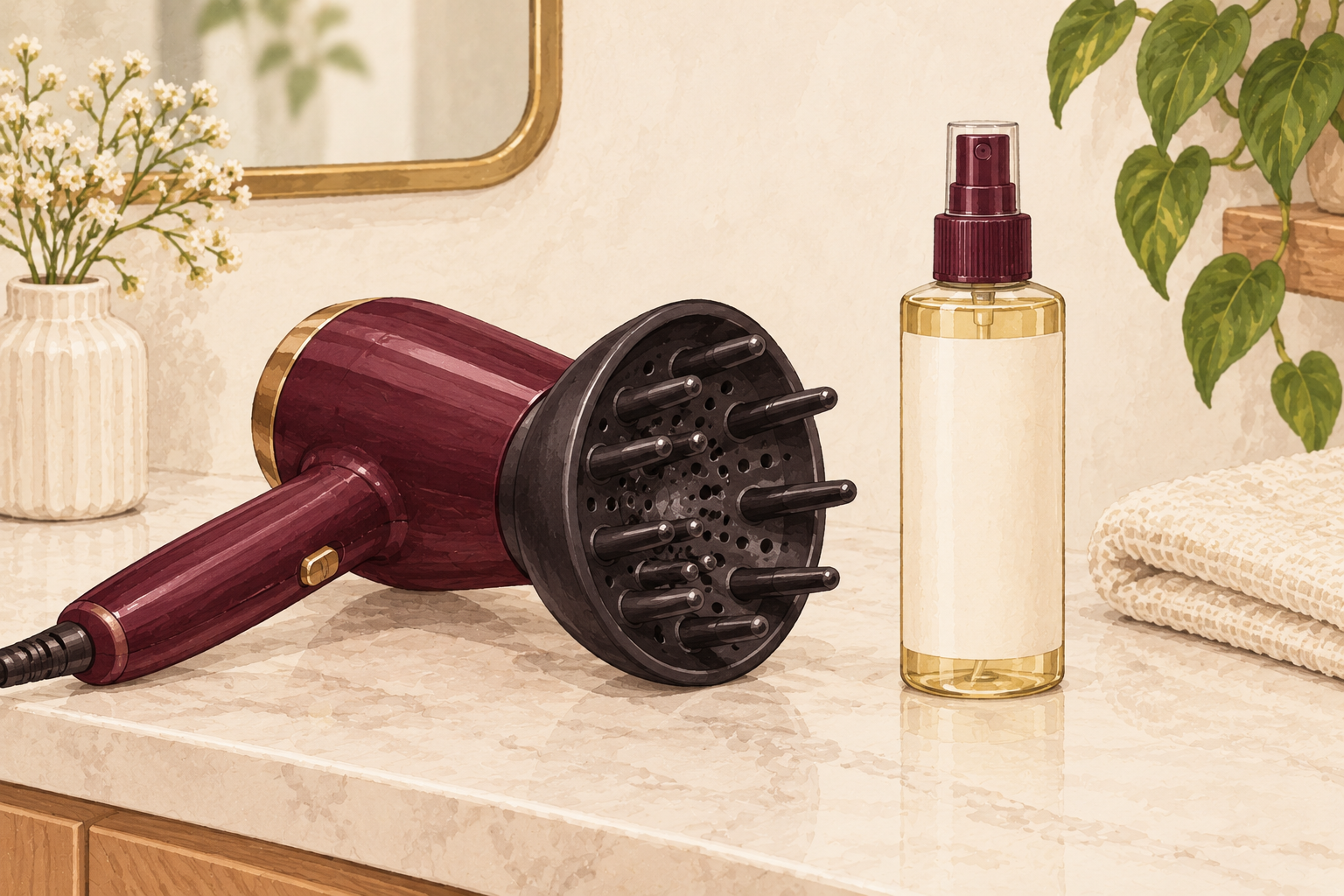
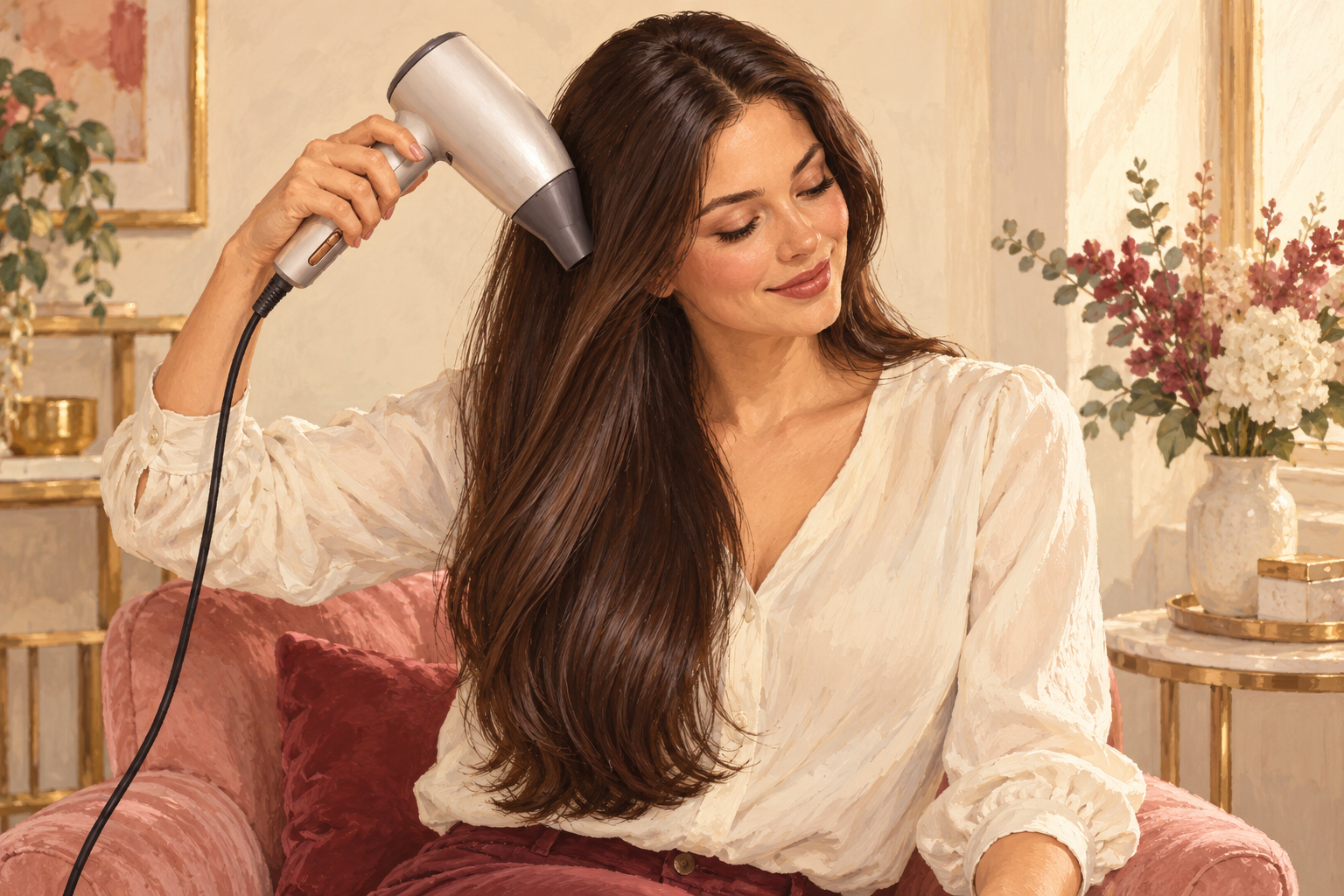
Look for low, medium and high settings and a cool shot button. A dryer that only blasts one fierce heat will scorch your ends. Dry your hair about eighty percent with a towel first, then use low or medium heat, and keep the nozzle a hand width from your hair. A diffuser spreads the air out, which keeps curls from blowing apart. Finish with the cool button to set the shape and add shine. Move the dryer constantly and never point it at one spot. Hair that feels hot to your touch is getting too much. If your dryer smells of burning dust, clean the back filter with a dry toothbrush.
6. Silk or satin scrunchies
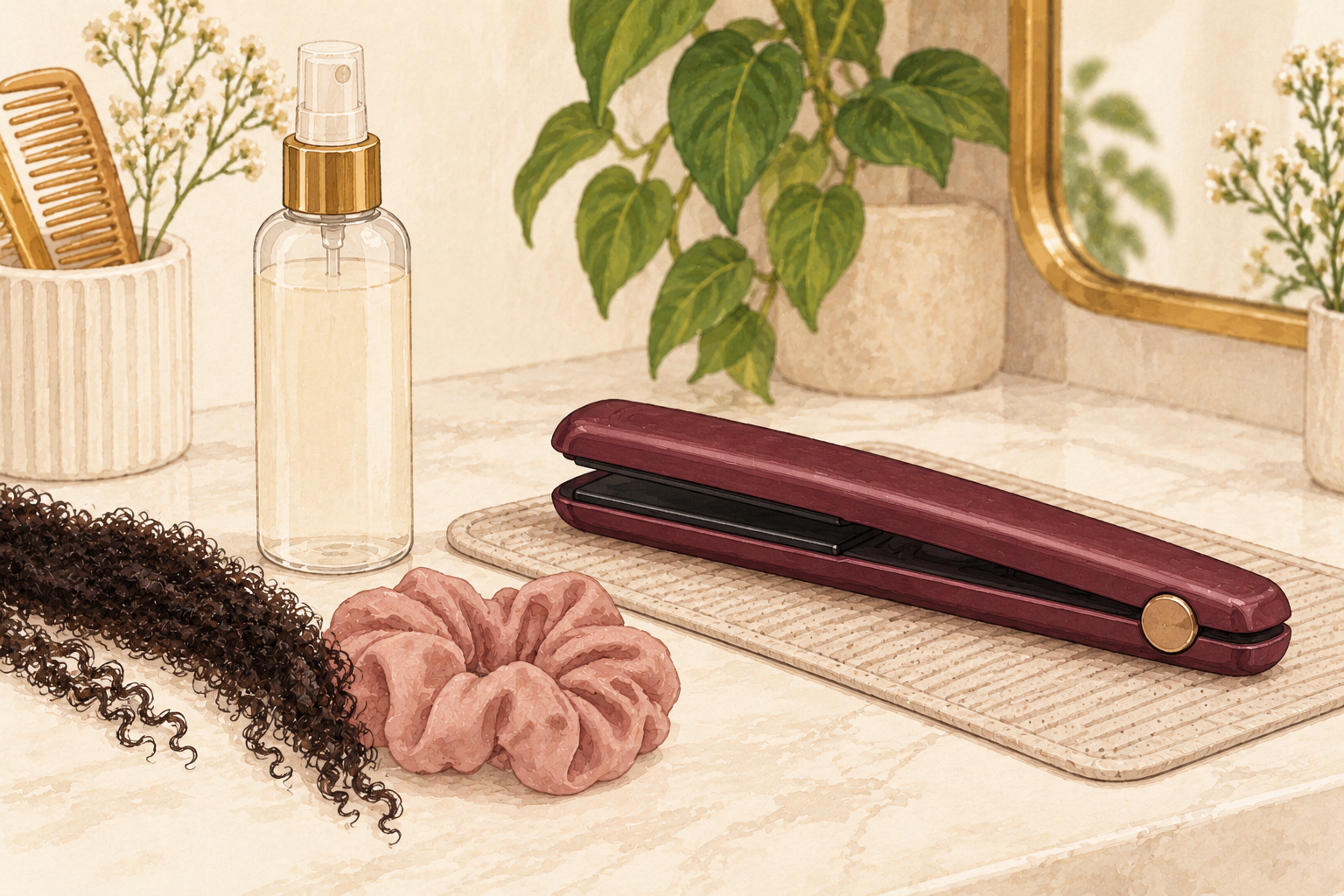
Swap thin elastic bands for a soft, wide scrunchie, and wrap it loosely. Plain elastic bites into the hair and snaps strands at the same spot every day. A fabric scrunchie spreads the grip, so there is no crease and no tug. Move your ponytail up or down each day so the pressure falls on a new place. If the band leaves a dent, it was too tight. Have two on your wrist and one by your bed. Pulling a ponytail loose with wet hair is a bad habit, so wait until it is dry. Take it out before bed and sleep with a loose braid or a satin bonnet instead.
7. Smooth sectioning and claw clips
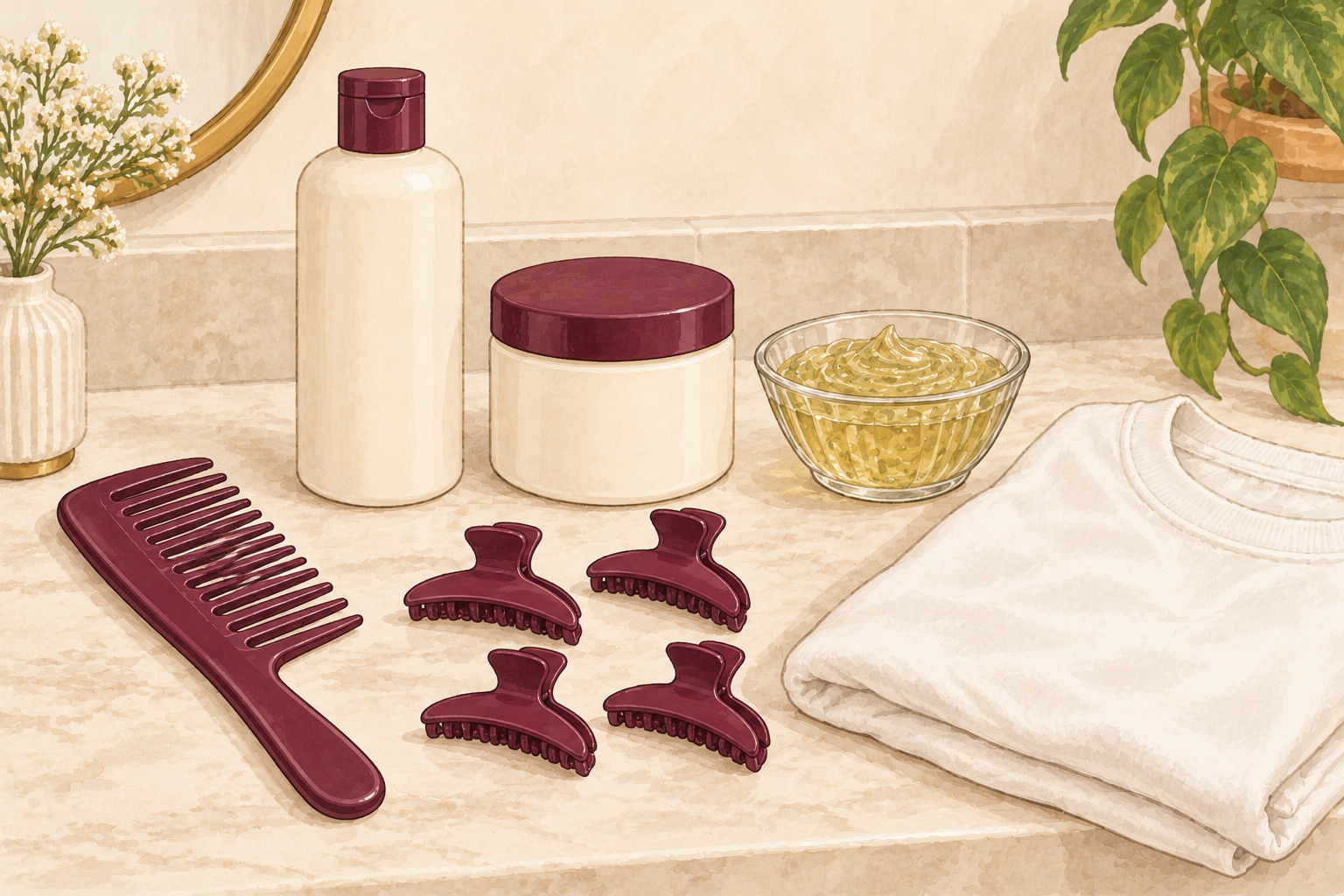
Choose clips with rounded edges and no metal teeth, then check them for burrs. Sectioning lets you work on one part at a time, so you can detangle, apply product or style without a mess. Part the hair into four, clip each part loosely, and release one at a time. A big claw clip holds hair up without the pull of a band. Change the clipping place each time so you do not leave a dent. Clips with a bent or rough spot should go in the bin right away. Duckbill clips are brilliant when you do your own back sections.
8. A heated tool with temperature control
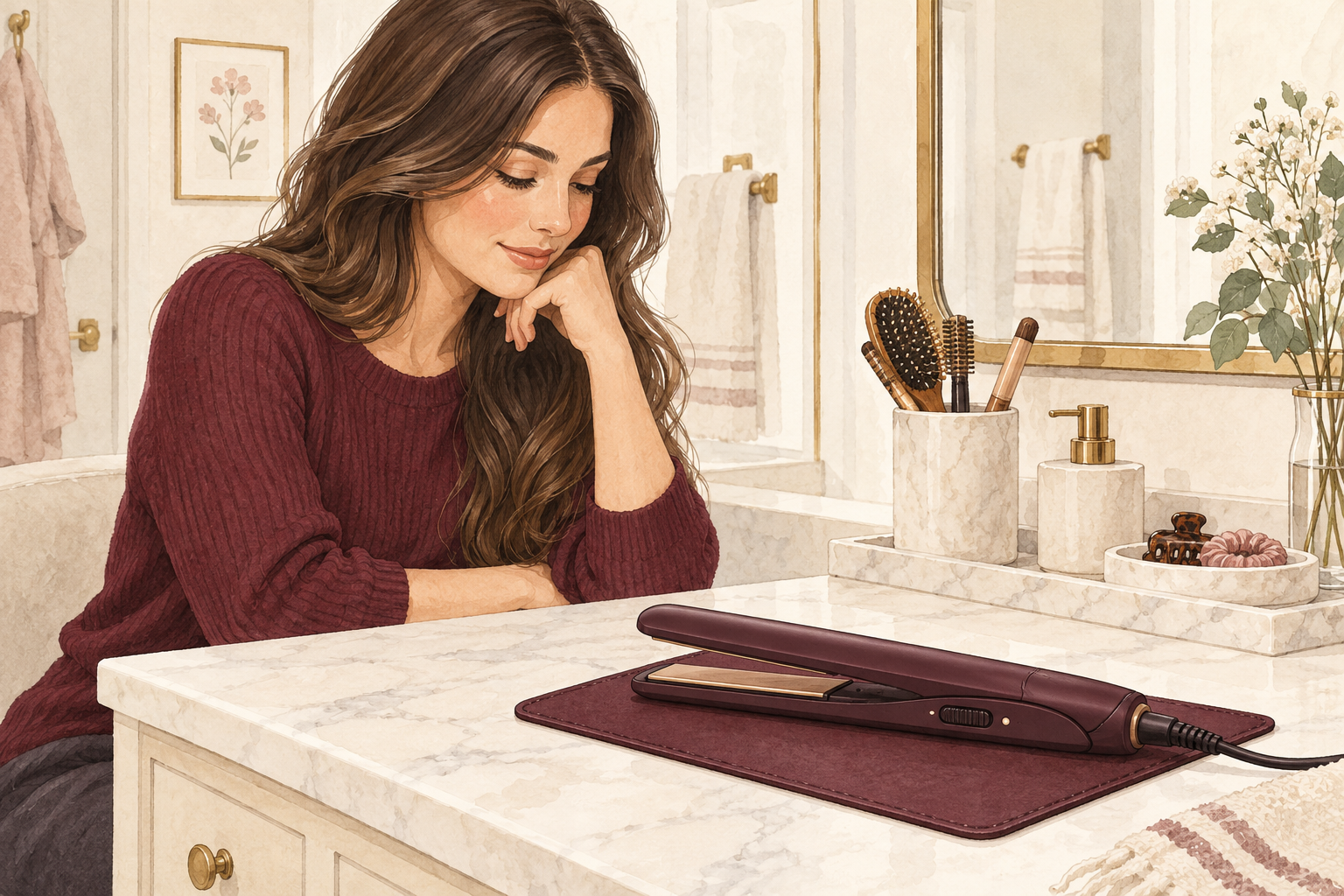
Only buy a flat iron or curling wand with a dial, and keep it low for fine hair and medium for thick hair. Fine hair can burn at a heat that thick hair shrugs off. Never use a tool that has only one temperature. Spray a light heat protectant on dry hair first, and pass the iron once rather than five times. If you smell hot hair or see steam, stop. Using heat once or twice a week is plenty. Leave it to cool on a heat mat, not on your counter or your bed. Let the plates reach the heat first, then test on a hidden strand.
9. A soft scalp massager
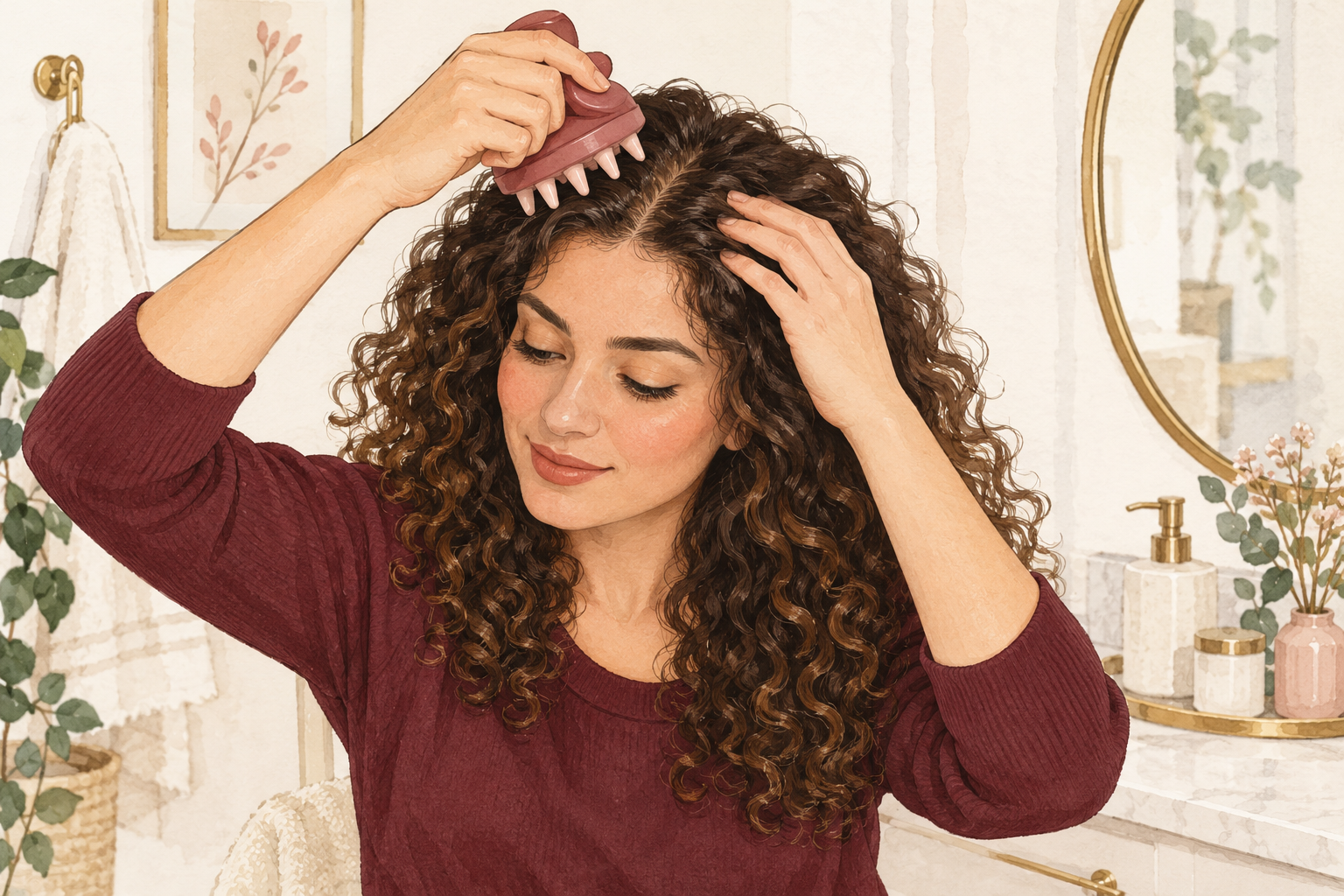
Choose a massager with rounded, bendy tips that feel gentle on the inside of your wrist. Use it in the shower on wet hair, with small slow circles for two to three minutes. It loosens flakes and old product and feels wonderful. Press lightly, because a scalp that feels scraped or sore needs less pressure. Do not use it on irritated or broken skin. Use it two or three times a week, and rinse it clean after. If you prefer, your fingertips do the same job. Stop at once if it pulls hair or pinches the skin.
10. A soft bristle brush for dry hair
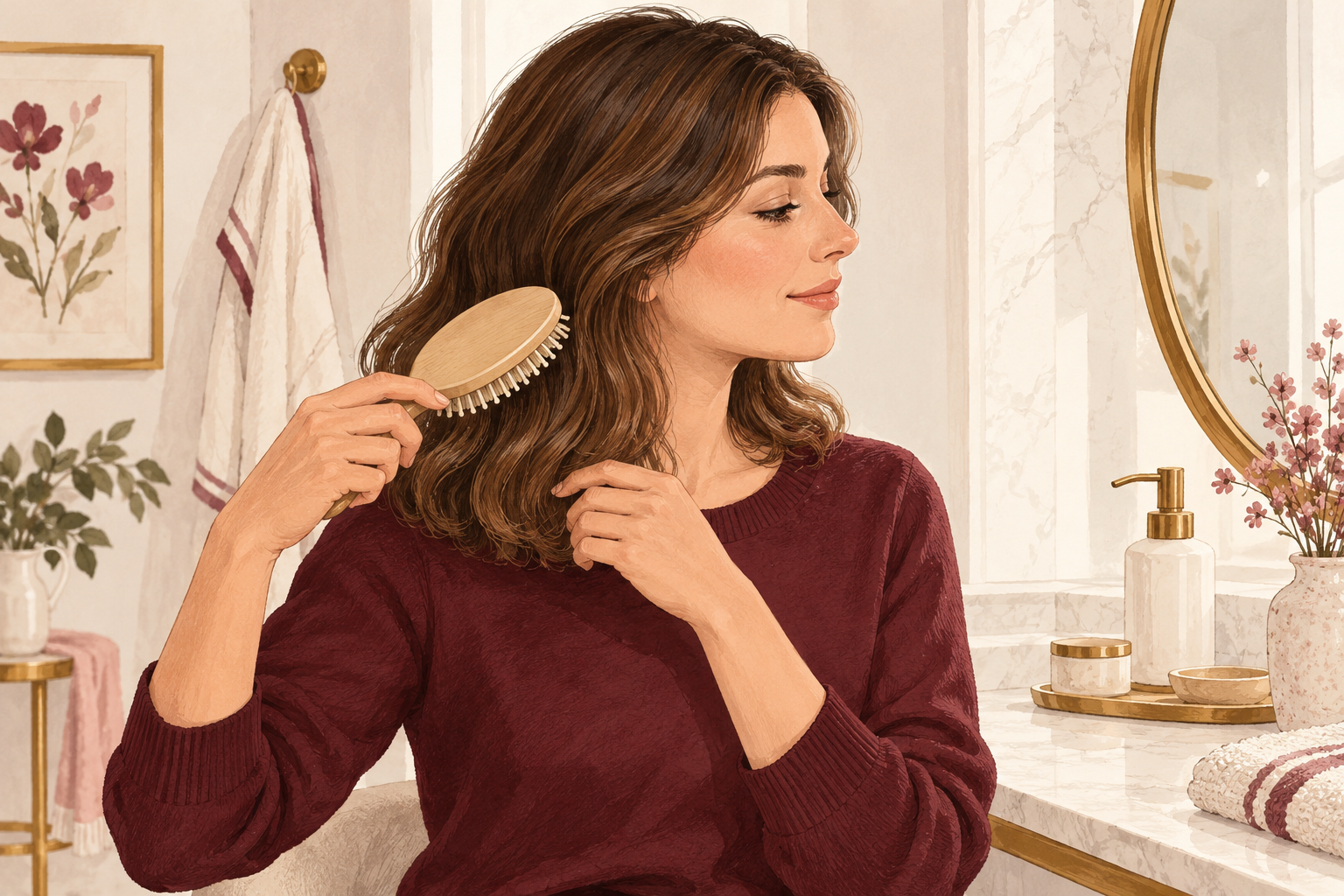
Pick a brush with soft, closely set bristles for smoothing straight or wavy hair that is already detangled. It spreads natural oil from the roots down to the ends, which adds shine. Brush gently from the ends upward and then from root to tip, no more than a few strokes. Skip it on curly or coily hair, where it can cause frizz and breakage. Never brush wet hair with a stiff brush. If you see lots of hairs in the bristles, slow down or change the brush. Wipe the bristles after use so oil does not build up.
11. Clean brushes and combs every few weeks
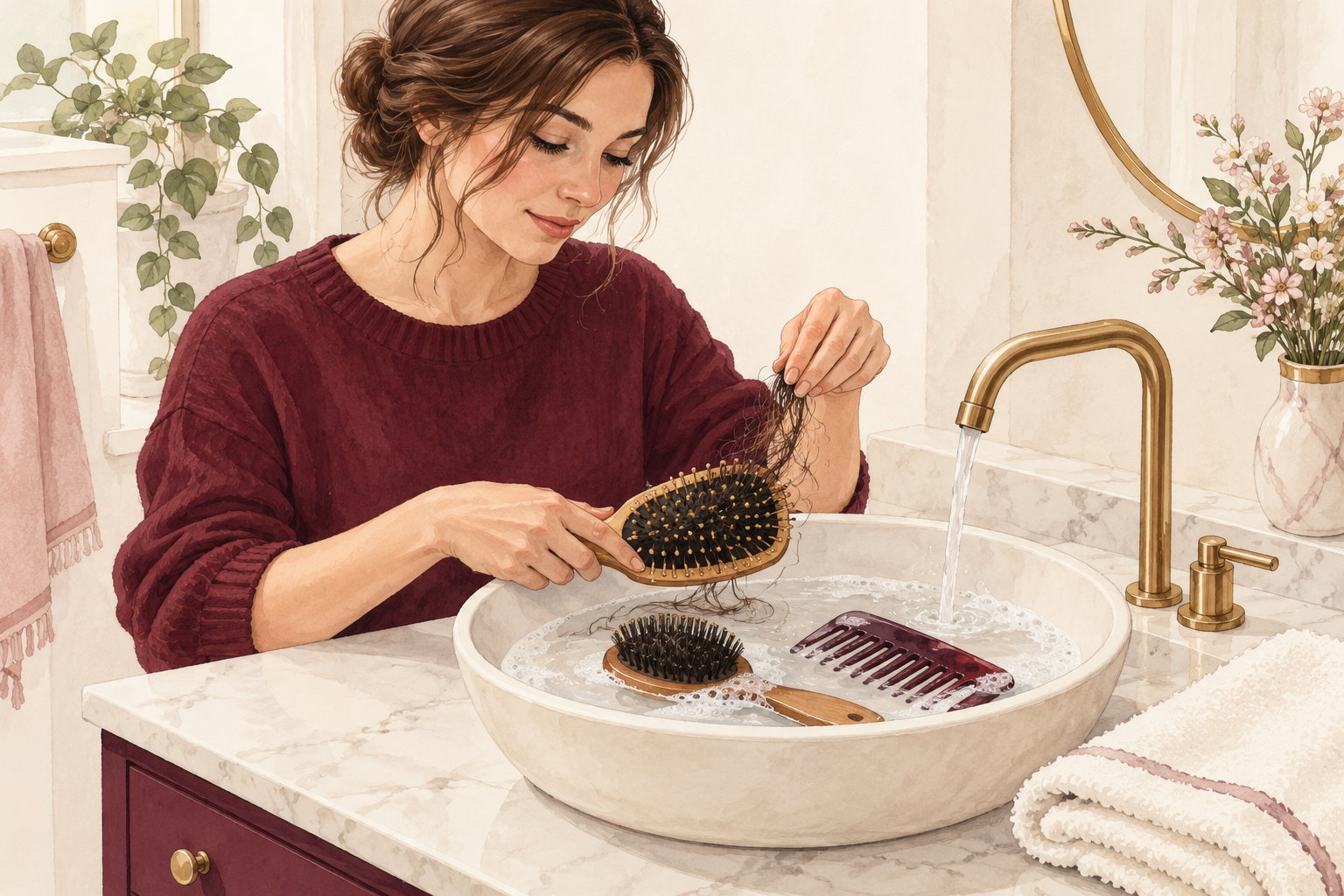
Pull the hair out of the bristles, then soak the tool in warm water with a little gentle shampoo for ten minutes. Dirty tools put old oil, product and dust straight back onto clean hair, and a coated brush will make your scalp itchy. Scrub the base with an old toothbrush, rinse, and let it dry bristles down on a towel. Do this every two to three weeks, or weekly if you use lots of product. Wooden tools should not soak, so wipe them with a damp cloth. A clean brush works better. Scrub the base and the gaps between teeth, where the grime hides.
12. Retire anything cracked, rough or snagging
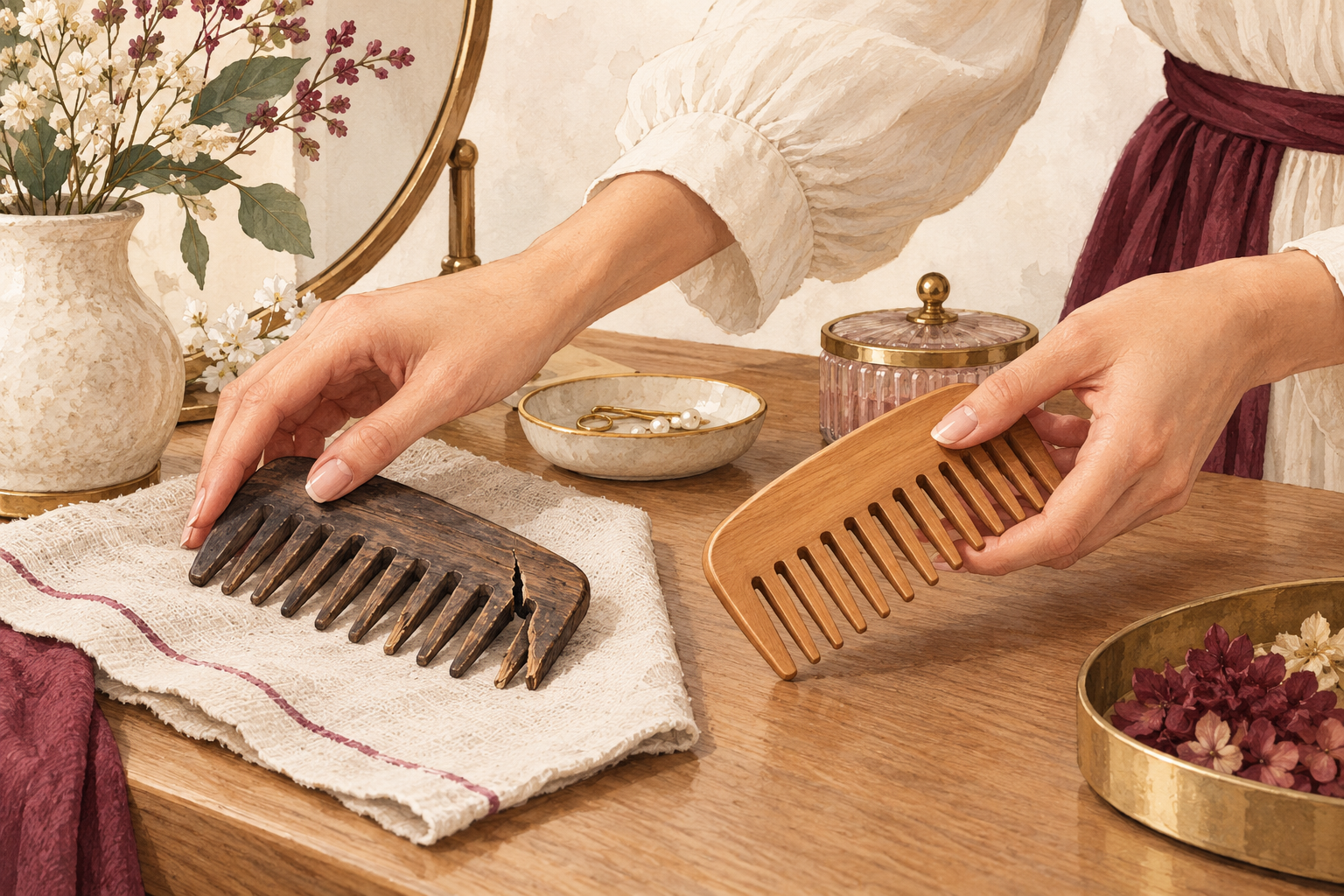
Run a clean strand of hair along every tool, and bin whatever catches. A chipped tooth, a rough seam or a frayed band will tear hair little by little, and you will not notice until the ends look ragged. Swap out your hair care tools when you spot damage, not when the whole thing breaks. You will likely notice less hair in the brush, fewer knots after washing and smoother ends within a few weeks. Keep a short list on your phone so you remember what needs replacing. Replace combs every year or two, even when they look fine.
Complete the Routine: Hair Care Tools That Protect Your Strands
Start tonight by checking your comb, your brush and your hair ties. For what to use with them, read about best conditioner for frizzy hair and curly hair care.