You stand in the aisle reading labels that all promise smooth, silky, frizz free hair, and half of them make your hair worse. The best conditioner for frizzy hair is not the one with the loudest claim. It is the one that fits your frizz and your strands. These 12 checks help you choose, so start at number one.
1. Spot dryness frizz

Check if your hair feels rough, thirsty and looks fuzzy even on dry, cool days. Dryness frizz shows up all over, and strands often feel straw like and soak up water quickly. It means the hair needs moisture, not just smoothing. Look for conditioners that say moisturizing or hydrating, and use a leave in on top. Spritz a strand with water and see if it soaks in fast, which points to thirsty hair. Dry weather makes it worse, so a deep treatment once a week helps it settle.
2. Spot damage frizz
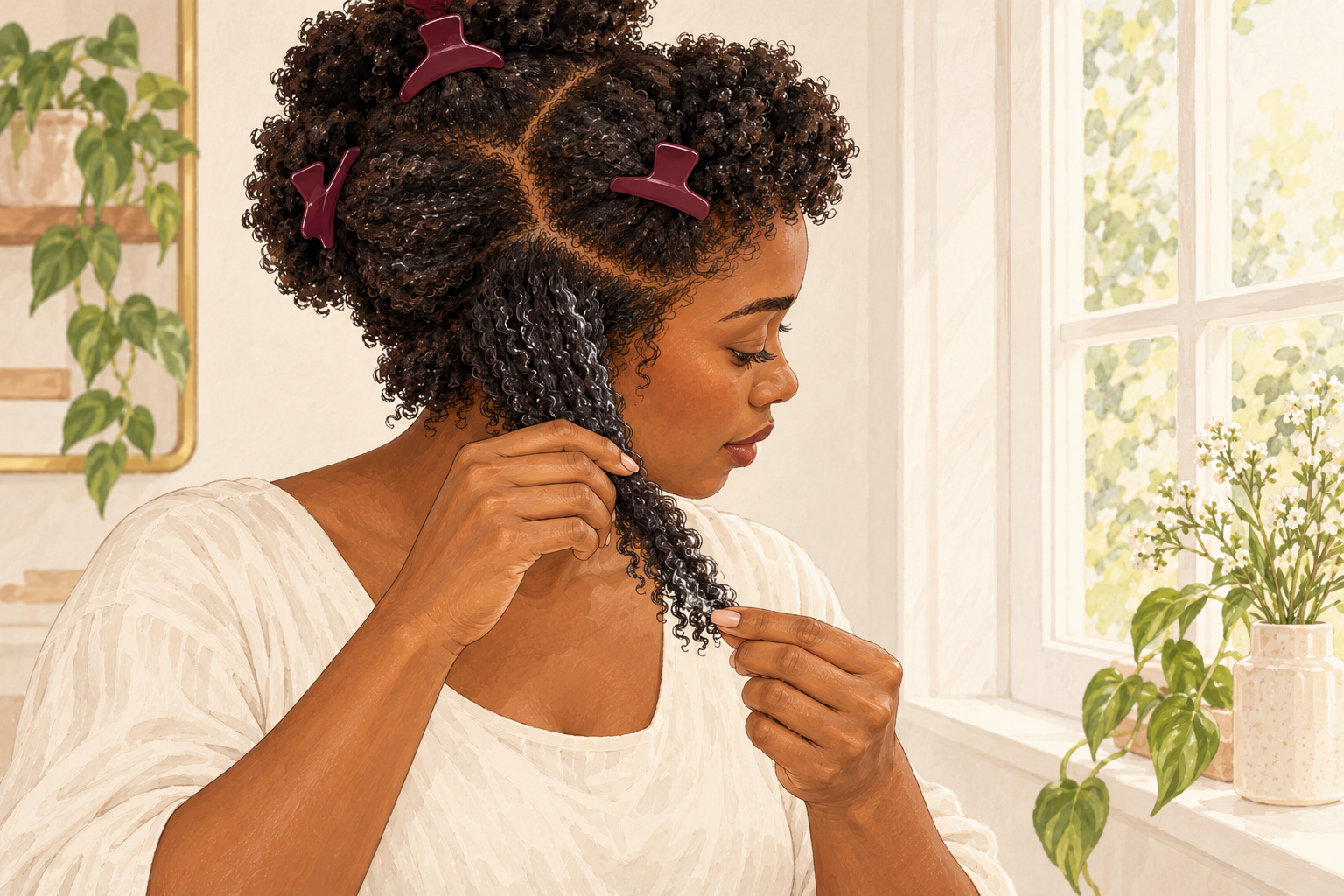
Look at the ends, because damage frizz sits mostly at the bottom and shows as tiny fuzzy fibers and splits. Heat, color, relaxers and rough brushing wear the outer layer away, so the ends cannot lie flat. A repair style conditioner with a little protein can help, but too much stiffens. Choose one that says repair or strengthen and use it only on the lower half. Trim any splits, since no conditioner can glue them back. Fix the habit that caused it too, such as dialing the heat down. Touch the very ends of your hair, and if they feel like fuzzy cotton, this is your frizz. Keep the conditioner off your roots so it does not flatten them.
3. Spot humidity frizz

Notice if the fuzz only appears on damp, sticky days and the hair puffs out within an hour. Humid air pulls water into the hair, so it swells and the surface lifts. A good conditioner helps by sealing the surface so less water gets in. Look for smoothing, anti humidity or sealing on the label. A leave in with a light oil on top helps too. This kind of frizz needs control, not heavy moisture. Match your product to the weather, and keep a lighter one for summer. Check the forecast the night before and pick your formula to match.
4. Look for conditioning agents near the top
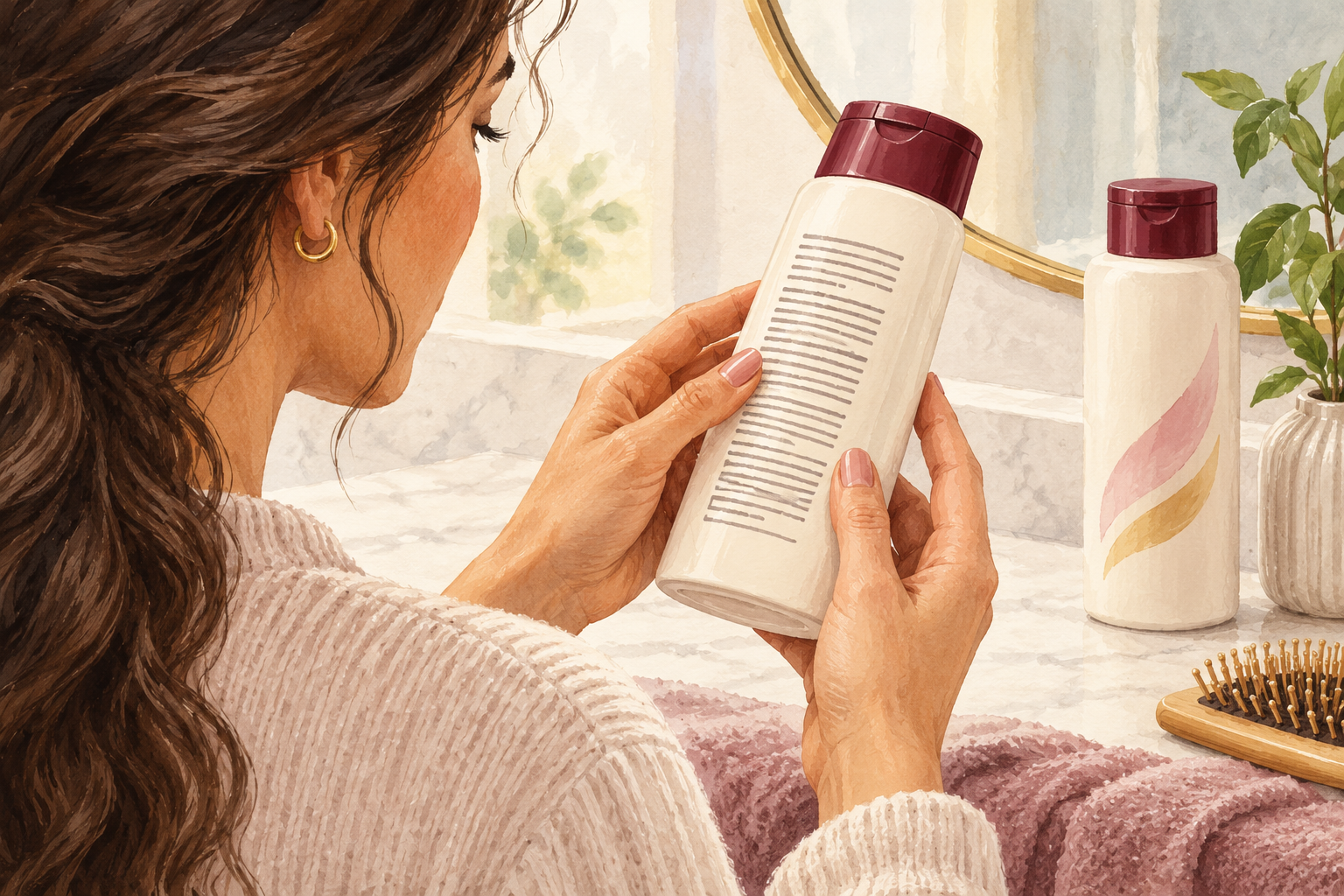
Read the first five ingredients on the back, since they make up most of the bottle. Look for ingredients that sound like fatty alcohols, such as cetyl or stearyl alcohol, plus soft sounding agents that coat the hair. These are the real conditioners, and they smooth the surface. If water is first and a conditioning agent comes next, that is a good sign. A bottle with mostly fragrance and thickeners near the top gives you a creamy feel and little else. Fatty alcohols are friendly and do not dry your hair, despite the word alcohol. Ingredients are listed from the most to the least, so the first few tell you the story.
5. Use humectants wisely
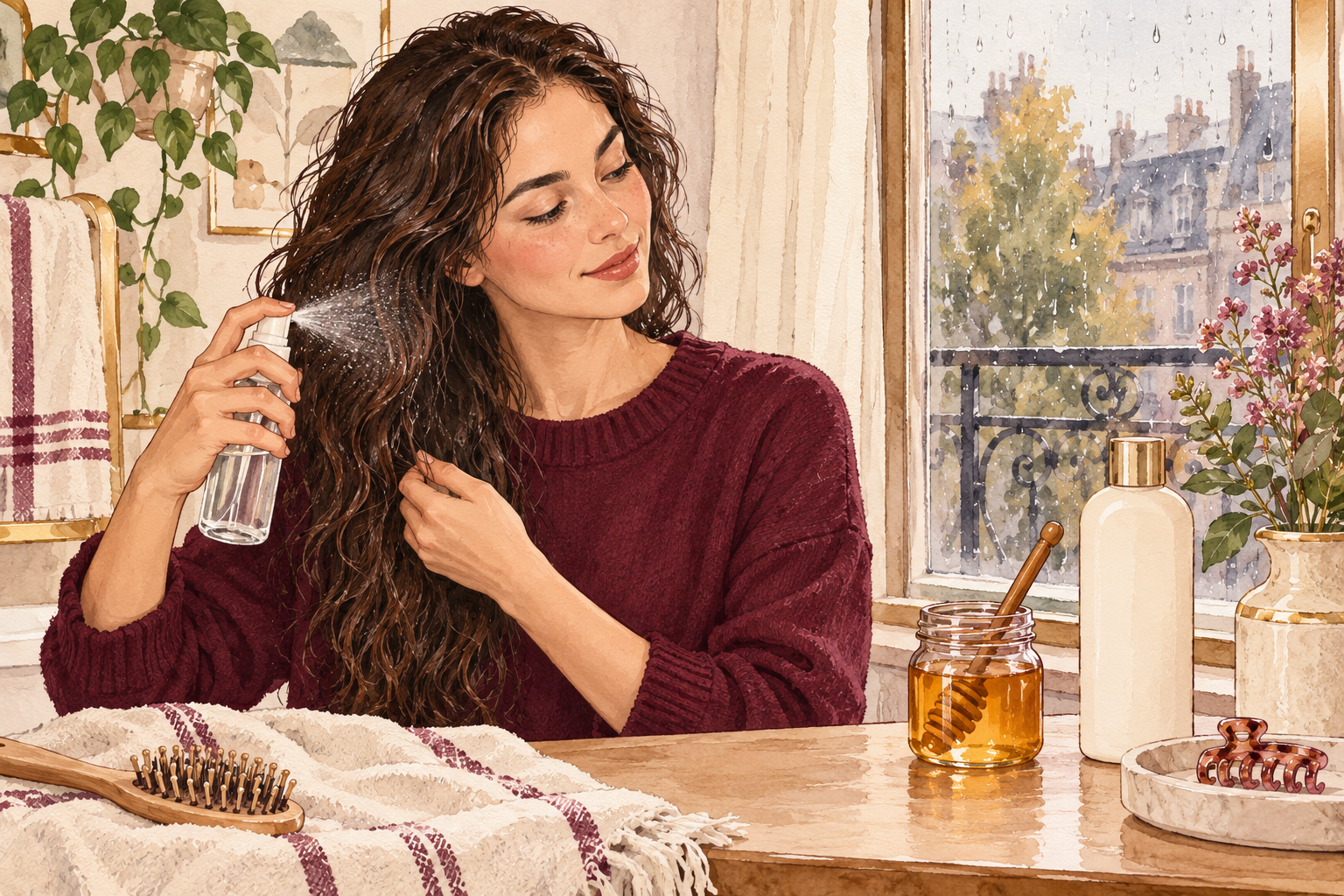
Humectants, such as glycerin and honey, pull water into the hair, which is great in mild air and risky in extreme weather. In very humid air they can pull in too much and make frizz worse. In very dry air they can pull water out of your hair instead. If your frizz explodes on rainy days, look for a conditioner with less glycerin, near the bottom of the list. If your hair is thirsty in mild weather, a little is lovely. Test it before a big day. If you are unsure, pick a formula with humectants in the middle of the list. A damp, rainy week is the best time to see how your formula holds up.
6. Know what silicones do
Silicones, often ending in cone or siloxane, coat the hair and make it smooth fast. They are great for slip and shine, and they block humidity well. The trade is build up, which can leave the hair heavy and dull over time. If you use them, clarify once or twice a month. If you love the feel but dislike the build up, choose water soluble versions that rinse off easily. Fine hair is happier with fewer of them, and a month without them shows you how your hair behaves on its own. A clarifying wash removes the film they leave behind.
7. Match fine hair to light formulas
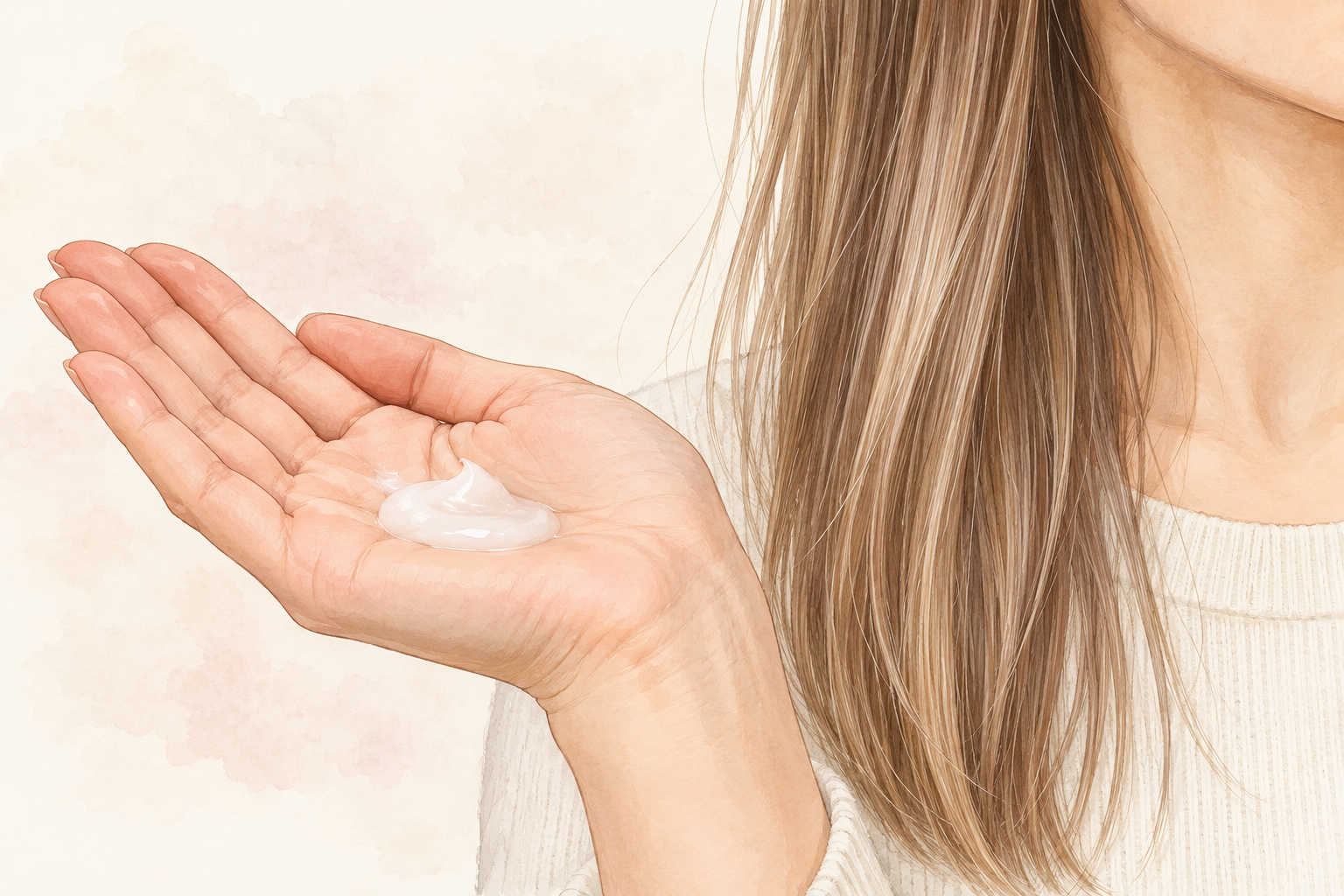
Choose a thin, lotion like conditioner with a milky texture if your strands are very thin. Fine hair gets weighed down by thick creams, and flat hair with frizz at the top is common. Use a coin sized amount, keep it off the roots and rinse thoroughly. Look for labels like lightweight, volume or weightless. Let it sit for only a minute or two. If your hair feels coated afterward, you used too much or the formula is too rich. Always start with less and add a little more if needed. Rinse with cool water at the end, and it will leave your hair lighter and bouncier.
8. Match thick or curly hair to richer creams
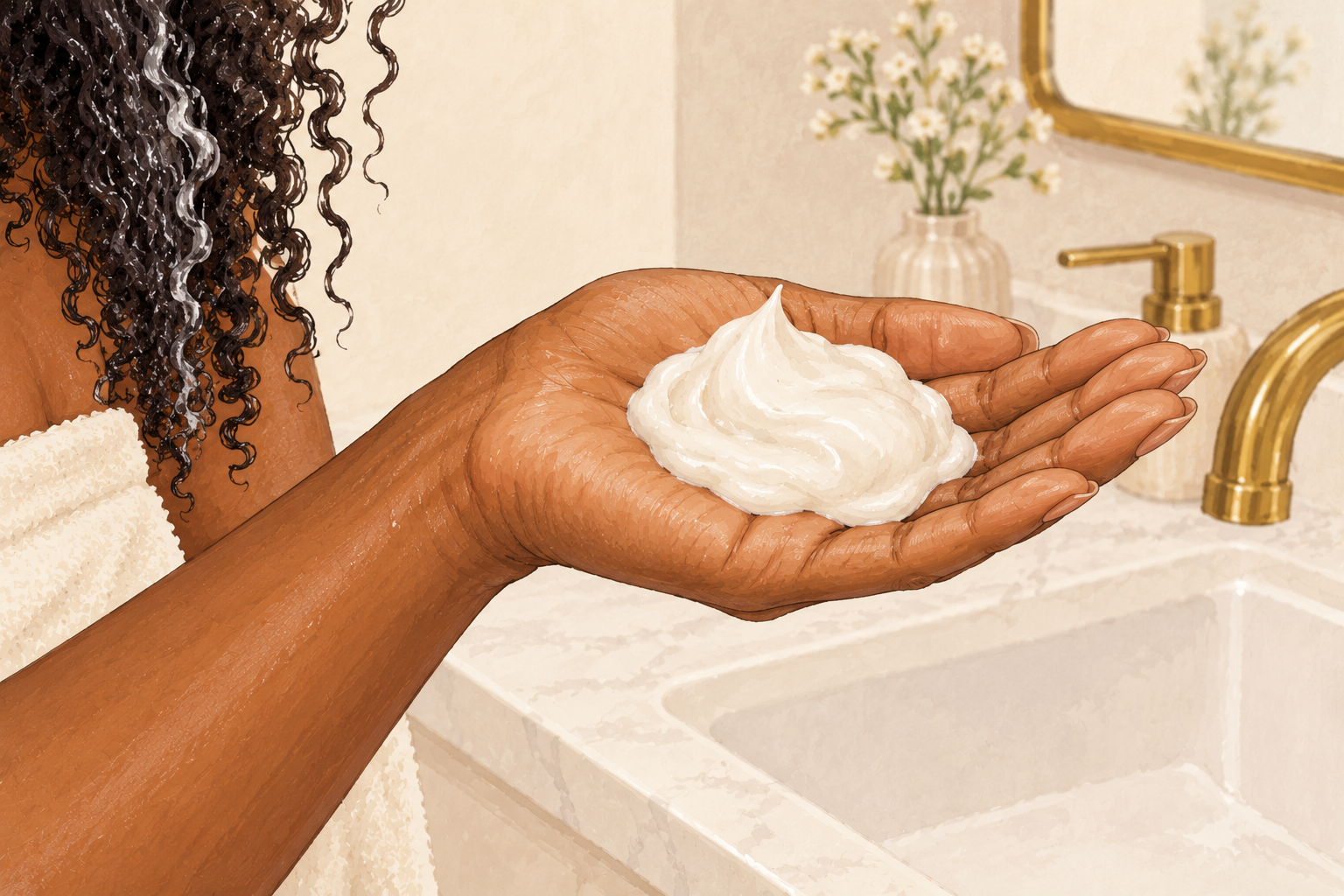
Pick a thick, creamy conditioner with butters and oils if your hair is thick, curly or coily. Curls dry out because oil struggles to travel down the bend, so they take richness well. Use a generous palmful, section by section, and leave it on for five minutes or more. A rich cream gives definition and tames frizz, as long as the strands feel soft and not coated. If it feels greasy, switch to a medium formula. Low porosity hair needs lighter versions, so test a small amount first. Thick hair holds more product, so be generous with the sections at the back.
9. Apply from the ears down and leave it on
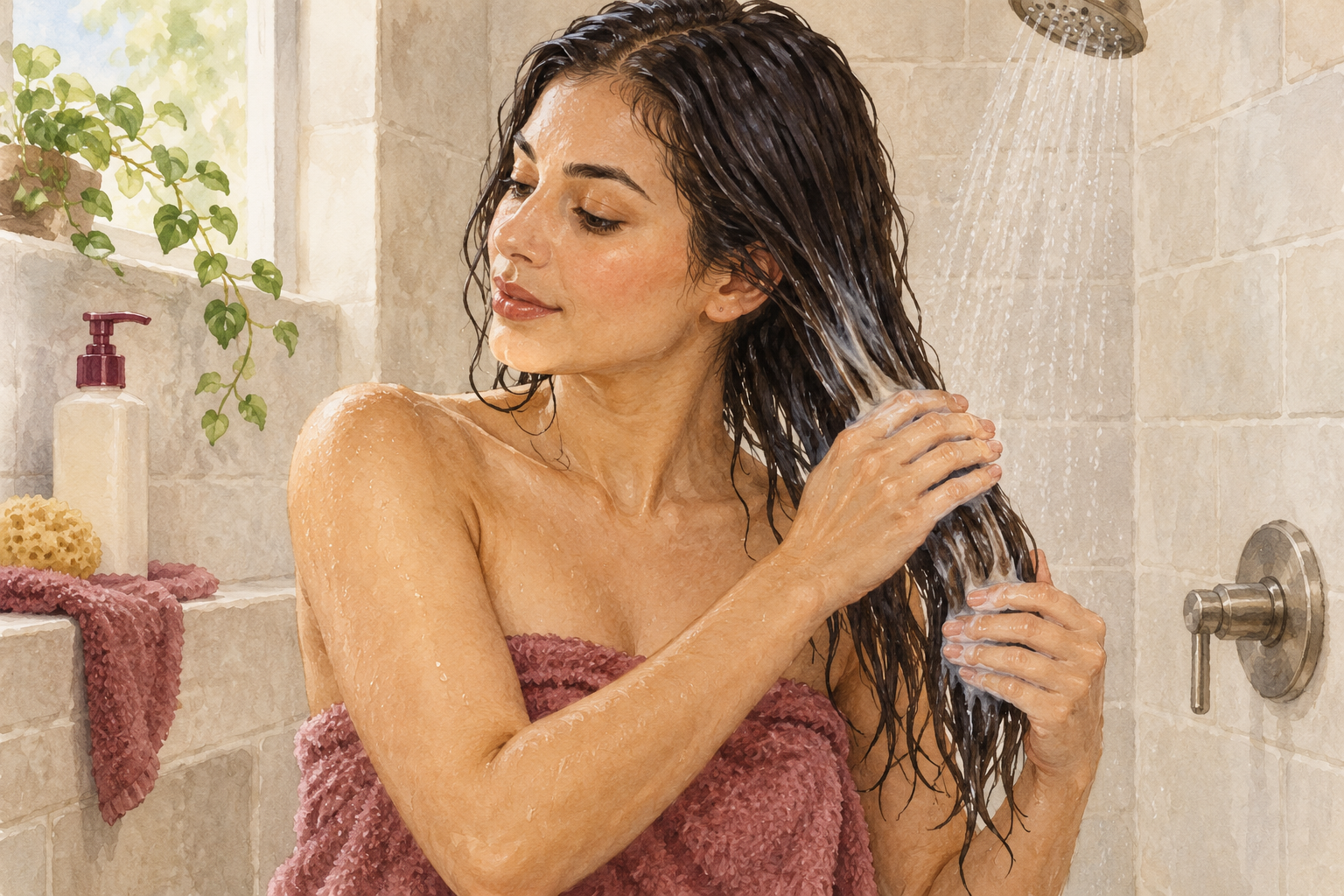
Squeeze out extra water, then smooth conditioner from your ears down to the ends for at least three minutes. The roots make their own oil and rarely need it. Hair that is soaking wet repels product, so squeeze first. Use a shower cap if you want to leave it on for ten minutes. Rinse with cool water and stop when the strands feel slippery, not squeaky. Do this after every shampoo. Too little time gives you little benefit, so set a timer on your phone until it becomes a habit. Leave the nape of your neck for last, since it tangles the most.
10. Detangle while it is still in your hair
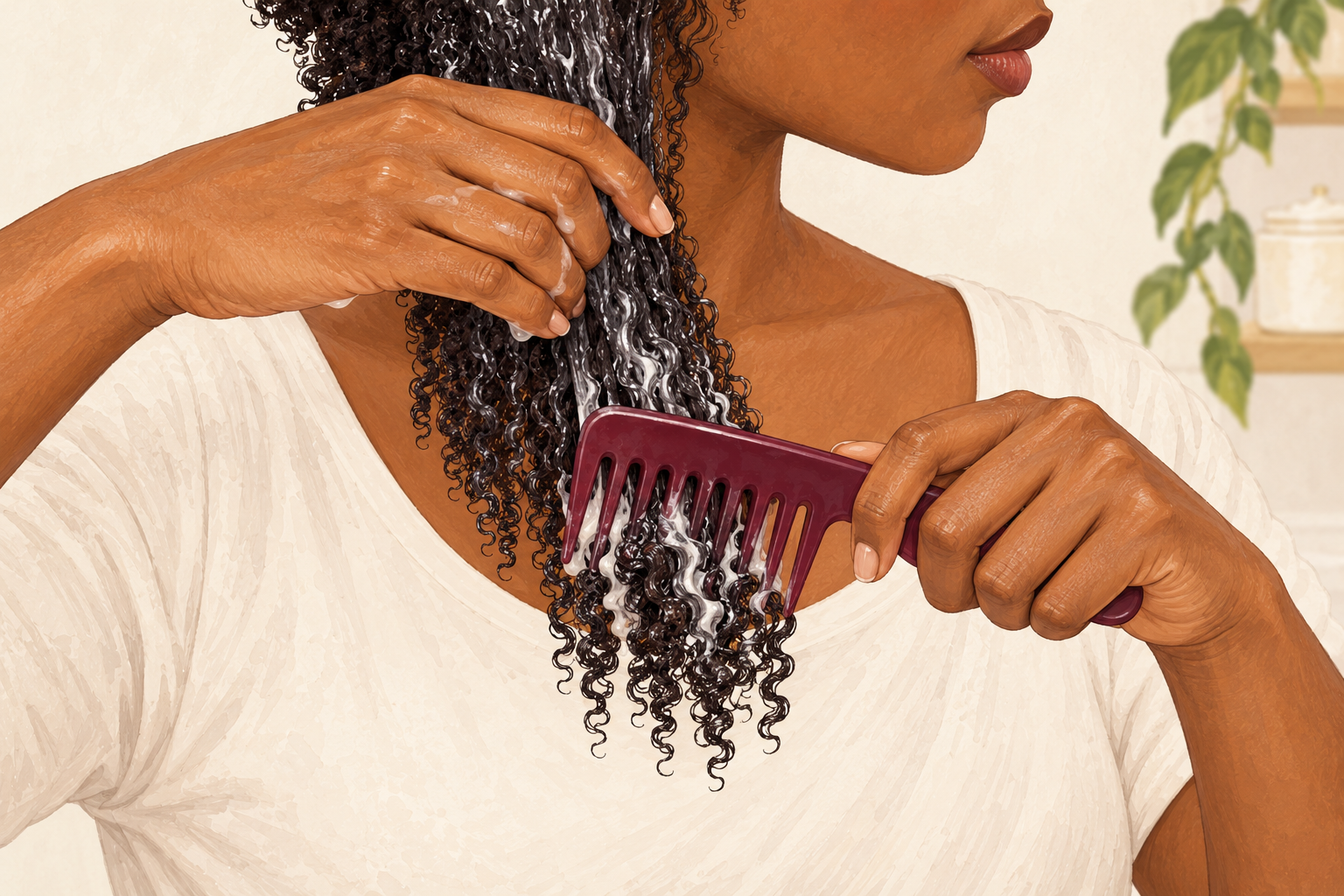
Comb through with a wide tooth comb while the conditioner is still on, starting at the ends. The slip protects the strands and cuts down on snapping, which makes frizz worse. Do it in four sections and rinse after. Never rake dry, tangled hair, because it breaks and fuzzes. If a knot will not budge, add more conditioner. When you rinse, hair should glide through your fingers. A detangled head also takes styling product more evenly, so leave in creams work better. Rinse until the water runs clear, and the comb will pass through easily. Smooth the ends last, with the flat of your hand, to flatten the cuticle.
11. Avoid protein overload
Skip repair and strengthening formulas if your hair snaps easily, feels stiff or turns straw like. Protein fills in weak spots, but too much makes hair hard, dry and prone to breakage. If a conditioner leaves your hair brittle, switch to a moisture formula for two washes and the stiffness fades. Use protein only about once a month if you color or heat style. Mix, do not stack, treatments. Hair that bounces back when you stretch it gently is balanced. Hair that snaps needs more moisture, not more protein. Check the label for words like keratin, collagen or hydrolyzed protein. Hair that feels stiff and brittle after a wash is a sign you have used too much.
12. Test for four washes and keep notes
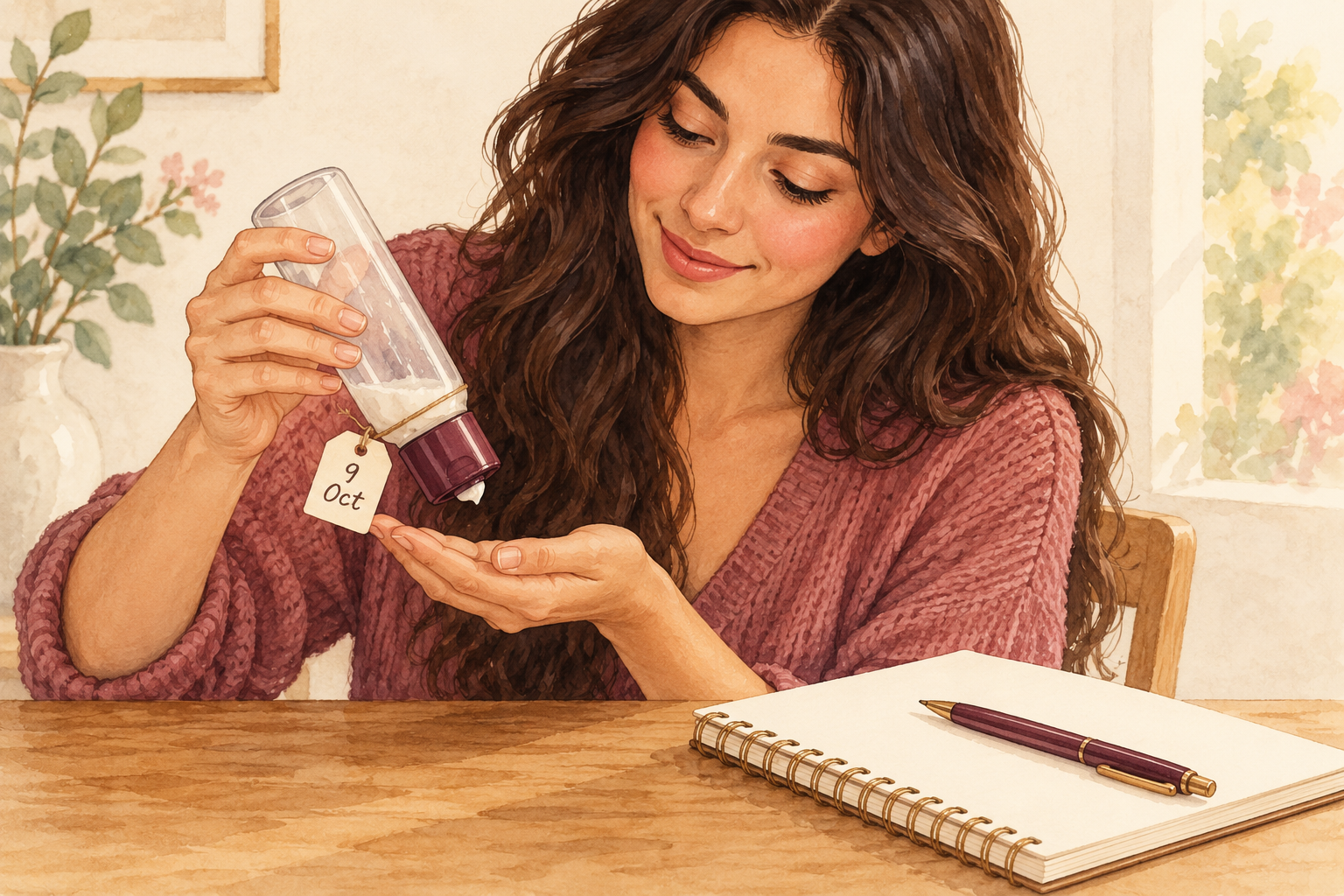
Give each new conditioner four washes before you decide. The first wash tells you about slip, the second about build up, and by the fourth you know how it behaves. Note how your hair feels wet, how it dries and how it looks the next day. You will likely notice smoother, softer hair with less puff if it suits you. If your hair feels dull, flat or sticky, it is not the one. The best conditioner for frizzy hair is the one that still works on day three. Hand the rest to a friend and keep the winner. Rotate two conditioners through the seasons if your frizz changes with the weather.
Complete the Routine: The Best Conditioner for Frizzy Hair, Chosen Well
Start by working out which frizz is yours, then match the formula. For next steps, read about best hair products for frizzy hair and hair mask for frizzy hair.