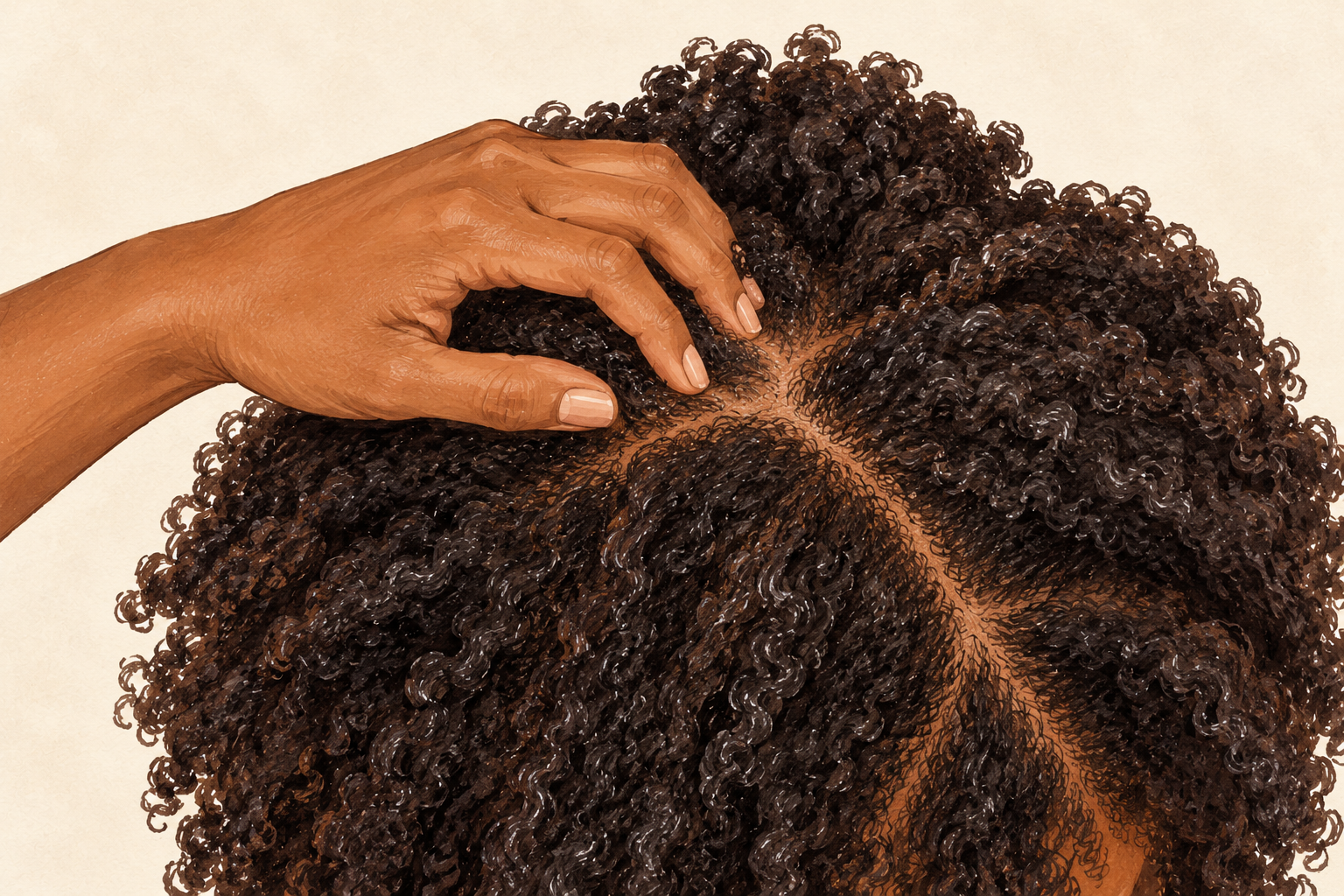
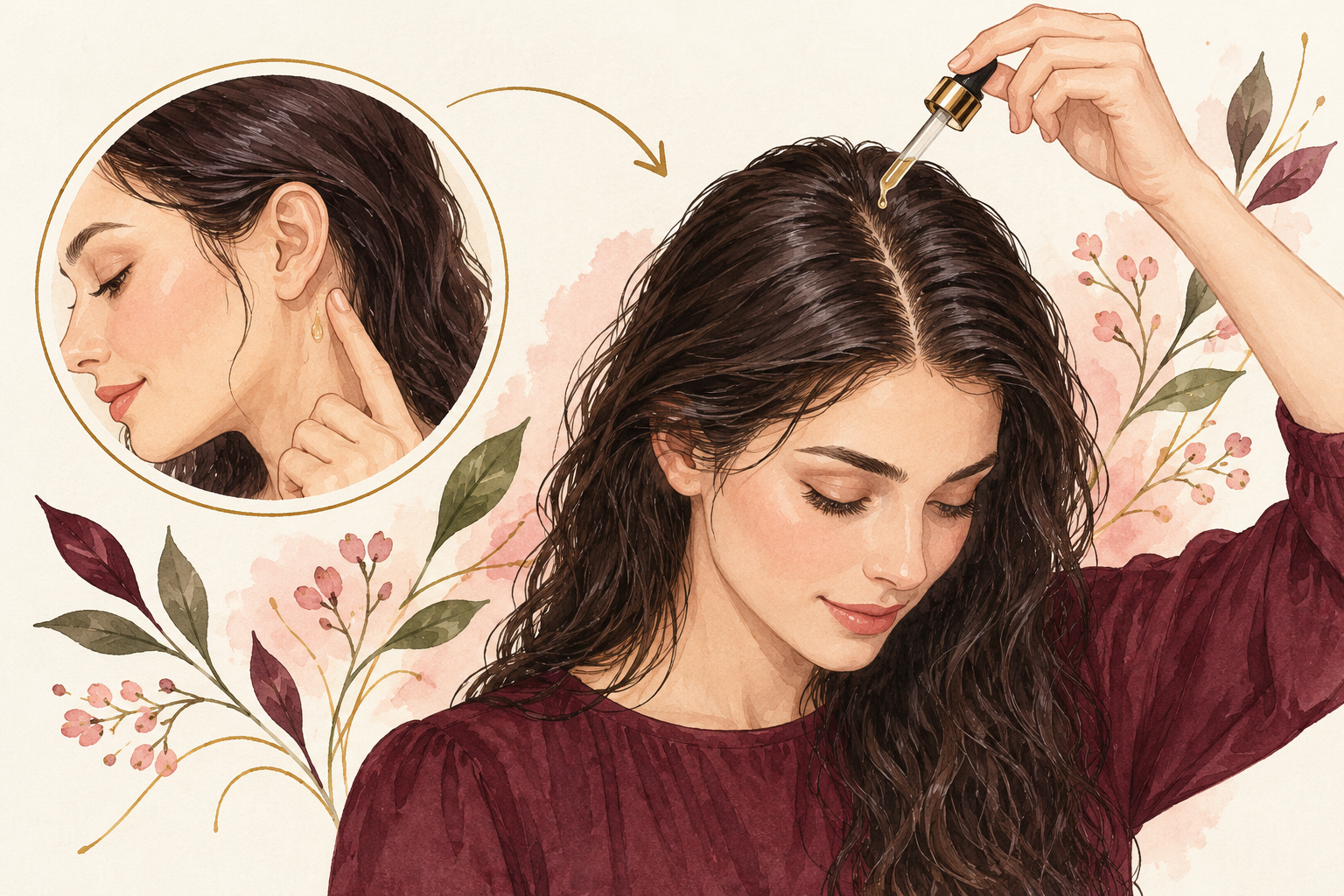
You mix a few oils in a cup, add a splash of this and that, and an hour later your hair is greasy and your scalp is itching. Guessing is how a hair growth oil recipe goes wrong. These 12 blends come with spoon measures, safety notes and storage tips for dry, fine and oily scalps, so start at number one tonight.
1. Set up a clean bottle and patch test
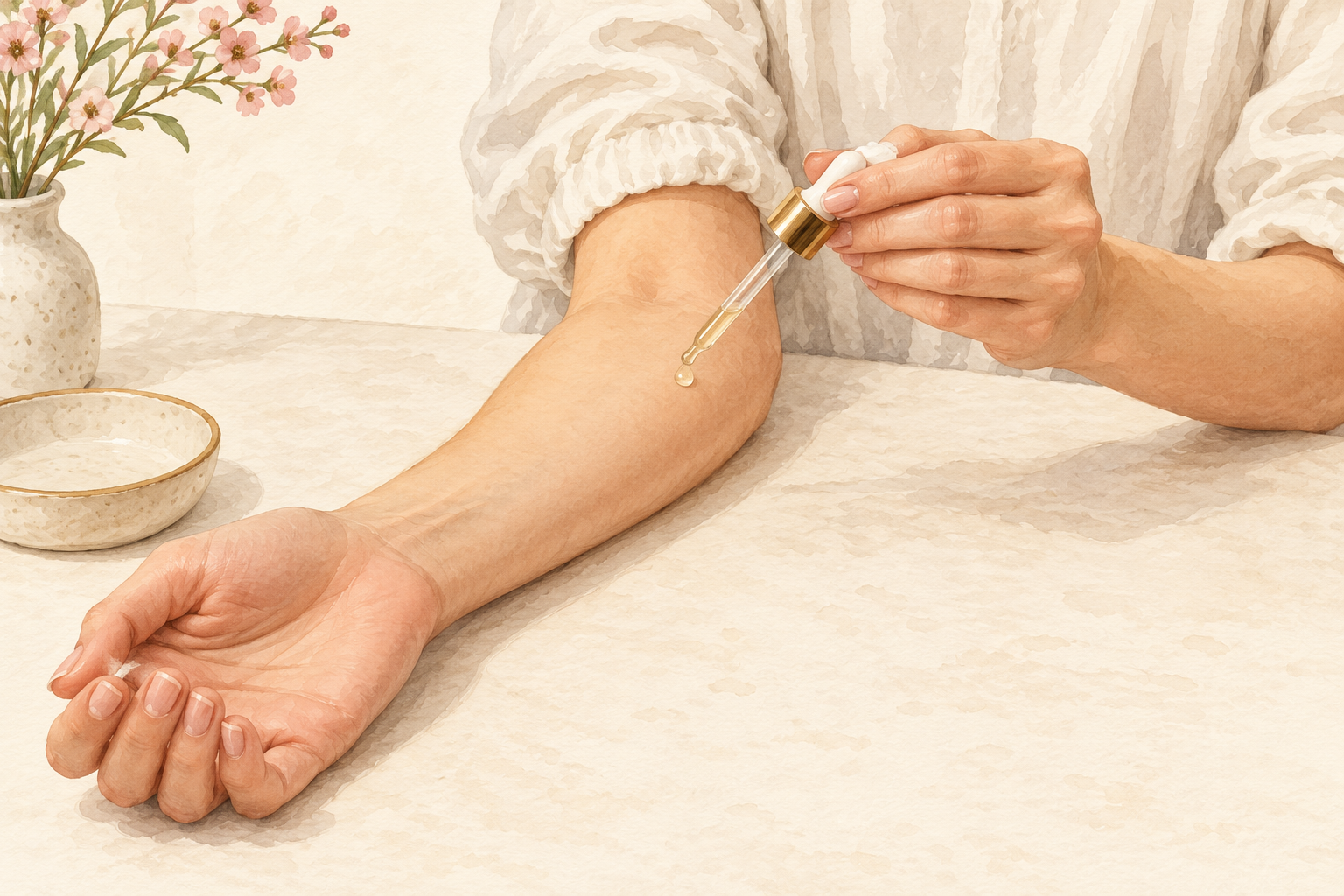
Wash a glass bottle with a dropper in hot soapy water, dry it fully, and keep a small funnel and spoons beside it. Before any blend touches your scalp, rub a drop on your inner arm and wait a full day. If the skin turns red or itchy, that oil is not for you. Glass keeps oils fresh better than plastic does. Label the bottle with the blend and the date on a piece of tape. A dry bottle matters, because a drop of water inside can make the oil spoil within days. Wipe the funnel dry between oils too.
2. Match the carrier oil to your hair
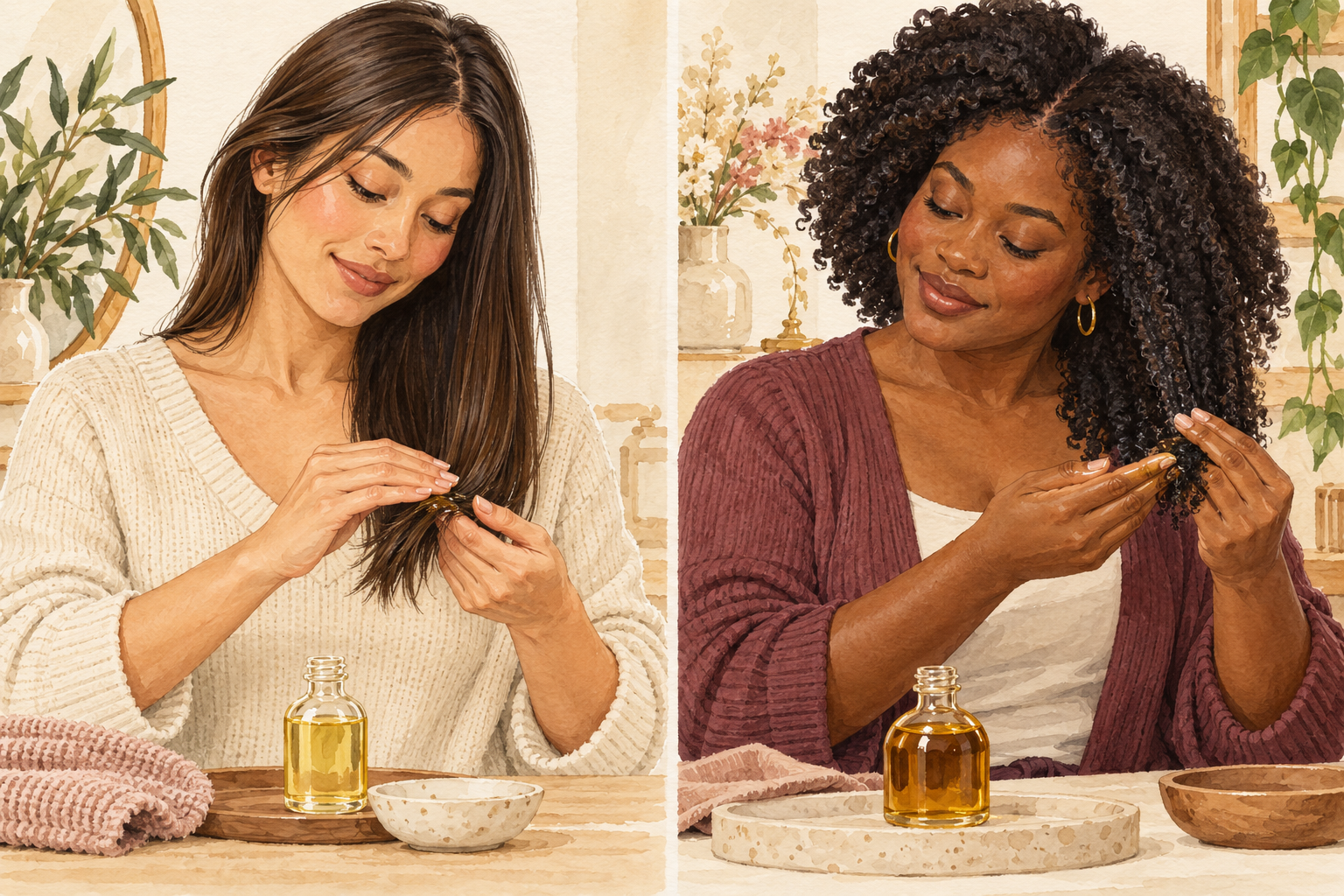
Choose light oils like grapeseed and jojoba for fine or oily hair, and richer ones like olive and avocado for thick or dry hair. A carrier oil is simply the base that carries everything else. Heavy oils on fine hair leave it flat and greasy by lunchtime, while light oils on thick hair disappear within an hour. Not sure? Rub a drop between your fingers and see how quickly it sinks in. Fast means light, slow and slick means rich. Pick two oils to begin with, not five, so you can tell which one your hair loves. If you cannot decide, jojoba is the friendliest place to start.
3. Start with the gentlest blend
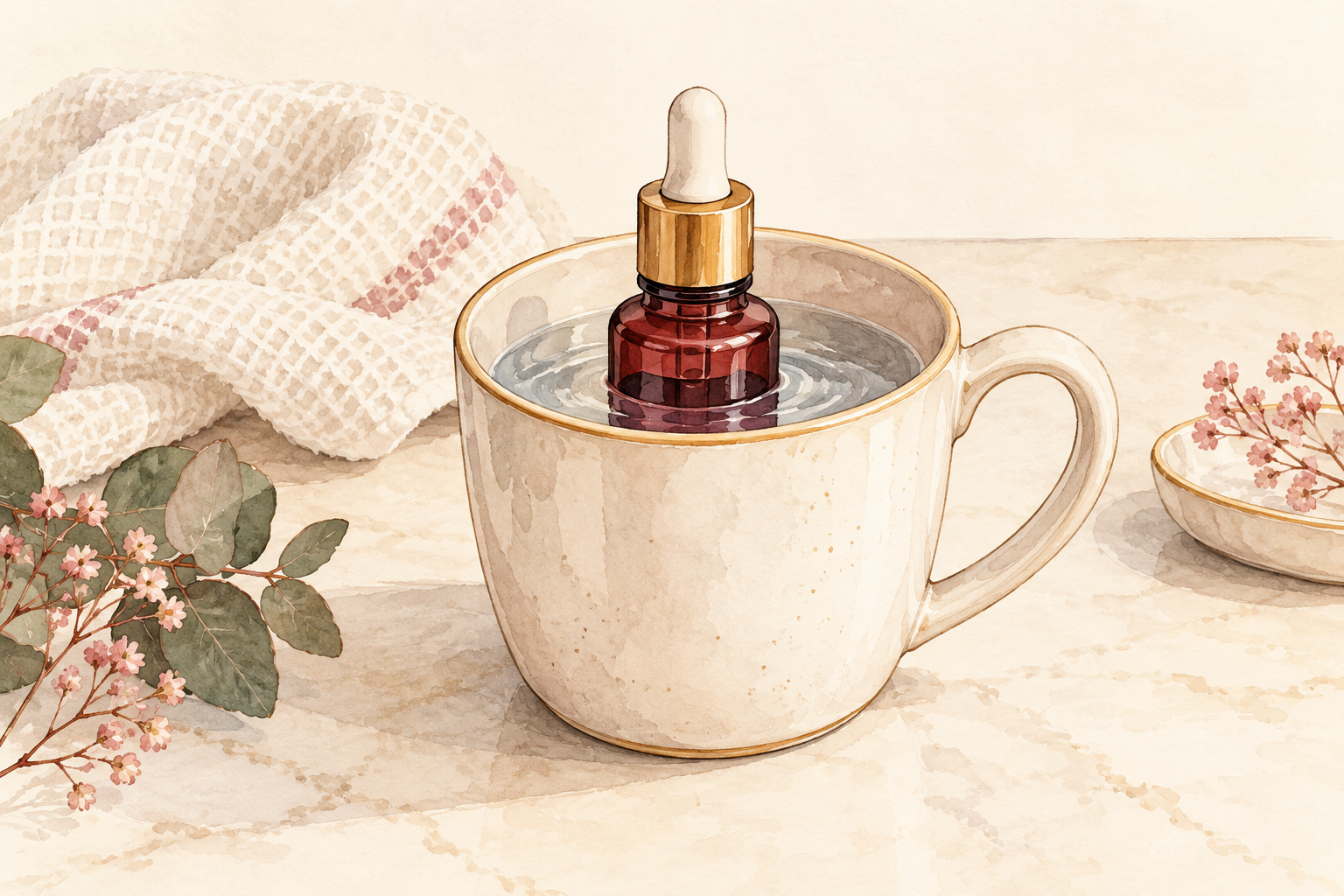
Mix two tablespoons of jojoba with two tablespoons of grapeseed oil, and nothing else. This is the lightest recipe on the list, so it is the safest first try for every scalp, even a sensitive one. Warm the bottle in a cup of hot tap water for a minute, then massage a teaspoon into the scalp. Leave it on for thirty minutes and shampoo it out. If your hair feels clean and soft afterwards, you have a good base. Measure with real spoons, not your eyes, because guessing leads to greasy mistakes. Make a small batch of four tablespoons, so it stays fresh.
4. Olive and castor for thick hair
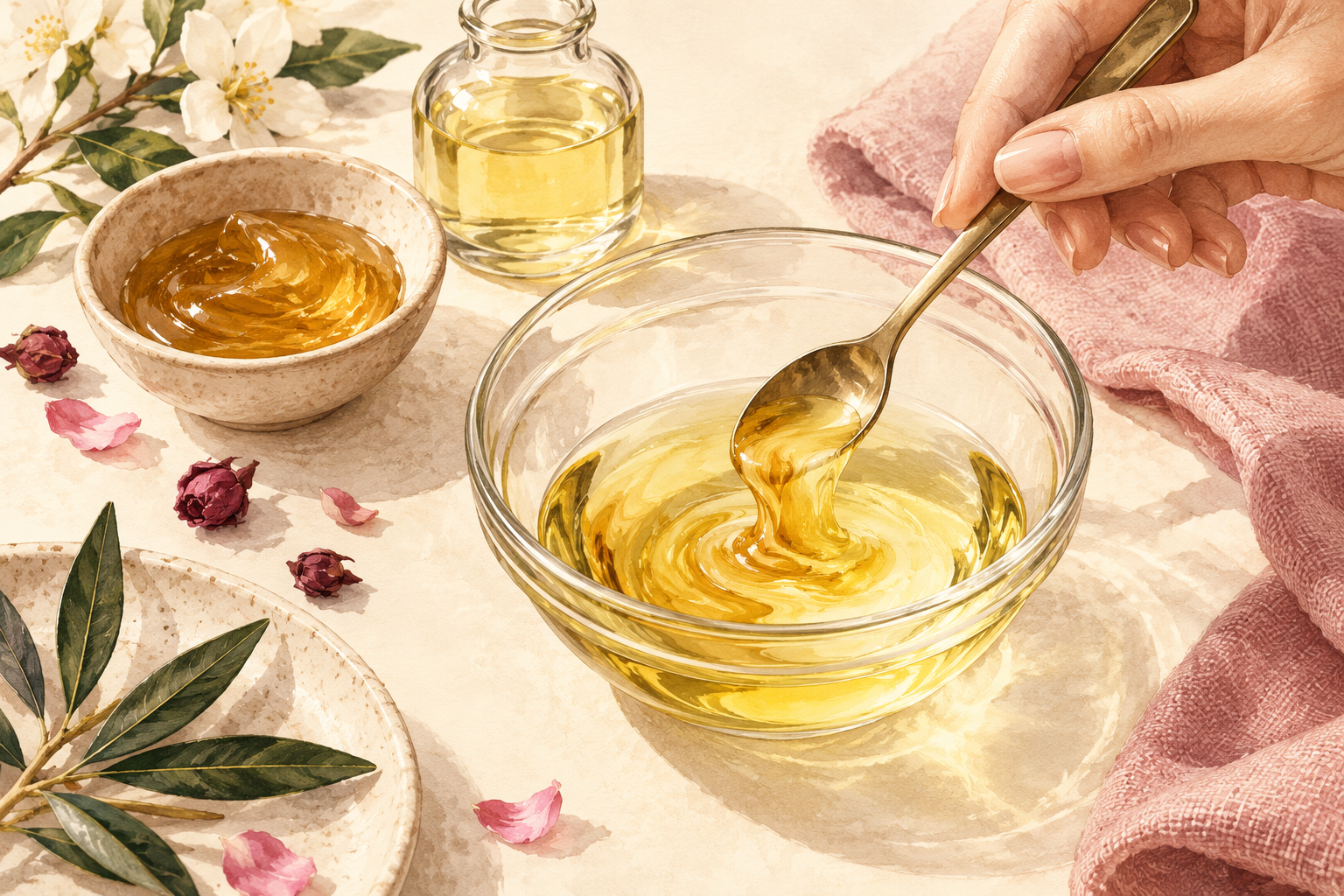
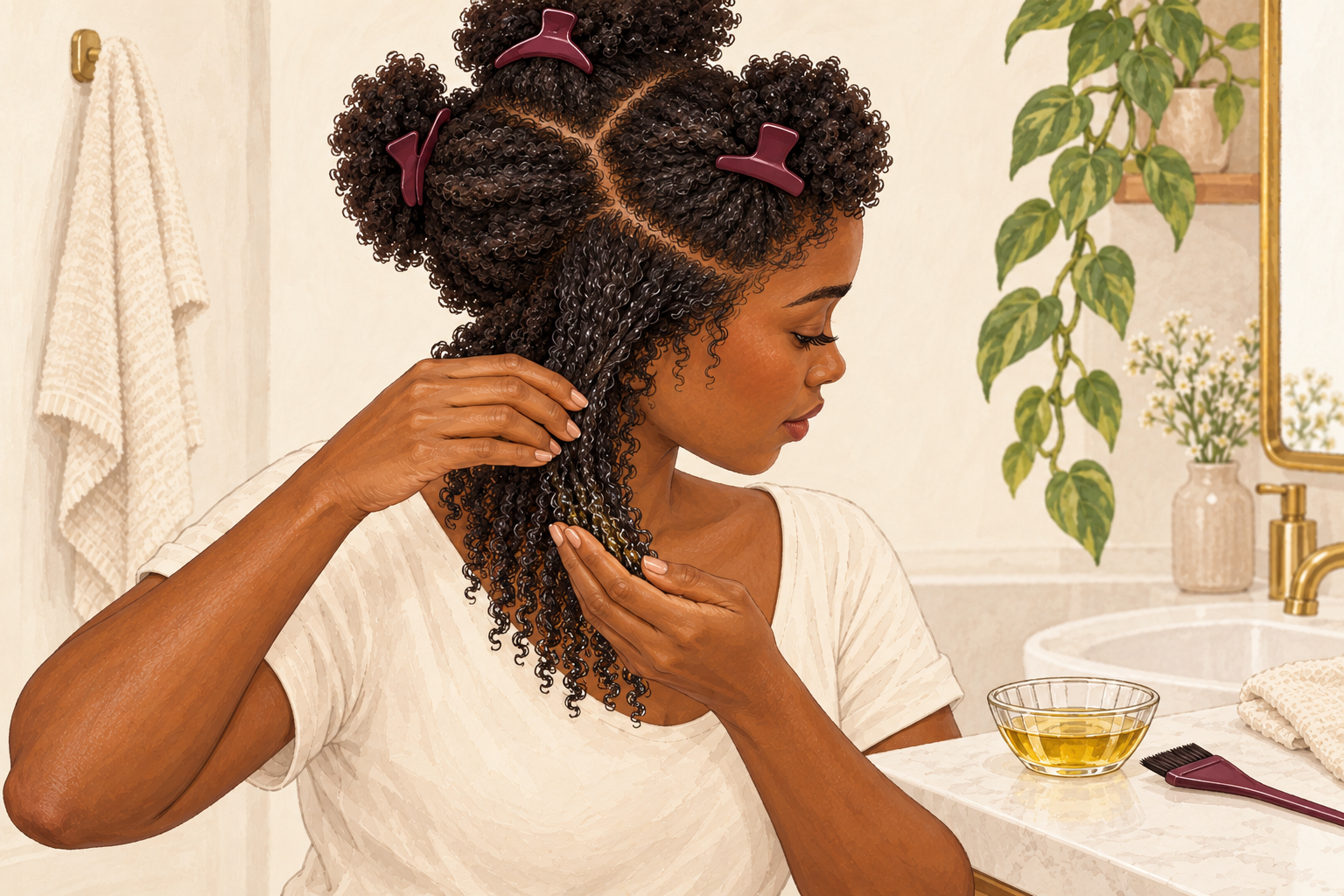
Combine three tablespoons of olive oil with one tablespoon of castor oil. Castor is sticky and heavy, so keep it to one part in four or it will be hard to wash out. This blend suits thick, coily or very dry hair that drinks oil. Warm it slightly and work it through your scalp in sections, then through the ends. Wrap your hair in a warm towel for twenty minutes. Shampoo twice to clear it. If it still feels coated, cut the castor to half a tablespoon next time. Nobody wants to wash their hair three times on a Sunday.
5. Avocado and jojoba for dry strands

Blend two tablespoons of avocado oil with one tablespoon of jojoba. Avocado oil is rich and soft, and jojoba keeps it from sitting too heavy. Smooth it down the lengths and ends of dry, rough hair, with just a little on the scalp. Leave it overnight under a satin bonnet and wash it out in the morning. Your hair should feel bouncy and cushioned. Use it once a week at most, since dry hair still needs a gap between oilings. If you feel tightness after washing, add a conditioner on top. The ends will feel soft and bendy by the next wash.
6. Almond and coconut for warm days
Mix three tablespoons of sweet almond oil with one tablespoon of melted coconut oil. Almond is light and smooth, and coconut helps protect hair before washing. Coconut can solidify in cold rooms, so keep this bottle somewhere warm. Use it as a pre wash oil for thirty minutes, and keep it off the scalp if you get breakouts along the hairline. Skip almond oil if you have a nut allergy. Warm days suit this blend best, because a runny oil spreads far more easily through the hair. One full tablespoon for the ends is plenty, and a few drops cover the rest.
7. Grapeseed and jojoba for fine hair
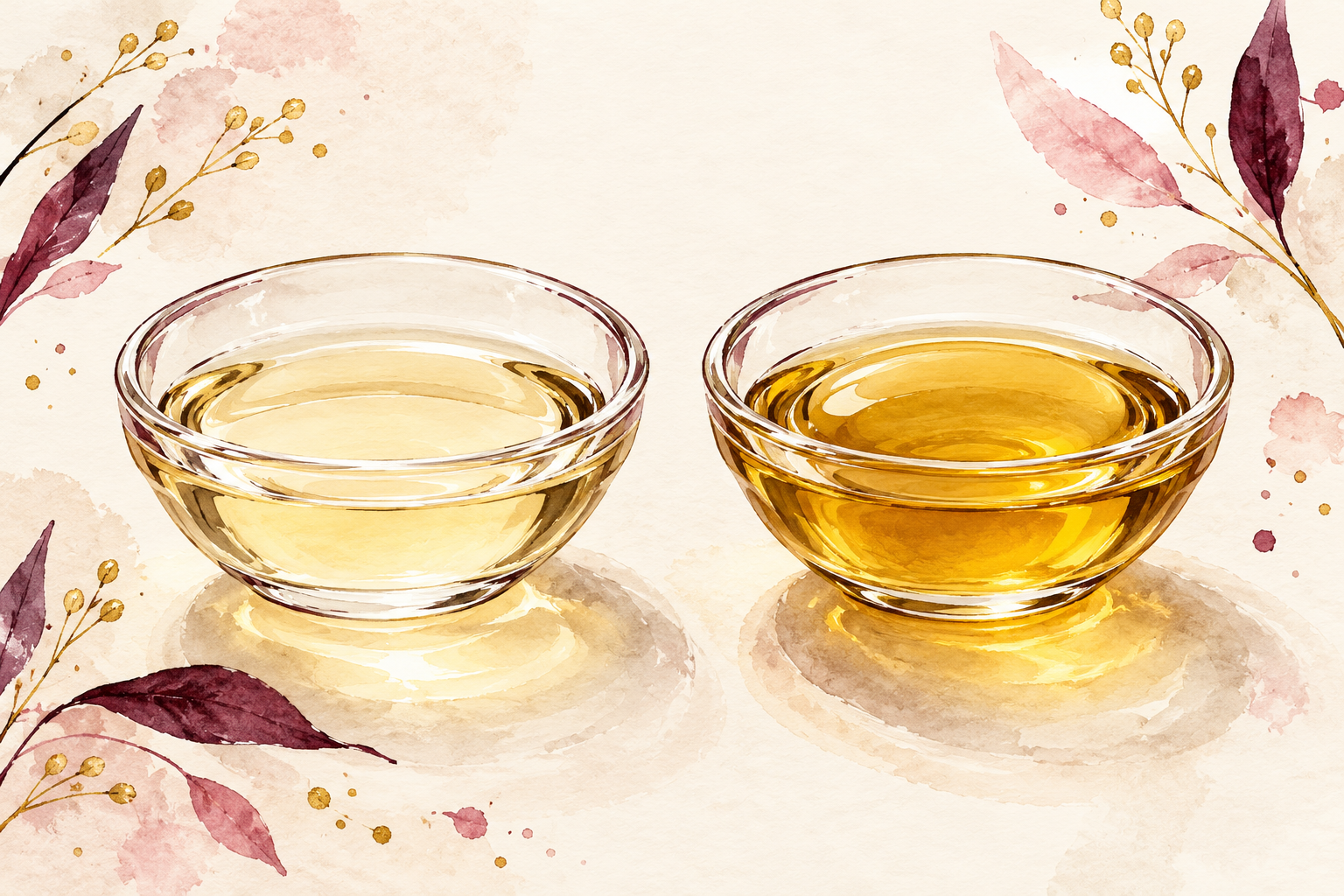
Use two tablespoons of grapeseed oil with one tablespoon of jojoba, and measure with the same spoon every time. Fine hair gets weighed down quickly, so this blend is the lightest of the strong ones. Rub it into the scalp before bed, then wash it out the next morning. It leaves hair feeling clean rather than slick. If your hair looks flat after use, halve the amount next time. Fine hair rarely needs more than a few drops on its ends, and the scalp can take the rest. A pea sized drop through the ends finishes the job.
8. Argan and squalane for a sensitive scalp
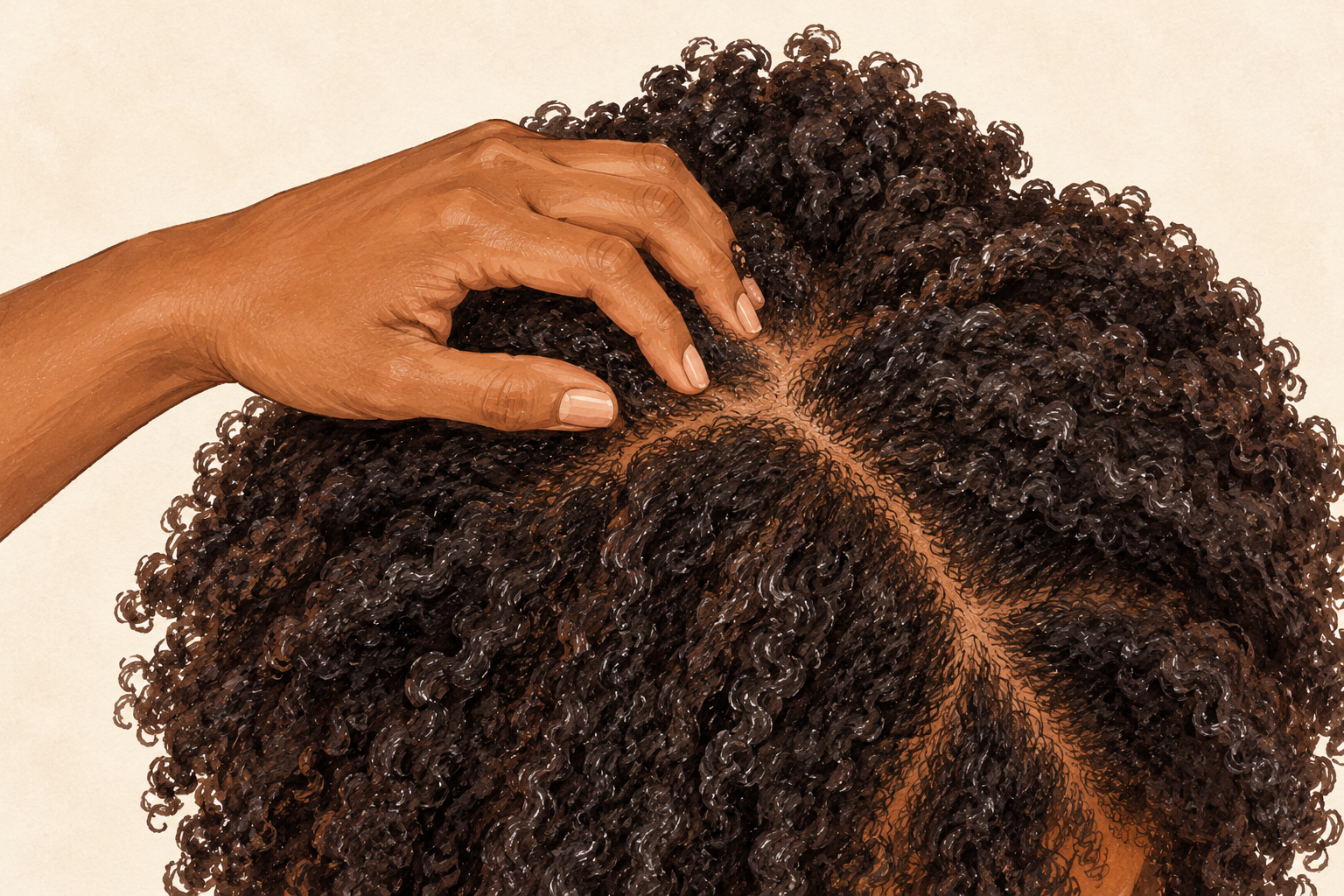
Mix one tablespoon of argan oil with one tablespoon of squalane, which is a very light oil that feels almost like silk. This is the mildest rich blend, so it suits a scalp that stings easily. Apply two or three drops to the parting only, then massage with slow circles. Argan is light on the hair, so you can leave it in. Always patch test first, even with gentle oils. Keep the amount small because a sensitive scalp does not need extra, and stop if you feel any tingling or heat. A little goes a long way on a delicate scalp.
9. Infuse dried herbs, not fresh
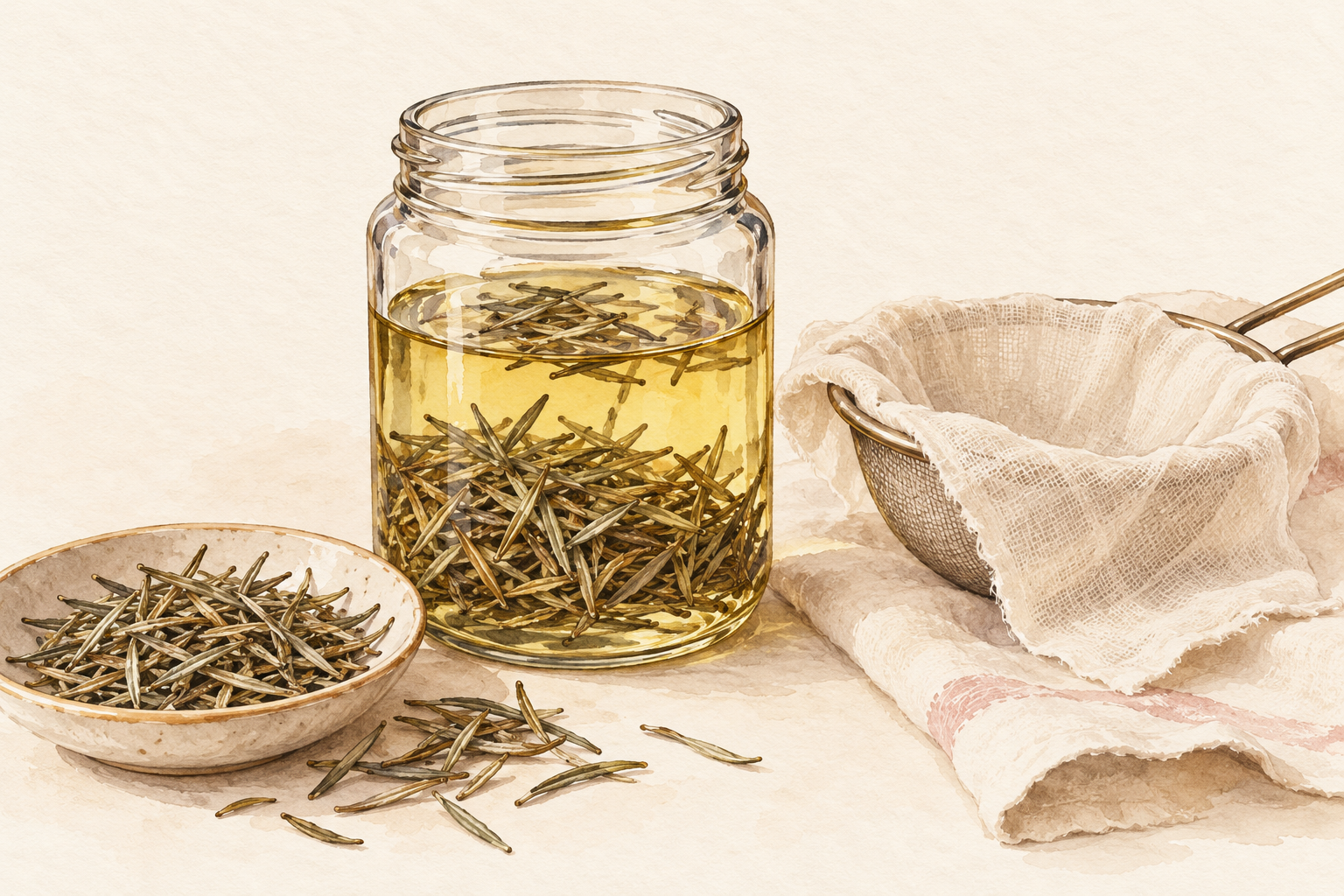
Fill a clean jar a quarter full with dried rosemary, cover it with a light oil, and leave it for two weeks, then strain. Fresh herbs hold water, and water in oil grows mold. Dried herbs are safe and smell lovely. Shake the jar once a day. Strain through a fine cloth and pour the oil into your bottle. A quick method is to warm the jar in a pot of hot water for an hour, which gives a lighter scent. Use the infused oil in place of a plain carrier in any blend above. Label it with the date, so you know when to use it up.
10. Keep essential oils to one, and go low
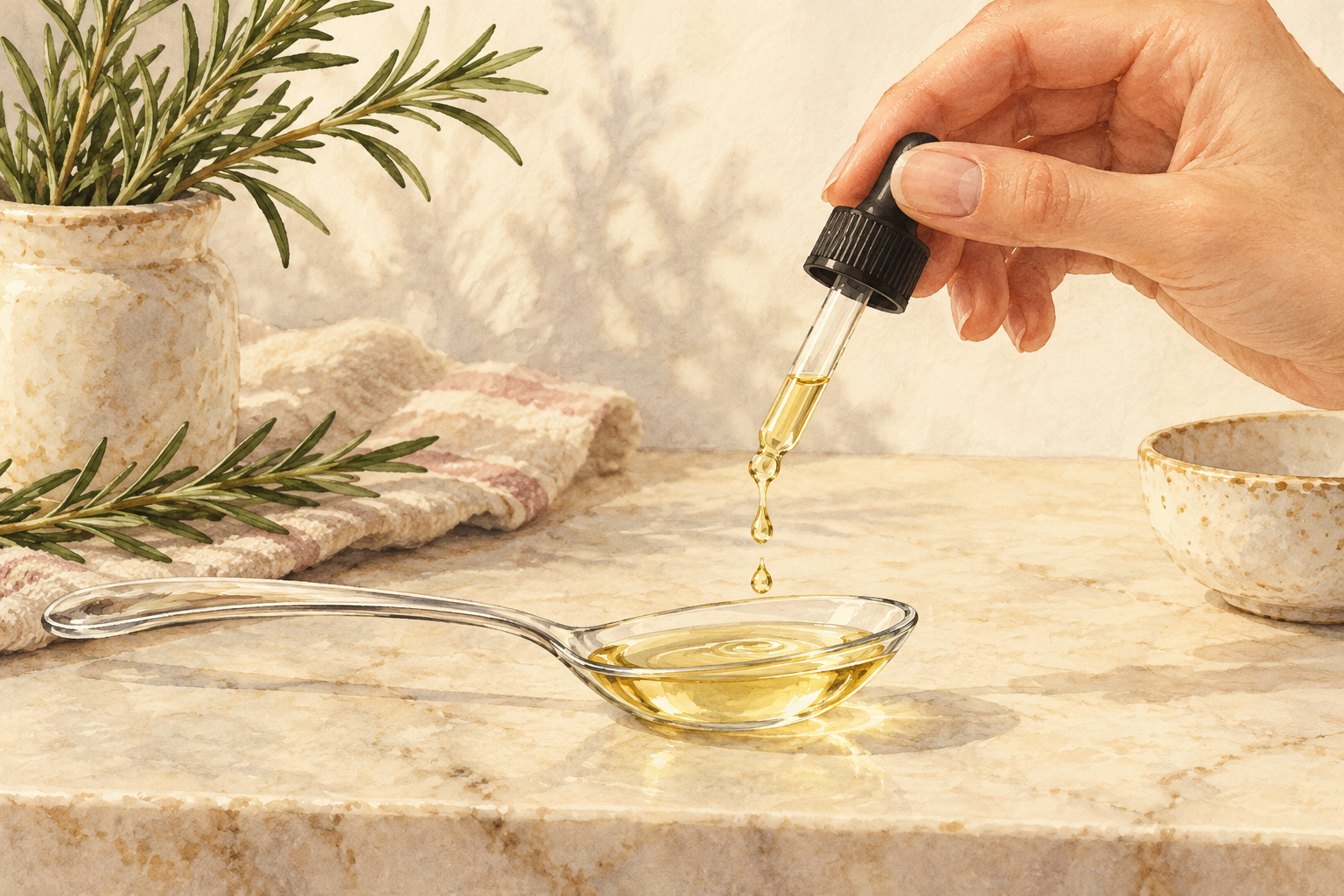
Add no more than six drops of one essential oil to a four tablespoon bottle of carrier oil. Essential oils are strong and can burn the scalp if you pour them in freely. Rosemary or lavender are popular, but one is plenty. Never apply them neat, and keep them away from your eyes. Skip them if you are pregnant or nursing. If you feel a sting, wash it off with shampoo straight away. More drops will not make hair grow faster, they will only make your scalp angry. If you want a scent, just smell the jar, and leave it at that.
11. Store it cool, dark and dated
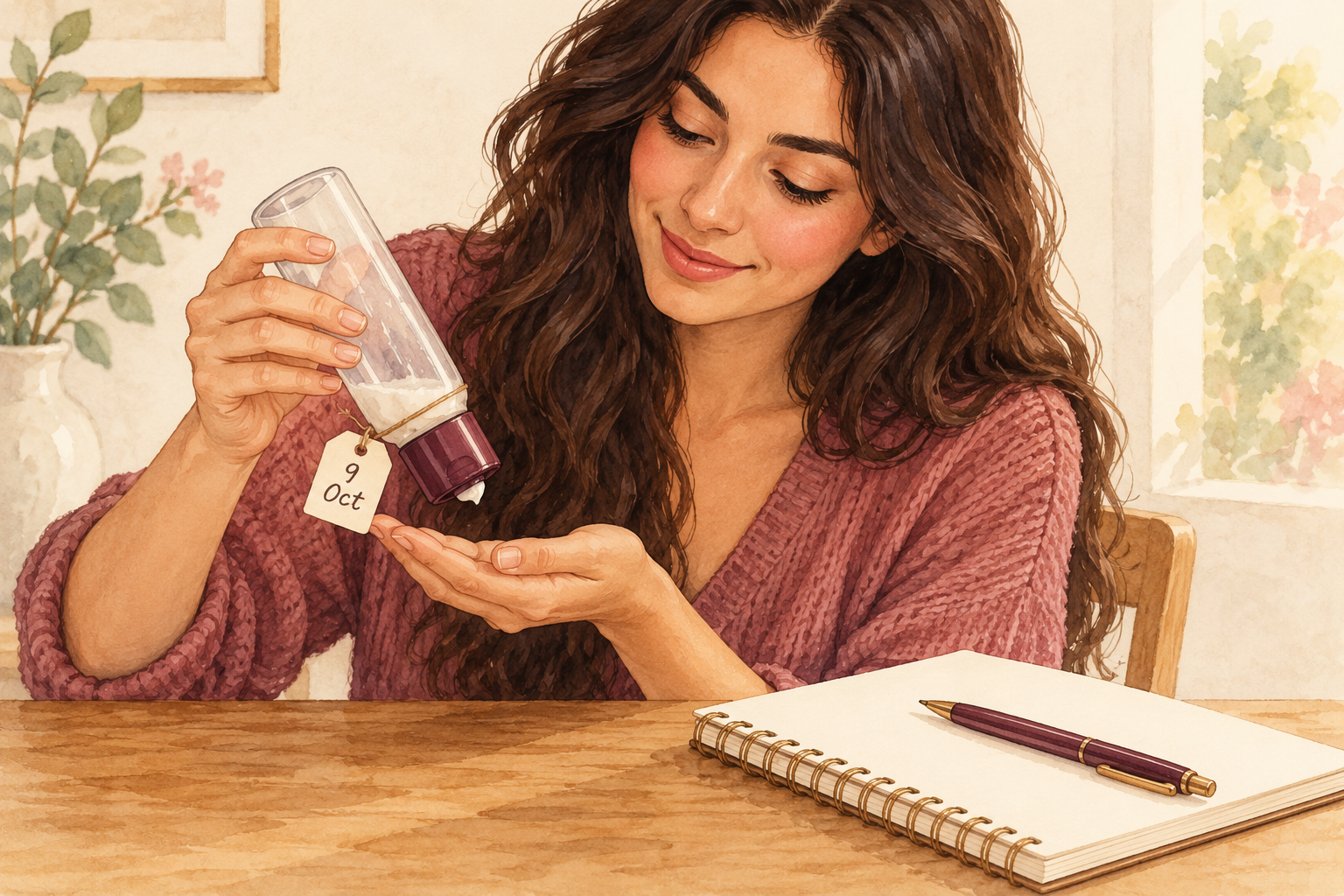
Keep your oil in a cupboard away from the stove, with the cap on tight, and use it within two to three months. Heat and light turn oils rancid, and rancid oil smells like old crayons. Throw it away if it smells sharp or looks cloudy. Make small batches so you finish them quickly. Wipe the dropper after each use so no hair or water goes back into the bottle. Fridge storage is fine for avocado and almond blends, though they may look cloudy until they warm up again. Pour small amounts into a travel bottle, and keep the main bottle closed and cool.
12. Use it twice a week and know what to expect

Massage for five minutes, leave it on thirty minutes to overnight, then shampoo well, twice a week at most. Oiling more often builds up on the scalp and can cause flakes or spots. After four weeks you will likely notice softer hair and less breakage. After eight weeks you may see a bit more length kept at the ends. A hair growth oil recipe will not change your genes, but it keeps the scalp comfortable. If you get itching, spots or flakes, cut back, and see your doctor if a rash spreads. Keep notes in your phone so you can see what each blend did.
Complete the Routine: Your Hair Growth Oil Recipe, Made Simple
Pick one blend, label it, and use it for eight weeks before you change anything. For more oil ideas, read about natural hair growth oil and castor oil for hair growth.