You start a plan on Sunday with six new products and big promises, and by Thursday it is all back in the drawer. A hair growth routine only works if you can keep it going on a tired day. These 12 steps build a weekly plan around three easy anchors, so start at number one tonight.
1. Choose three anchors, not ten tasks
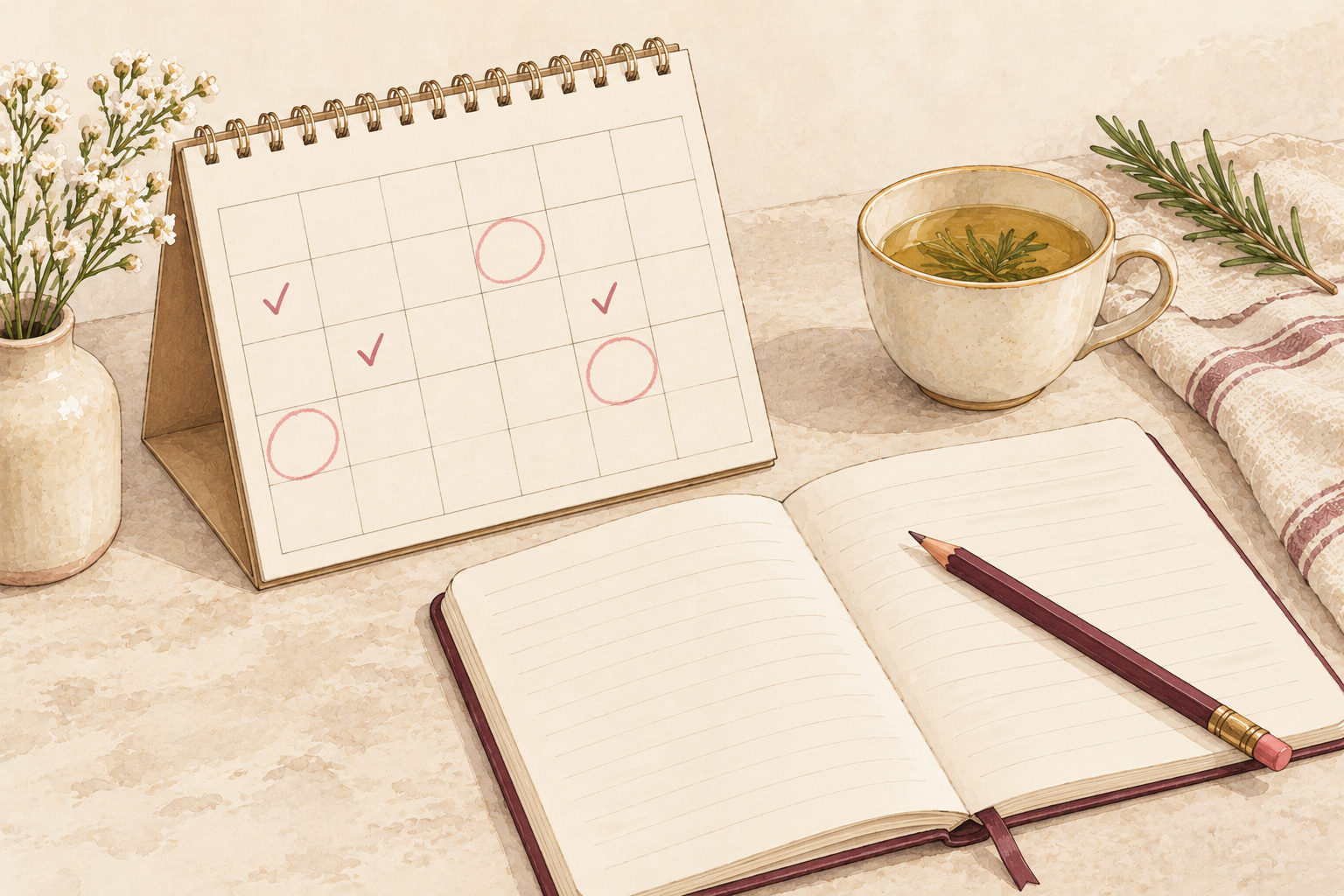
Pick three things you will do every single week, and ignore everything else for now. A good set is one proper wash day, scalp massage three times a week and a satin bonnet every night. That is already a full routine. Most plans collapse because they ask for an hour a day, and nobody has that. Write your three anchors on a sticky note and put it on your mirror. When the week goes wrong, doing just these three still counts as a win. Everything else in this list is a bonus that you can add one at a time once the anchors feel automatic.
2. Keep everything in one visible place
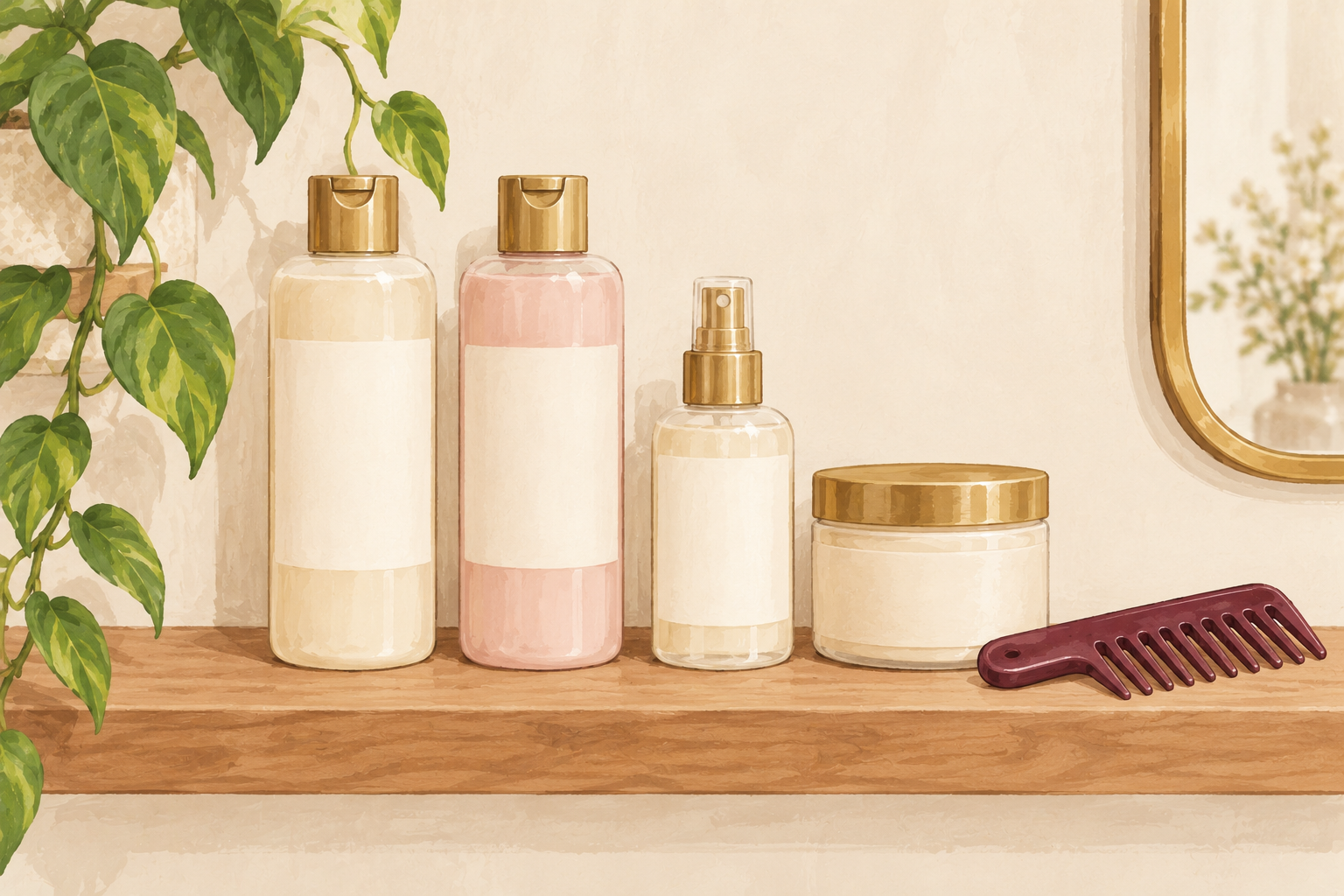
Put your comb, mask, leave in, spray and bonnet in one basket where you can see it. What is hidden in a cupboard does not get used, and a routine you have to hunt for supplies for will not last. Put the basket by your bed or on the bathroom shelf. Throw out empty bottles and half dried products so only what you use stays. A small, tidy basket makes wash day feel easy to start. Reaching for it should take under ten seconds, because that is the point where most people give up. Keep a second small pouch in your bag with a spare bonnet if you sleep away from home.
3. Attach each task to something you already do
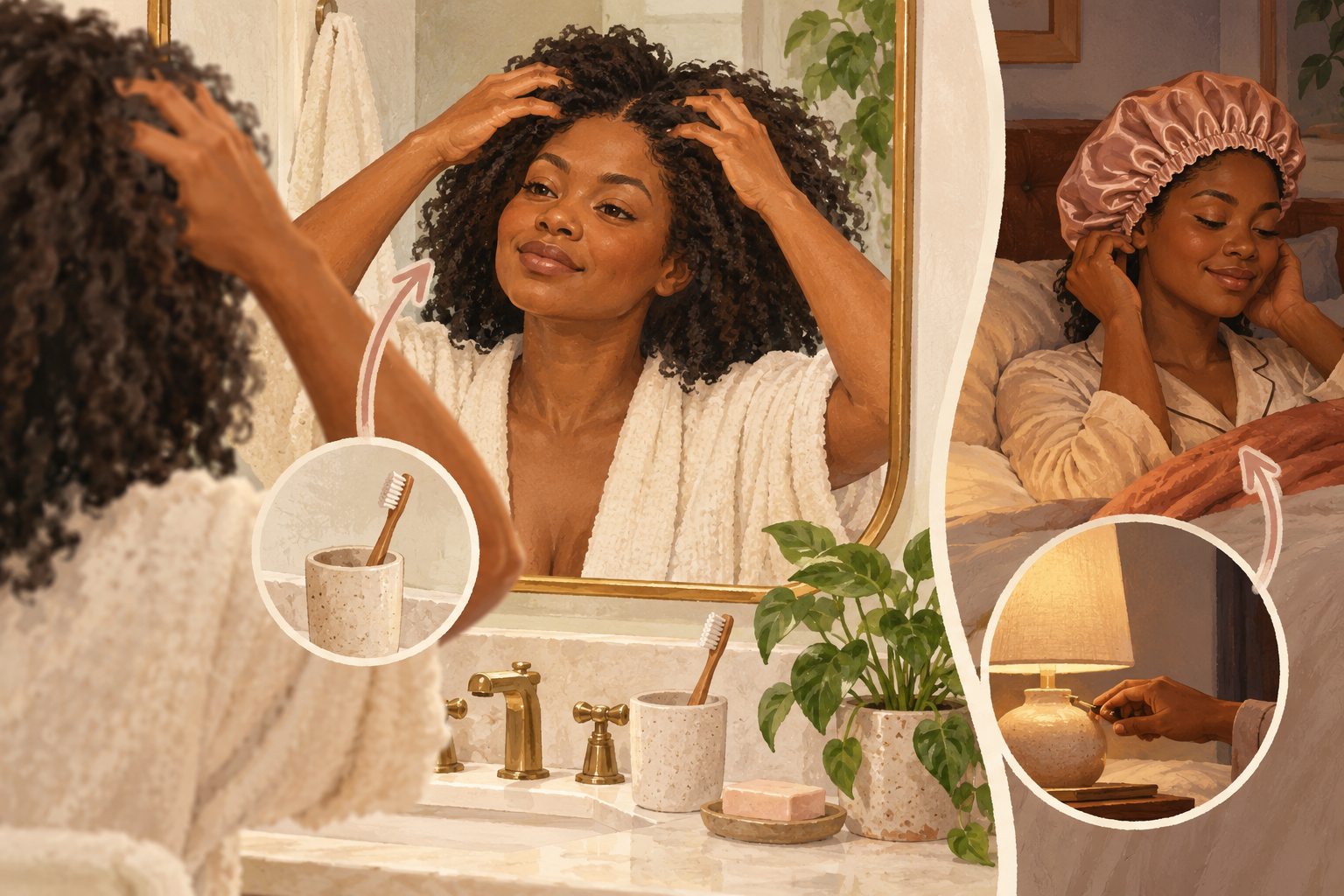
Tie your massage to brushing your teeth, and your bonnet to turning off the lamp. Habits stick when they ride on habits you already have. Nobody forgets to brush their teeth, so a three minute scalp rub afterwards happens without any reminder. Pick the wash day for a weekend morning, the same one every week. After two or three weeks you will not need to think about it at all. If you miss a day, do it the next time the old habit comes around instead of doubling up. Stack tasks that take under five minutes, since short jobs are far easier to keep than long ones.
4. Cleanse the scalp gently
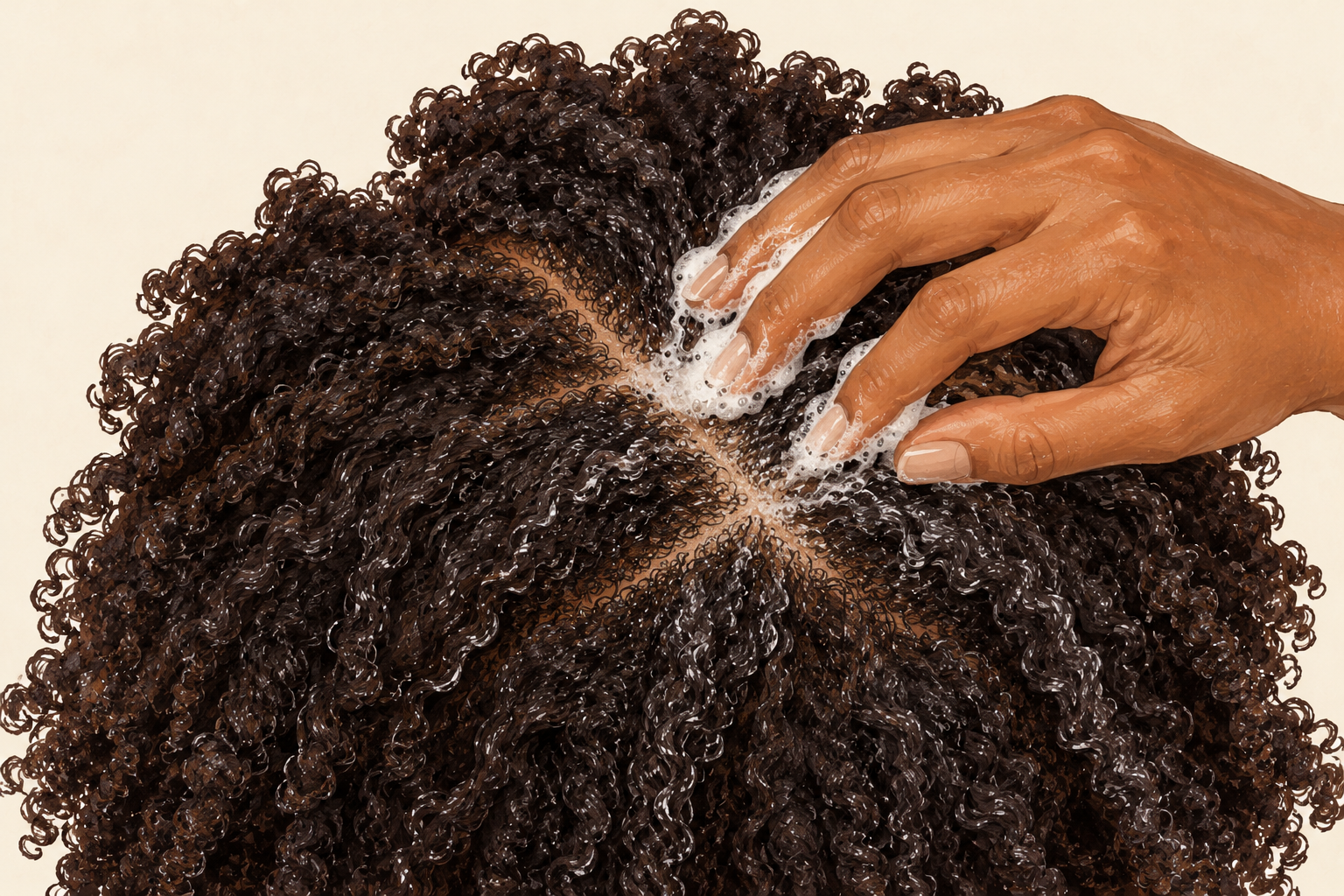
Wash once a week or every ten days, and focus the shampoo on your scalp. Use the pads of your fingers and small circles, never your nails. The suds will rinse down your lengths on their own, so you do not need to scrub them. A clean scalp is the soil your hair grows from, and buildup makes it itchy and dull. Rinse for a full minute longer than feels necessary. If your hair is dry or coily, wash less often, and if your scalp gets oily, wash a little more. Use lukewarm water, which cleans well without leaving your scalp tight and itchy.
5. Deep condition and detangle together
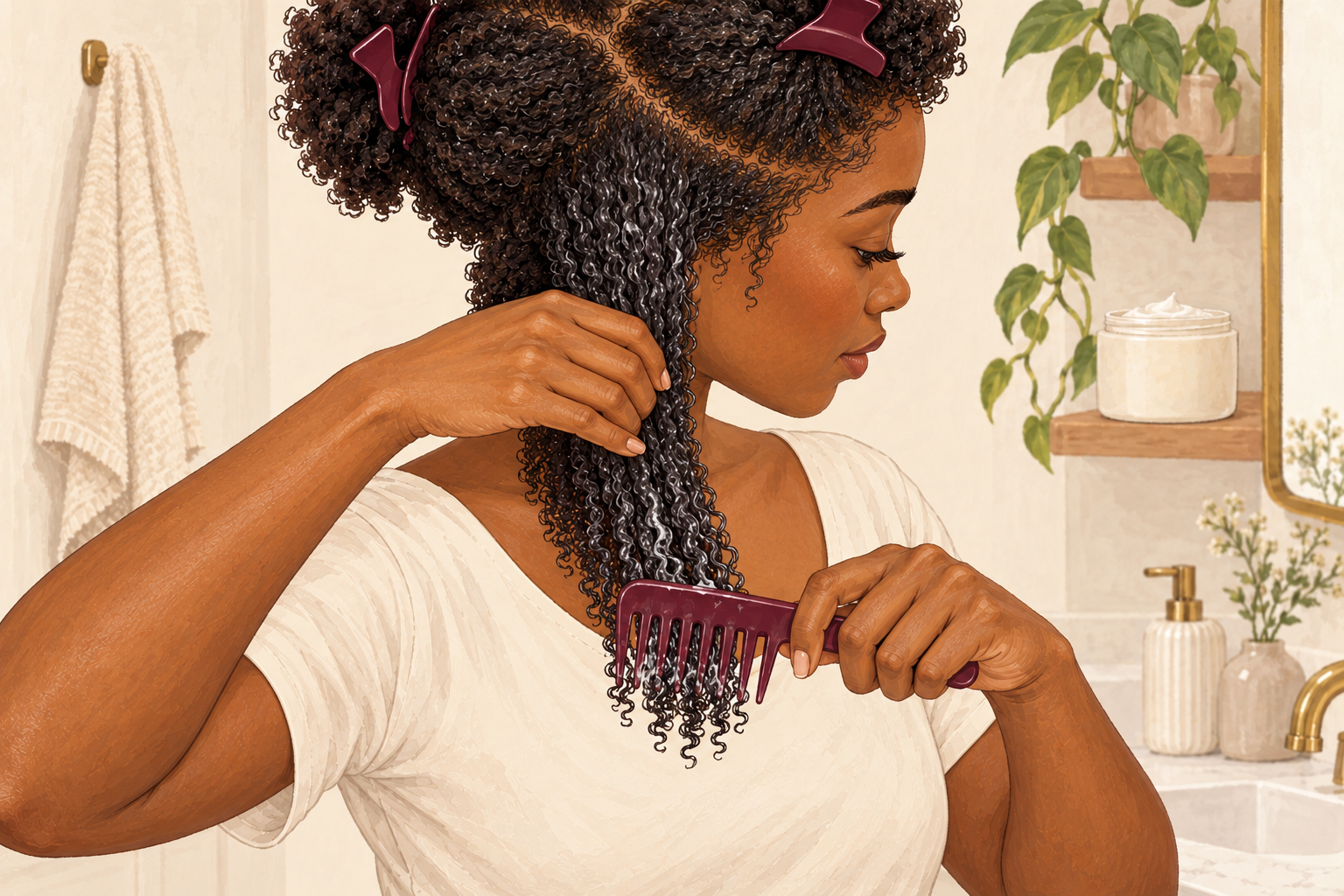
Smooth a thick conditioner over wet hair and comb it through gently while it sits there. The slippery mask makes knots easy to loosen, so you lose fewer strands than when you detangle dry. Work in four sections, starting at the ends and moving up. Leave it on for fifteen to twenty minutes with a warm towel over a shower cap. Rinse with lukewarm water. Hair that you handle this softly breaks less, and breakage is the real thief of length in most routines. Tie a scarf around your head while it sits so you can move around and get on with your morning.
6. Finish with leave in and a seal
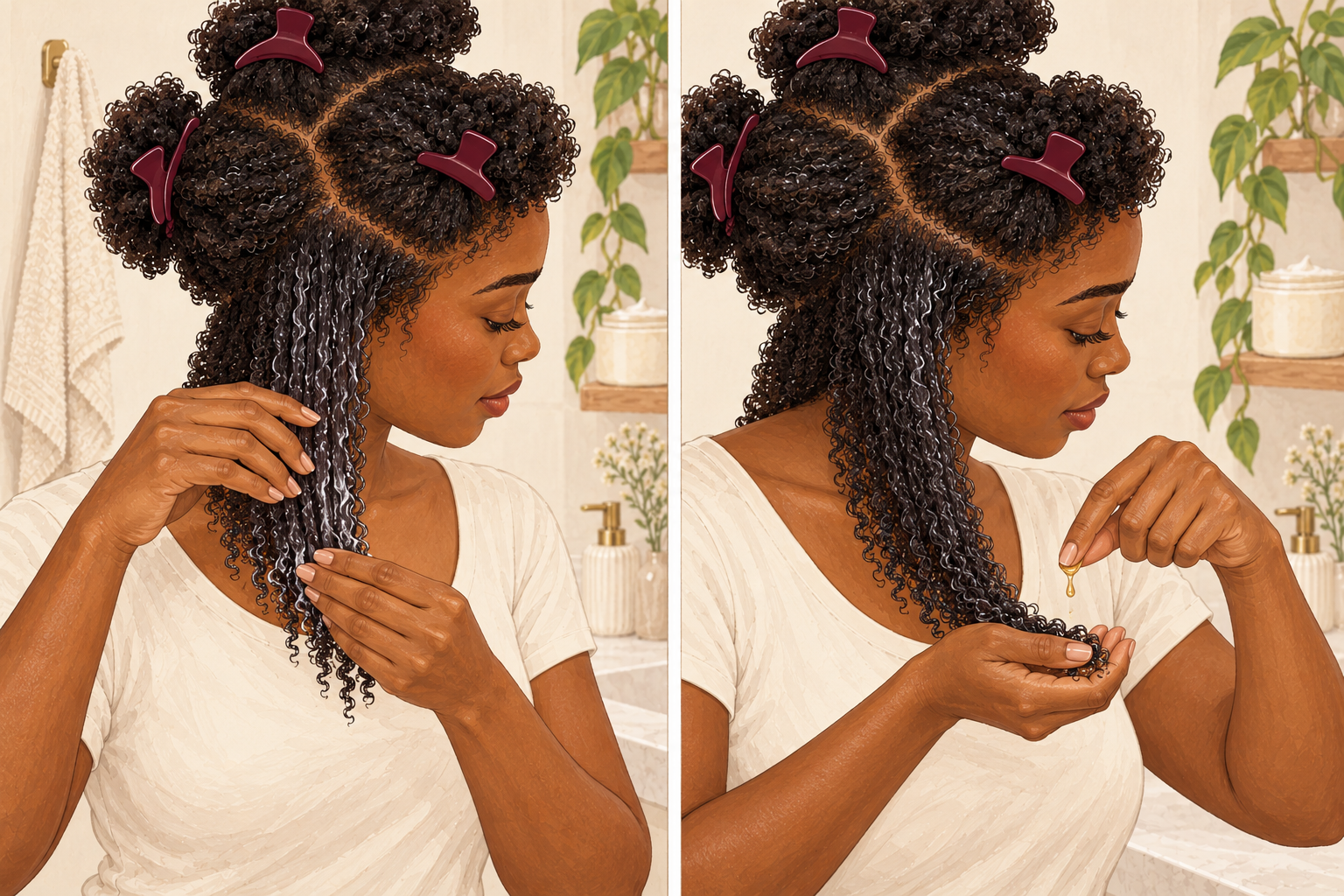
While your hair is still damp, press in a coin sized amount of leave in cream, then add a few drops of oil on top. Water goes first, cream second and oil last, so the moisture stays locked in. Focus on the ends, which are the oldest and driest part. A thin layer beats a heavy one, and you can always add more tomorrow. Your hair should feel soft and bendy, not coated or crunchy. This takes four minutes and protects the length you earned on wash day. On a rushed day, skip the oil and keep the cream, which is the more important half.
7. Massage your scalp three times a week
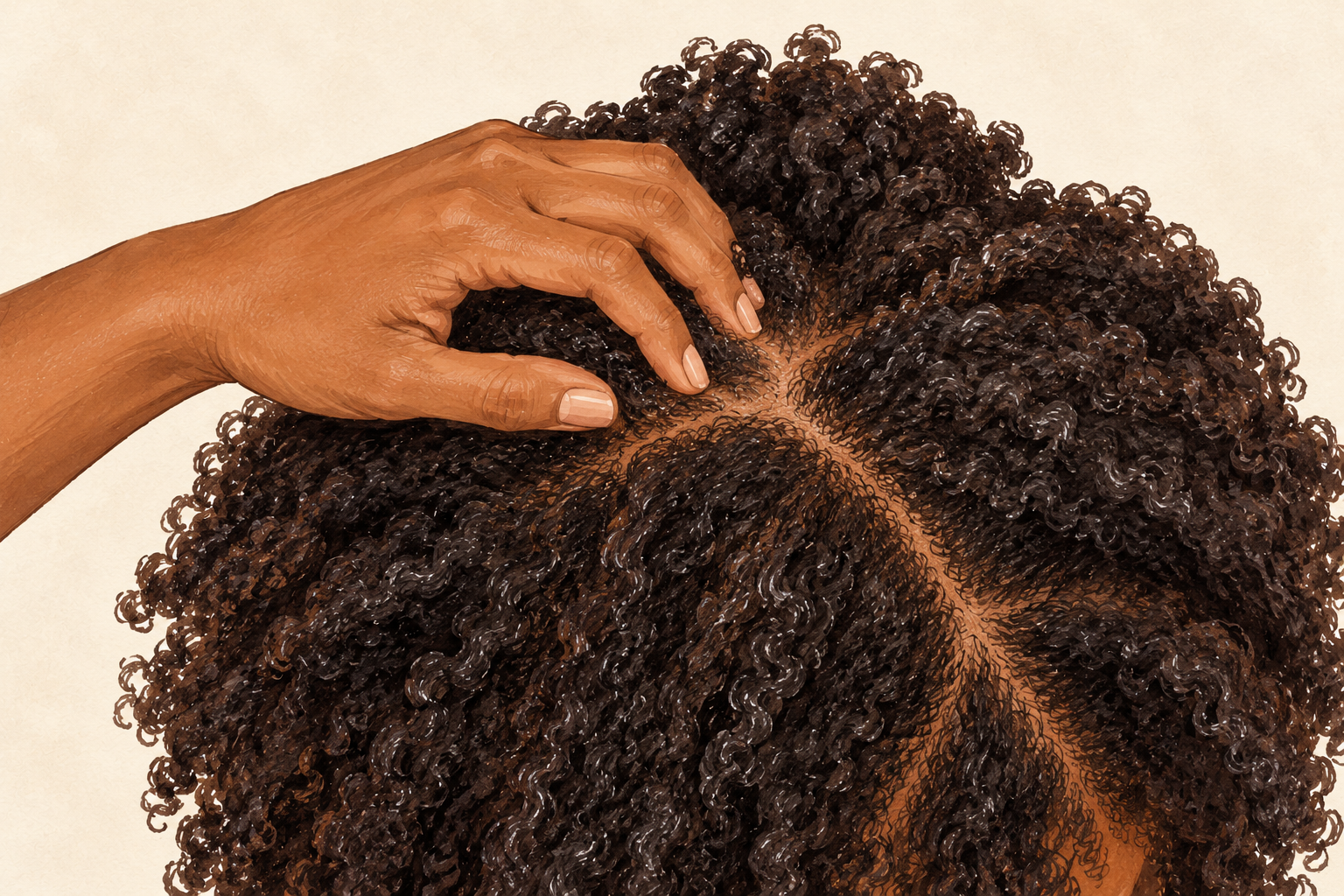
Spend three minutes with your fingertips, pressing and moving the skin in slow circles. Do it after brushing your teeth on Monday, Wednesday and Friday. Press firmly enough that the skin moves over the bone rather than just your fingers sliding over the hair. It should feel good and warm, never sore. A little light oil helps if your scalp is dry, and none at all if it runs oily. Over a few weeks your scalp may feel looser and more relaxed. Stop for the week if a spot feels bruised, and go lighter when you start again.
8. Refresh your ends with a light mist
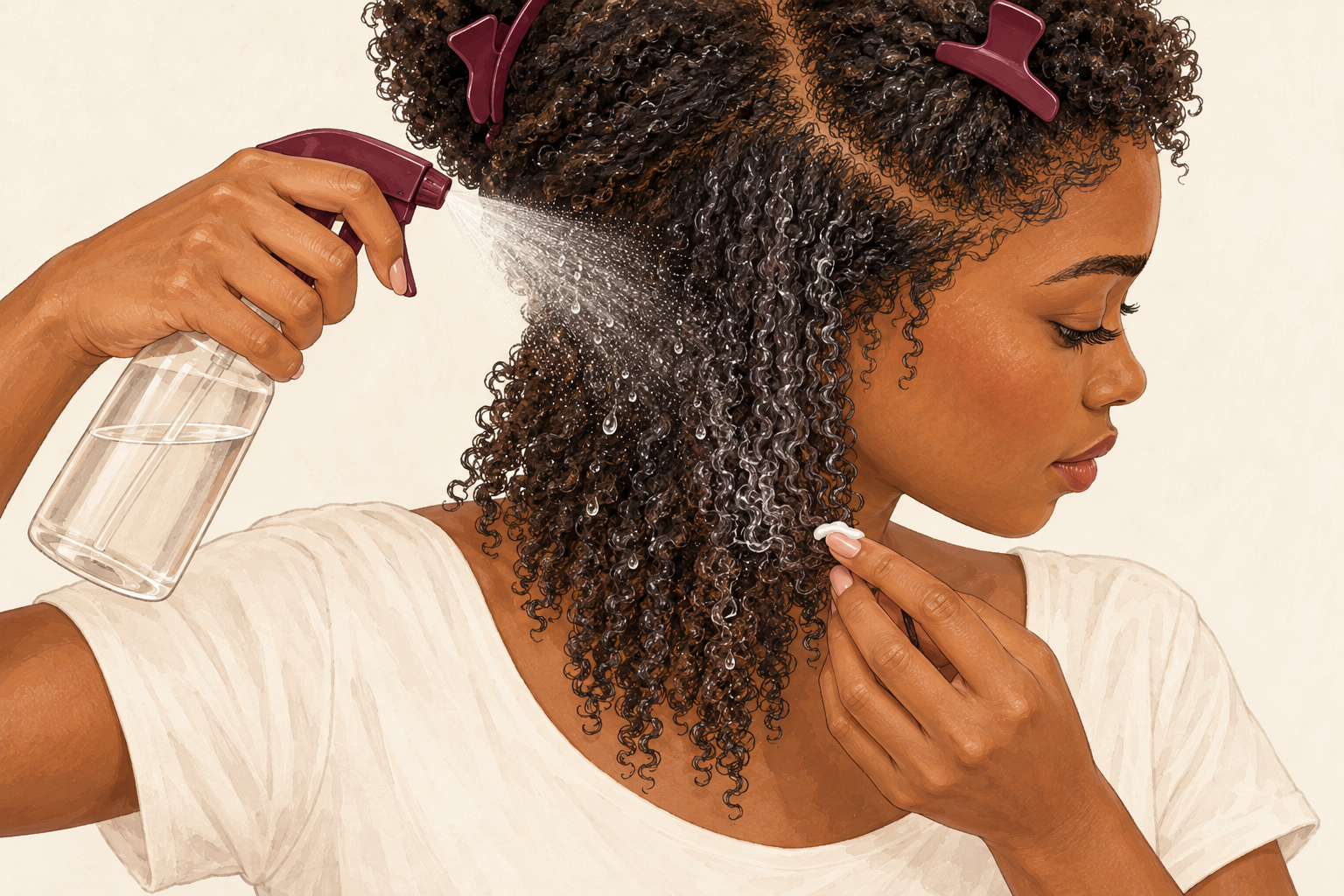
Midweek, spritz your ends with water mixed with a drop of leave in, then smooth with your palms. Dry ends crack and snap in dry air, and a light mist stops them getting brittle between wash days. Fill a small spray bottle with water and a teaspoon of your usual leave in, and shake it well. Two or three sprays are plenty. This is a thirty second job that fits into your morning. If your hair feels sticky afterwards, you used too much product, so use less next time. Do it again on the fourth day if your hair is very dry, then leave it be.
9. Secure your hair loosely before bed
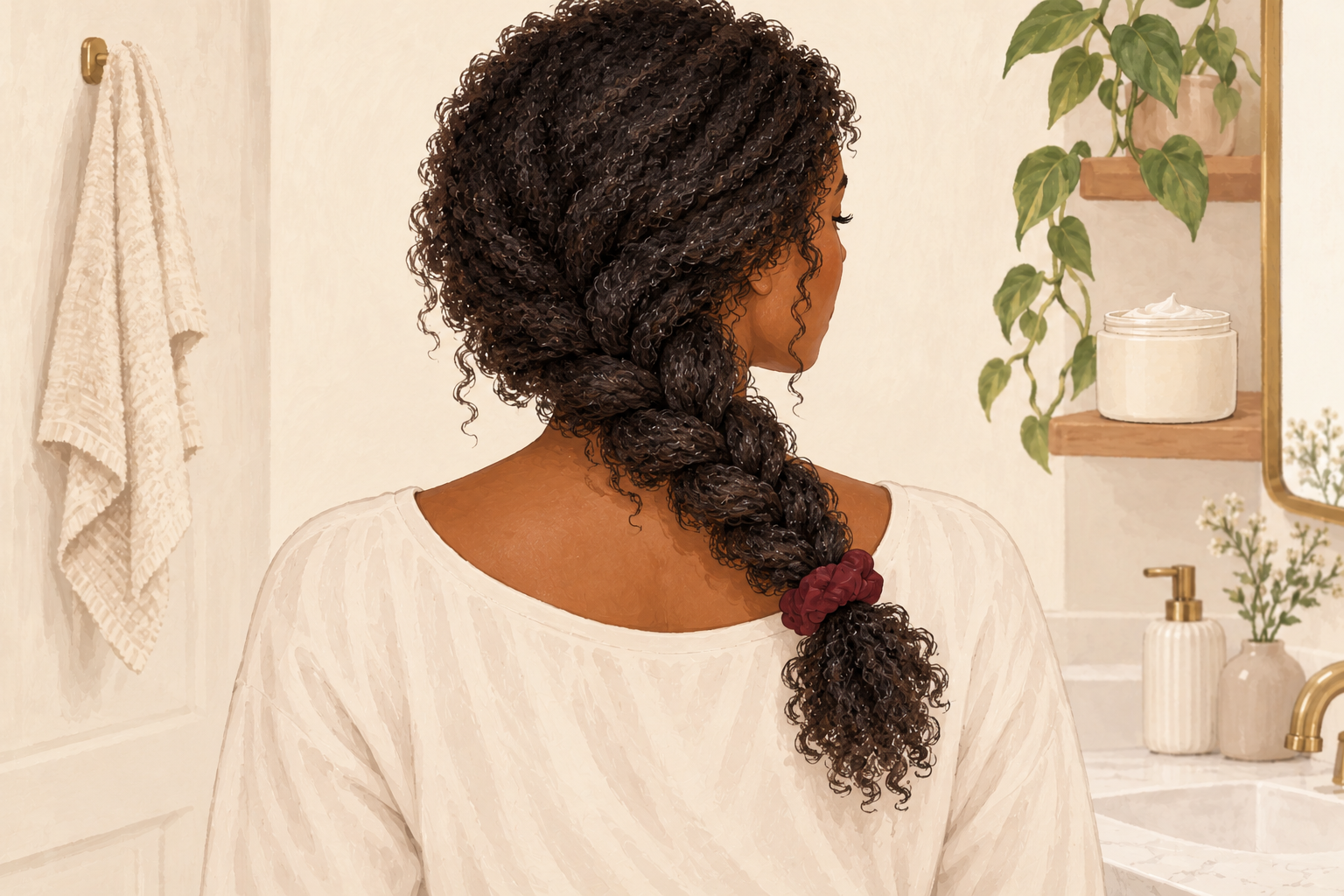
Gather your hair into one or two loose braids or a high puff with a soft tie. Tight styles tug at the roots all night, so keep the tie gentle. A loose style stops your hair tangling as you toss around, which means fewer knots to fight in the morning. Make sure the ends are tucked in so they do not rub on the pillow. It takes forty seconds. You will wake up with hair that looks nearly the same as when you went to bed. Undo the braids in the morning with your fingers and not a brush, to keep the pattern soft.
10. Cover your hair with satin

Slip on a satin bonnet or sleep on a satin pillowcase every night, even on lazy ones. Cotton drinks the moisture out of your hair and rubs the cuticle rough. Satin lets the strands glide, so you wake up with softer hair and fewer split ends. If the bonnet keeps sliding off, choose one with a wide, soft band, or tie a satin scarf. Keep a spare near the bed, because the clean one is always in the wash. This is the easiest anchor of all, because you are asleep while it works. Wash the bonnet every couple of weeks, because it collects oil and stale product.
11. Take photos and measure once a month

On the first of every month, stretch a strand from the nape and measure it, then take a photo in the same light. Hair grows about half an inch a month, so daily checking only makes you anxious. A monthly record shows the slow story, with softer ends and fewer breaks, long before the length looks different. Keep the photos in one folder on your phone. When a bad week hits, scroll back and see how far you have come. That small boost keeps you going when the mirror does not. Skip the mirror during the other weeks, since staring at your hair will not make it grow faster.
12. Keep what helps and drop what does not

After six weeks, sit down with your notes and ask which steps made hair feel better. Keep those, and drop whatever you only did out of guilt. Swap one thing at a time, like a lighter leave in or a different bonnet, so you can tell what changed. If a step makes your scalp itch or your hair feel heavy, it goes. A good hair growth routine is one you would still follow in a stressful month. What you will likely notice is steady softness, then fewer broken pieces, then a little more length. Then pick one new habit, add it for a month, and test it the same way.
Complete the Routine: Your Hair Growth Routine for Next Week
Tonight, set out your basket and put on your bonnet. For more help, read about castor oil for hair growth and curly hair care routine.