You hold your hands out in good light and suddenly spot every ridge, white dot and dull patch you never noticed before. Are these healthy nails or struggling ones? Most of us have no idea what normal looks like. Here are 12 signs, each with a gentle fix, so start at number one tonight.
1. A pinkish bed and a soft shine
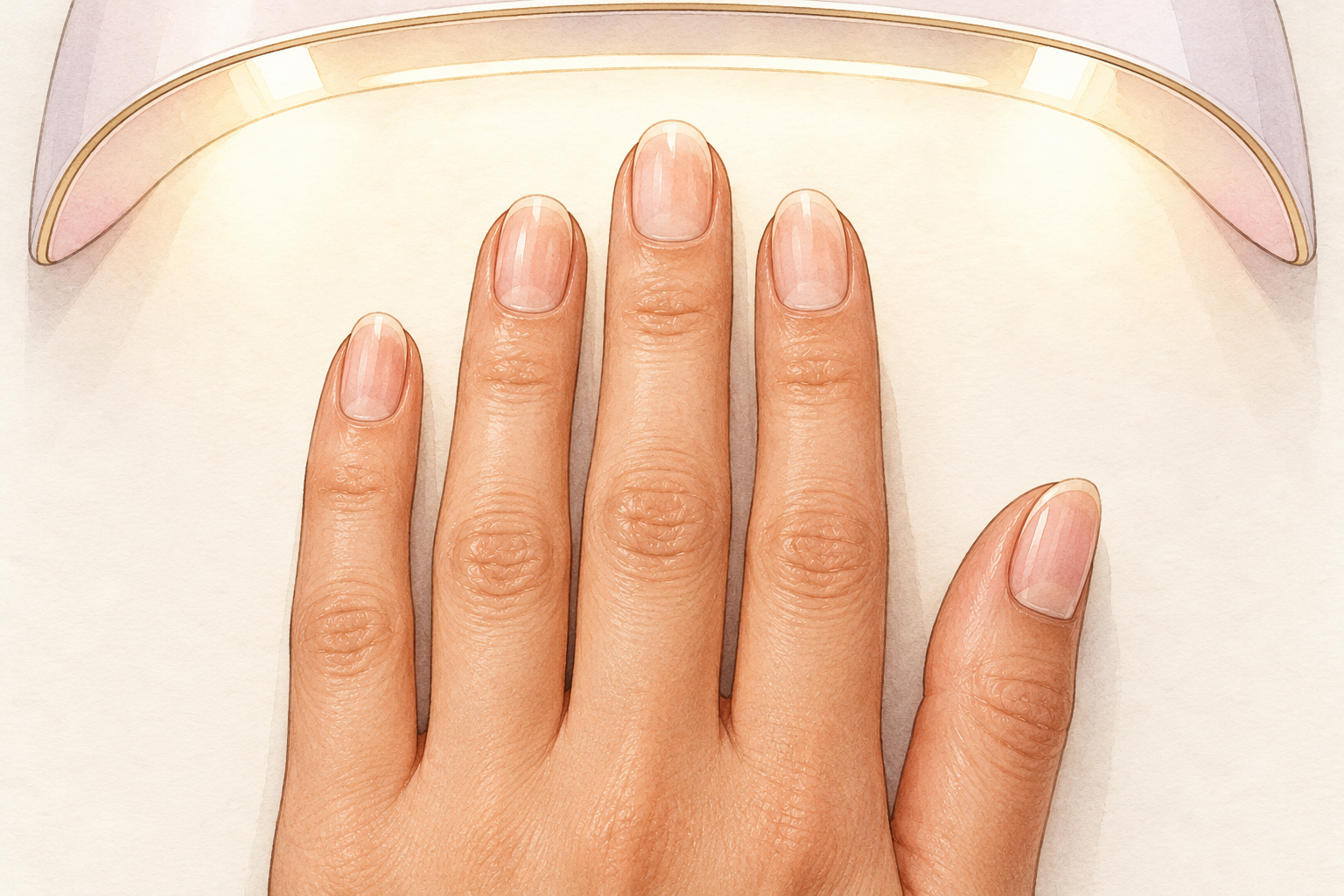
Healthy nails look pink under the nail, smooth on top and gently glossy, even with no polish. Press the tip of a nail for a second. The pink should fade to pale and come back quickly when you let go. That tells you the blood is moving nicely under the nail. Look at all ten in daylight rather than under a yellow bulb, because bad light hides the true color. The shine does not have to be mirror bright, just a soft sheen like the inside of a shell. If most of your nails match this, you are already doing well, so keep your routine small and steady.
2. A nail that bends a little before it breaks
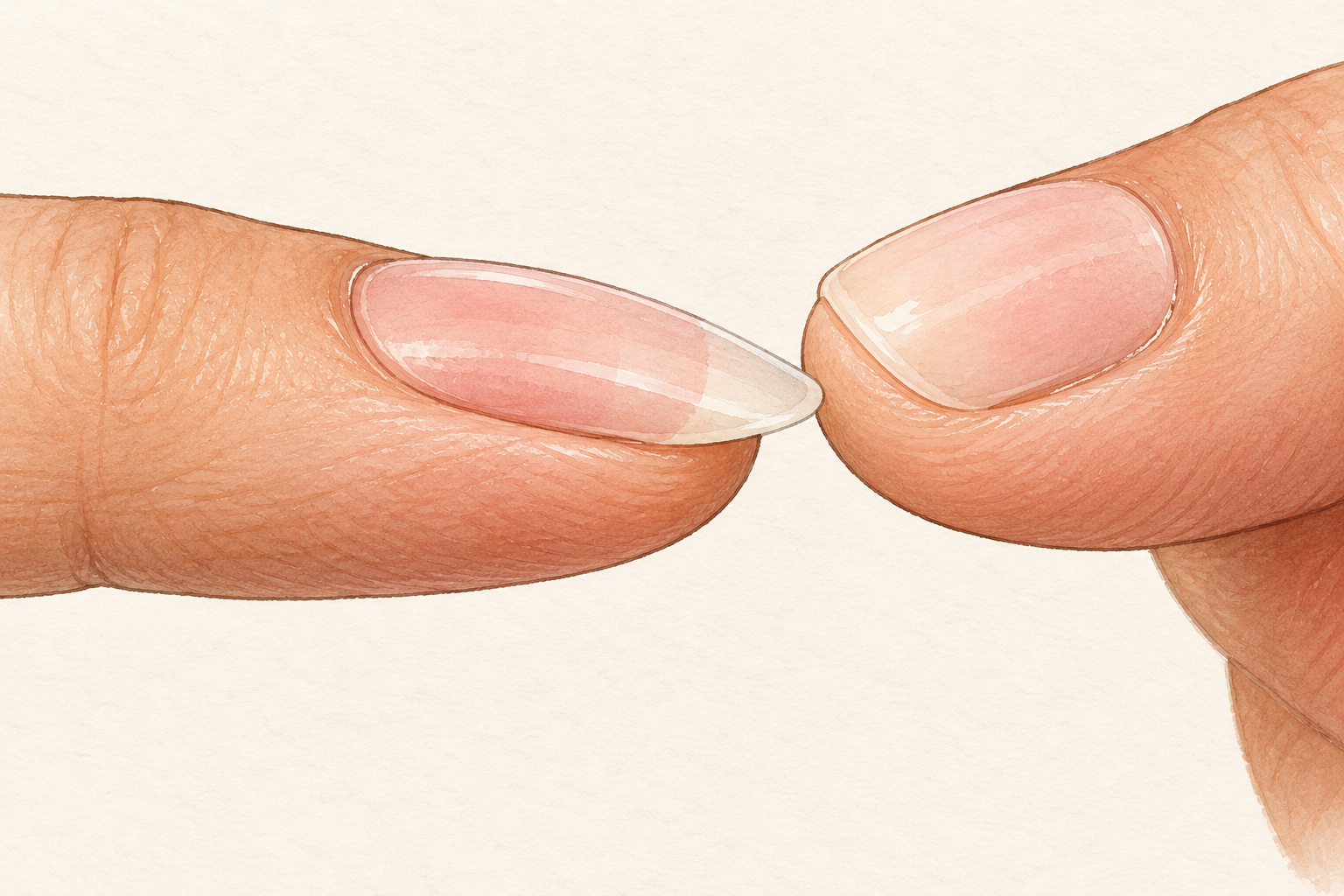
Press the free edge gently with your thumb and feel for a small amount of spring. A healthy nail flexes, then returns. One that snaps or splits at once is dry and brittle, while one that folds like paper is soft and thirsty. Both are about moisture, not strength you can buy. Test one nail rather than all ten, and do it after a warm wash when nails are softest. If the test makes a nail catch, file the edge smooth and carry on. Repeat the press once a week and you will learn your own baseline, which is more useful than any chart.
3. A surface that feels smooth
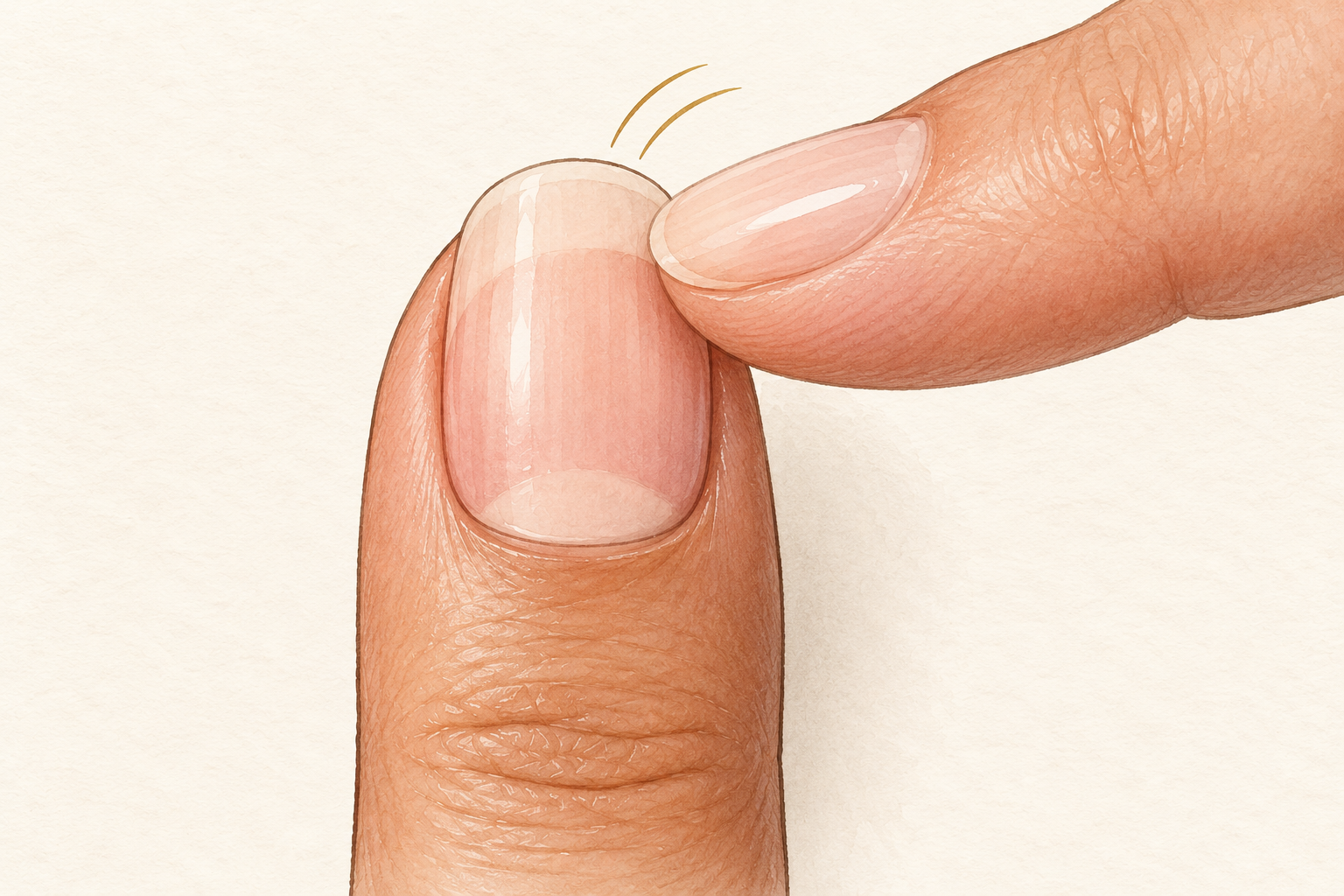
Run your fingertip over each nail and notice any rough or bumpy patches. A smooth surface means the layers are lying flat. Rough patches usually come from picking at polish, scraping with a tool or using a coarse file. Stop the scraping and the new nail grows in smoother. Buff nothing for now, because buffing thins the nail further. A drop of oil on the surface at night helps it sit flat. Be patient, because a nail takes about four to six months to grow out fully, so a rough patch near the base is old news by the time it reaches the tip.
4. Fine lines running up and down
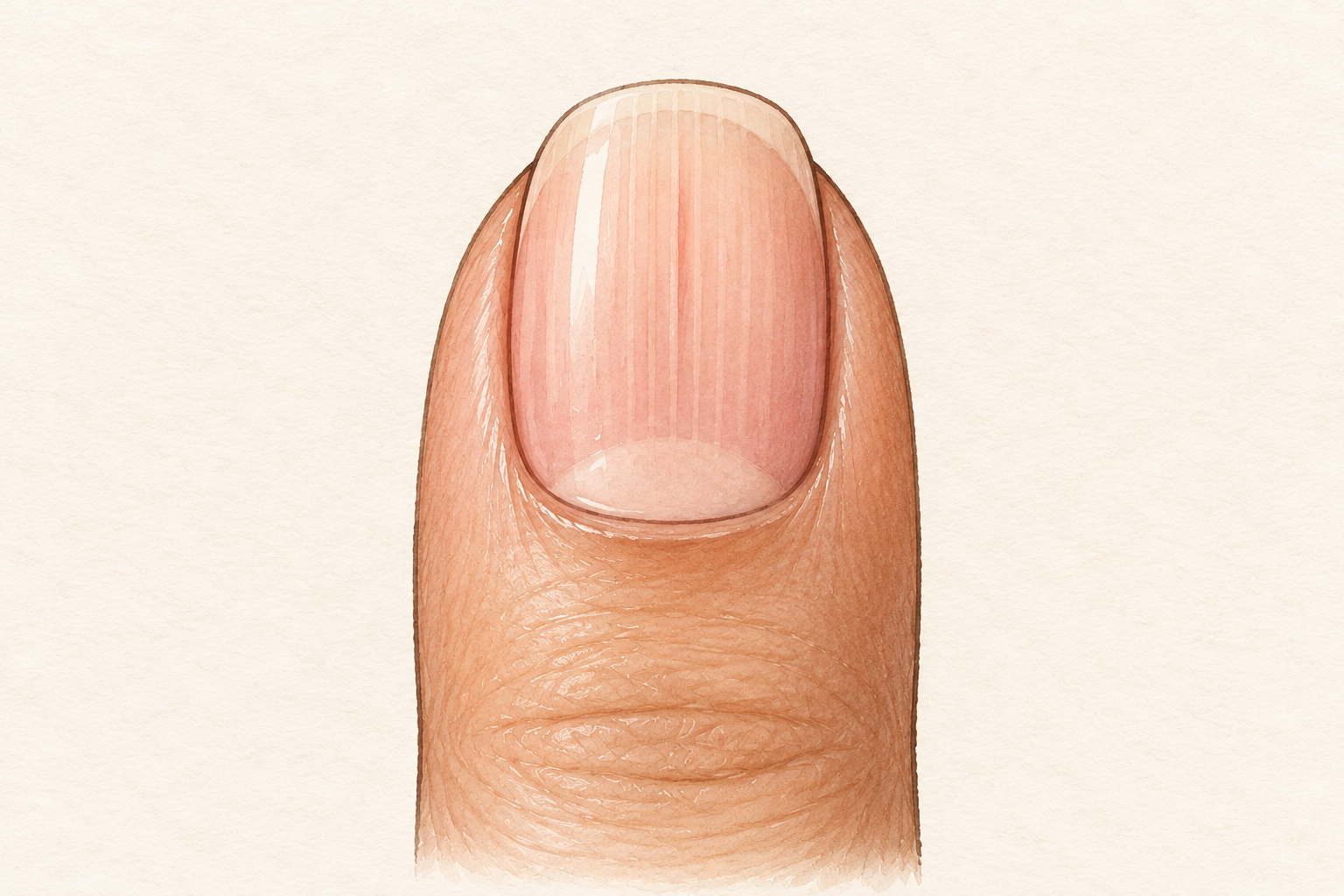
Soft vertical ridges are common and usually nothing to fear. They tend to show up more as the years pass, a bit like fine lines on skin. Moisture helps them look softer, so press in cuticle oil every night and use hand cream after each wash. Skip the ridge filling polishes that you buff in, because buffing thins the nail and makes it weaker. Think of the ridges like the grain in wood, part of the nail rather than damage on it. They should stay put and look the same from month to month, so a photo today will tell you later if anything has changed.
5. A dent straight across one nail
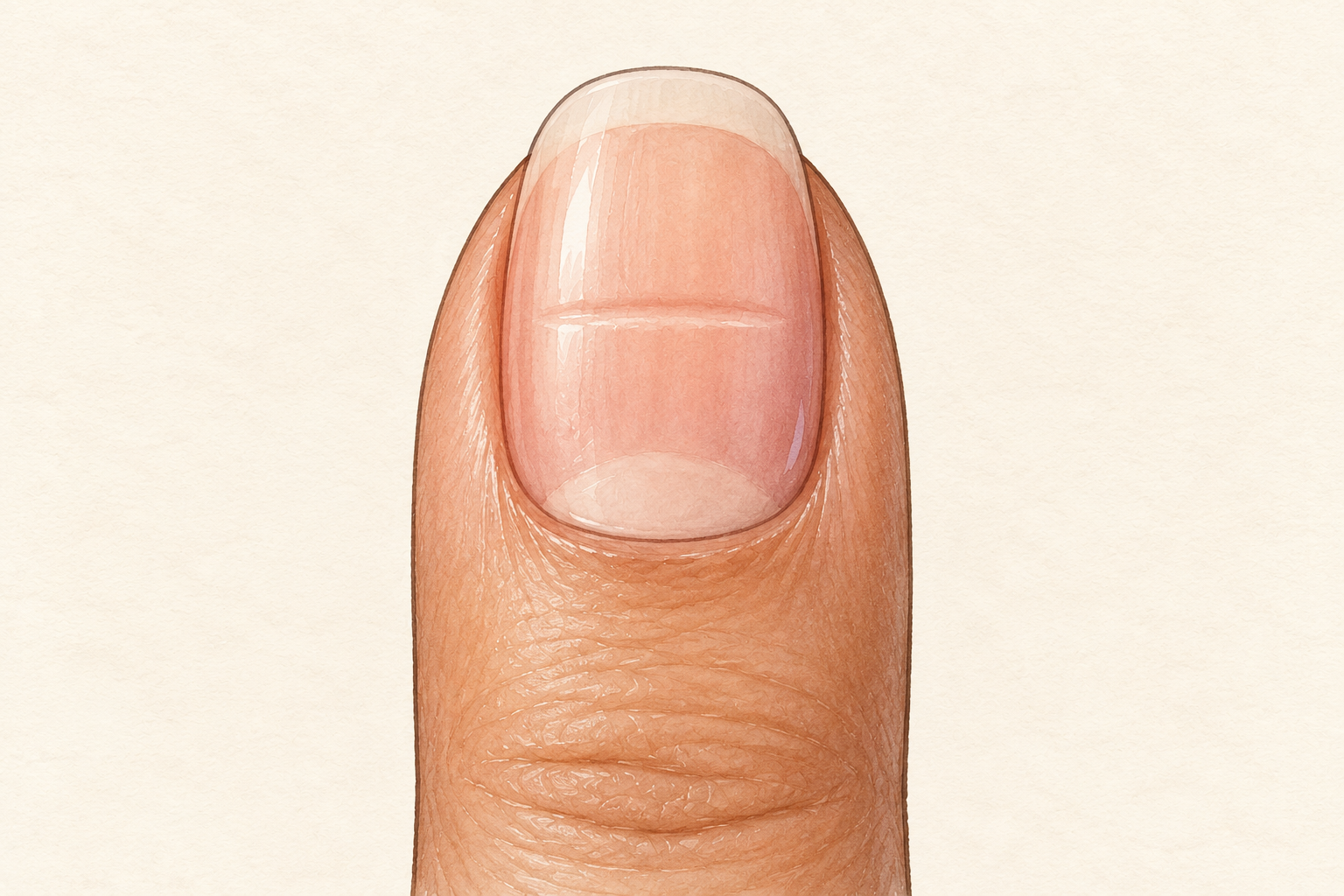
A single dent across a nail points to a rough patch a few weeks back, and it grows out on its own. Hard weeks, a bad cold, a crash diet or one slammed finger can all leave a mark. The dent moves toward the tip as the nail grows, and then you trim it away. There is nothing to rub on it. Instead, be kind to yourself and keep eating well and drinking water. If a dent appears on every nail at the same height, think back to what happened about two months ago. A new dent every few weeks is a sign to slow down and look at your habits.
6. Little white dots
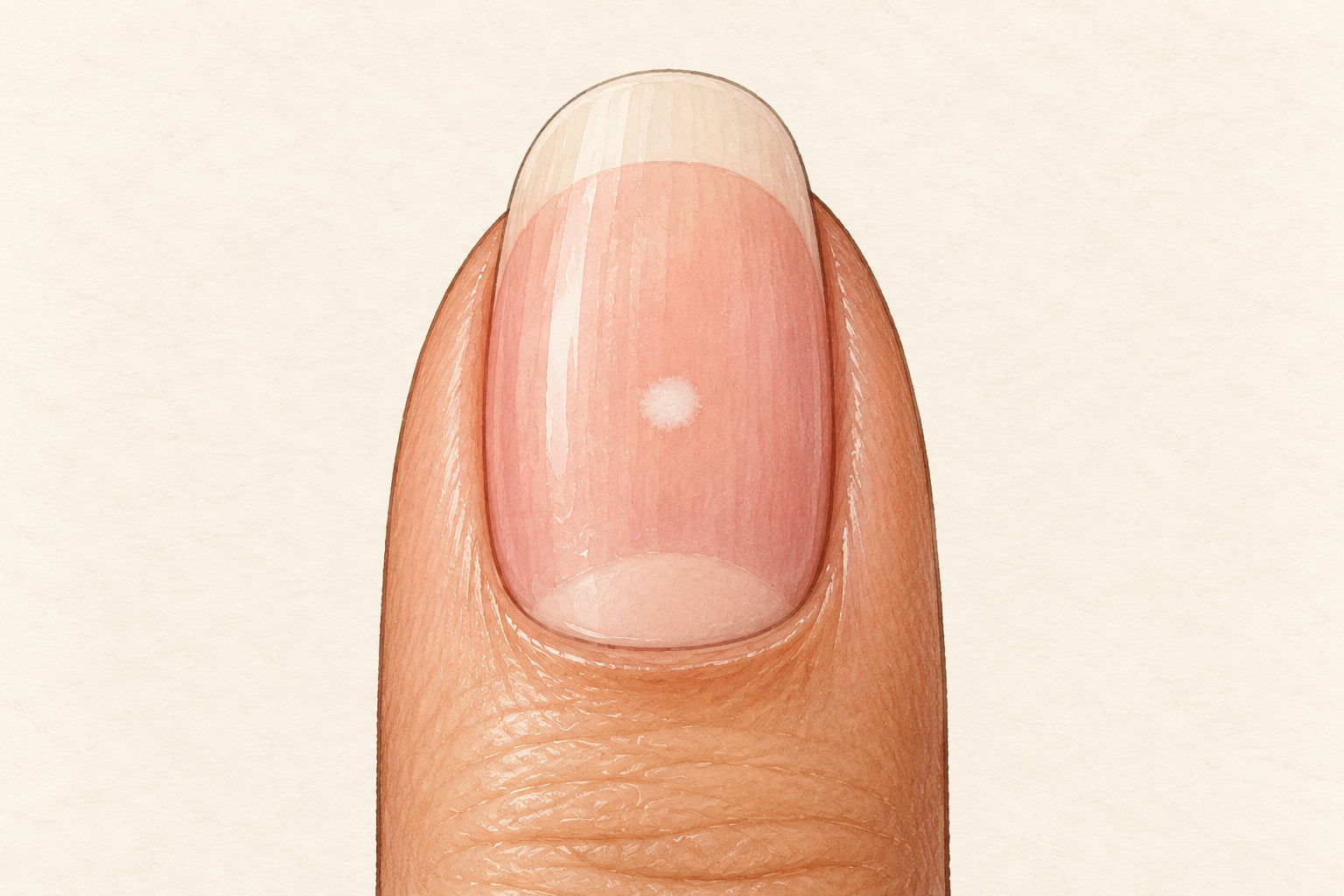
Those tiny white spots are most often a past knock, not a missing vitamin. You bump a nail on a table or a car door, forget about it, and the mark shows up weeks later. They travel up with the nail and vanish when you trim. Do not pick at them or scrub them with a file. Protect your tips by using the pad of your finger to press buttons and open lids. A few dots now and then are normal, and a handful at once simply means you have been busy with your hands. Keep your nails short while they grow out and the dots disappear sooner.
7. A yellow tint
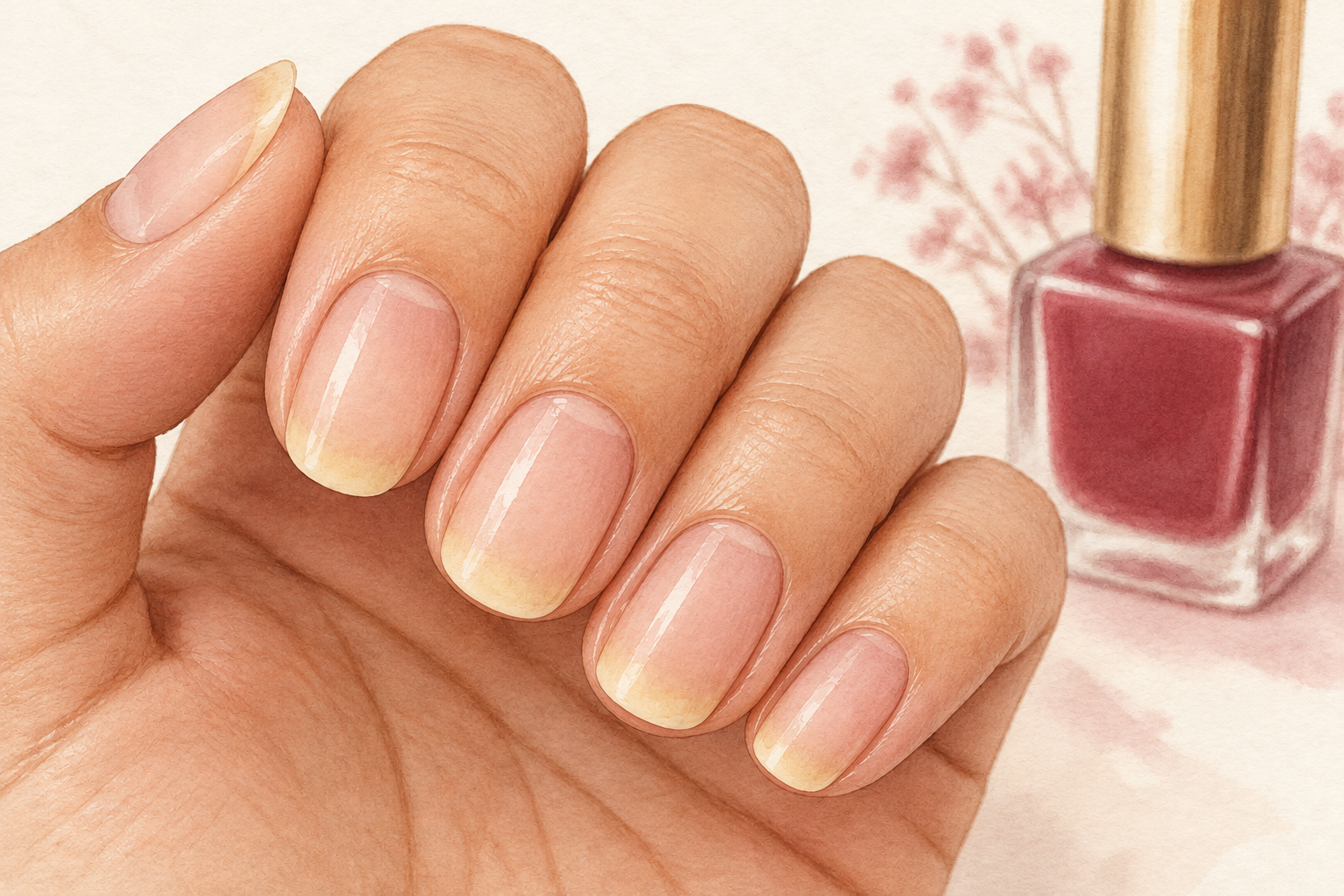
A yellow cast is most often polish staining, so take a break from color. Dark reds, oranges and some bright shades leave a tint behind, especially without a base coat. Go bare for a week or two, soak your fingertips in warm water for five minutes and scrub gently with a soft brush. Use a clear base coat before any color from now on. Smokers and strong dyes can tint nails too. The yellow fades as the nail grows, not overnight. If one nail turns thick and crumbly while the others stay fine, keep it short and dry and watch it for a few weeks.
8. Layers lifting at the tip
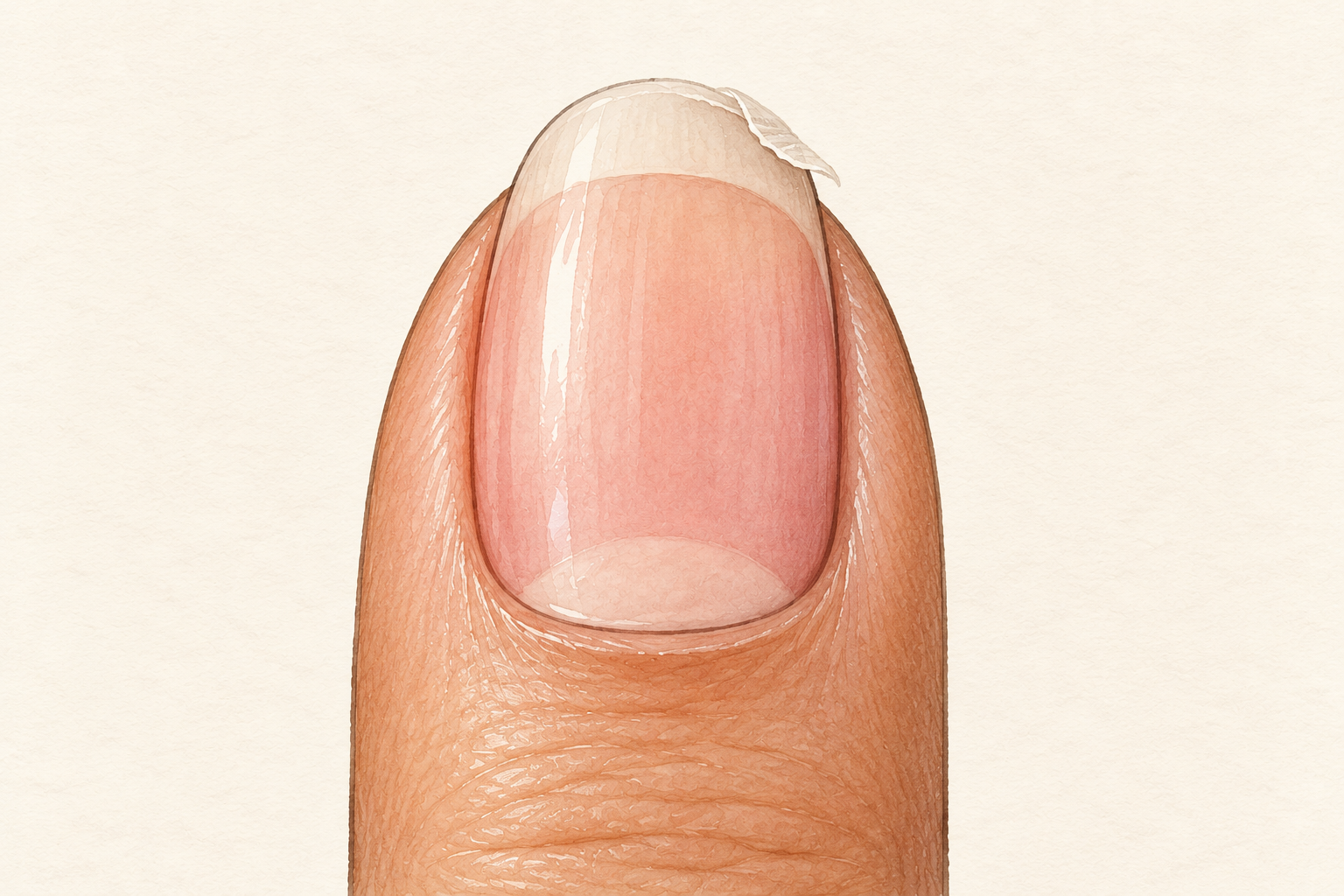
Peeling in thin sheets means the nail is drying out, usually from water and remover. Every time you wash, the nail swells with water and then shrinks as it dries, and that back and forth splits the layers. Wear gloves for washing up and put on hand cream right after you dry your hands. Use a remover without acetone, and press it on rather than scrubbing. File any lifted edge flat so it does not catch and tear further. Peeling also loves soaking in the bath, so keep the soaking short. Most people notice less peeling within three to four weeks of these small changes. Bath soaks and remover are the usual culprits, so look at peeling nails next.
9. Splits and snags
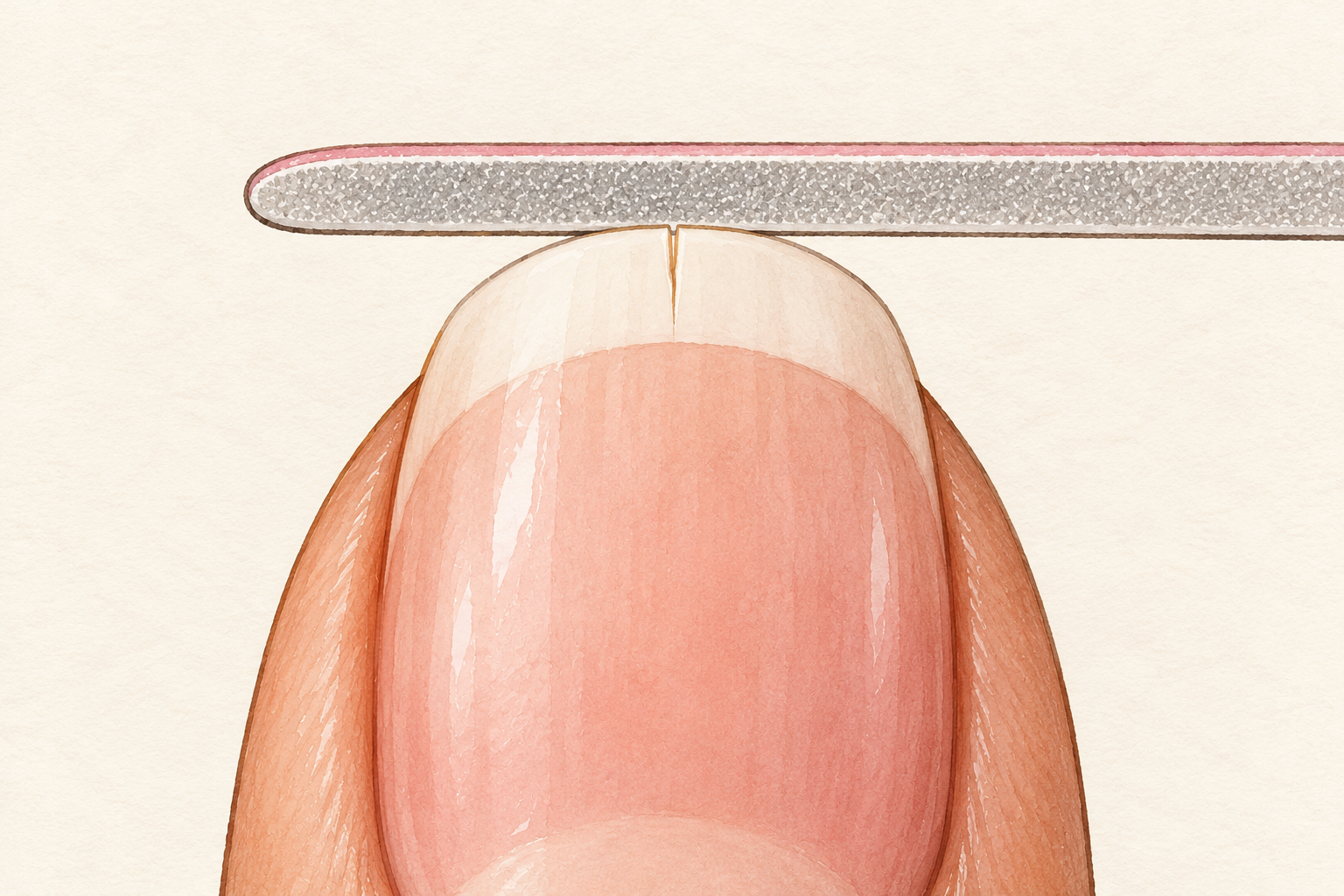
A split that keeps catching needs a smooth edge and a pause from long, sharp shapes. Trim it back to just below the split, then file one way with a fine file to seal the edge. Do not glue it or pick at it. Keep nails a little shorter for a few weeks, because the longer the lever, the easier it breaks. Dry nails split more, so oil them at night. If you cut your nails when they are bone dry, you invite splits, so trim after a warm wash. A split that does not grow out shows the habit behind it, so ask yourself what you used that nail for.
10. Cuticles that lie flat
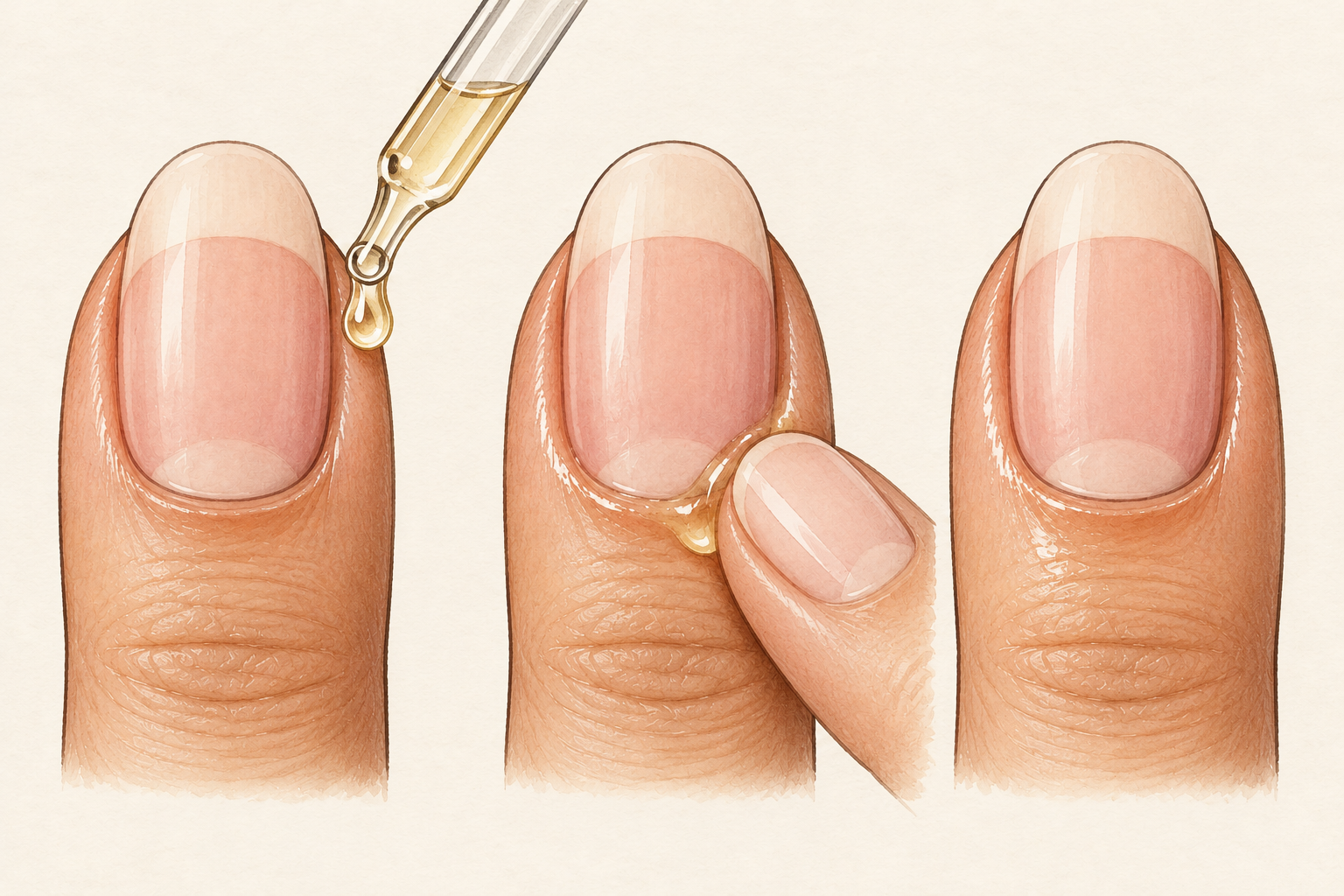
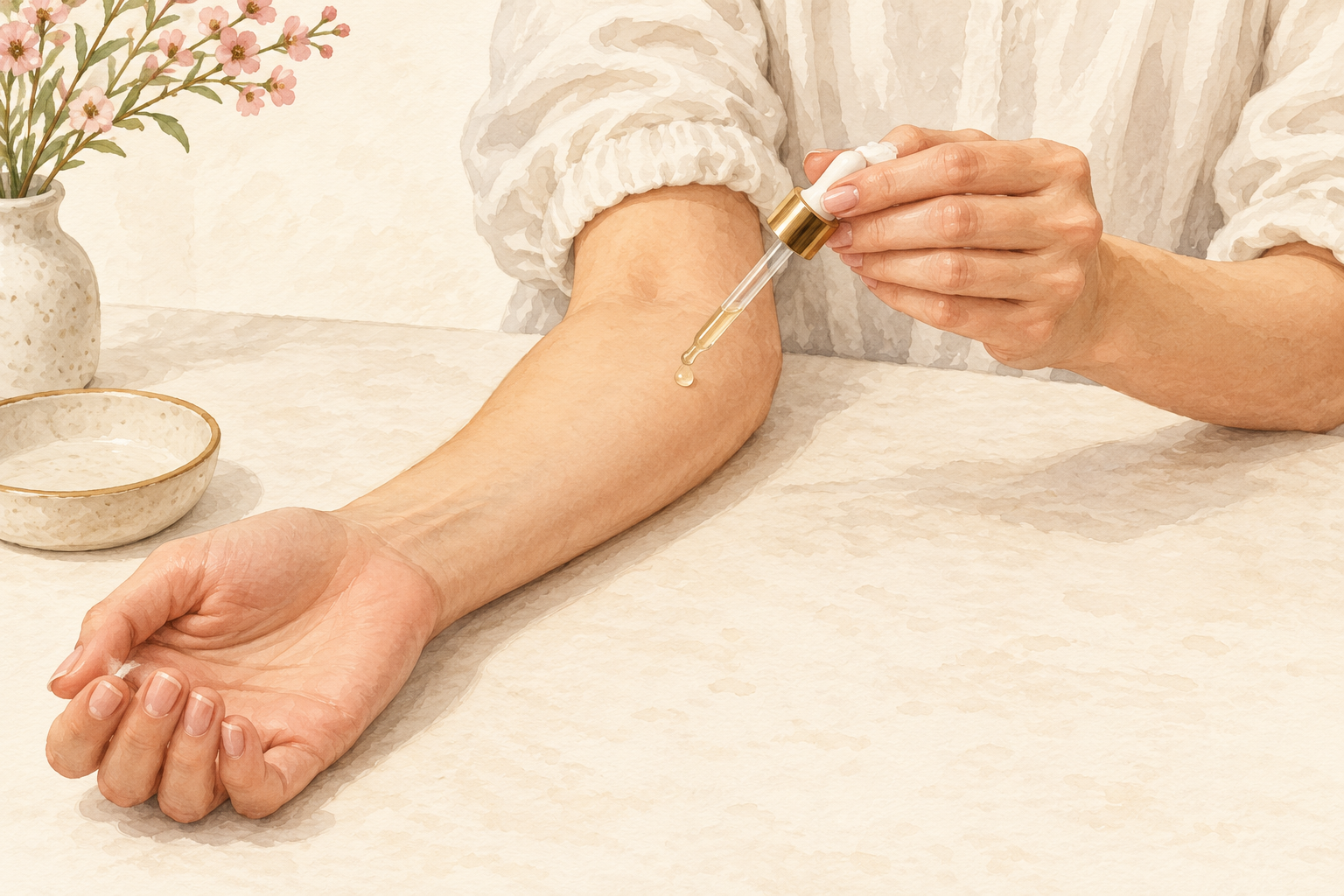
Look at the skin around your nails, because tight, cracked or ragged cuticles drag the nail down with them. The cuticle is a seal, and when it is torn, the nail grows in uneven. Never cut it. Soften it with a warm soak, nudge back only loose skin with a soft stick, and oil it daily. Hangnails should be snipped clean, not pulled. A calm, soft border around the nail is as good a sign as a glossy nail. Keep a small oil near your bed or sofa so the habit costs you nothing. Within two weeks the skin usually looks tidier and feels softer.
11. Changes that deserve a closer look
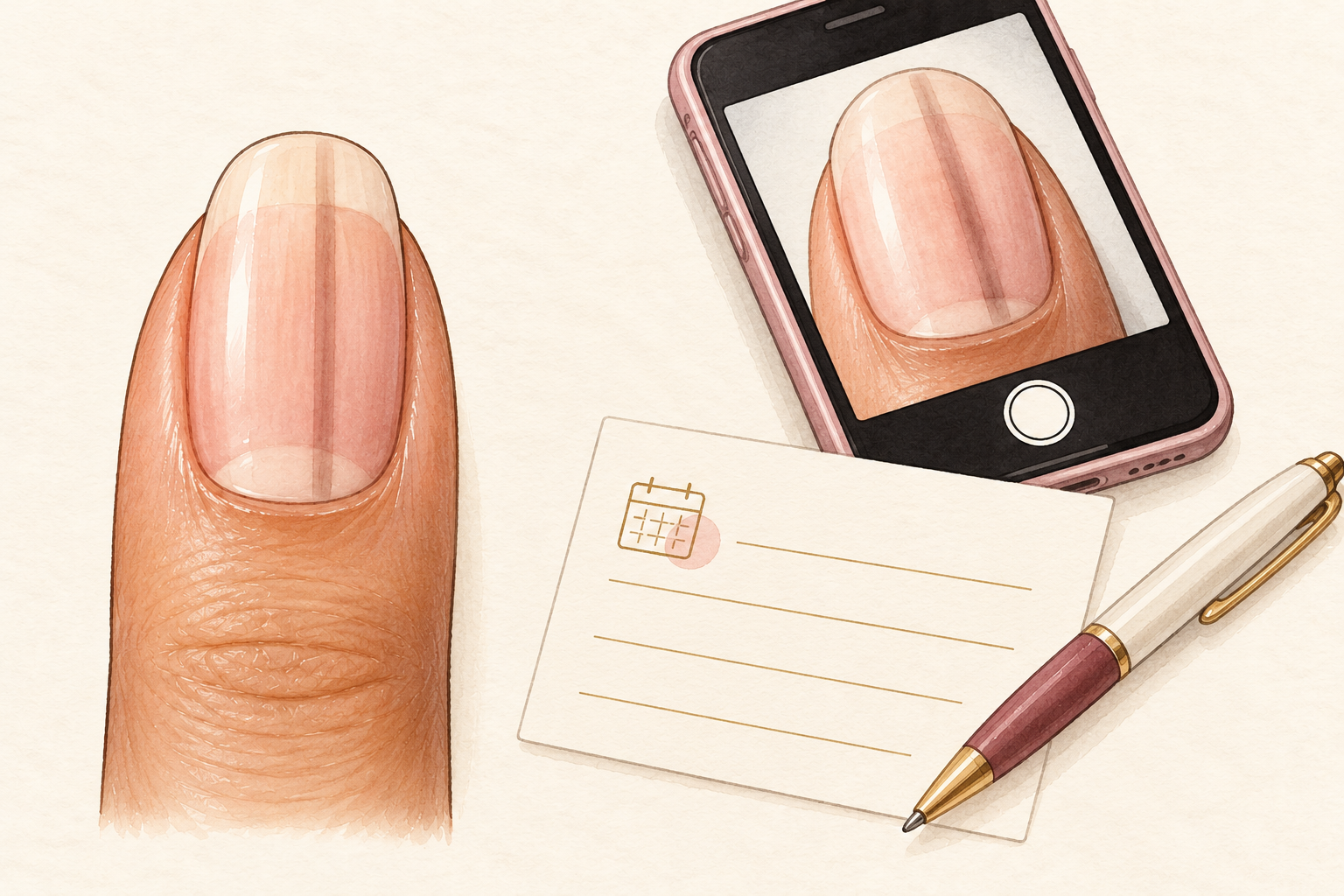
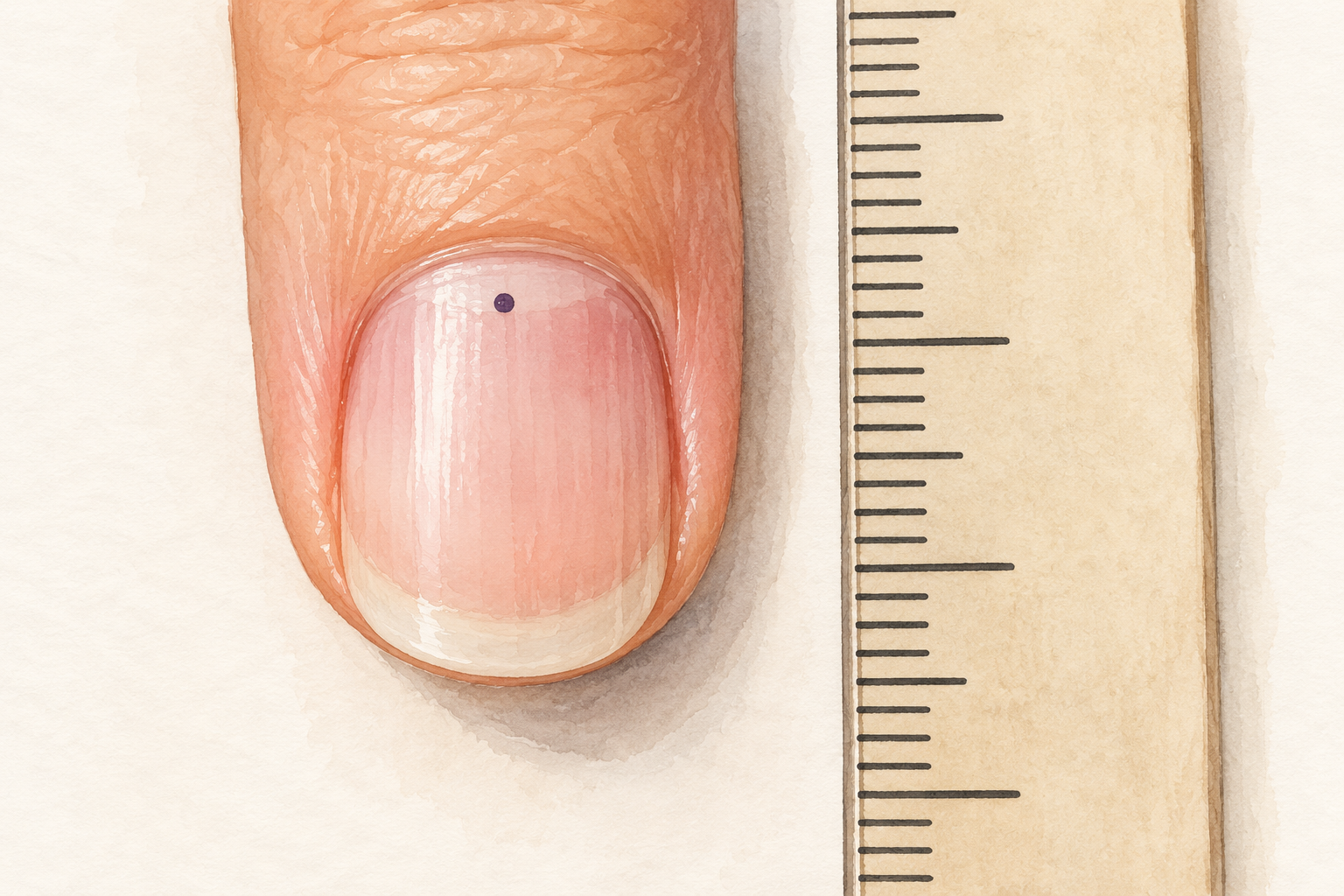
A dark stripe, a sudden color change on one nail or swelling around the nail is worth watching. Take a photo today and another in two weeks to see if anything has moved. A bruise grows out with the nail and shifts toward the tip, but a streak that stays or widens does not. If it keeps changing, stop and see your doctor, since guessing at home will not help. Everything else on this list is gentle and low stakes, and this is the one to keep your eye on. Most nail changes are harmless, so notice it calmly and keep going.
12. The habits that keep them healthy
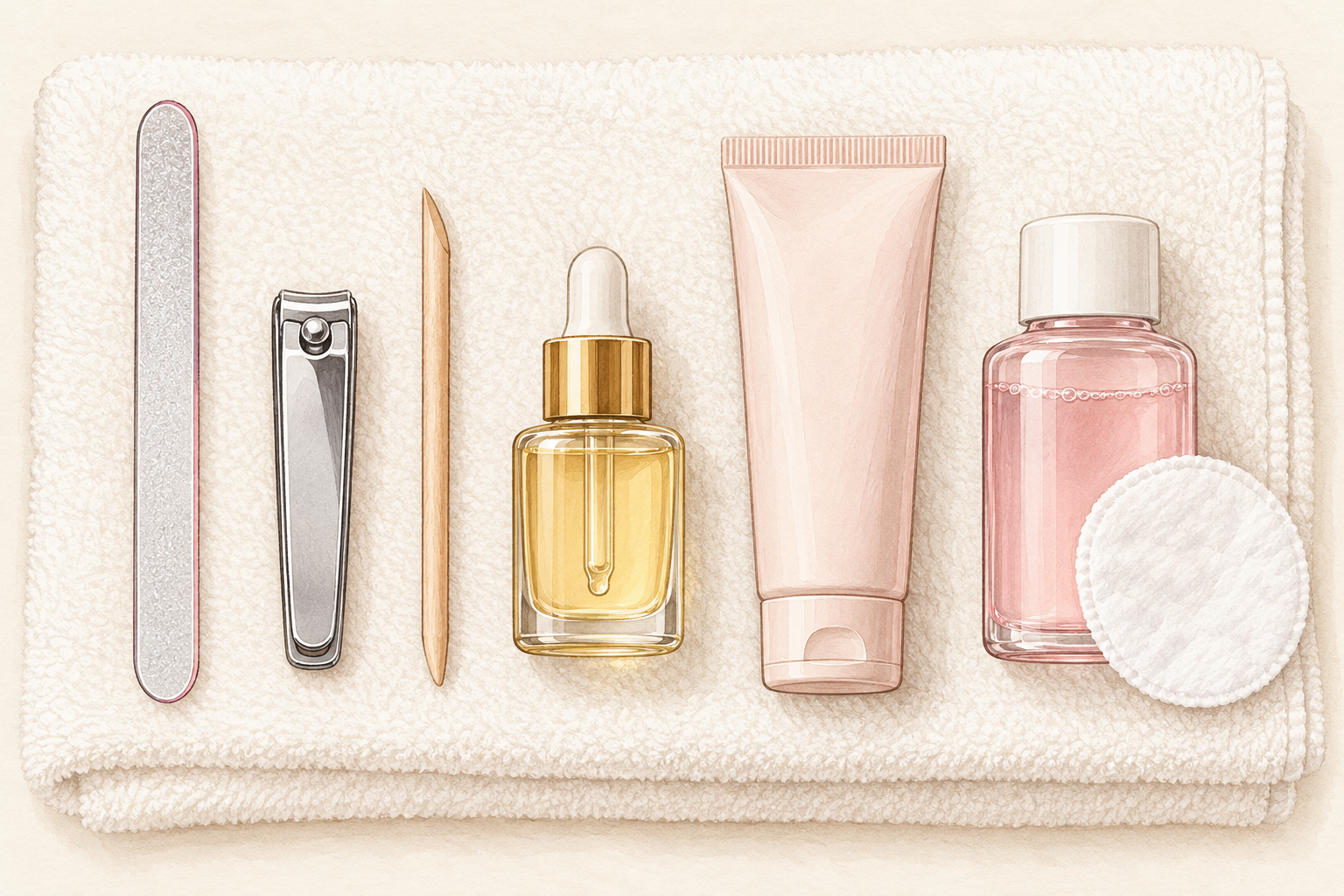
Oil at night, cream after every wash, gloves for the dishes and a gentle file once a week. Those four cover most of what nails ask for. Add a polish break every few weeks and use a clear base coat under color. Eat well, drink water and keep your hands out of hot water when you can. Be patient, because nails take months to renew, so the proof shows in weeks three to eight. You will likely notice fewer snags first, then less peeling, then a soft shine. Take a photo of your nails in the same light each month. Before you chase strength, learn the habits, then look at how to strengthen nails.
Complete the Routine: Keep Healthy Nails Going
Pick two habits from this list and stick with them for a month. Noticing these signs is a habit in itself, so the next time a nail looks off, the guides below can help you know what to try next.