You pick up a bottle of rosemary hair oil with a pretty green label and big promises about thicker hair, then turn it over and find a list you cannot read. Somewhere near the bottom is “fragrance” and a tiny sprig that might be rosemary. These 12 checks help you pick a good bottle, so start at number one the next time you shop.
1. Know what a bottle can really do
Expect softer, shinier hair from the oil, and treat any growth as a bonus. Plenty of women swear rosemary helps hair look thicker, and the buzz around it is loud. That buzz is exciting, but it is not a promise. A rosemary hair oil from a bottle is also weaker than pure essential oil. What you can count on is the feel of the carrier oil on your scalp and lengths. If a bottle makes your hair smooth and your scalp happy, it has done its job already. Keep your expectations sweet and small, and the bottle will not disappoint you.
2. Decide between a scalp oil and a lengths oil
Pick the job first: a thin oil for the scalp, or a richer one for the ends. A scalp oil should feel light and rinse out after a wash. A lengths oil can be thicker, but on your roots it will weigh them down and leave them greasy by evening. The label or the jar often says which one it is for. If it says both, test it on one small area before you commit. Fine hair usually prefers the lighter kind, and thick or coily hair enjoys the richer one. Jot down which type you want on your phone before you shop.
3. Turn the bottle around
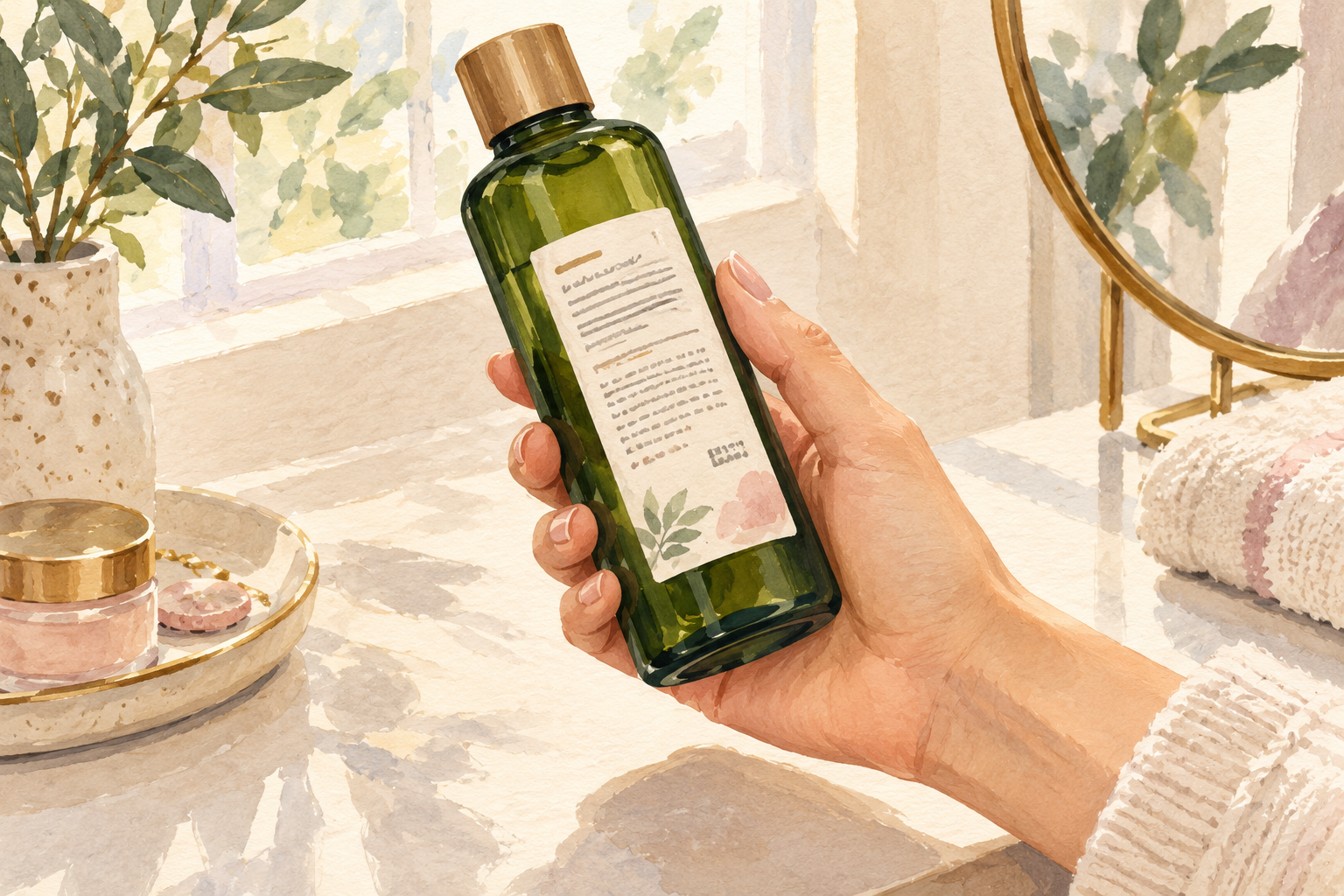
Ignore the front and read the ingredient list on the back, which takes about two minutes. The word rosemary on the front can mean a drop of extract or just a scent. Look for rosemary leaf oil, rosemary extract or rosemary essential oil in the list. If you cannot find any of those, you have a rosemary scented oil. That is not a crime, but it is not worth paying extra for the name. Scent alone does nothing for your scalp, so check before you carry it home. Take a photo of the list so you can compare it at home.
4. Find where rosemary sits

Check how high rosemary appears on the list, because ingredients run from the largest amount to the smallest. If rosemary comes after the fragrance, you are getting a trace. A rosemary hair oil with it in the first few lines is more likely to carry a meaningful amount. Rosemary extract in a plant oil is milder than the strong essential oil, but it also means a smaller dose. Compare two bottles side by side and pick the one that lists it higher. It takes ten seconds, and it tells you more than the front ever will.
5. Check the carrier oil

Look at the first oil on the list, because the carrier makes up most of the bottle. Jojoba, sweet almond, olive, castor and coconut are the common ones, and jojoba usually feels lightest on the scalp. Mineral oil and silicones sit on the surface and coat the hair, which some women like and others find heavy. Match the carrier to your hair. Fine hair dislikes thick oils, dry coily hair loves them, and an itchy scalp is kinder to a light one. Choose the feel you would actually enjoy using weekly. A short carrier list of one or two oils is easier to judge than a long blend.
6. Check that it has been diluted
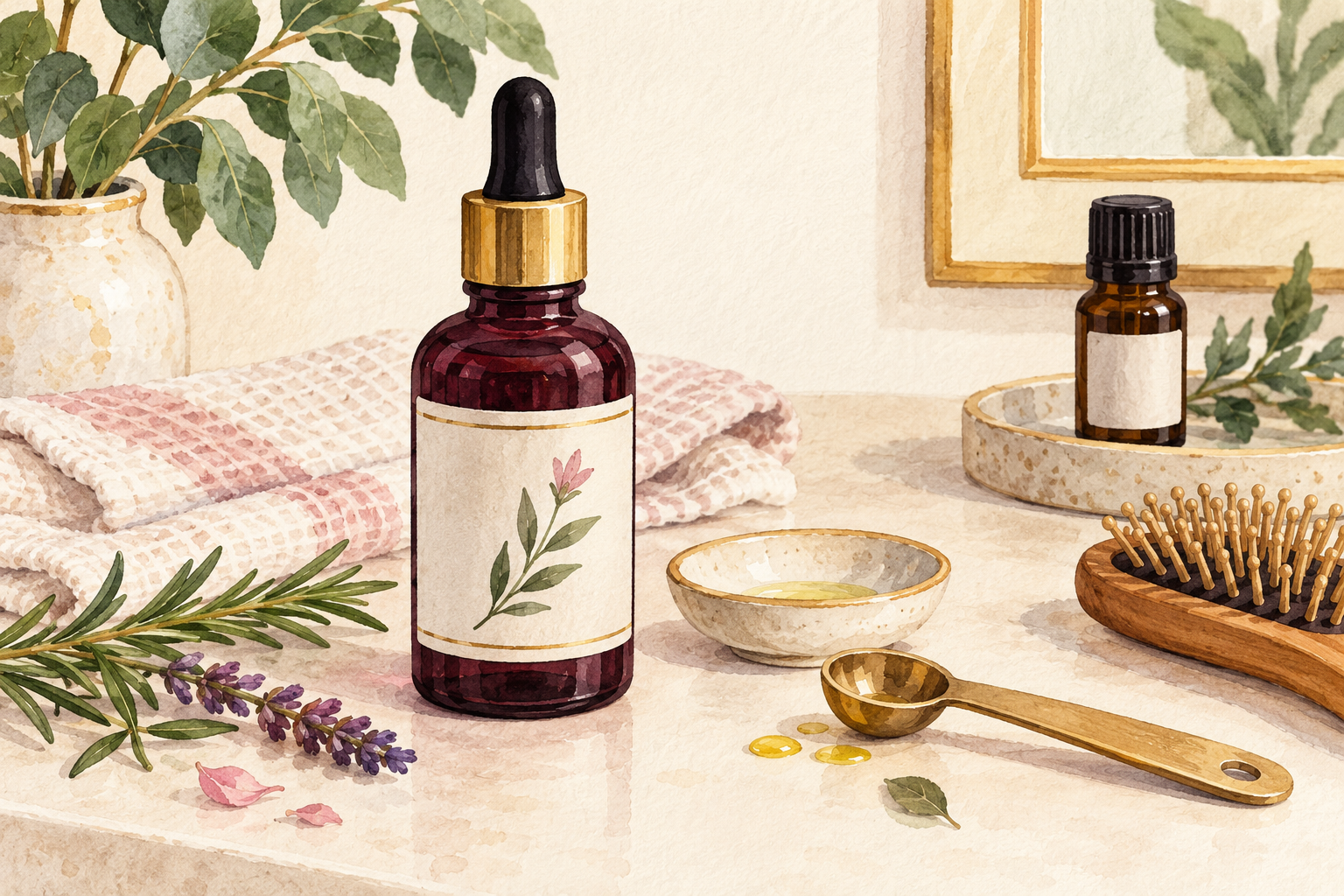
Rosemary essential oil is strong and should never go on the scalp neat. When you make your own, the usual rule is about five drops in a teaspoon of carrier oil. A finished bottle should already be diluted, so be wary of any oil that tingles hard or burns the moment you touch it. A very sharp, strong smell is a poor sign too. If a bottle stings, rinse your scalp with cool water and put it back on the shelf. Mild warmth is fine, but burning is not. Never add extra drops of essential oil to a finished bottle.
7. Walk away from guaranteed results

No oil can promise regrowth in a set number of days. Big promises, perfect before and after photos and miracle words are all reasons to be careful. A good label tells you what is inside and how to use it. If a claim sounds bigger than a plain oil could deliver, leave that bottle on the shelf. Words like instant, cure and secret are the loudest warnings. A plain bottle with a short, clear list is nearly always a better buy than a loud one. Pretty before and after photos prove nothing about what is inside the bottle.
8. Watch for heavy fragrance, dyes and a missing list

Skip bottles with strong perfume, added color or an incomplete ingredient list. Fragrance and dyes can irritate a sensitive scalp, and they say nothing about quality. A bottle with no batch number, no storage advice or no date is hard to trust, because plant oils go rancid over time. If you ever have a reaction, you need to know exactly what you used. A short, plain list is easier to judge. Smell the oil at the shop if you can, and walk away from anything that smells stale or sour. Plain glass or dark bottles protect the oil better than clear ones.
9. Patch test for a full day

Put a small dab on the inside of your forearm and leave it for 24 hours. If you see redness, itching or a rash, do not use it on your scalp. Do the test even if the bottle says gentle, because rosemary can irritate some skin. Keep it away from your eyes and rinse with cool water if it gets near them. Wait the full day before you go any further. Test every new bottle, even from a brand you have used before, because formulas change. Check the spot again after a day, and again at the end of the week.
10. Use fewer drops than you think

Warm three to five drops between your fingers and massage them into the scalp for a couple of minutes. Do this two or three times a week, not every day. Layering oil daily builds up and can make the scalp itchy or flaky. Leave it for an hour, or overnight if your scalp tolerates it, then shampoo it out. A little goes a long way, so one small bottle should last you weeks. If your hair looks greasy at the roots the next morning, you used too much. Rub the leftover oil from your palms through your ends.
11. Avoid the mistakes that waste a bottle

Keep the cap tight and the bottle out of the sun, because heat and light spoil plant oils. A bottle that smells off or turns thick should go in the bin. Skip the strong essential oil while you are pregnant and use a plain carrier oil instead. Do not pile the oil on top of heavy styling products, which blocks it from your scalp. Writing the opening date on the bottle helps you track freshness. Keep it away from your eyes and from the pillow, because oil stains cotton. If your pillow smells oily, you used too much.
12. Know how to tell it is working, and when to skip it

Give a rosemary hair oil twelve weeks and compare photos of the same parting in the same light. In week one you may notice softness and a nicer feel on the scalp. By week four you will know whether your scalp tolerates it and whether it leaves the roots greasy. Skip the oil if your scalp stings, itches or flakes. If your hair is shedding heavily, bring it up the next time you see your doctor, because an oil will not solve that. A bottle that passes every check here is a safe place to begin.
Complete the Routine: Make Your Rosemary Hair Oil Choice Count
Tonight, take a bottle you already own, read the back with these checks, then patch test it on your arm. If it fails, read how to make rosemary oil for hair for a simple homemade version, and learn how often to use it in hair oiling.