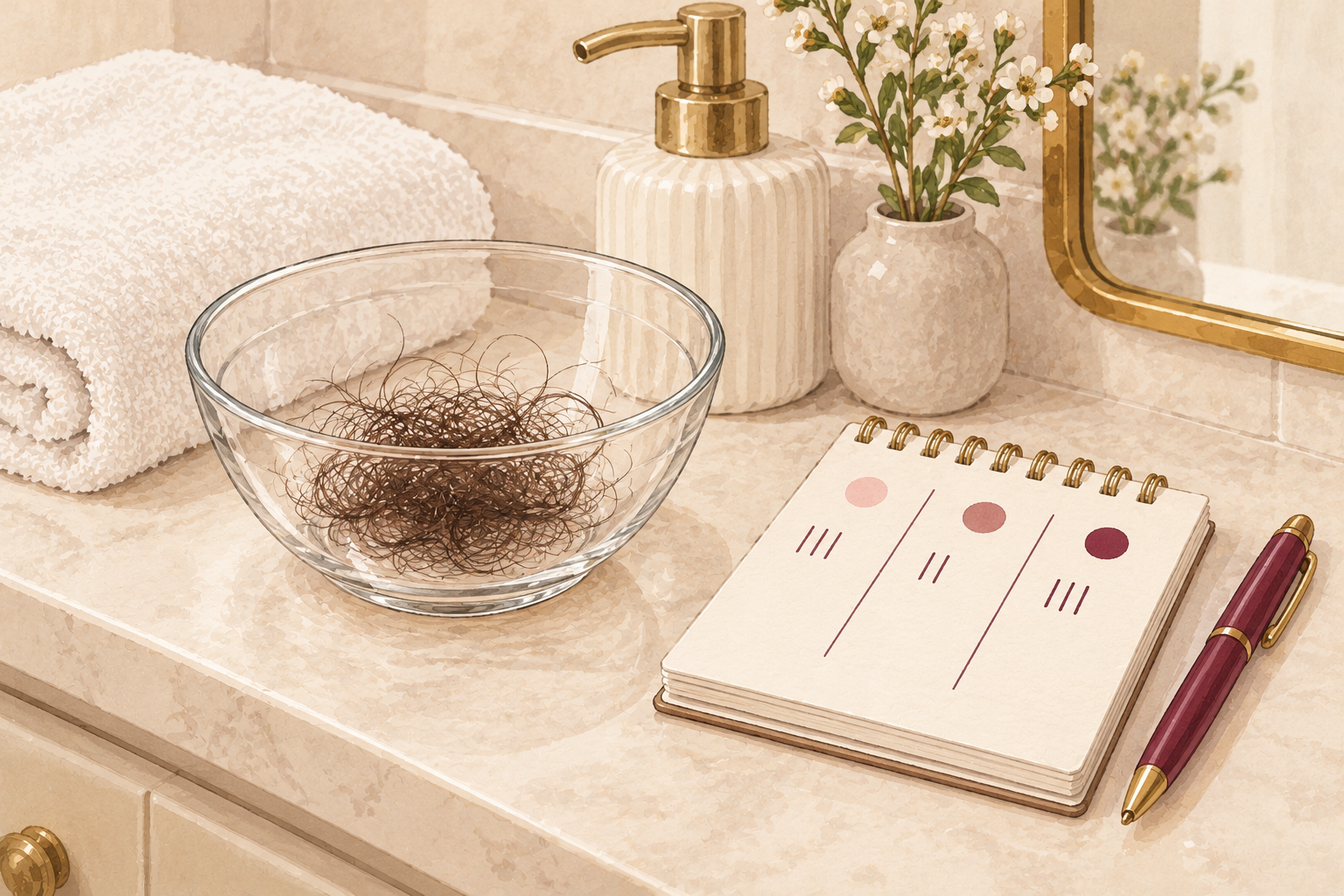
Your locs are new, or you are thinking of starting, and every video says something different. Wash too little and the scalp complains, fiddle too much and the locs frizz and thin. Dreadlocks hair care comes down to a clean scalp, full drying and patience. Here are 12 habits that cover all three, so start at number one tonight.
1. Follow your loctician on early washing
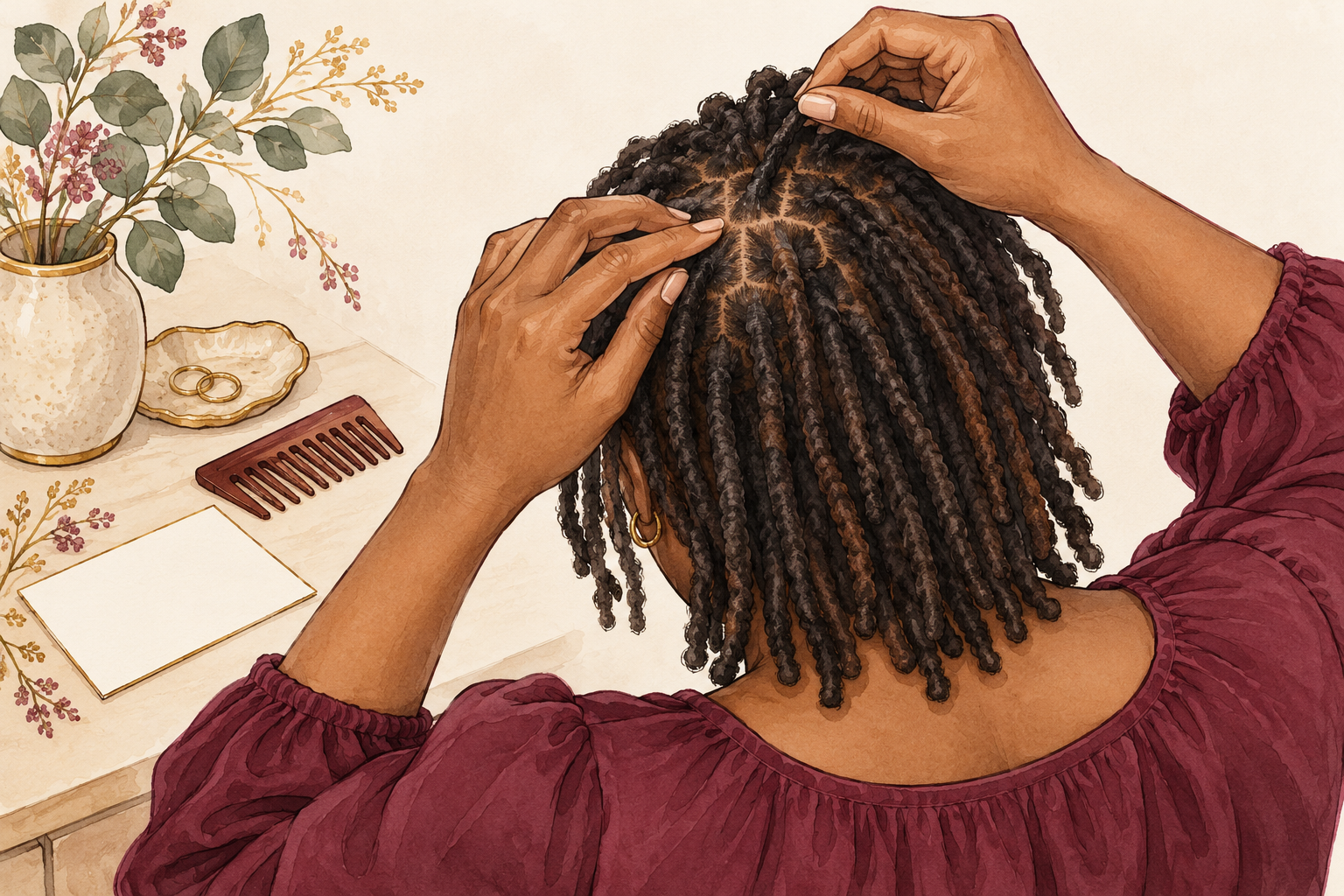
Ask whoever started your locs how long to wait before the first wash, and follow it exactly. Many people say wait one to four weeks, depending on the method. Locs that are washed too soon can unravel, and locs that go too long can build up. In the meantime, you can keep your scalp fresh by wiping it with a clean damp cloth. When the green light comes, wash in a nylon wash cap or a stocking if you are told to. Write the advice on a note and stick it where you will see it. Starter locs are delicate, so their advice beats anything you read online.
2. Resist the urge to fiddle

Leave your locs alone between maintenance days. Twisting, pulling and rolling them all day loosens the roots and makes them frizzy and thin. If you must touch them, press lightly along the length with a flat palm. Frizz in the early months is normal, because locs go through an awkward stage before they settle. Keep your hands busy with something else, like a stress ball or a bracelet to fidget with. Roots that are handled all day tire and break. Every week you leave them alone is a week they spend locking in. By month three or four, you will see them tighten and smooth.
3. Choose a residue free shampoo from the start
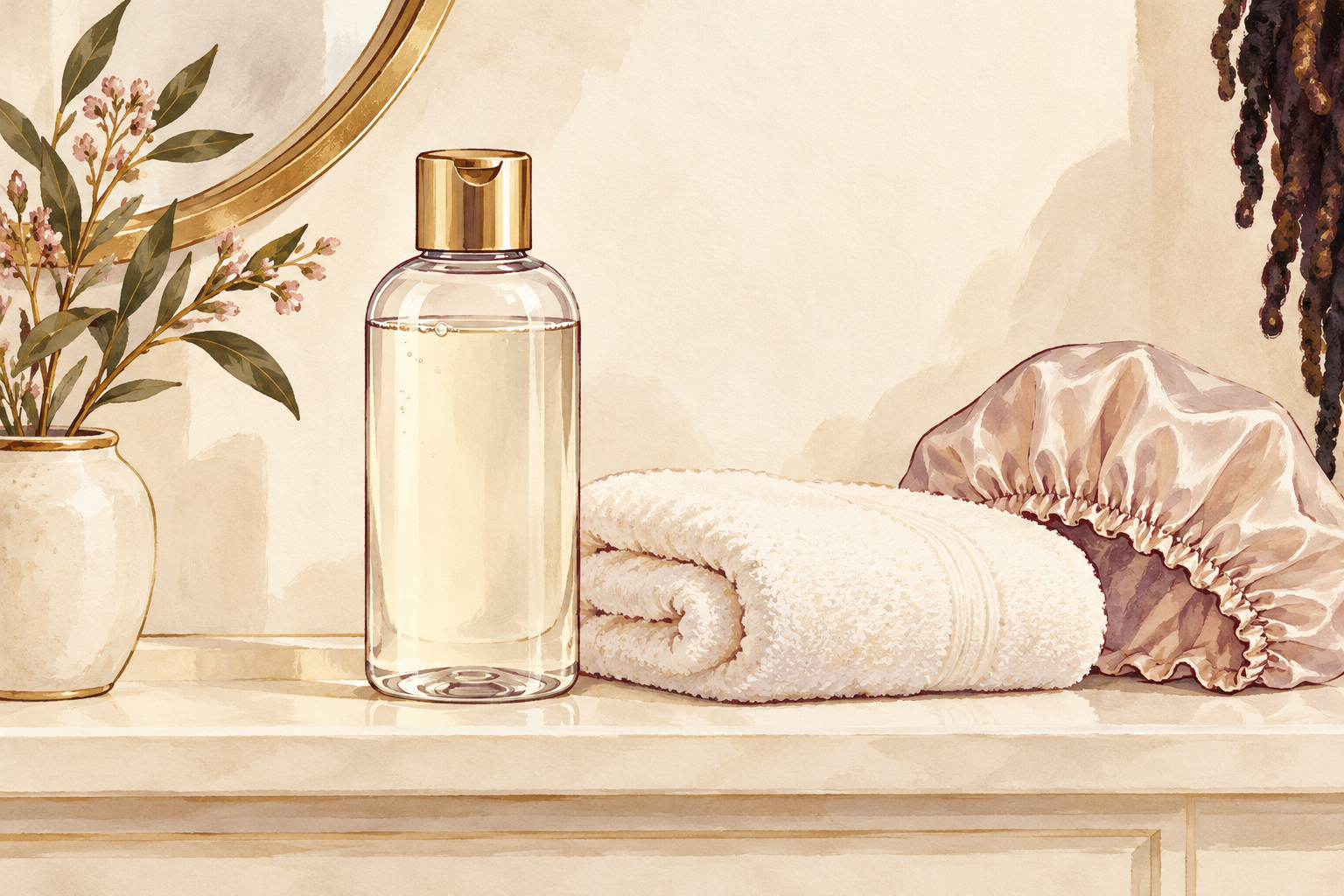
Look for a clear or light shampoo that rinses cleanly, and skip creamy or conditioning formulas. Creamy products leave a film that gets trapped inside the loc and will not rinse out. A clear shampoo does not do this. If a bottle says moisturizing or two in one, put it back. Check that your shampoo does not leave white flakes after it dries. Dilute it with water in a squeeze bottle so you can aim it at the scalp. If your locs feel heavy or smell musty, product is probably trapped inside. Switching to a clear shampoo early saves you from big problems later.
4. Concentrate on the scalp
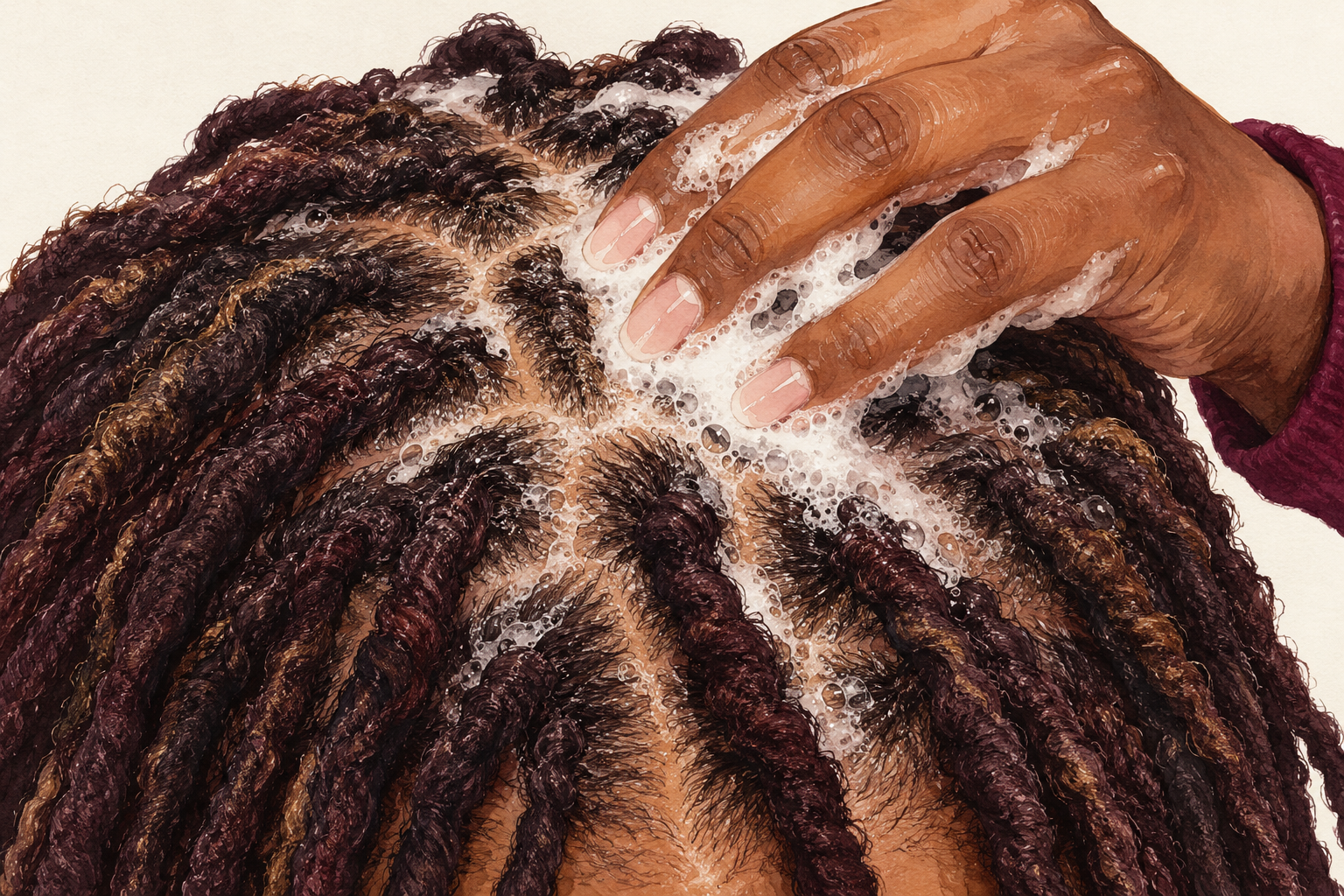
Squeeze diluted shampoo along each parting and massage the scalp with the pads of your fingers for two minutes. That is where oil, sweat and dead skin gather. The locs themselves get cleaned when the suds run down. Keep your nails away from your scalp, because scratching can cause tiny cuts. Wash every one to two weeks, or weekly if you sweat a lot or work out often. Skipping washes for a month builds up and creates itching and smell. Press the foam along every parting with your fingertips, front to back, so no patch of scalp is missed.
5. Squeeze, do not rub
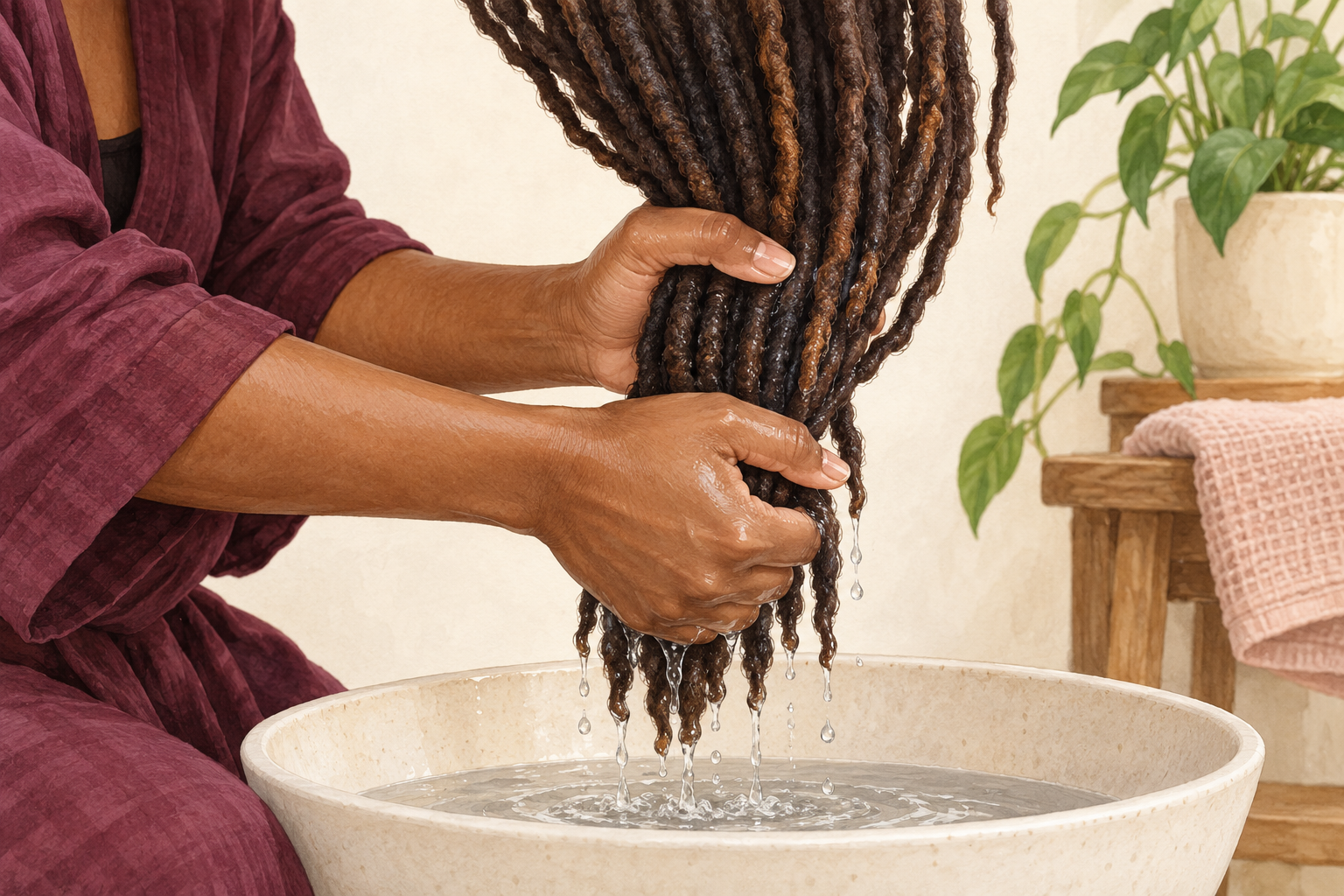
Rinse the locs under running water, then squeeze the shampoo through them like you would a sponge. Rubbing them roughly against each other makes lint and loose fuzz, which lodges in the loc. Press the foam up and down each loc a few times, then rinse until the water runs clear and the locs no longer feel slippery. This can take three to five minutes, longer if your locs are thick. Hold your locs forward over a basin rather than flipping them back, so the water runs away from the scalp. Gentle squeezing keeps the locs smooth and the roots tight.
6. Dry fully every time

Squeeze the water out with a towel, then let your locs air dry or sit under a warm dryer until they feel completely dry inside. Locs hold water in their centers for a long time. Damp locs can grow a musty smell, which some people call dread rot. Keep drying for as long as it takes, which can be a few hours. Fluff them in the sun or by a window when you can. Do not go to bed with wet locs or wrap them while damp. A dry loc smells like fresh hair and has a light, springy feel when you press it.
7. Palm roll instead of heavy retwisting

Dampen a loc lightly and roll it between your palms for a few seconds to tidy new growth. Palm rolling is gentle, and it keeps the shape without pulling on the root. Do a few locs a day instead of the whole head at once. Always roll the same way, so the loc keeps its twist. Heavy retwisting every week or two can thin the roots and cause breakage. Go longer between full retwists, which many people do every six to eight weeks. A quiet roll is all your locs need most days, and it takes a minute or two for each section.
8. Skip heavy waxes and creams
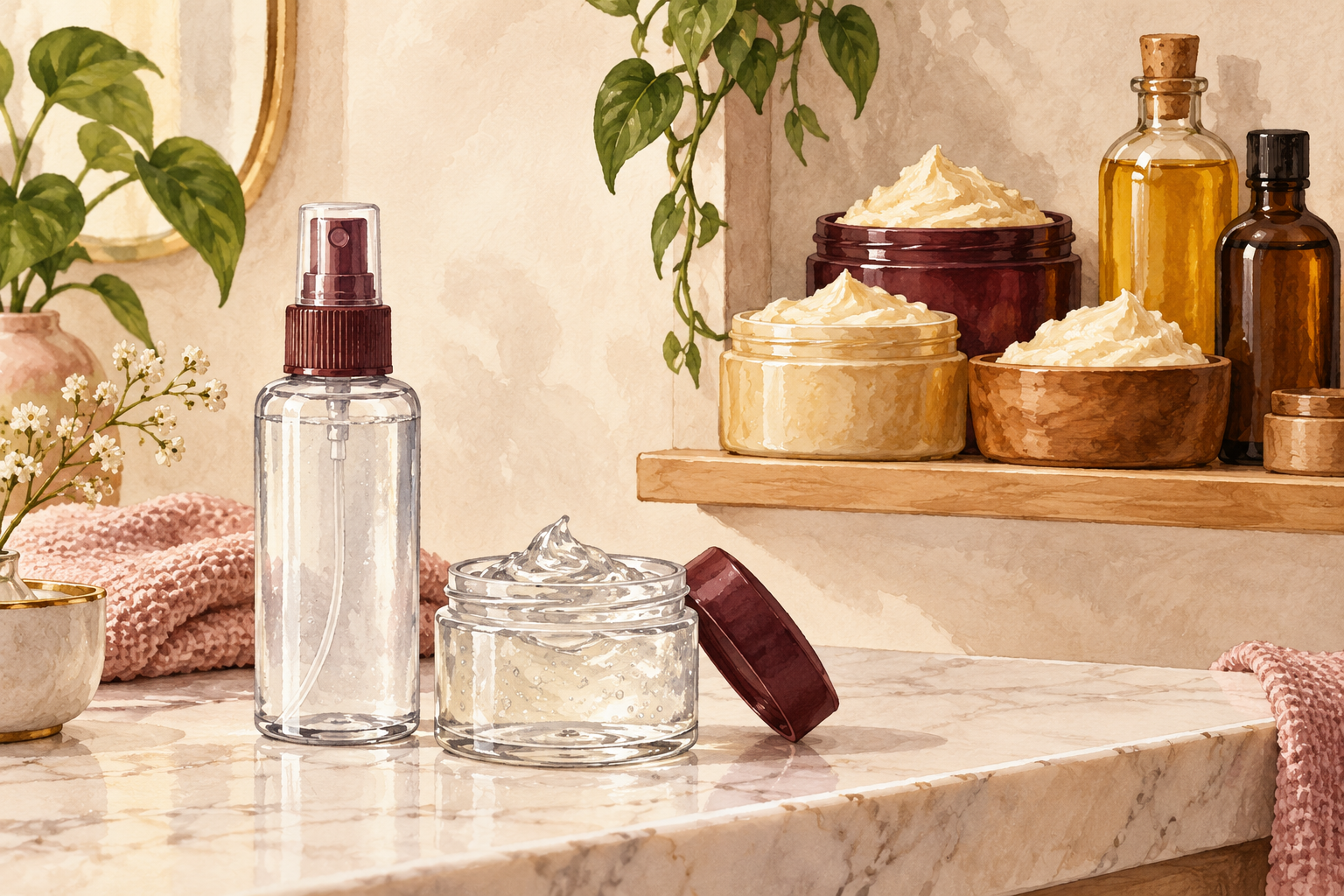
Choose a light spritz of water mixed with a few drops of oil, and put the thick waxes back. Wax and heavy cream coat the loc and never wash out, so lint and dust stick to them. Over time the loc gets heavy, dull and slow to dry. If you want shine, use a very light oil on the surface, a few drops at a time. For moisture, spritz with water and seal with a tiny amount. Light products keep your locs breathing and clean, and that is what makes them look healthy. Good dreadlocks hair care is often about what you leave out, not what you pile on.
9. Cover locs at night with satin

Tie your locs loosely on top of your head and cover them with a satin bonnet or scarf. Cotton pillowcases snag at the loc surface and leave fuzz. Satin glides and keeps your locs smooth. Do not pull the bonnet down tight, because that stresses the roots. Use a large bonnet if your locs are long, so they are not squashed. In the morning, shake your locs out gently and check the bonnet has not left a line across your forehead. If it has, it is too tight. Wash the bonnet every week or two.
10. Avoid heavy tension styles

Pick loose styles, like a low bun, a half up or a soft pin, and avoid pulling the locs tight. Constant pull at the roots can cause thinning around the hairline, and that kind of loss can be permanent. Use wide, soft bands instead of thin elastics. Change where you tie them every few days. If your scalp feels sore or you see small bumps, loosen the style at once. Heavy locs need support, so tie them in two or three places rather than one. The longer your locs, the more weight your roots have to hold, so give them a rest day with everything hanging free.
11. Massage the scalp and spot problems early
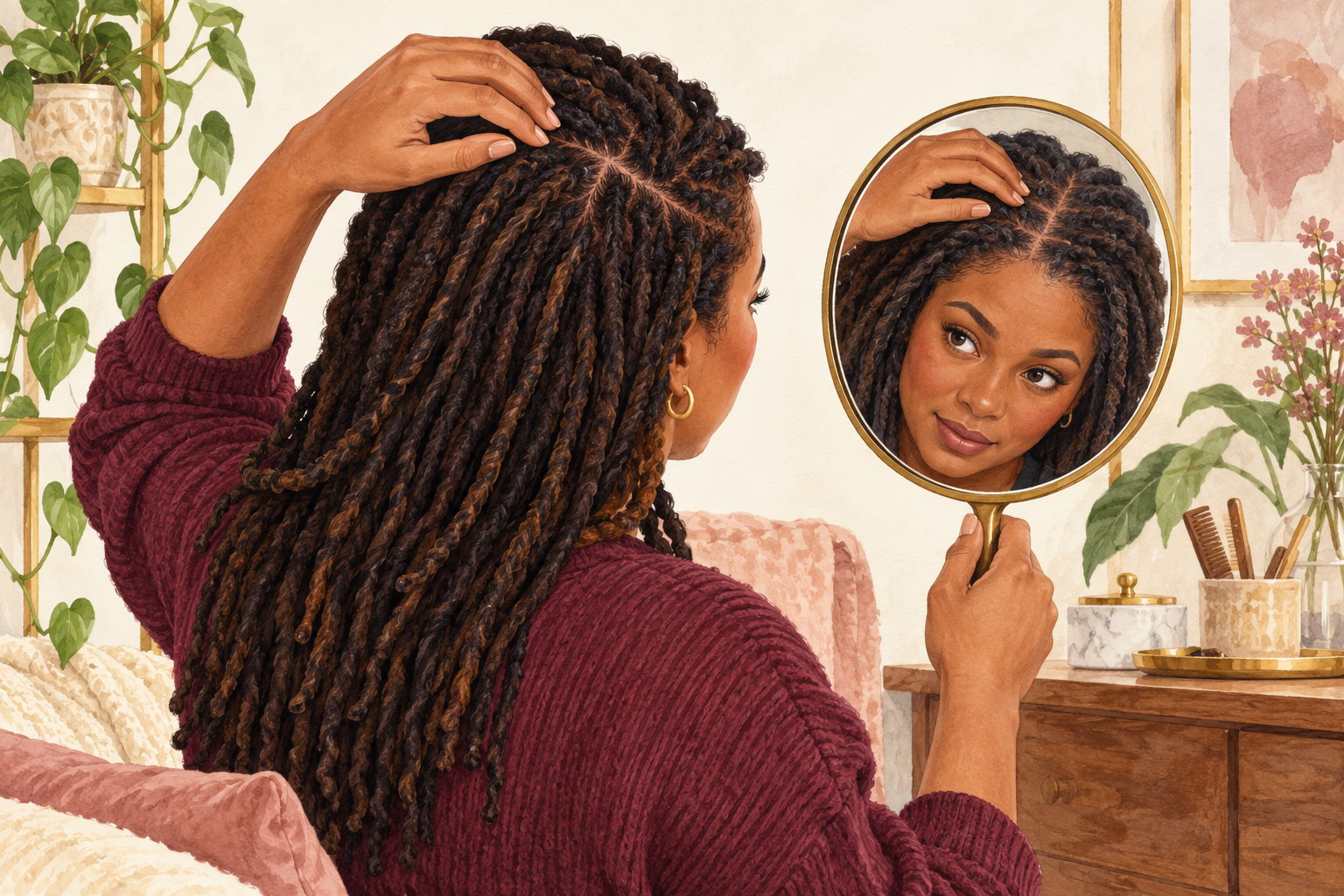
Rub your scalp gently for two minutes a few times a week, and use a mirror to see the partings. The massage brings blood to the roots and loosens dry skin. Look for redness, flaking, bumps or a sharp smell. Small itching is usually dryness, which a light oil on the scalp can ease. Treat it early, because a small problem becomes a big one under locs. If you see sores, or the itch will not go away after a couple of weeks, see your doctor before it spreads. Most scalps stay calm with regular washing and a gentle touch.
12. Use rinses carefully and dilute properly

Mix one tablespoon of apple cider vinegar into two cups of water if you want a rinse, never stronger. Pour it over the scalp and let it sit for one minute, then rinse well with clean water. Too much vinegar dries the locs and stings the scalp. Try a small patch first to see how your skin reacts, and stop if it stings. Use it once a month at most, not every wash. A rinse can help with build up, but it does not replace a proper wash. Dry your locs fully afterward, because rinse water sits in the center like any other water.
Complete the Routine: Dreadlocks Hair Care That Lasts
Start with number 3 and number 6 on your next wash day. For more help, read 4C natural hair care and curly hair care.